
In the closing months of World War II, when most bomber designs still relied on piston engines and conventional tails, Jack Northrop remained committed to developing an aircraft that was all wing and almost nothing else. According to him, removing the fuselage and the tail and letting the wing carry everything would result in reduced drag and increased range. One result of this thinking was the YB-35, an experimental heavy bomber designed for the US Army Air Forces (USAAF) as a pioneering “flying wing,” featuring no distinct fuselage or tail. It utilized four 3,000-hp Pratt & Whitney R-4360 engines with pusher propellers to achieve long-range capabilities. But as jet propulsion matured rapidly in 1945, the US Army Air Forces (USAAF) authorized a dramatic change. In June of that year, Northrop received approval to convert two YB-35 airframes into jet-powered bombers.
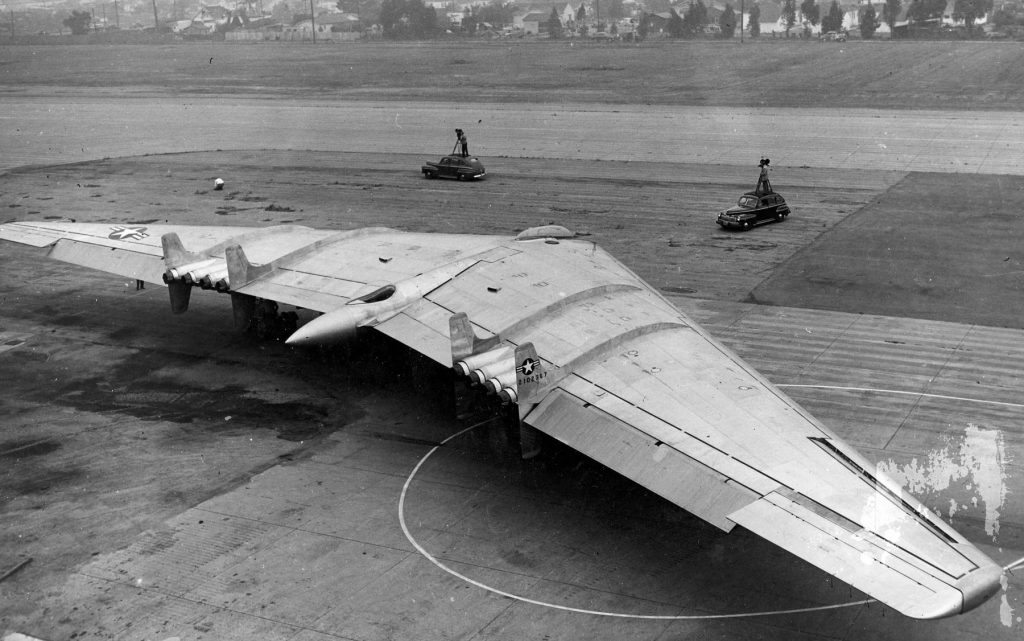
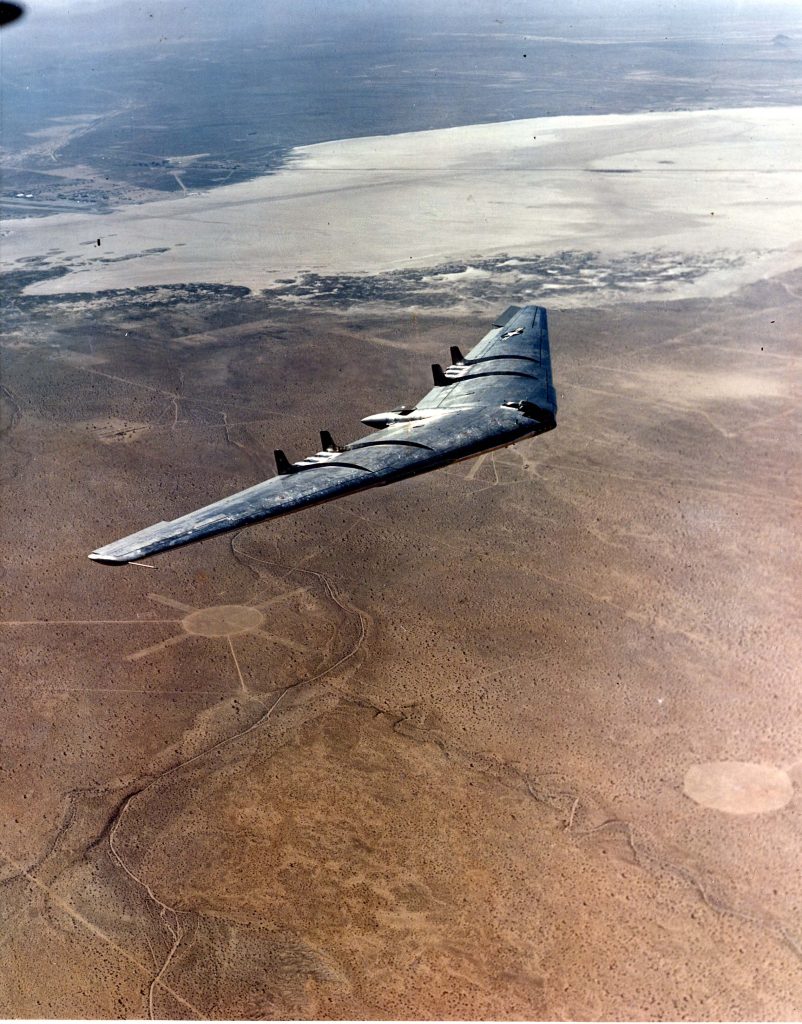
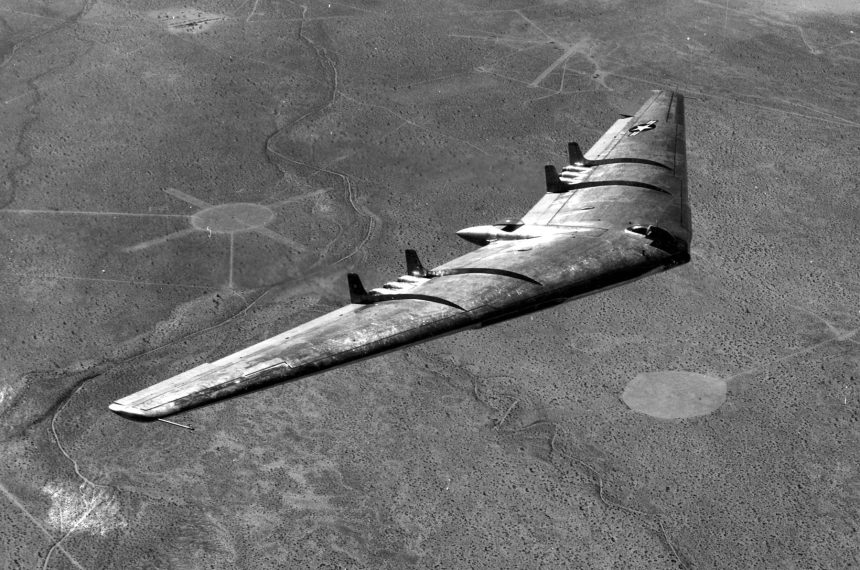
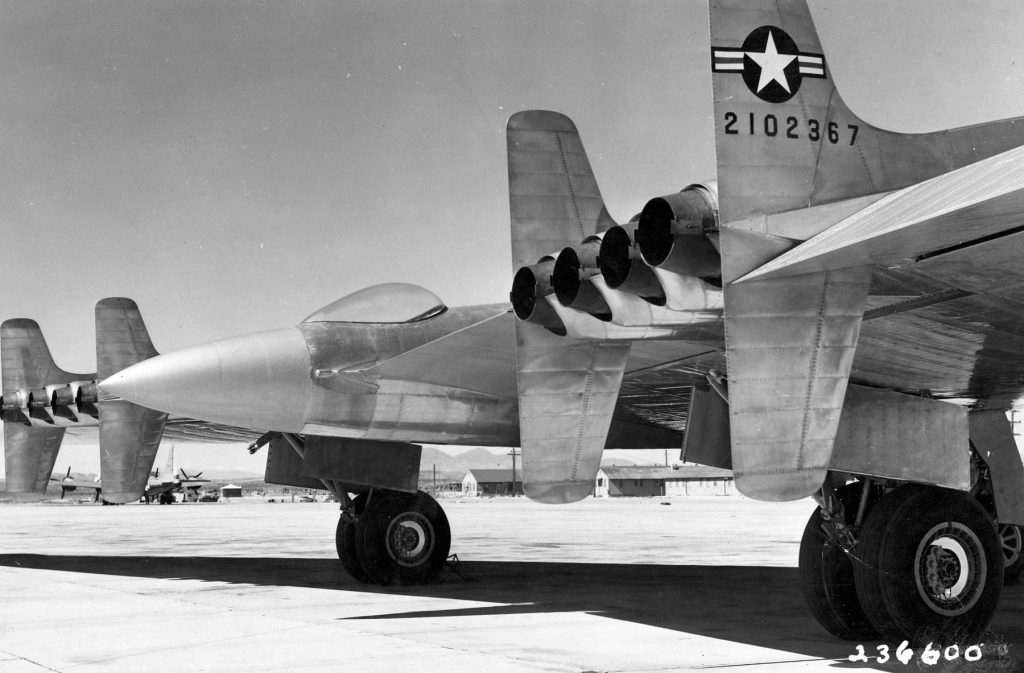
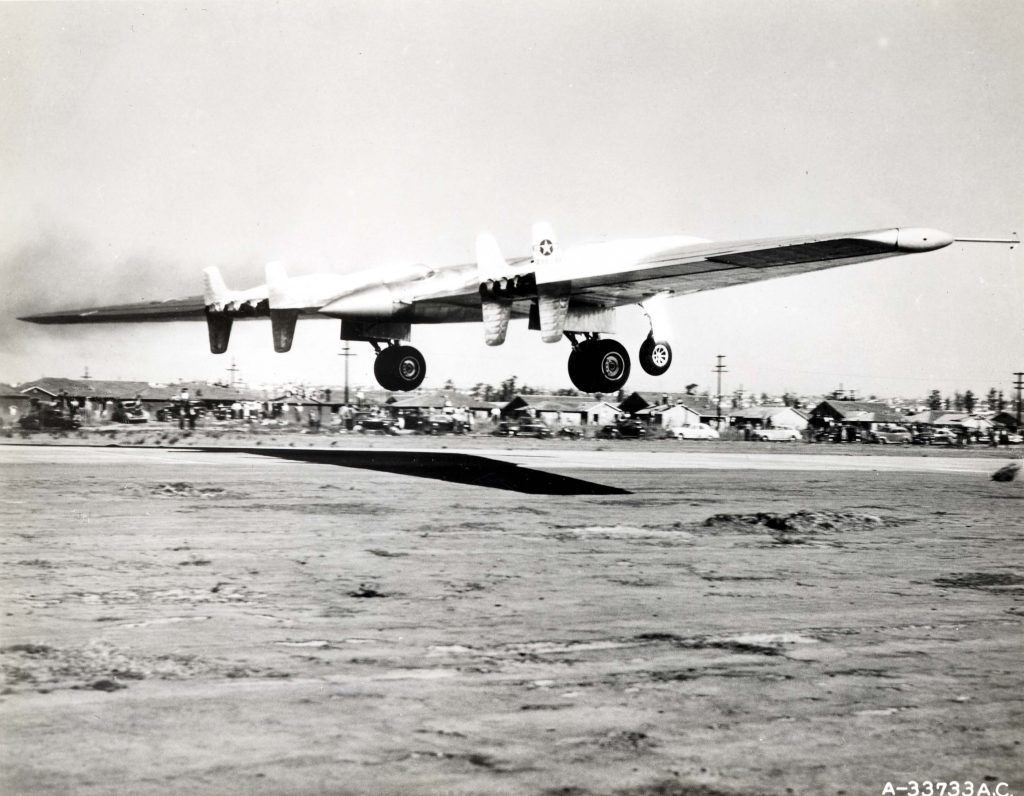
The transformation was extensive as the four Pratt & Whitney R-4360 piston engines were removed and replaced with eight Allison J35 turbojets, each producing 4,000 pounds of thrust. The engines were buried within the wing, exhausting through paired outlets. Four small vertical stabilizers were added, two on each wing, positioned near the exhausts to improve directional stability. Engineers also installed air dams extending forward from the fins to manage airflow over the swept wing, attempting to preserve lift and reduce unwanted aerodynamic effects.
Birth of YB-49
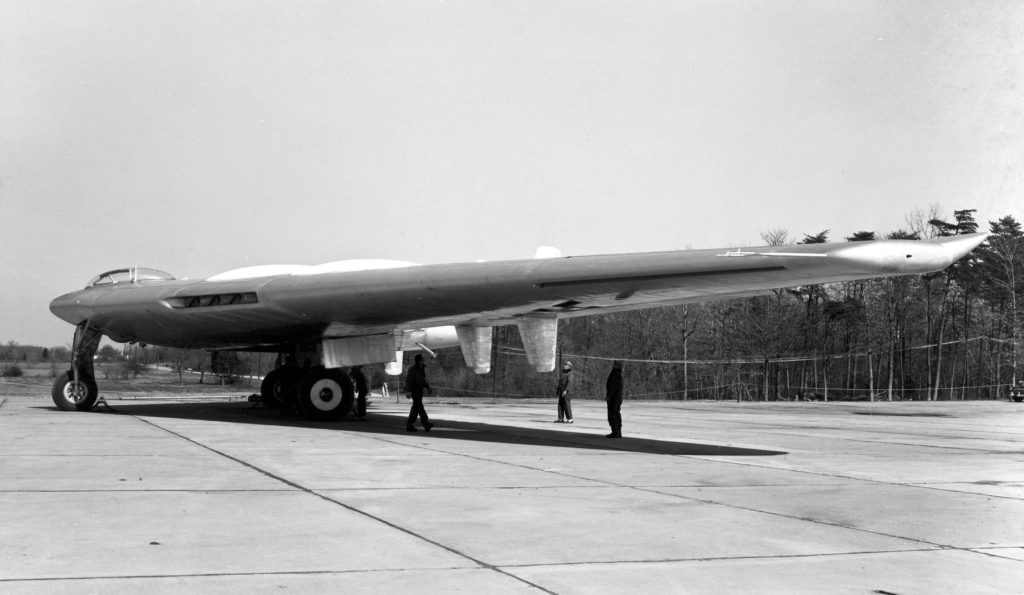
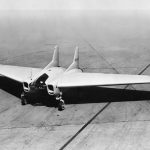
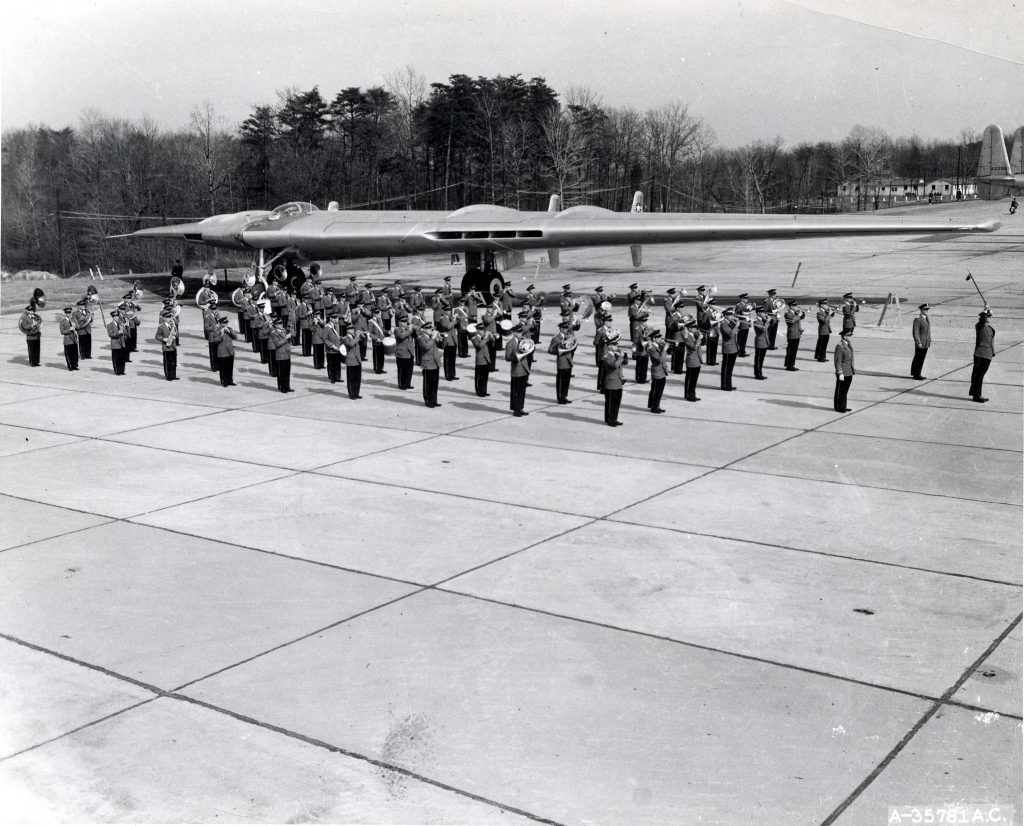
The converted aircraft was known as the YB-49. The first of the two prototypes, serial number 42-102367, was ready by October 1947. On October 21, Northrop’s Chief Test Pilot Max Stanley lifted the aircraft into the California sky from Hawthorne and flew it to Muroc Air Force Base, where most of the Air Force’s high-speed testing was now concentrated. The flight lasted 34 minutes. To observers on the ground, the airplane looked almost like a broad, flat wing with no fuselage projecting forward and no tail rising behind it.
The YB-49 demonstrated impressive performance for its time. It had a wingspan of 172 feet but was only 53 feet long. It was powered by eight turbojet engines and could fly at speeds of about 495 miles per hour, cruising at around 420 mph, and climb to altitudes over 42,000 feet. It was designed to carry bomb loads up to 16,000 pounds and reach distances of up to 4,000 miles. A crew of six worked in a small central area, while the fuel, structure, and machinery were located in the wings. Good performance numbers are important, but they don’t guarantee a bomber’s success. Flight tests showed both promising results and some difficulties. The engines provided speed, but the airframe was originally designed for piston engines, which made the transition less smooth. More importantly, the flying wing design did not have natural stability. Typical bombers use large vertical and horizontal tails to stay stable, while the YB-49 relied on careful design and pilot adjustments.
In smooth air, the aircraft could be handled well. In turbulence, however, it had a tendency to “hunt” (oscillatory yaw motion). During simulated bomb runs, this instability made precise aiming difficult. Pilots reported that the airplane demanded continuous attention. There was little natural tendency for it to settle into trimmed, hands-off flight. In an era before digital flight controls, this was a serious operational concern. The second YB-49, serial number 42-102368, began flying in early 1948. Testing continued with both aircraft through the spring. On June 5, 1948, the second YB-49 broke apart in flight and crashed, killing all five crew members aboard, including Major Daniel H. Forbes Jr. and Captain Glen W. Edwards. The accident cast a long shadow over the program. Later, two Air Force installations would bear their names: Edwards Air Force Base in California and Forbes Air Force Base in Kansas.
Return as B-2
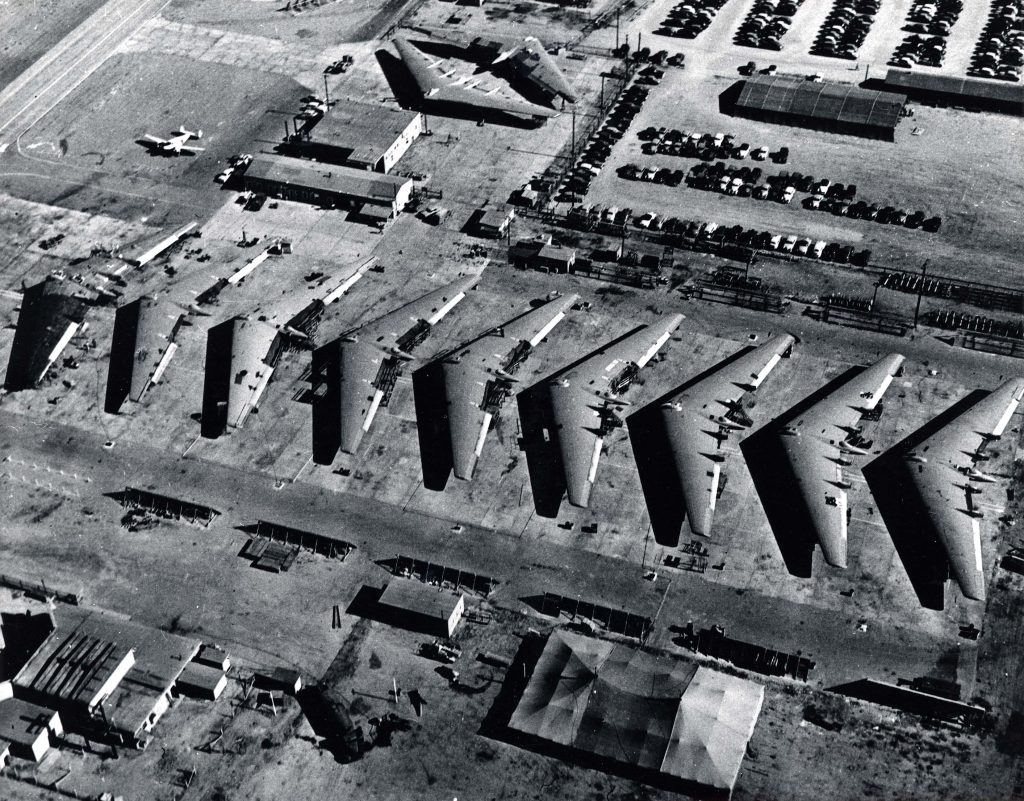
After the crash, testing continued with the remaining aircraft. Engineers installed additional instrumentation to gather more detailed data. Yet the program’s position was weakening. The Air Force was changing its focus to other bomber designs, including simpler swept-wing models and, later, the B-52. Political and budget issues created more confusion. Finally, on March 15, 1950, an Air Force crew was testing the aircraft’s stabilizer response during a high-speed taxi run when the nose wheel began a violent shimmy. Before the aircraft could be brought under control, the nose landing gear collapsed, and the remaining YB-49 broke in two and was destroyed. With that accident, the jet-flying-wing program effectively ended.
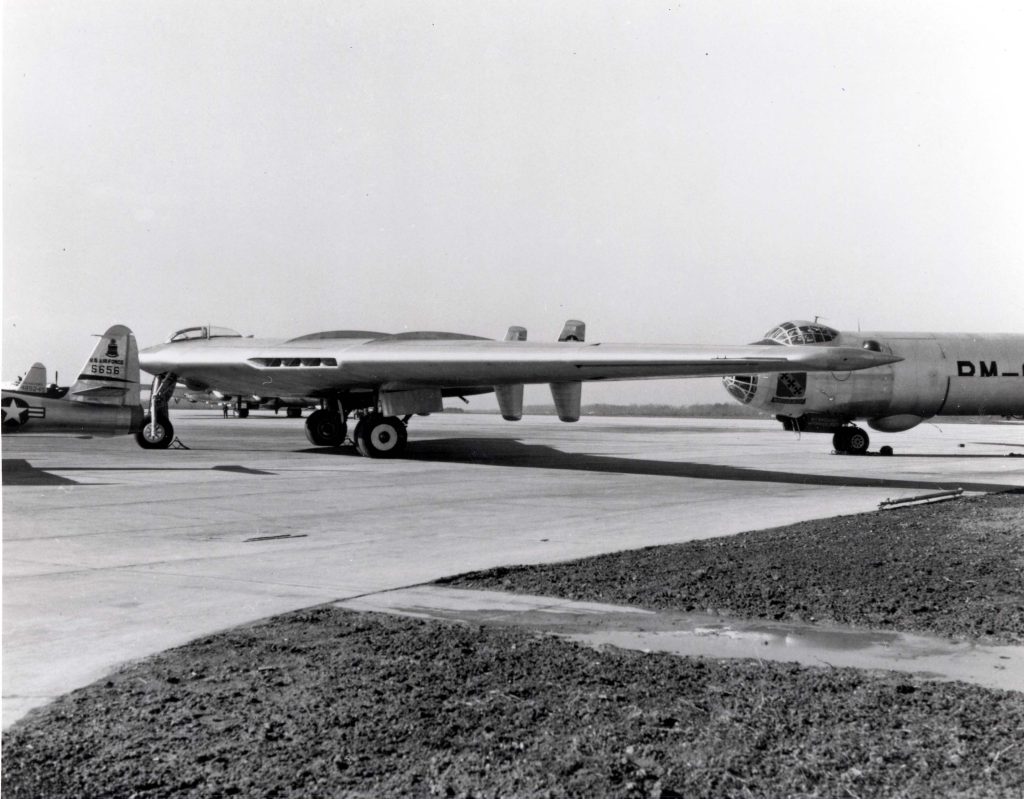
In purely practical terms, the YB-49 had failed to secure production. Only two had flown. Both were lost. The flying wing bomber concept would remain dormant for decades. Yet the idea did not disappear. The YB-49 had demonstrated reduced parasitic drag, high-altitude capability, and, though it was not yet fully understood in operational terms, reduced radar return compared to conventional bombers. What it lacked was a control system capable of managing its inherent instability. In the late 1940s, such control systems did not exist, and pilots were the stability augmentation system. Nearly forty years later, when digital fly-by-wire systems could make constant corrections beyond human capability, Northrop’s concept returned in a new form.
It was none other than the B-2 Spirit that adopted the flying wing layout, not as a compromise but as a foundation for stealth and long-range penetration. Where the YB-49 had struggled with stability, the B-2 would use computers to maintain it invisibly and continuously. The YB-49 never entered service. But it proved that a bomber did not have to look like a bomber. Like many other aircraft in the Grounded Dreams series, the YB-49 was not a failure, but arrived before its time. It demonstrated that a wing alone could support the structure, fuel, engines, and crew; the design reappeared decades later in very different contexts. Read more Grounded Dreams articles HERE.