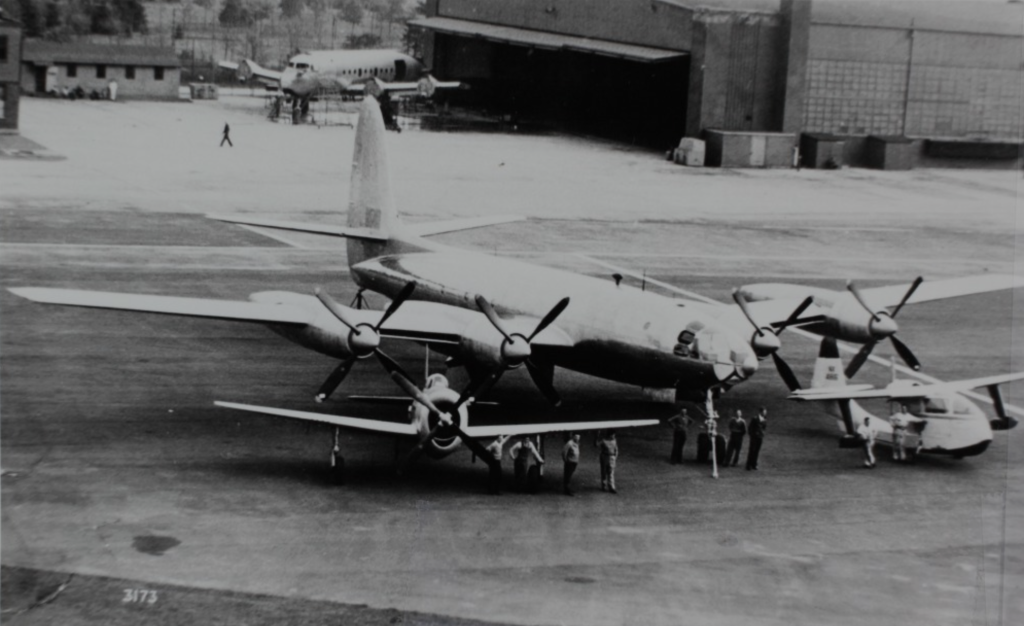

As World War II was nearing an end, aviation engineers pushed piston-engine aircraft to their limits, and a rare aircraft whose job was not to fight but to gather intelligence was born. Known as the Republic XF-12 Rainbow, the aircraft was not built to carry bombs or passengers; its job was to fly higher, farther, and faster to gather intelligence across vast distances quietly. But by the time it proved it could do exactly that, history had already moved on. The XF-12 was born in 1943, when the US Army Air Forces’ (USAAF) existing aircraft were struggling to meet the demands of long-range reconnaissance in the Pacific. As fighters lacked endurance, bombers, which were not suitable for such roles, used to carry unnecessary weight for reconnaissance missions. The USAAF wanted to develop a purpose-built reconnaissance aircraft that could cruise at around 400 miles per hour, reach 40,000 feet, and cover roughly 4,000 miles in a single mission. Republic Aviation answered with the XF-12 Rainbow.
XF-12: A Rare Design
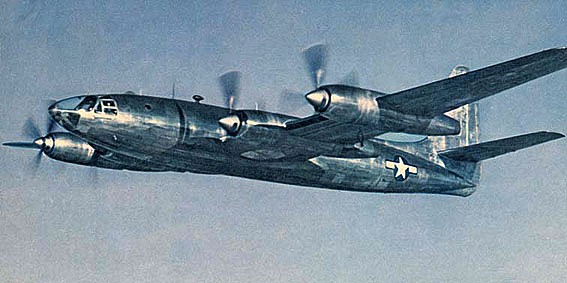
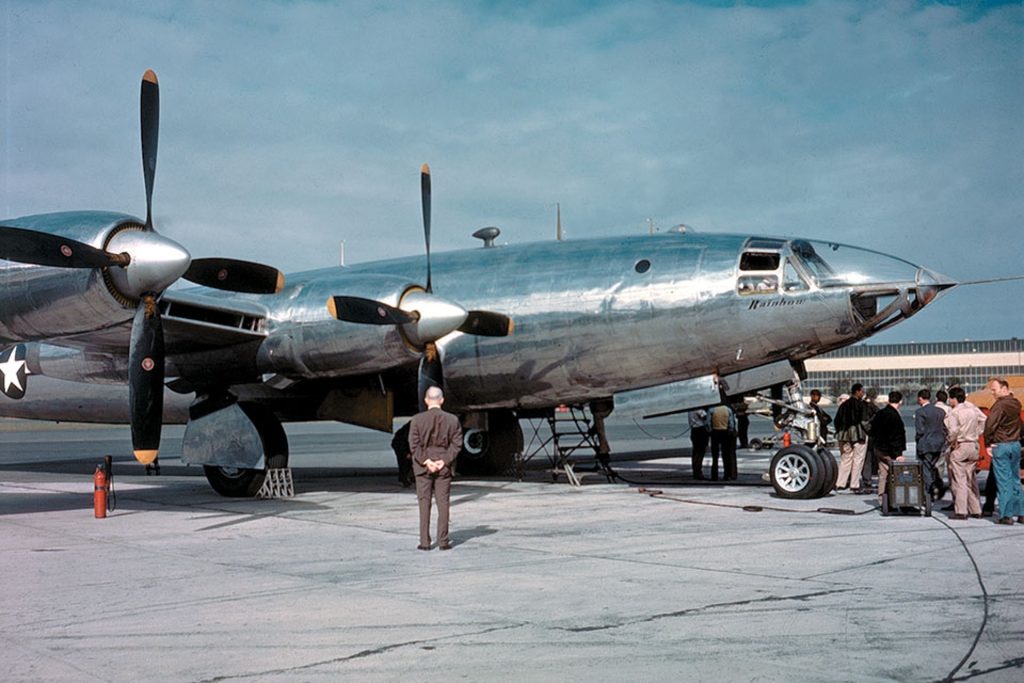
From the beginning, the Rainbow focused on XF-12’s aerodynamic efficiency above all else. Republic’s engineers, drawing on their fighter experience with aircraft like the P-47 Thunderbolt, treated drag as the enemy. As a result, the XF-12’s fuselage was long and almost perfectly cylindrical, capped with a sharp, glazed nose. There were no unnecessary bulges and no awkward transitions. Power came from four Pratt & Whitney R-4360 Wasp Major radial engines, among the most powerful piston engines ever built. Each engine was tightly cowled and heavily refined. Instead of conventional cowl flaps that added drag, the XF-12 used sliding cowl rings and carefully ducted airflow. Cooling air entered through the wing’s leading edge, passed through the oil coolers and intercoolers, and exited towards the tail of the aircraft in a way that actually contributed thrust at cruise. Twin turbochargers sat at the rear of each nacelle, and water-methanol injection was available for short bursts of extra power.
The XF-12’s wing was long and slender, with a high aspect ratio and squared tips, built for efficiency rather than maneuverability. Every detail was added with the mindset of keeping drag low at high speed, and keeping fuel burn reasonable at altitude. In level flight, the XF-12 would become the fastest four-engine piston aircraft ever built, the only one to exceed 450 miles per hour without resorting to jet power. Its reconnaissance capability also matched its performance. Three camera bays sat aft of the wing, housing vertical, split-vertical, and trimetrogon cameras, allowing the aircraft to photograph wide areas in a single pass. For night missions, the XF-12 carried photo-flash bombs to illuminate targets below. Camera lenses were electrically heated to prevent frosting at altitude. In addition, the aircraft carried a complete airborne darkroom. Film could be developed and printed during the flight itself, meaning intelligence could be reviewed almost immediately after landing.
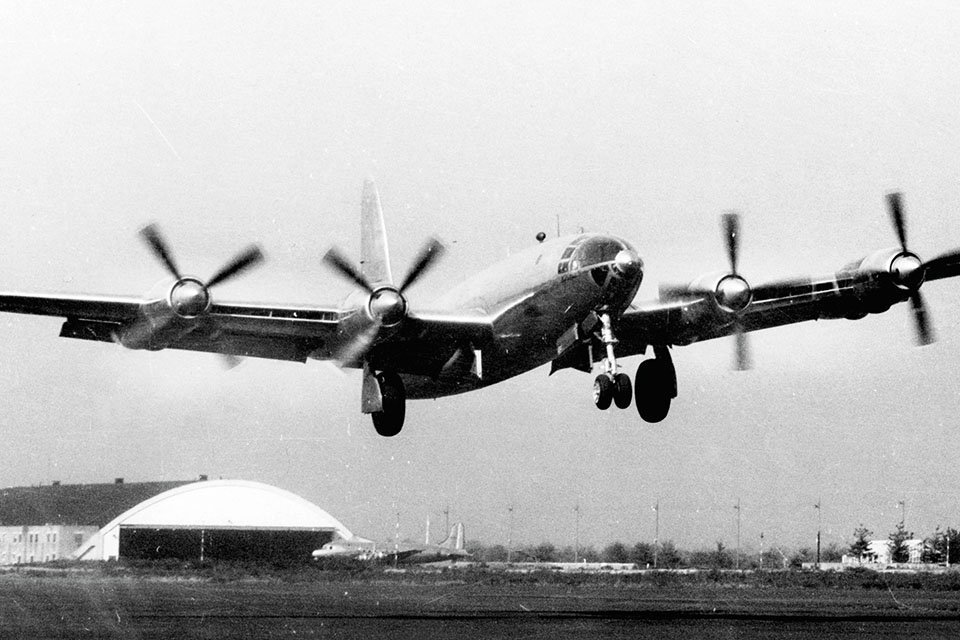
The Rainbow first flew on February 4, 1946, just months after the war had ended. In testing, it reached altitudes of 45,000 feet, achieved speeds approaching 470 miles per hour, and demonstrated a range of roughly 4,500 miles, exceeding nearly every requirement set by the USAAF. However, after World War II, the aviation world was changing rapidly, and the missions for which XF-12 was designed no longer existed. In addition, with the war over, budgets tightened, priorities shifted, and modern platforms such as B-29 and B-50 bombers were deemed sufficient for reconnaissance missions. Later, the attention quickly shifted toward jet aircraft like the Boeing RB-47 Stratojet.
Ended After Achieving a Record
Only two prototypes were built. The first suffered a serious landing accident in July 1947 during maximum-weight testing, when its right main landing gear failed. The test pilot managed to save the aircraft, burning off fuel and bringing it down on the remaining gear, but the damage was extensive. Republic repaired it, and testing continued under the new US Air Force designation, XR-12. The second prototype would make the aircraft’s most famous flight. On September 1, 1948, it departed Muroc Army Air Field in California and climbed to 40,000 feet before turning east. Over the next six hours and fifty-five minutes, it photographed its entire path across the United States, taking one image roughly every minute. The result was a continuous photographic strip more than 325 long, composed of 390 individual photos covering a 490-mile-wide field of vision. The flight appeared in Life magazine later that year. By then, the XF-12 program had already been canceled.
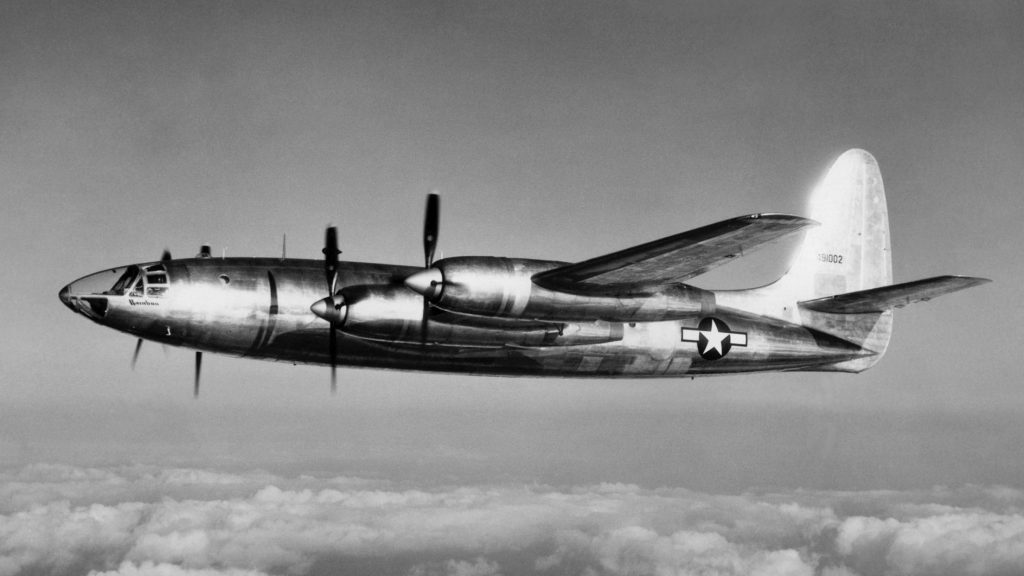
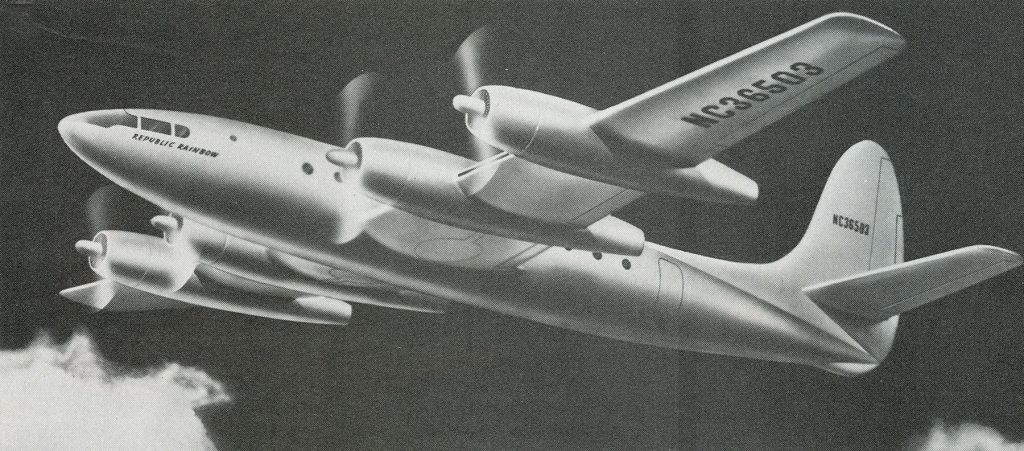
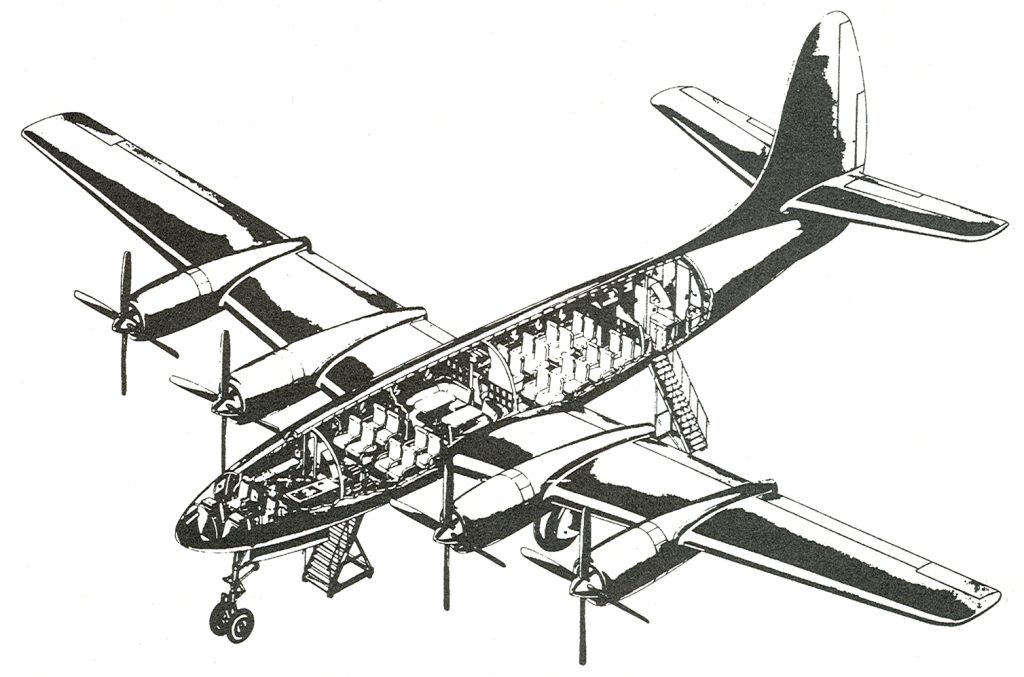
However, tragedy followed, and just weeks later, on November 7, 1948, the second prototype suffered an engine explosion during a test flight, and while most of the crew escaped, two were killed. The loss played a huge role in ending the program, though the surviving aircraft continued limited testing into the early 1950s, accumulating just over a hundred flight hours before being retired and eventually used as a target. Republic also explored a civilian future for the Rainbow in the form of the RC-2 airliner that could carry around 46 passengers. American Airlines and Pan Am expressed tentative interest, but without military orders to absorb development costs, the aircraft was simply too expensive. Cheaper alternatives like the Lockheed Constellation, Douglas DC-6, and surplus wartime transports made the business case impossible, and the RC-2 never left the drawing board.
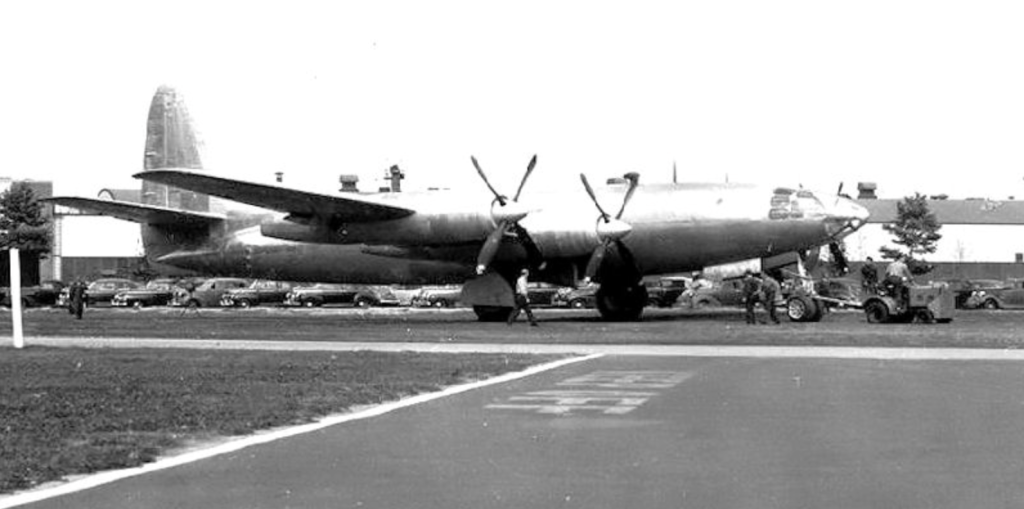
In the end, the Republic XF-12 Rainbow was not a failure of engineering, but it arrived at the wrong time. Like many aircraft remembered in the Grounded Dreams series, the XF-12 never entered service and never found a place in a rapidly changing world. The aircraft was proof that engineering can be technically perfect and still be lost to history. Check our previous entries HERE.