

In the middle years of World War II, speed alone was no longer enough. Designers were beginning to think about survival inside combat, not just reaching it. Bombers were becoming larger, formations tighter, and defensive guns heavier. If fighters could not easily out-climb or out-gun them, perhaps they could out-endure them. Northrop answered it by building a fighter strong enough to survive contact. Jack Northrop had spent years exploring the flying wing, believing that removing the fuselage reduced drag and weight while improving efficiency. By 1942, he proposed a small, compact interceptor built almost entirely as a wing, designated XP-79. The aircraft would be fast, heavily built, and able to attack bombers at very close range. The real intention was to develop a fighter that could survive a collision if one happened during high-speed interception.
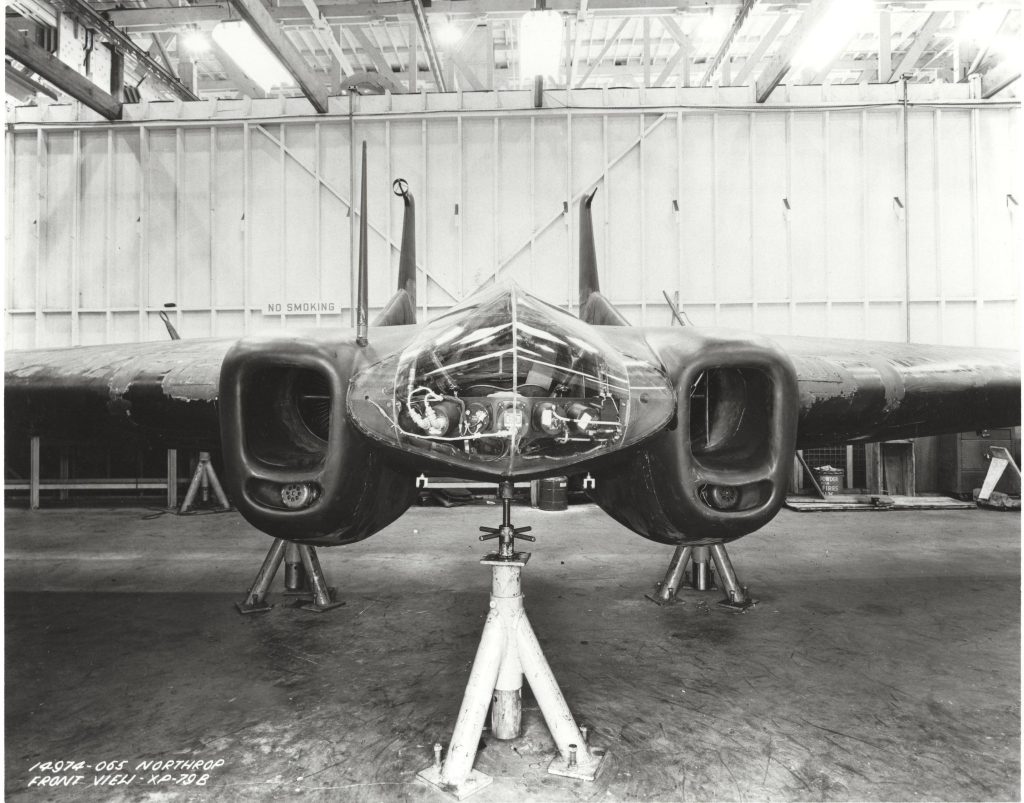
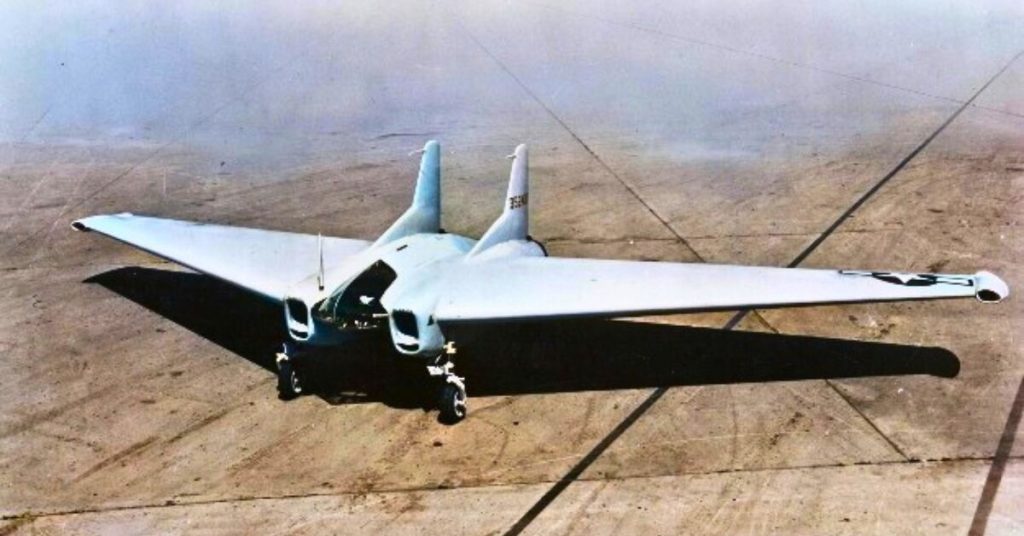
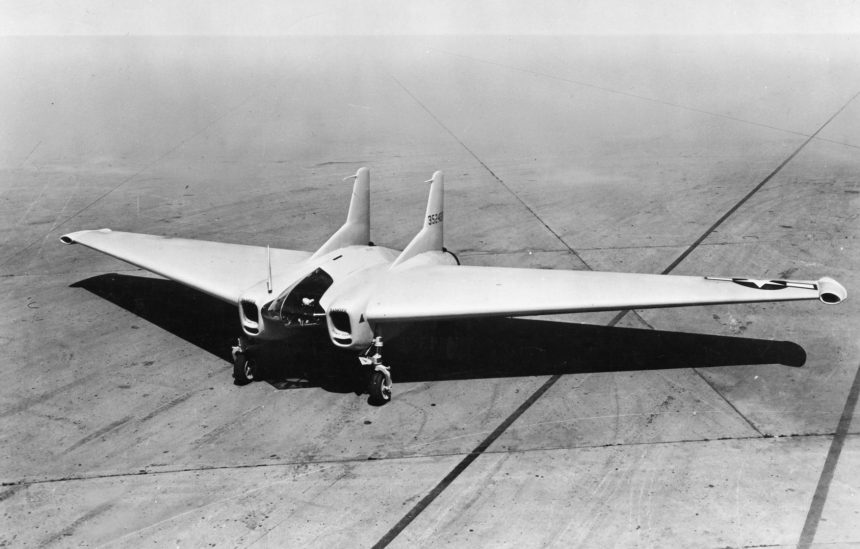
The XP-79, built under U.S. Army Air Forces (USAAF) project number MX-365, was an ambitious design for a flying wing fighter aircraft. It had several unconventional features. The pilot would operate the aircraft from a lying position, permitting the pilot to withstand much greater g-forces in the upward and downward direction with respect to the plane. The structure was equally unconventional. Instead of the familiar riveted aluminum skin, the airframe used a welded magnesium monocoque shell. The leading edge was thick and strong, thinning toward the trailing edge. It formed both structure and armor in one piece, unusual, difficult to manufacture, but very strong for its weight. Control was also different. There was no traditional rudder. Split elevons and airbrakes controlled direction by changing drag across the wing rather than deflecting a tail surface. The aircraft was designed less like an airplane and more like a controlled aerodynamic body.
Evolution of XP-79
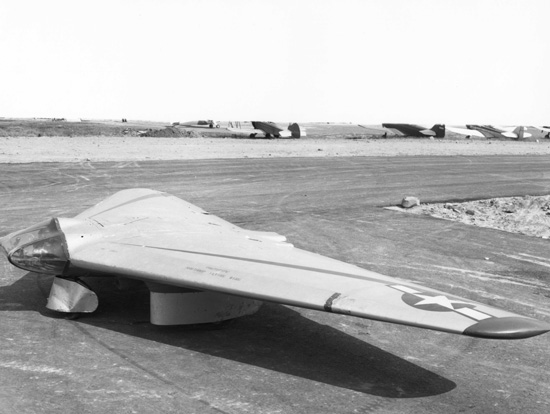
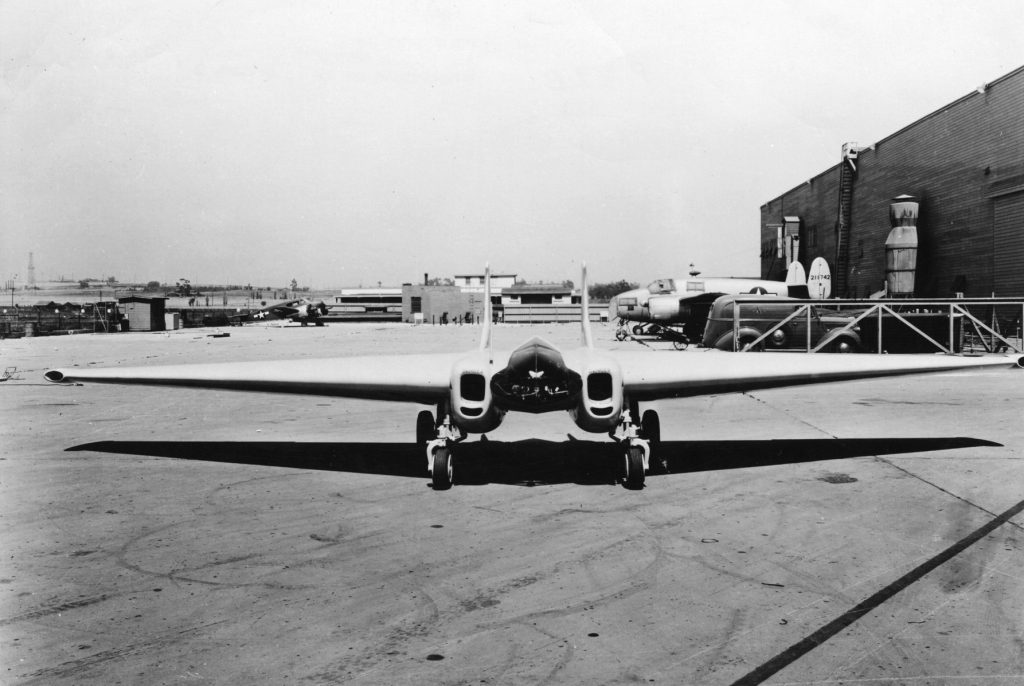
At first, the fighter was meant to use a rocket engine so it could climb quickly toward approaching bombers. But in practice, the rocket system proved difficult to operate, so the design was changed to use two Westinghouse 19B small jet engines instead, each producing 1,150 lb of thrust. This version became the XP-79B. The XP-79B’s flying wing measured just under 38 feet across with a length of about 14 feet and stood a little over 7.5 feet high. The empty weight of the aircraft was roughly 5,800 pounds, and 8,700 pounds when fully loaded. It could carry about 300 gallons of fuel inside the wing structure. Northrop expected a maximum speed of about 525 miles per hour, a service ceiling of roughly 40,000 feet, and a climb rate of 6,000 feet per minute. The aircraft was envisioned to be armed with four .50-caliber Browning M2 machine guns mounted in the wings.
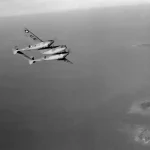
Before building the fighter, Northrop tested the idea step by step. Small experimental gliders called MX-334 began flying in 1943. The early trials were even towed across the dry lakebed behind trucks, and later behind a Lockheed P-38. The aircraft showed potential, but also clear handling problems, especially keeping direction at higher speeds. Engineers added larger fins and kept refining the design, even after one glider was lost. In 1944, the advanced MX-324 finally flew using the 9.120 kN (2,050 lbf) Aerojet XCAL-200 rocket engine. It became the first American rocket-powered aircraft to fly under its own power. The flights were short, but they proved that the flying wing could be flown and controlled.
The Final Flight
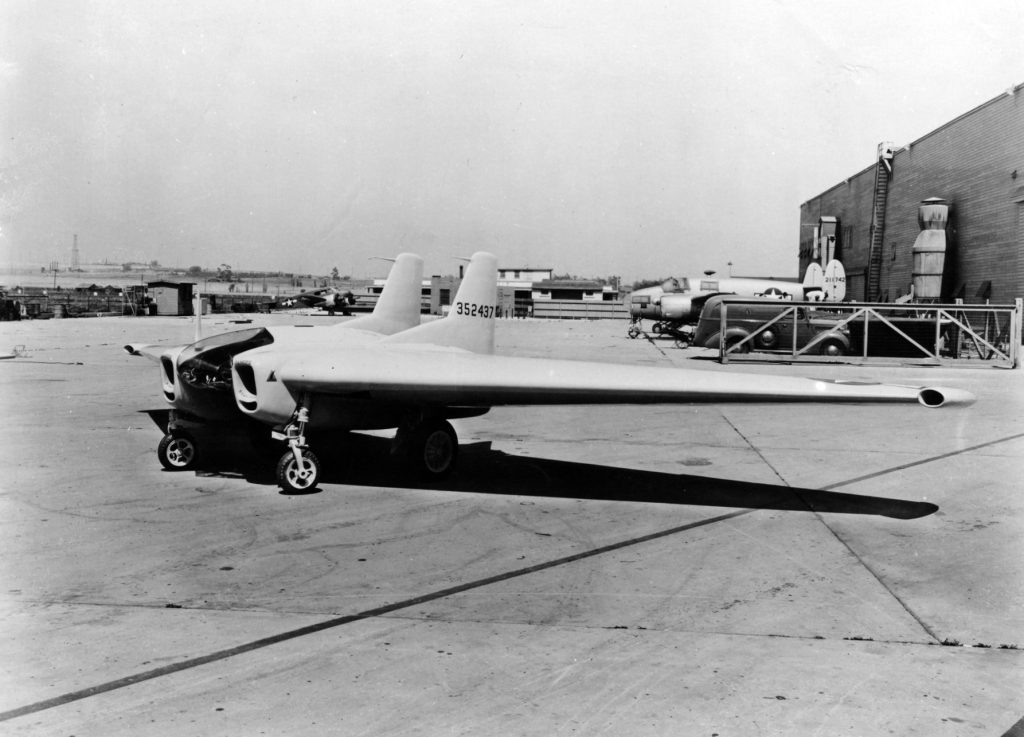
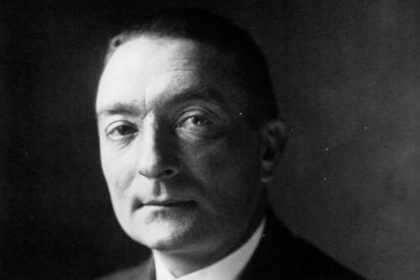
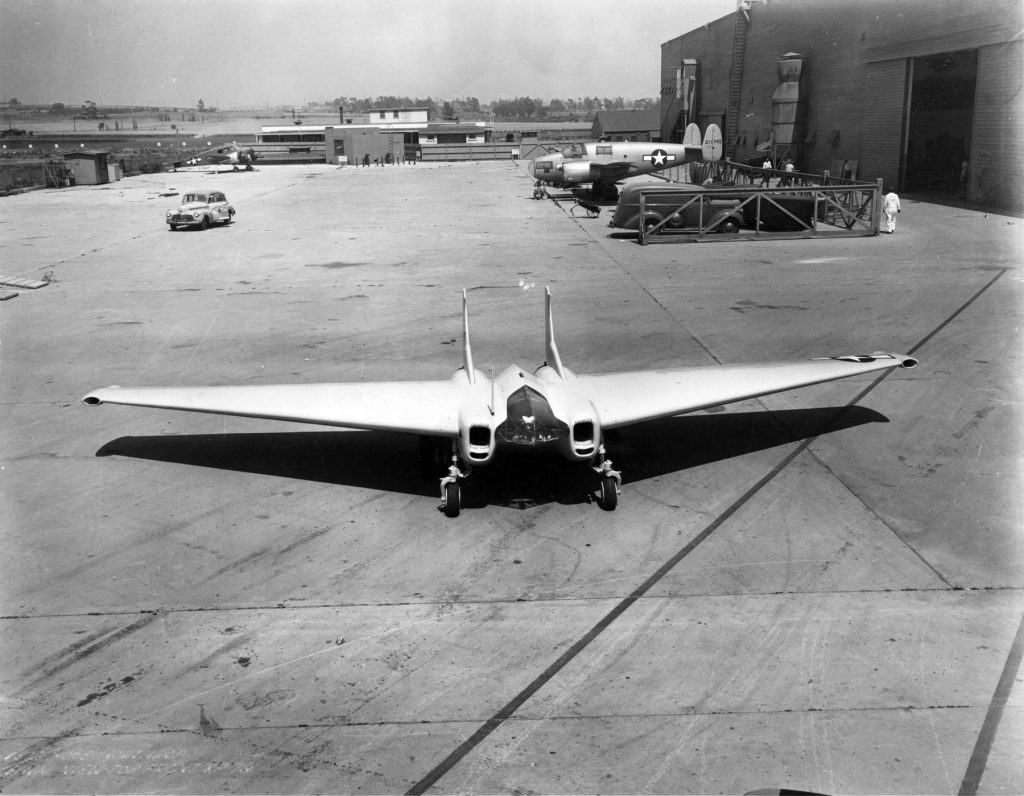
By late 1945, the war was ending, but the XP-79B was ready. Taxi trials at Muroc Dry Lake were delayed by brake and tire problems. On 12 September 1945, test pilot Harry Crosby took the aircraft into the air for the first time. Fifteen minutes into the flight, while performing a slow roll, the aircraft suddenly lost control, and the nose dropped. The roll tightened into a vertical spin. Crosby attempted to escape, but the aircraft struck him as he left the cockpit. The XP-79B hit the ground and was destroyed. The cause was never fully determined. Work on the second prototype stopped almost immediately. By then, the war had ended, and jet fighters were advancing rapidly. Conventional aircraft were already approaching the performance the XP-79 hoped to achieve, but without its complexity or risk.
The idea behind the aircraft, a close-range bomber interceptor designed around structural strength, no longer fits the emerging air combat doctrine. Speed, radar, guided weapons, and high-altitude interception were replacing close-quarters engagements. Fighters no longer needed to survive contact; they needed to avoid it. In the end, the program did not fail because of a bad idea. It failed because technology was evolving rapidly. The problems once considered real had suddenly disappeared. The aircraft had been carefully tested and thoughtfully engineered. Like many other aircraft in the Grounded Dreams series, the aviation world chose to distance itself from XP-79, even though the aircraft wanted to provide the safest place for a fighter. Check our previous entries HERE.