






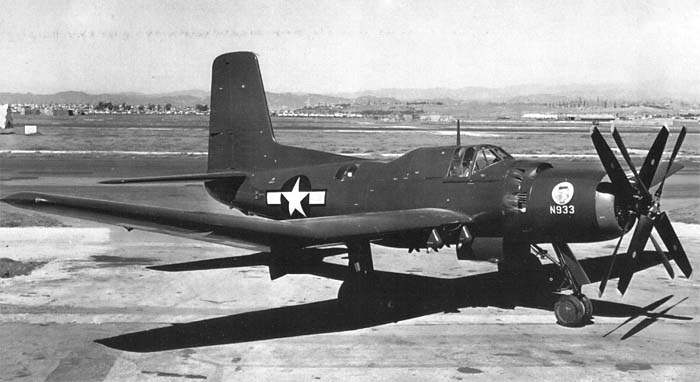

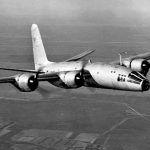
In the late 1930s, the U.S. Navy needed a new torpedo bomber to replace its TBD Devastator bombers. The new bombers were intended for use on the U.S. Navy’s Essex-class and the upcoming Midway aircraft carriers. As a result, in 1939, designers at Douglas began developing a new aircraft, and by 1942, they launched a new project called the “Devastator II.” On October 31, 1943, just four days after the order for the large Midway-class aircraft carriers was placed, Douglas received a contract for two prototypes, designated XTB2D Skypirate. Douglas completed development of the first Skypirate prototype by 1945, and it flew for the first time in March of that year. With a crew of three, the XTB2D Skypirate was 46 feet long, 22.7 feet high, with a wingspan of 70 feet and a wing area of 605 square feet. Its empty weight was 18,405 pounds, its gross weight was 28,545 pounds, and its maximum takeoff weight was 34,760 pounds. The fuel capacity of the aircraft varied depending on the mission. For a torpedo bomber mission, the aircraft could carry 320 US gallons in the fuselage tank. For a bomber mission, it could hold 501 US gallons, and in an overload scout mission, the fuel capacity was the same 501 US gallons, but also had provisions for an additional 273 US gallons in wing tanks, and two drop-tanks with 300 US gallons each.
Design of Douglas XTB2D Skypirate
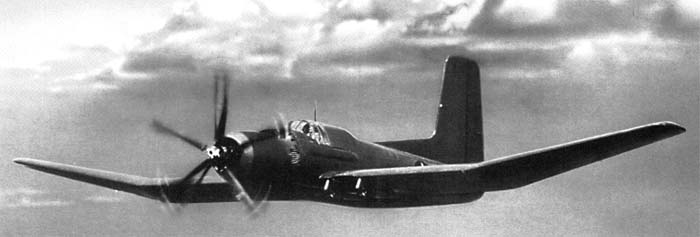
The Douglas XTB2D Skypirate was powered by a Pratt & Whitney R-4360-8 Wasp Major, a 28-cylinder, four-row, air-cooled radial piston engine that produced 3,000 horsepower. It had an eight-bladed Hamilton-Standard propeller with a Super Hydromatic design and contra-rotating, fully-feathering capabilities. The front propeller was 14.1 feet in diameter, while the rear propeller was 14.3 feet in diameter. The Douglas XTB2D Skypirate was the largest carrier-based aircraft of its time and could carry four times the weapons of the Grumman TBF Avenger. The maximum speed of the aircraft was 340 mph at 15,600 feet, with a cruise speed of 168 mph and a range of 1,250 miles. The ferry range of the Douglas XTB2D Skypirate was 2,880 miles, the service ceiling was 24,500 feet, and the rate of climb was 1,390 feet per minute. The aircraft could carry seven machine guns, including four .50-caliber guns mounted on the wings, two in the dorsal turret, and one in the ventral bath. It could also carry 8,400 pounds of bombs or four torpedoes. The XTB2D Skypirate faced challenges from the start due to limited support from the U.S. Navy.
The Cancellation
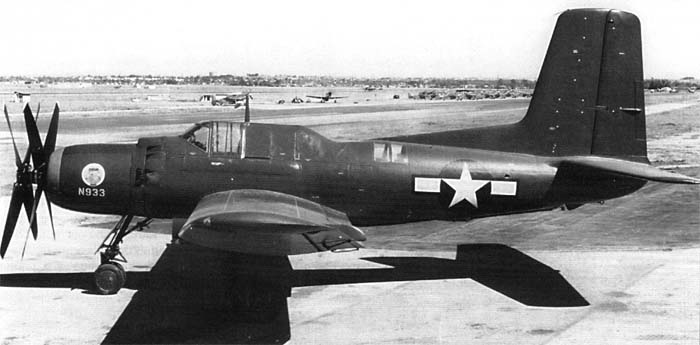
On May 20, 1944, a recommendation was made to cancel the project because the aircraft was designed only for large aircraft carriers, but the work continued. The second prototype had a 58 cm longer fuselage and flew in the summer of 1945. Both prototypes were flown for testing without any weapons. Although the flying tests stayed on schedule, the collapse of Japanese forces in the Pacific and delays with the Midway aircraft carrier led to the cancellation of the Douglas XTB2D Skypirate. As a result, the 23 pre-production aircraft ordered were also canceled. Moreover, the role of dedicated torpedo bombers became outdated after WWII ended, as advancements in aviation technology allowed multi-role fighter-bombers to take over this task. In the Grounded Dreams series, despite its impressive performance, the Douglas XTB2D Skypirate was canceled, and both of its prototypes were scrapped. The Douglas XTB2D Skypirate was not a bad aircraft, but there were no clear policies around its development that led to the abandonment of what could have been a “Devastator II.” Read more Grounded Dreams articles HERE.
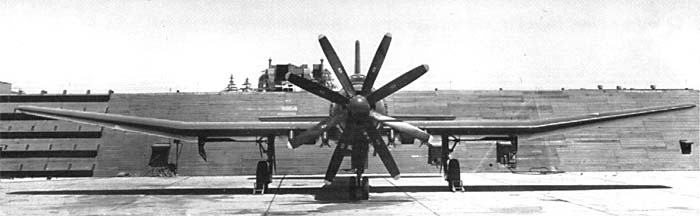


This aircraft was intended to fly from the Midway Class of “CVBs”, Aircraft Carrier Large, but, it was too big to fly from the Essex Class fleet carriers.