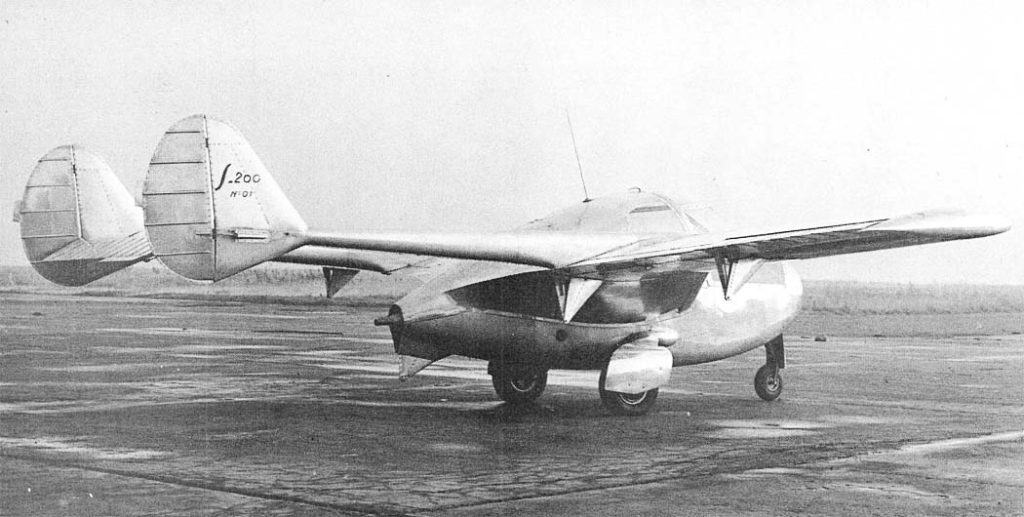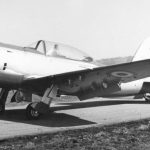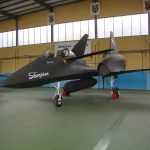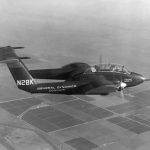
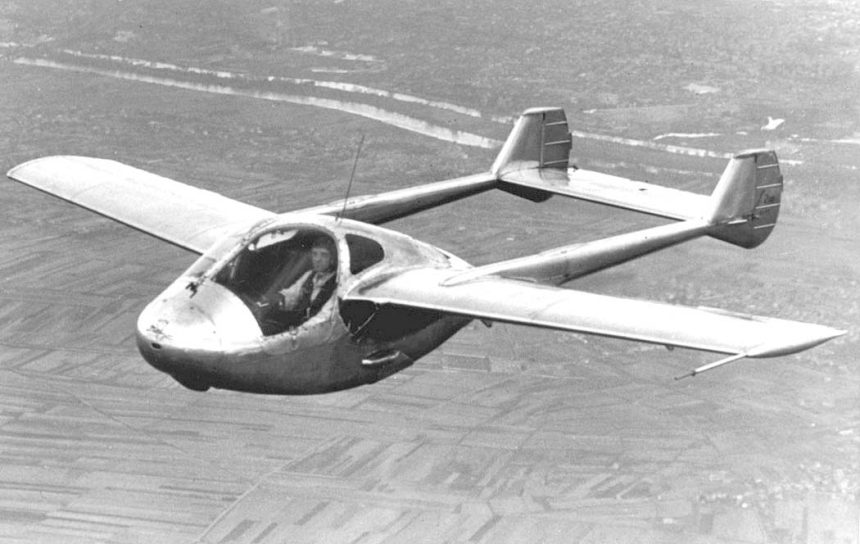


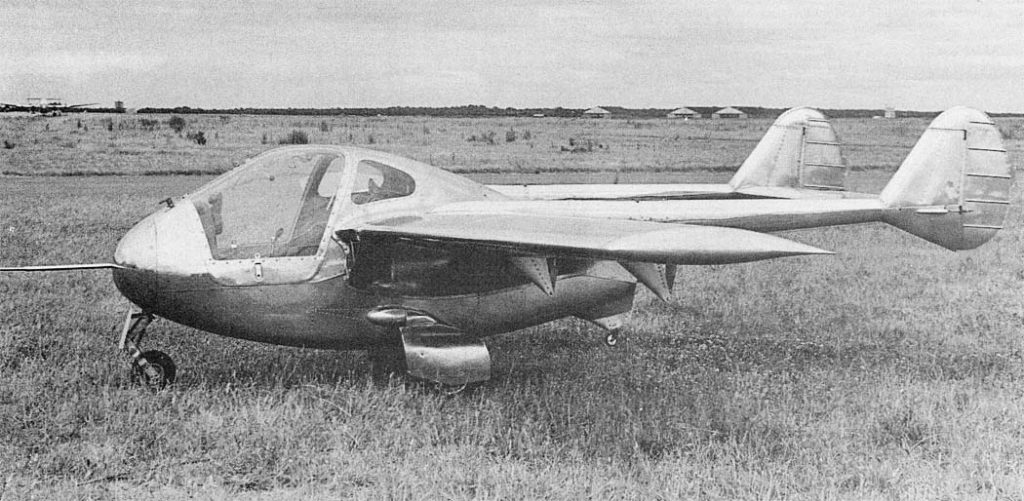
In the early 1950s, a French aircraft manufacturer Société Industrielle Pour l’Aéronautique (SIPA) designed what it described as the world’s first civilian “light jet-powered aircraft.” The aircraft, designated SIPA S.200 Minijet, was designed for touring and acrobatics. The development was initiated in February 1951, and SIPA unveiled the first prototype of Minijet at the 1951 Paris Air Show to generate some interest. The first of the two prototypes that SIPA developed had its maiden flight on January 14, 1952. In addition to two prototypes, a pre-production batch of five SIPA S.200 Minijets was also built. The SIPA S.200 Minijet featured a shoulder-wing with twin booms that held the vertical stabilizers, along with a tailplane connecting the two booms. The setup was similar to that of the de Havilland Vampire, a jet-powered fighter from the 1940s. The Minijet was fitted with a compact cabin in the central fuselage, where two people could sit side by side. The canopy opened forward to access the small cabin, and the entry was provided by large gull-wing doors on either side of the fuselage. Starting with the second prototype, the Minijet included attachment points for auxiliary wingtip fuel tanks that each held 15 gallons. The internal fuel tanks, located in each wing and feeding into a central tank, held only 55 gallons, limiting the aircraft’s range.
Design of SIPA S.200 Minijet
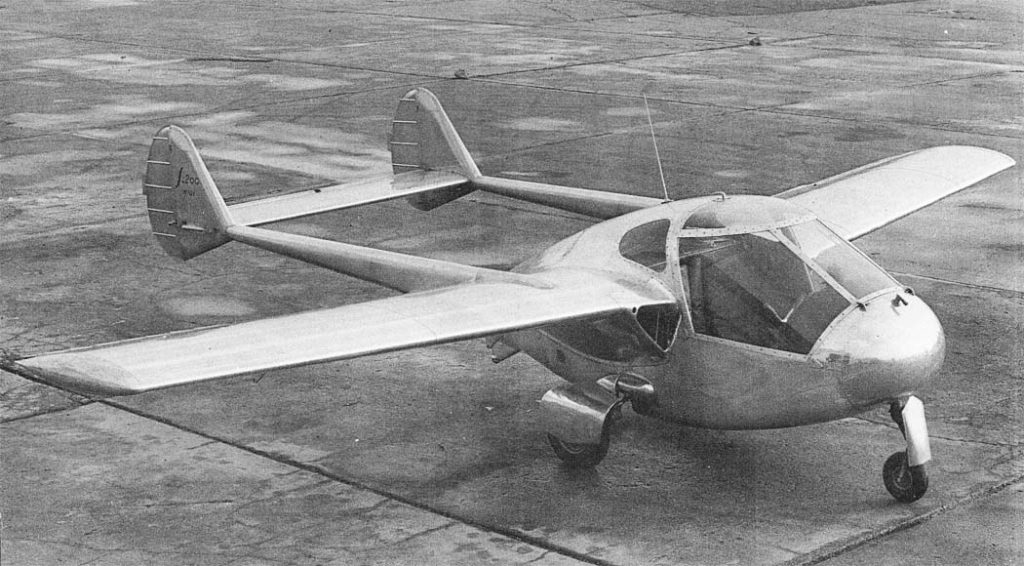
The SIPA S.200 Minijet had wings fitted with special flaps called double-slotted, hydraulically actuated Fowler flaps. These flaps extended to 12 degrees for takeoff and were controlled by a unique H-style lever on the console. During flight, the lever also raised and lowered the flaps and operated the landing gear. The cockpit controls were inspired by modern trainers and fighter aircraft, where each pilot could control the stick with their right hand and the throttle with their left. The Minijet was reportedly easy to maneuver in the air and had enjoyable flight controls. The Minijet was built to handle aerobatic maneuvers and withstand up to 9Gs, but it was not approved for snap rolls. It could fly upside down for up to 20 seconds. Justifying its name, the SIPA S.200 Minijet was 17 feet long, 5 feet high, with a wingspan of 26.3 feet, and a wing area of 104 square feet. The empty weight of the aircraft was 1,153 pounds, and the gross weight was 1,940 pounds. The aircraft was powered by a Turbomeca Palas turbojet engine that produced 330 pounds of thrust. The small engine meant the Minijet had limited power, resulting in a low thrust-to-weight ratio. The engine was located just behind the cabin, and the cabin’s rear served as a firewall. Airflow to the engine came from two air intakes, one in each wing root. To prevent the engine from hitting the runway during landing, a tail skid was mounted below the engine exhaust. The maximum speed of the SIPA S.200 Minijet was 248 mph, with a cruise speed of 223 mph. The range of the aircraft was 350 miles without tip-tanks, the service ceiling was 26,000 feet, and the aircraft could climb at a rate of 1,140 feet per minute.
The Cancellation
In testing, the pilots were impressed by its performance, with some describing it as easy to maneuver. Featuring responsive flight controls, the SIPA S.200 Minijet was considered a stable and enjoyable aircraft to fly. The aircraft’s speed was also good for a light jet at the time. However, a small engine with limited thrust made it difficult to climb, and its low fuel capacity limited its range. In most respects, the SIPA S.200 Minijet was a jet-powered light aircraft that was advanced for its time. However, it did not enter mass production due to its underpowered engine, and demand was not strong in the 1950s. Later, modified versions with more powerful engines showed much better performance, including the ability to climb at 8,000 feet per minute. However, plans to build additional batches were postponed and eventually canceled due to a decline in the general aviation sector, which further reduced its interest in the Minijet and hurt its sales. In 1993, a broker from California found a SIPA S.200 Minijet stored in Florida. He replaced its engine with a General Electric T58, which provides 800 pounds of thrust, an increase of 142 percent over the original Turbomeca Palas engine. The last production Minijet, F-PDHE, still exists today. The Bezard Collection currently owns it at Persan-Beaumont Airport, northwest of Paris. In the Grounded Dreams series, the SIPA S.200 Minijet stands as an aircraft ahead of its time, and was ultimately a victim of slow aviation times when companies were looking to maximize profits rather than offer personal journeys. Read more Grounded Dreams articles HERE.