

In the early 1960s, the US military was looking for a vertical takeoff and landing (VTOL) aircraft for transport missions that could travel faster and longer than helicopters. The idea was to transport troops and supplies rapidly into unprepared areas. All U.S. military services, the U.S. Army, U.S. Air Force, U.S. Navy, and U.S. Marine Corps, came together to launch the Tri-Service Assault Transport Program in 1961 to develop a new VTOL aircraft. The initial plan was to create a new aircraft to replace the Sikorsky HR2S, designed to carry a payload of about 10,000 pounds. Later, the specifications were updated, while maintaining the same payload but increasing the operational range to 250 miles. The services also raised the cruising speed to 280 to 300 mph and the maximum speed to 350 to 450 mph. However, for the Marine Corps, the requirement stated that the fuel load could be reduced so the total weight would stay under 35,000 pounds, as long as the aircraft could still operate within a 100-nautical-mile radius.
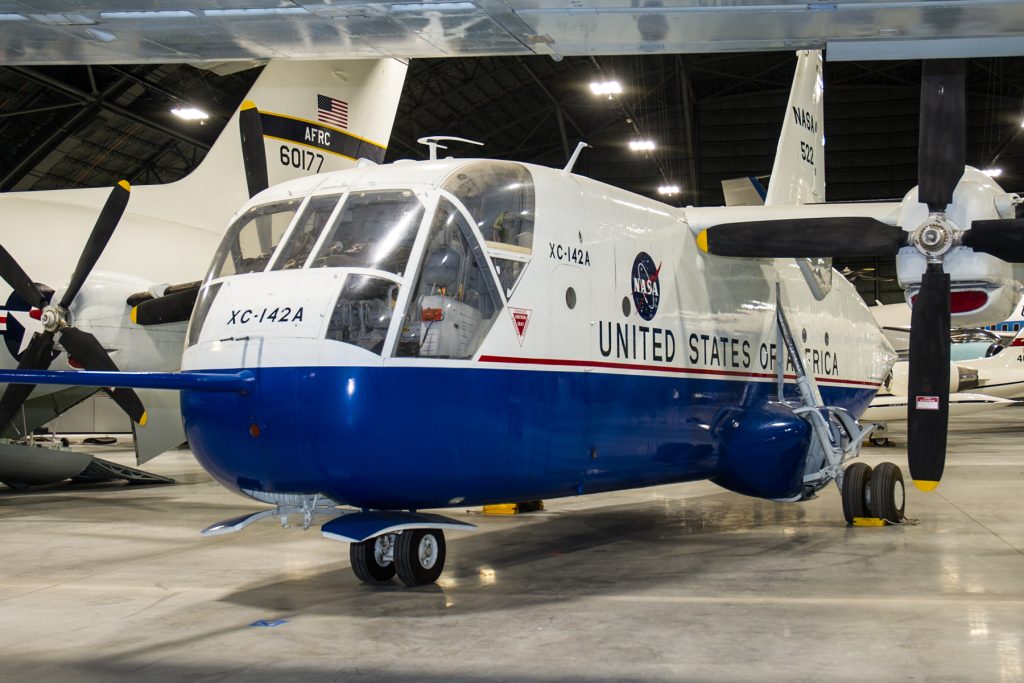
In response to the program, Vought proposed its tilt-wing XC-142 aircraft. In 1962, the proposal won the competition, and Vought was awarded a contract to develop five XC-142 prototypes. At the time, Vought joined a conglomerate and became Ling-Temco-Vought (LTV), and the aircraft was renamed LTV XC-142. However, as the prototypes were being developed, the U.S. Navy decided to withdraw from the program, as the service was concerned that the strong airflow from the propellers would make it difficult to operate. The C-142 was expected to have a ground pressure of 10 psi, higher than the U.S. Navy’s HR2S helicopter’s 7.5 psi, causing issues such as blowing people around and stirring up significant debris. The Navy believed the LTV XC-142 would limit its operations to only prepared landing pads, making it unsuitable for assault missions. However, the development of the LTV XC-142 continued for other services, and the aircraft first flew on September 29, 1964, on a conventional flight.
Design of LTV XC-142
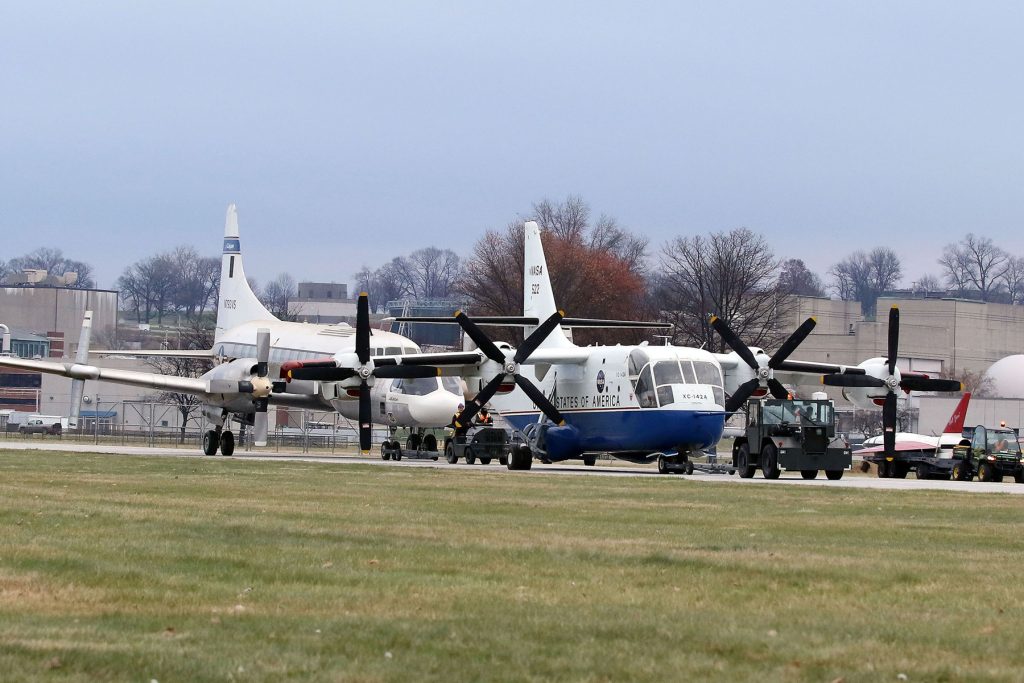
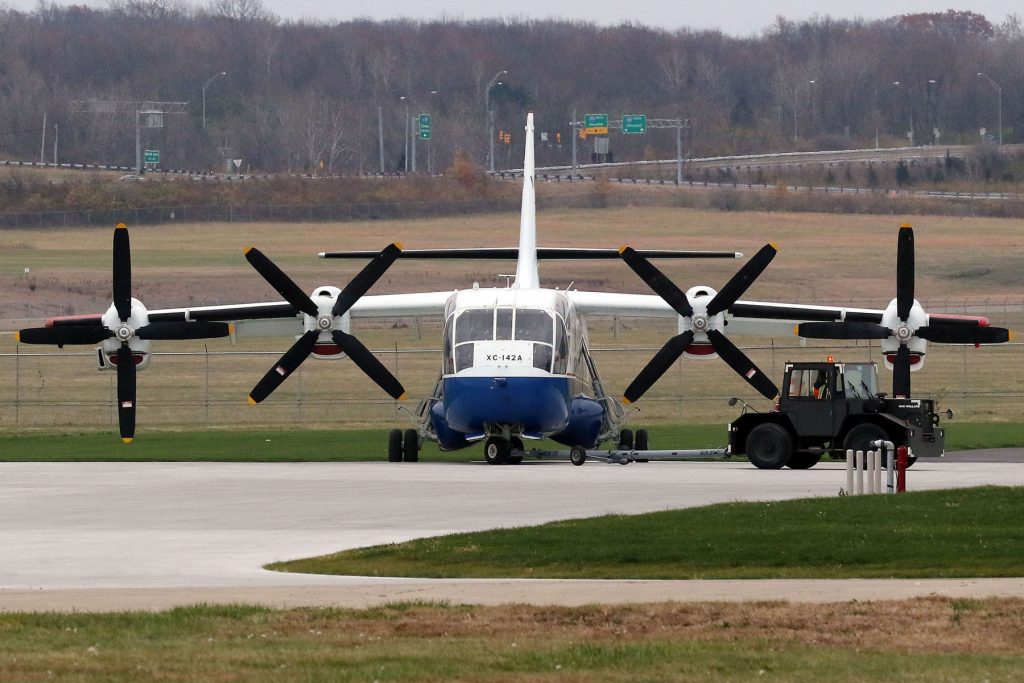
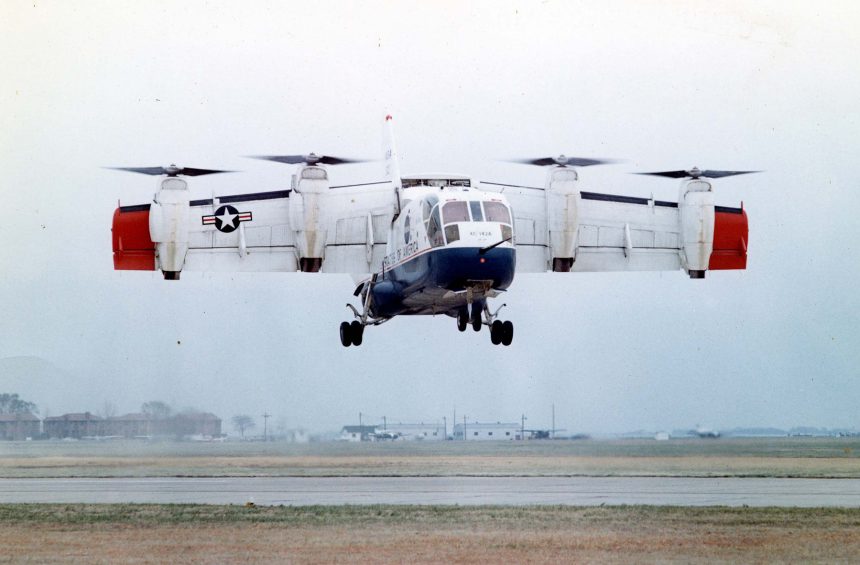
With a crew of two, the aircraft could carry 32 equipped troops, 24 stretcher patients with four attendants, or 8,000 pounds of cargo. The LTV XC-142 was 58 feet long, 26 feet high, with a wingspan of 67.6 feet and a wing area of 534.5 square feet. Its empty weight was 22,595 pounds, the gross weight was 34,474 pounds, and the maximum takeoff weight was 44,500 pounds. The aircraft had a fuel capacity of 1,400 US gallons, which provided it with a combat range of 230-470 miles, depending on speed and altitude, and a ferry range of 3,800 miles. The LTV XC-142 was powered by four General Electric T64-GE-1 turboprop engines, each producing 3,080 horsepower. The LTV XC-142 was equipped with four main 15.5-foot-diameter, four-bladed Hamilton Standard variable-pitch propellers, each driven by an engine. Additionally, it had a separate, horizontal 8-foot three-bladed tail rotor used for pitch control during vertical hover.
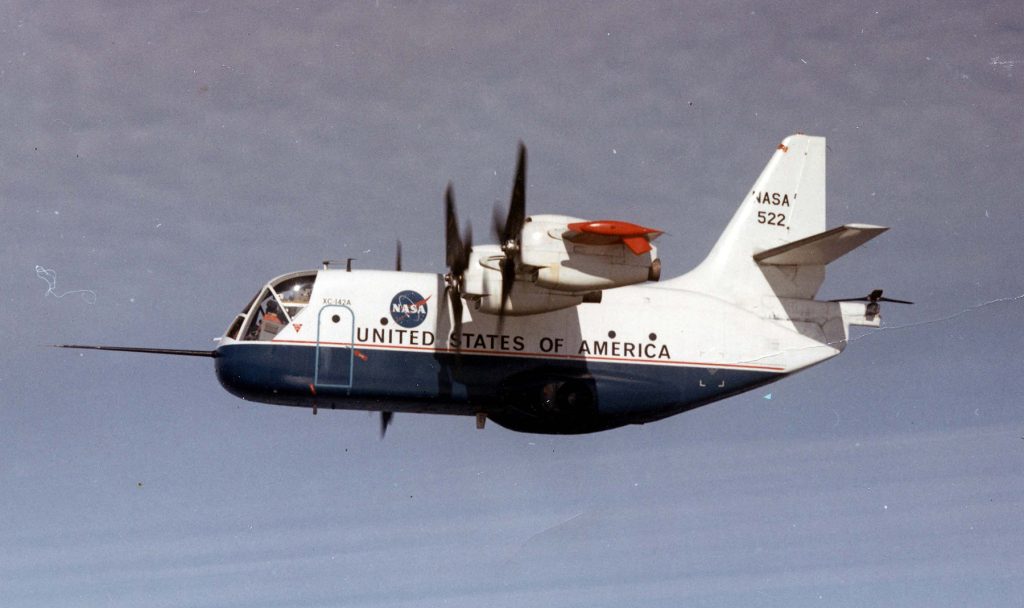
The maximum speed of the LTV XC-142 was 431 mph at 20,000 feet, with a cruise speed of 288 mph at sea level. The service ceiling was 25,000 feet, and the aircraft could climb 6,800 feet per minute. The aircraft had a high-mounted wing and cruciform tail, keeping the rear area clear for loading. It used tricycle landing gear, with the main legs tucking into blisters on the sides of the fuselage. When parked normally, it looked like a standard cargo plane. For VTOL operations, the aircraft could tilt its wing to vertical and, to control roll while hovering, it used different propeller speeds, while yaw was controlled by the ailerons in the wind. For pitch control, there was a separate tail rotor that lifted the tail, unlike traditional helicopter vertical rotors. When on the ground, the tail rotor folded against the tail to prevent damage during loading. The wing could rotate up to 100 degrees, past vertical, to hover in a tailwind. The LTV XC-142 flew its first hover on December 29, 1964, and made its first transition flight on January 11, 1965.
The Cancellation
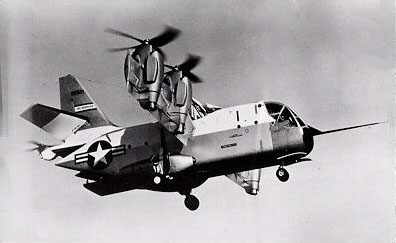
The U.S. Air Force received the first LTV XC-142 in July 1965 for testing. The aircraft was tested in various scenarios, including paratroop drops, carrier operations, simulated rescues, and cargo extraction. Though the LTV XC-142 performed well overall, its driveshaft was unstable, producing excessive vibration and noise levels. Problems with the driveshaft, along with operator error, led to several hard landings, causing damage. One crash resulted from a failure of the driveshaft connected to the tail rotor, leading to three fatalities. The LTV XC-142 also had a problem with stability when its wings were at angles between 35 and 80 degrees, particularly at low altitudes. As a result, in 1966, the US Air Force proposed a modified C-142B version of the aircraft. The new LTV XC-142 version was envisaged to be a lighter aircraft with a streamlined cockpit, a larger fuselage, and improved engines.
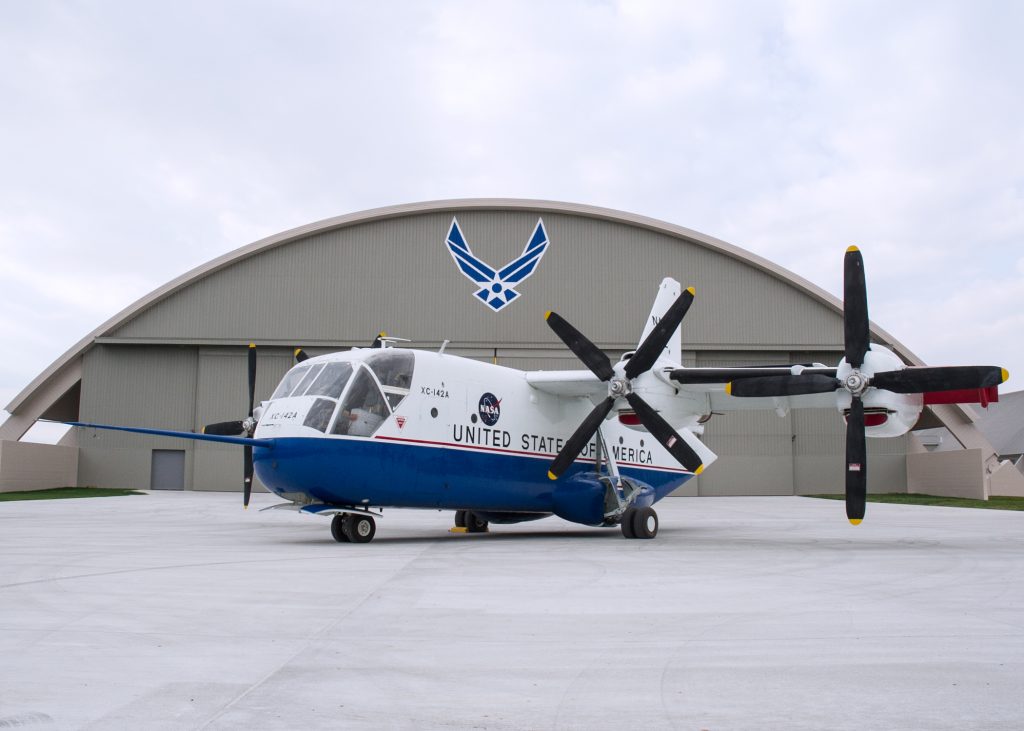
However, the program was canceled in 1967 after the tri-service management team did not support the development of the US Air Force’s modified LTV XC-142. Testing of the XC-142A ended, and the last flying model was sent to NASA for research from May 1966 to May 1970. Throughout the LTV XC-142 program, the aircraft completed 420 hours of flight time across 488 flights, and 39 different military and civilian pilots operated five LTV XC-142As. Although the LTV XC-142 never entered production, the lessons from the aircraft helped develop future VTOL transport aircraft, such as the V-22 Osprey. Currently, an XC-142 is on display in the fourth building of the National Museum of the United States Air Force at Wright-Patterson Air Force Base near Dayton, Ohio. In the Grounded Dreams series, the LTV XC-142 was an aircraft that helped the aviation world learn more about VTOL flight and brought VTOL engineering to what we see today. Read more Grounded Dreams articles HERE.