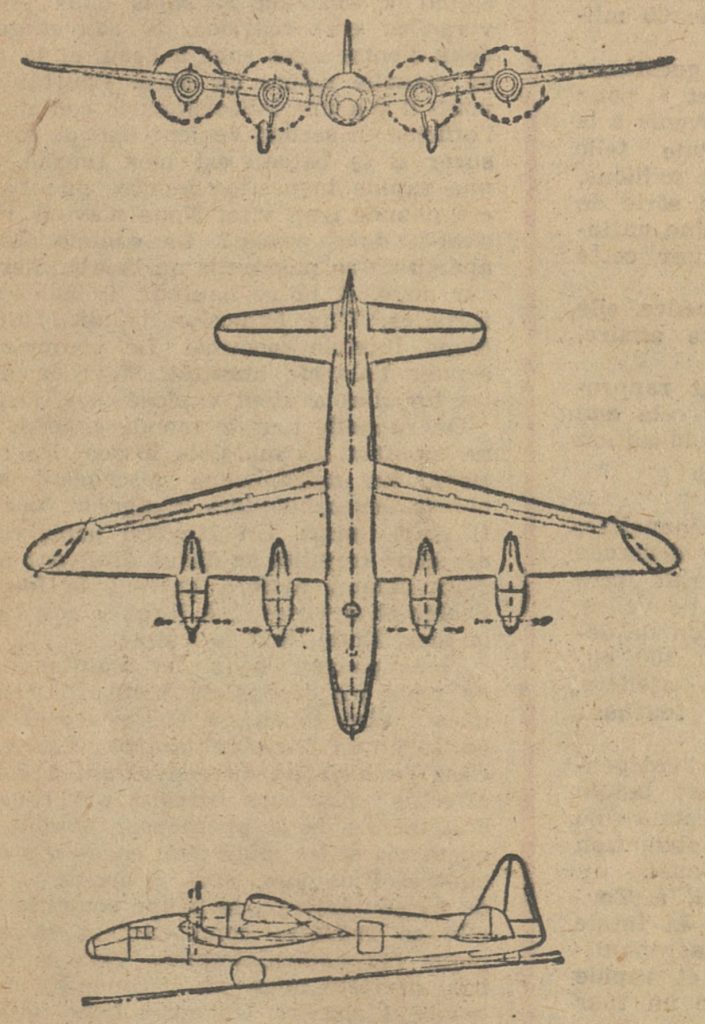
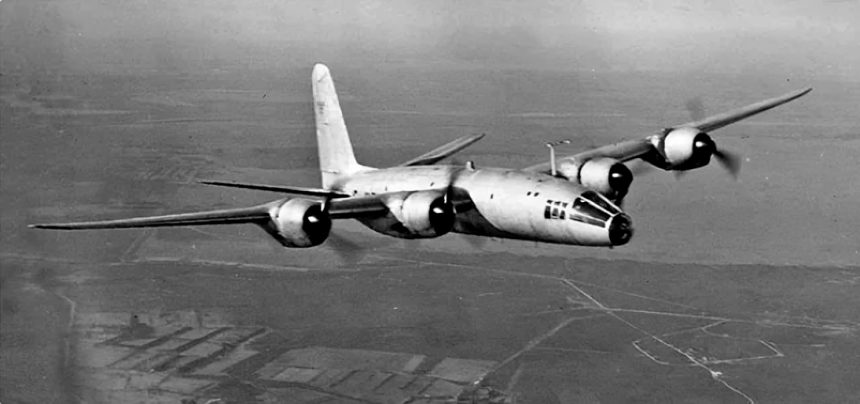

In the 1940s, the French state-owned Institut géographique national (National Geographic Institute), now known as Institut national de l’information géographique et forestière (National Institute of Geographic and Forest Information), was looking for a high-altitude photo-survey aircraft. At the same time, French aircraft manufacturer SNCASE designed a “stratospheric” transporter, the SE-1010, for transatlantic mail services in 1945, but it was not built. However, with a modified nose section, it was adapted as a high-altitude photo-survey aircraft for the Institut géographique national, designated SE-1010. When not used for surveying, it was proposed for use as a 14-passenger transport aircraft. The aircraft also received interest from the French Air Ministry. In September 1945, the Air Ministry tasked SNCASE with developing a new strategic reconnaissance aircraft for the Armée de l’Air (French Air Force), intended to compete with similar aircraft in the United States and Britain.
Design of SE-1010
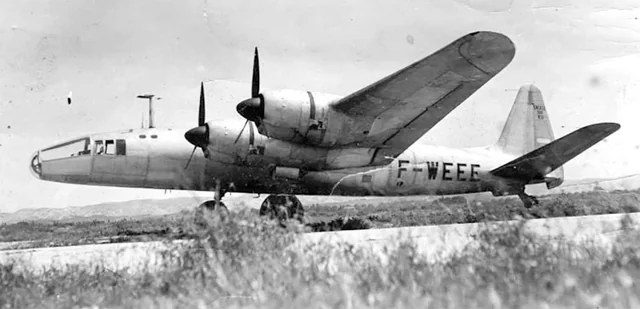
The prototype of the SE-1010 was built in 1947 and, with French test registration F-WEEE, made its first flight on November 24, 1948. The SE-1010 was a slender, four-engine mid-wing monoplane powered by four two-row 14-cylinder Gnome-Rhône 14R air-cooled radial engines, each producing 1,600 horsepower. The fuselage was entirely metal, assembled from aluminum panels. In its general architecture, it featured a mid-wing configuration with a fuselage and a classic retractable landing gear. The SE-1010 aircraft was 71.7 feet long, 17 feet high, with a wingspan of nearly 102 feet and a wing area of 1,252 square feet. The empty weight of the aircraft was 30,865 pounds, with a gross weight of 55,116 pounds and 60,000 pounds when equipped with photographic equipment. The gross weight of the passenger version was 73,000 pounds. The SE-1010 had a fuel capacity of 4,240 US gallons. The aircraft was equipped with four 3-bladed Ratier metal-and-wood propellers, each with a 12.6-foot diameter. The maximum speed of the aircraft was 395 mh at an altitude of 26,000 feet. The cruise speed of the aircraft was 340 mph. The range was 4,500 miles, and it could climb 26,000 feet in 36 minutes or 30,000 feet in 46 minutes. A low cruise speed, below 250 mph, removed the French Air Force and the Air Ministry’s interest in the SE-1010 as a strategic reconnaissance aircraft. However, for the Institut géographique national, speed was not an issue, and the program continued.
The Cancellation
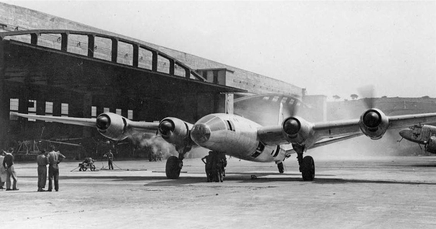
However, tragedy struck on October 1, 1949, when the prototype crashed during a test flight near Carcès in the Var department. According to the Bureau of Aircraft Accident Archives, the crew of six left Marseille-Marignane Airport at 14:16 local time for a test flight. While cruising about 28 miles north of Toulon, the four-engine aircraft went out of control, dove into the ground, and crashed in a wooded area. In the crash, the SE-1010 aircraft was destroyed during its 34th test flight and had already completed 60 flying hours. All six crew members, including pilot Henri Vanderpol, flight engineers Silvio Agliany and Pierre Bouillon, mechanics Ferdinand Pillet and Valery Chasson, and the radio operator Marius Rivet, died in the accident. The probable cause of the crash was determined to be that the pilot in command lost control of the airplane, which entered a flat spin in flight, and recovery was not possible. Following this accident, it was decided not to pursue further flight testing or work on the SE-1010, and the program was terminated with only a single prototype of the aircraft ever built. The Institut géographique national had to wait until the 1950s for a new aircraft capable of conducting high-altitude photo-survey and mapping, when the organization acquired the Hurel-Dubois HD-34. The SE-1010 is a reminder that aviation history has seen many tragic losses before arriving at the final, real solution the world enjoys today. Like many other aircraft in the Grounded Dreams series, the SE-1010 is not available today for aviation enthusiasts to see, even though it is almost forgotten, but it was part of the French push to rebuild its Air Force after World War II. Some programs under the push led to highly successful aircraft, such as the Flamingo, while others did not progress beyond the prototype stage, such as SE-1010. Read more Grounded Dreams articles HERE.