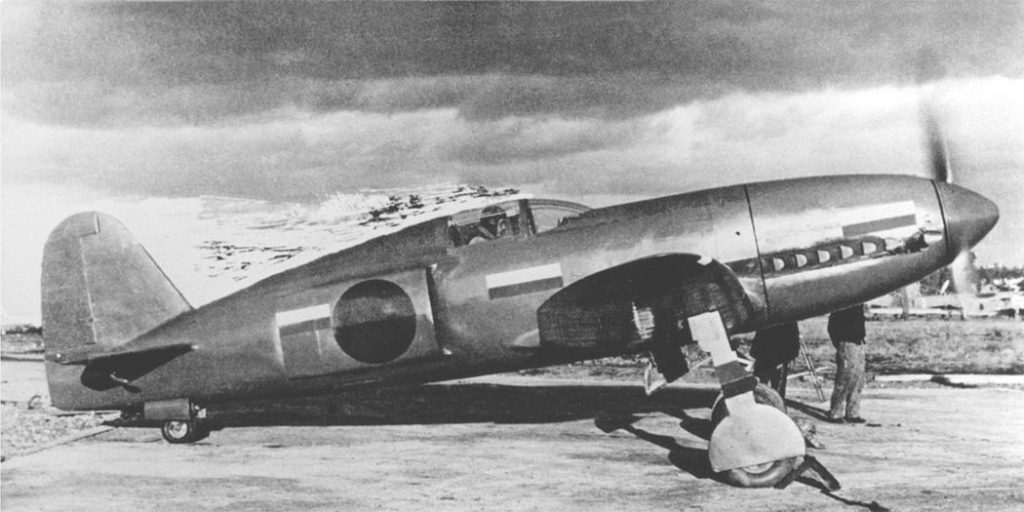
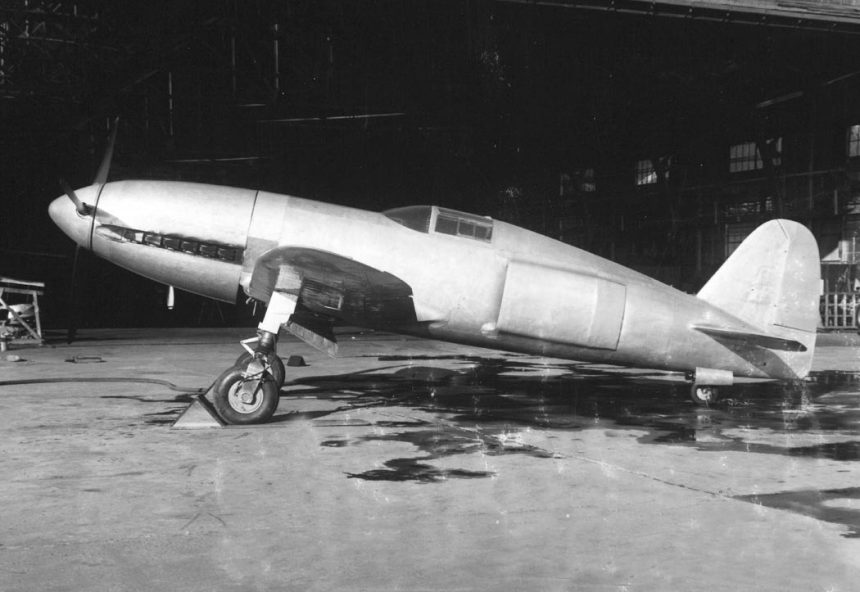


In the 1930s, Japan sought to develop a new aircraft to close the technological gap with Western planes. The aircraft was intended to be a high-speed research aircraft and break the absolute speed world record. In 1938, the Aeronautical Research Institute of the University of Tokyo began designing the aircraft. It was built by Kawasaki and thus named Kawasaki Ki-78. A wooden model of the aircraft was completed in May 1941. When WWII began, the project was handed over to the Imperial Japanese Army, and Kawasaki was awarded a contract to build two prototypes. Construction of the first prototype began in September 1941 at the Kawasaki plant located at Gifu Air Base. The Kawasaki Ki-78 was an all-metal low-wing monoplane. It had a narrow, streamlined, minimum-cross-section fuselage and laminar-profile wings with a high wing loading of 43 pounds per square foot. To help with landing speed and control at low speeds, the wings had drooping ailerons and a combination of slotted and Fowler flaps, which were new for Japanese planes. When the Fowler flaps were extended, the slotted flaps opened to a similar degree. When both flaps were fully extended, the ailerons automatically lowered by 10 degrees.
Design of Kawasaki Ki-78
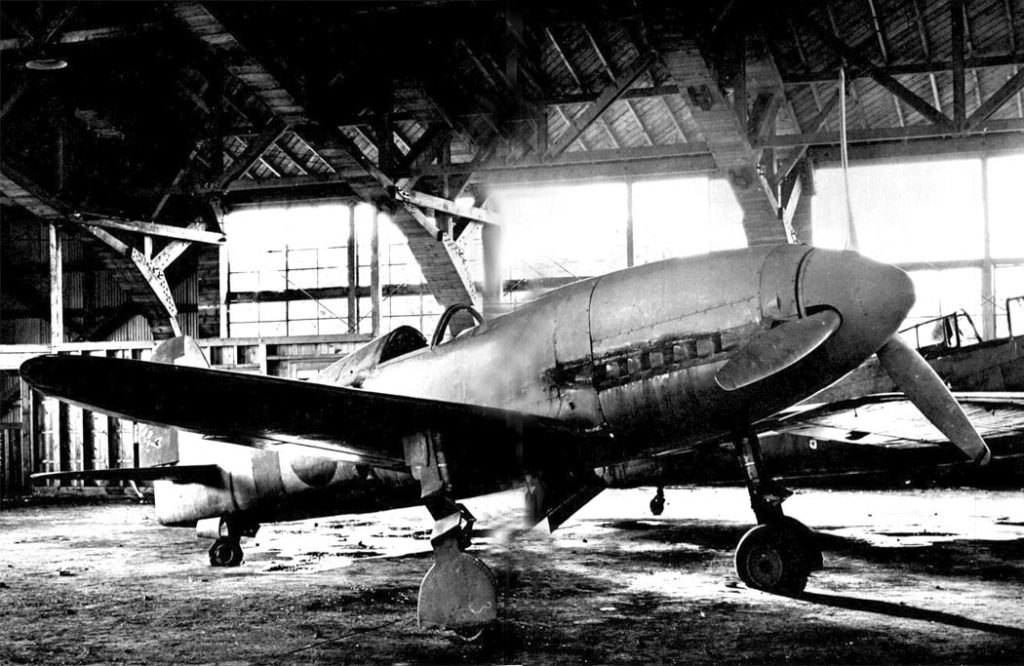
The Kawasaki Ki-78 was powered by a Daimler-Benz DB 601A V-12 inverted liquid-cooled piston engine, fitted with a water-methanol injection system, which helped it to produce 1,550 horsepower. The engine was built under license from Germany. The engine cooling system included two radiators, one on each side of the back of the fuselage. These radiators had large air intakes that protruded slightly from the fuselage. Flaps controlled airflow through each radiator by adjusting the outlet size. In addition, a small 60-horsepower turbine was fitted in the fuselage to drive a fan that helped with cooling. With a crew of one, the Kawasaki Ki-78 was 26.7 feet long, 10.1 feet high, with a wingspan of 26.3 feet and a wing area of 120 square feet. The empty weight of the aircraft was 4,255 pounds, and the gross weight was 5,071 pounds. The aircraft was intended to achieve a speed of 528 mph (850 km/h) at 11,500 feet. The Kawasaki Ki-78 had a range of 370 miles and a service ceiling of 26,000 feet. The Ki-78 first flew on December 26, 1942, and during this flight, the aircraft showed poor control at low speeds and severe stall characteristics. The aircraft was heavier than expected, which increased the wing loading.
The Cancellation
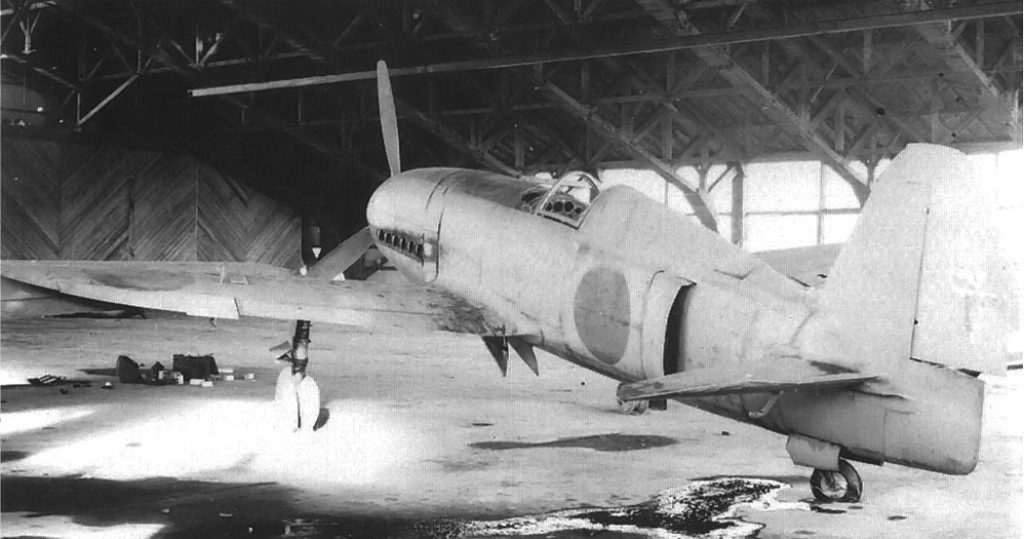
Even with flaps and drooping ailerons to control takeoff and landing speeds, the Kawasaki Ki-78 still had a high takeoff speed of 127 mph (205 km/h) and a landing speed of 105 mph (170 km/h). At a low speed of 395 mph (635 km/h), elevator flutter was detected, and to eliminate this, a horn-type compensation system was installed on the rudders. The Kawasaki Ki-78’s high-speed testing began in April 1943, and it completed 30 flights by December. On its 31st flight on December 27, 1943, the aircraft flew at its top speed of 435.6 mph (699.6 km/h) at an altitude of 11,500 feet, which was much lower than the expected 530 mph (850 km/h). A feasibility study later found that various design changes were needed to eliminate the issues with the aircraft and achieve a speed of 530 mph. As a result, the project was canceled after the 32nd flight on January 11, 1944, and the second Ki-78 was never made. At the time the Kawasaki Ki-78 was canceled, the fastest aircraft was the German Messerschmitt Me 163 Komet, which could reach 700 mph, followed by the Messerschmitt Me 262 at roughly 540 mph. While the fastest piston-engine fighter to enter large-scale production was the late-war P-51H Mustang, which could reach about 487 mph. The Kawasaki Ki-78, which already reached nearly 436 mph, could have matched the performance of the Mustang, called one of the best fighters of WWII. In the Grounded Dreams series, the Kawasaki Ki-78 lacked because of an unwillingness to continue maturing the program and a hurry to reach 528 mph. Read more Grounded Dreams articles HERE.