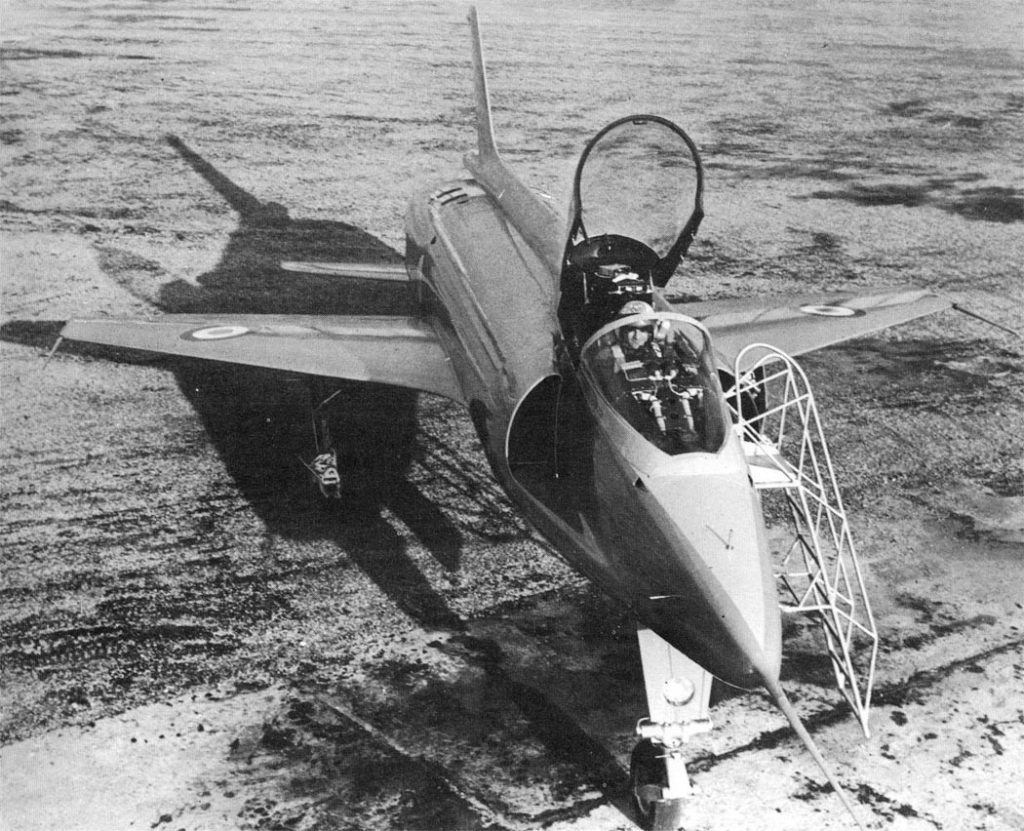
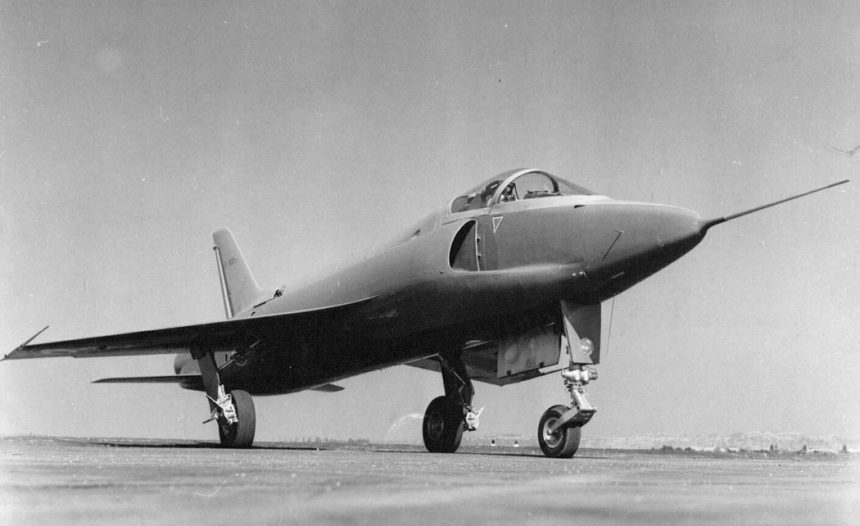

In the mid-1950s, the French Air Force sought to develop a twin-engine turbojet fighter for continuous safe operations in the event of an engine failure. The service requested industry proposals, and in 1955, two proposals, the Bréguet 1100 and the Dassault Étendard II, were selected. The French Air Force ordered Bréguet Aviation to build three prototypes of the Bréguet 1100, including a naval version. The Bréguet 1100 was a twin-engine version of the under-development single-engine Bréguet 1001 Taon, which was developed for a NATO ground-attack fighter competition. Though the development of the Bréguet 1100 was initiated after the Bréguet 1001 Taon, it made its first flight on March 31, 1957, nearly three months before Taon.
Design of Bréguet 1100
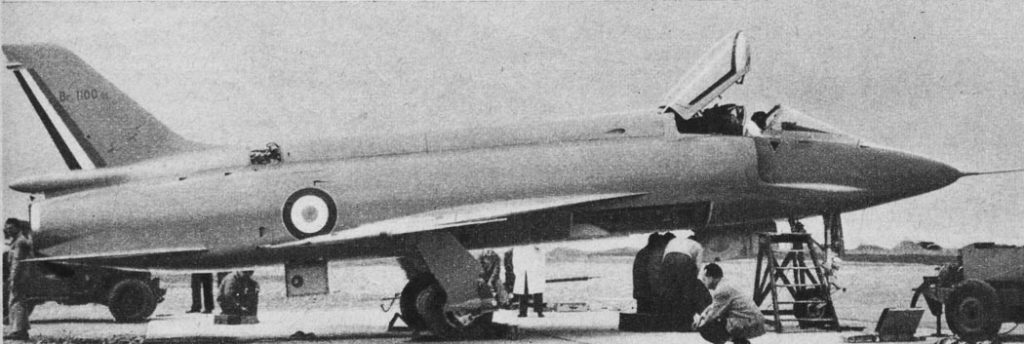
The Bréguet 1100 was entirely made of bonded alloy and featured many honeycomb structures. Its wings were about 15% longer and 35% larger in area than those of the Taon, but it was planned for the production Taons to use the 1100’s wings. The 1100 had broad short-span ailerons and narrow long-span flaps, with spoilers in front of them. Both types had similar side air intakes, but the 1100’s twin engines and jet pipes in the middle of the fuselage made it wider and longer, without the area rule design that narrows the body. Both aircraft also had similar swept, straight-edged tail surfaces, cockpits in the nose with narrow upper fuselage coverings, and tricycle landing gear. There were sixteen different weapon options available for Bréguet 1100, including four 12.7 mm Browning machine guns, two 30 mm DEFA cannons, 35 Matra unguided rockets, or a pack of fifteen 68 mm SNEB 22 rockets. The Bréguet 1100 was powered by two Turbomeca Gabizo axial flow turbojet engines, each producing 2,668 pounds of dry thrust and 3,307 pounds of thrust with afterburner. The single-seat fighter was 41.1 feet long, 14.3 feet high, with a wingspan of 25.8 feet and a wing area of 210.1 square feet. The empty weight of the aircraft was 8,362 pounds, and the gross weight was 14,429 pounds. The maximum speed of the aircraft was 710 mph.
The Cancellation
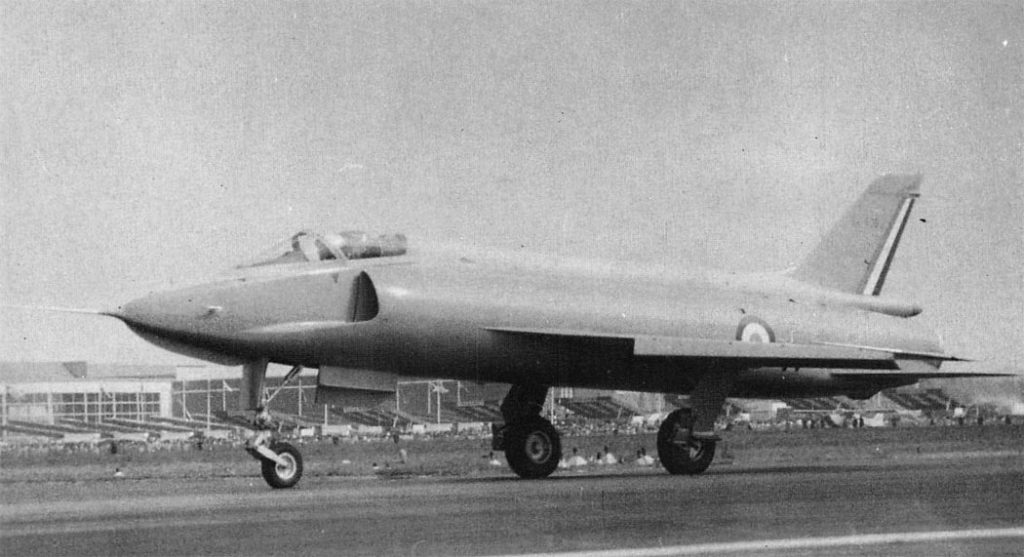
In flight tests, the Bréguet 1100 performed well at low speeds. However, during tests at higher speeds, the engineers found an aerodynamic problem due to the proximity of the two engine nozzles. The close spacing of the engine nozzles increased drag, resulting in thrust loss that prevented the aircraft from reaching its expected performance, especially at high altitudes where it was supposed to reach Mach 1. The other minor problems found during flight testing of the Bréguet 1100 included insufficient braking, airbrakes causing a nose-down moment, and changes in lateral control effectiveness. However, the Bréguet 1100’s engine was unreliable. The Gabizo engines were still not dependable, and the afterburner system was not installed on the Bréguet 1100 prototype. However, the single-engine aircraft, Taon, that entered the NATO competition in 1957, looked more promising. Some, like the Dassault Étendard IV, met and even exceeded the requirements of the French and NATO programs without powerplant issues. Towards the end of 1957, there was a debate over the advantages of single-engine versus twin-engine aircraft. As a result, on December 21, 1957, the French Air Force General Staff decided to cancel the twin-engine jet fighter program due to government spending cuts. Only one prototype was built, which made 65 flights for testing. The second prototype, which was 80% complete, was also scrapped. In the Grounded Dreams series, the Bréguet 1100 had to be canceled due to a lack of advanced engines and money. The aircraft itself was not bad, but it was not given enough attention to become a flying beast. Read more Grounded Dreams articles HERE.