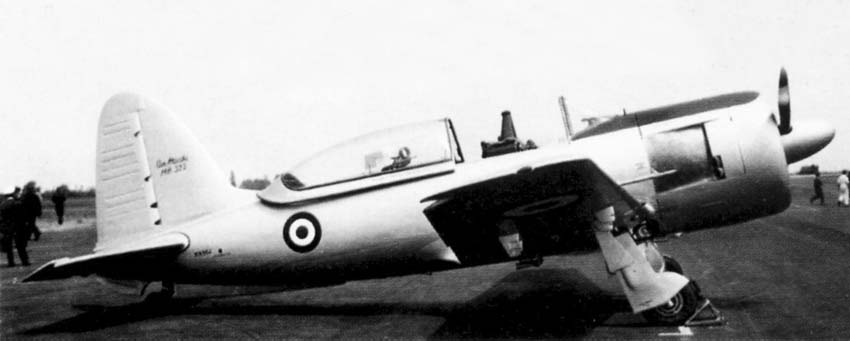
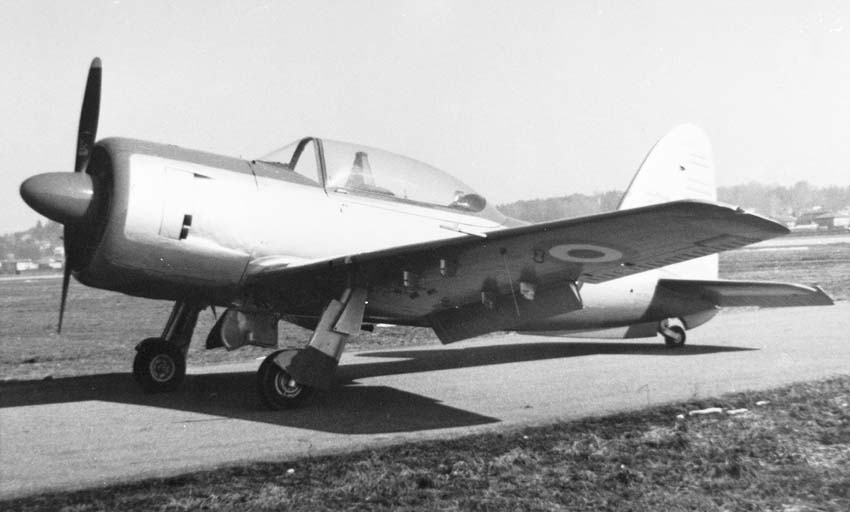


In the early 1950s, the Italian Air Force was looking for options to replace its WWII-era US North American T-6 trainer aircraft. As a result, the service initiated a procurement program, and Italian aircraft manufacturer Macchi (now called Aermacchi) submitted the design of Macchi MB.323, and Fiat presented its G.49 for the program. Both aircraft first flew in 1952. The Macchi MB.323 was a low-wing monoplane mostly made of metal. It had a sliding canopy, and was powered by a nose-mounted Pratt & Whitney Wasp R-1340-AN-1 Wasp nine-cylinder radial engine producing 610 horsepower. It also had retractable landing gear and a tailwheel.
Design of Macchi MB.323
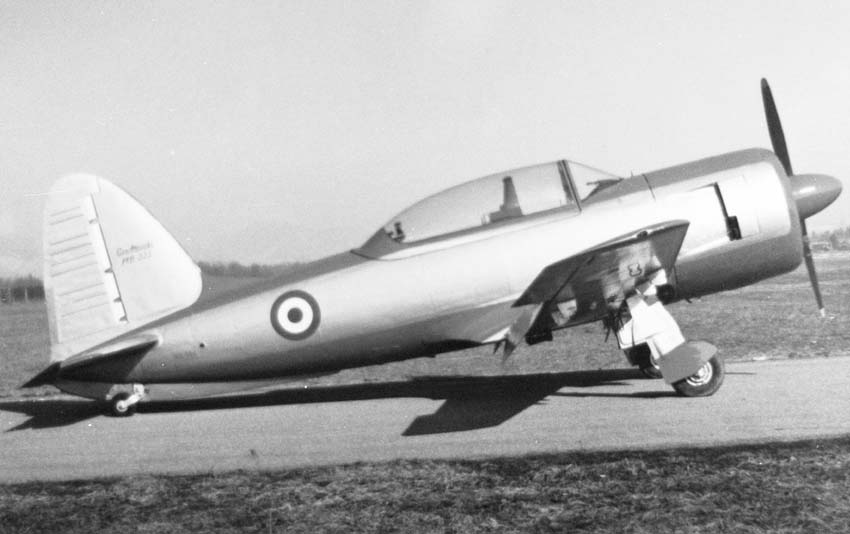
The Macchi MB.323 was 32.2 feet long, 13.3 feet high, with a wingspan of 40.8 feet and a wing area of 237 square feet. Its empty weight was 3,726 pounds, and its gross weight was 4,960 pounds. The maximum speed of Macchi MB.323 was 232 mph at 9,500 feet, with a cruise speed of 203 mph at 6,600 feet. The range was 670 miles, the service ceiling was 24,600 feet, and it could climb 3,300 feet in around 2 minutes. The aircraft could also carry bomb racks and a 7.9 mm machine gun for training. On the other hand, the Fiat G.49 was also an all-metal low-wing monoplane. Similar to the Macchi MB.323, the G.49 had retractable landing gear and a tailwheel. It featured an enclosed cockpit with a raised canopy for both a student and an instructor sitting one behind the other. There were two versions of G.49, each with a different engine. The first, the G.49-1, used an Alvis Leonides radial engine, while the G.49-2 had a Pratt & Whitney R-1340-S3H1 Wasp nine-cylinder radial piston engine, producing 610 horsepower. The Fiat G.49 was 31.2 feet long, 8.8 feet high, with a wingspan of 42.7 feet. Its empty weight was 4,983 pounds, and the gross weight was 6,305 pounds.
The Cancellation
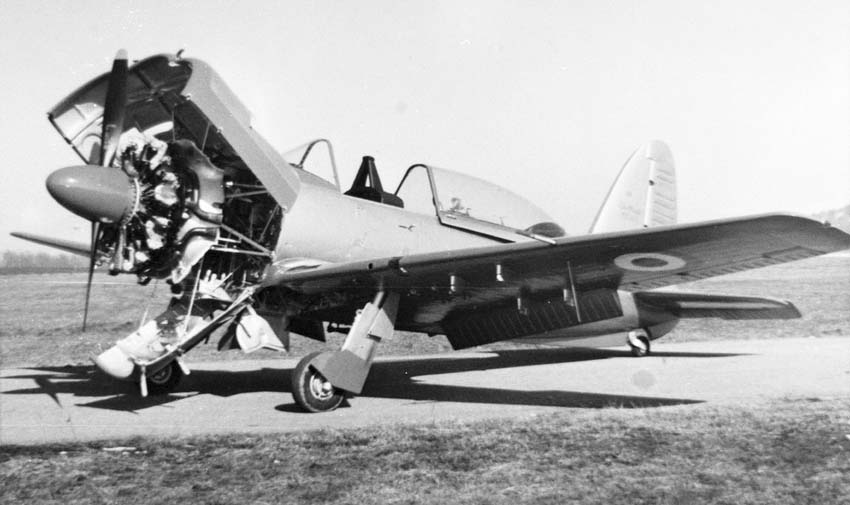
The maximum speed of G.49 was 230 mph, with a range of 1,181 miles and a service ceiling of 22,300 feet. Both the G.49 and Macchi MB.323 performed well in test flights. In fact, the Macchi MB.323 had a better chance of winning the competition, considering its trainer-friendly canopy and well-armed configuration. However, the Italian Air Force chose the Fiat G.49-2, and the Macchi MB.323 never entered production. The Italian Air Force believed that the MB.323 did not add much value to the existing North American T-6 Texan trainers, and the Fiat G.49 was considered modern, ending the road for the Macchi MB.323. However, the Fiat G.49 was also not produced in huge numbers with the arrival of jet engines, and only a small number were operated by the Italian Air Force. Moreover, in the mid-1950s, Ermanno Bazzocchi, the designer of Macchi MB.323, built another trainer, the jet-powered MB.326, which became one of the most popular Italian planes in aviation history. It was used as a trainer and for ground attacks, operating from Australia to Argentina. It also saw combat in Angola with the South African Air Force during the South African Border War. The MB.326 defeated the Fiat G.80 and G.82 in the latter competition. In the Grounded Dreams series, the Macchi MB.323 was an important lesson for Aermacchi, which it capitalized well and returned stronger. Read more Grounded Dreams articles HERE.