






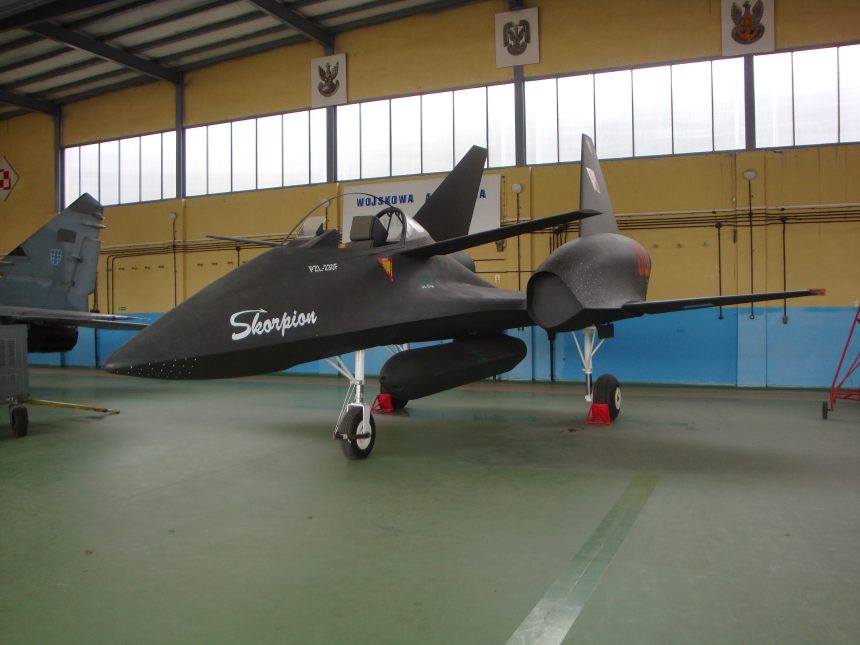

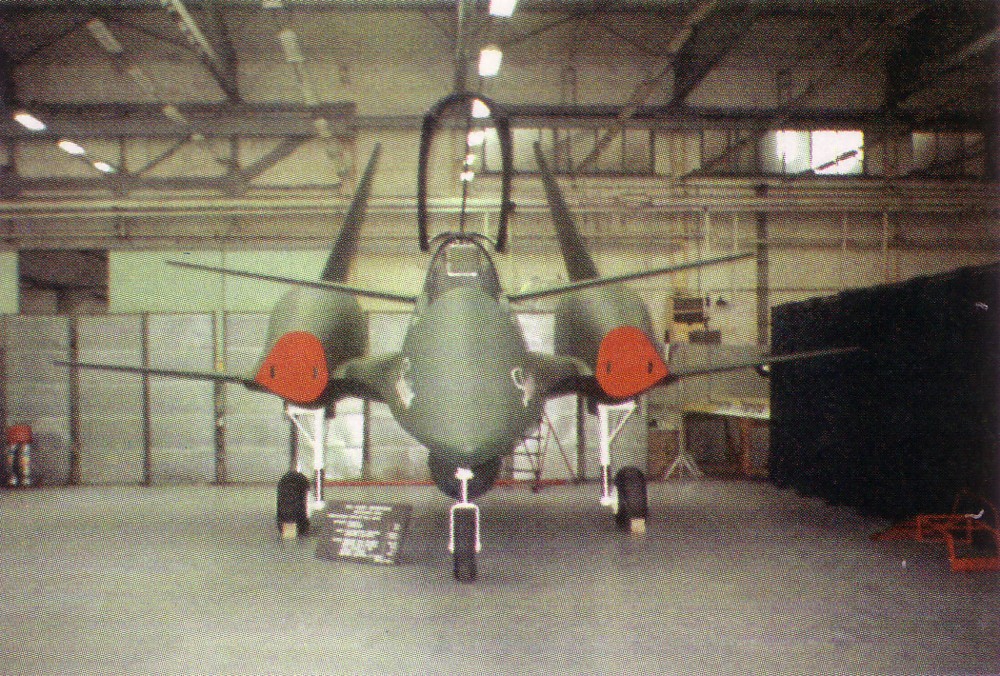
In the late 1980s, Polish manufacturer PZL Warszawa-Okecie wanted to build an aircraft with short takeoff and landing (STOL) capabilities, capable of carrying a heavy payload at low manufacturing and operating costs. The aircraft, called the PZL-230 Skorpion, was intended to be a twin-turboprop ground attack plane. The company began developing the aircraft in 1990, and it was designed to take off and land on a runway about 820 feet long, fly at speeds up to nearly 400 mph, and carry up to 4,400 pounds. Initially, designers chose a pair of Pratt & Whitney Canada PT6A-67A turboprop engines for the aircraft, to be mounted on either side of the plane’s rear fuselage. Most of the technology for this new aircraft was derived from the PZL-130 Orlik trainer aircraft, which was developed earlier. The PZL Warszawa-Okecie decided to present the design of the PZL-230 Skorpion to the Polish Air Force for a light-strike and battlefield-support role.
Design of PZL-230 Skorpion
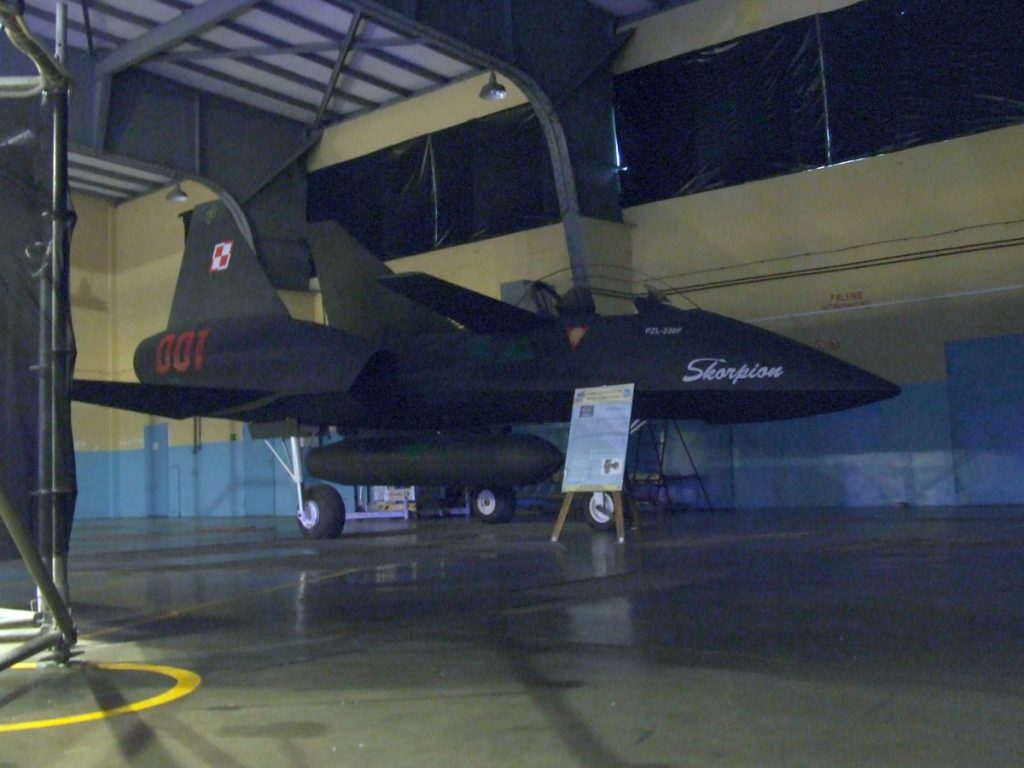
After the fall of Communism in Eastern Europe, three aircraft manufacturers in Poland competed for the air force’s contract. The Polish Air Force chose the PZL-230 Skorpion, and as a result, the design of the aircraft had to be revised to improve its speed and payload capabilities to meet the air force’s requirements. The PZL-230 Skorpion was then recognized as a government-approved program, and by late 1992, PZL showcased a mock-up of the Skorpion. The new design also included features like fly-by-wire technology and stealth capabilities. The new version of the PZL-230 Skorpion was powered by two Pratt & Whitney Canada PW305 turbofan engines, each producing 5,200 pounds of thrust. However, the PW305 engines were later found to lack enough thrust for the design. After further revisions, the aircraft was powered by two Honeywell LF 507 turbofan engines, which were mounted on pylons on top of the rear fuselage, positioned between the twin tailfins in a side-by-side arrangement. In June 1994, the Polish Ministry of Defense announced that it would stop funding the PZL-230 Skorpion program. Brigadier General Henryk Mika, who was in charge of military purchasing at the Ministry, said it made little sense to start a new project when they could develop an existing design to meet the needs of the Polish Air Force. However, PZL-Okecie decided to continue the development of the aircraft on its own. At one point, the company even considered using a new turboprop-powered aircraft design to help support the PZL-230 Skorpion program. By late 1994, chief designer Andrzej Frydrychewicz had finalized the aerodynamic design of the PZL-230 Skorpion, except for the tail. Wind tunnel tests were set to determine whether to use a butterfly-style tail or a classical fin-and-tailplane layout.
The Cancellation
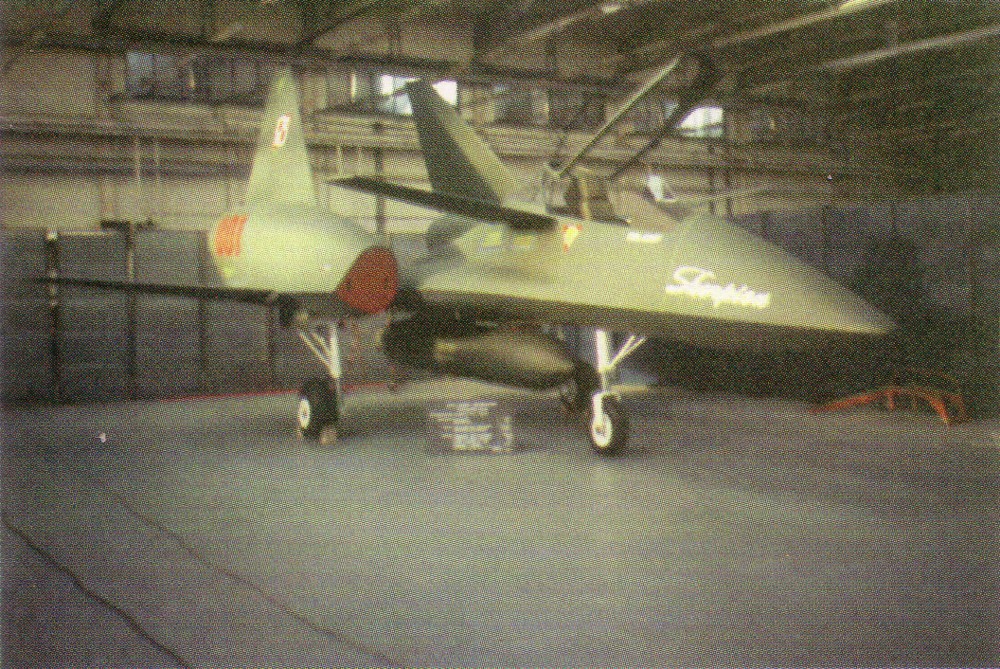
The PZL-230 Skorpion had a three-surface control system, featuring foreplanes on both sides of the cockpit. It was meant to use a fly-by-wire flight control system from the American company Lear Astronics. In 1994, after the redesign, the PZL-230 Skorpion was 32.10 feet long, 13.9 feet high, with a wingspan of 39.8 feet and a wing area of 273 square feet. The maximum speed was estimated to be 620 mph at an altitude of 32,710 feet. The PZL-230 Skorpion aircraft was intended to be equipped with various Western-made weapons and equipment, such as a 25mm Martin Marietta GAU-12/U and a 30mm GAU-8/A Avenger cannons. The cockpit would also feature a Martin-Baker Mk.10 ejection seat, sparking debate over how much of the aircraft should be manufactured in Poland. Some politicians argued that the program should be cut off if fewer than 70 percent of the parts were Polish-made. Others said that, for a practical approach, working with international partners could help Poland gain technology and knowledge to improve its own industry. By December 1994, the PZL-230 Skorpion’s stealth features were no longer a top priority. The main reason was the belief that since the Skorpion would usually fly at very low altitudes during combat, even strong stealth capabilities would not significantly reduce its chance of detection. Despite this shift, at least 50 percent of the aircraft’s structure was still expected to be made from carbon fiber composite materials. PZL Okecie did not have the ability to produce this structure on its own, so it discussed working with several foreign aviation companies, including British Aerospace (BAE) and Construcciones Aeronáuticas SA (CASA). However, in late 1994, Frydrychewicz said that other Polish aircraft manufacturers were not very enthusiastic about working together on the PZL-230 Skorpion project, and the project was abandoned. In the Grounded Dreams series, the PZL-230 Skorpion was not a bad design or aircraft, but was a victim of political and economic realities. Apart from a wooden mock-up, no PZL-230 Skorpion prototype was ever built or flown. Read more Grounded Dreams articles HERE.












Thank you kapil, a very interesting read.
Lol a Gao 30 mm. That thing would struggle to carry 2 50 cal ww 2 machine guns. They were high