
By Randy Malmstrom
Since his childhood, Randy Malmstrom has had a passion for aviation history and historic military aircraft in particular. He has a particular penchant for documenting specific airframes with a highly detailed series of walk-around images and an in-depth exploration of their history, which have proved to be popular with many of those who have seen them, and we thought our readers would be equally fascinated too. This installment of Randy’s Warbird Profiles takes a look at the Museum of Flight’s Goodyear FG-1D Corsair, BuNo 88382.
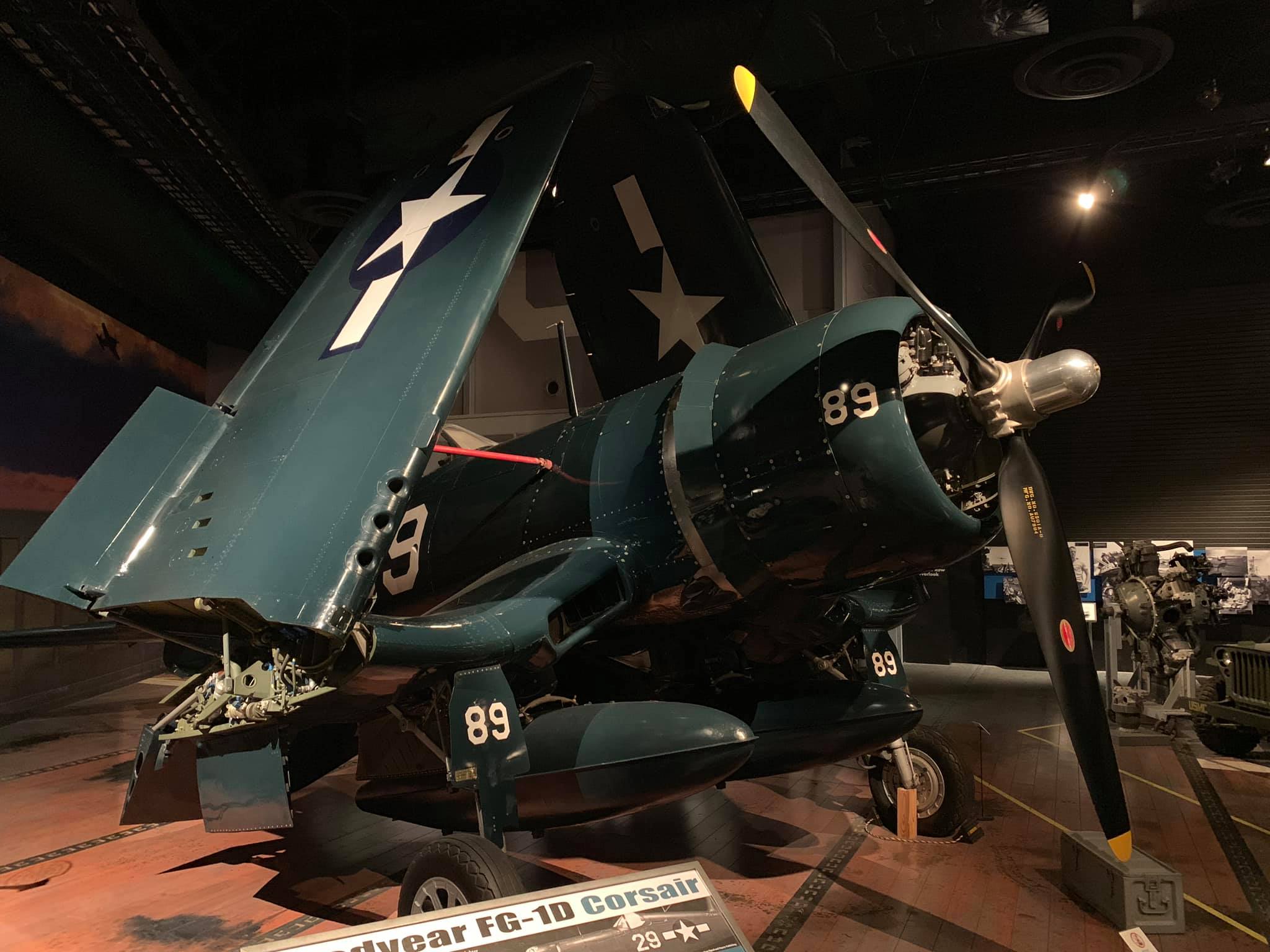
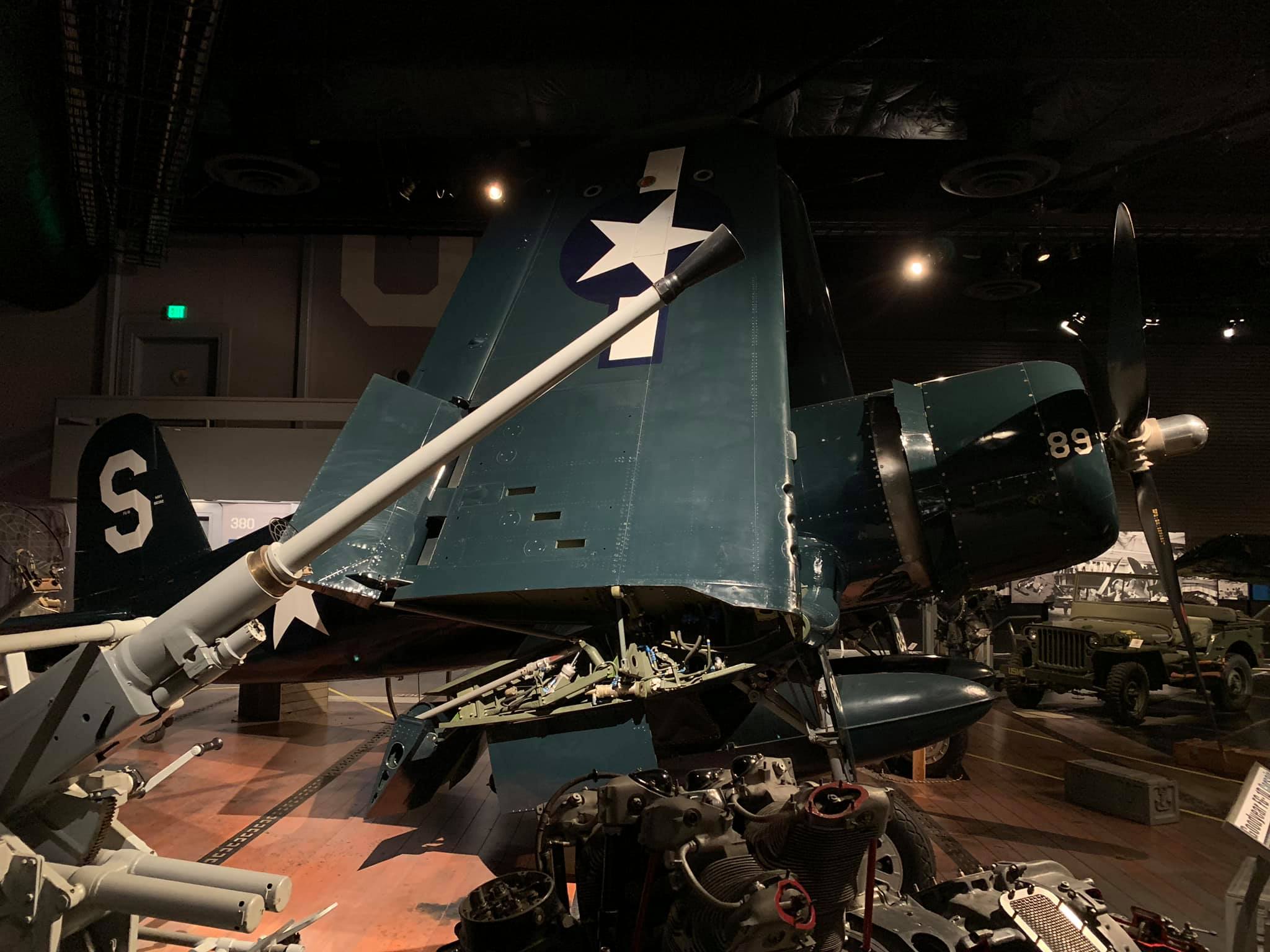
Goodyear FG-1D Corsair, Bu. No. 88382, constr. no. 3196. This particular aircraft was built under license by Goodyear Rubber & Tire Company in Akron, Ohio, and delivered to the U.S. Navy on April 21, 1945, and saw service with VBF-14 aboard CV-11 (USS Intrepid) while stationed in Hawaii until November 1945. It was transferred to the Naval Reserve and flew out of Saipan and Hawaii, and was later sent to Naval Air Station Sand Point, Washington.
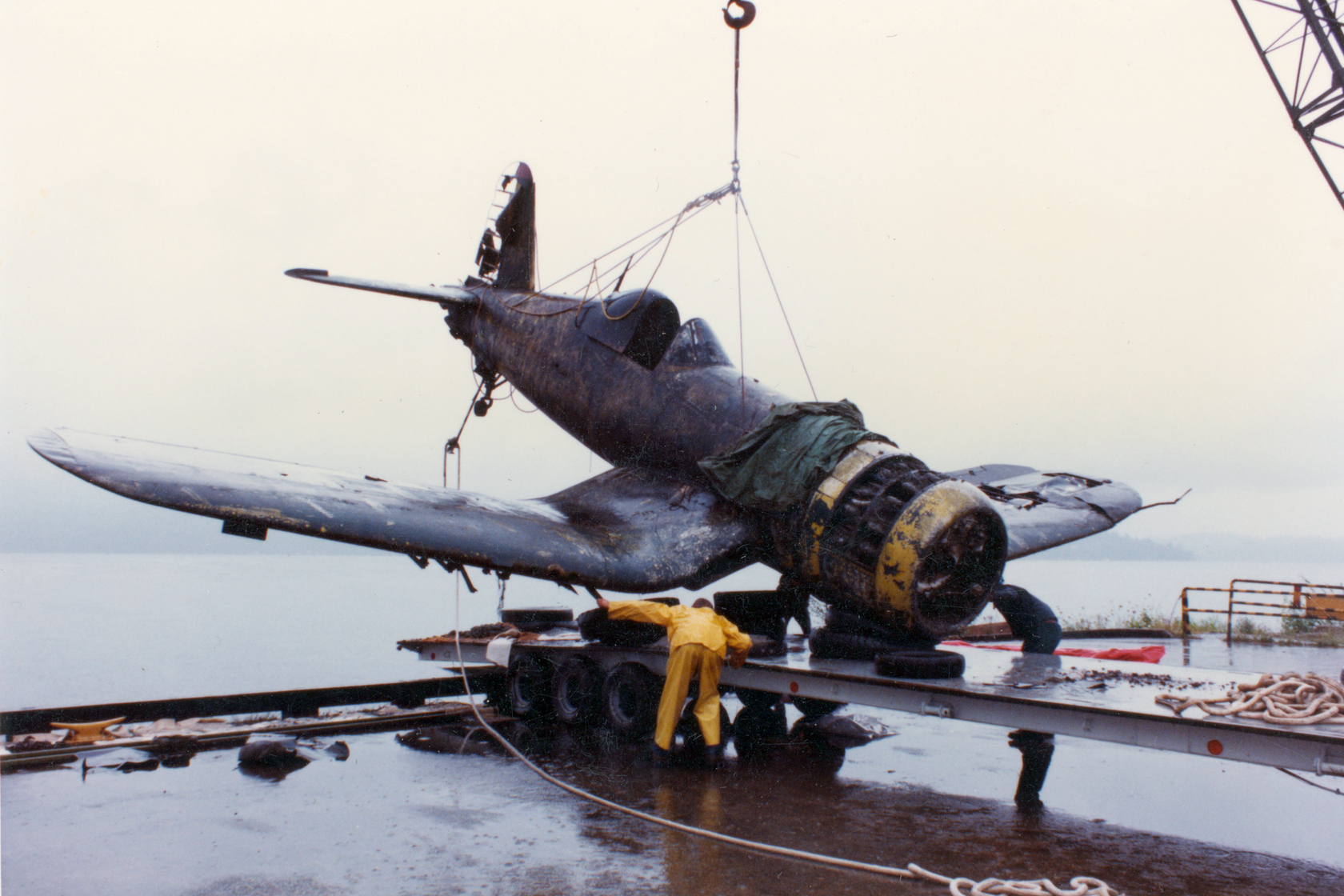
On July 29th, 1950, in weather of scattered clouds, two divisions of four Corsairs each went into an attack simulation over Lake Washington: Division 1, led by Lt. G.R. Botsford; and Division 2, led by Lt. D.E. Freet. LTJG Ralph H. Milleson was in the #2 position in Division 1 (flying this Corsair), and Ensign Stanley M. Hayes flew the #4 position in Division 2 (FG-1D Corsair BuNo. 87833). Division 2 broke left into a crossunder from left to right, and after the crossunder, broke away, increasing the rate of descent to avoid more clouds, thereby losing sight of Division 1. The increased rate of descent and speed of Division 2 caused Hayes to drop back slightly. It was approximately 11:30 a.m., and at that time, Freet, the Division 2 leader, started another crossunder from right to left. During the crossunder, Hayes collided with Milleson’s Corsair. The propeller of Milleson’s plane chopped up the top side of Hayes’ fuselage just aft of the cockpit, and Hayes bailed out at about 500 ft. and was rescued by a Navy Crash Boat (one account says it was a passing yacht). Milleson’s propeller was damaged, and he had to belly-land in the lake, where it sank in 190 feet of water. Milleson was rescued by a Navy Crash Boat. Both Division leaders were ordered to appear before an informal Aviators Disposition Board. Marine Corps Maj. Herb Valentine watched the landing and scratched a mark on his office window in line with the site where the airplane disappeared. In 1983, his mark helped Air-Marine Salvors of Auburn, California, locate the aircraft and salvage it from Lake Washington (see historic photo). Hayes’ BuNo. 87833 was initially left in the lake due to its extreme impact damage; USN Deep Water Storage Facility – not to be touched. However, since I wrote the majority of this article, other salvage operations have been taking place. The Museum of Flight Restoration Center on Paine Field in Everett, Washington, began the restoration, and in May 1988, it was shipped for final restoration to Airpower Unlimited in Jerome, Idaho.
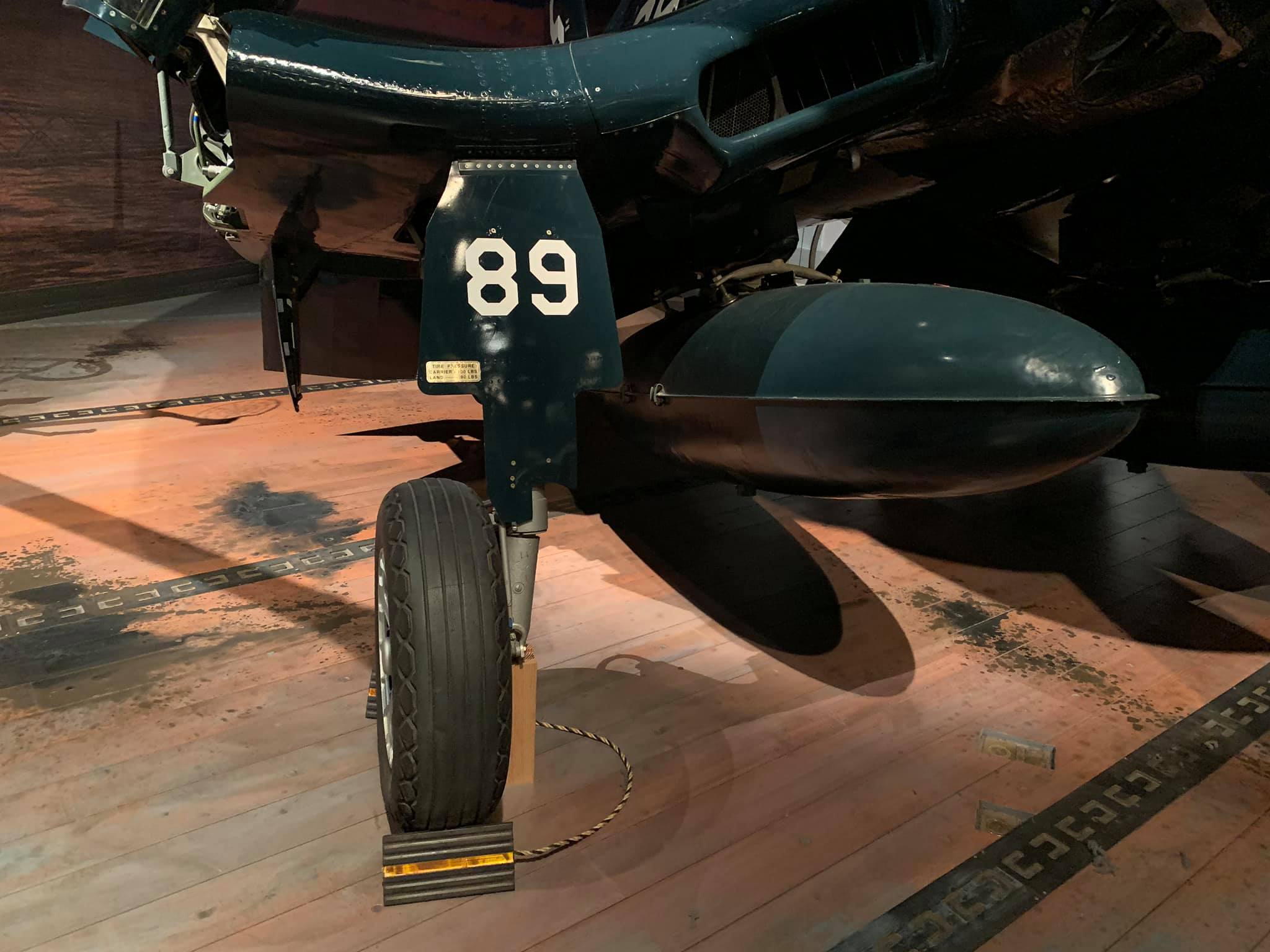
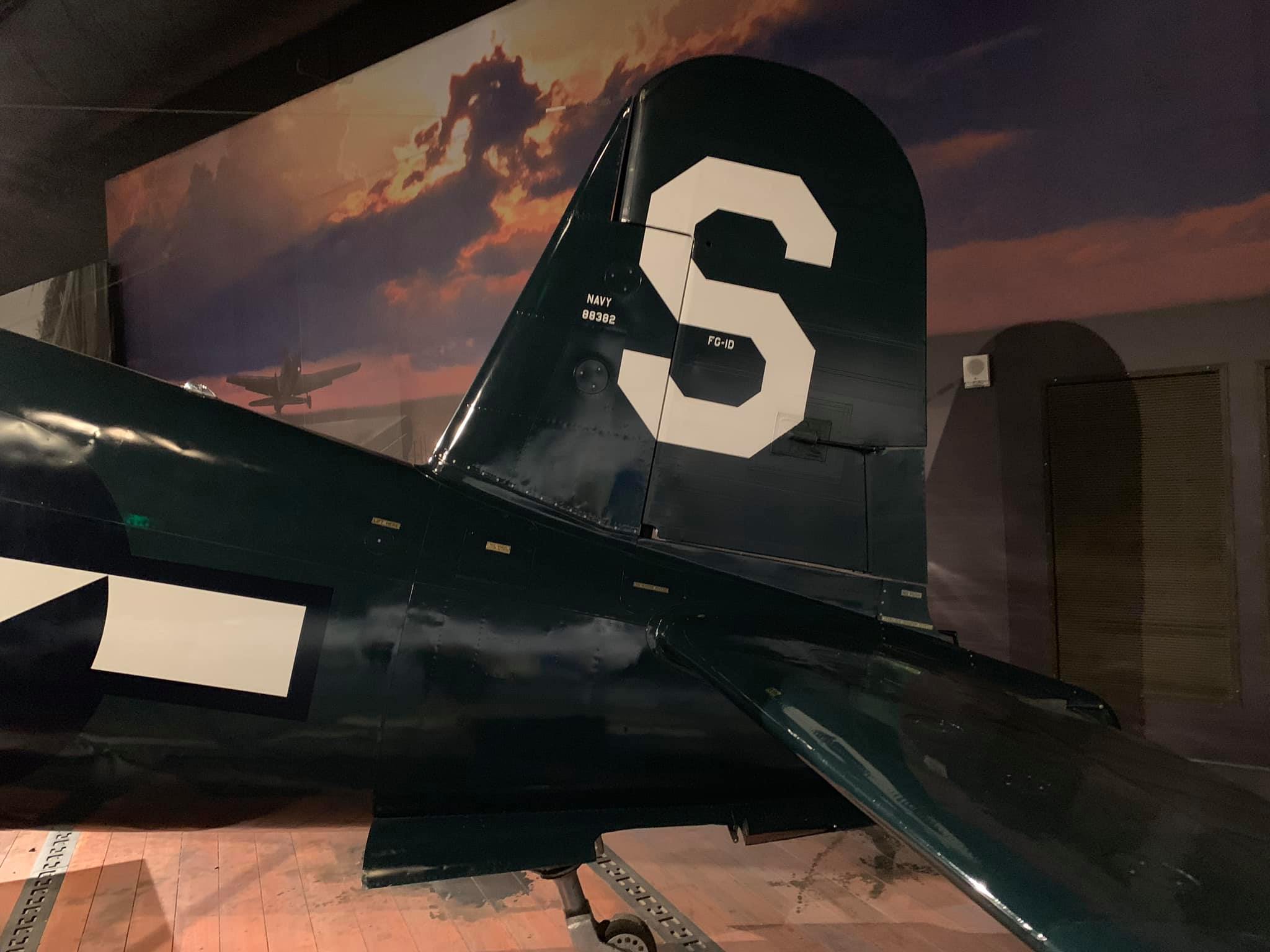
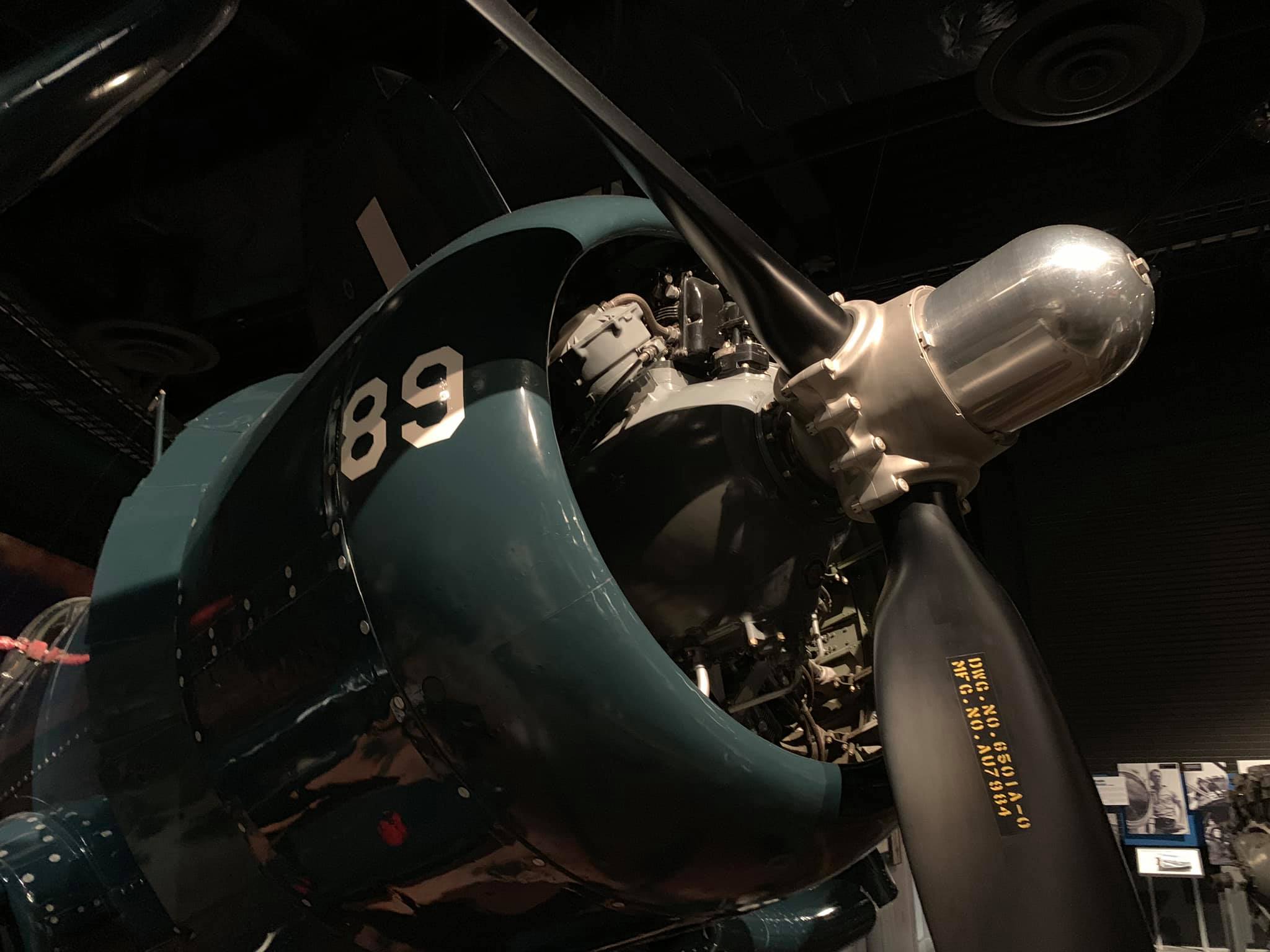
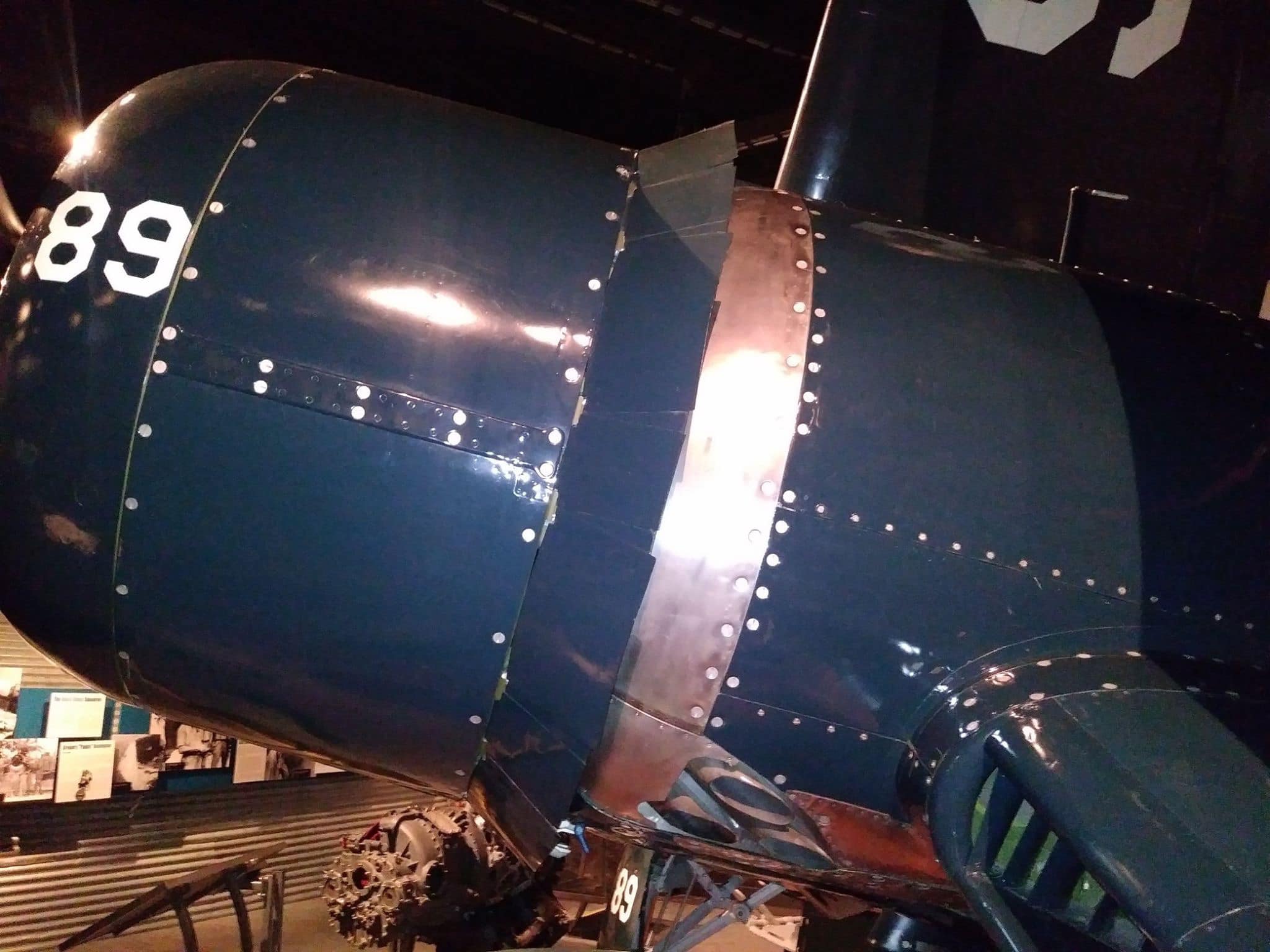
The airplane is dedicated to, and a good deal of the restoration funding came from family and friends, in honor of Navy LTJG Jerome Reese “Jomie” Schuchart, USNR, a Seattle pilot killed April 13, 1989, in a midair collision during a routine instructional flight in a T-2C Buckeye at NAS Meridian, Mississippi. It is painted as #89 (the year of his death), tail code “S” (representing the lieutenant’s last name as well as representing NAS Sand Point, Washington) of the USS Valley Forge (CV-45). I am told by James Oldfield, one of the restorers, that he found the pilot’s knife and the aircraft’s identification plates in the cockpit. It is owned by the National Naval Aviation Museum, Pensacola, and is on loan to the Museum of Flight (MOF) on Boeing Field in Seattle, Washington; and while there is no flying in its future, again at last check, it has been restored to almost flyable status (the fuel tank bladder would need to be redone and the port wing requires some restoration for example.
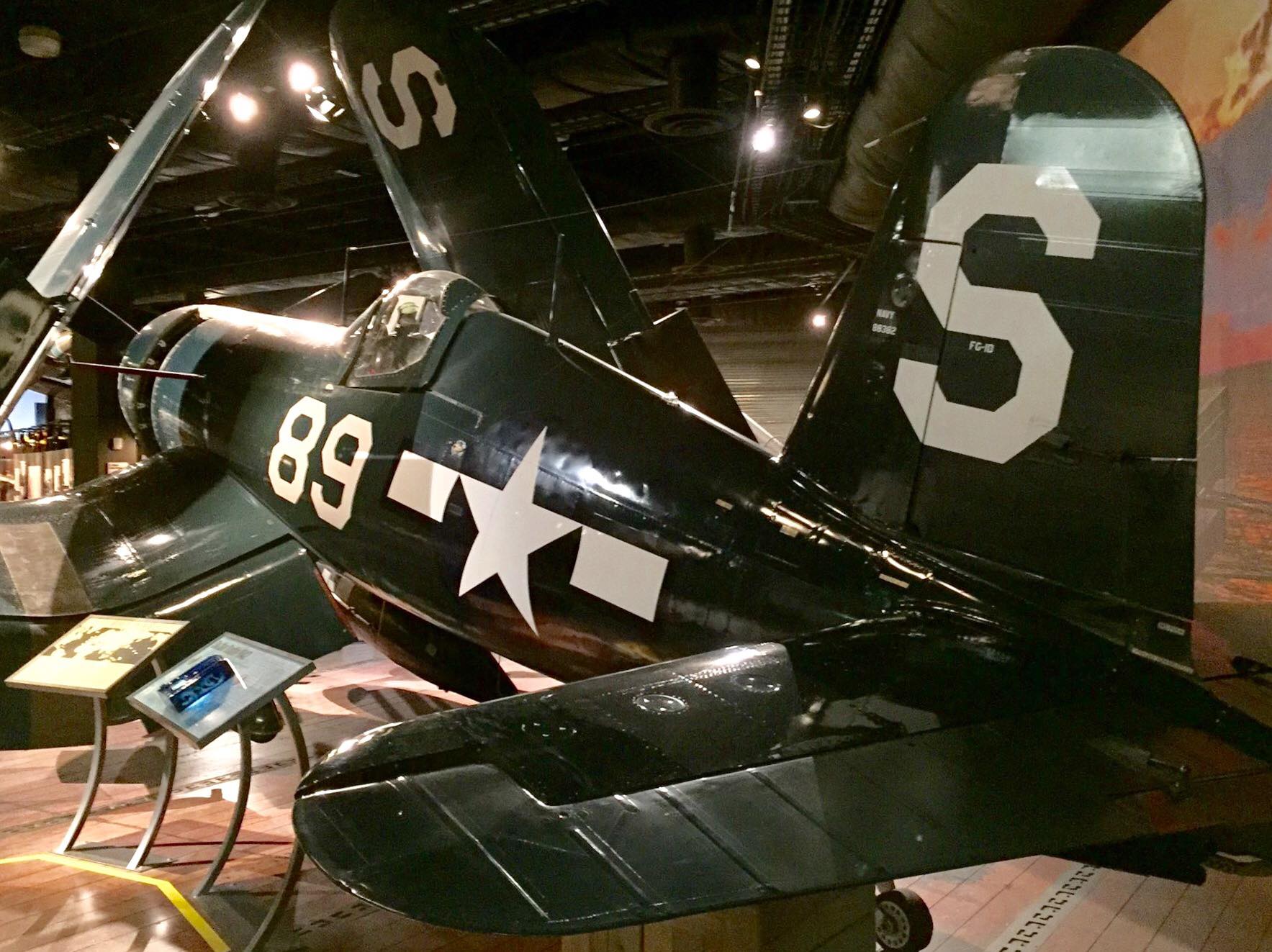
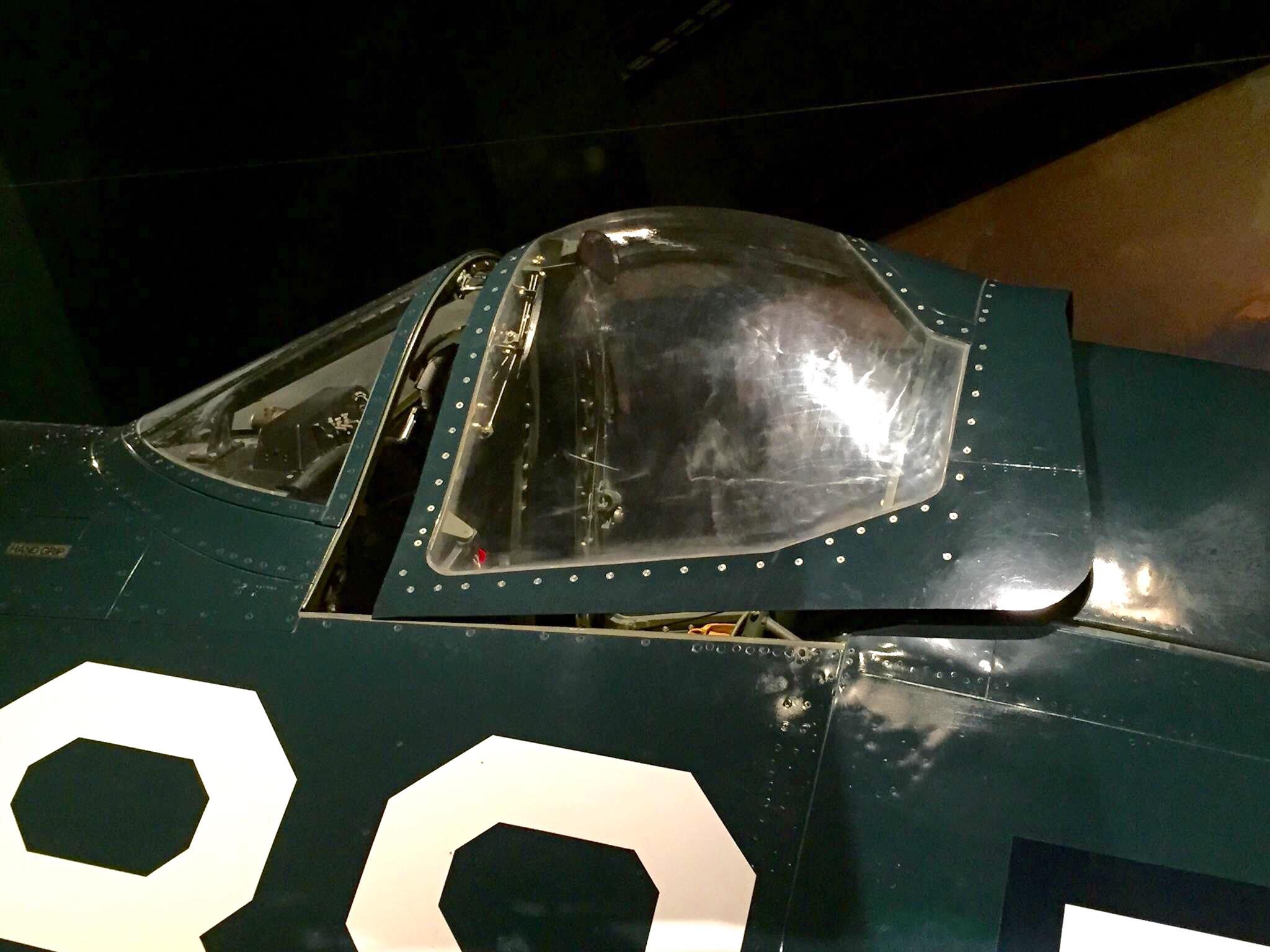
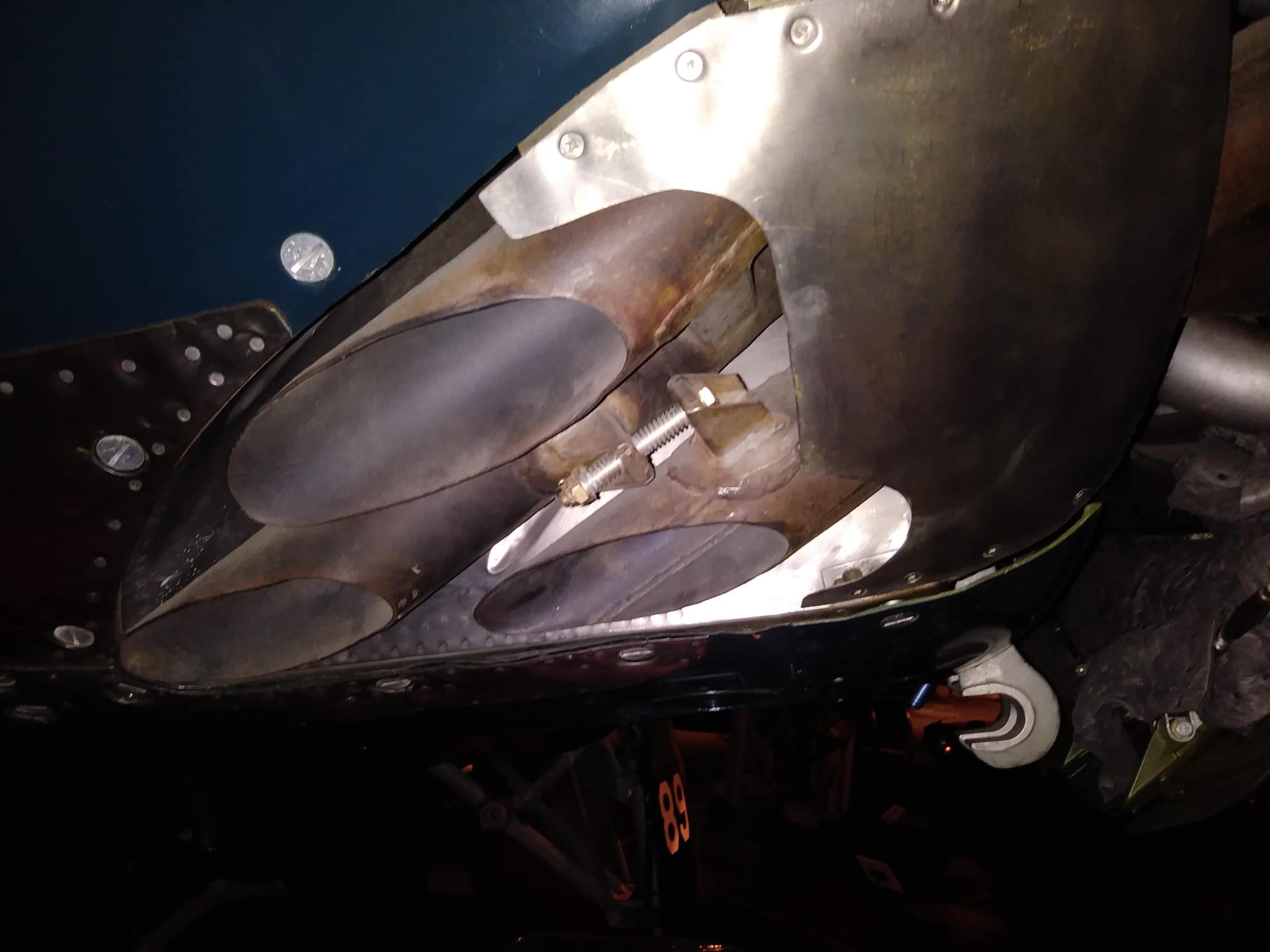
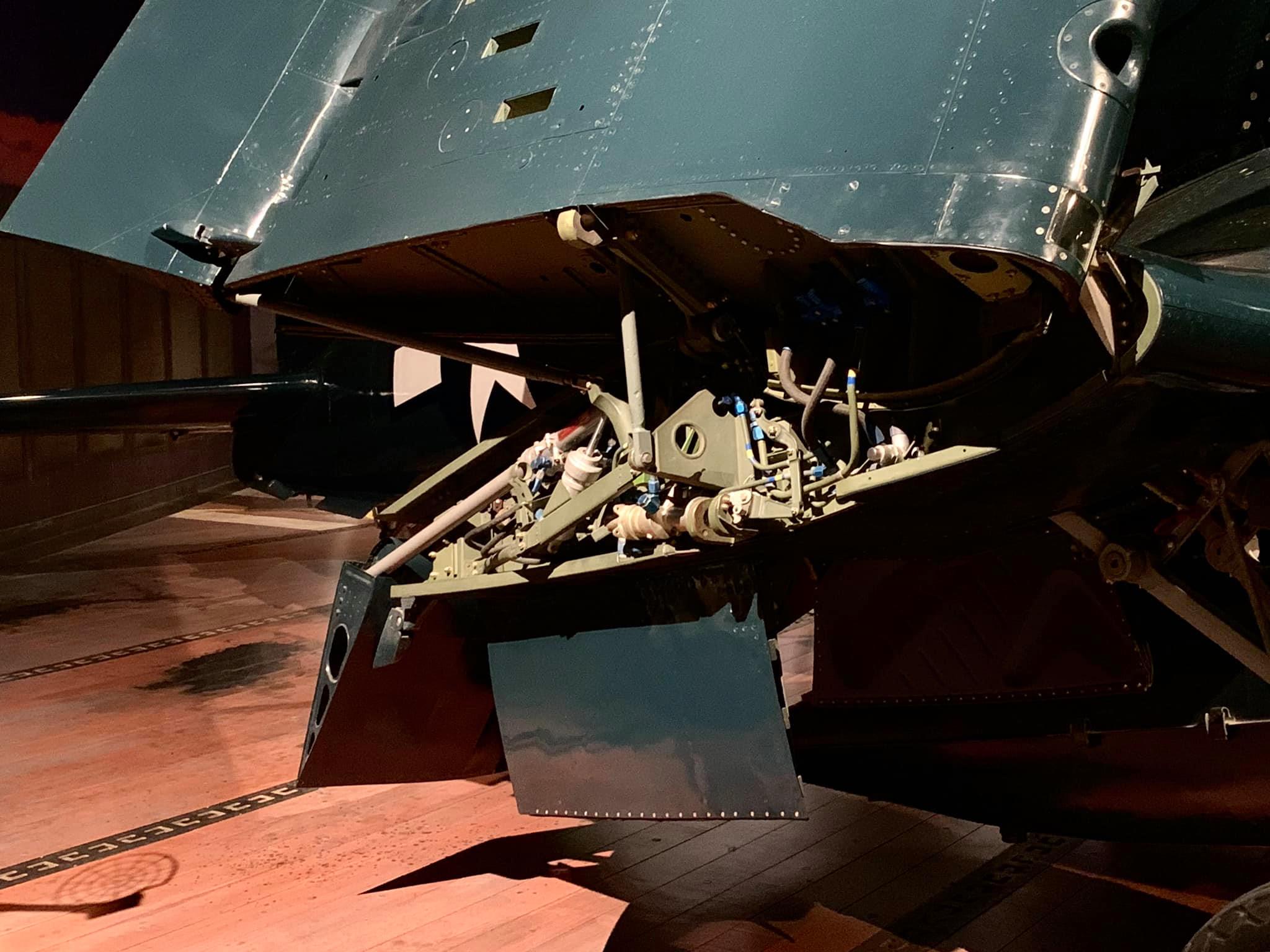
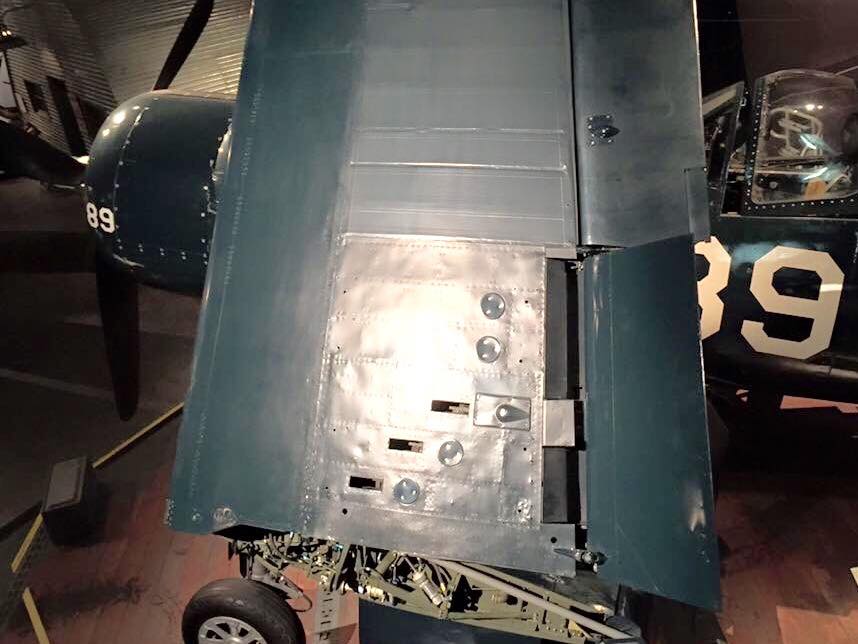
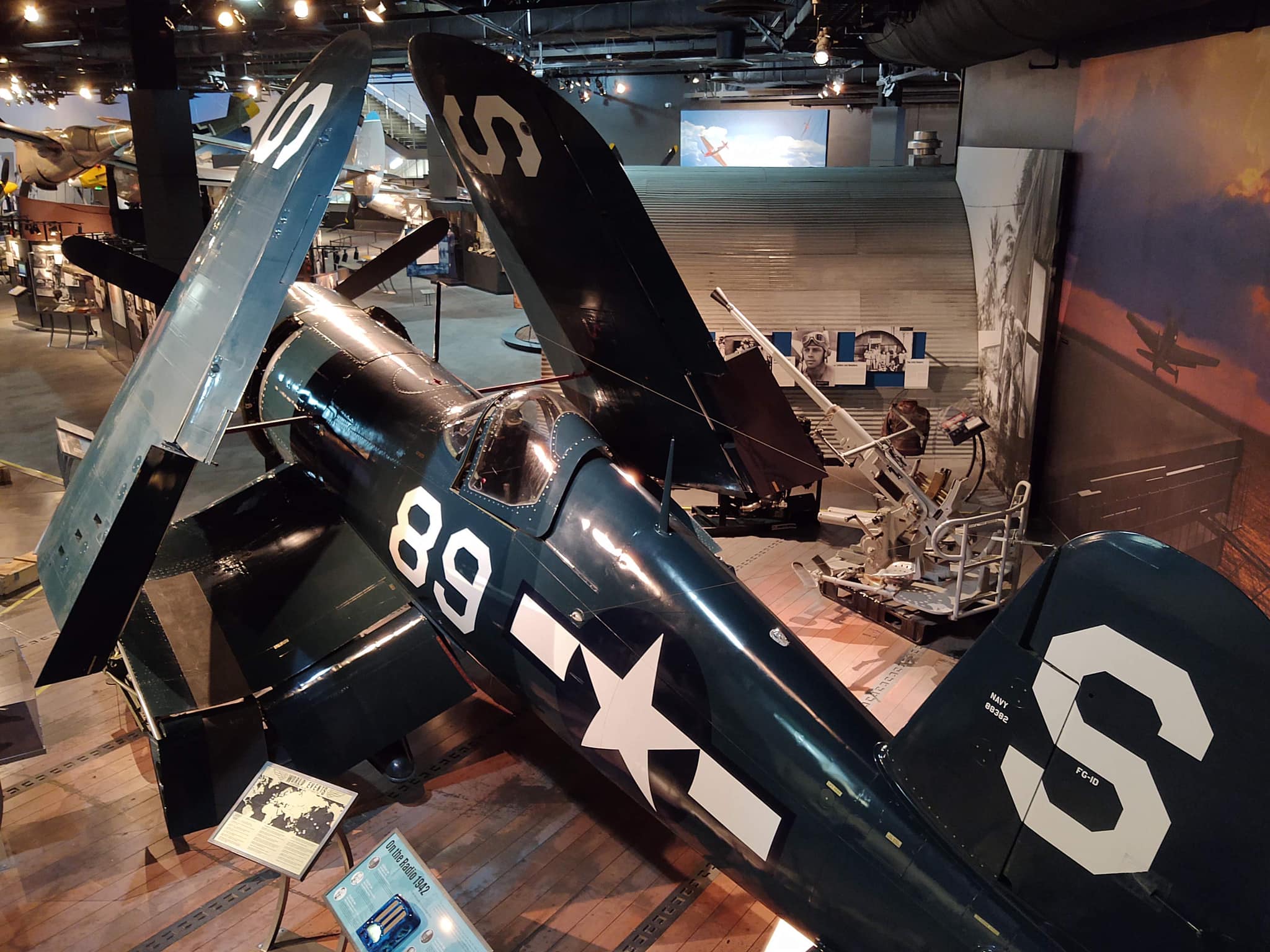
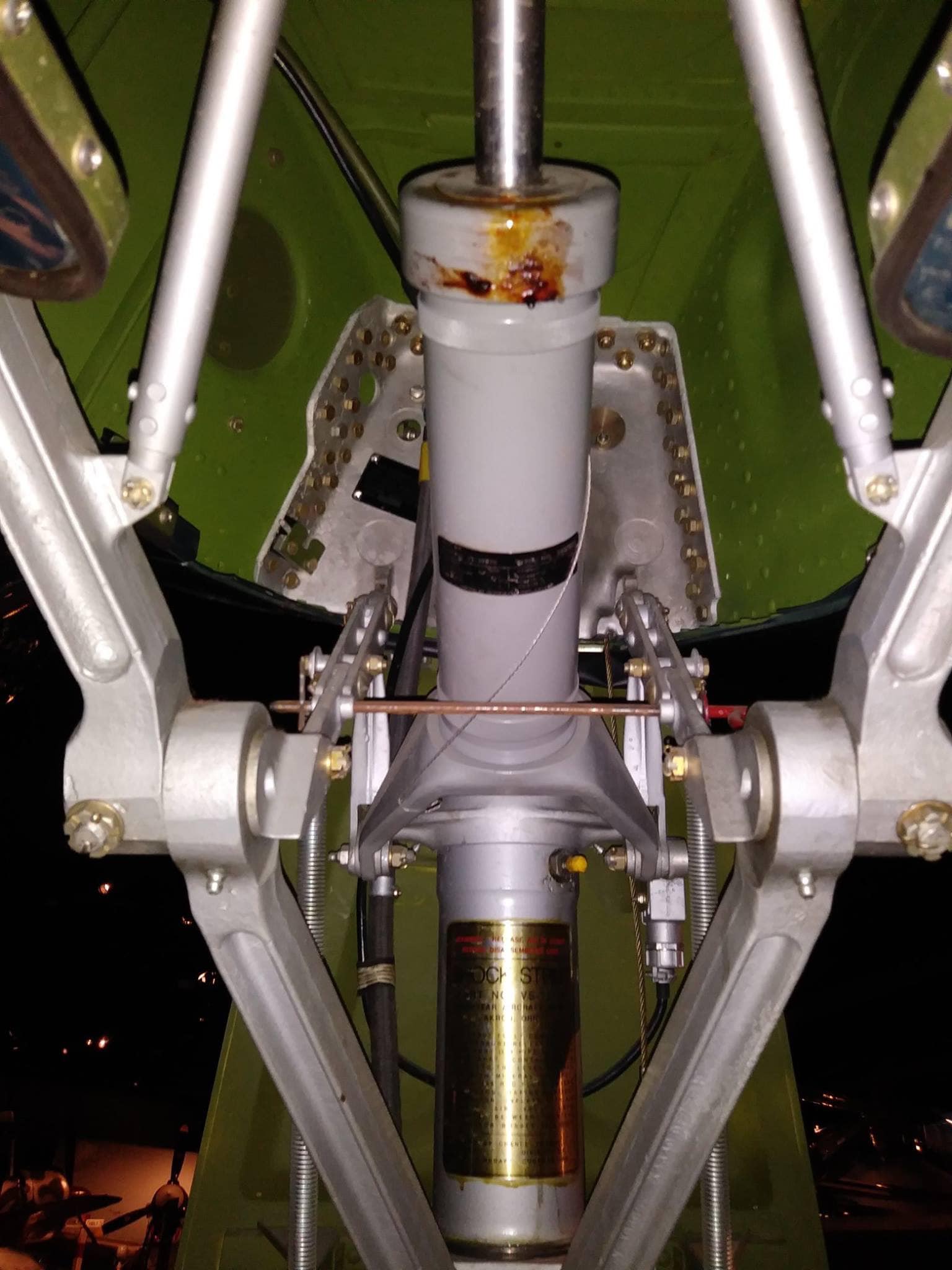
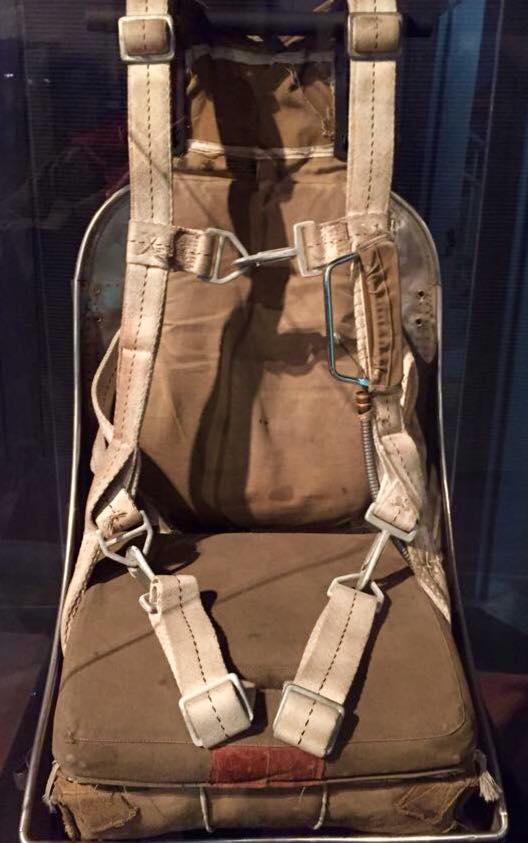
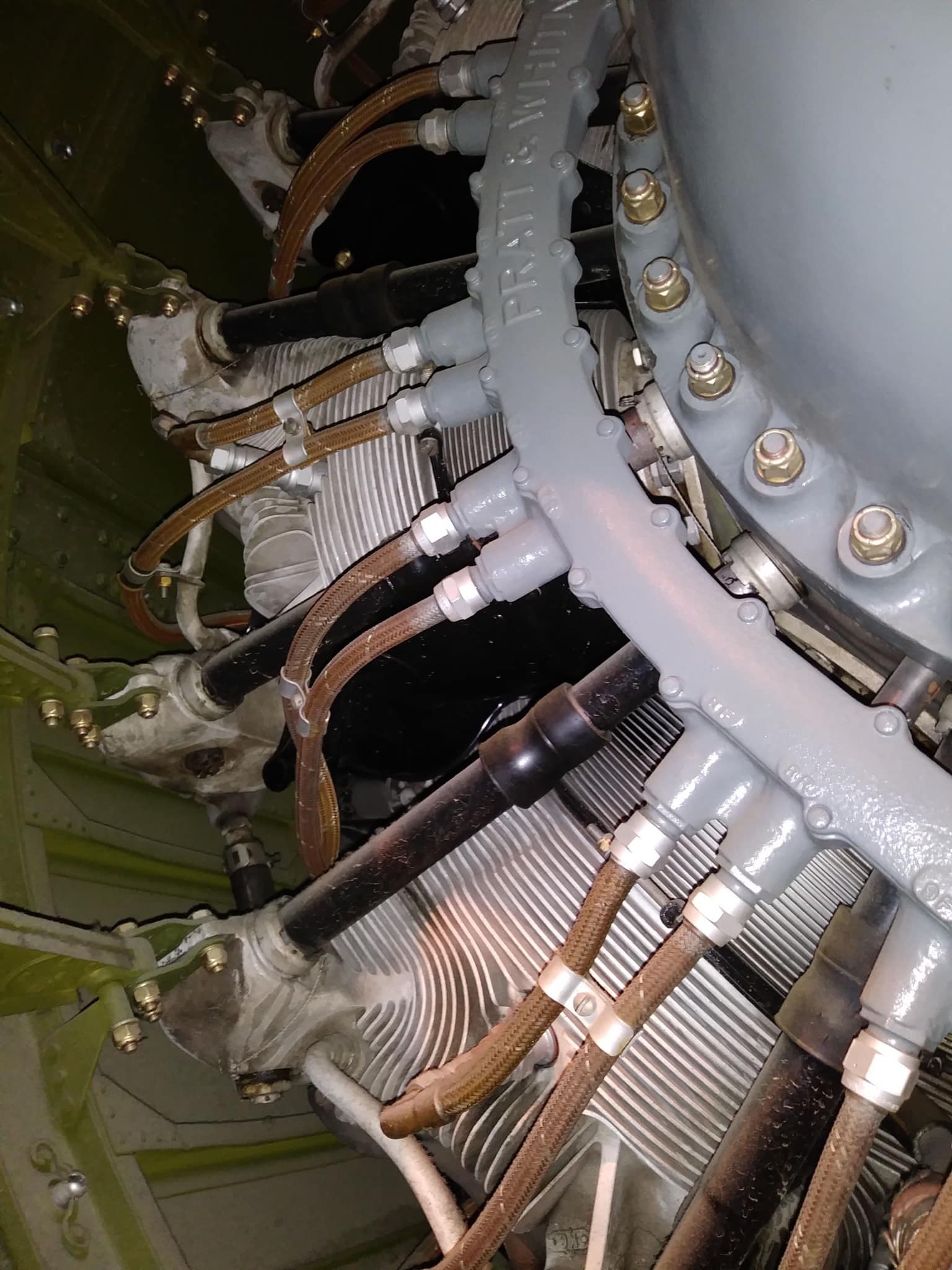
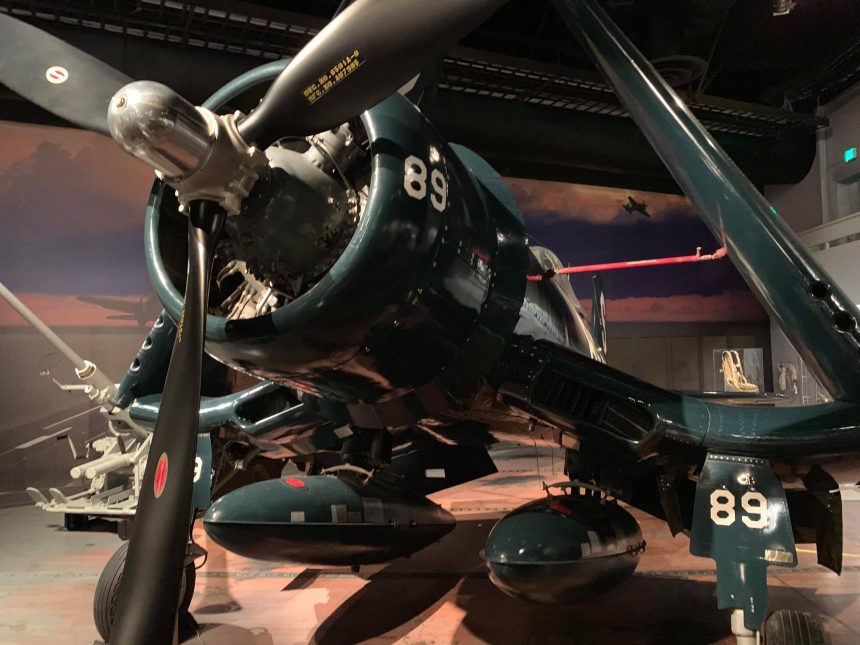
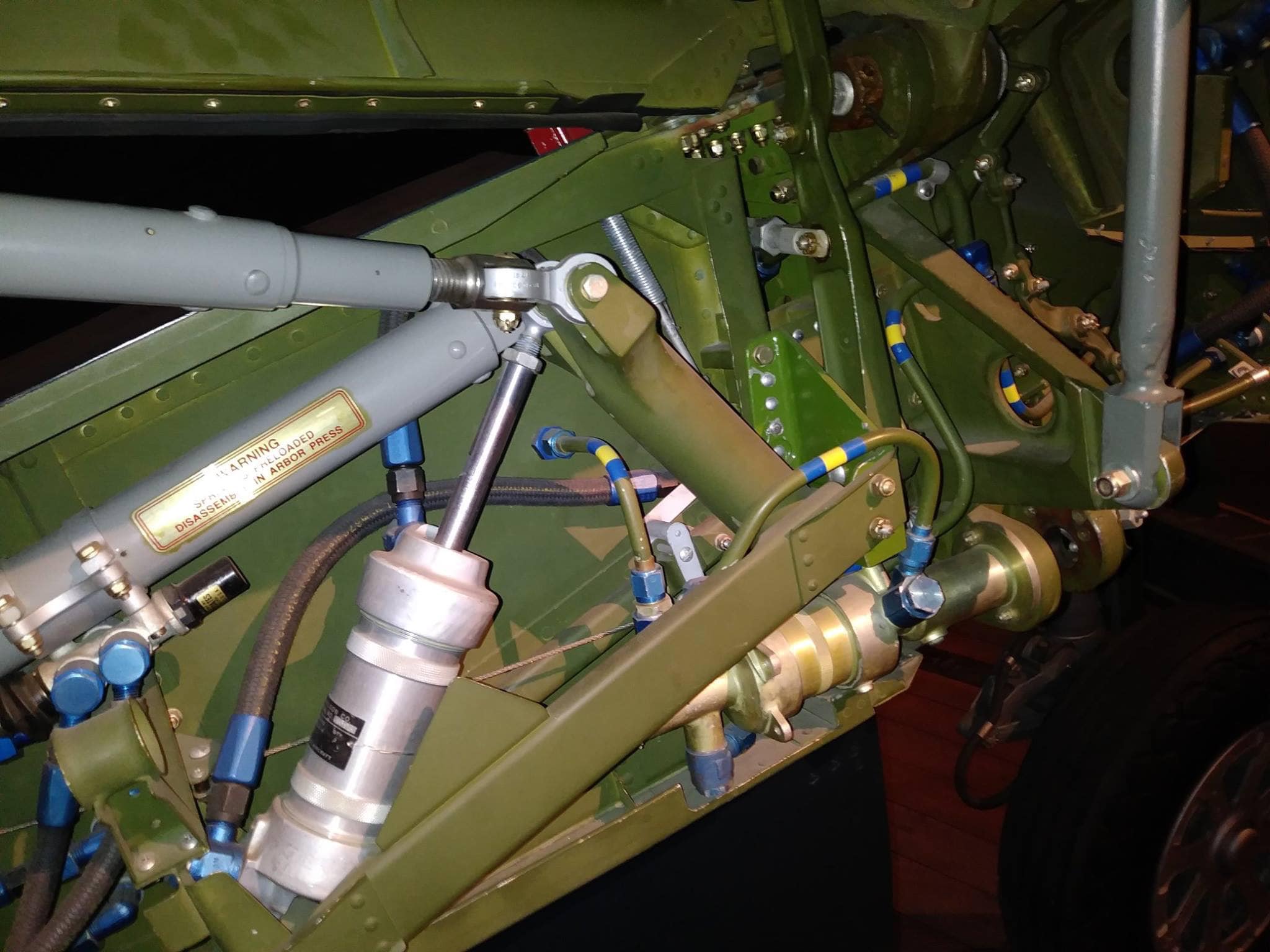
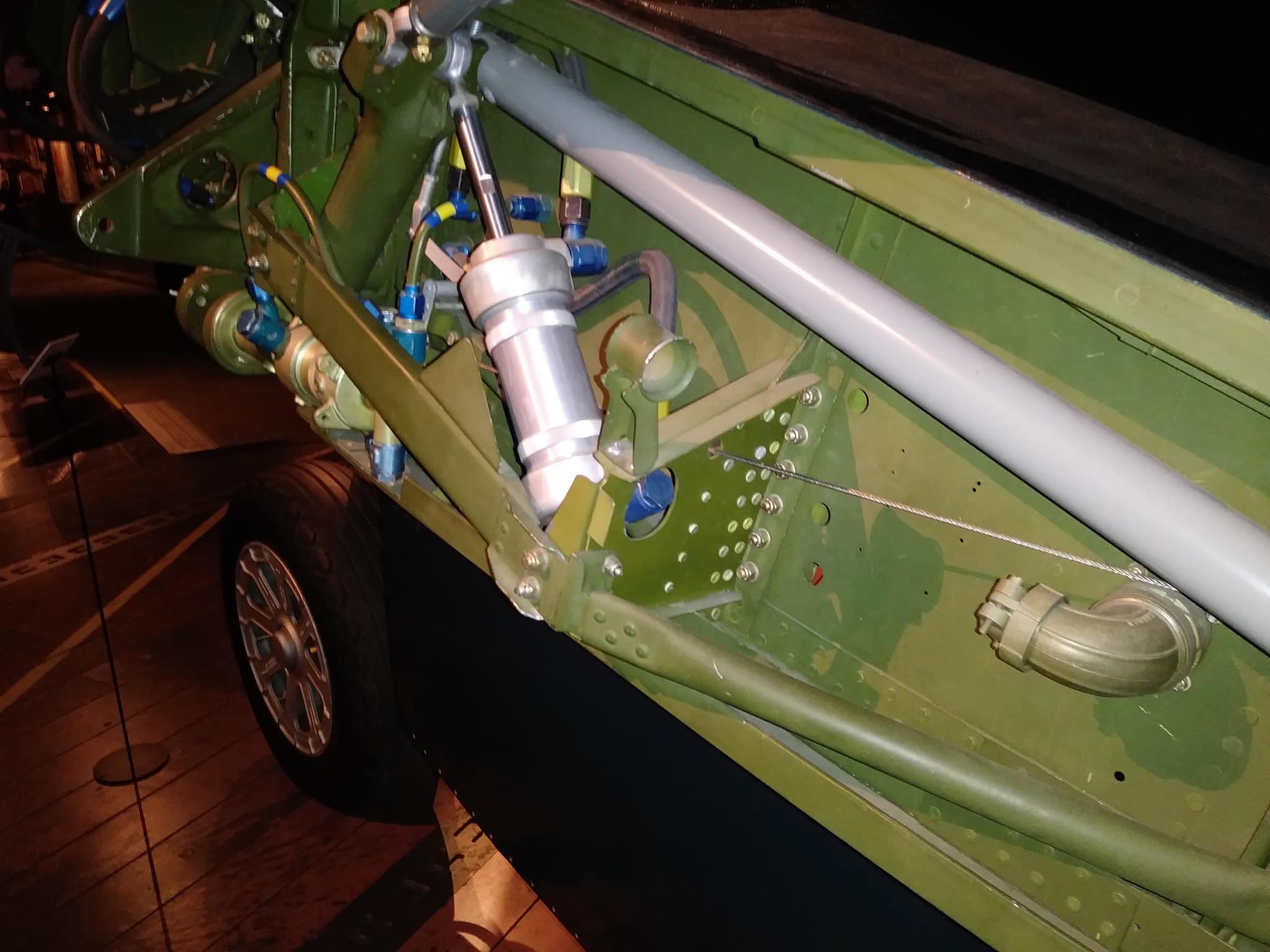
These photos were taken by me, and some are courtesy of Don England, formerly of MOF – thanks very much. Nicknames for the Corsair included: U-Bird, Hog-Nose, Horseshoe, Great Iron Bird, Sweetheart of Okinawa, Super Stuka, The Hog, Bent Wing Bird, Ensign Eliminator, Hosenose, and Whistling Death. The Corsair was designed by Chance Vought Chief Engineer Rex B. Beisel, a graduate of the University of Washington. Fitted with a Pratt & Whitney R-2800-8W Double Wasp engine powering a 13 ft. Hamilton propeller (9 in. clearance between prop tips and ground or carrier deck). Armament varied but could be fitted with six wing-mounted Browning M2 .50 caliber machine guns and 8 HVAR rockets or 2,000 lbs. of bombs from wing hardpoints (the inner undersurfaces of the wings were reinforced). Here is a link to my walkaround: https://www.facebook.com/video.php?v=961619977198993
The Corsair was fitted with a small window on the leading edge of each wing. The one on the right wing contains the gun camera. The leading edge on the left wing contained an “Approach Light” with a regular light bulb situated behind a multi-colored filter. The filter had horizontal bands from top to bottom as follows: green, a thinner line of amber, and then red at the bottom. While not visible to the pilot, it was meant to be very visible to the LSO (Landing Signal Officer) on an aircraft carrier deck, providing him with information as to the attitude of the aircraft. If the plane is nose-high, the LSO sees red, meaning the Corsair is approaching too slowly. If the plane is nose-down, coming in fast, he sees green.
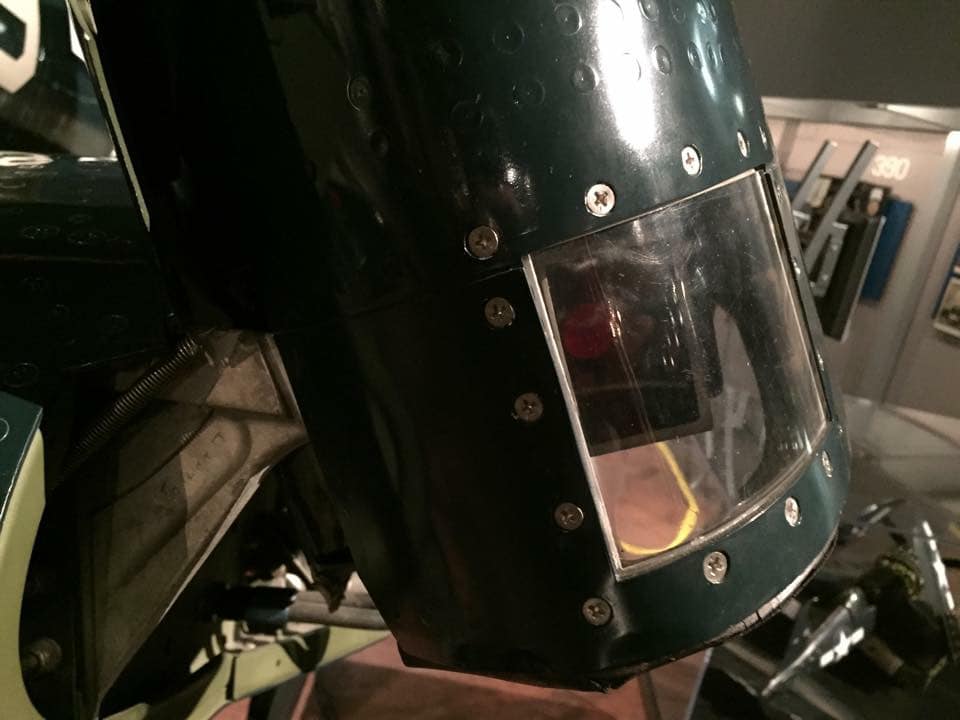
If the pilot has the aircraft in the correct attitude for landing (to intersect with the deck right in front of the arresting wires), the LSO sees amber. Note the 6-inch-long stall strip located on the leading edge of the starboard wing just outboard of the guns. The large propeller on Corsairs caused a lot of torque at slow speeds, which caused the port wing to drop at stalling speeds, creating a tendency for the aircraft to go into an asymmetrical stall. The problem was solved by the addition of this small device (it causes the starboard wing to stall symmetrically with the port wing). The oldest Corsairs had home-made wooden blocks; later, aircraft came from the factory with an aluminum strip already in place.
About the author:  Randy Malmstrom grew up in a family steeped in aviation culture. His father, Bob, was still a cadet in training with the USAAF at the end of WWII, but did serve in Germany during the U.S. occupation in the immediate post-war period, where he had the opportunity to fly in a wide variety of types that flew in WWII. After returning to the States, Bob became a multi-engine aircraft sales manager and, as such, flew a wide variety of aircraft; Randy frequently accompanied him on these flights. Furthermore, Randy’s cousin, Einar Axel Malmstrom, flew P-47 Thunderbolts with the 356th FG from RAF Martlesham Heath. He was commanding this unit at the time he was shot down over France on April 24th, 1944, and spent the rest of the war as a prisoner of war. Following his repatriation at war’s end, Einar continued his military service, attaining the rank of Colonel. He was serving as Deputy Wing Commander of the 407th Strategic Fighter Wing at Great Falls AFB, MT at the time of his death in a T-33 training accident on August 21, 1954. The base was renamed in his honor in October 1955 and continues to serve in the present USAF as home to the 341st Missile Wing. Randy’s innate interest in history in general, and aviation history in particular, plus his educational background and passion for WWII warbirds, led him down his current path of capturing detailed aircraft walk-around photos and in-depth airframe histories, recording a precise description of a particular aircraft in all aspects.