
By Randy Malmstrom
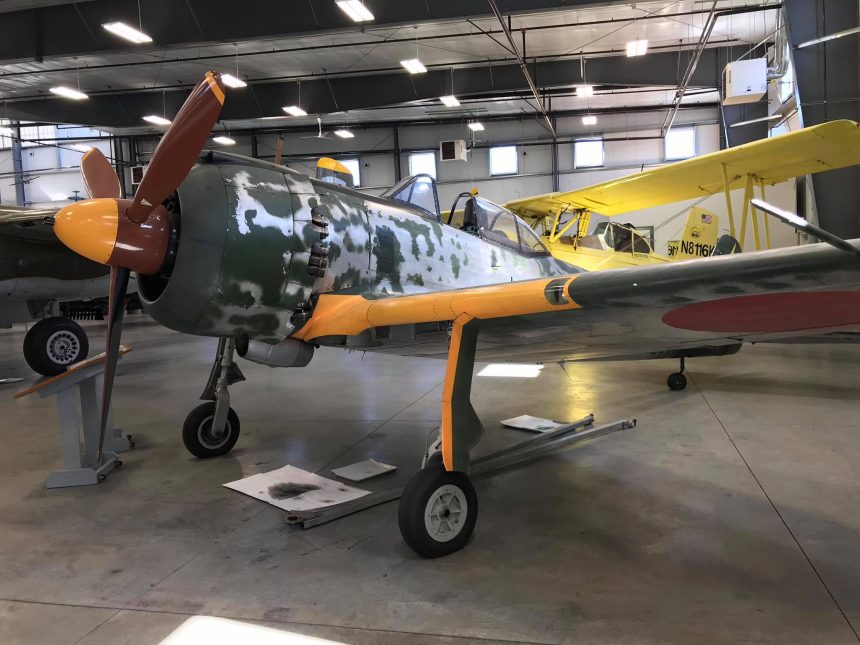
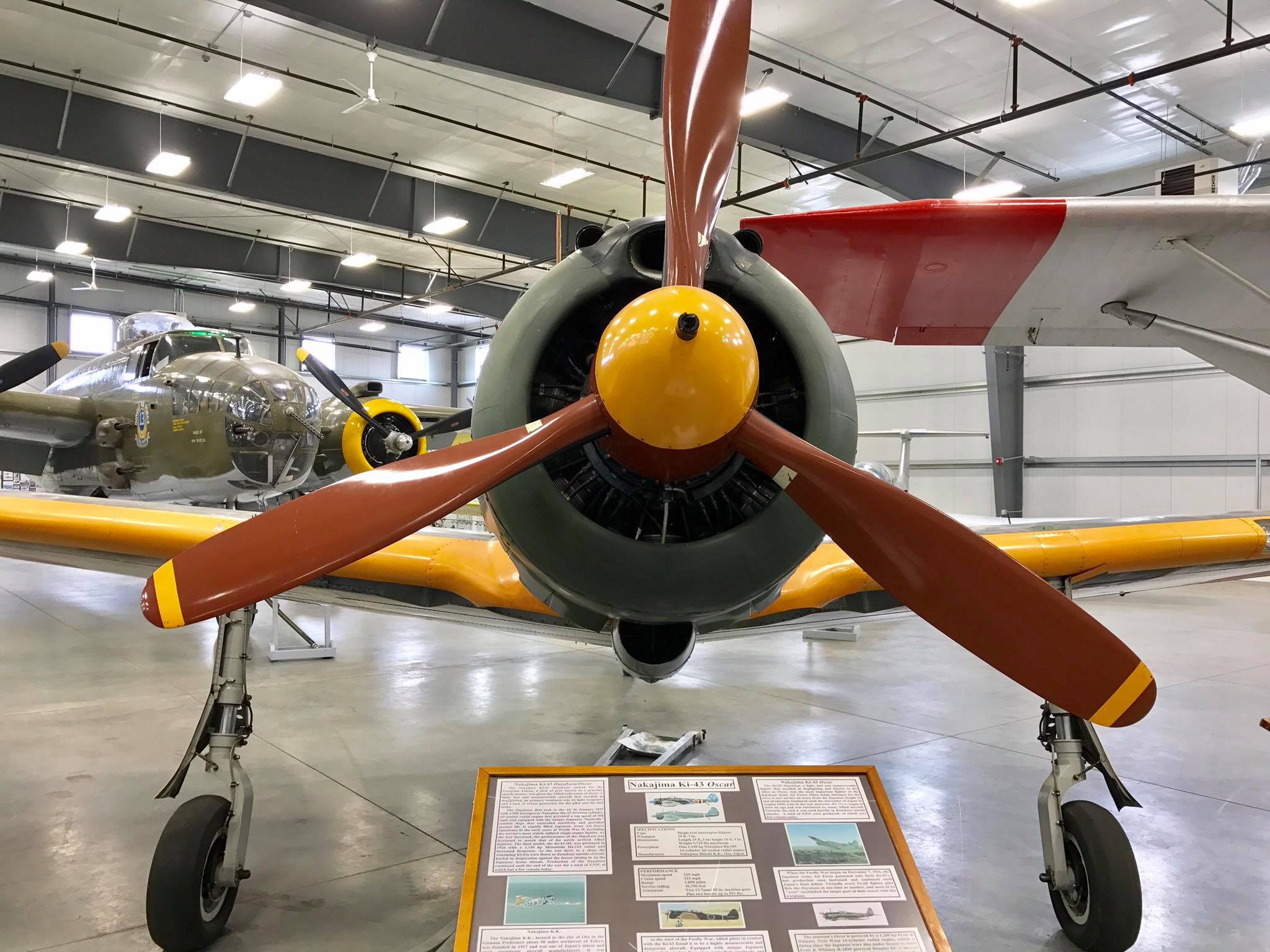
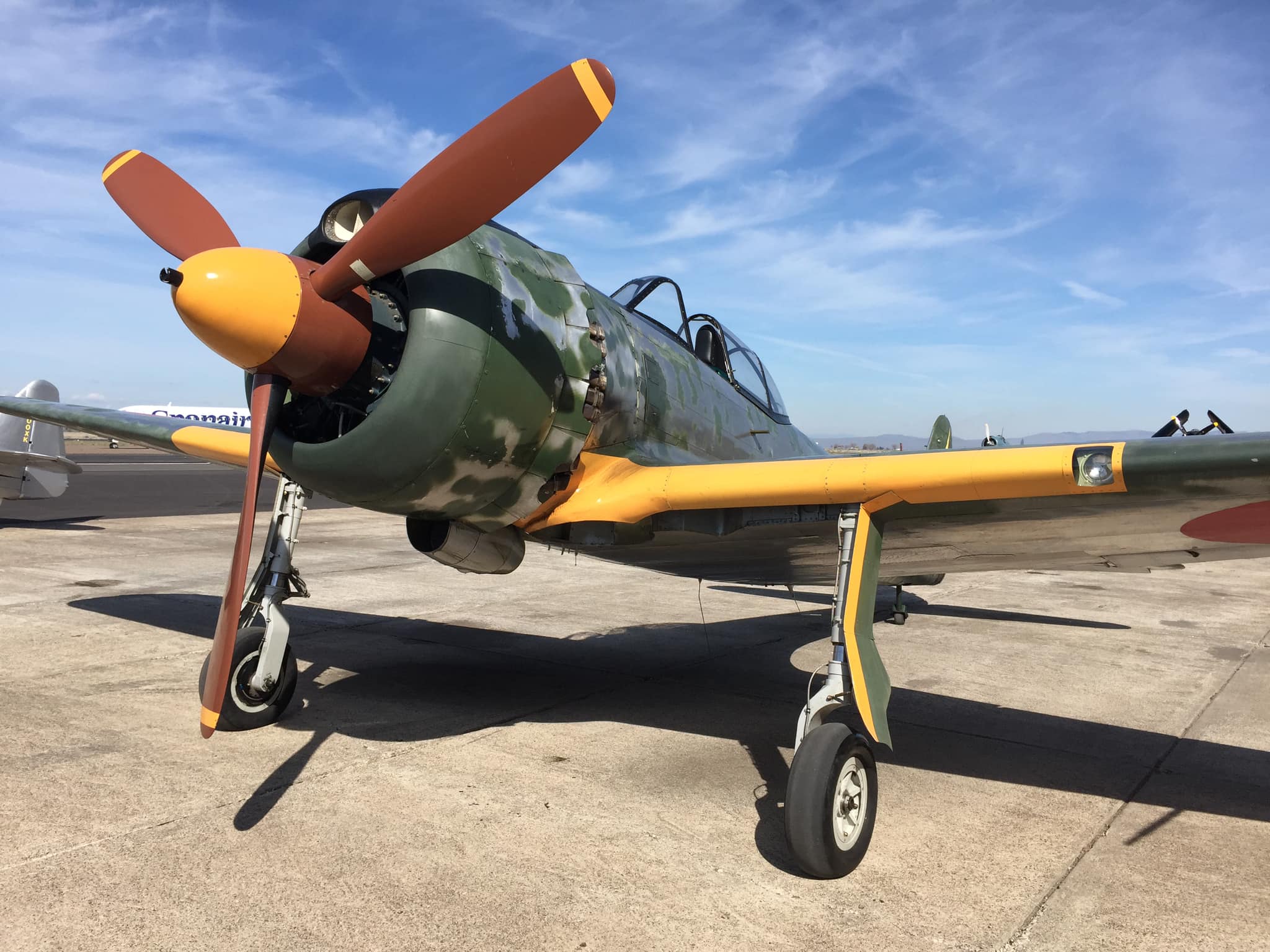
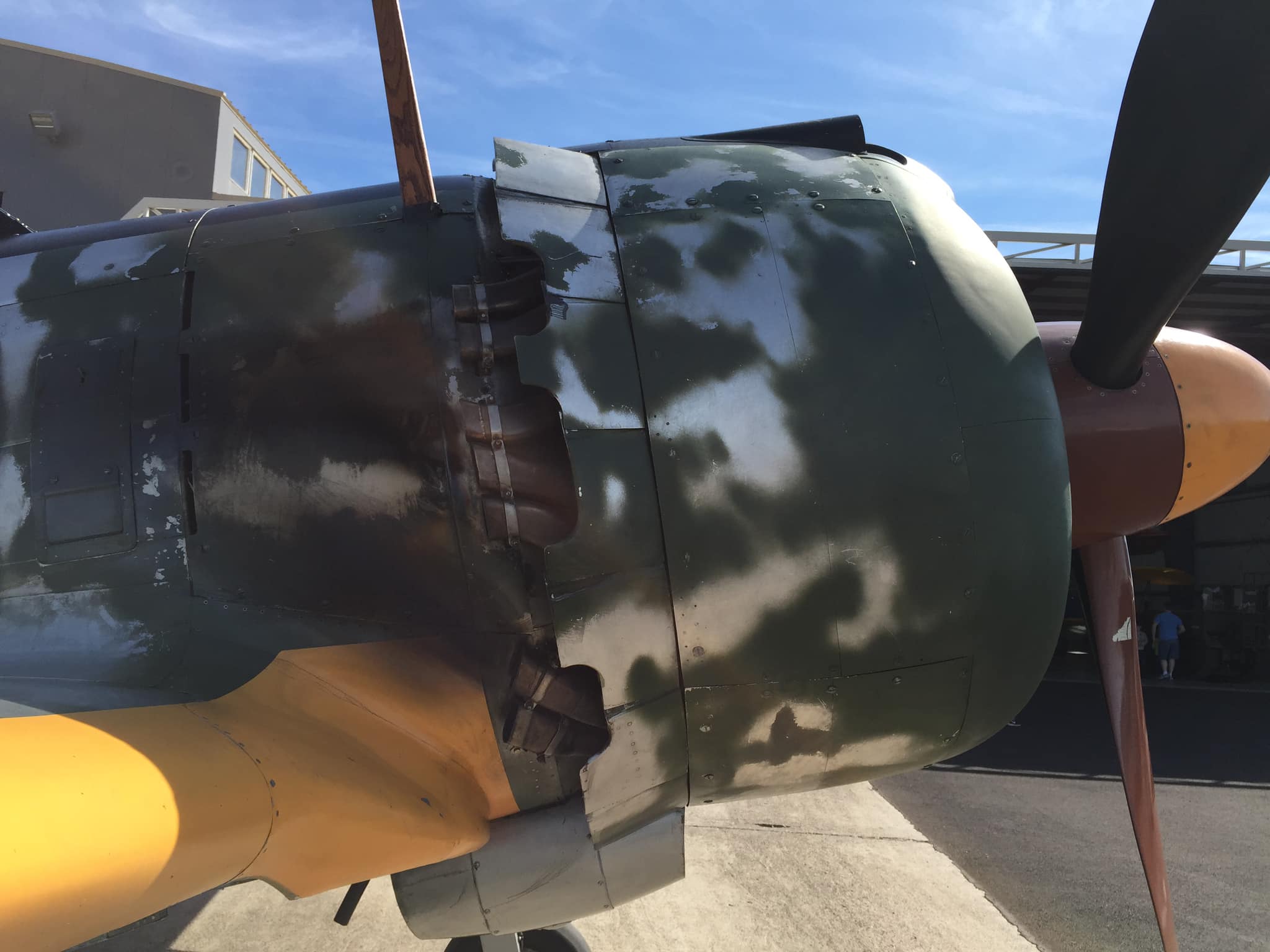
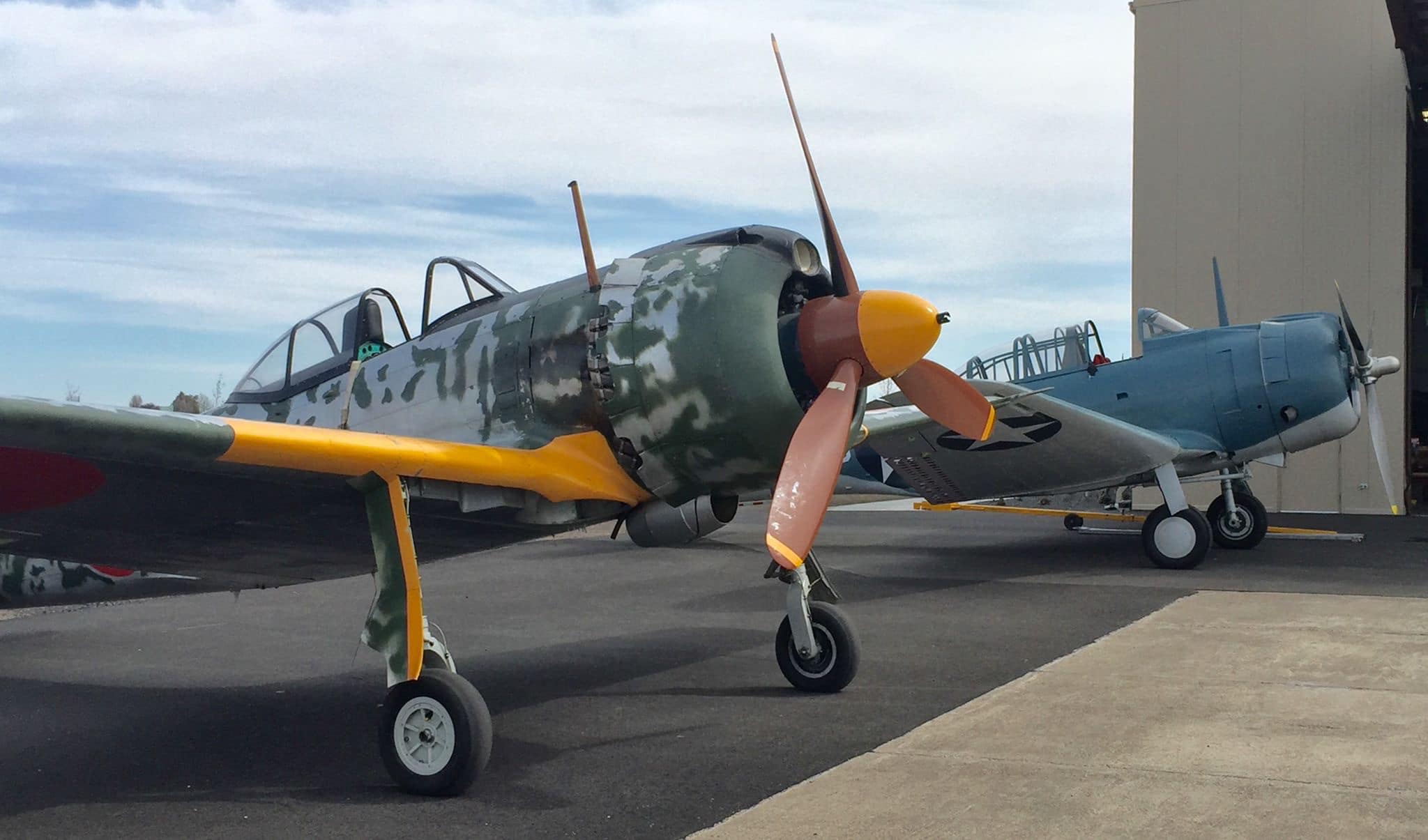
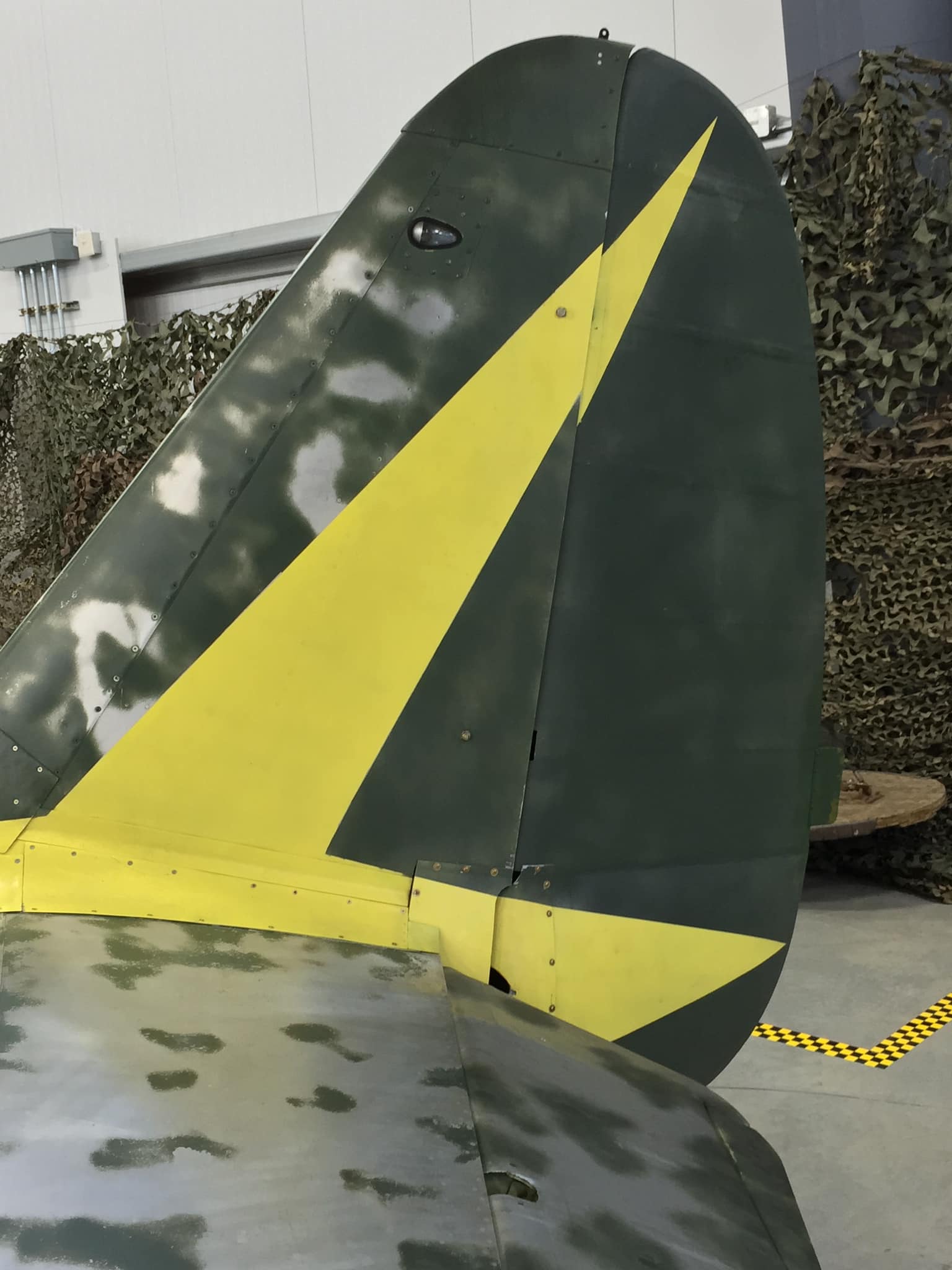
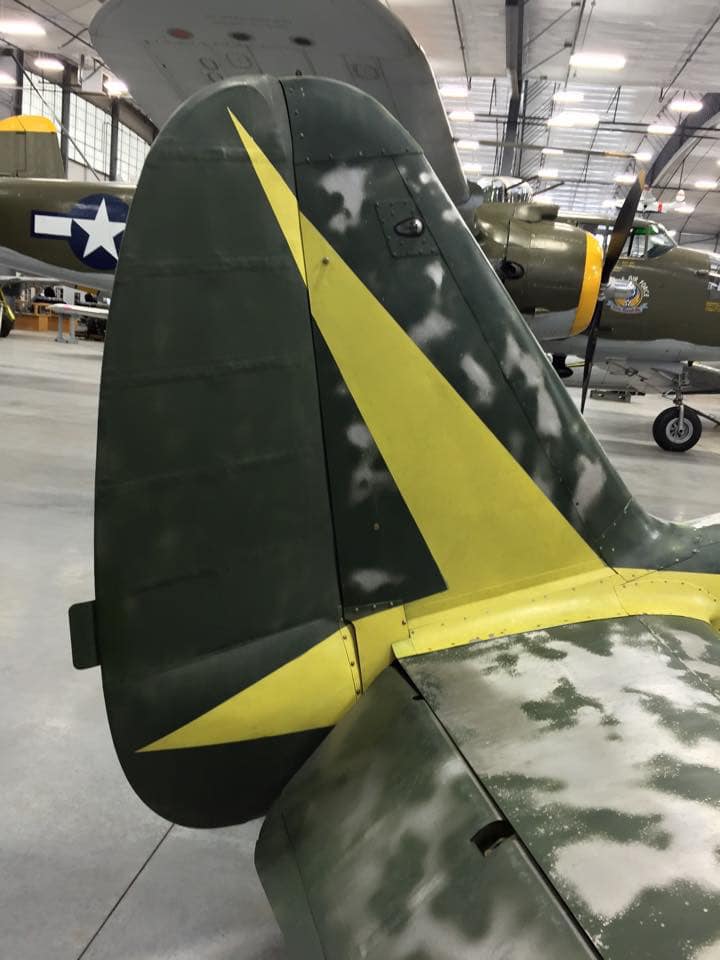
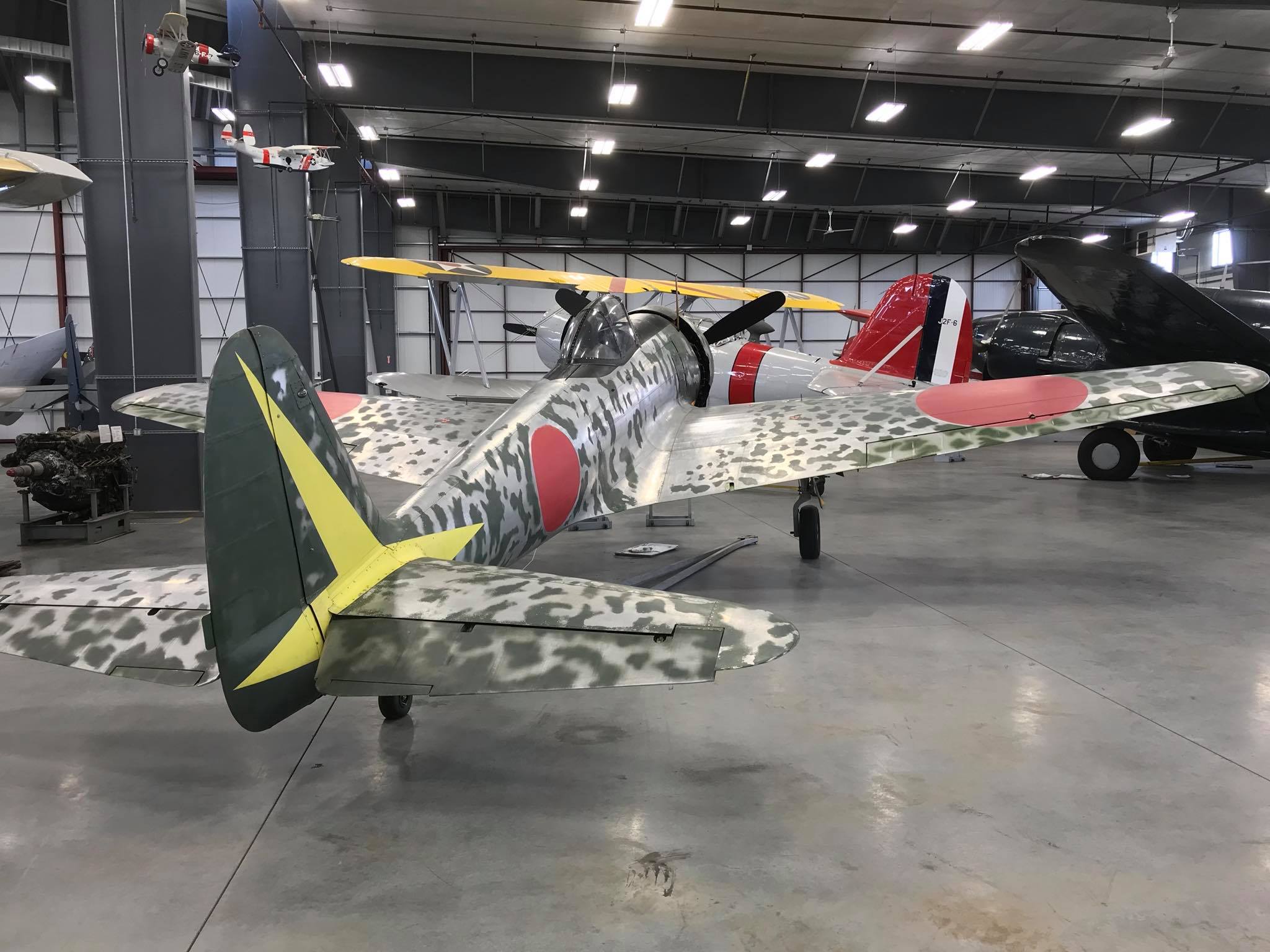
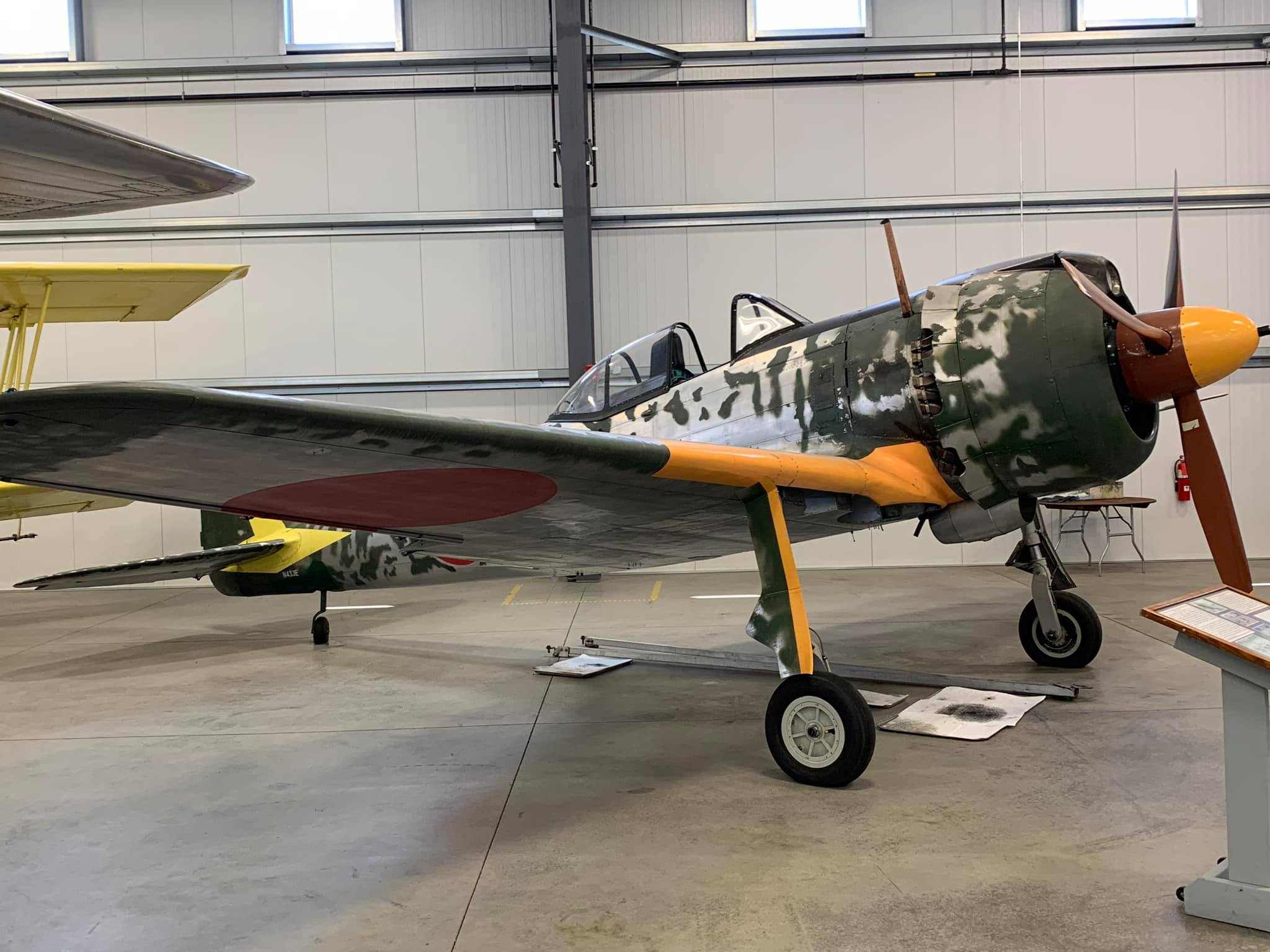
Nakajima Ki-43-IIIa Hayabusa (はやぶさ ) (Peregrine Falcon), Army Type 1 Fighter, Allied reporting name “Oscar” N43JE. This particular airworthy aircraft is a rebuild from usable parts from four wrecks recovered from the Kuril Islands (lying equidistant between Japan and Russia), along with newly manufactured parts. The parts from the wrecks were brought to the U.S. by Doug Champlin, and rebuild began with Texas Airplane Factory in Fort Worth, Texas, and was completed in 2004 by Gosshawk Unlimited (which moved to Casa Grande, Arizona in 2005; it had been started by Dave Goss, who had been General Manager of Champlin Fighter Museum in Mesa). When it was in primer, the Texas Airplane Factory was planning on a green over gray (grey) camouflage scheme for the airplane. But, after transfer to Gosshawk, the mottle paint scheme used was from the markings of the 54th Sentai (Fighter Group or Air Combat Group), 3rd Chutai (Fighter Squadron), Mfg. No. 15344 (see photo of tail emblem). The 54th surrendered in Formosa in 1945.
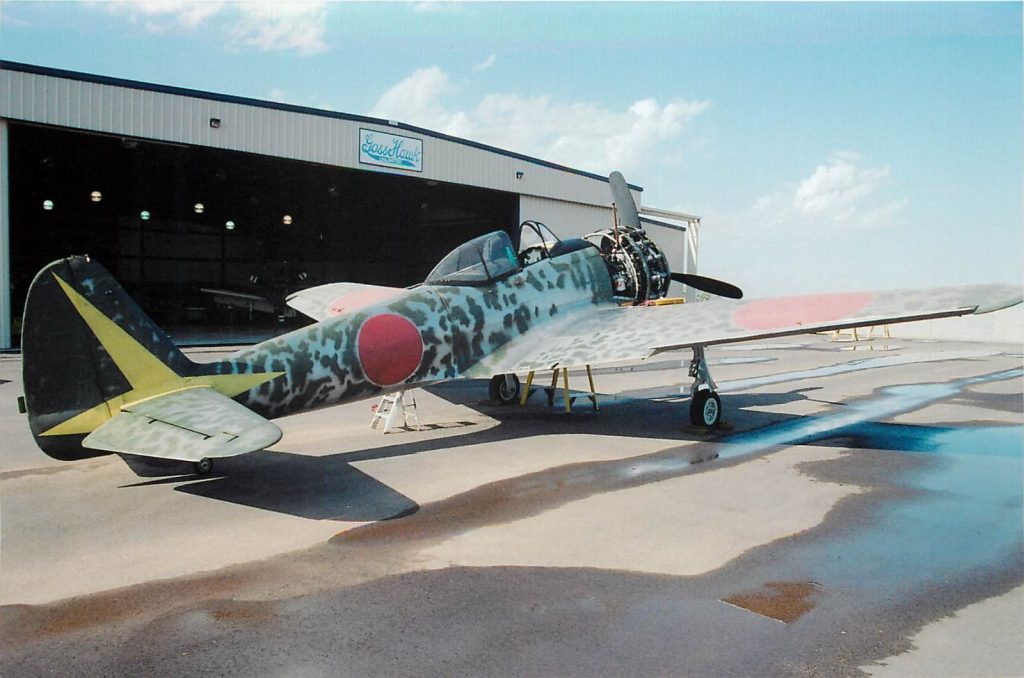
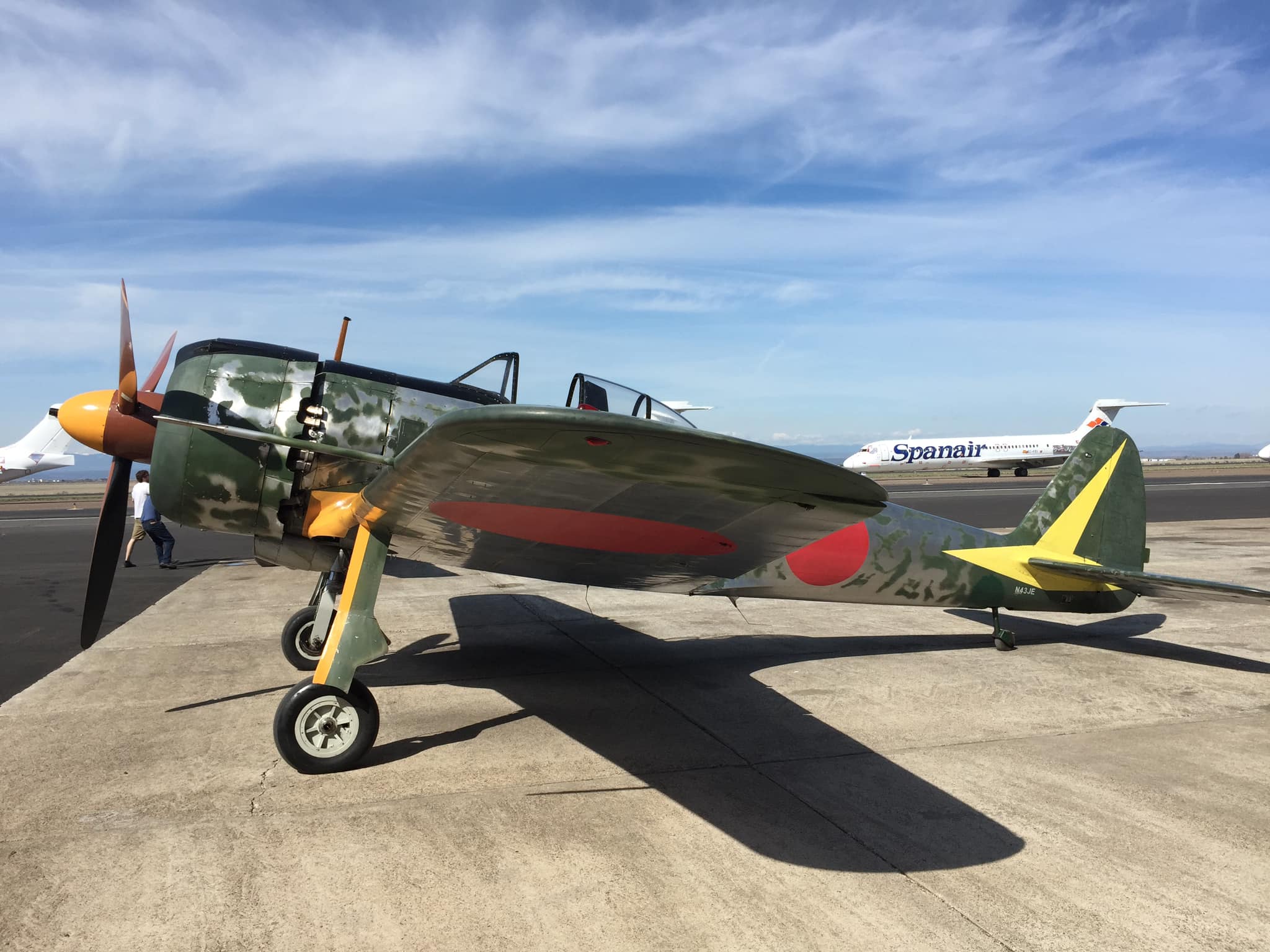
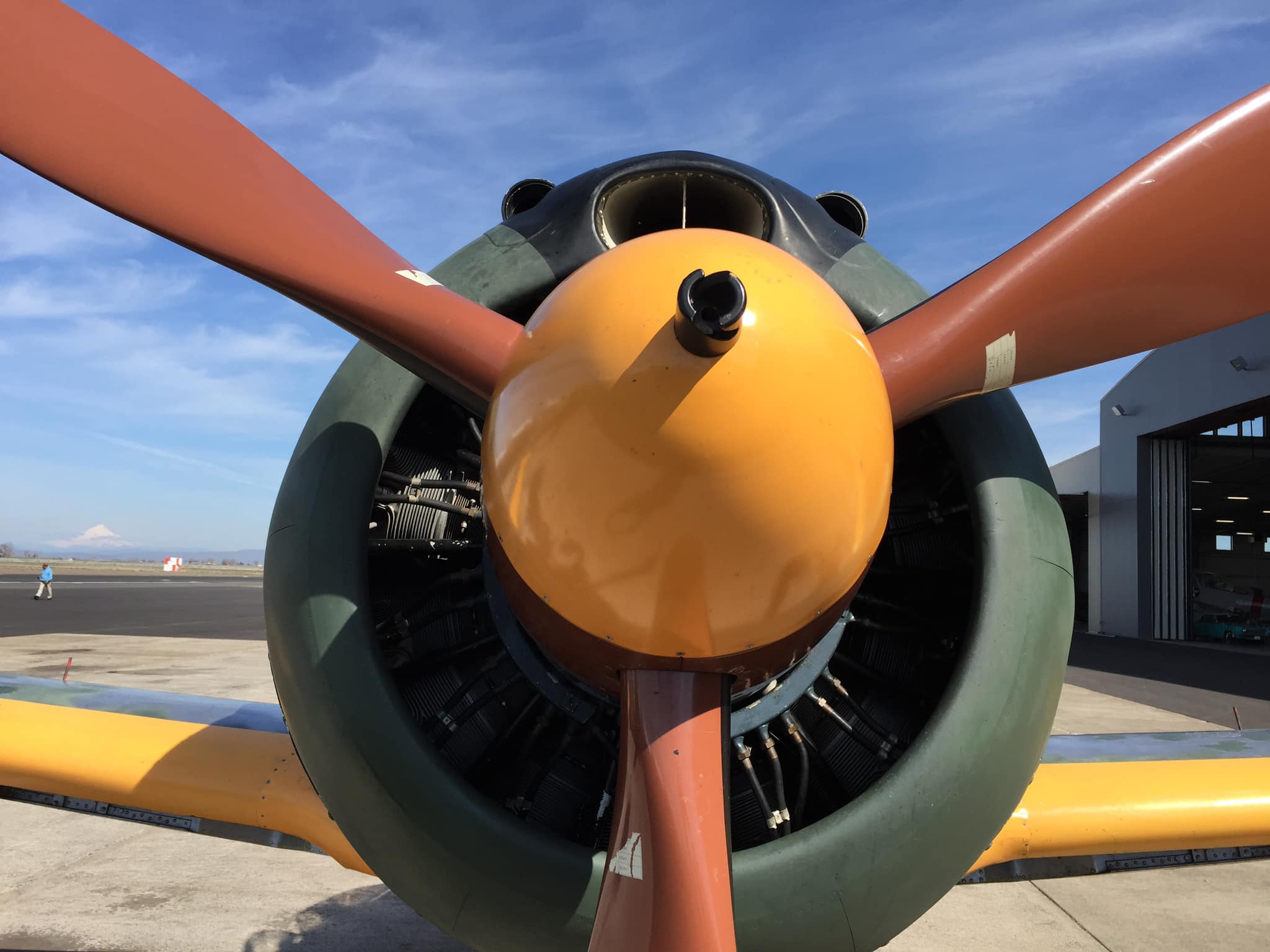
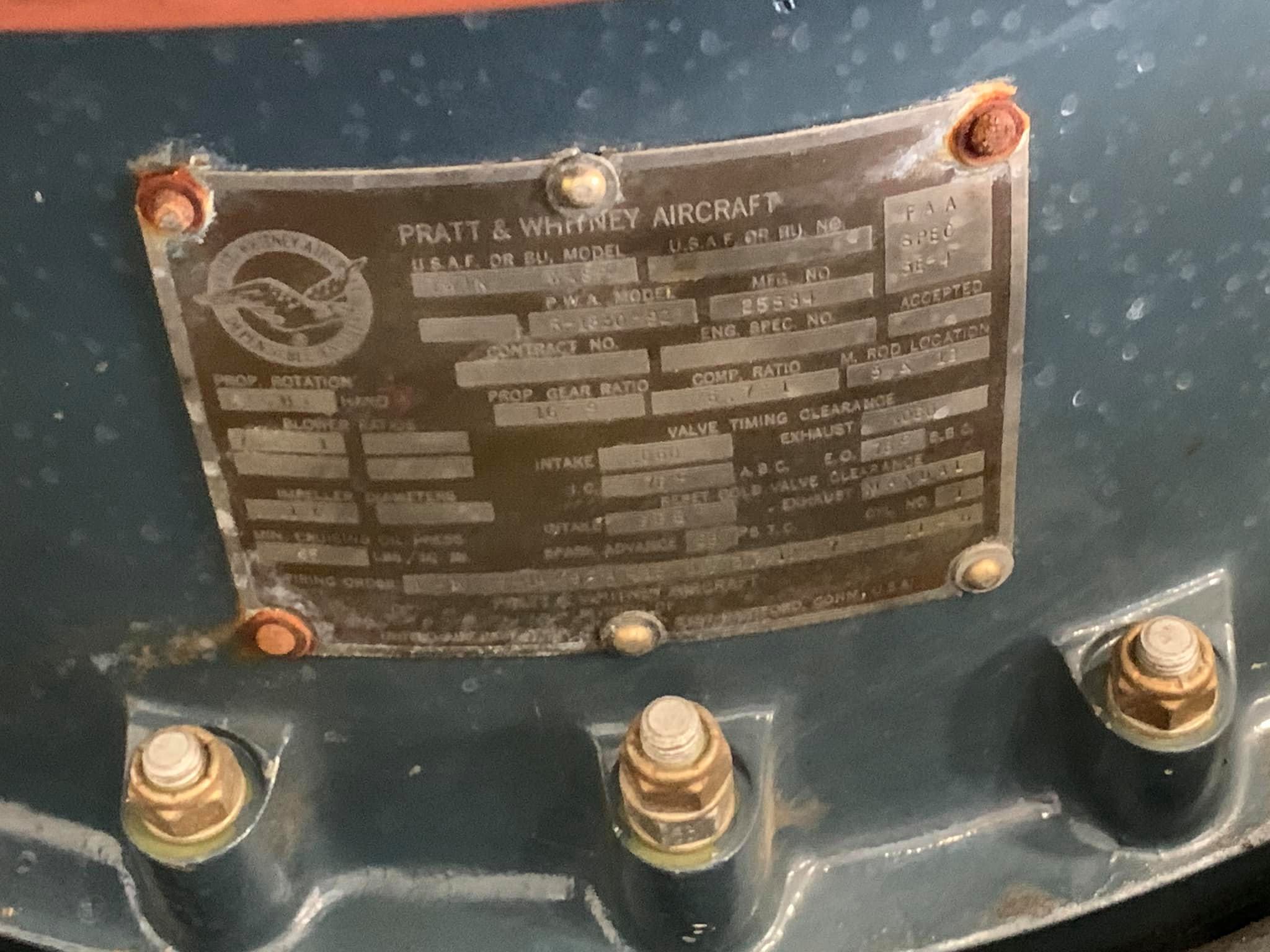
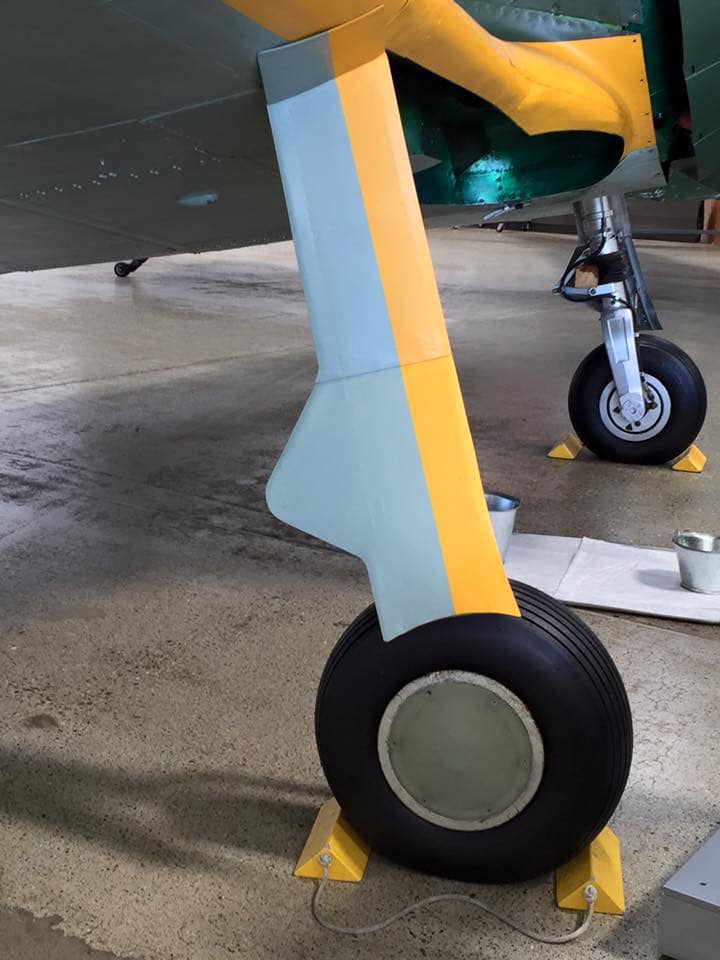
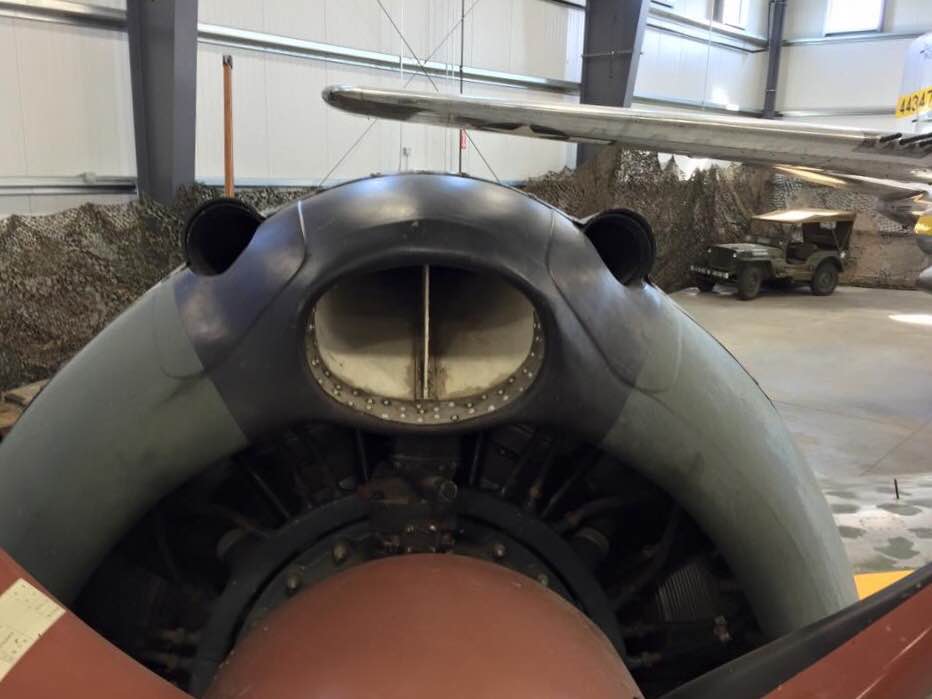
It has been fitted with a Pratt & Whitney R-1830-92 engine (in the 1930’s, Japan had a license to build their version of the Douglas DC-3 with a version of the P&W engine, and the P&W engine fits into the Ki-43 cowling within 4″ of the original radius). Note the color used for the Aotake undercoat. It was acquired to become part of the Erickson Aircraft Collection located in Madras, Oregon, and is now owned by Jack Erickson’s Nakajima N43JE LLC.
As a side note, pilots and crews of B-17’s (318th Squadron, 88th BG), P-38’s (432nd Army Air Force Base Unit), P-39Q’s (546th Squadron, 478th FG), P-63 King Cobra’s (432nd), and C-47’s trained at Madras Army Air Field during World War II under the Spokane Air Technical Service Command (SPATSC). As of this writing, aside from the certain Erickson crew, Ross Granley is checked out in this aircraft (I have flight clips here). My photos and YouTube links:
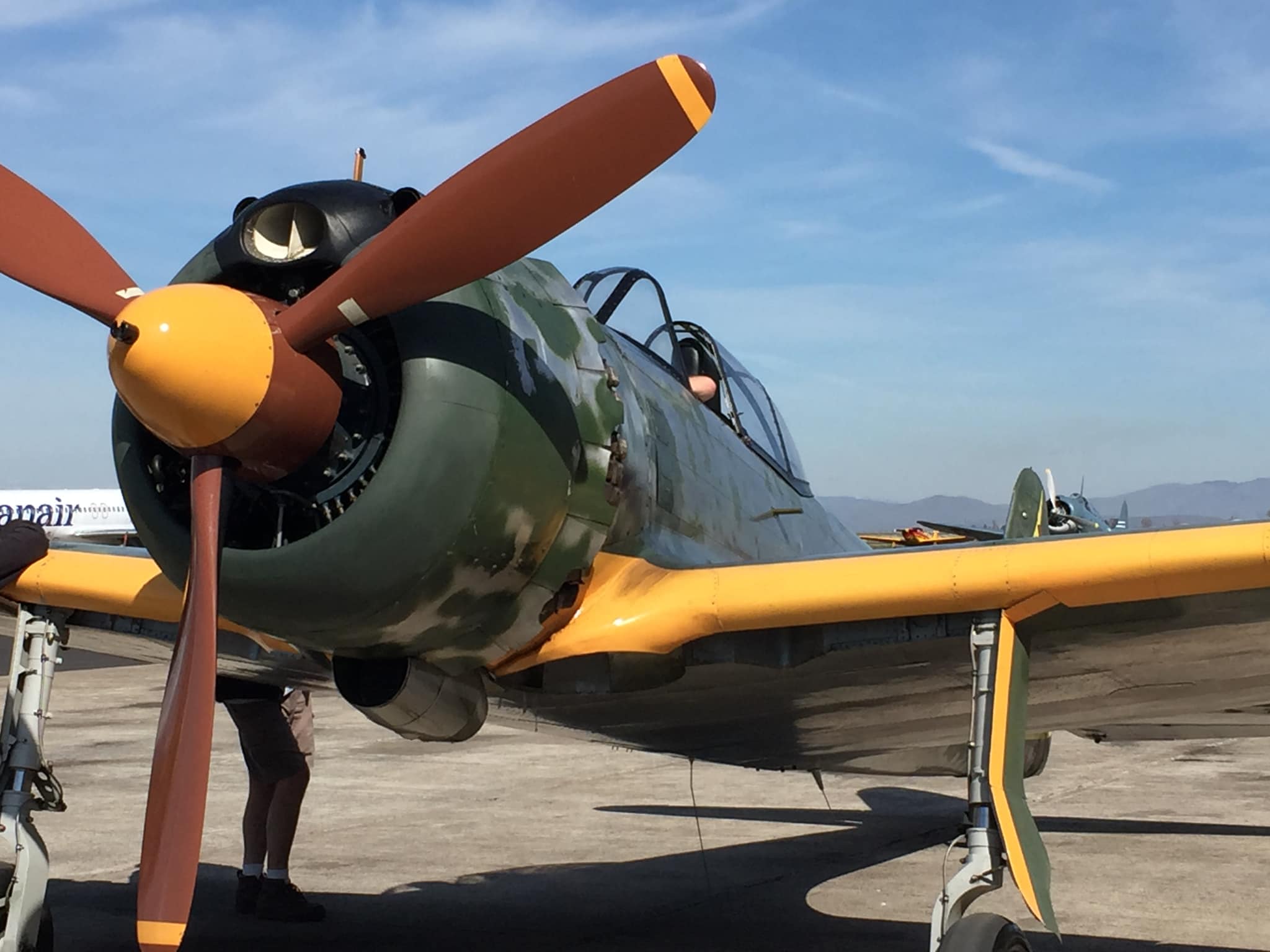
The Hayabusa was an all-metal construction except for fabric control surfaces. Its original design did not provide for pilot armor or self-sealing fuel tanks (later variants provided for both to some extent). It was powered by a Nakajima Ha-25 14-cylinder radial engine (later variants were fitted with the more powerful engines) with an annular air cooler located in front of the engine (this was later replaced by a honeycomb unit under the cowling). Armament varied by version but included a 7.7 mm Type 91 machine gun and a 12.7 mm Ho-103 heavy machine gun (similar to the Browning .50 cal.), both fitted to the top of the cowling and fired through the propeller. It is my understanding that the Ho-103’s slower rate of fire and tendency to jam led some pilots to replace it with a second Type 91 in the field. It could carry two 33 kg. bombs.
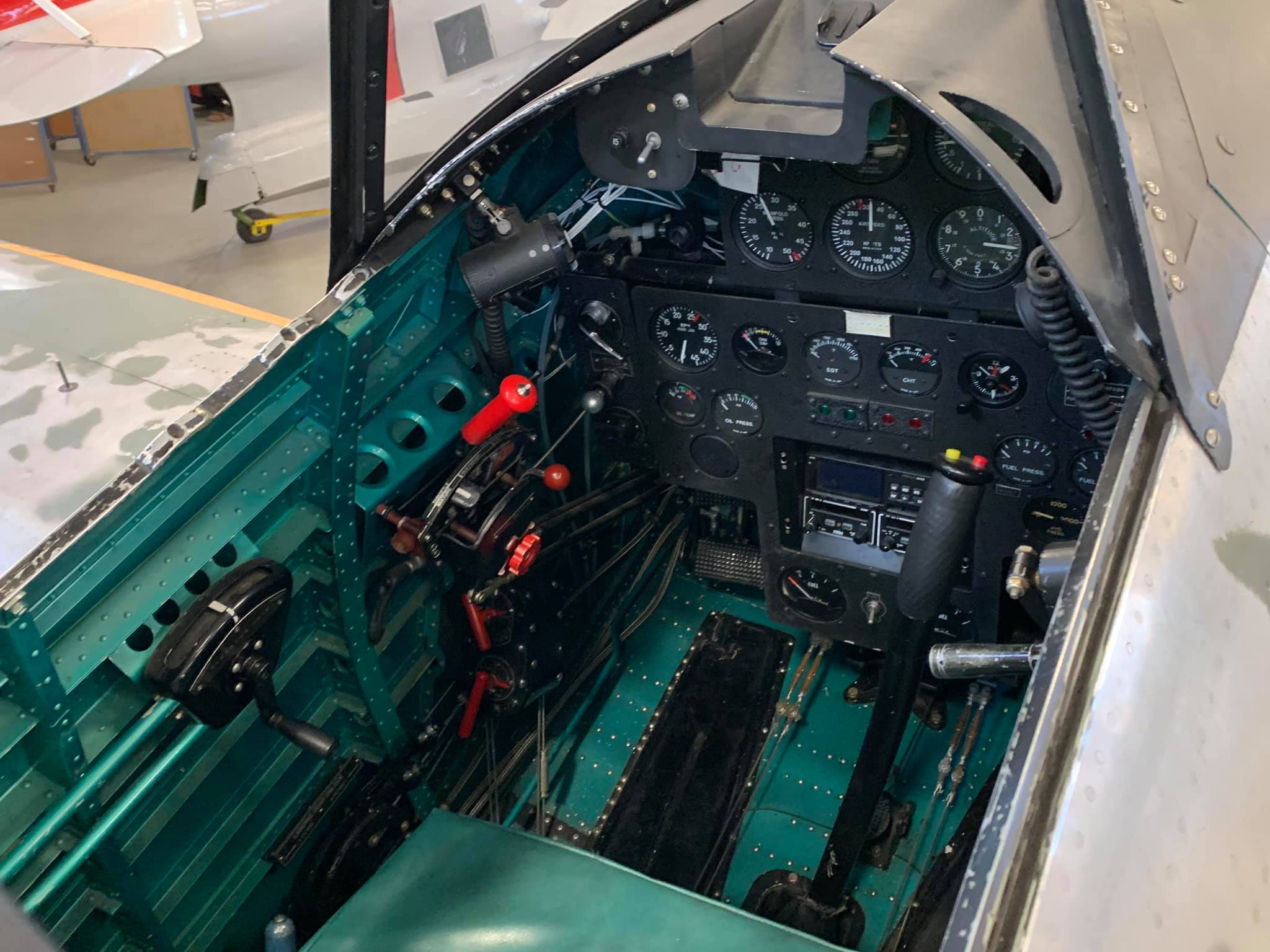
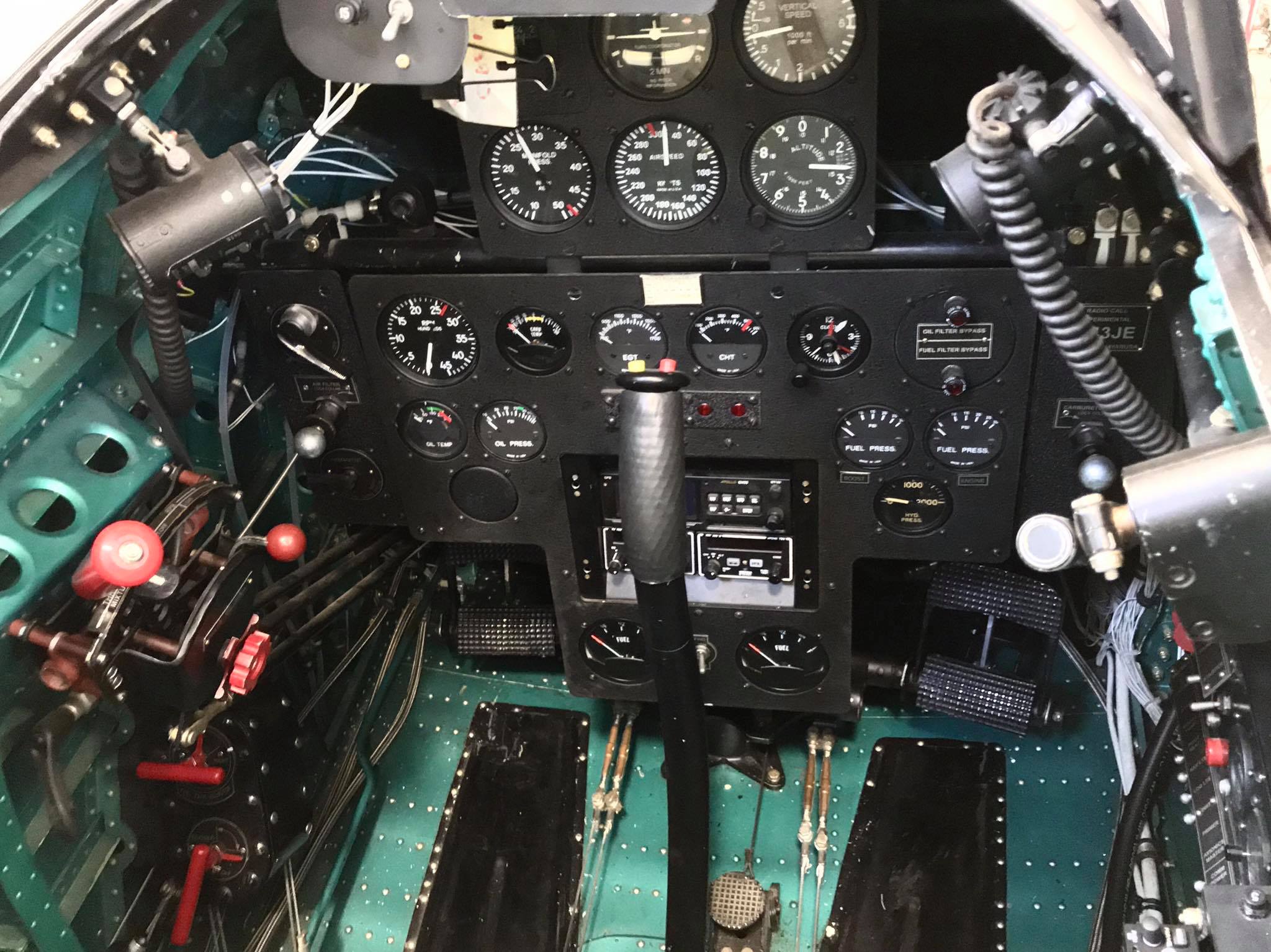
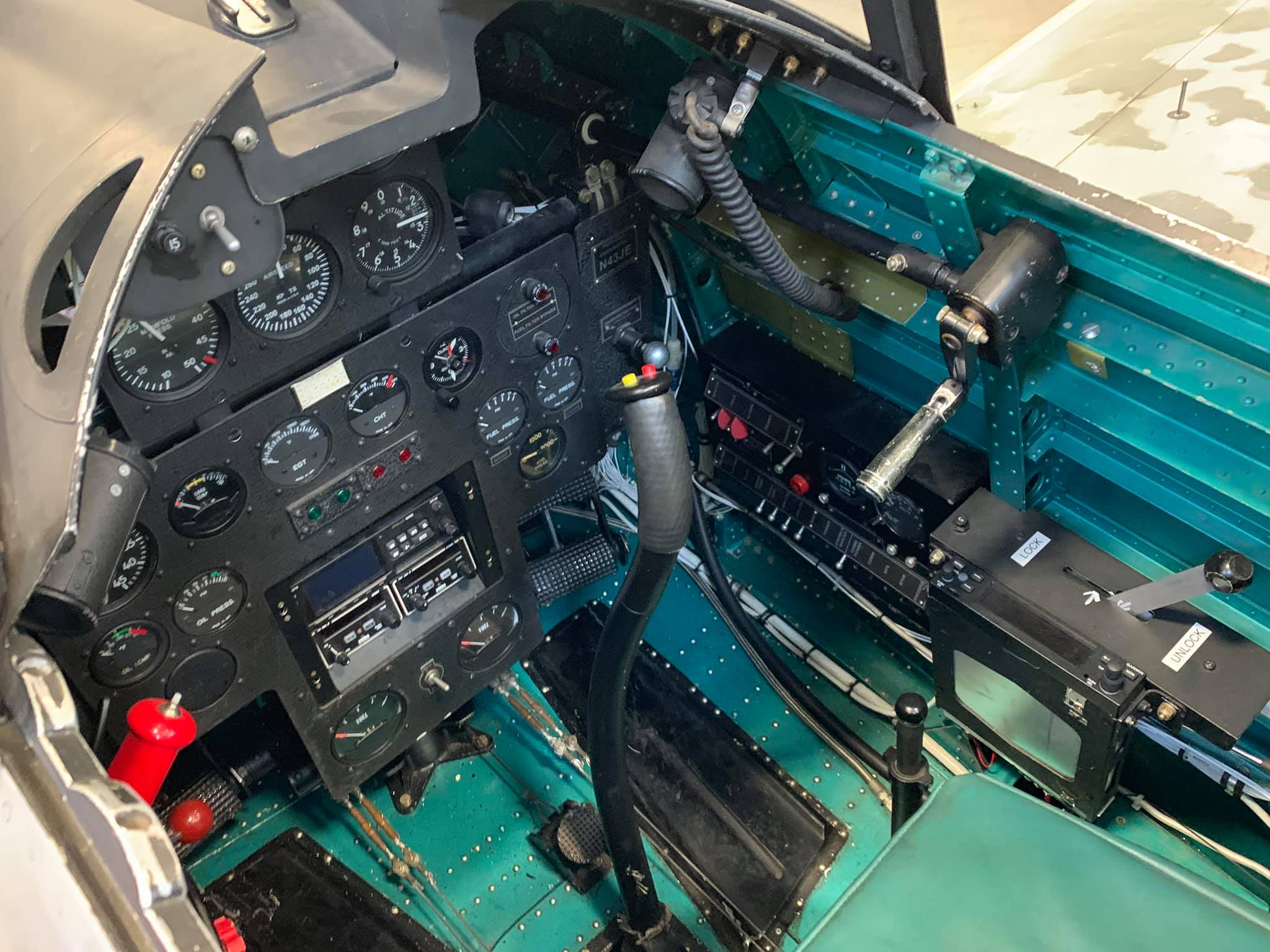
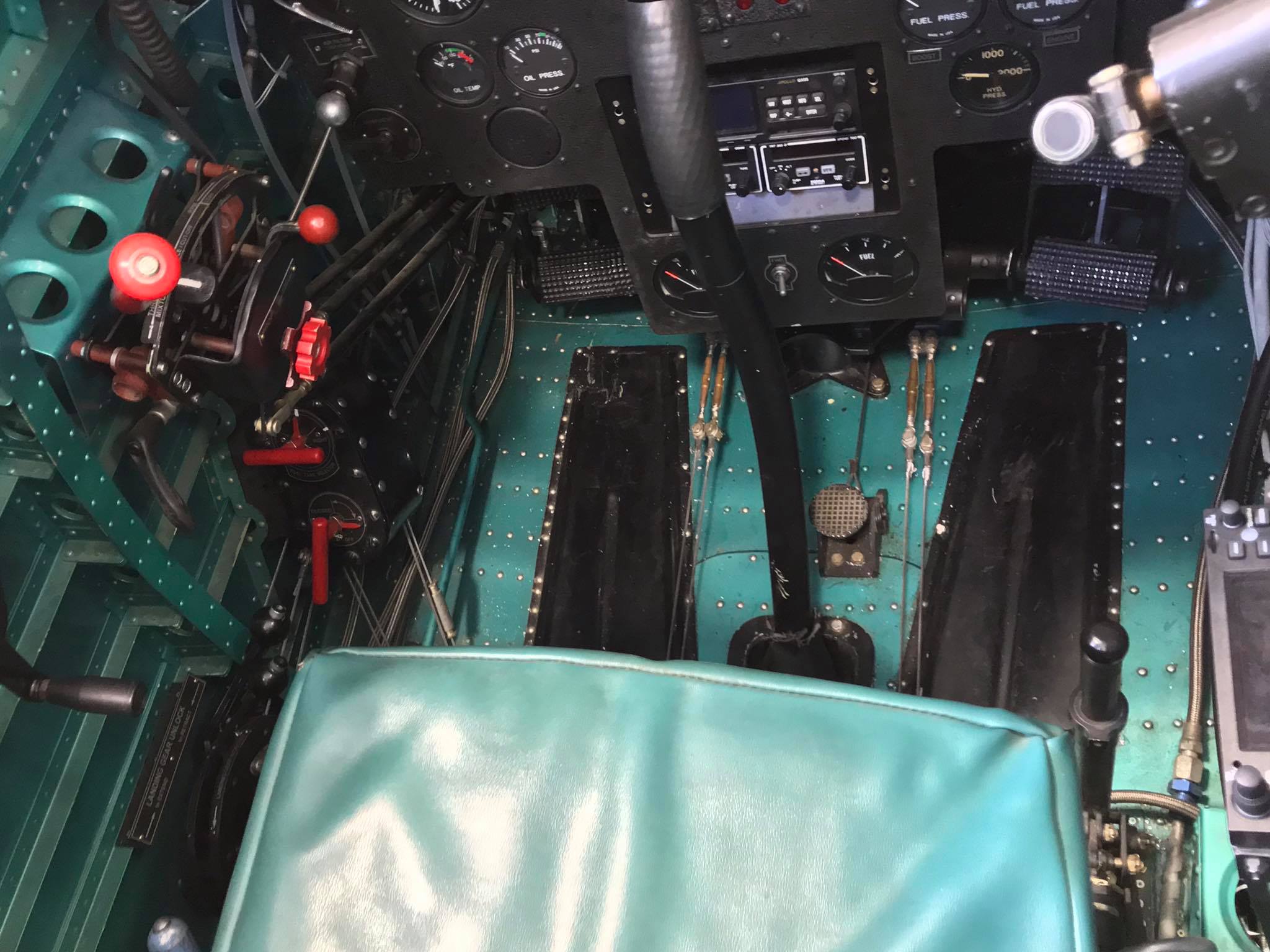
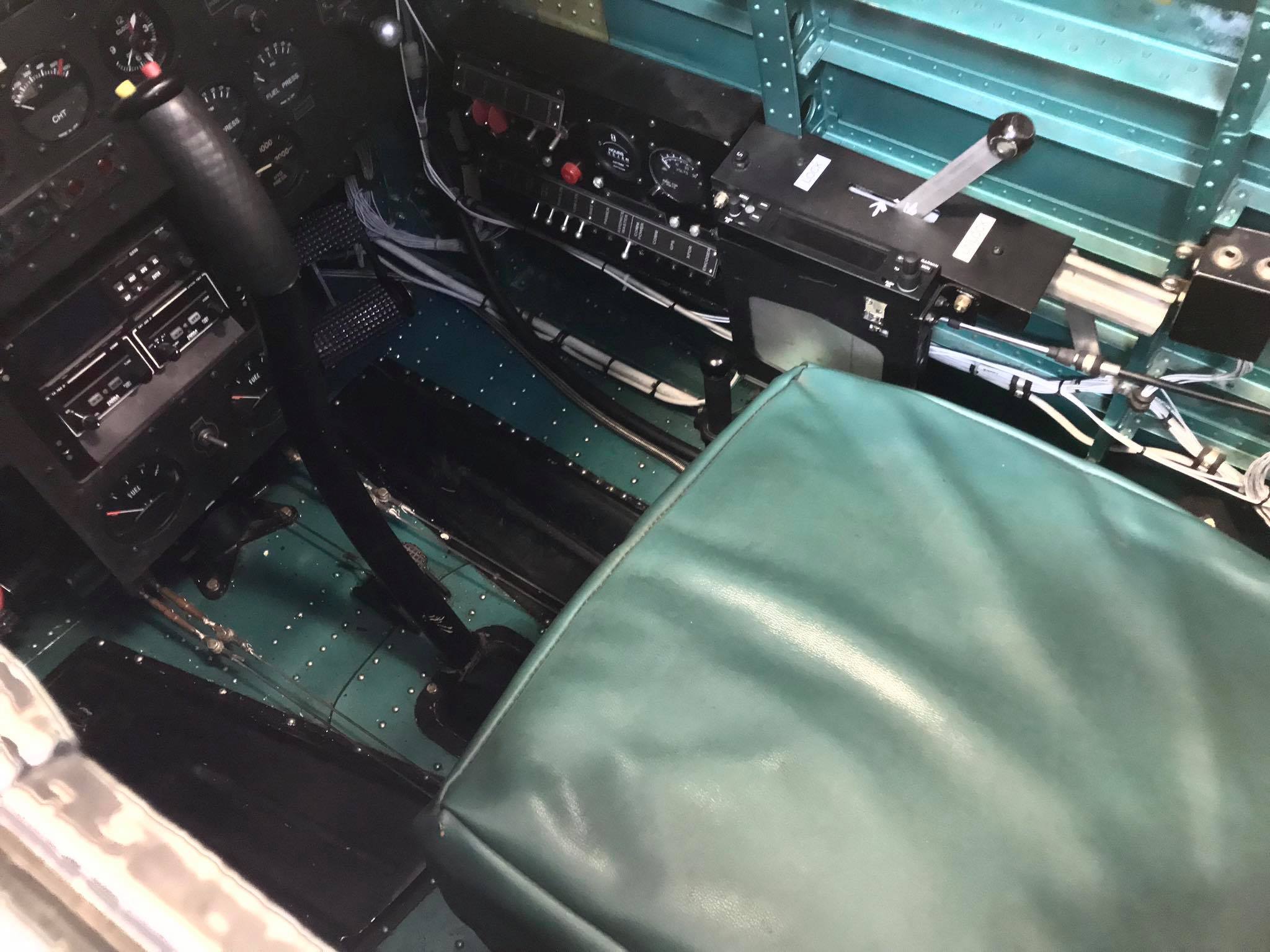
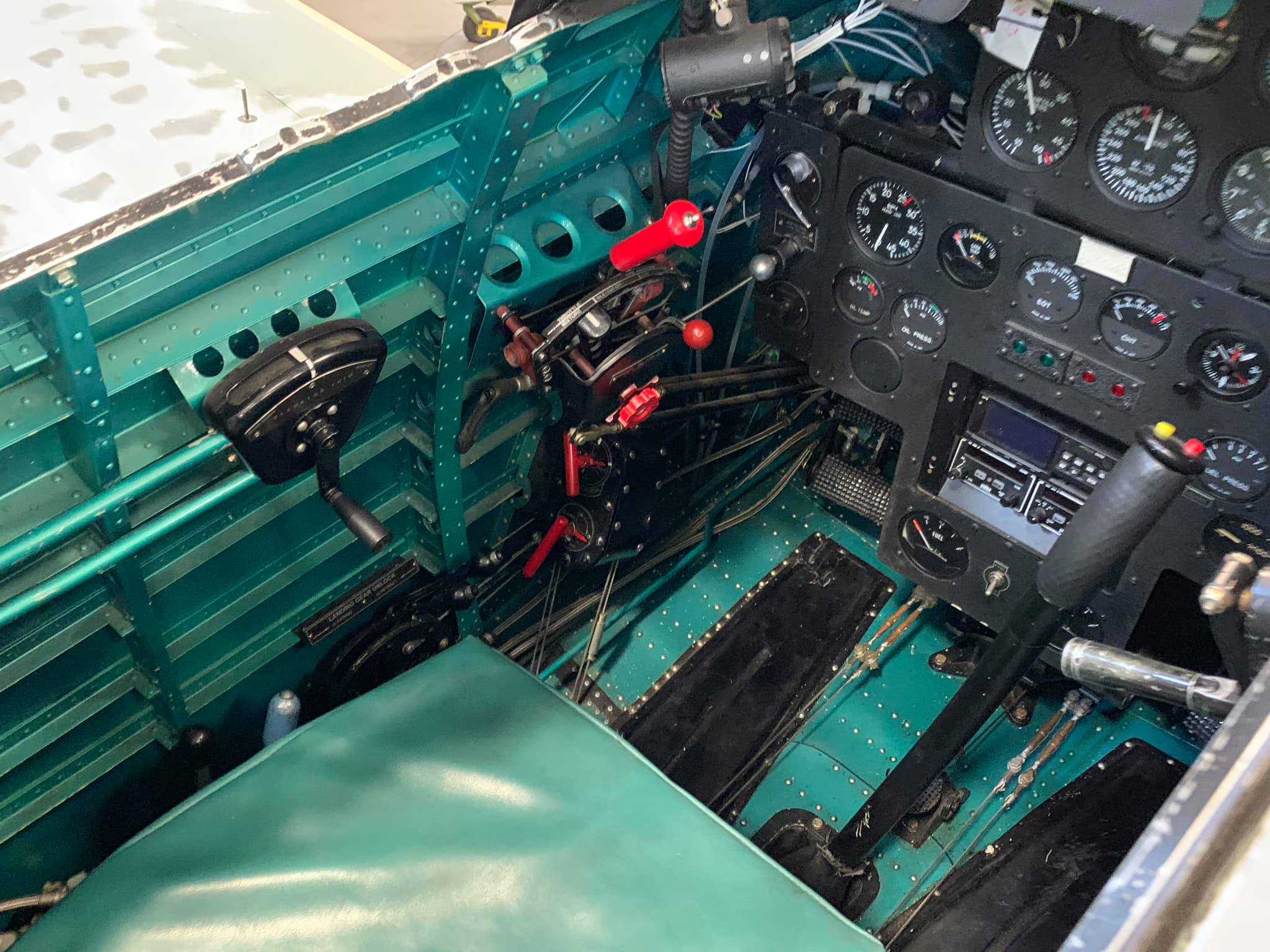
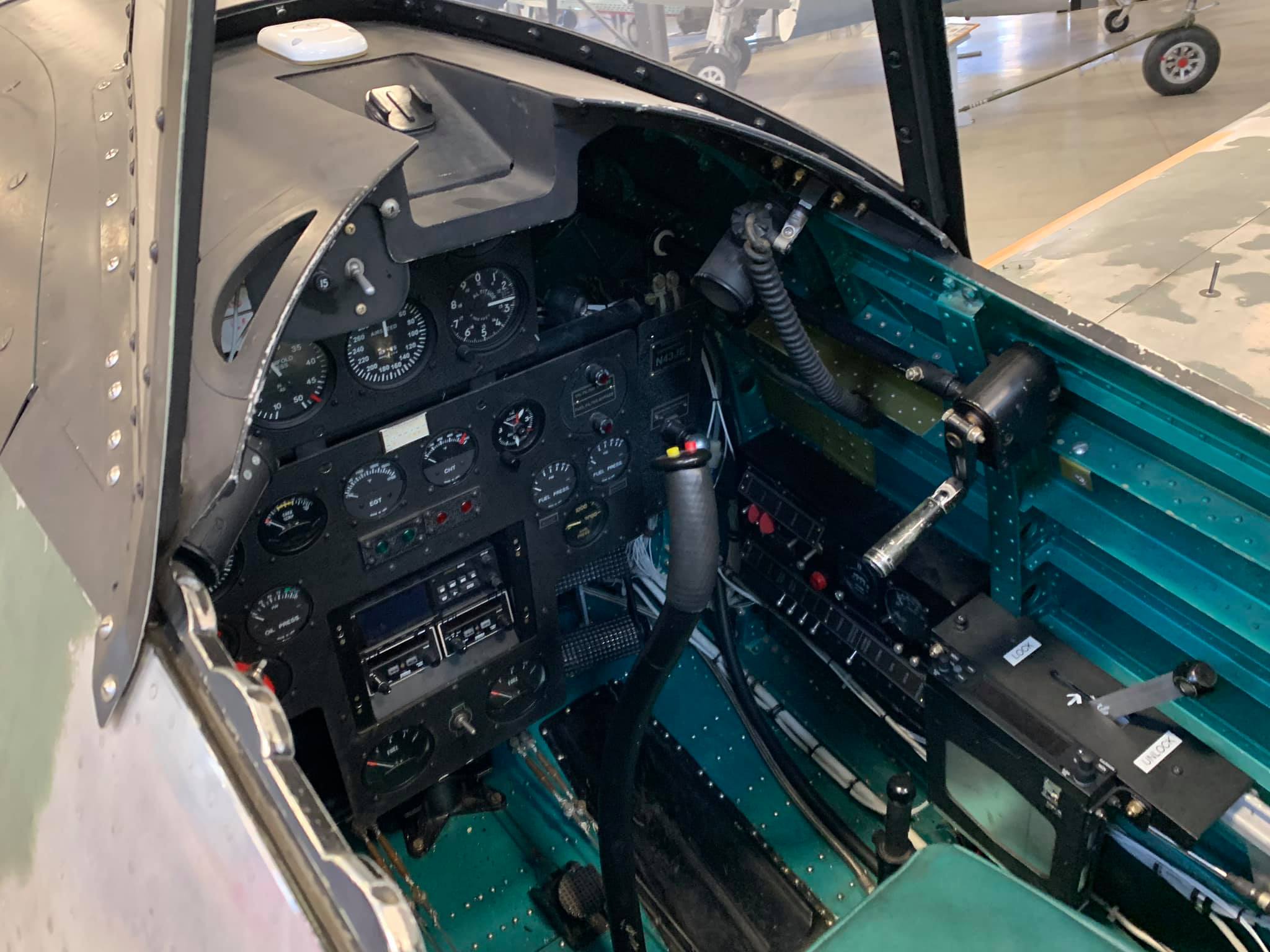
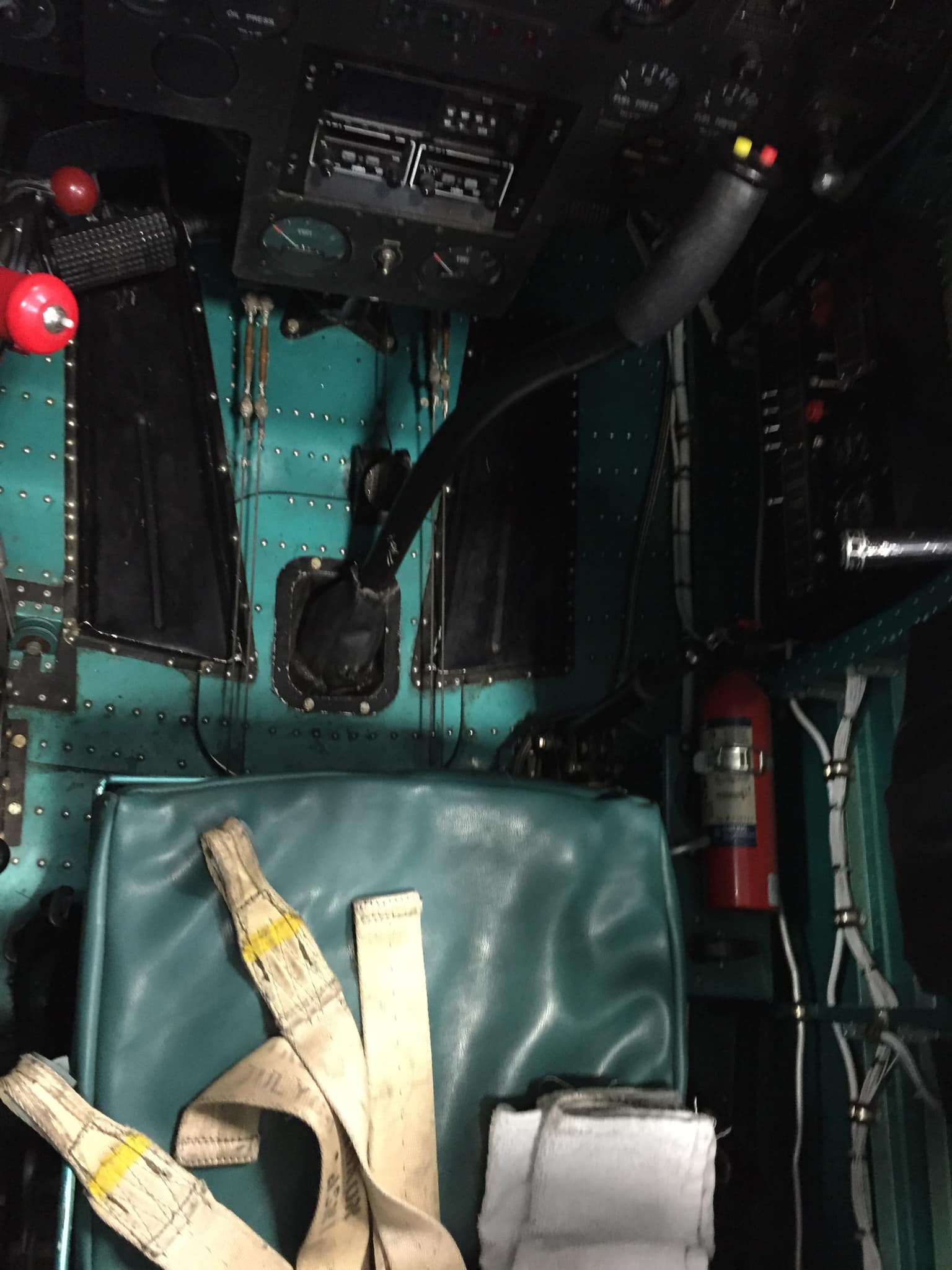
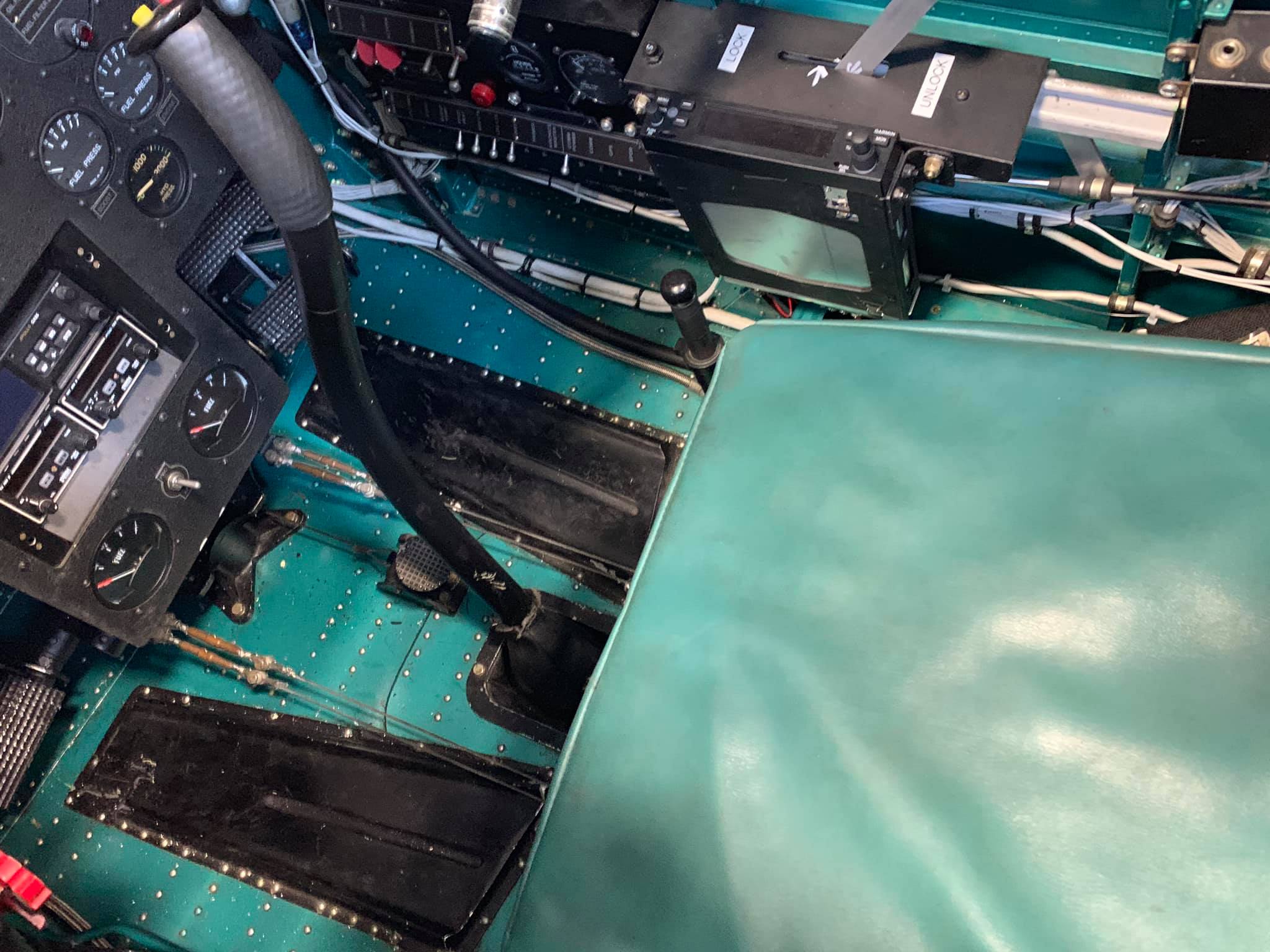
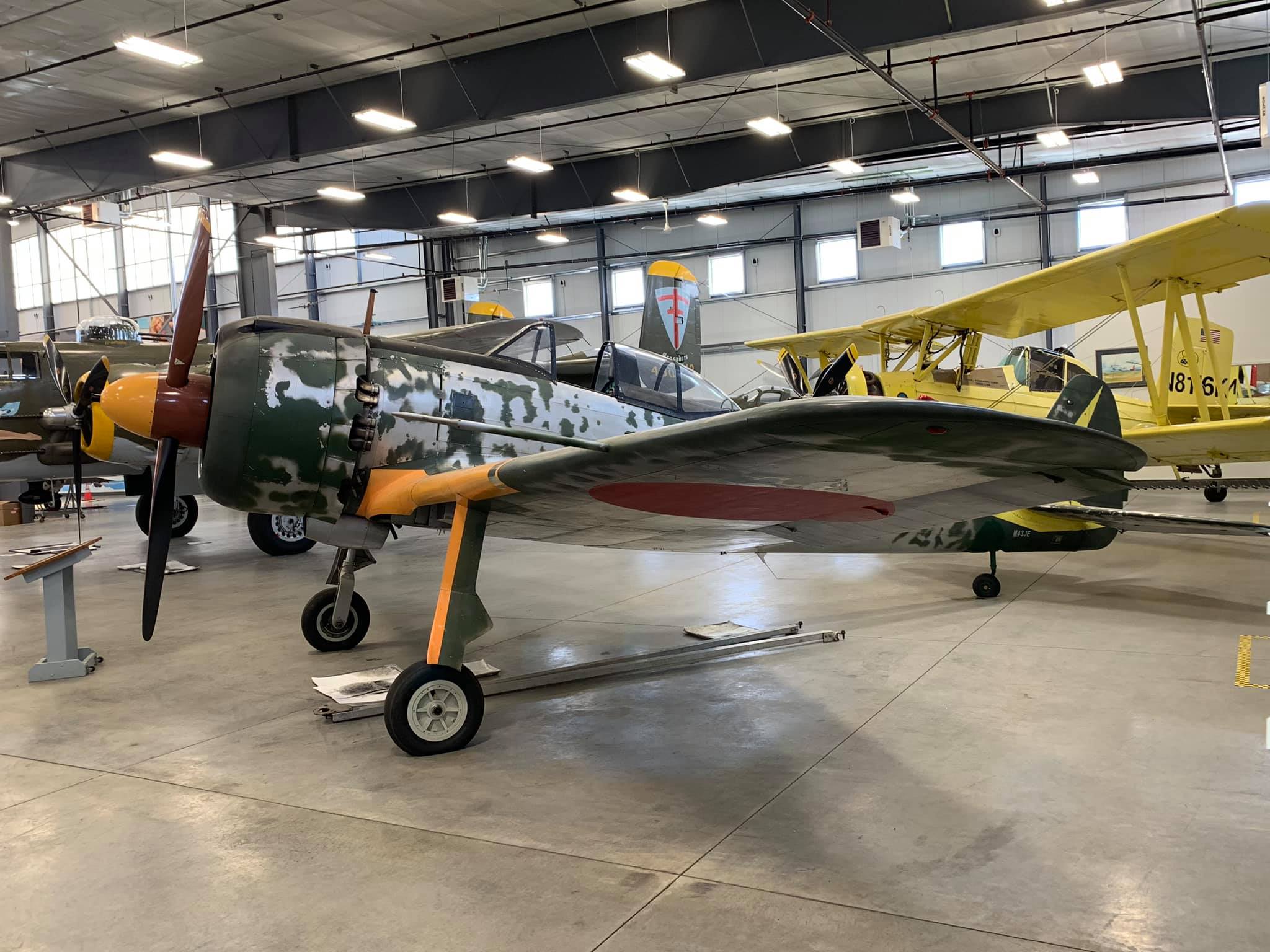
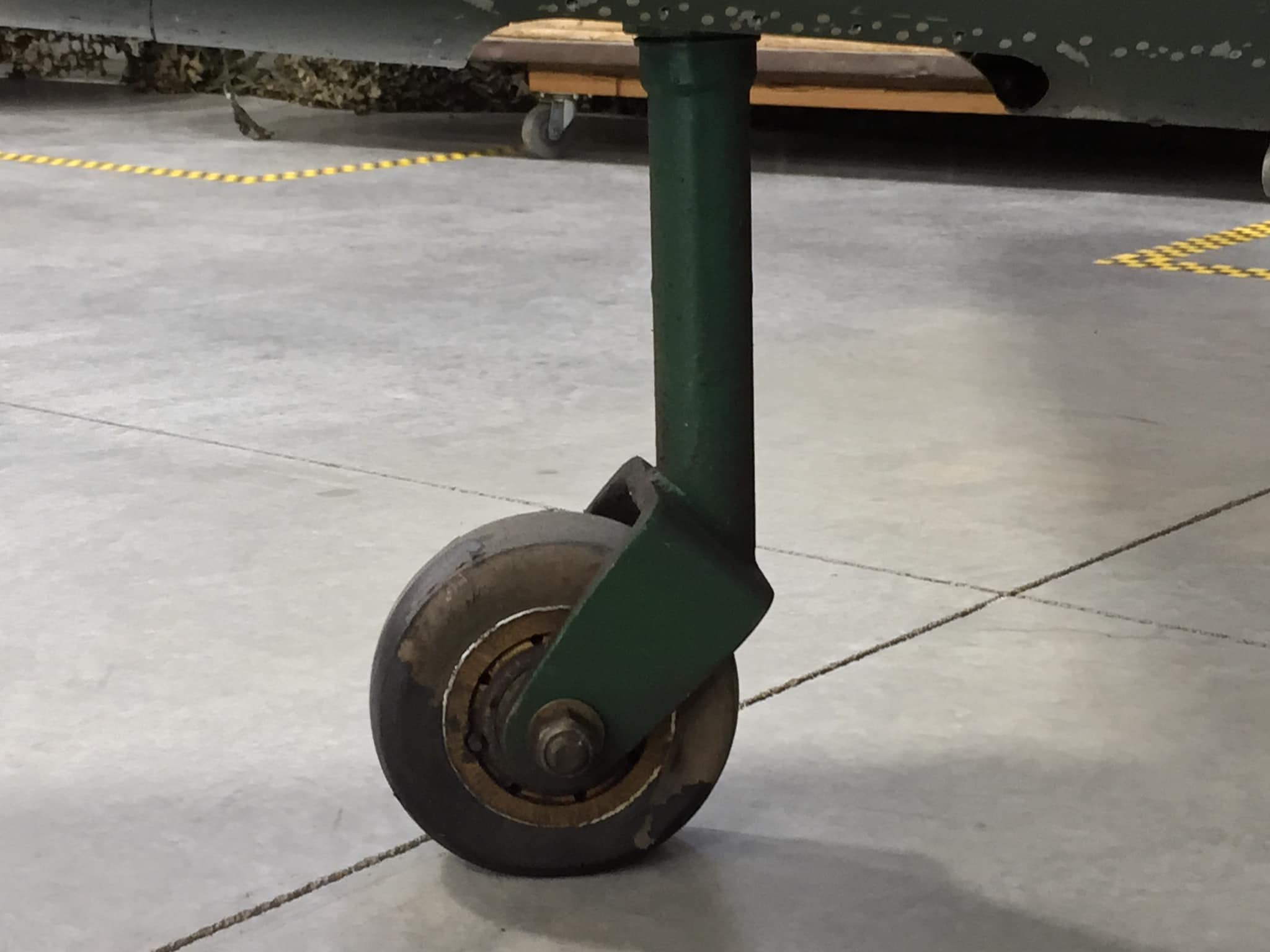
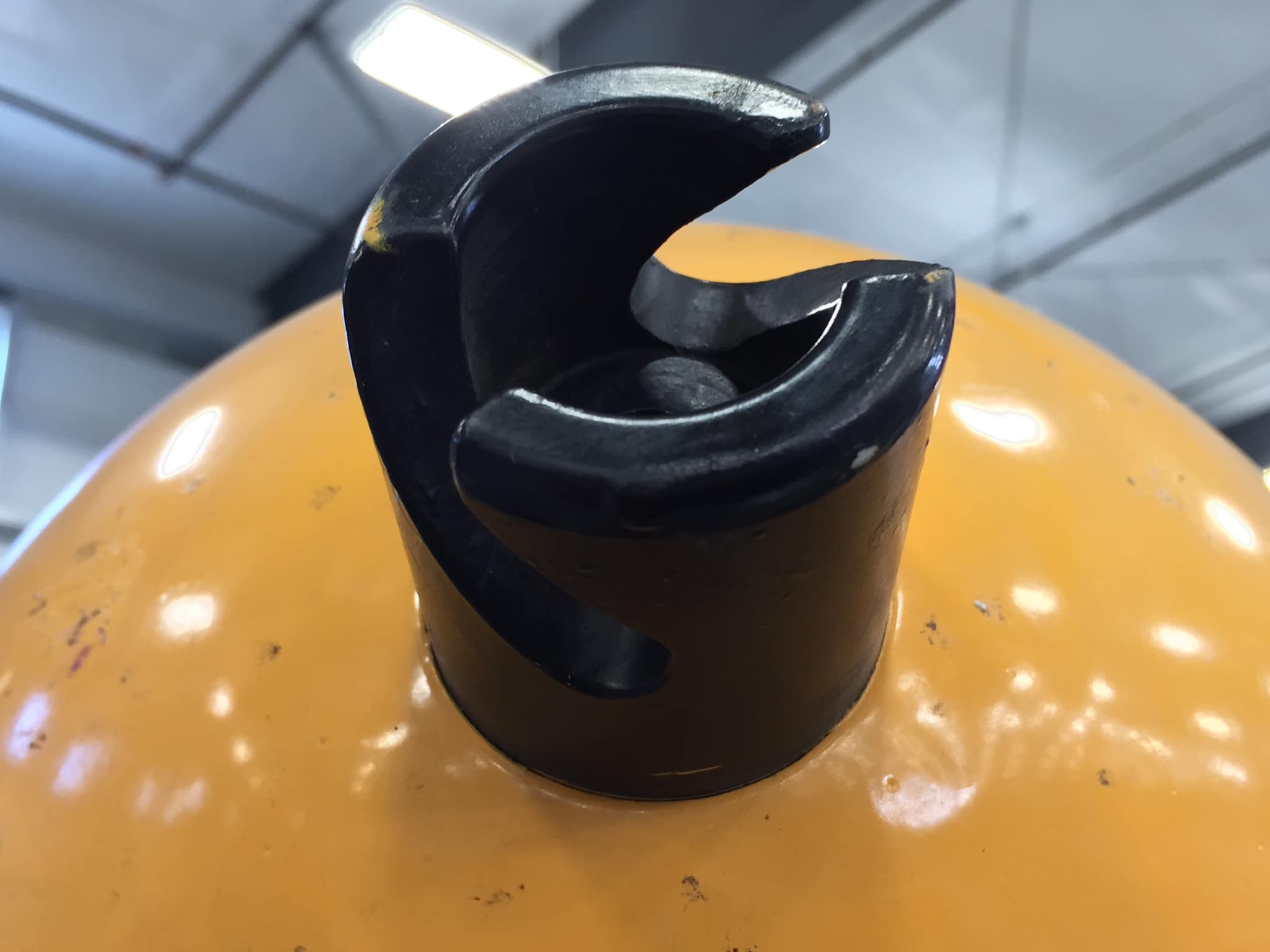
To further the lightness and agility of the aircraft by omitting a battery and engine starter, it was fitted with a Hucks Starter hub or dog in the nose; it also had “combat” or “butterfly” flaps on the wings’ inner trailing edges that added wing surface for improved maneuverability. There was a leather-covered metal pilot’s pull rather than a foot stirrup and a handhold. The Type 89 scope gun sight (no gun sight is on this aircraft) has a cover to protect it from dirt and engine oil during takeoff and is removed by the pilot before combat using a connecting rod through the windscreen. It has mechanical landing gear indicator rods or bayonets attached to the gear struts and protruding through the top of the wings.
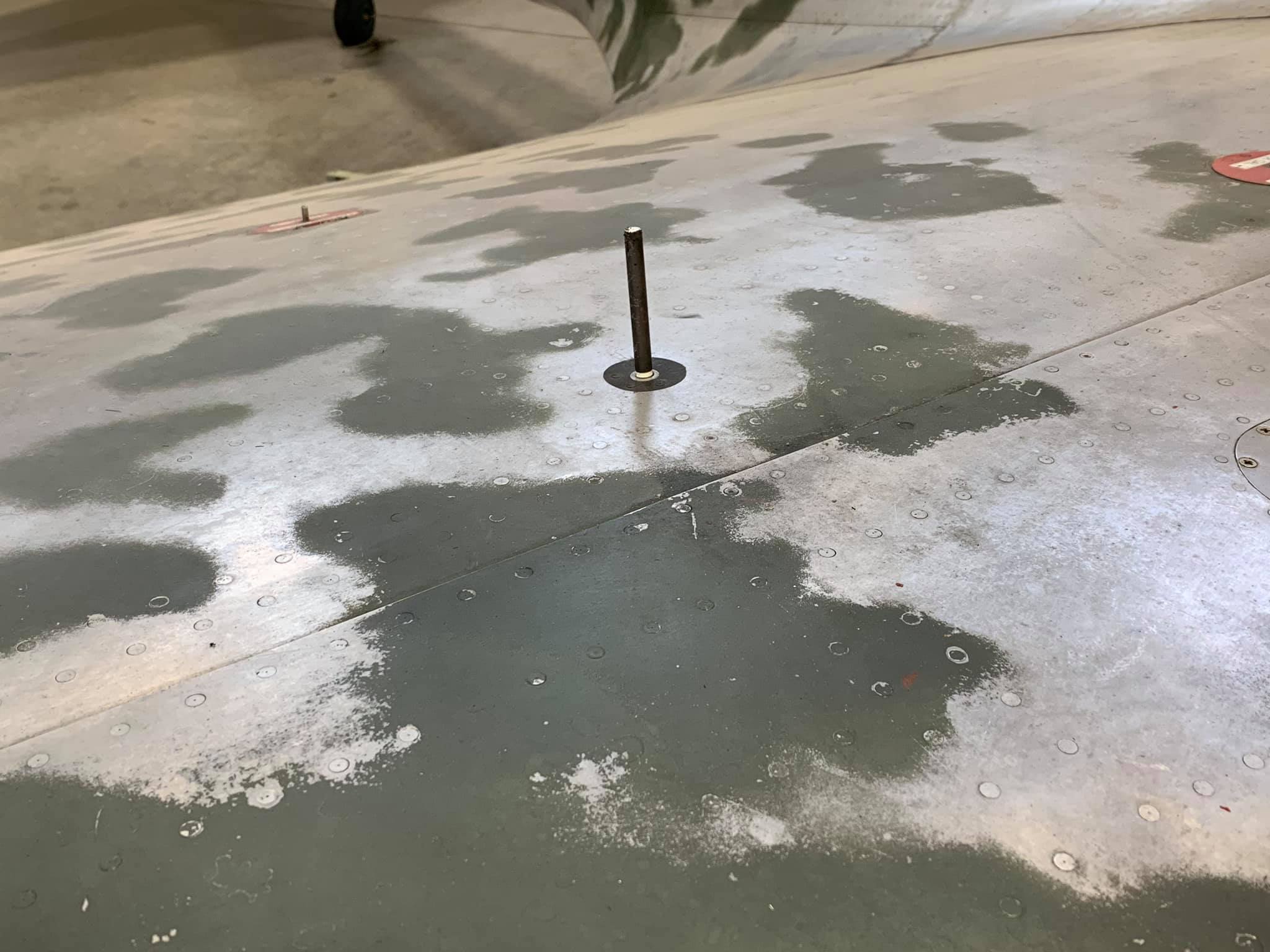
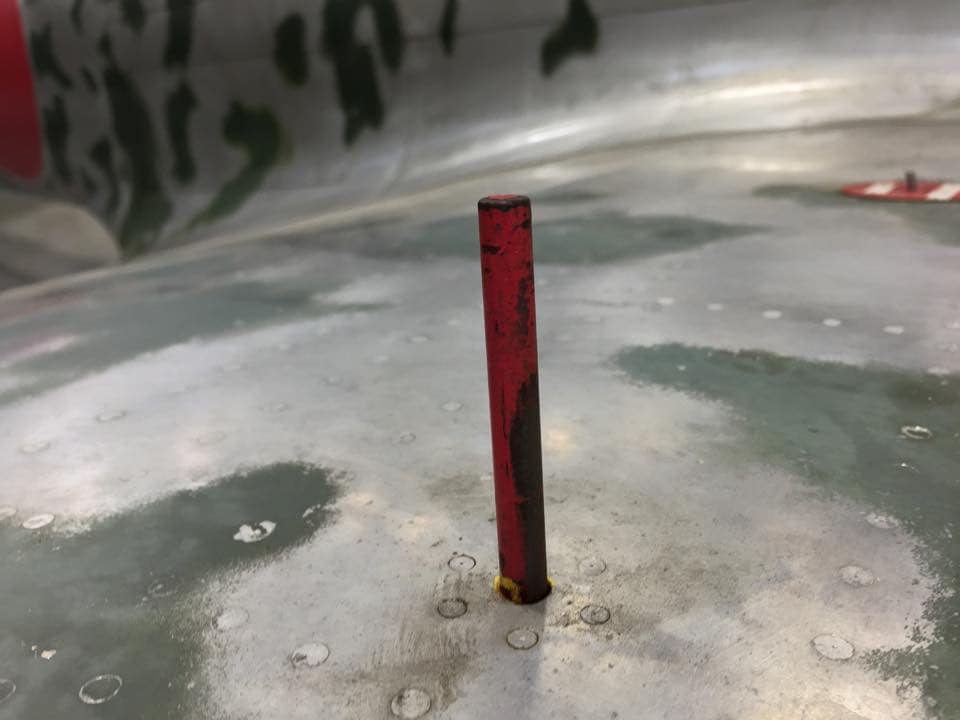
You can see the color of Aotake ( 青竹) (basically translates as “green bamboo“), an anti-corrosion paint used in the landing gear wells. It had no specific color, but was often bright blue-green (U.S. tests showed it to be superior to Zinc Chromate used on U.S. aircraft). The leading edges of the wings have been painted with yellow identification panels as a way to try to avert friendly fire. There is an escape hatch on the port side of the fuselage aft of the cockpit, which allowed the pilot to remove the seat back, which was held in place by spring-loaded pins, and escape through the hatch. There is a trumpet-shaped air intake in front of the engine (similar to one found on some Republic P-47’s), which provided fresh air that was warmed by the engine on its way to warm the cockpit (on the P-47, it also defrosted the windscreen). Here is some information in regard to paint schemes. There was no official color reference system in Japan during the operational period of the Ki-43, and any existing JAAF regulations were seldom carried out to the letter; a wide range of colors and means of application were used.
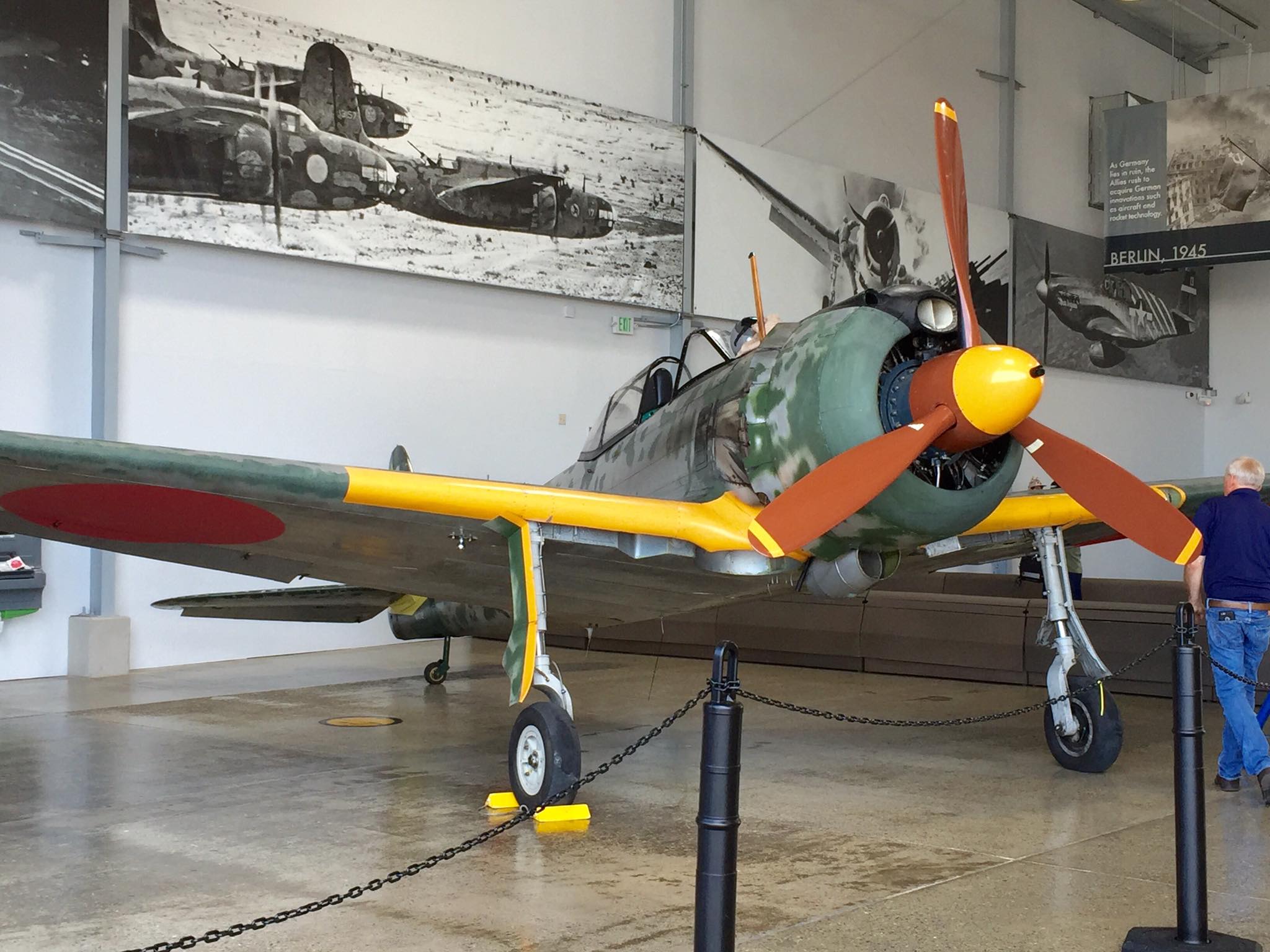
Until the III models all aircraft left the assembly line unpainted except for the iconic Hinomaru (sign of the sun or red disc) on the top and bottom wing surfaces (and on the Model II it was also applied to the fuselage sides), as well as the black anti-glare panel on top of the fuselage from the cowling front to the end of the canopy (although there is some evidence that by the III variant, this was no longer applied) and perhaps some information stencils. Before the III variants, camouflage was applied to many, but not all, frontline aircraft in the field, and was applied using various means, including spraying and hand painting using wide brushes. The choice of painting scheme was the provenance of the local commanders or even ground personnel on paint and means of application on a local level, which included the use of captured Allied paints (unlike the Japanese Navy Air Force, the JAAF itself, at least initially, attached relatively little importance to protective painting). There is evidence that the individual Sentais strove for a uniform look, but under combat conditions, even this was apparently not fully carried out.
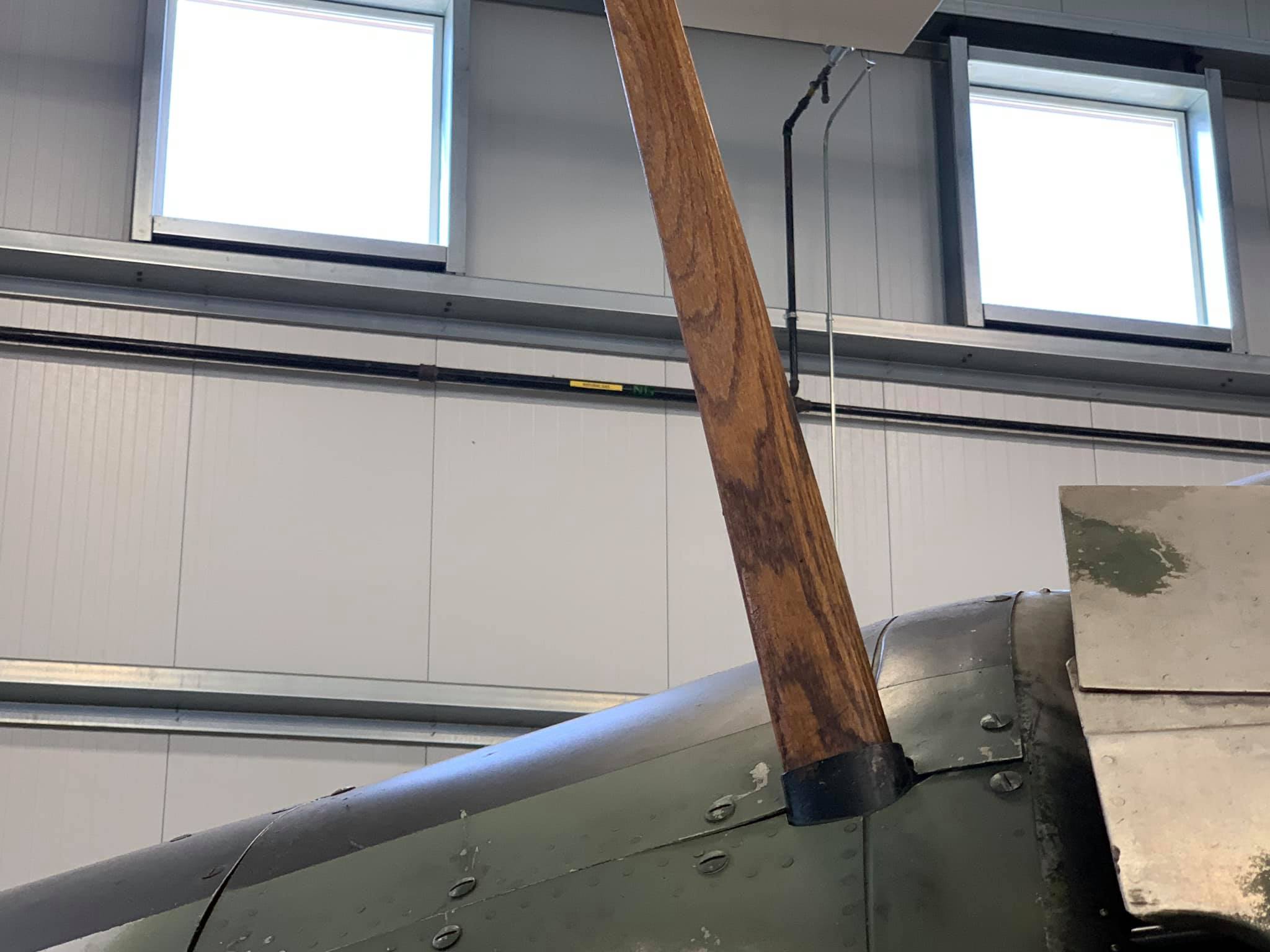
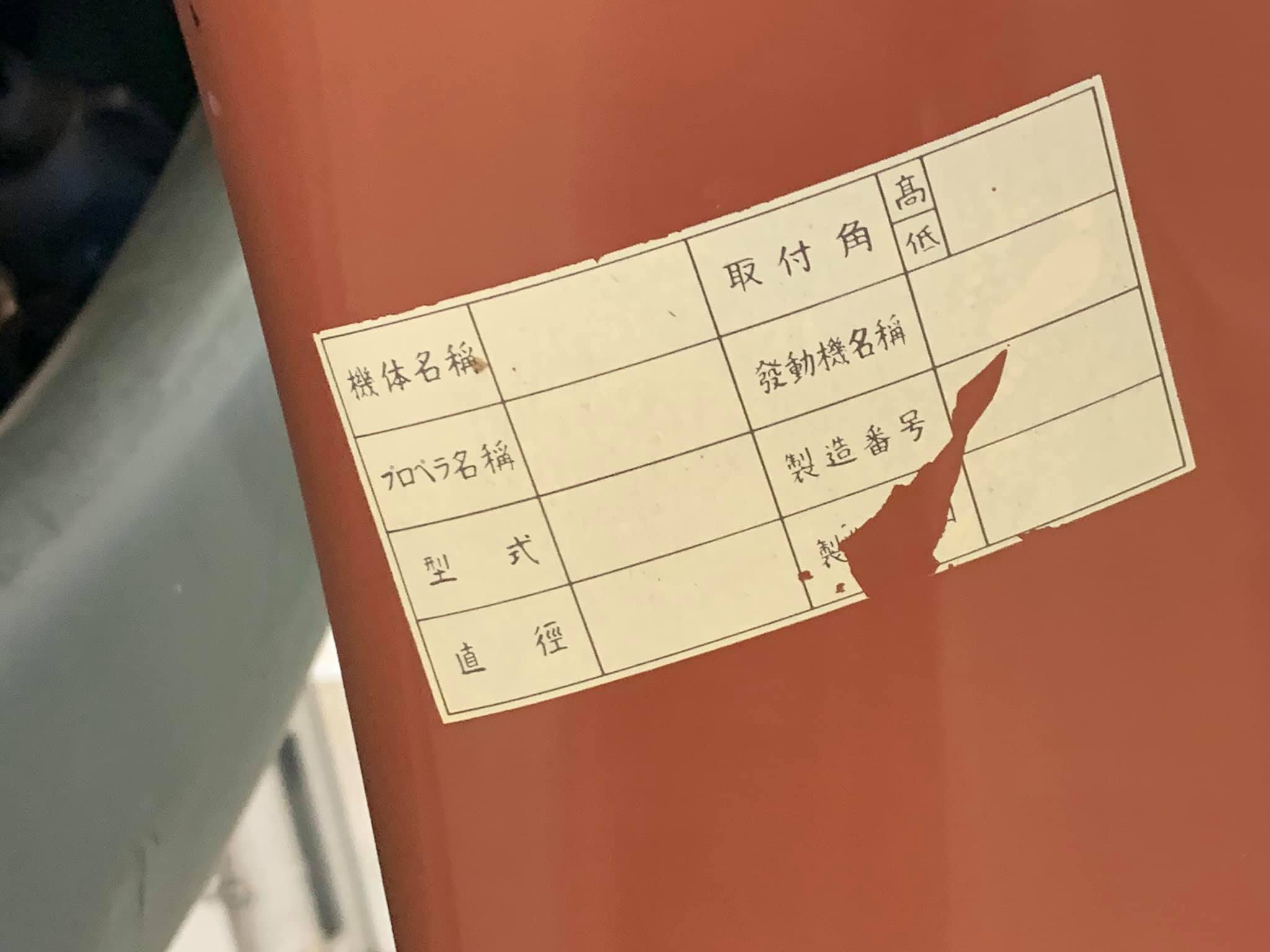
By the III variants, aircraft left the assembly line with largely all the external surfaces painted but unprimed, and with the high amount of cellulose contained in the paints, compounded by climate and lack of maintenance and proper care, all led to rapid fading and weathering. As far as determining the exact colors used, several factors come into play, such as cultural differences between Japan and the Western world, lack of exact equivalents in Japanese and vice versa, as well as issues within Japanese itself in transforming the spoken language to the written one and the language norms of the 1940’s. Propeller front surfaces and spinners were initially unpainted (the backs of the propeller blades were black); from the II variant on, the spinners and both sides of the blades were red-brown, and the warning stripe and the factory stencil on the blades became painted in yellow (although various phases in paint application cannot be used as a means of determining the version type). The undercarriage and small exterior parts were normally not painted; Aotake was used to coat many of the interior surfaces, including wheel wells (although this seems to have been dispensed with in late production aircraft). The cockpit interior, instrument panel, and seat were also painted with an interior color such as olive green or khaki-brown. Unit markings, individual aircraft markings, patriotic and personal markings were also applied in many cases.
About the author 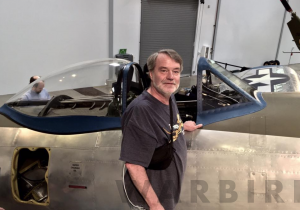
Randy Malmstrom grew up in a family steeped in aviation culture. His father, Bob, was still a cadet in training with the USAAF at the end of WWII, but did serve in Germany during the U.S. occupation in the immediate post-war period, where he had the opportunity to fly in a wide variety of types that flew in WWII. After returning to the States, Bob became a multi-engine aircraft sales manager and, as such, flew a wide variety of aircraft; Randy frequently accompanied him on these flights. Furthermore, Randy’s cousin, Einar Axel Malmstrom, flew P-47 Thunderbolts with the 356th FG from RAF Martlesham Heath. He was commanding this unit at the time he was shot down over France on April 24th, 1944, spending the rest of the war as a prisoner of war. Following his repatriation at war’s end, Einar continued his military service, attaining the rank of Colonel. He was serving as Deputy Wing Commander of the 407th Strategic Fighter Wing at Great Falls AFB, MT, at the time of his death in a T-33 training accident on August 21, 1954. The base was renamed in his honor in October 1955 and continues to serve in the present USAF as home to the 341st Missile Wing. Randy’s innate interest in history in general, and aviation history in particular, plus his educational background and passion for WWII warbirds, led him down his current path of capturing detailed aircraft walk-around photos and in-depth airframe histories, recording a precise description of a particular aircraft in all aspects.