





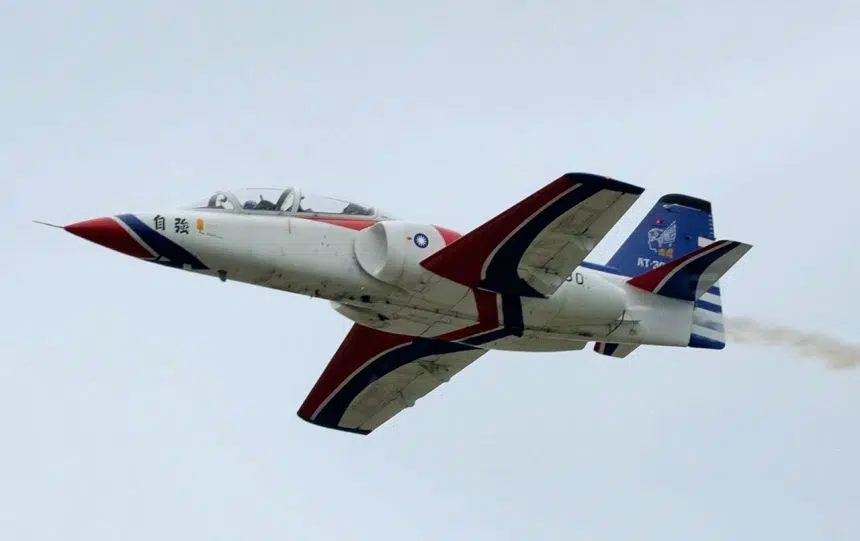

On this day in aviation history, 46 years ago (September 16, 1980), the AIDC AT-3 took flight for the first time. Known as the Tzu Chung, or “Self Reliance,” the twin-engine jet was developed in Taiwan by the Aerospace Industrial Development Corporation (AIDC) as an advanced trainer and light attack aircraft for the Republic of China Air Force. Development began during the 1970s as Taiwan sought a replacement for its aging Lockheed T-33 trainers. AIDC partnered with American aircraft manufacturer Northrop on the new design, producing a conventional low-wing aircraft with tandem seating and two turbofan engines mounted along the sides of the rear fuselage. Two prototypes were constructed, with the first taking flight on September 16, 1980.

Production began in 1982, with the first aircraft entering Republic of China Air Force service in 1984. Sixty AT-3A trainers were ultimately constructed, while the design was also adapted into the single-seat XA-3 Lei Ming light attack aircraft. The AT-3 became the primary advanced trainer for Taiwanese military pilots and also served with the Republic of China Air Force’s Thunder Tigers aerobatic demonstration team. The AT-3 measures 42 feet 4 inches in length with a wingspan of 34 feet 3 inches and is powered by two Garrett TFE731 turbofans producing 3,500 pounds of thrust each. It can reach approximately 560 mph, has a range of around 1,400 miles, and a service ceiling of 48,200 feet. Seven hardpoints allow the aircraft to carry up to 6,000 pounds of external stores for weapons training or light attack missions.




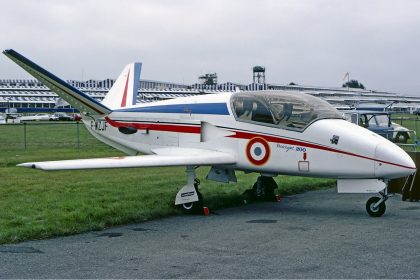





that’s a nice looking plane! would be ideal for private ownership if you could get parts.