
(Image credit: VAN)
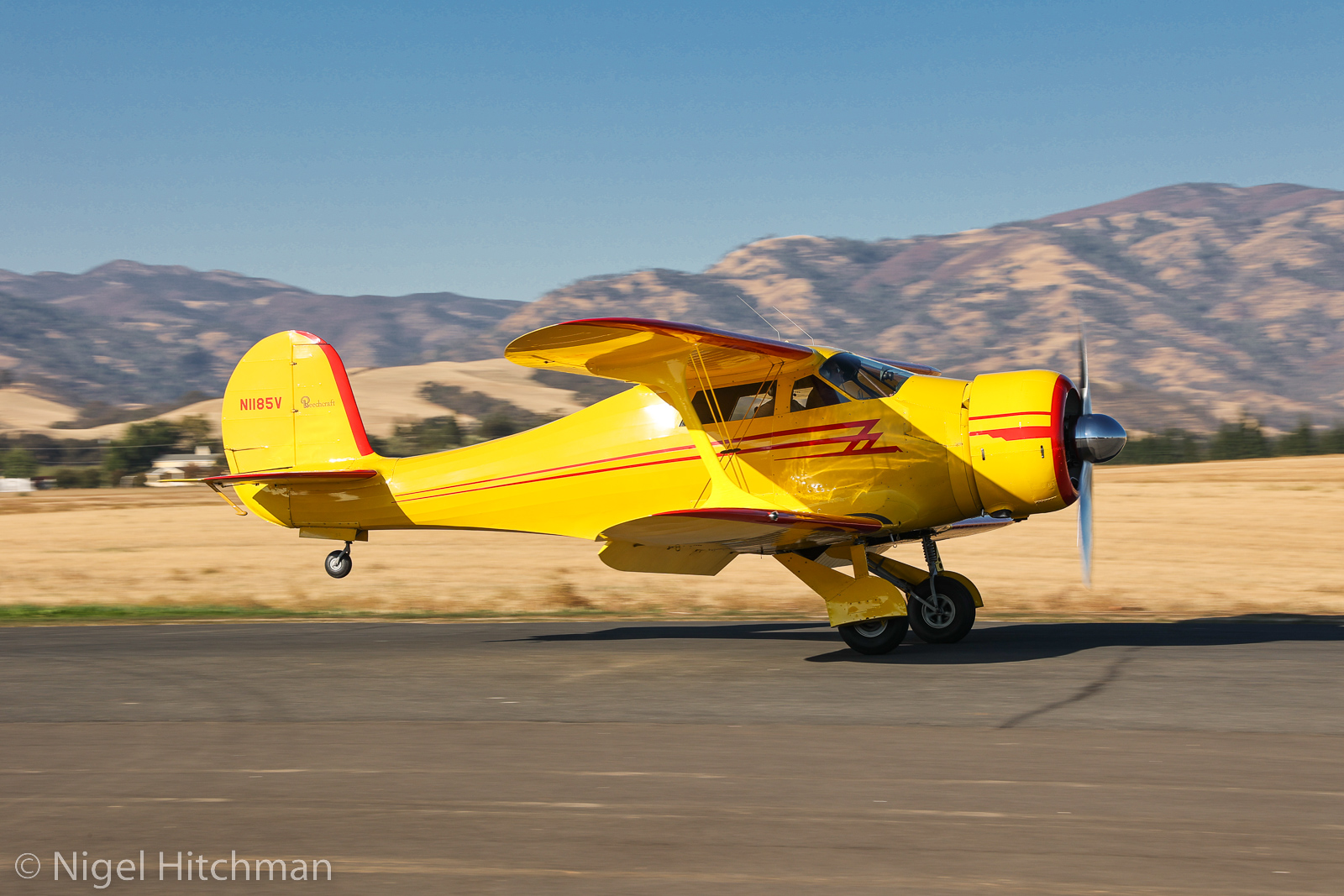
On this day in aviation history, 93 years ago (November 4, 1932), the first flight of the Beechcraft Model 17 Staggerwing took place. The Model 17 was an American-built civilian/executive transport and air-racing aircraft. Beech’s Staggerwing was designed as a biplane that featured negative wing stagger – where the lower wing sits further forward than the upper. This unconventional wing layout led to an aircraft with a sleek and attractive aesthetic, making the Model 17 a desirable plane from the time of its production to today.
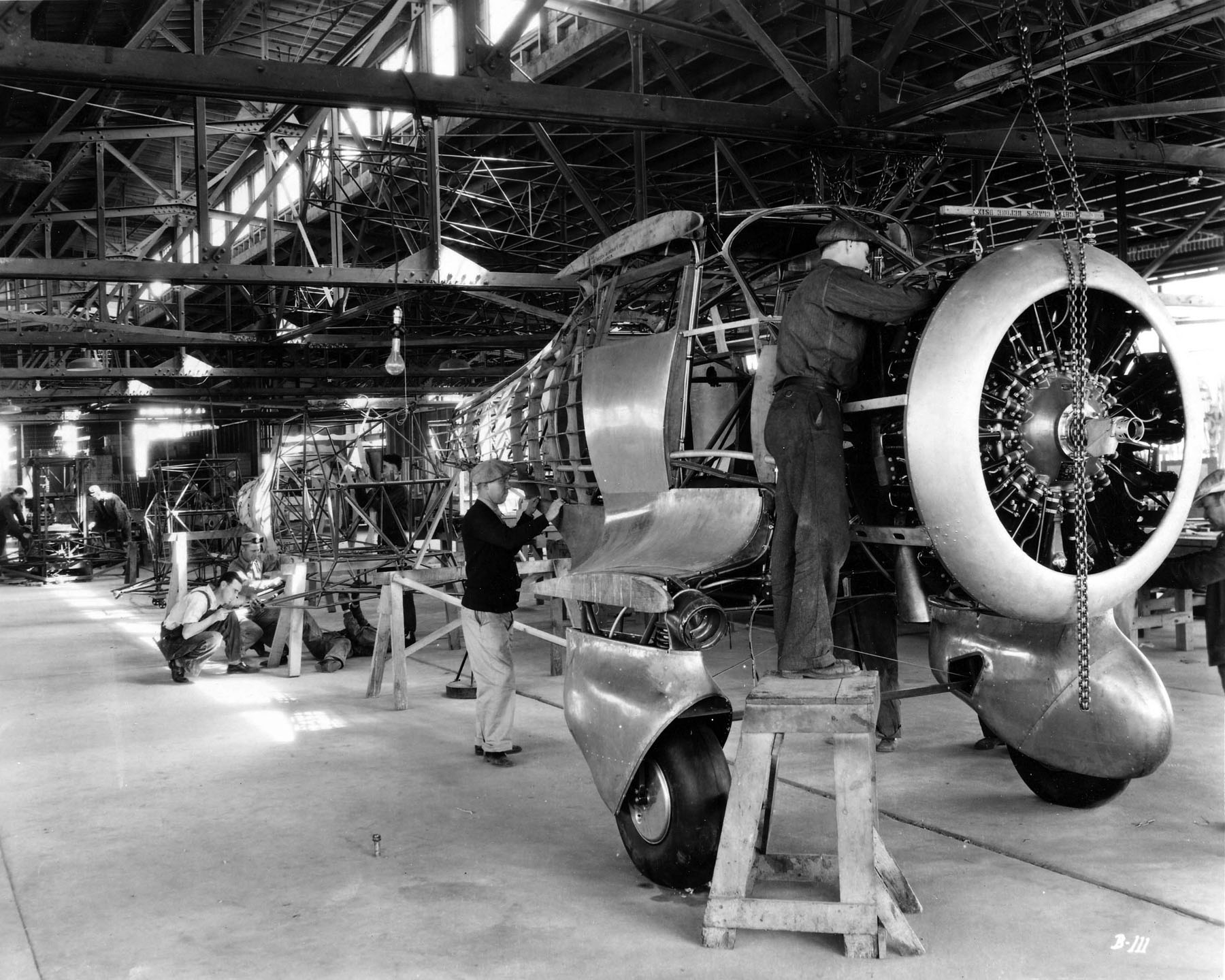
In 1932, Walter H. Beech left his job with Curtiss-Wright to create the Beech Aircraft Corporation. While on the way out from Curtiss, Beech brought with him company aircraft designer Ted A. Wells. Beech and Wells set to work on the first project for their new company – a fast biplane that would have an enclosed canopy, targeted towards business executives. The Staggerwing was based on a design that Wells had drafted while with Curtiss-Wright, which was rejected by that company’s board.
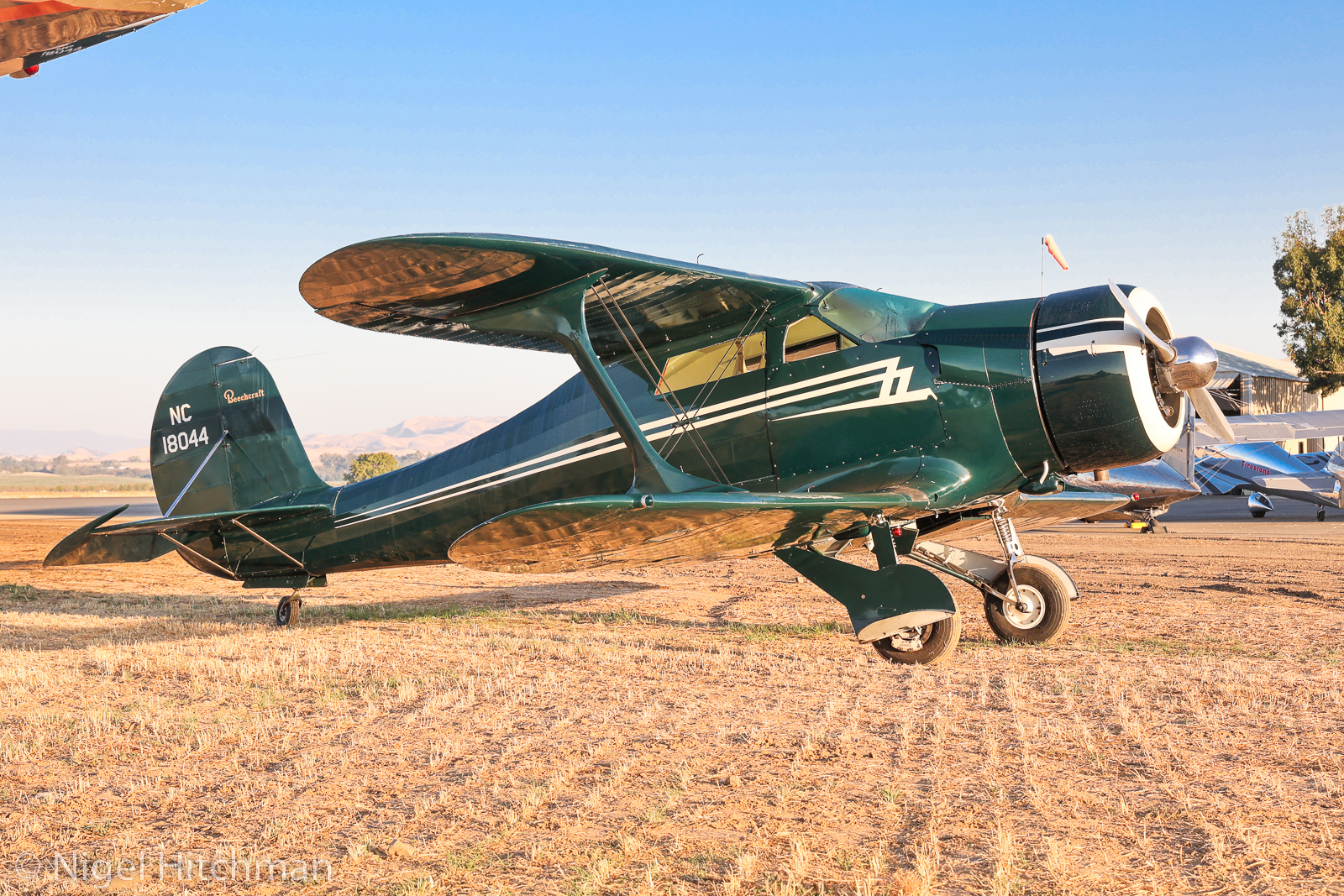
After the Model 17’s release, the aircraft’s market share slowly began to rise. The aircraft gained popularity as an executive aircraft for business people who wanted to get somewhere fast and in comfort. The United States military also began to take notice of the allure of the Staggerwing. As World War II began to boil, the United States Army Air Corps saw a need for a compact executive aircraft that could serve as a courier and liaison platform. In 1942, an order for 270 Model 17s was placed – eventually to be designated as the UC-43. Staggerwings would go on to serve with the U.S. Navy as the GB-1 and GB-2, and also with the Royal Fleet Air Arm as the Traveller Mk. I.
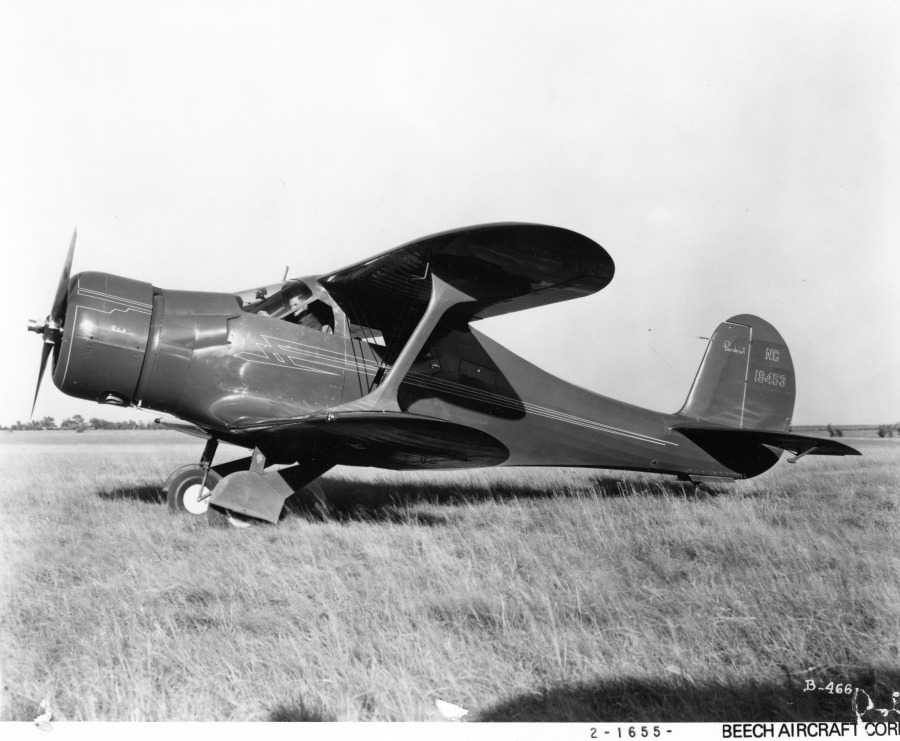
The Beechcraft D17S had one pilot and could carry a load of three to four passengers. A Pratt & Whitney R-985-AN-1 “Wasp Junior” radial engine of 450 horsepower propelled the Staggerwing to a maximum speed of 212 miles per hour – a mere 10 mph above the cruise speed. The Beech D17S had a range of 582 nautical miles and a service ceiling of 25,000 feet. A 1,500 feet per minute rate of climb made the Staggerwing feel like a rocket to those traveling for business or pleasure. The overall performance of the aircraft made it popular on the air racing scene. A total of 785 Beechcraft Staggerwings were manufactured between 1933 and 1949, with many survivors still flying today.