





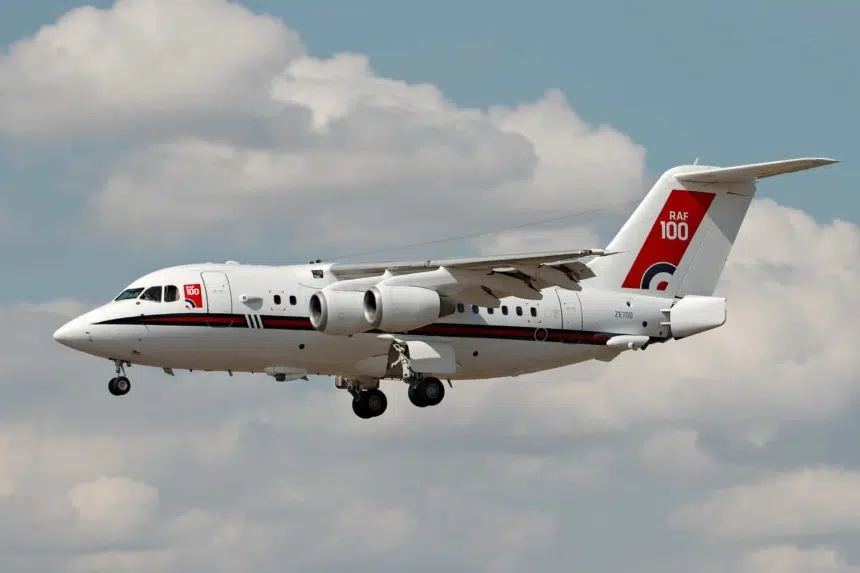


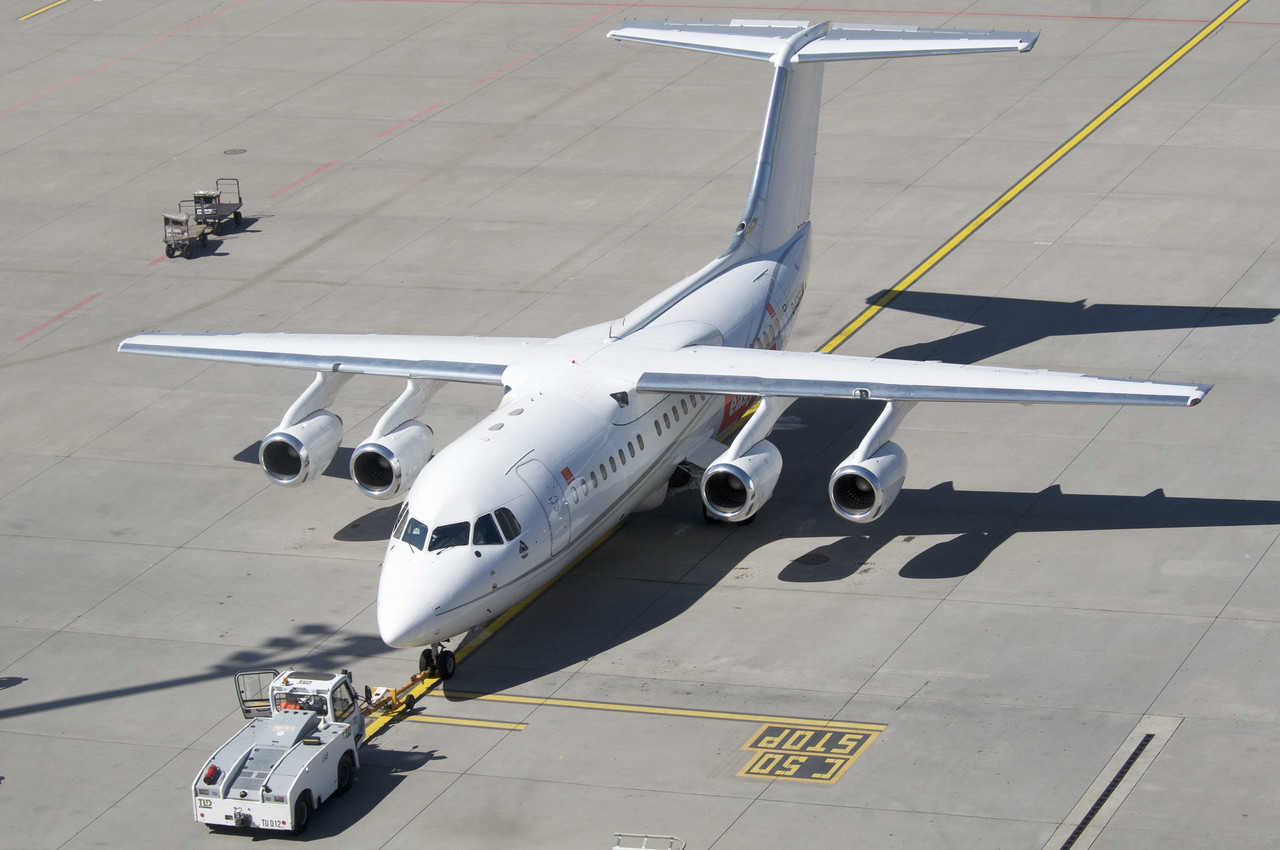
On this day in aviation history, 45 years ago (September 3, 1981), the British Aerospace 146 took flight for the first time. Developed as a short-haul regional airliner, the distinctive high-wing jet featured four turbofan engines and a T-tail. Its exceptionally quiet operation would later earn it the marketing name “Whisperjet.” Development began in 1973 when Hawker Siddeley launched the HS.146 as a 70-seat regional airliner intended to bridge the gap between turboprops such as the HS.748 and Fokker F27 and larger jet airliners. The economic downturn following the 1973 oil crisis halted the program in 1974, but limited development continued. British Aerospace revived the project in 1978, leading to the prototype’s first flight three years later.

The BAe 146 entered commercial service with Dan-Air in May 1983 and became particularly well suited to short runways and noise-sensitive airports. The original -100 was followed by the larger -200 and -300, while the improved Avro RJ family entered production during the 1990s. Passenger, cargo, military, and firefighting versions have operated around the world. The BAe 146 and Avro RJ became the most successful British civil jet airliner program, with nearly 400 aircraft produced. The BAe 146-100 measured approximately 86 feet in length with a wingspan of 86 feet 5 inches and was powered by four Avco Lycoming ALF 502 turbofans. It could cruise at approximately 460 mph, had a range of around 1,800 miles, and a service ceiling of 35,000 feet. Depending on configuration, the original -100 could accommodate around 70 to 90 passengers.






I live close to Cranfield in Bedfordshire, sadly, over the past 10 years or more, dozens of these have arrived to be stripped, broken up and then disposed of. I once flew from Stansted to Bordeaux with an airline called Buzz, it was remarkabley quiet, even at the rear. A unique aircraft in its size and configuration.
Given it’s longevity and the number of Airlines that operated it, i think it must be regarded as a success story.
I saw it. It was a terrible day and had an BaE 125 executive jet as a chase plane
BAE 146. Flew as a passenger many times between Perth Western Australia and Darwin in the Northern Territory. Beautiful light and airy aircraft and blissfully quiet. Only had one problem in Darwin while it was on the apron. The escape chute deployed for some unknown reason. Nothing could be done so they took it off and we flew without!
One of the best aircraft ever build, travelled on it from Germany to Warton Vise versa many times, save, reliable and comfortable.
Only one accident due to not being fueled enough.
FL350!!! When, where, hou?
FL350!!! When, where? Max FL – 290
Avro RJ max altitude FL350