






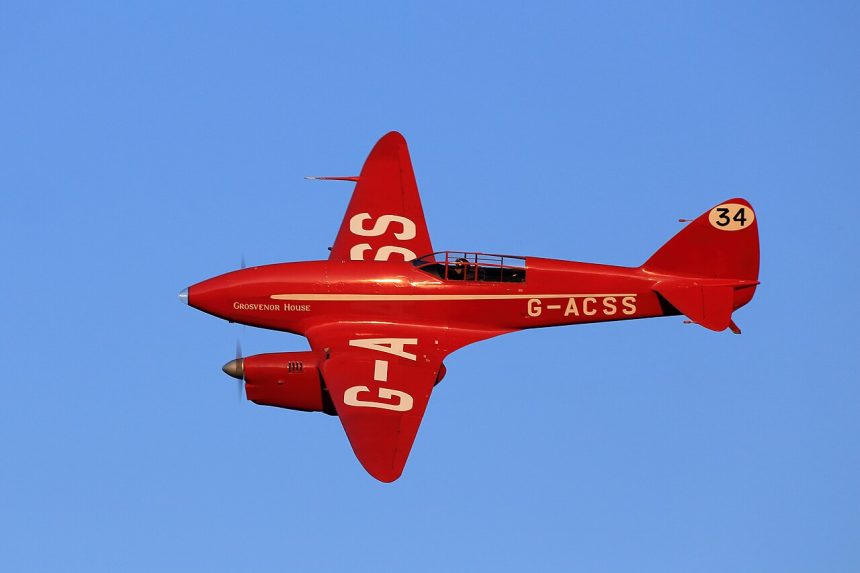


On this day in aviation history, 92 years ago (September 8, 1934), the de Havilland DH.88 Comet took flight for the first time. Designed specifically for the MacRobertson Air Race from England to Australia, the sleek twin-engine racer combined long range with high speed and became one of the most recognizable racing aircraft of the 1930s.
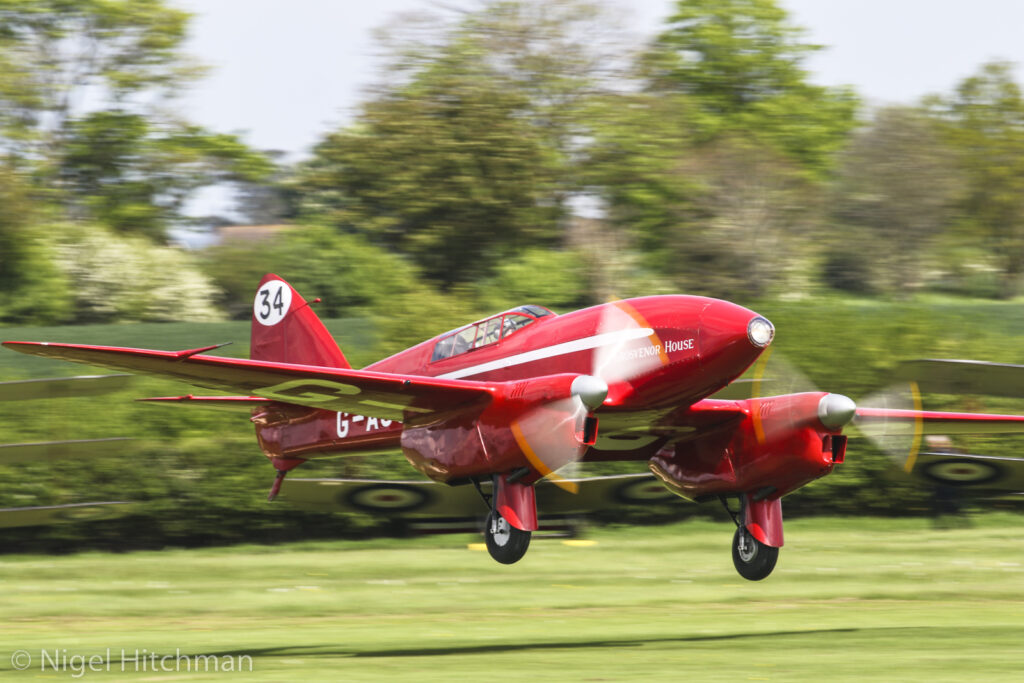
Development began early in 1934 after de Havilland announced that it would build a specialized racer if at least three customers placed orders. Three aircraft were ordered, allowing designer A. E. Hagg to develop an advanced wooden monoplane featuring stressed-skin construction, retractable landing gear, landing flaps, variable-pitch propellers, and an enclosed tandem cockpit. The demanding schedule left only six weeks between the Comet’s first flight and the beginning of the race.

Three Comets entered the MacRobertson Air Race on October 20, 1934. G-ACSS Grosvenor House, flown by C. W. A. Scott and Tom Campbell Black, reached Melbourne in approximately 71 hours and won the race outright. Other Comets went on to establish numerous long-distance records during the 1930s, including flights between Europe, Africa, Australia, and New Zealand. Only five DH.88s were built. The DH.88 measured 29 feet 2 inches in length with a wingspan of 44 feet and was powered by two specially tuned de Havilland Gipsy Six R engines producing approximately 230 horsepower each. It could reach about 237 mph, cruise at approximately 220 mph, and had a range approaching 2,900 miles. Its combination of speed, range, retractable landing gear, and exceptionally clean aerodynamics made the Comet an advanced design for its time.
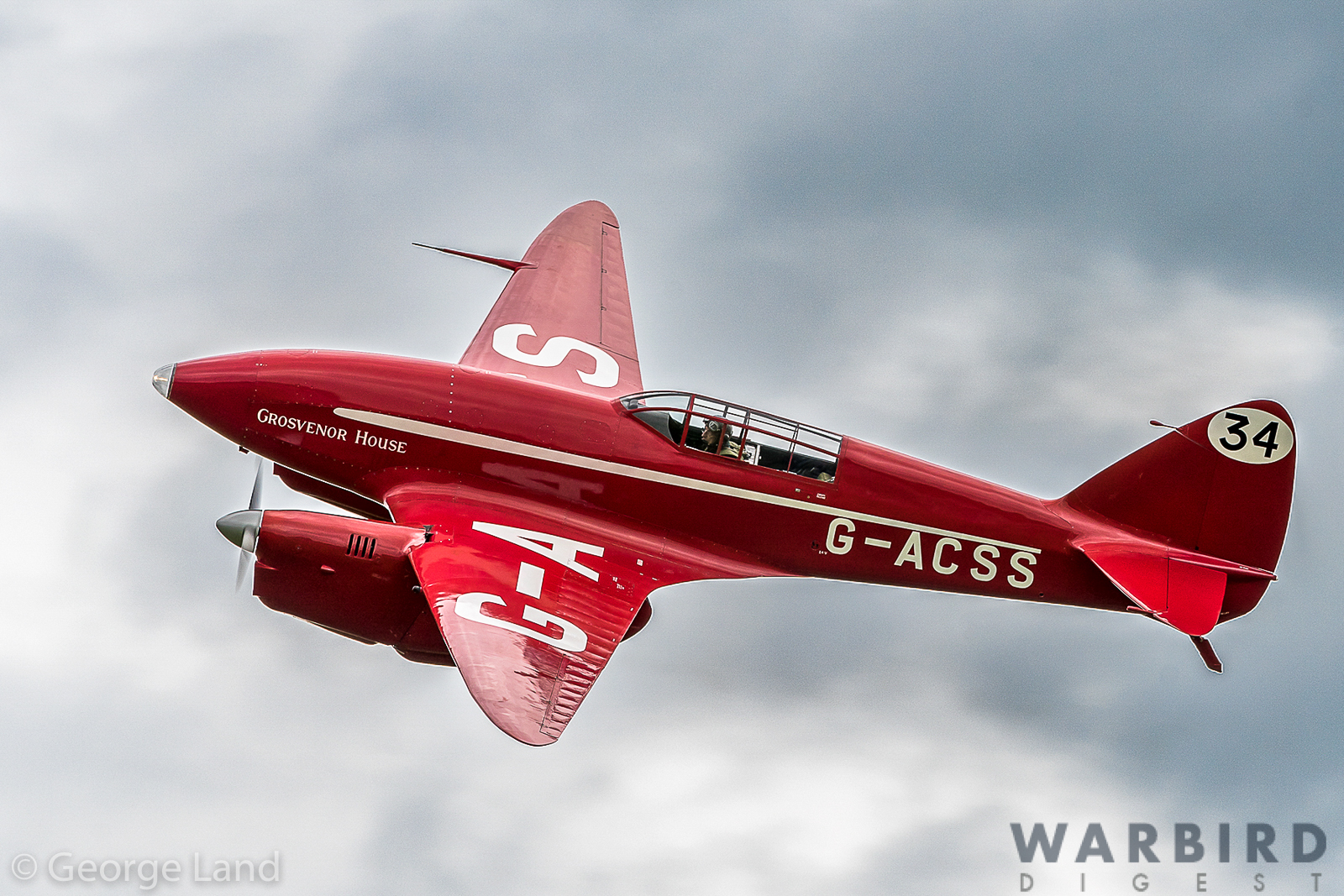









While the Comet may have won the MacRobertson Air Race, it was really a wake up call for Britain, because second place went to a stock KLM DC-2 carrying passengers on airline routes. The race showed Britain how far they had fallen behind American manufacturers.