

(Image credit: VAN)
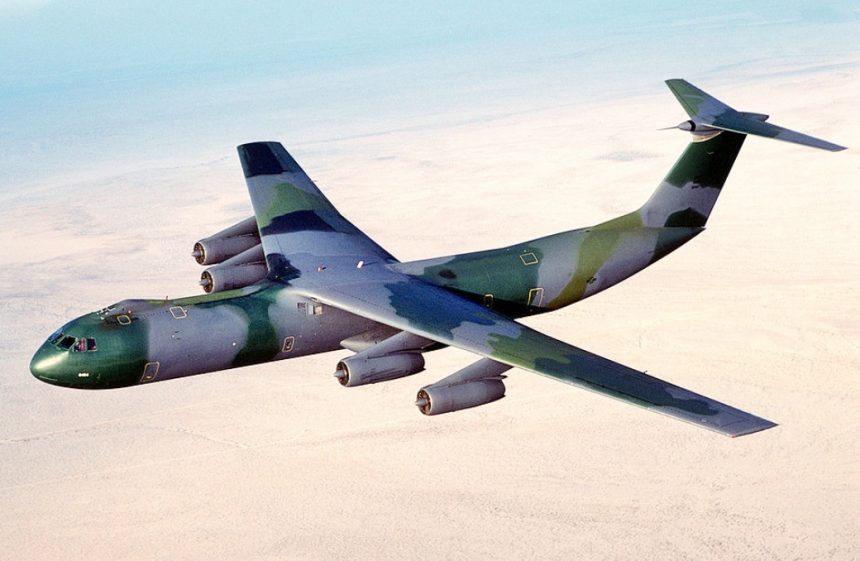
On this day in aviation history, 62 years ago (December 17, 1963), the first flight of the Lockheed C-141 Starlifter took place. The C-141 was a strategic airlifter flown by the United States Air Force and NASA. Within the USAF, the Starlifter served with the Military Air Transport Service (MATS) and later on the Air Mobility Command (AMC). The C-141 was developed as a replacement to the slower prop-driven heavy-lifters in the USAF arsenal – such as the Douglas C-124 Globemaster II and C-133 Cargomaster. The National Aeronautics and Space Administration used the C-141 as an airborne observatory. Within the military, the Starlifter saw service beginning immediately after delivery in 1964. The heavy lifting and large space capabilities of the C-141 made the aircraft a popular commodity in the US efforts during the Vietnam War. Starlifters participated in operational sorties within the combat zone, carrying much-needed equipment to the lines. As the Vietnam War drew to a close, the C-141 was tasked with transporting repatriated American prisoners of war.

Lockheed’s C-141 was flown by a crew of 5 to 7 personnel and had a capacity for nearly 200,000 pounds of payload. Four Pratt & Whitney TF33-P-7 turbofan engines, each with 20,250 pounds of thrust, powered this heavy-lifter. The C-141 was 168 feet – 4 inches long, had a wingspan of 160 feet, and sat 39 feet – 3 inches tall. The Starlifter could attain a maximum airspeed of 567 mph, had a range of 2,550 nautical miles, and could reach a service ceiling of 41,000 feet. Lockheed built a total of 286 C-141s between 1963 and 1968.

C-141s served in Operation Desert Shield and Desert Storm, and continued in military service until 2004. One of the more notable Starlifters, the Hanoi Taxi (AF Serial Number 66-0177), provided medevac services after Hurricane Katrina. On May 6, 2006, Hanoi Taxi and the C-141 as a whole flew for the final time to the National Museum of the United States Air Force. The Hanoi Taxi can be seen on display at this museum, located in Dayton, Ohio.