
By Randy Malmstrom
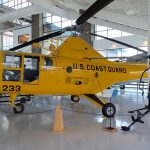
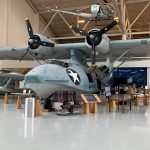
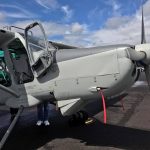
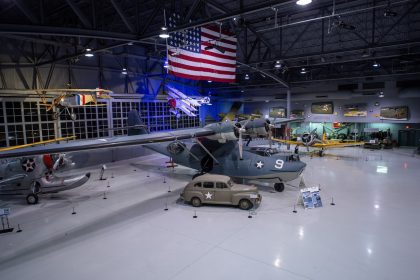
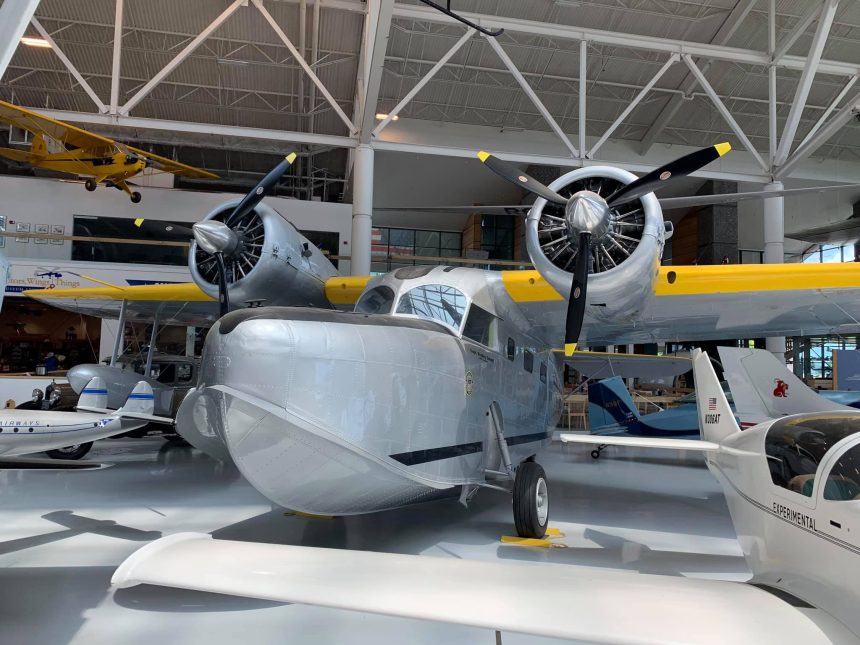
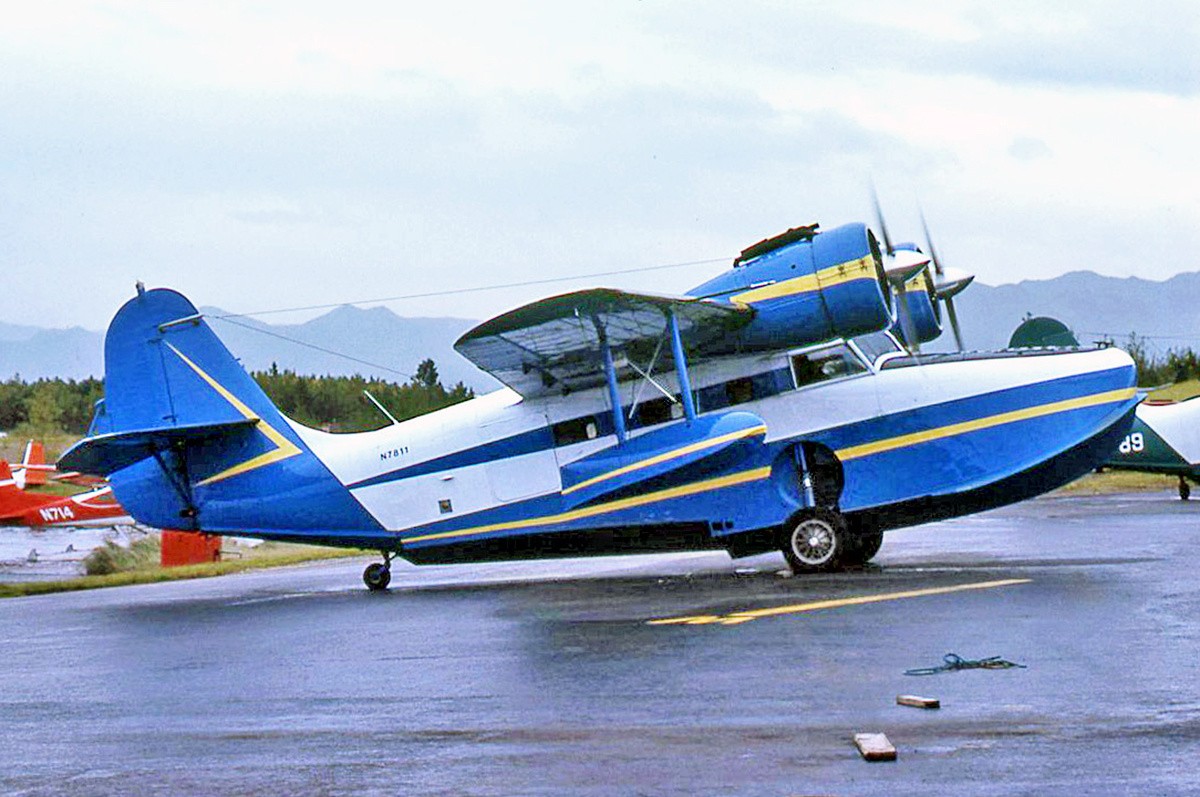
Grumman JRF-2 Goose. This particular aircraft was built in 1942 and has been restored as JRF-2, s/n V176, MSN 1065, which was based at CGAS (Coast Guard Air Station) Port Angeles, Washington. The aircraft crashed on Blyn Mountain, Washington, on April 6, 1943. LCDR Frederick L. Westbrook and LTJG Carl Huessy were killed in the crash; Aviation Radioman First Class Thurlow E. Kesner and Aviation Pilot First Class Earl H. Muykens were rescued but later died of their injuries. My photos at the Evergreen Aviation & Space Museum in McMinnville, Oregon.
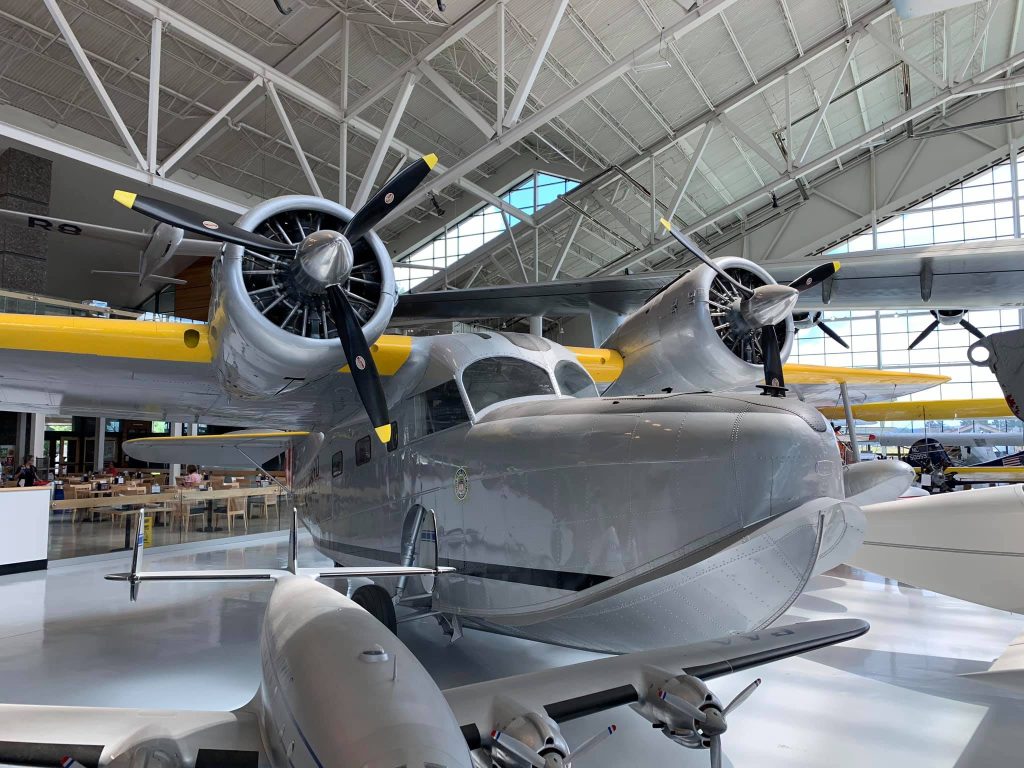
The JRF-2 is the U.S. Coast Guard variant of the Grumman G-21 Goose – the nickname “Goose” was given to the aircraft by the British Royal Air Force, which flew it for air-sea rescue. The U.S. Army Air Corps began acquiring the G-21 in 1938 and was designated “OA-9 (aerial observation). The U.S. Navy and the U.S. Coast Guard designated them “JRF.” The U.S. Coast Guard began acquiring various aircraft by the mid-1920s and gave their aircraft one or two-digit serial numbers at that time. The second series of aircraft acquired by the USCG was assigned two- or three-digit serial numbers. On October 13, 1936, all existing and new aircraft were given three-digit serial numbers with a “V” prefix. That V prefix was then deleted on December 28, 1945, in favour of a number 1 prefix beginning in 1951, and starting in the 1980s, serial numbers were assigned in blocks for each aircraft type.
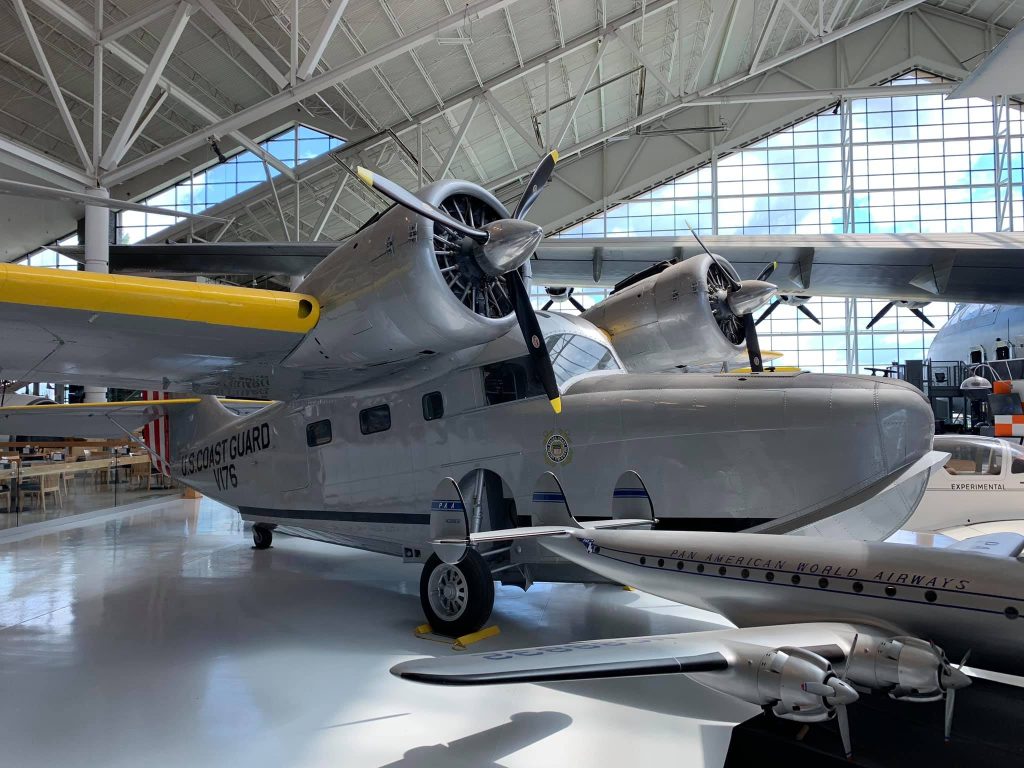
The amphibious Goose was built by Grumman Aircraft Engineering Corporation and introduced in 1937 as an eight-seat commuter for industrialists (Henry Morgan, Marshall Field, for example) to fly from their private air strips on Long Island to the waters near Wall Street, and they commissioned Leroy Randle “Roy” Grumman (himself a native of New York) to build 10 aircraft. In all, approximately 350 Gooses (never referred to as “Geese”) were built and were flown by many overseas operators. It became increasingly used for military transport during World War II.
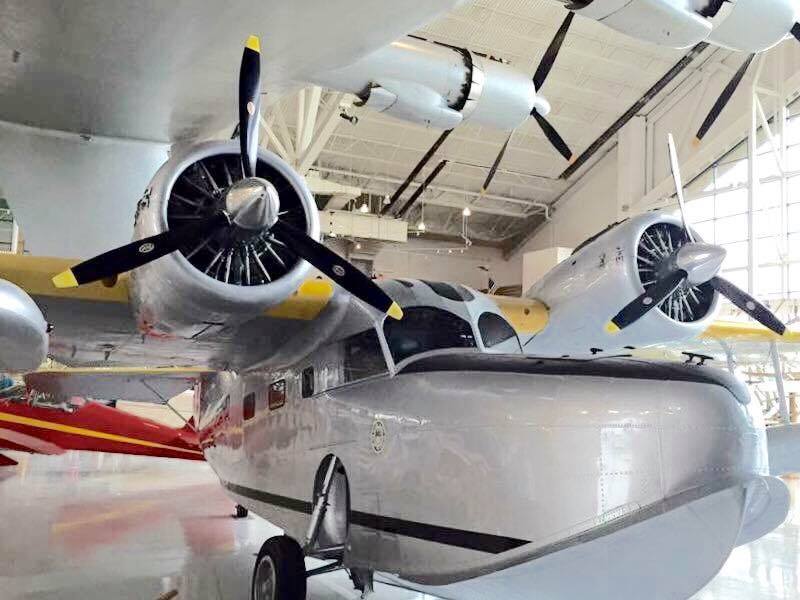
Powered by a pair of Pratt & Whitney R-985 Wasp Junior engines fitted on a shoulder-mounted wing assembly, like other amphibious aircraft such as the PBY Catalina/Canadian Canso (which had a pylon-mounted wing assembly), this obviously meant less sea spray on the propellers and in the nacelles (and better visibility for pilot and crew). Like the Grumman FM-2 Wildcat, the landing gear was fully manually retractable by the pilot cranking the attached cables (the Wildcat also used a pair of bicycle-type chains on gears). I have detailed photos of my own if interested. Grumman took out U.S. Patent No.1859624 A for it. The JRF-2 variant of the Goose modified for the USCG had provision for a stretcher.
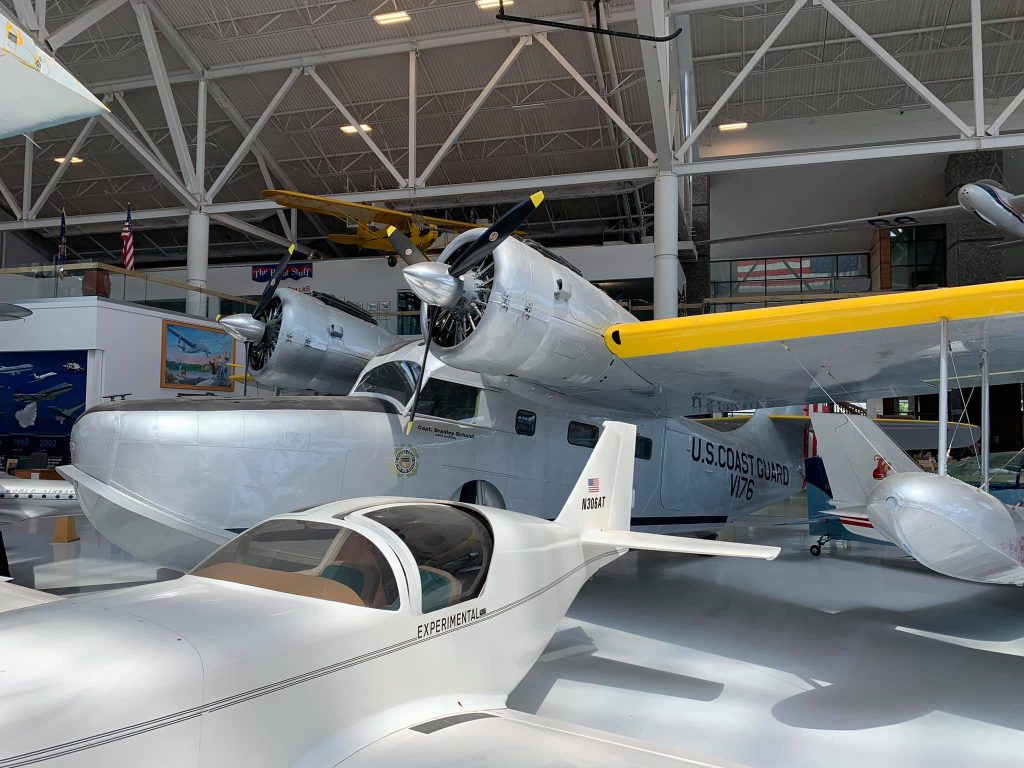
Editor’s notes: This Grumman Goose was originally constructed as Grumman serial number B-122 and delivered to the US Navy as JRF-5 Bureau Number 87728 in March 1945. On October 13, 1952, BuNo 87728 was officially stricken from the US Navy at Naval Air Station Quonset Point, Rhode Island. Soon afterwards, the demilitarised aircraft, now classified as a G-21A, was registered as N781 with the US Department of the Interior, Fish and Wildlife Service in Anchorage, Alaska, on October 28, 1953. On April 5, 1960, the aircraft’s registration changed to N781SA, re-registered with the State of Alaska, Department of Fish & Game in Juneau, but three years later, on June 27, 1963, the registration was changed to N781S. The final change in registration for this Goose occurred when, on June 27, 1963, the registration was changed to N7811. For over 40 years, the aircraft remained in use with the State of Alaska, being modified with three-bladed propellers and retractable wingtip floats, until it was sold to PenAir (Peninsula Airways) of Anchorage, Alaska. On June 24, 2007, the aircraft suffered a takeoff accident at Dutch Harbour, but was repaired and flown again, being refitted with fixed pontoon floats for its wings. By January 2014, the aircraft was placed on display at the Evergreen Aviation & Space Museum, where it remains on display.
About the author
 Randy Malmstrom grew up in a family steeped in aviation culture. His father, Bob, was still a cadet in training with the USAAF at the end of WWII, but did serve in Germany during the U.S. occupation in the immediate post-war period, where he had the opportunity to fly in a wide variety of types that flew in WWII. After returning to the States, Bob became a multi-engine aircraft sales manager and, as such, flew a wide variety of aircraft; Randy frequently accompanied him on these flights. Furthermore, Randy’s cousin, Einar Axel Malmstrom, flew P-47 Thunderbolts with the 356th FG from RAF Martlesham Heath. He was commanding this unit at the time he was shot down over France on April 24th, 1944, and spent the rest of the war as a prisoner of war. Following his repatriation at war’s end, Einar continued his military service, attaining the rank of Colonel. He was serving as Deputy Wing Commander of the 407th Strategic Fighter Wing at Great Falls AFB, MT, at the time of his death in a T-33 training accident on August 21, 1954. The base was renamed in his honour in October 1955 and continues to serve in the present USAF as home to the 341st Missile Wing. Randy’s innate interest in history in general, and aviation history in particular, plus his educational background and passion for WWII warbirds, led him down his current path of capturing detailed aircraft walk-around photos and in-depth airframe histories, recording a precise description of a particular aircraft in all aspects.