





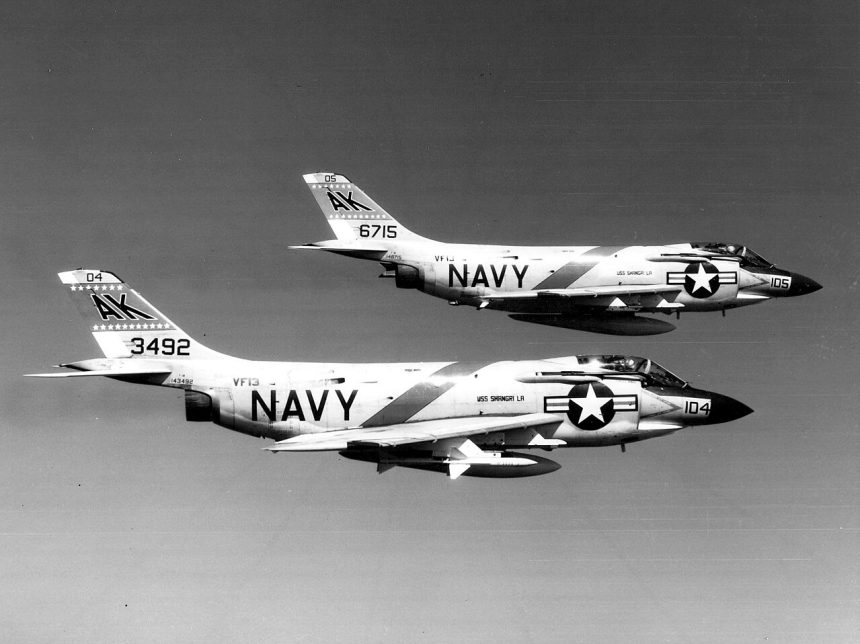


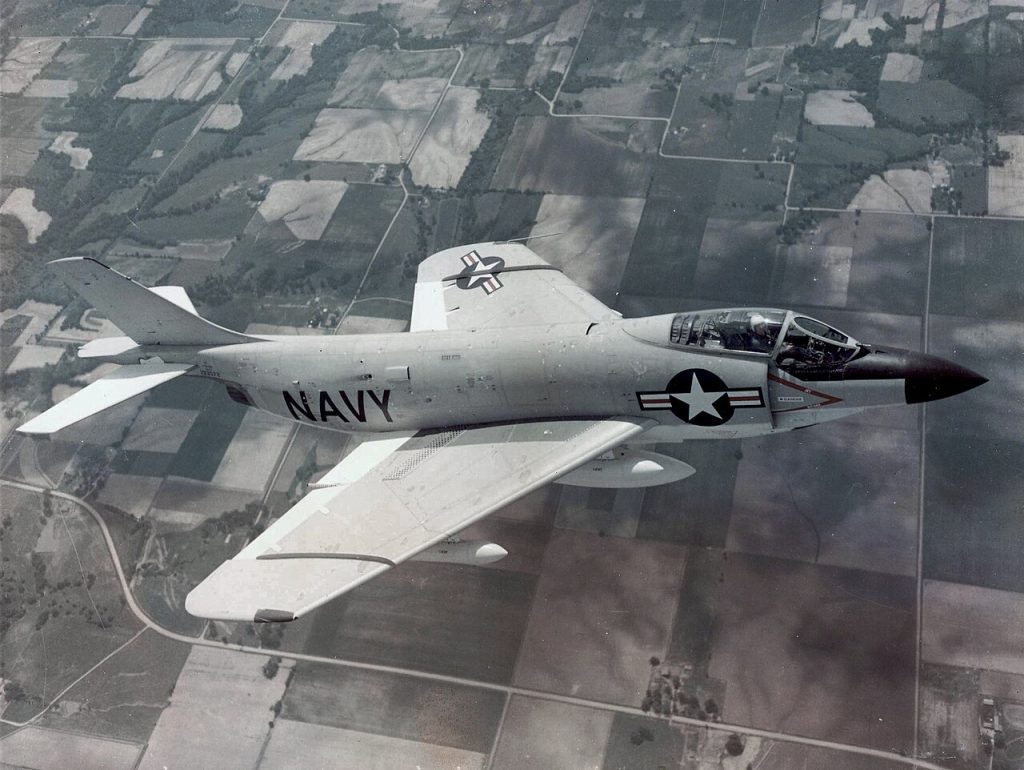
On this day in aviation history, 75 years ago (August 7, 1951), the McDonnell F3H Demon took flight for the first time. Test pilot Robert Edholm was at the controls of the XF3H-1 prototype for this first flight. The Demon was an all-weather interceptor, noted for being the first swept-wing fighter and only single-engined aircraft of the type to be produced by McDonnell. Development of the F3H began in the late 1940s upon the issuance of a United States Navy requirement seeking a high-performance swept-wing fighter to replace the F2H Banshee.
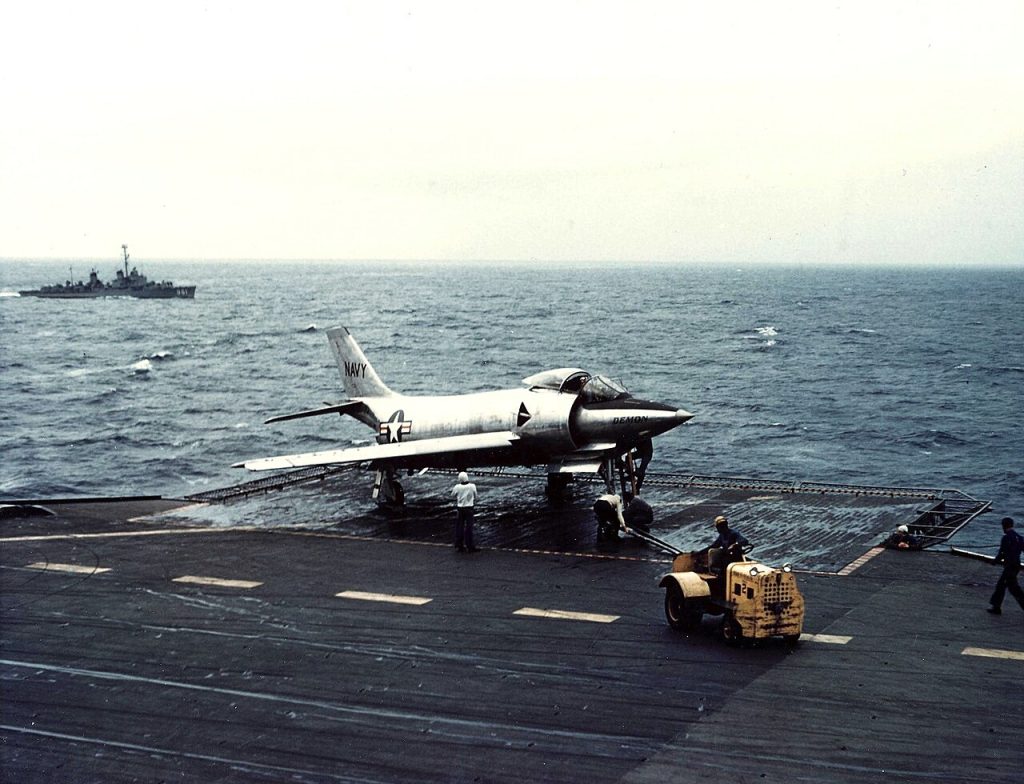
United States’ intelligence of the developing Mikoyan-Gurevich MiG-15 was non-existent at the onset of the Banshee’s initiation. The US Navy, however, foresaw the likelihood of high-performance Soviet jet fighters and issued its requirements for a swept-wing fighter based on anticipation. The engine that would power the F3H was also in development, the Westinghouse J40. McDonnell agreed to use this engine to satisfy the US Navy’s requirements. The new J40 was to produce 11,000 pounds of thrust, three times that of the F2H’s J34.
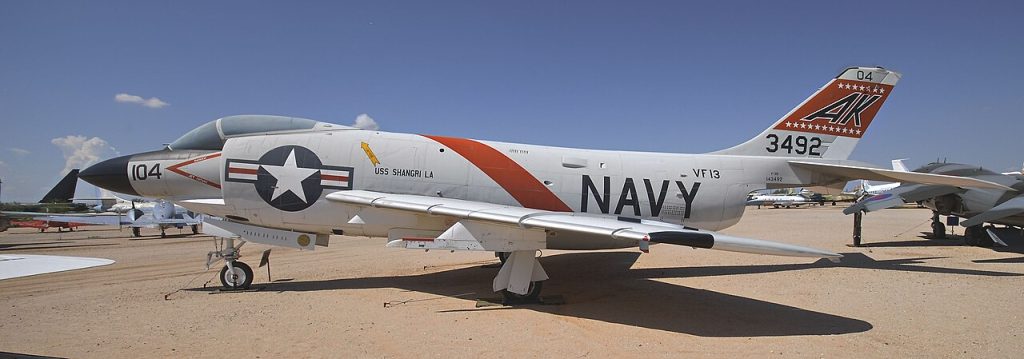
The US Navy was hasty with their order for the Demon, ordering an initial batch of 150 F3H-1Ns in March of 1951. Flight testing revealed the F3H to be simple enough to fly, maneuverable, and to have responsive controls. However, the fighter was underpowered, especially at higher altitudes. The prototype was lost to an accident, and flight testing of the production variants of the Demon would not continue until 1953, near the end of the Korean War. The J40 engine was dropped in favor of an Allison 71-A-2E afterburning turbojet engine, which produced 9,700 lbf thrust dry and 14,750 lbf with afterburner.
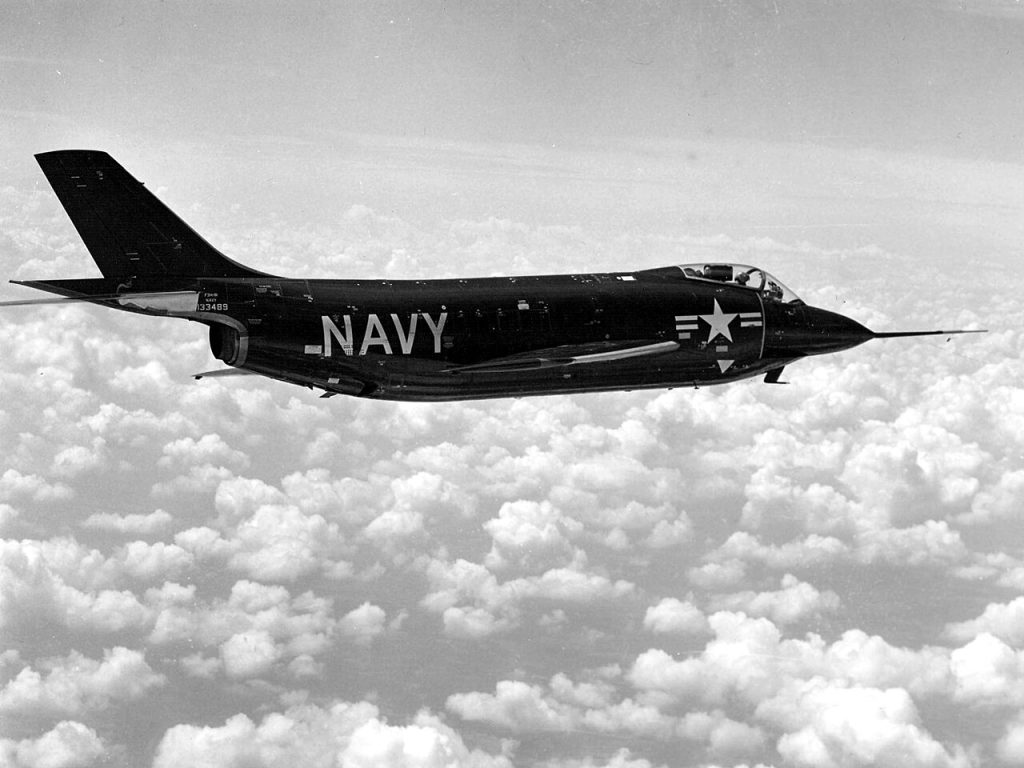
Those who flew the F3H were given the title Demon Drivers, while the ground crew was known as Demon Doctors. The Demon was known for its low power-to-weight ratio, earning it the nickname the Lead Sled. Regardless, the production F3H retained positive flying characteristics and was generally liked by pilots and crew alike. The F3H could attain a maximum airspeed of 716 mph at sea level, and climb at 12,795 fpm. The Demon had a range of 575 miles and an endurance of 3 hours. McDonnell armed the F3H with four 20 mm Colt Mk 12 cannons, four AIM-7 Sparrow or AIM-9 Sidewinder missiles, and up to 6,000 lbs of bombs, rockets, or fuel tanks. Three F3H Demons remain today, all on display within the United States.






Looks like a mini phantom from certain angles