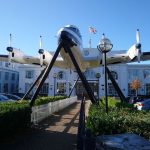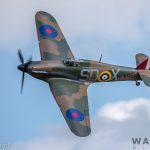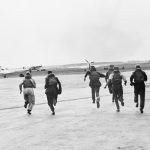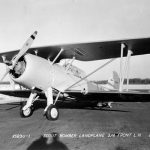
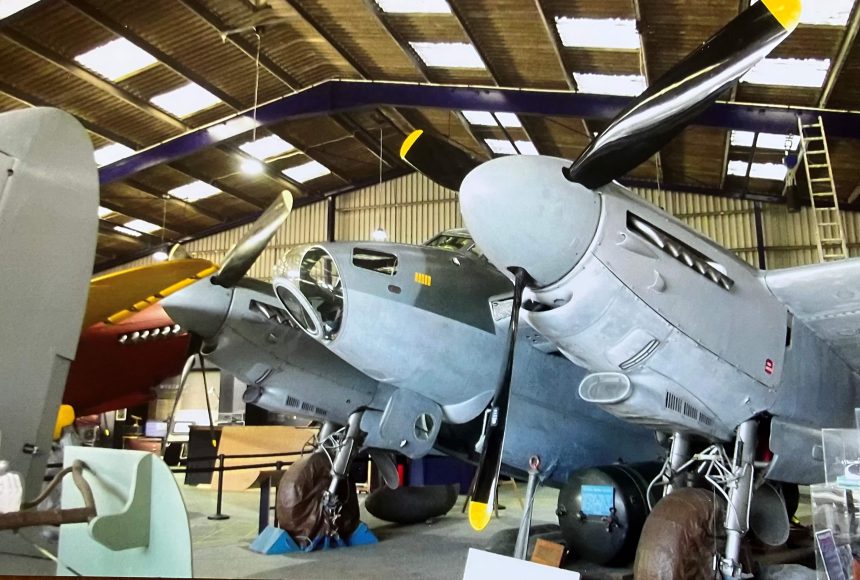

Nestled between St Albans and Hatfield in Hertfordshire stands a unique aviation institution dedicated to preserving a remarkable British air engineering legacy. The de Havilland Aircraft Museum at Salisbury Hall, London Colney, is Britain’s oldest aviation museum. It is devoted to the conservation and display of aircraft designed and built by local pilot and air manufacturing genius Sir Geoffrey de Havilland (1882-1965). It is a working museum with real aviation history. It occupies the exact grounds where the extraordinary twin piston-engined de Havilland DH 98 Mosquito was designed and assembled, under conditions of utmost secrecy during WWII. The Museum hosts three variants of this iconic WWII warbird, including its prototype, and welcomes visitors to a fascinating collection of twenty de Havilland-built civil and military aircraft in its hangars and outside grounds.
Covert Creation
The Museum adjoins historic Salisbury Hall, a moated manor house dating to the 16th century. The current house dates to the late 17th century and from 1905 was the former home of Lady Randolph Churchill (mother of Winston Churchill). Churchill was a frequent visitor. In the 1930s it was home to Britain’s famous steam locomotive engineer Sir Nigel Gresley. After war broke out in September 1939, the de Havilland Aircraft Company (1920-1963), based in nearby Hatfield, built a secret design office and camouflaged barn in the Hall’s grounds. It was similar to a modern aviation ‘skunk works‘. Company founder and director Geoffrey de Havilland dispatched a core design team, led by Chief Designer Ronald Bishop, to Salisbury Hall in October 1939. Based on designs drawn up in 1938, they made an unusual proposal to the UK Air Ministry to build an unarmed, all-wood two-seat bomber (bypassing wartime shortages of metal alloys). It would be light and fast. The Air Ministry, initially skeptical, ordered 50 DH 98s in March 1940. The Mosquito was born. de Havilland built five at Salisbury Hall covertly, with three sent to nearby Hatfield Aerodrome for flight testing.
‘Wooden Wonder’
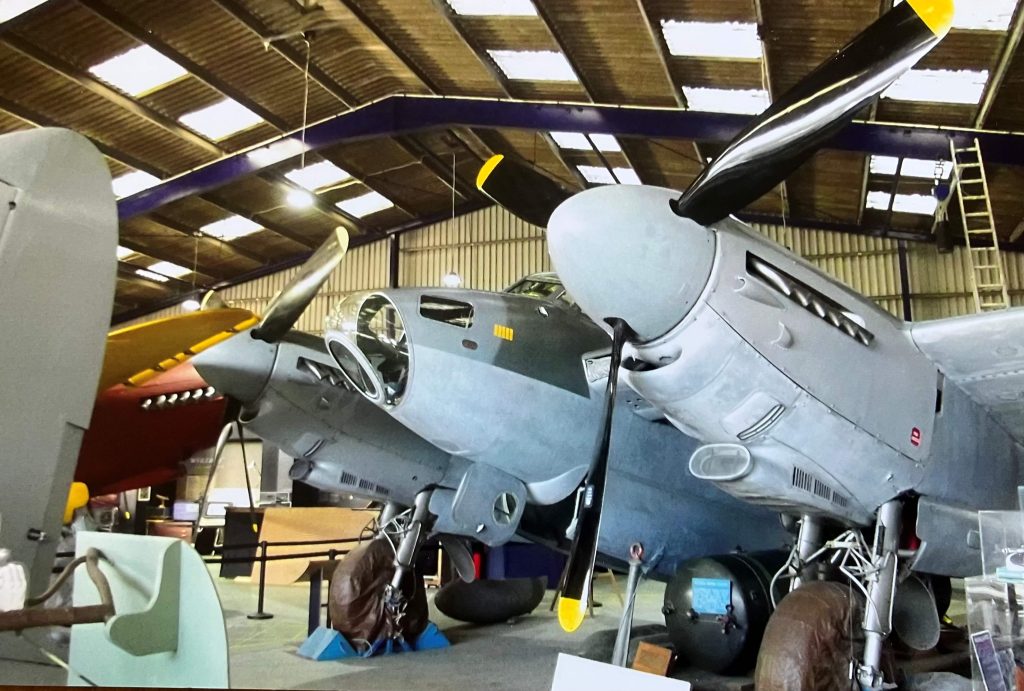
Bishop designed the aircraft out of birch plywood and Ecuadorian balsa wood. The Mosquito fuselage was built in two separate vertical halves, using concrete and wooden molds. Internal wiring, control cables, and hydraulic lines were inserted into the open halves before they were glued together, clamped, and covered in a protective layer of doped fabric. A master cabinetmaker, Bert Gear, supervised the wooden construction, using a supply chain including piano manufacturers and well-known British furniture maker Waring and Gillow. The Mosquito was designed without gun turrets, saving further weight. It was powered by two supercharged V-12 1,460-hp Rolls-Royce Merlin 21 engines, giving the Mosquito an unmatched power-to-weight ratio for a British light bomber. The initial prototype, serial number W4050, was completed in Salisbury Hall barn in November 1940. Disassembled, it traveled unobtrusively by road to Hatfield. Painted all-yellow, W4050 made its maiden flight on 25 November 1940, flown from Hatfield Aerodrome by test pilot Geoffrey de Havilland Jr. Subsequent flight trials confirmed that at 392 mph the Mosquito was faster than the Supermarine Spitfire Mk II (360mph). Its flight ceiling was 33,000 feet, although later variants managed 42,000 feet. de Havilland had produced a winner. As Mosquitos began to roll off the mass production line at Hatfield from mid-1941, for final assembly at Leavesden, near Watford, they were armed with four .303-inch Browning machine guns in their nose mountings, with an additional four 20mm Hispano MK II cannons mounted under the cockpit floor. From 1943, the Mosquito fighter-bomber variant, the FB VI, carried two 500-lb bombs in its bomb bays plus two more 500-lb bombs or eight RP-3 rockets mounted under its wings. The Mosquito served throughout the war as a successful multi-role fighter-bomber, pathfinder, and photo-reconnaissance aircraft. Famously, Mosquitos conducted low-level precision raids on Gestapo HQ, Oslo (1942), Berlin (1943), Amiens Prison (1944) and photographed the Auschwitz-Birkenau extermination camp in Poland in full operation (April 1944). Later Mosquito versions were powered by Mk 113 and Mk 114 Rolls Royce Merlin engines, carried 4,000-lb ‘Blockbuster‘ bombs, and were deployed as radar-arrayed night fighters. These achieved considerable success against Luftwaffe bombers attacking Britain in the so-called ‘Little Blitz‘ (January-May 1944). Between 1942 and 1945 Mosquito night fighters shot down an estimated 600 enemy aircraft. A total of 7,781 DH 98 Mosquitos were built during the war in the UK, Canada, and Australia, in 27 variants. A total of 40 different versions were made. 3,326 were built at Hatfield.
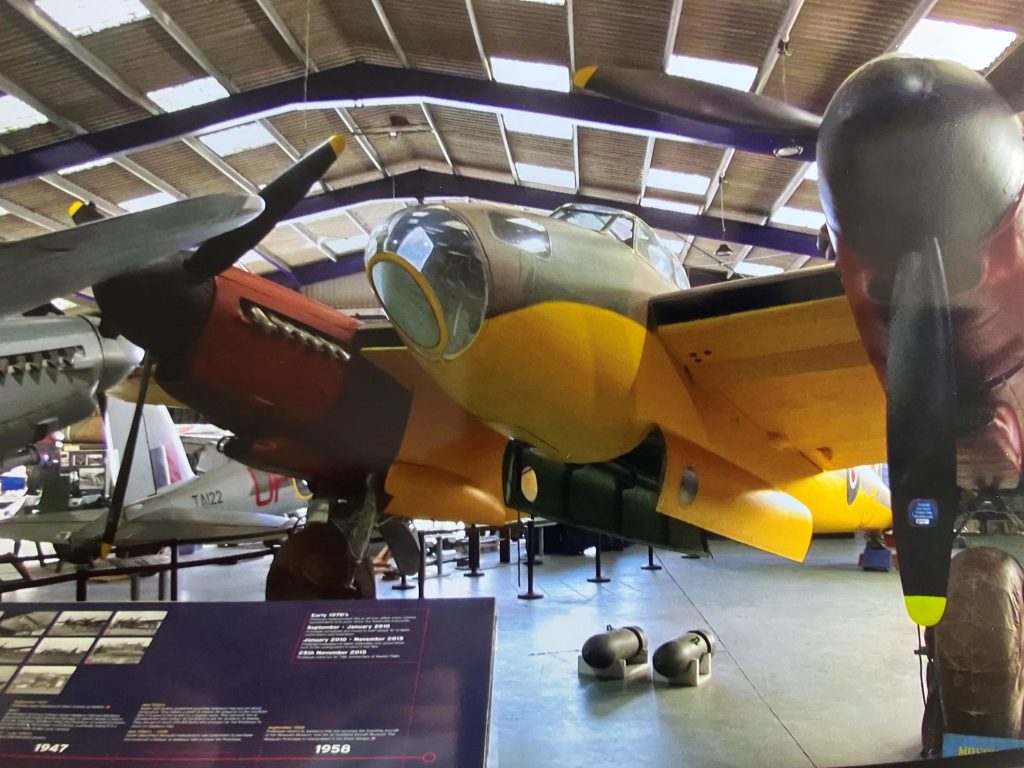
Today, the DH 98 Prototype W4050, the only surviving first prototype of a twin-engined piston WW2 combat aircraft, has pride of place at Hertfordshire’s de Havilland Aircraft Museum. It was later repainted from all-yellow to dark camouflage on its upper surfaces and yellow on its undersides, with red Merlin engine cowlings and the circle letter ‘P’ for ‘Prototype’ proudly on its rear fuselage. In tests in 1943 with Merlin 77 engines, W4050 reached a flight speed of 439 mph.
First British Aviation Museum
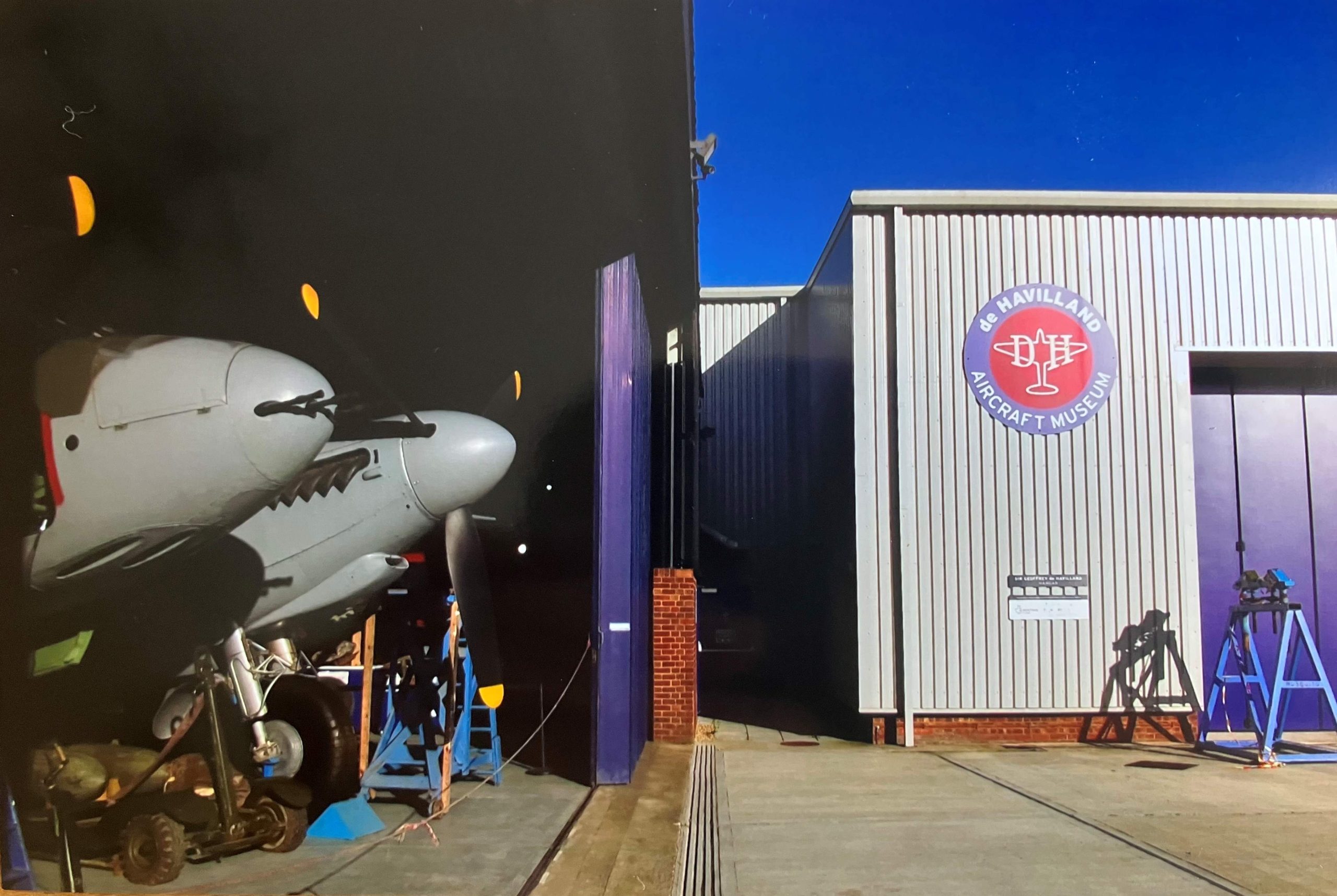
In 1947, the de Havilland design teams vacated the site and returned to Hatfield. Salisbury Hall fell into disrepair. The original Mosquito prototype, W4050, was set to be scrapped. With a view to posterity, dedicated De Havilland employees dismantled the airframe and defiantly stored its components in a hangar at Hatfield. In 1955, ex-Royal Marine Major General Walter Goldsmith purchased the derelict Salisbury Hall. During the Hall’s restoration, Goldsmith discovered original Mosquito engineering sketches on the walls. Goldsmith and the de Havilland Company agreed to return the preserved prototype to its birthplace. In May 1959, the prototype Mosquito went on public display at Salisbury Hall. The same year, Major General Goldsmith and John ‘Cat’s Eyes‘ Cunningham (former RAF Mosquito night fighter ace and de Havilland chief test pilot) opened Britain’s first aviation museum on the Salisbury Hall site. In 1977, the de Havilland Aircraft Museum Trust charity purchased the current site to manage, protect, and expand the historic aircraft collection. In 2014, the site was renamed The de Havilland Aircraft Museum and has been revitalized following construction of new hangars during 2016-2019. It is a working museum where visitors can walk through display and restoration hangars and interact with volunteers. The Museum’s collection of twenty aircraft is structured across distinct eras of British civil and military aviation development. It is the only venue in the world, thus far, where visitors can view three distinct examples of the de Havilland Mosquito in situ.
Mosquito Hangar and DH Classics
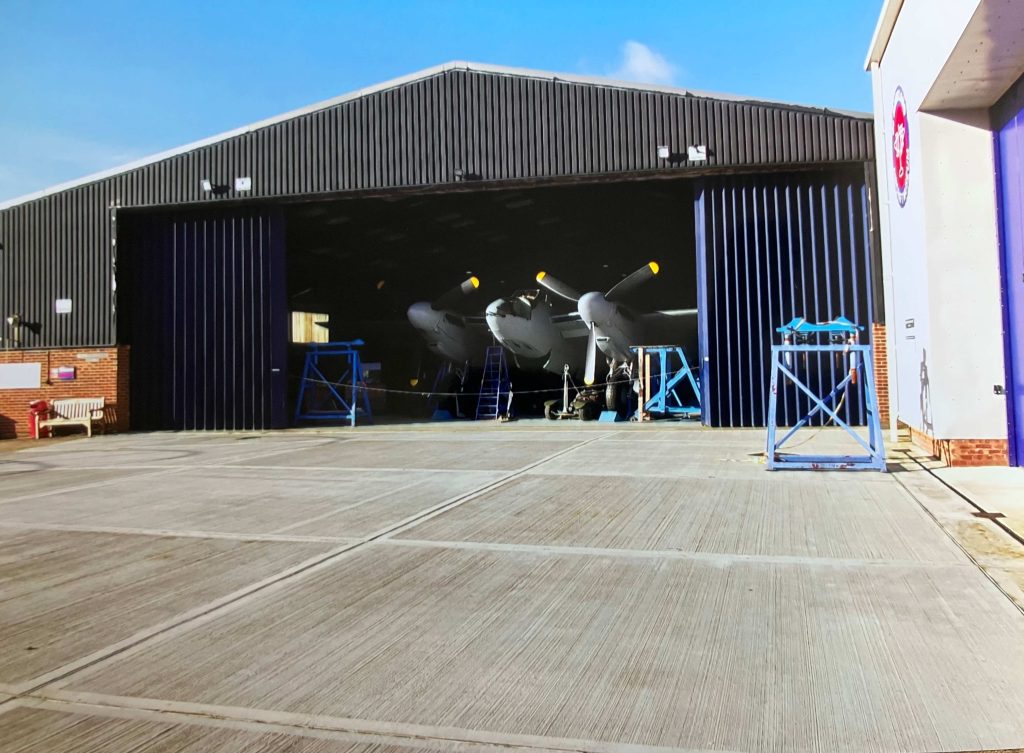
The Museum’s Walter Goldsmith Hangar (1984) showcases the static display of prototype DH 98 Mosquito (W4050), a target-towing DH 98 Mosquito B.Mk 35 (TA634), and fighter-bomber variant DH 98 Mosquito FB. MK.VI (TA122), together with refuelling equipment, armaments, and audio-visual displays. In the same hangar is a hybrid cockpit and forward fuselage of an Airspeed Horsa AS51/58 transport glider, of the types used in 1944-1945 by Allied glider troops landing on Sicily (1943), D-Day, Arnhem (1944) and the Rhine crossing (1945). The Museum also offers visitors the chance to fly sorties (guided by an instructor) in an immersive Mosquito simulator, with realistic DH 98 flight instruments, controls and a 270-degree projection screen.
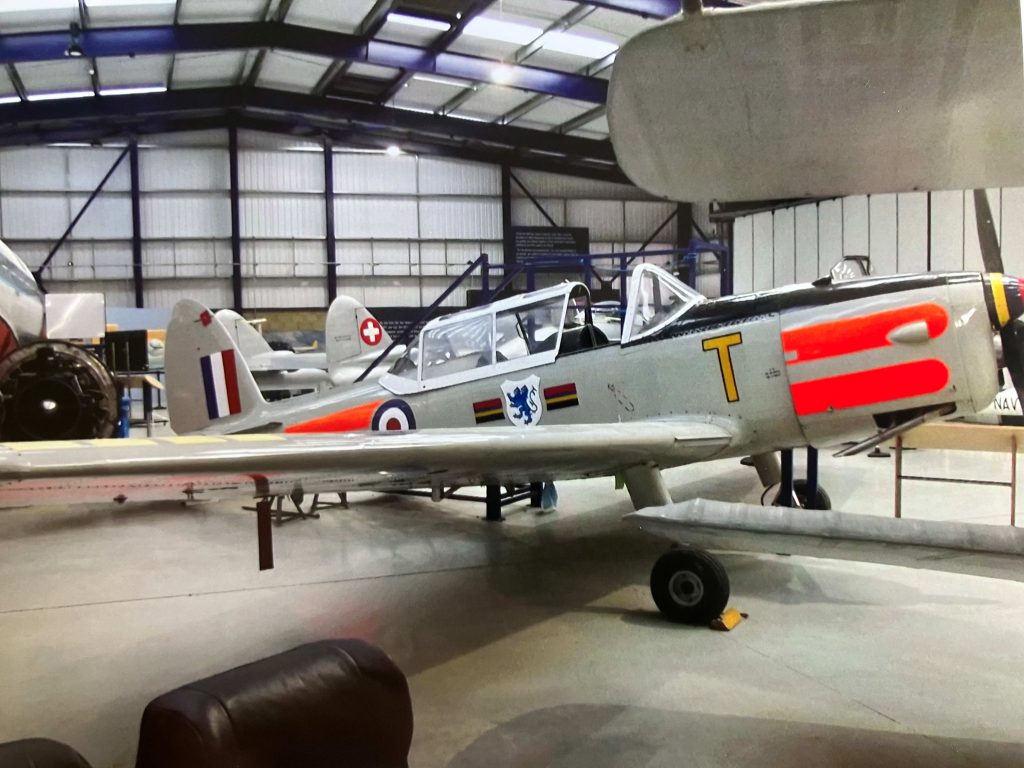
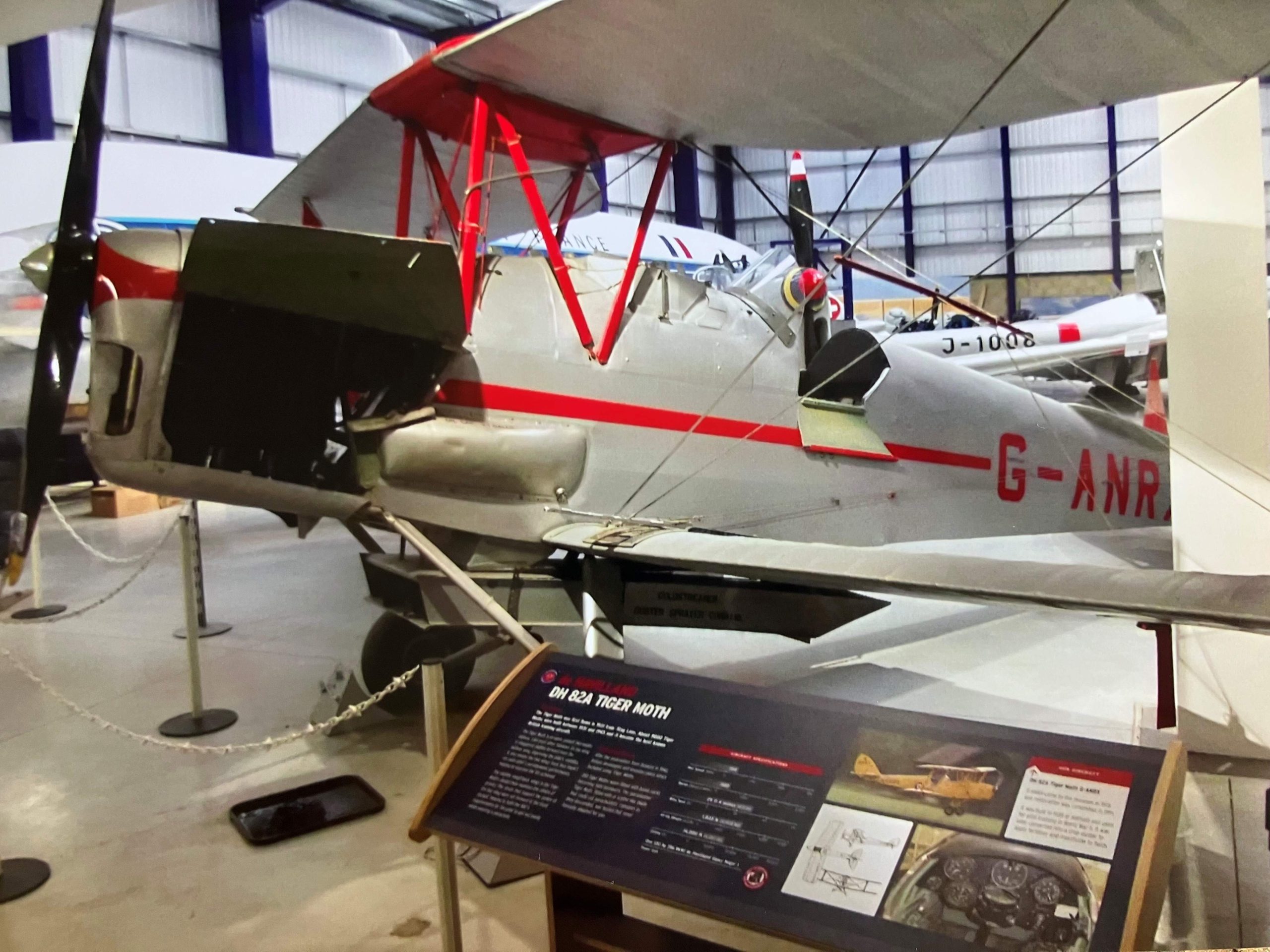
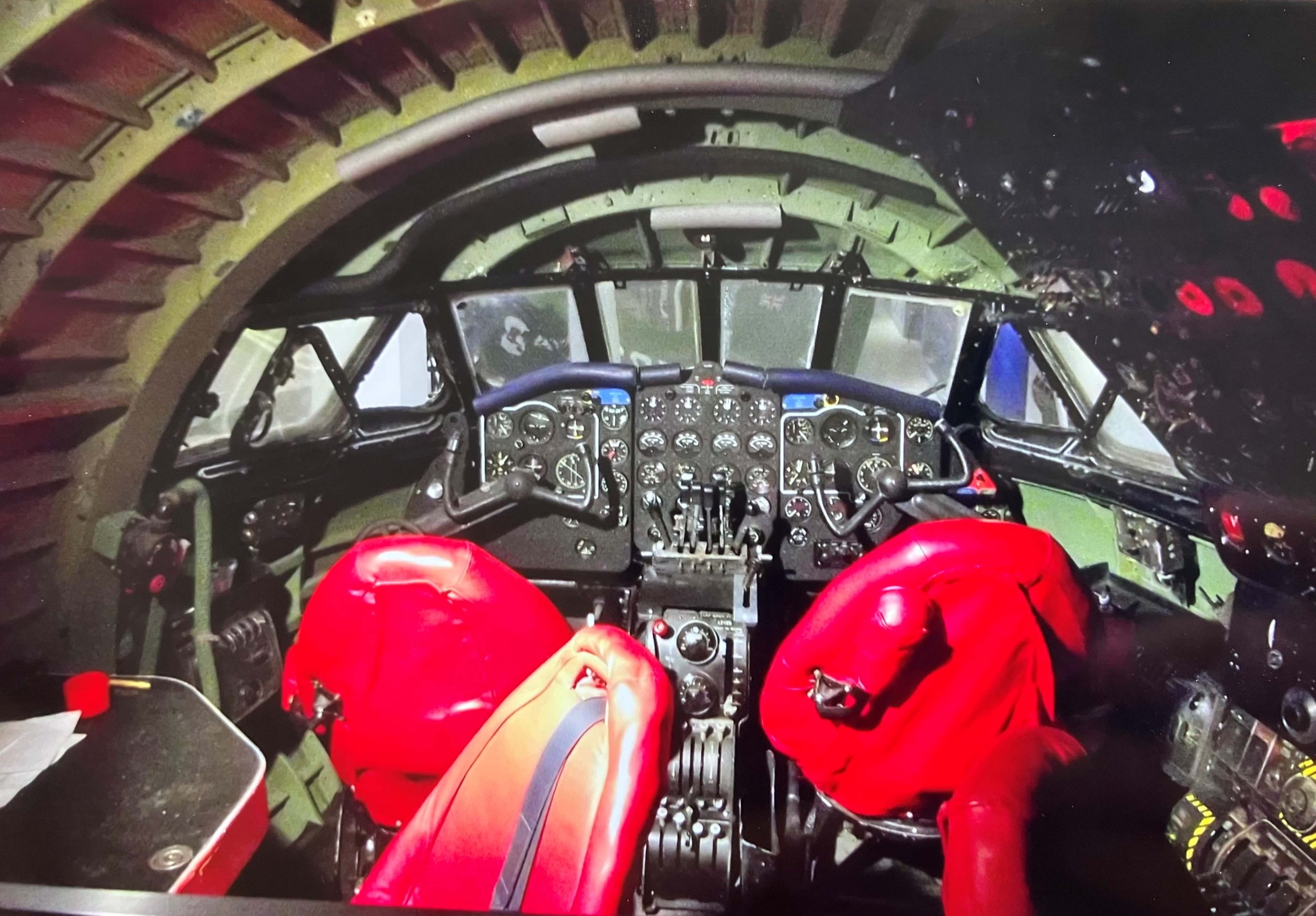
Next door, the larger Sir Geoffrey de Havilland Hangar houses other DH icons. These include a 1930s DH 88 Comet racer replica, DH 82B Queen Bee radio-controlled target aircraft, DH 53 Humming Bird (1923), DH 87B Hornet Moth and a wonderful Cierva C24 Autogyro (the only rotorcraft built by de Havilland). Nearby, stand fine examples of DH 82A Tiger Moth and DHC1 Chipmunk trainers and twin-boom tail DH 100 Vampire, DH 110 Sea Vixen, and DH 112 Sea Venom jet fighters. The Museum has two variants of the DH 100 Vampire, the second jet fighter to enter RAF service in 1945, in both single and dual control versions.
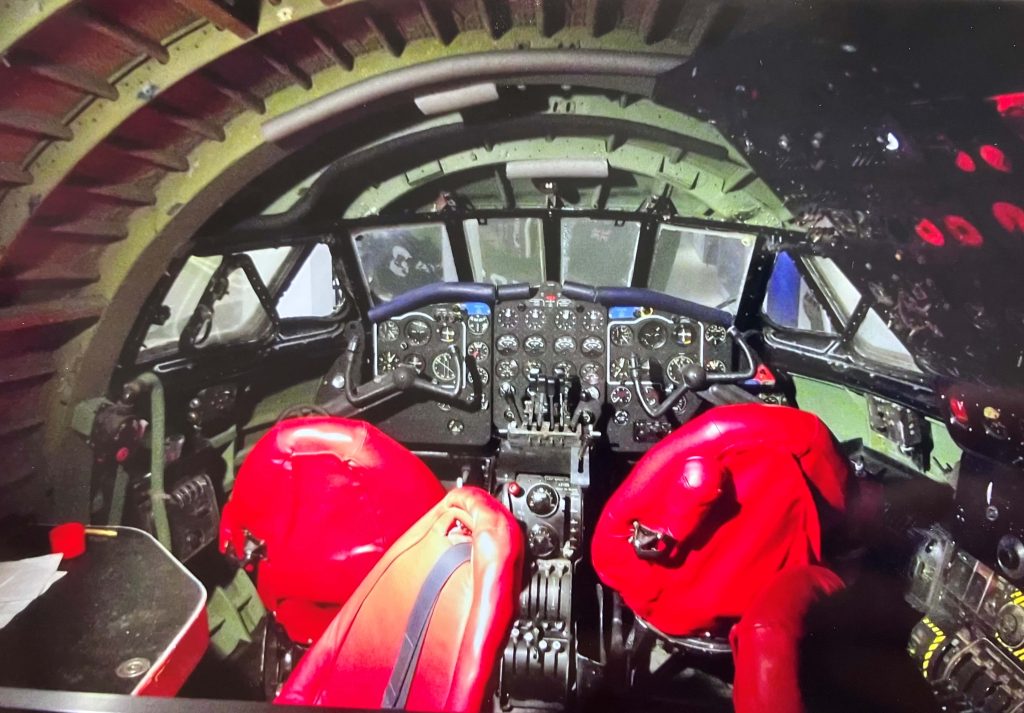
In the same hangar is a rare cockpit and complete fuselage of DH 106 Comet 1A (F-BGNX), one of three Comets made at Hatfield for Air France in 1953. It is the only example left with its original square windows. Visitors can walk through its interior passenger cabin to the cockpit, and it is highly atmospheric. It leaves an abiding impression both of 1950s design excellence and of lost civil aviation promise. Conservation hangars also ensure the de Havilland Museum’s vital role in protecting its collections. Since 2022, restorations on a 1934 DH 89A Dragon Rapide (G-AKDW) are now well advanced. With its port wing already back in place and two Gipsy Queen II engines set to be reattached in the coming months, it will be a welcome addition to the Museum’s static displays by the end of 2026. It has been painted in the attractive light blue and white livery of Hillman’s Airways Ltd, London (1931-1935).
Historic Powerplants
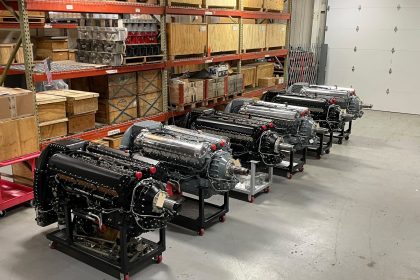
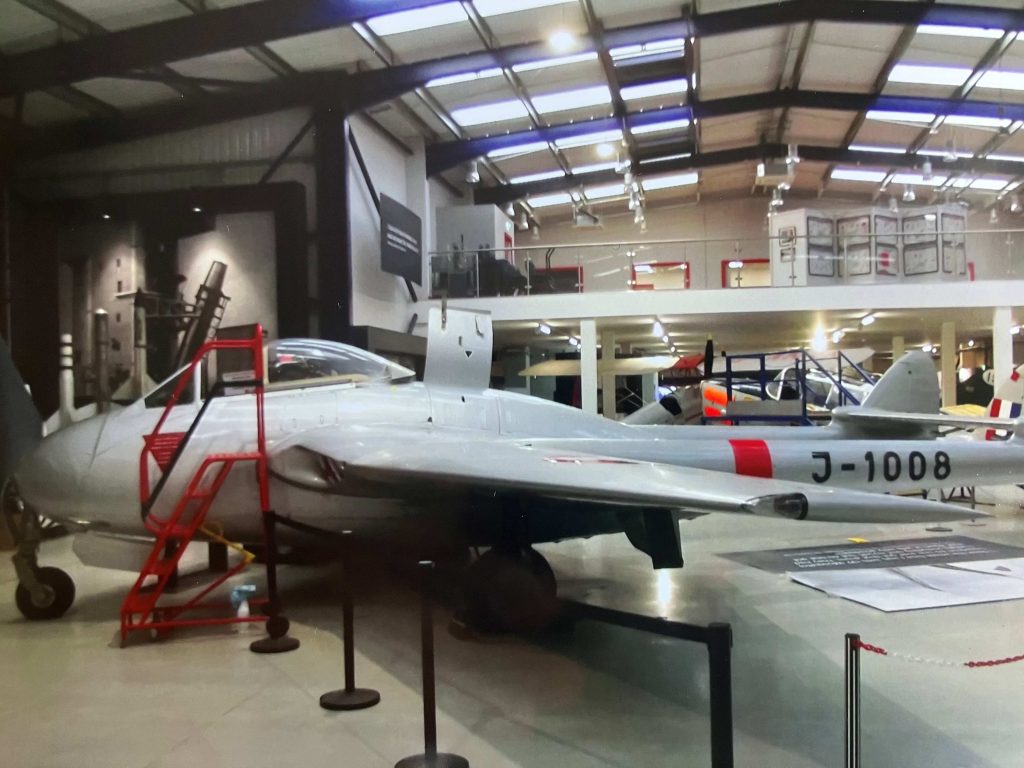
The Museum also offers much for aero engine enthusiasts to investigate, displaying a range of historic powerplants, including a number designed by de Havilland’s genius aircraft engine designer Frank Halford (1894-1955). From 1923, Halford designed the famous Gipsy series of air-cooled inline engines for de Havilland, the Goblin 2 (1945) and Ghost (1953) turbojets, and Gyron Junior (1958) axial-flow jet engines. Examples of all of these are on display. The Museum also features two rare rocket engine types associated with Cold War-era testing at Hatfield in the 1950s, the 8,000-lb thrust de Havilland Spectre (1953) and liquid-propelled de Havilland Super Sprite (1958).
Outside Exhibits
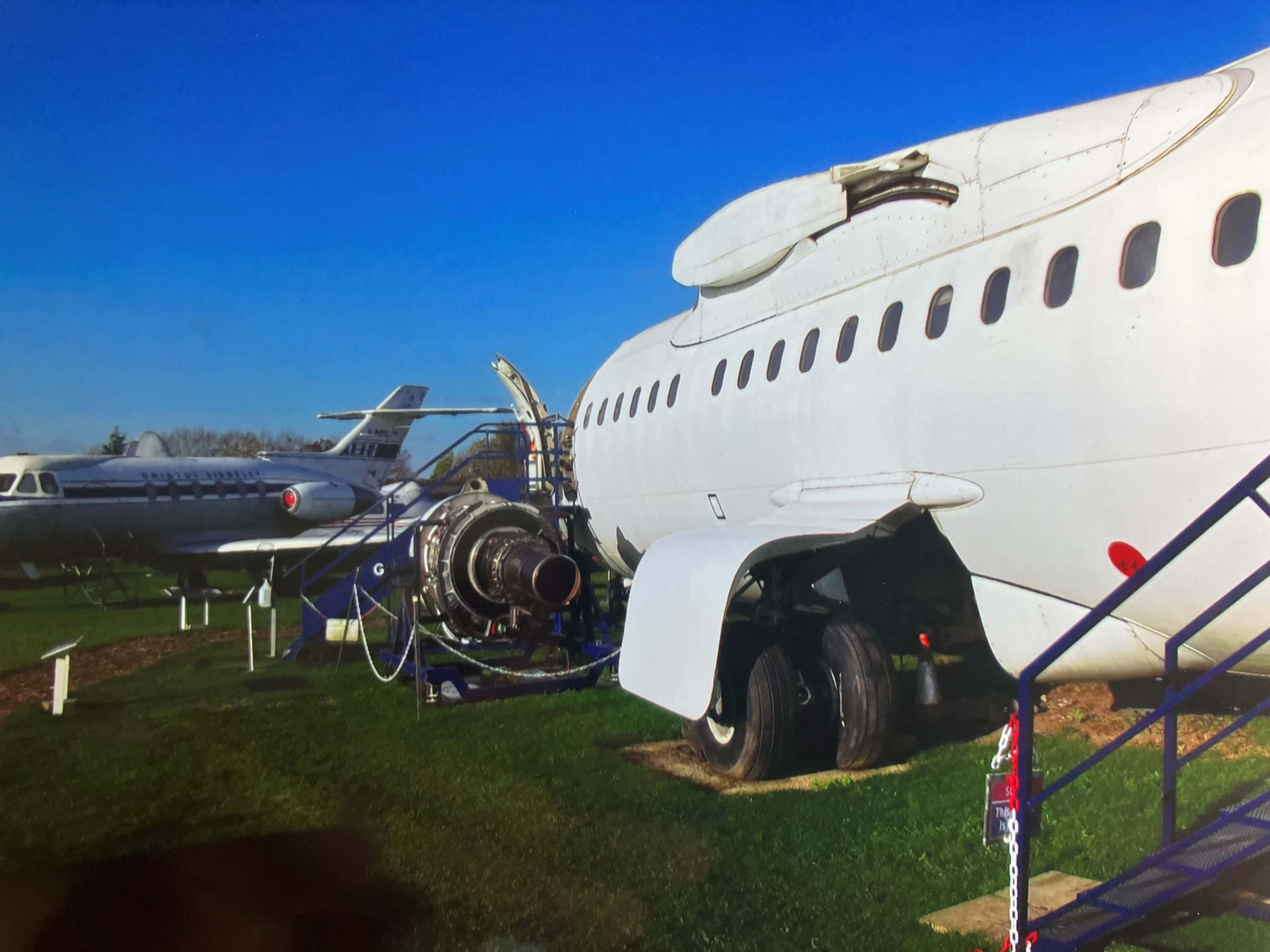
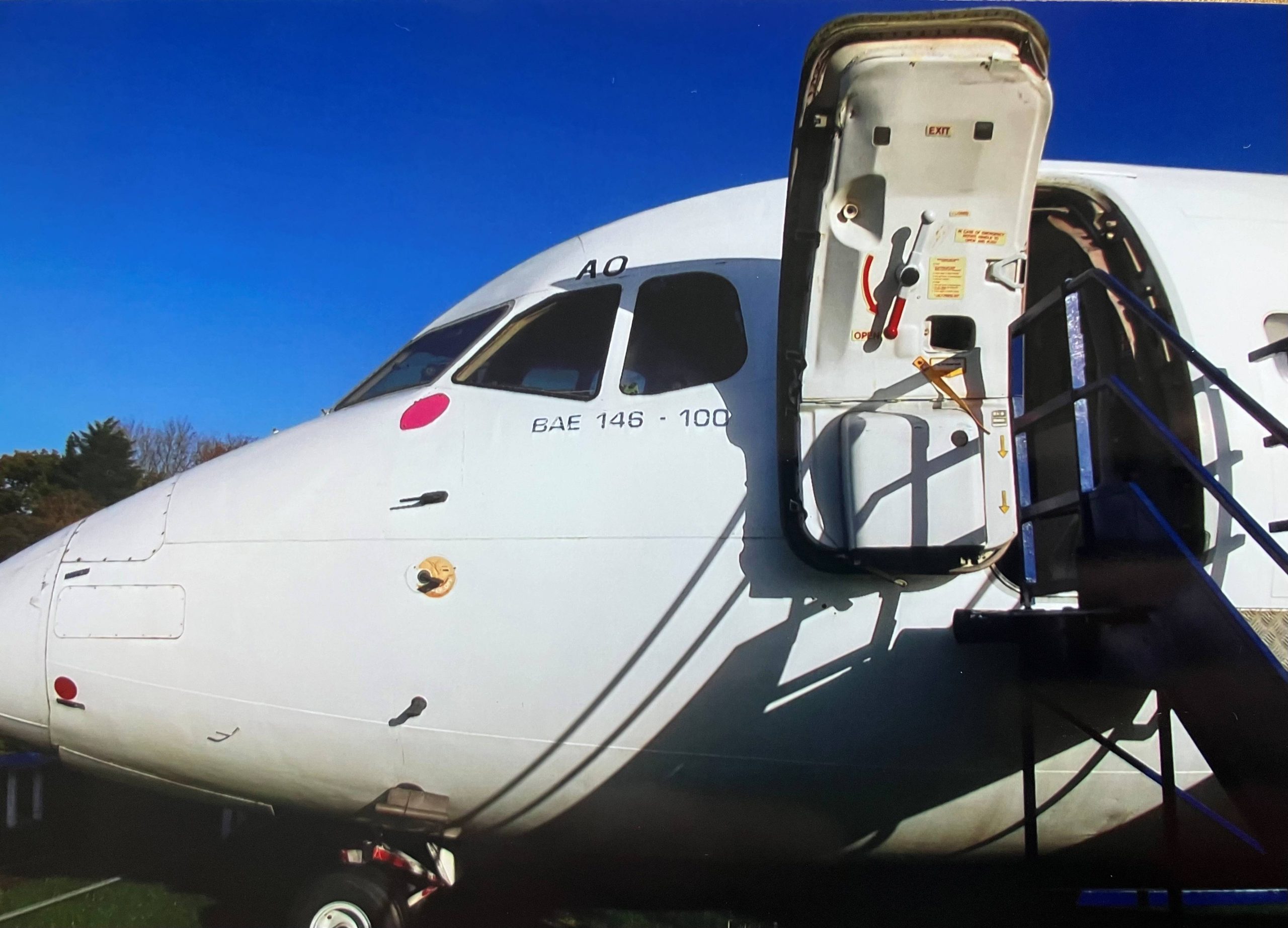
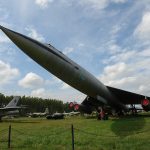
The de Havilland Aircraft Company was bought by Hawker Siddeley Group in 1960 and was nationalized as British Aerospace (BAe) in 1977. The Museum grounds feature open-air static displays from this era. They include a DH T11 Vampire trainer, a DH 106 Comet R2 cockpit section and Comet 4 simulator, a DH 114 Heron MK2D airliner (1956) and a DH 104 Dove MK.8. The Heron and Dove were all-metal light transports and VIP aircraft which dominated the short haul, feeder market in Britain in the 1940s and 1950s. Visitors can climb into the cockpit and forward fuselage of a 1962 DH 121 Trident 2E airliner in British European Airways livery (built at Hatfield) and see a good example of a DH 125 executive jet (1963). The 1980s are represented by the complete cockpit and fuselage of a BAe 146-100 ‘Whisper Jet‘ short haul airliner. The British press dubbed the 146 the ‘Whisper Jet‘ due to its four quiet turbofan engines. For a decade it was Britain’s most successful home-grown regional jet airliner. It first flew from Hatfield in 1981. A total of 221 were built between 1983 and 1992. Visitors can board its well-apportioned passenger cabin and immaculately preserved cockpit. On my visit, sitting in the cockpit and advised by a knowledgeable volunteer on the aircraft’s service, I recalled seeing BAe 146s taking off, spookily quiet, from British Aerospace’s Hatfield runway in the late 1980s. Sadly, BAe closed its Hatfield site in 1993. Either way, I never imagined I would one day sit in the cockpit of one of these innovative short-haul aircraft.
Flourishing Legacy
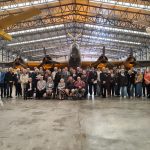
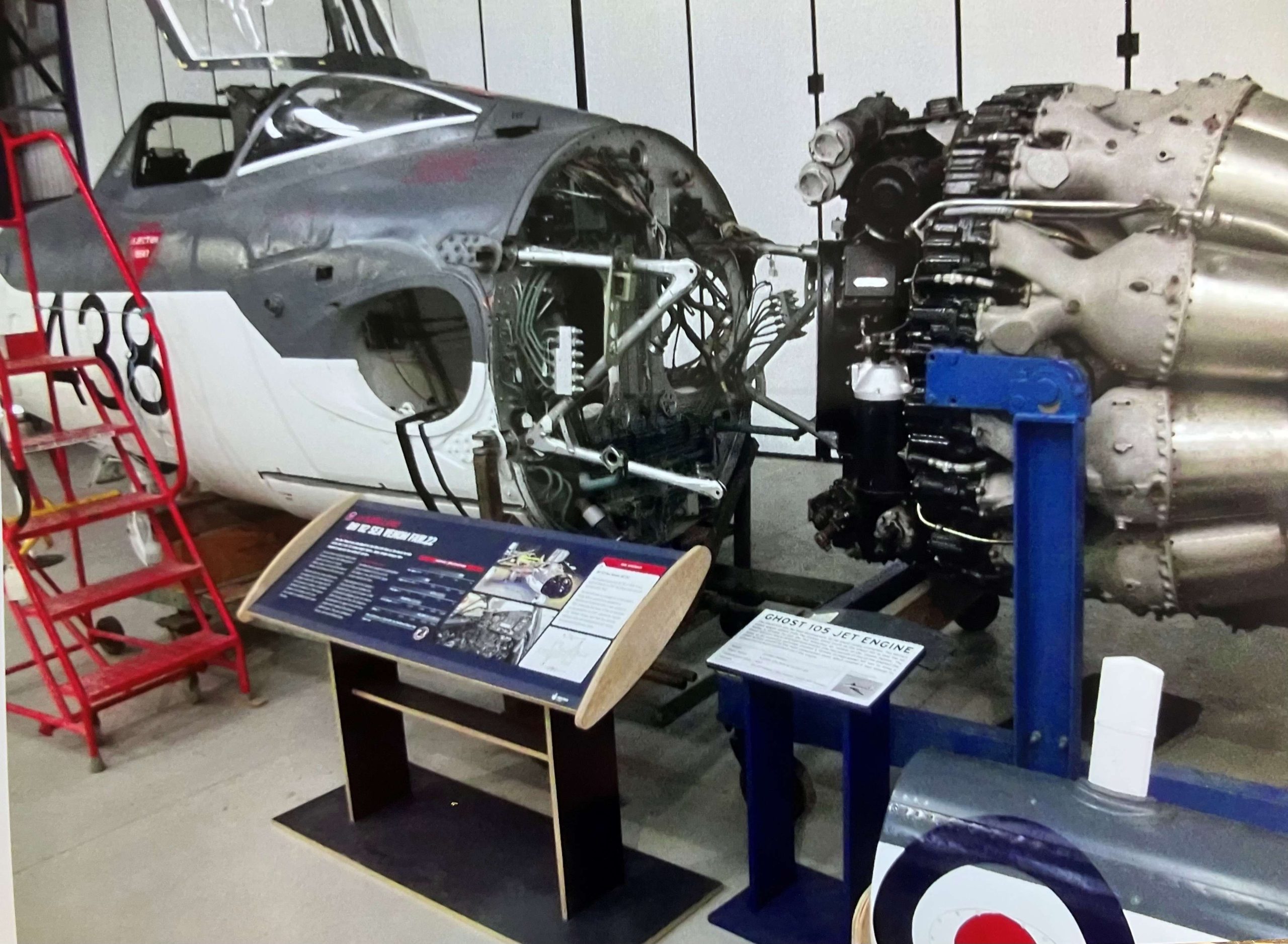
Backed by the UK’s National Lottery Heritage Fund, the Museum completed a major transformation in 2020 by opening its £3 million, environmentally controlled, Sir Geoffrey de Havilland Hangar. This facility, preceded by a new Amy Johnson conservation hangar opened in 2016, brought vulnerable, historically critical aircraft—such as the rare DH 110 Sea Vixen, DH 106 Comet 1A and DH 98 Mosquito FB.VI—under permanent cover. The Museum features a refurbished café, shop, educational spaces, workshops, community activities and a thriving volunteer program. In November 2025, to commemorate the 85th anniversary of the first flight of the Mosquito in 1940, volunteers rolled out DH 98 Mosquito FB VI (TA122) from its hangar. A memorable talk was given by Flight Lieutenant Colin Bell DFC, a 104-year-old former Mosquito pathfinder pilot and veteran of over fifty ‘ops’ (operations) over Germany.
In 2026, the Museum’s mission, “to preserve and bring to life the pioneering achievements of one of Britain’s most innovative and inspiring aircraft companies,” flourishes. Sir Geoffrey de Havilland, his remarkable aviation legacy, and this award-winning Hertfordshire museum continue to enthrall. For more information and to support the de Havilland Aircraft Museum, click on this link: www.dehavillandmuseum.co.uk.