





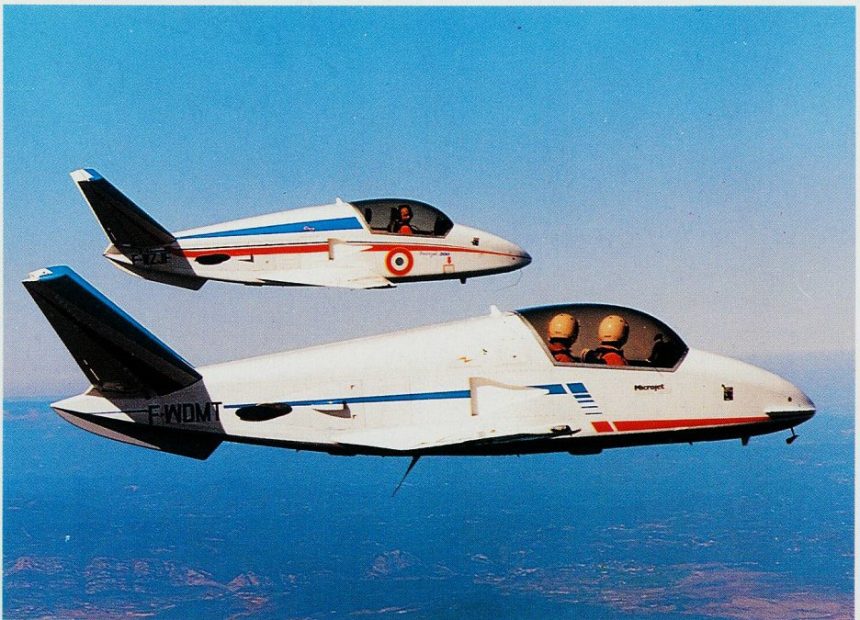

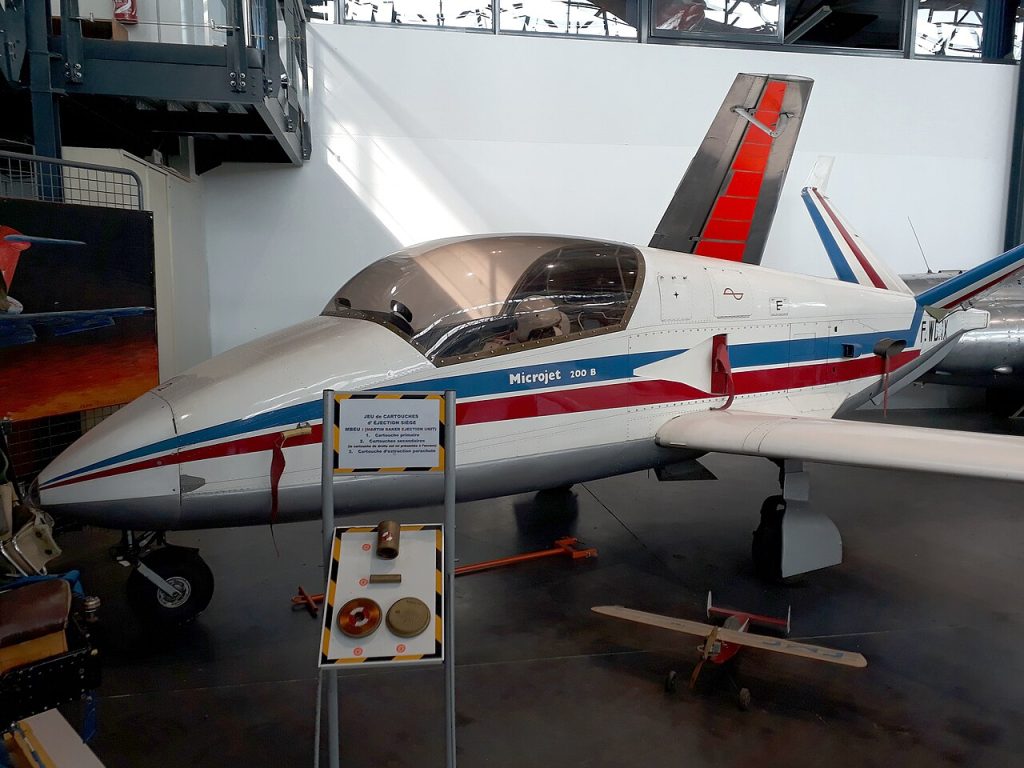
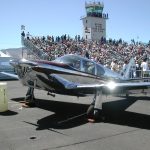
On this day in aviation history, 46 years ago (June 24, 1980), the Microjet 200 took flight for the first time. Designed by French aviation manufacturer Microjet SA, the 200 was a jet trainer that was intended for military service. The design was light and developed around two Microturbo TRS 18-1 turbojet engines. The student and instructor sat side-by-side. Behind them was a V-tail, and beneath were retractable landing gear. The Microjet 200 prototype was of all-wood construction, while the three subsequent pre-production models were made with mixed materials. The pre-production model first flew on May 19, 1983, nearly 3 years after the prototype.
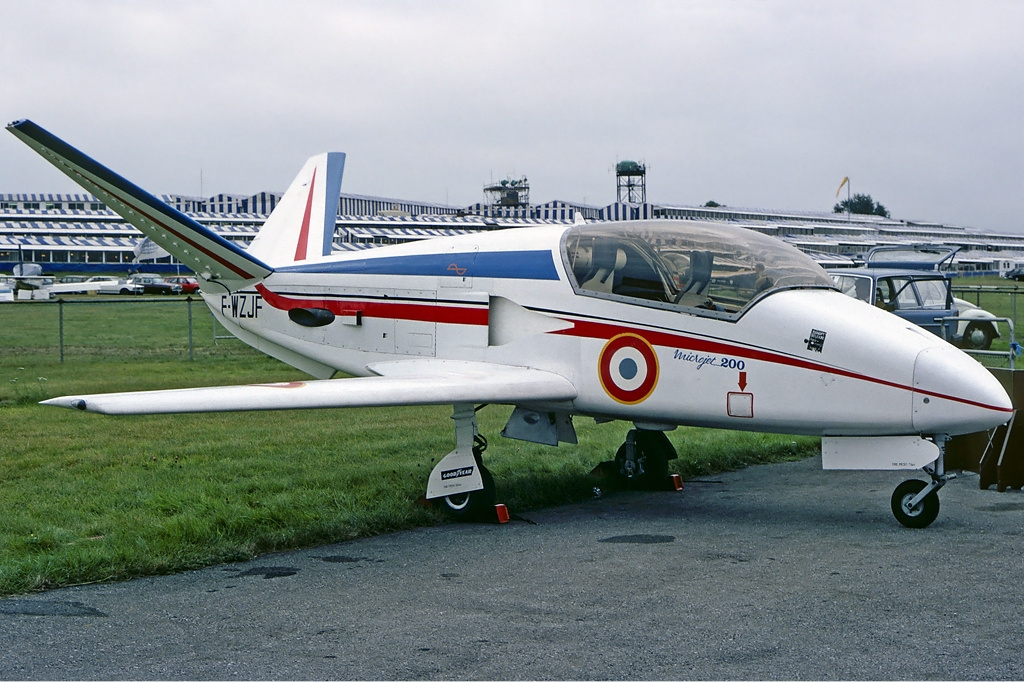
Microjet’s intent with the Model 200 was to offer a military jet trainer that would reduce barriers to entry for nations seeking a combat trainer. It was to be of lower cost and simpler to fly and maintain. Furthermore, the operating costs would be lower than competing jet trainers. High wing-loading, responsive controls, and integrated avionics were promised to help low-time military combat pilots train up to the level required to fly and fight. Despite the promises and optimism of Microjet, their Model 200 failed to receive any strong interest on the military market. As a result, no production aircraft were manufactured. The Microjet Model 200B pre-production variant, with the 293 lbf Microturbo TRS 18-1, could attain a maximum airspeed of 287 mph. Cruise speed was 241 mph, which gave the Model 200B an endurance of 2 hours. The Microjet had a service ceiling of 30,000 ft, and could climb at 1,705 fpm. The size of the 200B was indeed micro, with a length of 21 ft – 10.5 in, a wingspan of 24 ft – 9.75 in, and 7 ft – 11.25 in of height.




Is it possible for a new beginner in pilot training?