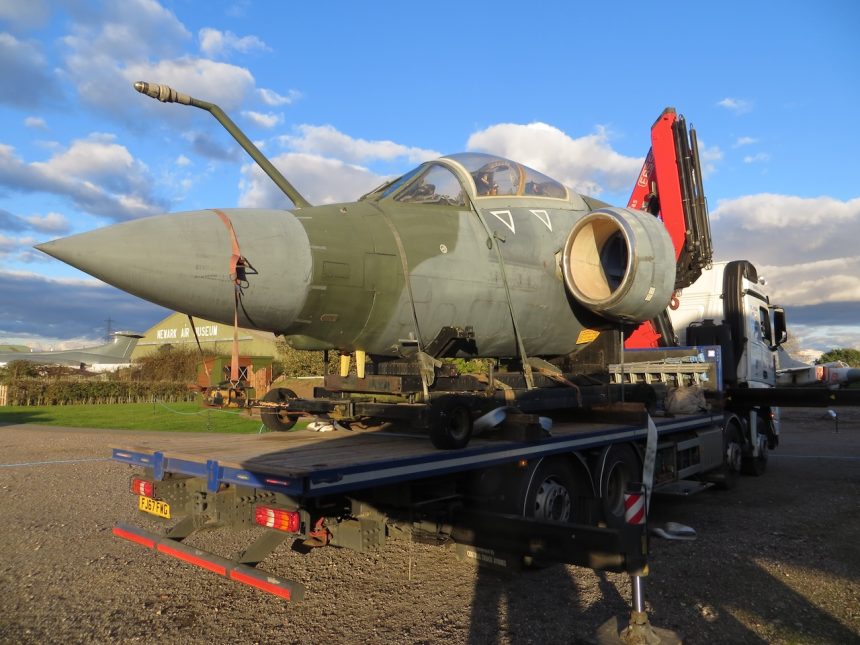

The trustees of Newark Air Museum have announced that the Blackburn Buccaneer S.2B cockpit from XX899, which has been on loan to the museum since autumn 2018, will soon be departing for a new home in Oxfordshire. The cockpit is expected to leave the museum’s Gateway Aviation Site before the end of June 2026. It will move to an undercover location close to its owner, Robin Phipps, who has overseen its restoration and preservation for many years. XX899 arrived at Newark in October 2018 after relocating from the Midland Air Museum in Coventry. The move required the cockpit section to be lifted over the perimeter fence at Coventry Airport before being transported to Newark. Since arriving at the museum, it has been displayed with portions of its original fuselage structure intact, allowing the canopy to slide along its rails as designed. Owned by aviation enthusiast Robin Phipps, the cockpit has become a popular exhibit at Newark, where restoration work has continued throughout its stay. Today, the cockpit is in excellent condition and even retains its radar installation, making the nose section noticeably heavy.
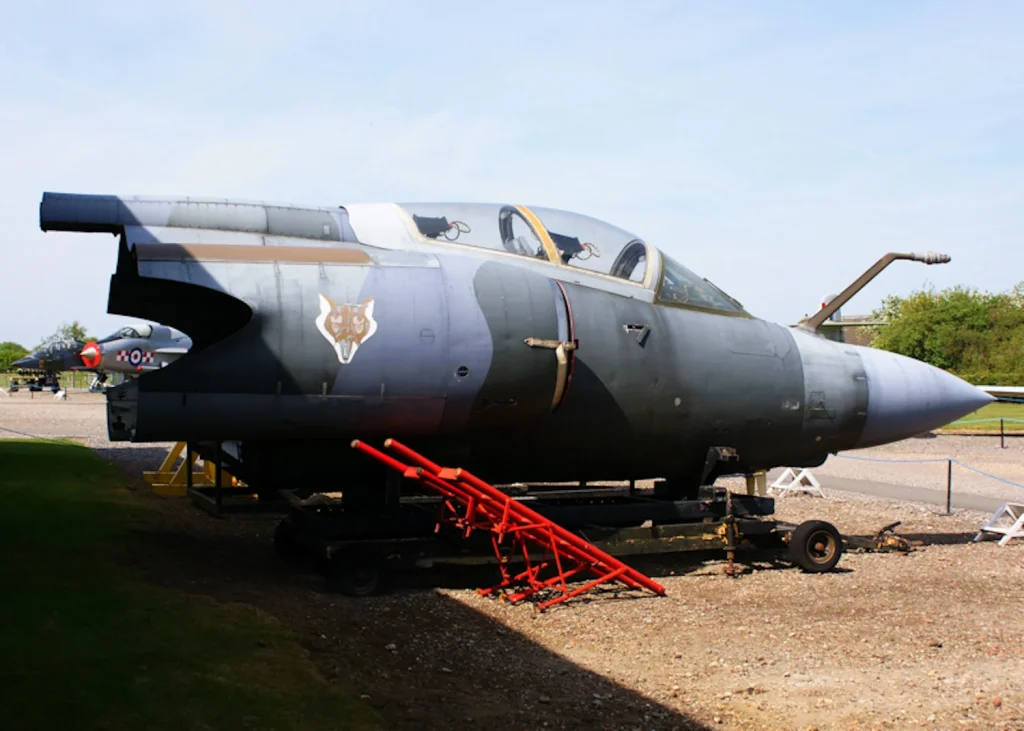
The Blackburn Buccaneer was developed as a low-level strike aircraft and became an important asset for both the Royal Navy’s Fleet Air Arm and later the Royal Air Force. Following the cancellation of the TSR.2 program, the Buccaneer proved to be a highly capable alternative, consistently demonstrating outstanding low-level performance. Royal Navy Buccaneers operated from aircraft carriers including HMS Eagle and took part in operations supporting the oil blockade of Rhodesia in 1966. The type also gained attention for remarkable long-range flights, including a 1,950-mile non-stop crossing from Goose Bay, Canada, to RAF Lossiemouth in Scotland. In 1967, Buccaneers were famously used during attempts to sink the grounded oil tanker Torrey Canyon off the Cornish coast.

The aircraft’s RAF service was not without challenges. In February 1980, the entire fleet was grounded after a fatal in-flight breakup revealed significant fatigue issues. Following extensive inspections and modifications, operations resumed later that year. As the Panavia Tornado entered service, the Buccaneer force gradually shifted to secondary roles and received upgrades, including AIM-9 Sidewinder missiles. Despite plans for retirement, the aircraft enjoyed a final period of operational success during Operation Granby in the 1991 Gulf War, where Buccaneers played a crucial role in laser target designation using the TIALD system.

(Image credit: RAF)
Buccaneer XX899 was delivered to the Royal Air Force on September 29th, 1976, joining No. 12 Squadron at RAF Honington. During Operation Granby in 1991, the aircraft carried the tail code “P” and the nose art name Laser Lips Laura. On February 2nd, 1991, XX899 and Buccaneer XW547 flew the first Buccaneer combat mission of the conflict. It is also believed that XX899 flew more Buccaneer missions during the Gulf War than any other aircraft of the type. Like all Buccaneer S.2Bs, XX899 was crewed by a pilot and navigator. The aircraft had a maximum speed of approximately 570 mph, a range of 3,110 miles, and a service ceiling of 48,000 feet. Power was provided by two Rolls-Royce Spey engines. Its internal bomb bay could carry four 1,000-pound bombs, while each wing pylon was capable of carrying stores weighing up to 3,000 pounds. The S.2B variant was also equipped to carry Martel anti-radiation and anti-shipping missiles, and later the Sea Eagle anti-ship missile.
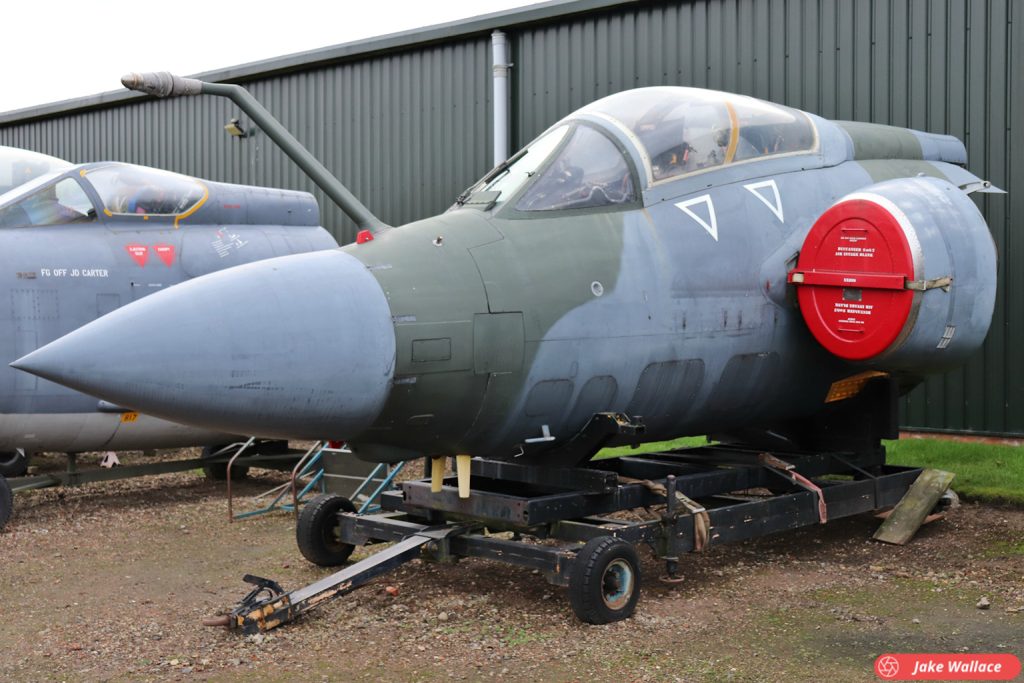
Following its retirement, XX899 was scrapped at RAF Lossiemouth in 1994 and reduced to a cockpit section by Hanningfield Metals. Robin Phipps subsequently acquired the nose section, preserving an important piece of Buccaneer history that has since been enjoyed by visitors to both Coventry and Newark. Although its departure will mark the end of nearly eight years on display at Newark Air Museum, XX899’s move to Oxfordshire will ensure that this significant Gulf War veteran continues to be preserved for future generations. For more information about the Newark Air Museum, visit www.newarkairmuseum.org.
(Image credit: Newark Air Museum)