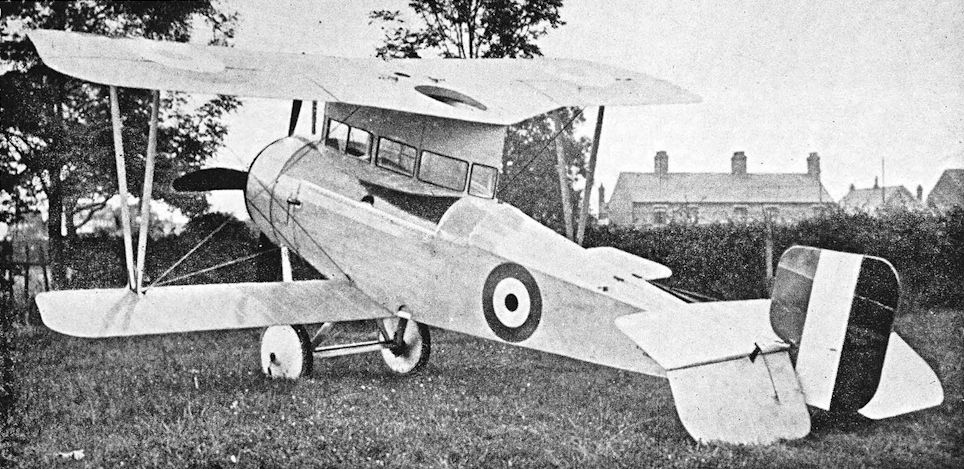
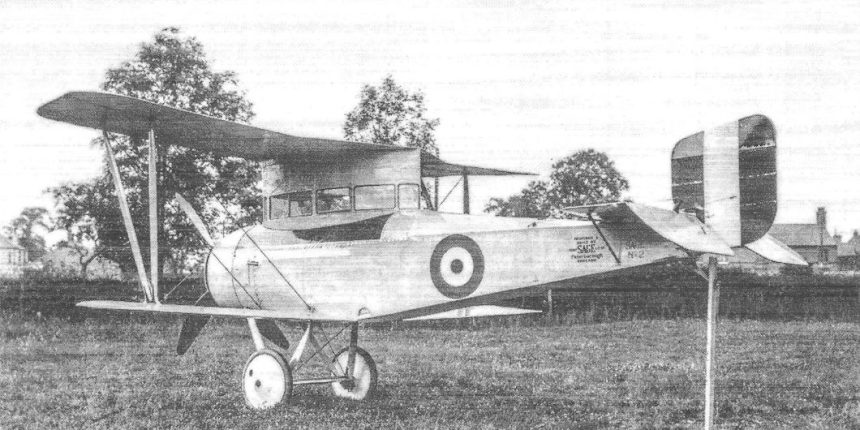

On this day in aviation history, 110 years ago (August 10, 1916), the first flight of the Sage Type 2 took place. A prototype two-seat fighter of British design, the Sage was intended to be a solution to the need for more advanced combat aeroplanes. Frederick Sage & Co, a successful woodworking company at the time, established their own aircraft division in 1915. Noted pilot and aircraft designer Eric Gordon England was hired by Sage to provide guidance, along with Clifford Tinson, formerly of the Bristol Aeroplane Company. Tinson began his work at Sage with sights set on a two-seat fighter design. Although capable of seating two, the Type 2 was smaller than most single-engine fighters of the period. Both the pilot and his gunner sat in an enclosed canopy, protected from the harsh elements of the dogfighting atmosphere. This canopy sat sandwiched between the upper and lower wings, atop the forward fuselage. An effective gun synchronising gear had not yet been refined or readily made available, so a hole was cut in the upper wing, over the gunner’s seat. From here, the gunner could stand, exposed above the wing, to shoot the .303 in Lewis gun. The gunner had full range of motion from this vantage point, and could even fire forward of the propeller.
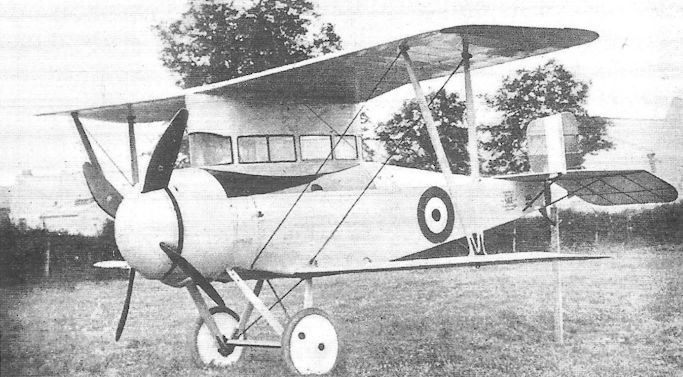
The Sage Type 2 was powered by a 100-horsepower Gnome Monosoupape rotary engine, which allowed the unconventional fighter to attain a maximum airspeed of 112 mph. The Type 2 had an endurance of 2 hours and 30 minutes, equating to a range of 268 nautical miles. Service ceiling for the Type 2 was 16,000 feet, while the aircraft could reach 10,000 feet of altitude in nearly 15 minutes. Flight testing allowed the Sage to prove solid performance and maneuverability. The fighter was noted as being relatively simple to fly. An unfortunate accident occurred on September 20, 1916, due to a failure of the rudder post. The sole-built Sage Type 2 was damaged beyond repair. No further development of the fighter took place, as the introduction of the interrupter gear and Sopwith 1½ Strutter filled Britain’s combat aircraft needs for WWI.