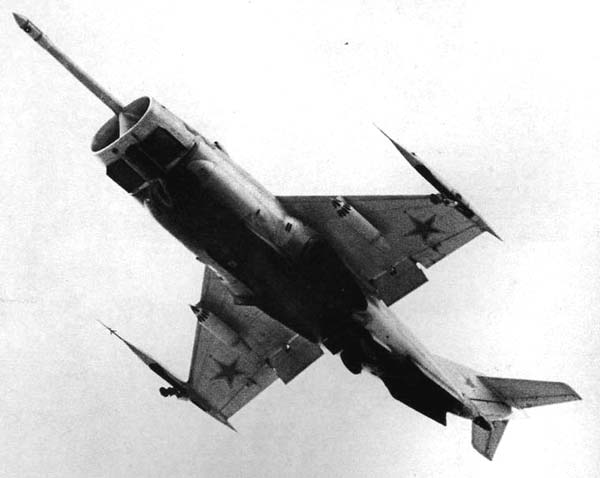
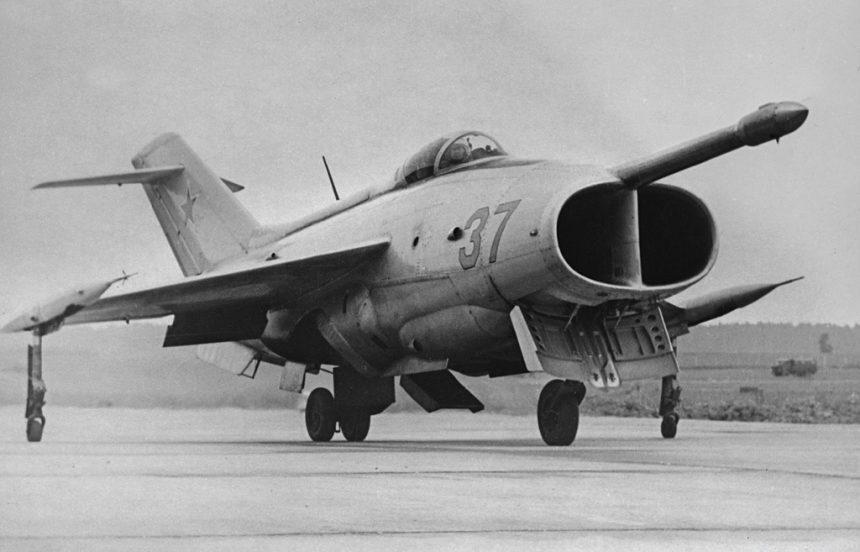


On this day in aviation history, 63 years ago (June 23, 1963), the first untethered vertical flight of the Yakovlev Yak-36 took place. Named by the Soviet Union as the Izdeliye V, and by NATO as the Freehand, the Yak-36 was an experimental combat aircraft with Vertical Takeoff and Landing capabilities (VTOL). Development of the Yak-36 began in 1960, and in 1961 a contract was offered by the Soviet government for the development of a single-seat V/STOL fighter. Yakovlev’s design consisted of twin 12,000 lbf Tumansky R-27-300 vectored thrust axial flow turbojet engines, installed in the forward fuselage. A long nose intake directed air to the engines, which both had swivelling exhaust nozzles near the aircraft’s CG location. A total of four prototype Yak-36s were manufactured, without the intent to use them in combat. The Freehand lacked the required thrust and range to be effective as a combat aircraft, so refinements would have been needed to make it a fighter.
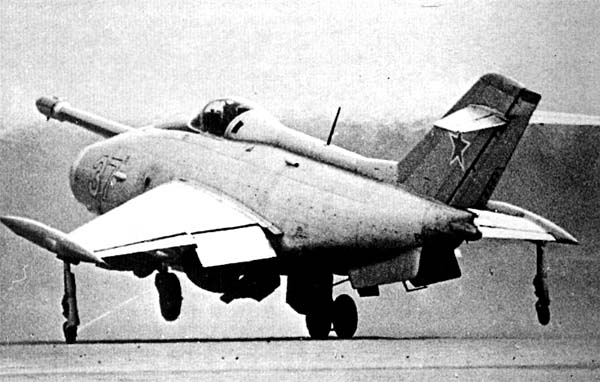
The first tethered flight of the Yak-36 occurred on January 9, 1963. Issues with the exhaust were revealed on this flight, so repairs and redesigns were required. On June 23, 1963, the first untethered flight took place. On September 16, 1963, the first full transition to horizontal flight was successfully completed, described to be “reminiscent of a circus act” by one of the test pilots. The first flight to test all phases of flight, from vertical takeoff to vertical landing, was completed on March 24 of 1966. In flight testing, the Izdeliye V was found to have a maximum airspeed of 560 mph and a range of 200 nmi. The Yak-36 could reach a service ceiling of 39,000 ft (6,200 ft hovering ceiling), and climb at 28,000 fpm. Had the Yak-36 been developed further into a fighter, it would have been armed with twin 23 mm GSh-23L cannons and had hardpoints for bombs, missiles, or rockets. The success of the Yak-36 led to further development into the Yak-36M, which eventually led to the Yak-38 Forger, the Soviet Union’s first and only operational VTOL fighter.