






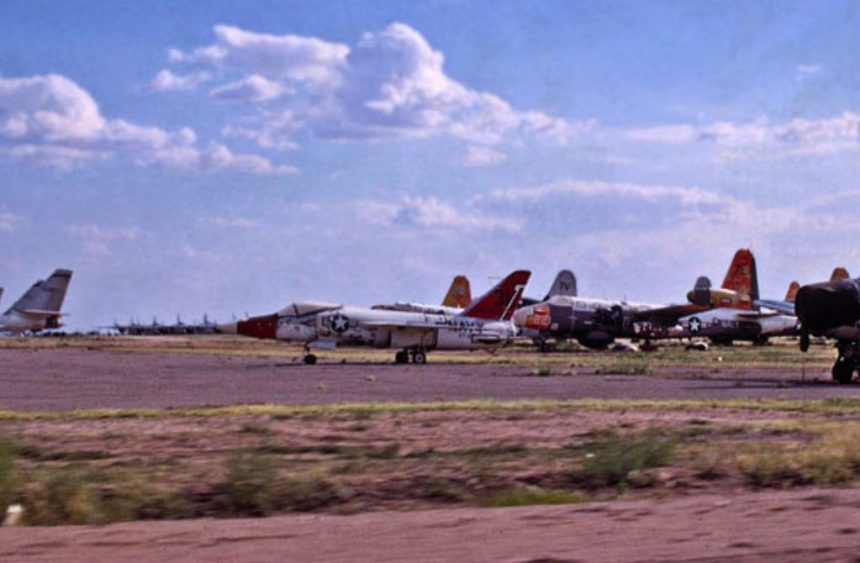

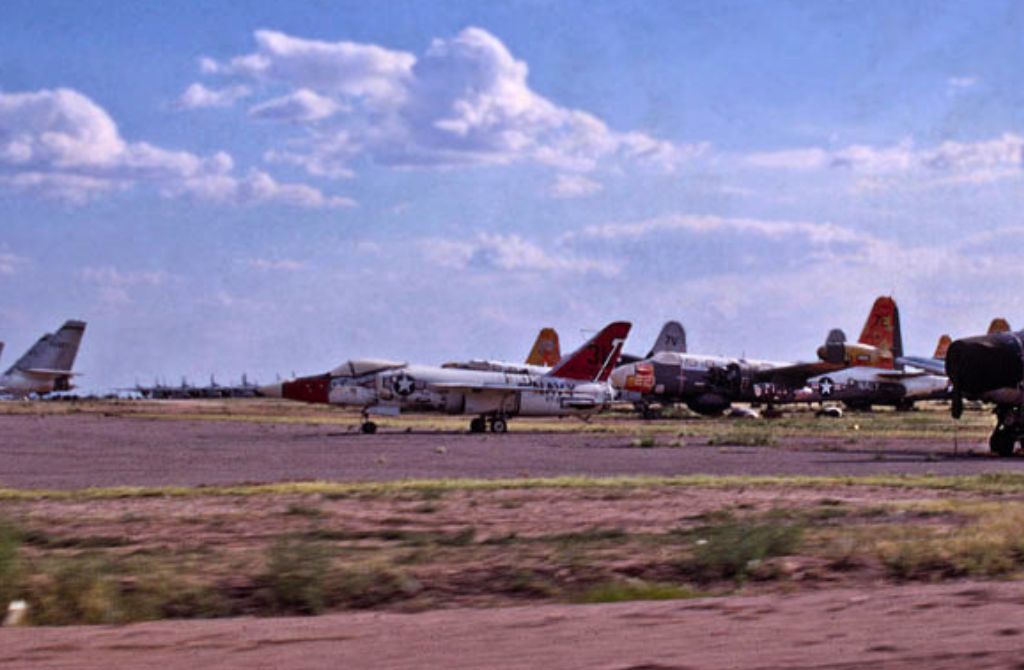
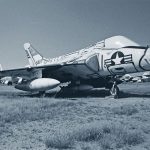
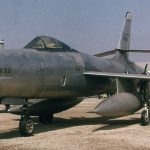
As we continue the Boneyard Files series, which showcases some of the retired aircraft resting at Davis-Monthan Air Force Base in Tucson, Arizona, in the late 1960s, today’s story features the Grumman F-11 Tiger through the lens of Neil Aird’s “Monthan Memories” photos. The F-11 Tiger was a lightweight fighter aircraft known for its strong performance. It was a single-seat, carrier-based fighter aircraft used by the United States Navy during the 1950s and 1960s. Originally designated as the F11F Tiger in April 1955, it was renamed F-11 Tiger following the introduction of the 1962 United States Tri-Service aircraft designation system. The Grumman F-11 Tiger served with the Blue Angels flight demonstration team from 1957 to 1969. The Grumman Aircraft Corporation produced approximately 200 Tigers, with the last one delivered on January 23, 1959.
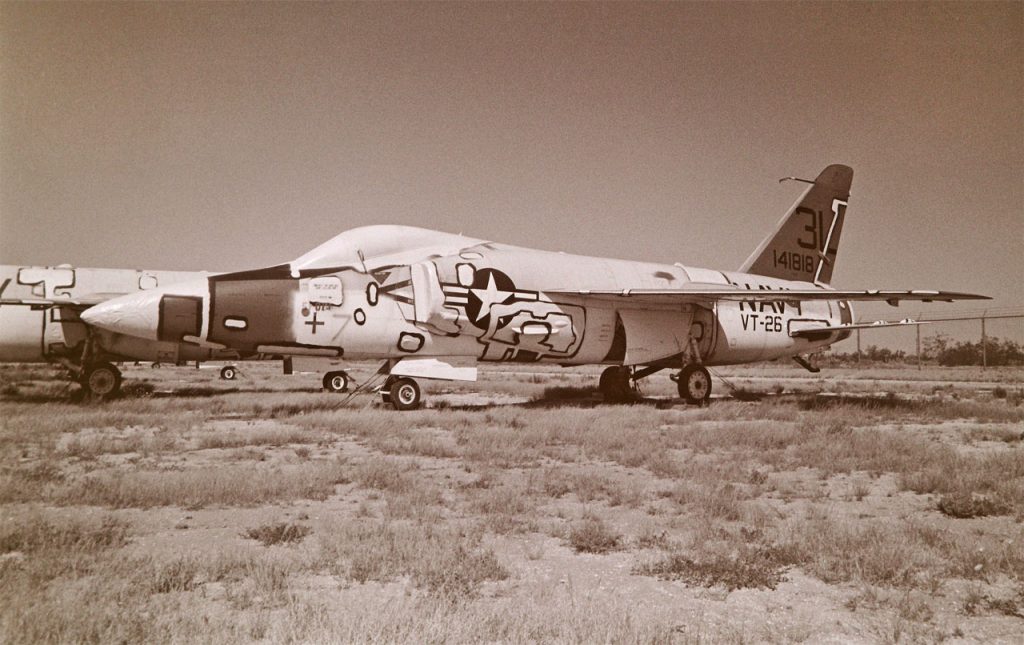
The Grumman F-11 Tiger originated from Grumman’s 1952 efforts to improve the F9F-6/7 Cougar. However, the final design was completely different from its predecessor. The F-11 was built as a lightweight fighter. Its development model first flew in July 1954 and had thin swept wings that used spoilers instead of ailerons. The fuselage was designed in a coke-bottle shape, which helped it exceed Mach 1 in speed. The aircraft was 46.11 feet long, 13.2 feet high, with a wingspan of 31.7 feet. It was powered by a Wright J65-W-18 turbojet engine, producing 10,500 pounds of thrust with afterburner. The empty weight of the aircraft was 13,810 pounds, and the gross weight was 21,035 pounds. It had a range of 1,270 miles and a service ceiling of 49,000 feet. It was armed with four fixed 20 mm cannons and had provisions for four AIM-9 Sidewinder missiles. One of the test flights of the Grumman F-11 Tiger became famous for a bizarre incident when a test pilot accidentally shot himself down with his own bullets. While diving and firing the guns, he flew faster than the bullets on his pullout, causing an engine flameout and forcing him to land. The Navy received its first Grumman F-11 Tiger aircraft in March 1957. Seven US Navy squadrons used the F-11 fighter jet. These squadrons included VF-21 and VF-33 in the Atlantic Fleet, and VA-156 (which became VF-111 in January 1959), VF-24 (renamed VF-211 in March 1959), VF-51, VF-121, and VF-191 in the Pacific Fleet.
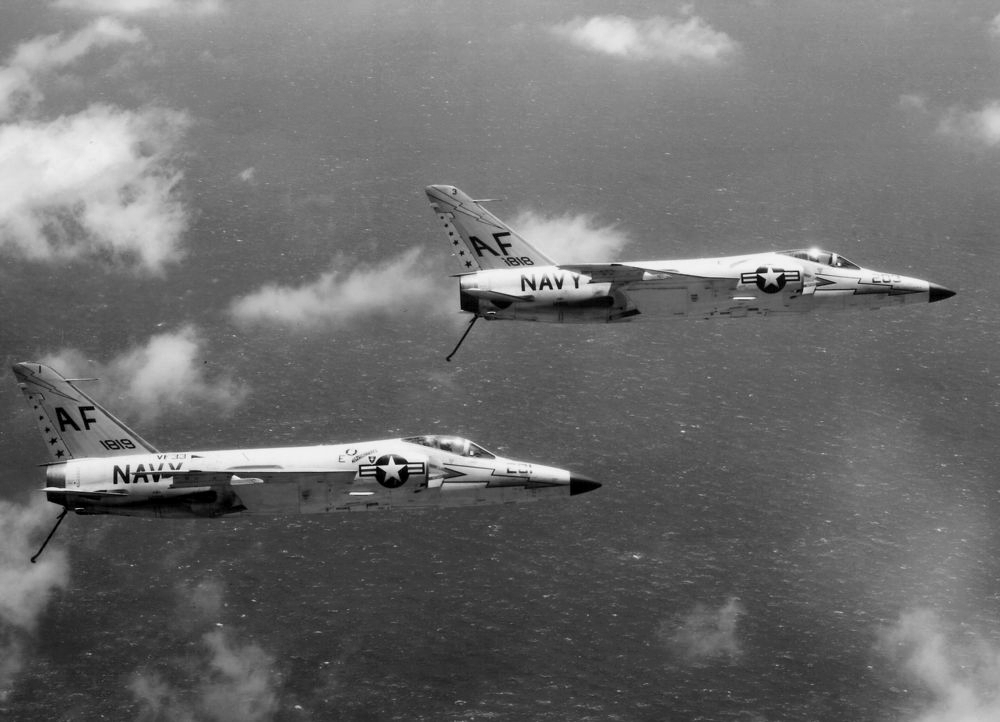
The Grumman F-11 Tiger operated from several aircraft carriers, including the USS Ranger, Intrepid, Hancock, Bon Homme Richard, Forrestal, and Saratoga. The F-11 Super Tiger, with a more powerful engine, could fly at 1,386.47 mph and set a world record altitude of 76,828 feet. Although it performed well, the F-11 Tiger was in service for only four years because it was introduced around the same time as two of the best fighter jets, including the F8U Crusader and the F4H Phantom II. Its performance was not as good as the Crusader’s, and the J65 engine was unreliable. The F-11 also had limited range and endurance. Because of these issues, the Navy canceled all orders for the Grumman F-11 Tiger’s reconnaissance version. By 1961, the aircraft was withdrawn from carrier operations but continued to be used for training at bases in South Texas, Beeville, and Kingsville, until the late 1960s. After completing that training, students trained in the F-9 Cougar gained brief experience in supersonic flight in the Grumman F-11 Tiger before moving on to fleet fighters. After the aircraft were retired, they were sent to Davis-Monthan Air Force Base, known as “The Boneyard.” Read more Boneyard Files Articles HERE.

Would like to know, if any acft from RVAW 110. E2- B& C Hawkeye acft are still stored. Thank you.
It should be noted that, even after the withdrawal of the F-11A from Fleet service, the Tiger continued on with the Blue Angels through the 1969 Airshow season. Fast and nimble, the Tiger excelled in the performance of the Blues routines. They were supplanted in the 1970 season by the F-4J. Cheers.
My BIL’s Father was a Crew Chief on one of the F11F Blue Angels. When they flew at the Grand Opening of Houston Intercontinental Airport in 1969. My Sister was in the same location as her one day FIL was.
The F11F Tiger was what helped kick off WWIII in the 1959 novel ALAS BABYLON. It fired a Sidewinder Missile at a Russian Reconnaissance Jet over the Mediterranean. The Russian Pilot cut his engines. The Sidewinder went dumb and started to fly towards a steam locomotive pulling an ammunition train into Latakia. The Sidewinder hit the locomotive and the crash cooked off nuclear weapons being hauled.