





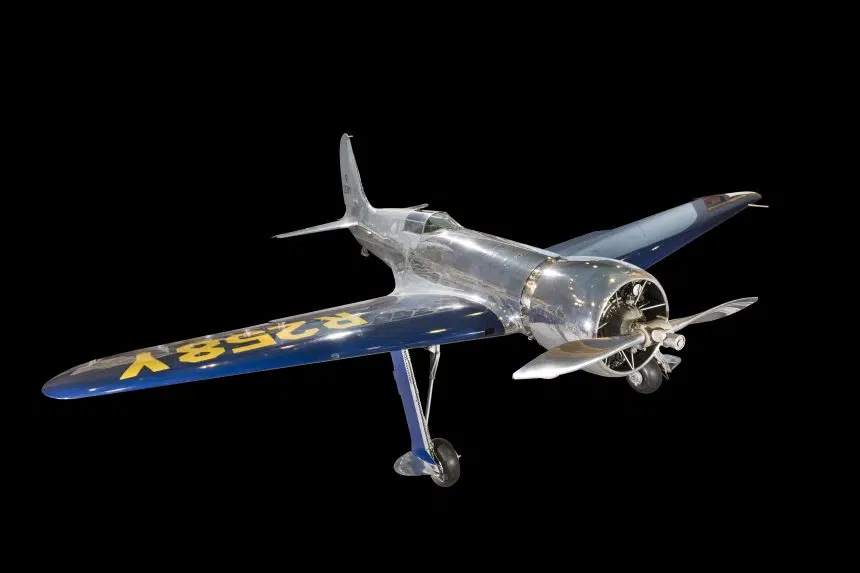

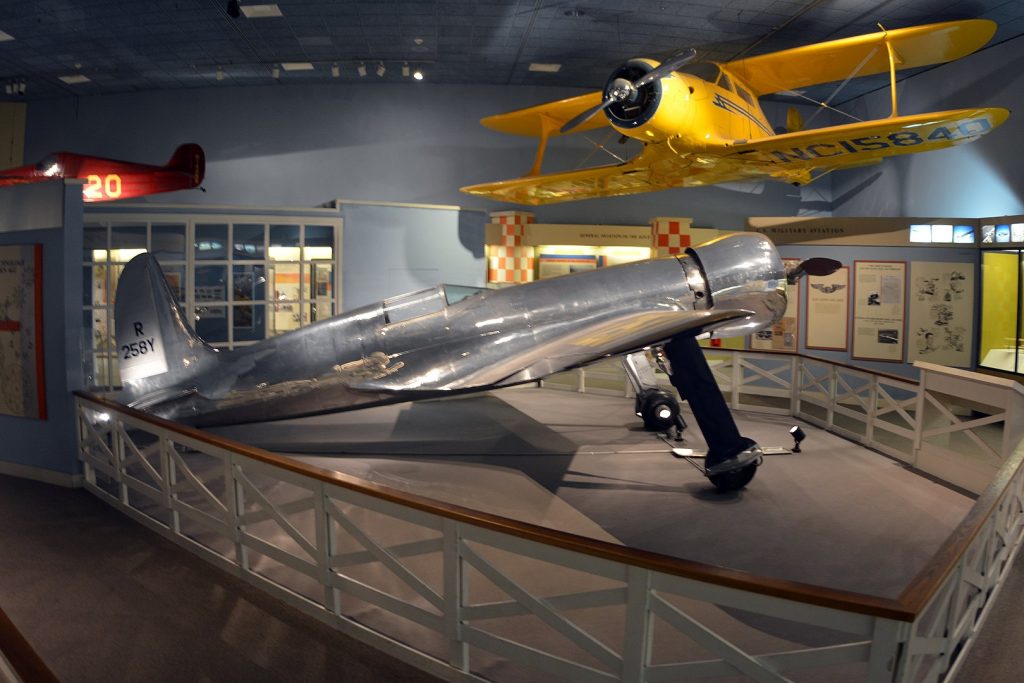
On this day in aviation history, 91 years ago (September 13, 1935), Howard Hughes established a new world landplane speed record while flying his Hughes H-1 Racer. Flying over a timed course near Santa Ana, California, Hughes averaged 352.39 mph over four passes, demonstrating the remarkable performance of an aircraft designed specifically to push the limits of speed.

Development of the H-1 began in 1934, when Hughes and engineer Richard Palmer set out to create a record-breaking aircraft. Streamlining was central to the design, which incorporated a smooth aluminum skin with flush rivets, retractable landing gear, and a hydraulically retractable tail skid. The H-1 made its actual first flight on August 17, 1935, with Hughes at the controls.

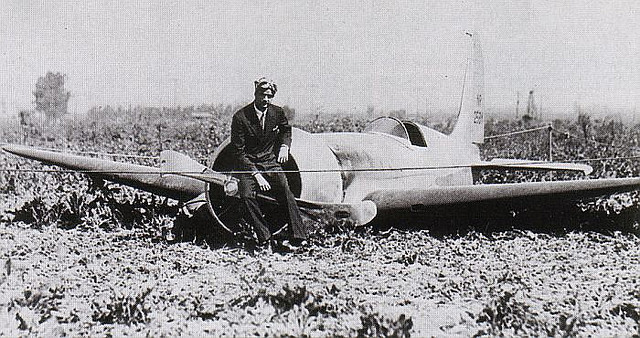
Less than a month later, Hughes used the H-1 to attack the landplane speed record. To reduce weight, the aircraft carried only a minimal amount of fuel. After completing four timed passes, Hughes exhausted his fuel supply and was forced to make a wheels-up landing in a beet field. Neither Hughes nor the aircraft suffered serious damage. In 1937, fitted with longer wings, the same H-1 carried Hughes nonstop from Los Angeles to New York in 7 hours, 28 minutes, and 25 seconds, setting another record. The original aircraft survives today in the Smithsonian’s National Air and Space Museum.
The H-1 in its original short-wing configuration measured 27 feet in length with a wingspan of 31 feet 9 inches. Power came from a modified Pratt & Whitney R-1535 Twin Wasp Junior radial engine producing approximately 1,000 horsepower. The aircraft’s recorded maximum speed was 352 mph. The H-1 became the last privately built aircraft to establish the world landplane speed record, as subsequent record holders were primarily military designs.








And yet, despite that, British amd Italian seaplane contemporaries went faster setting absolute airspeed records whilst pushing enormous floats through the air!