





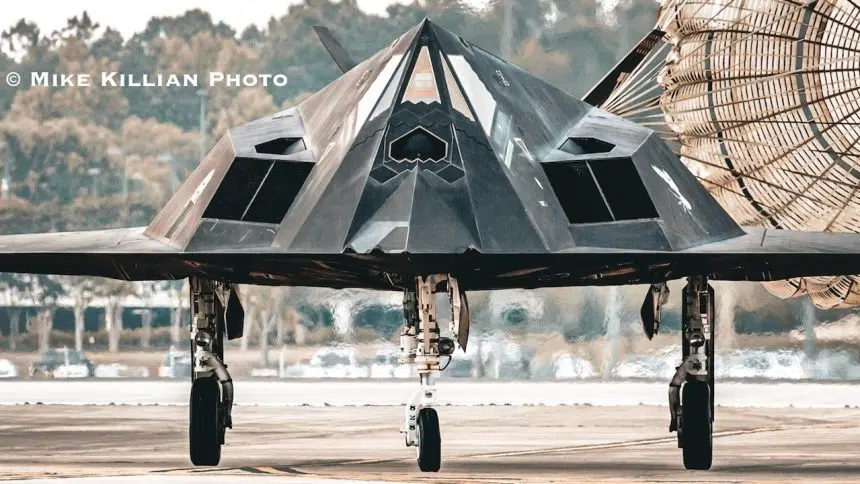

The legendary F-117 Nighthawk was officially retired from the U.S. Air Force in April 2008, when the final four aircraft flew out of Holloman Air Force Base, New Mexico, bound for long-term storage in Nevada. In recent years, however, the jet has been spotted flying low-level mountain training routes and participating in large aerial combat exercises, with few official details provided. The Air Force has never said much about the program. While the F-117’s present-day operations are no secret, a recent report by The War Zone confirms that the jets need new parts and are expected to keep flying until 2034—more than a quarter-century after their retirement ceremony.
What “Retired” Actually Meant in 2008
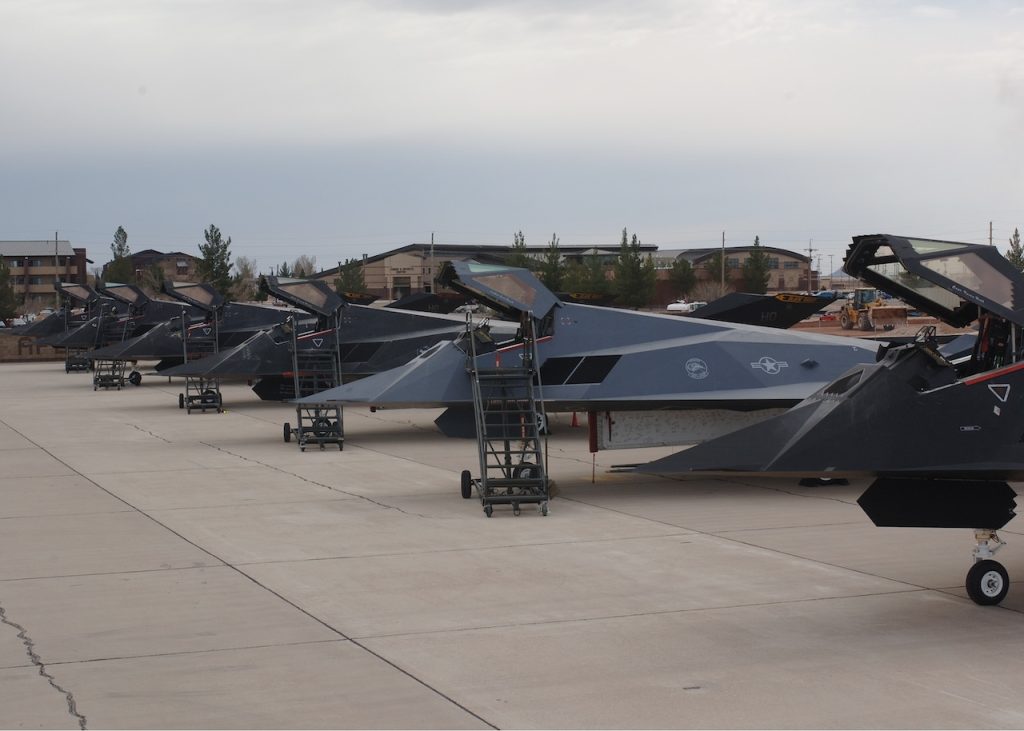
The Nighthawk was the world’s first operational stealth aircraft, built by Lockheed’s Skunk Works and flown in total secrecy from Area 51 years before the public knew it existed. By the mid-2000s, newer stealth platforms had taken over its mission set, and the Air Force accelerated the type’s retirement to free up modernization funding. The final flyover—nicknamed “Sunset Stealth”—took place at Holloman Air Force Base on April 21, 2008, sending the last four Nighthawks to storage at Tonopah.

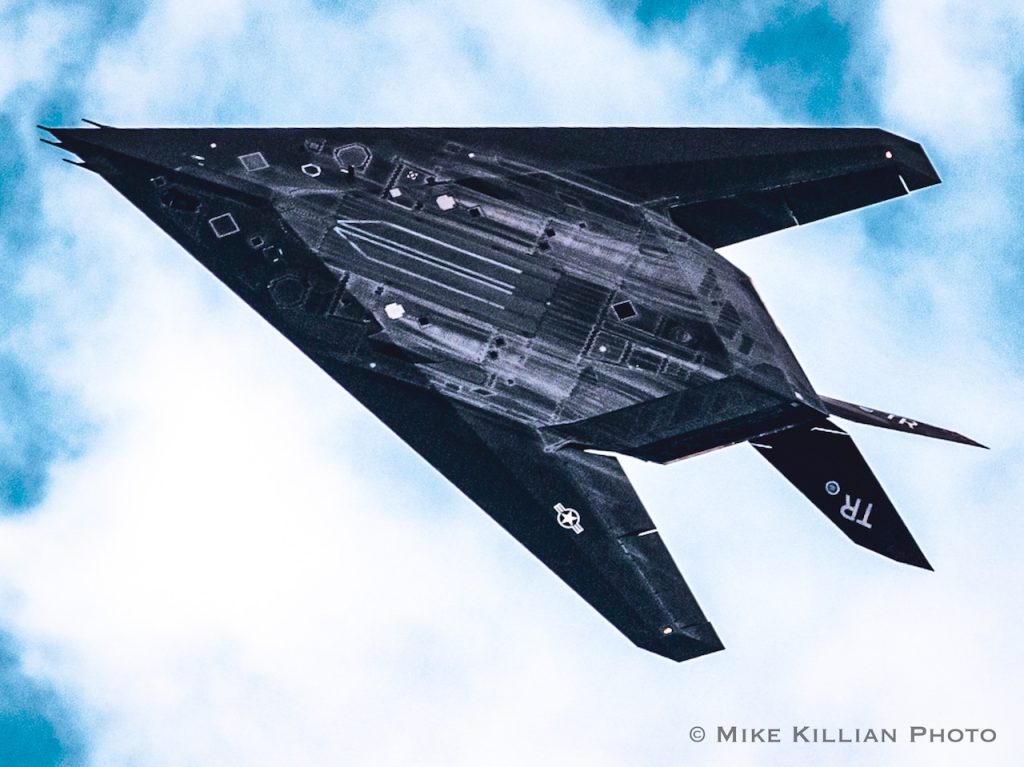
What happened next was quieter than any ceremony. As of 2021, 48 airframes were being kept in flyable or “regeneratable” storage, under much of the same secrecy that defined the aircraft’s early life. At first, it was aviation photographers capturing the jets around the mountain and desert training ranges of Nevada and Southern California. Those images gained millions of views on social media and attracted widespread coverage from defense media outlets. Eventually, the Air Force acknowledged the flights, but it has never said much about why the F-117 remains active.
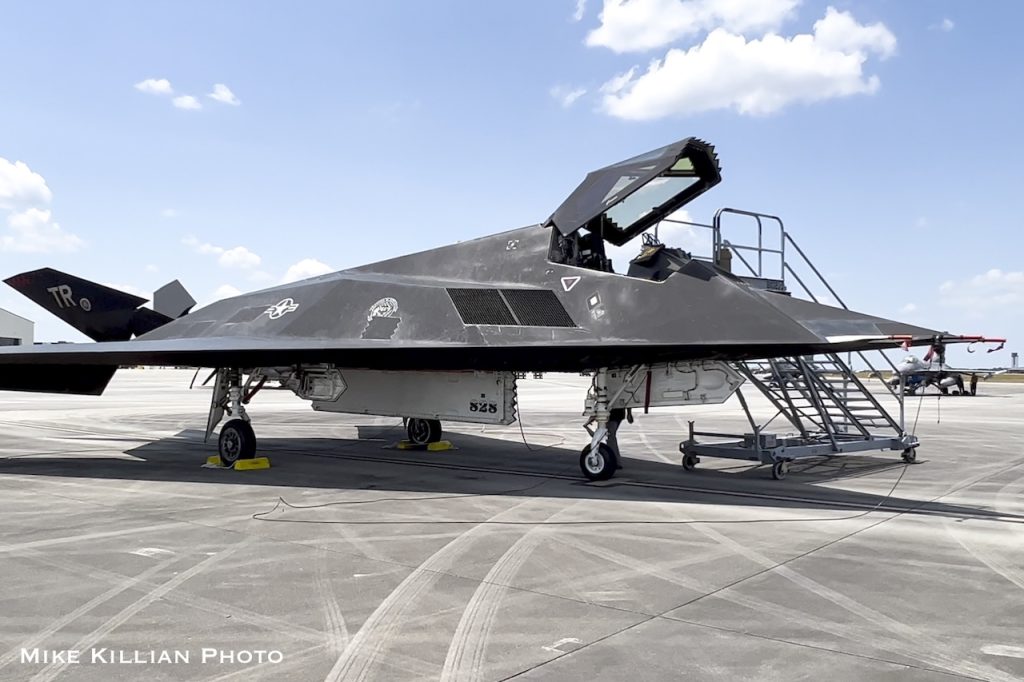
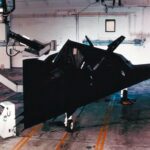
(Image credit: Mike Killian)
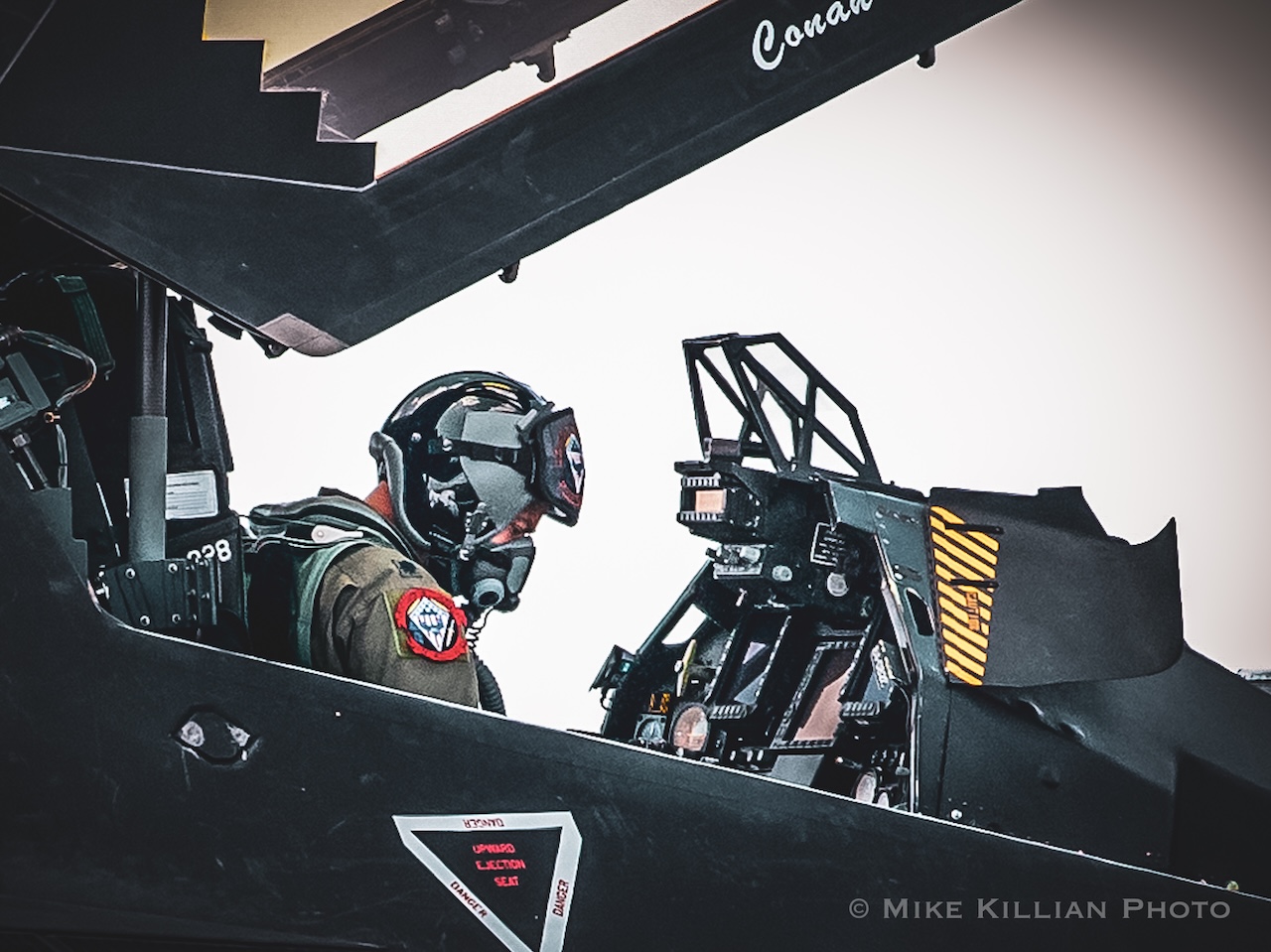
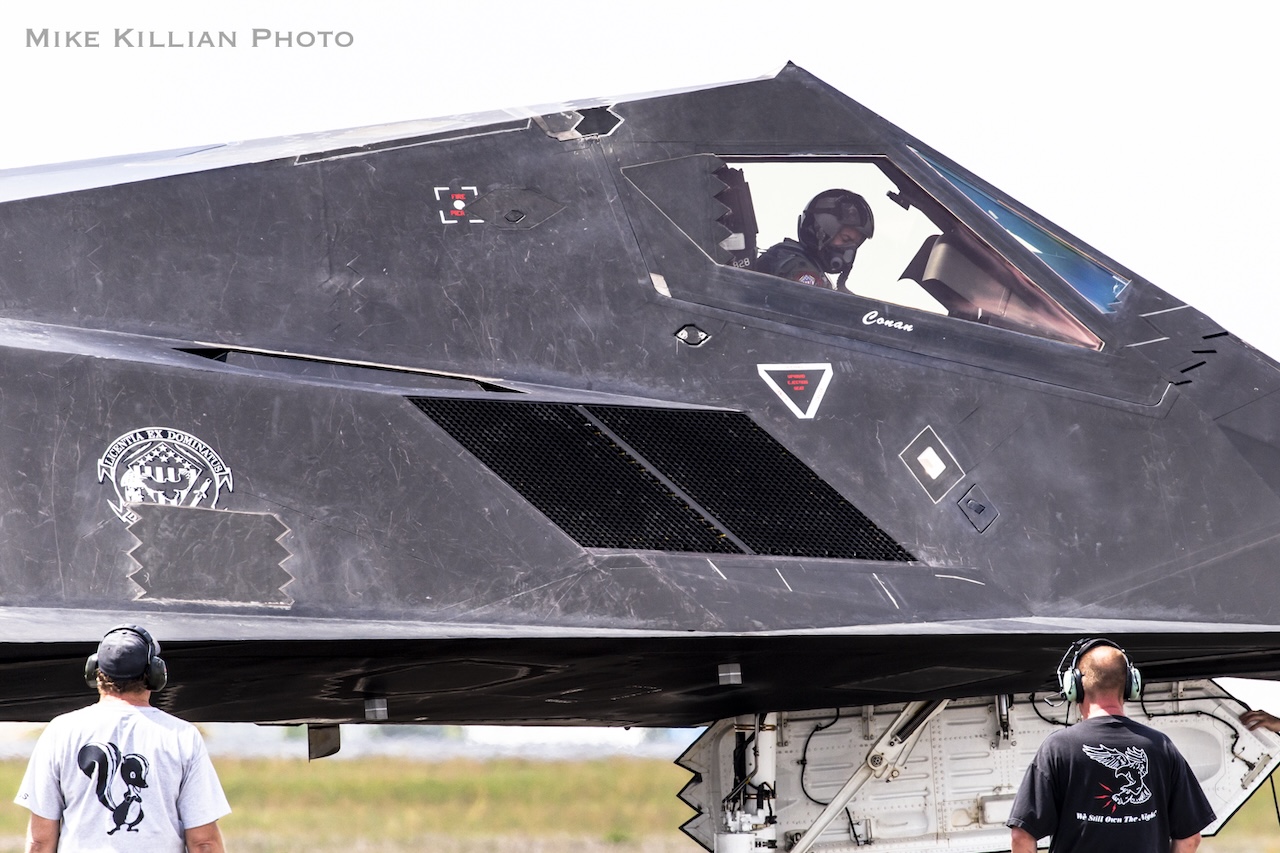
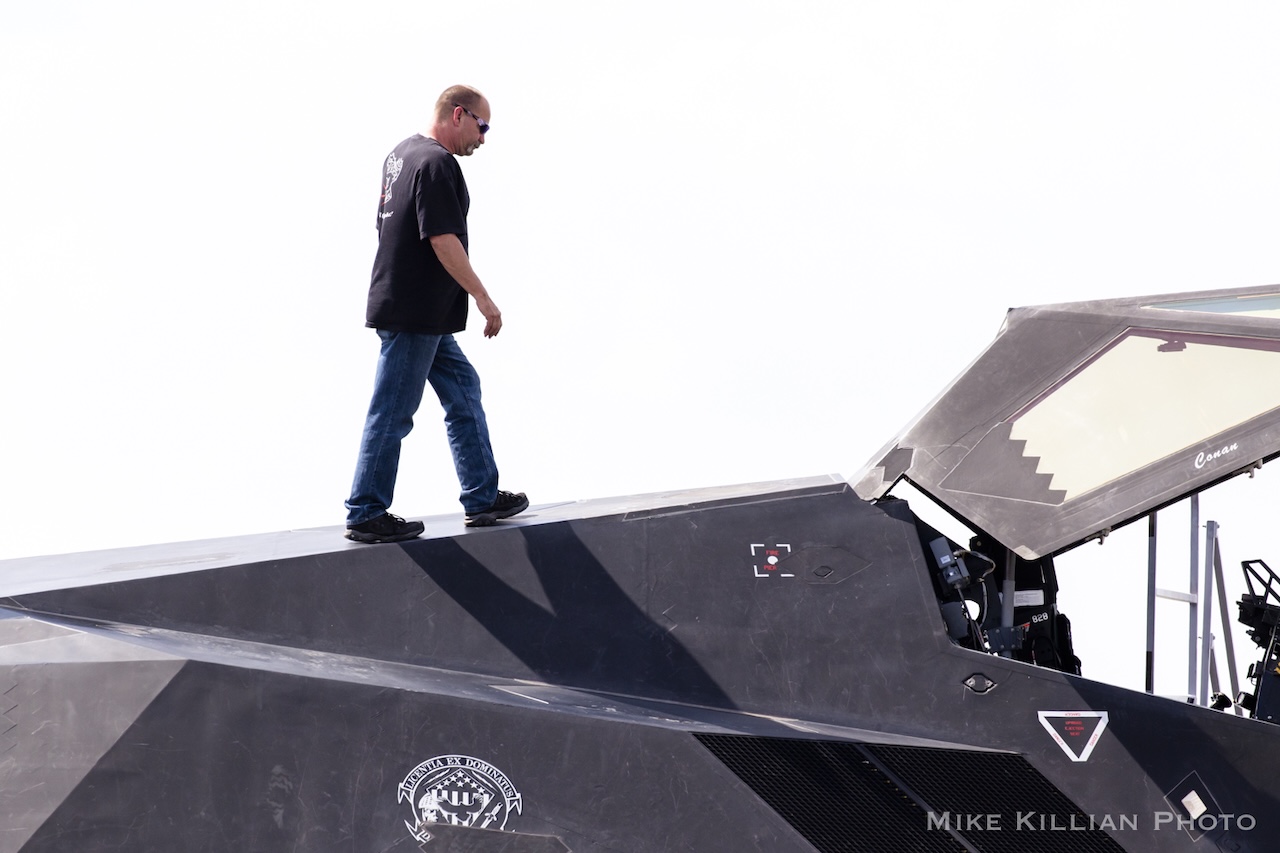
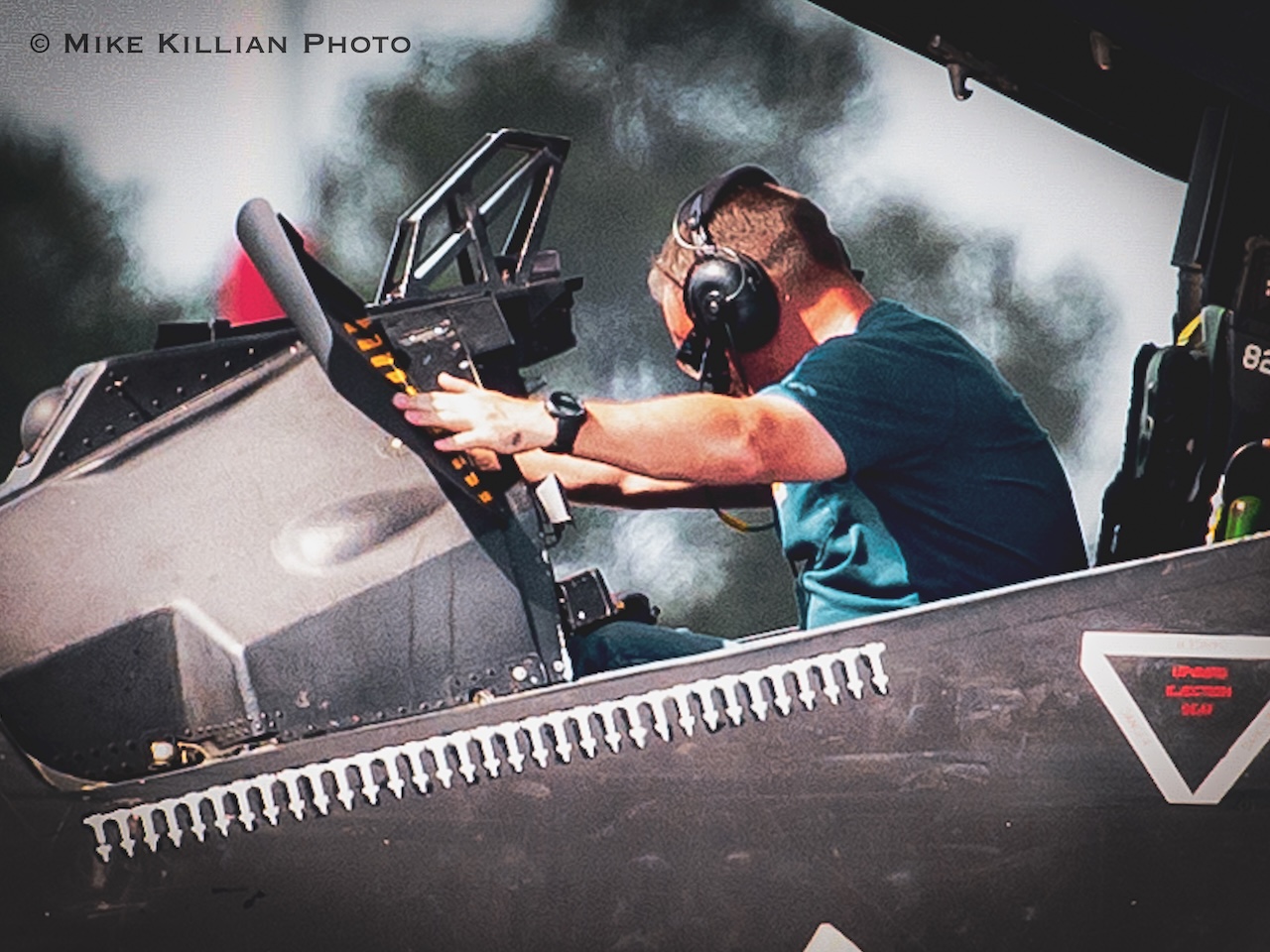
One of the clearest acknowledgments came in September 2021, when F-117s conducted dissimilar air combat training alongside California Air National Guard F-15s operating from Fresno. The California Air National Guard’s 144th Fighter Wing even issued a press release welcoming two of the Nighthawks. A year later, I was invited to the Sentry Savannah exercise in Georgia for an up-close look at one of the F-117s, along with the F-22s and other assets it would be training against. Interestingly, the maintainers and crew were dressed in civilian clothes and wore Skunk Works shirts. One of the pilots had a “DARK KNIGHTS” patch on his shoulder.
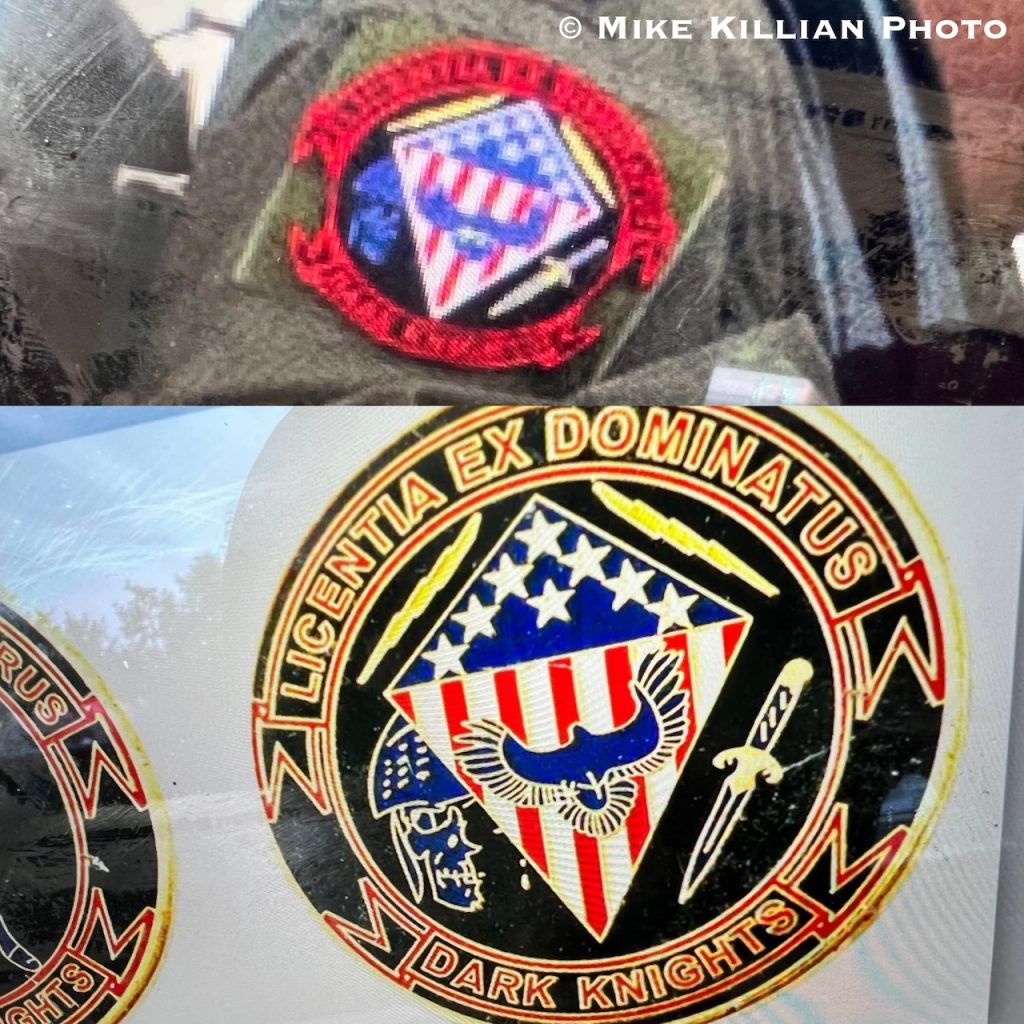
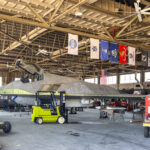
(Image credit: MIke Killian)
A Combat Record That Made the Nighthawk Legendary
Understanding why the Air Force never fully let the F-117 go requires understanding what it accomplished before retirement. During Operation Desert Storm in 1991, F-117s flew roughly 1,271 sorties and achieved an estimated 80 percent mission-success rate, according to Lockheed Martin’s program figures. The aircraft represented only about 2 percent of coalition combat sorties but struck an estimated 40 percent of the campaign’s strategic targets. It was also the only coalition aircraft permitted to strike targets inside Baghdad’s city limits. Not a single F-117 was lost or suffered battle damage during the war.

The one blemish on that record came eight years later. On March 27, 1999, during NATO’s Operation Allied Force over Yugoslavia, an F-117 was shot down by Serbian air defenses near Belgrade—the only combat loss the type ever suffered. The incident is still studied in military aviation circles for what it revealed about the limitations of even a stealth aircraft operating along a predictable flight path. The Nighthawk returned to combat once more in 2003, flying more than 100 sorties during the opening strikes of Operation Iraqi Freedom. That record is part of why the aircraft’s slow, semi-secret second life has drawn so much attention from aviation watchers. This is not a forgotten prototype being kept around for sentimental reasons. It is one of the most operationally significant aircraft in modern Air Force history.
A Paper Trail Reveals the F-117’s Future
The public picture of what was happening at Tonopah began to firm up in 2022, when the Air Force Test Center at Edwards Air Force Base issued a request for information seeking a contractor to provide F-117 maintenance and logistics support—not the kind of administrative footprint created for a fleet that has finished flying. Defense-focused outlets, led by The War Zone, began piecing together what that meant: a formal, funded plan to keep a portion of the fleet flying well into the future. That reporting has since been corroborated by Air & Space Forces Magazine and Air Force program data. The Air Force has contracted with Lockheed Martin to maintain the F-117 for test and training support through at least 2034. About 45 aircraft remain in flying or regenerable condition, with approximately two or three being demilitarized each year as the fleet is gradually drawn down.
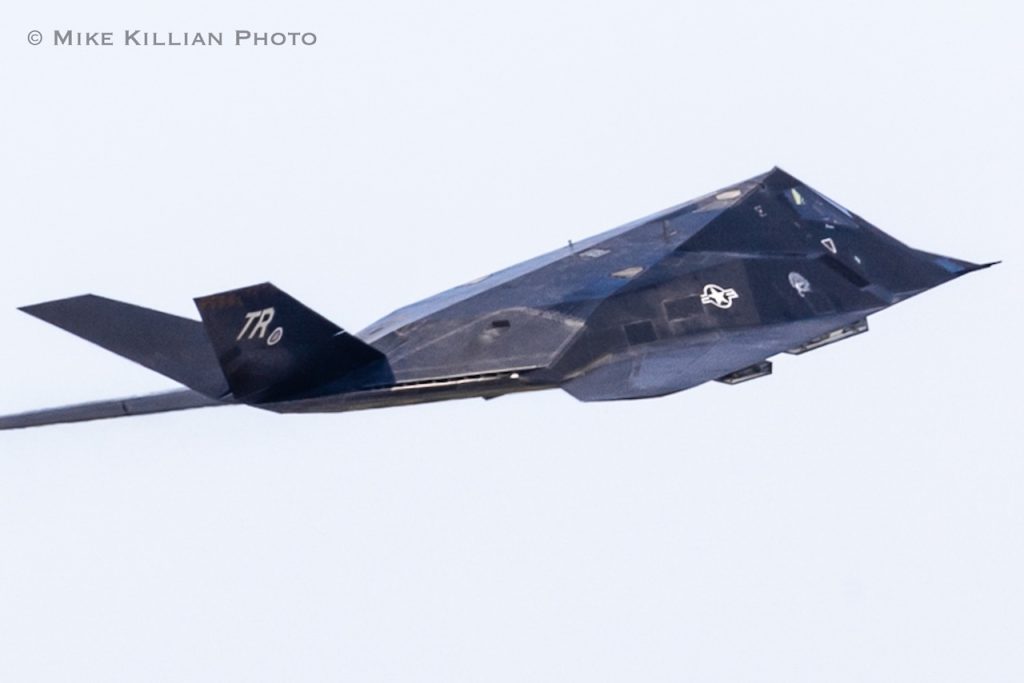
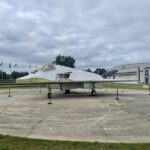
(Image credit: Mike Killian)
What the F-117 Is Actually Doing Today
None of this involves returning the F-117 to combat. Its second career centers on three roles, each built around the same low-observable qualities that made the aircraft significant in the first place—and its unmistakable “Dorito” shape. Adversary training: With low-observable designs still relatively rare among the world’s fighter fleets, the F-117 gives American pilots a real stealth aircraft to train against—something no simulator can fully replicate. The jets have conducted dissimilar air combat training alongside Air National Guard F-15s and participated in large-force exercises such as Sentry Savannah. They have also operated alongside dedicated Aggressor squadrons at Nellis Air Force Base and Marine Corps Air Station Miramar.
Sensor and technology testing: Because its radar signature has been thoroughly documented over four decades of service, the F-117 is a useful, relatively low-risk platform for testing new radar systems, coatings, and sensors without placing a frontline aircraft at risk. Threat-surrogate work: The airframe’s size, radar signature, and flight characteristics allow it to stand in for other systems during test scenarios, filling a role that might otherwise require a purpose-built target drone or a far more expensive aircraft.

The Detail That Signals This Is Not Winding Down
One of the clearest signs of how seriously the Air Force is treating the F-117’s extended service life is its work to certify the KC-46A Pegasus tanker to refuel the Nighthawk in flight. Certifying a new tanker to support an aircraft that officially left service before the tanker even existed is the kind of investment that makes sense only if the program is expected to continue for years—not quietly wind down.
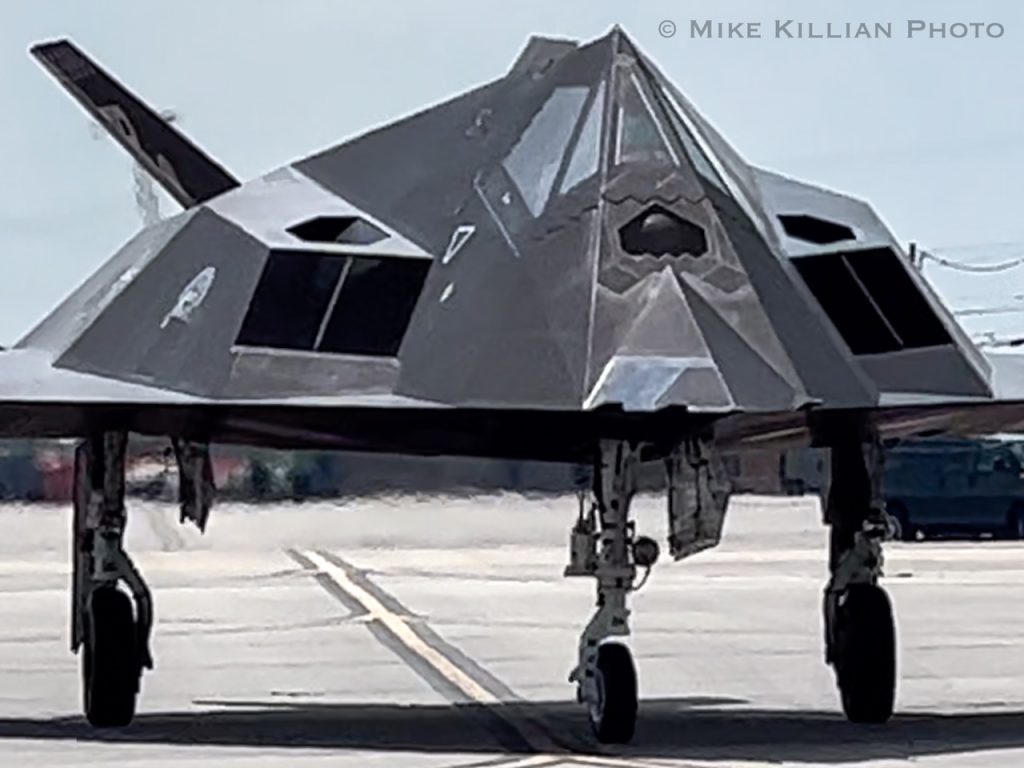
(Image credit: Mike Killian)
Why 2034, Specifically?
The date does not appear to be arbitrary. It tracks with a managed, congressionally authorized drawdown designed to spread the cost of retiring the fleet over roughly a decade, rather than demilitarizing dozens of airframes—and absorbing the associated disposal costs—in a single budget cycle. The timeline may also roughly coincide with the introduction of the Air Force’s next generation of combat aircraft. As those platforms enter service during the early 2030s, the reasoning goes, the need for a dedicated low-observable adversary aircraft could finally ease, closing out the F-117’s role as newer stealth aircraft become established.
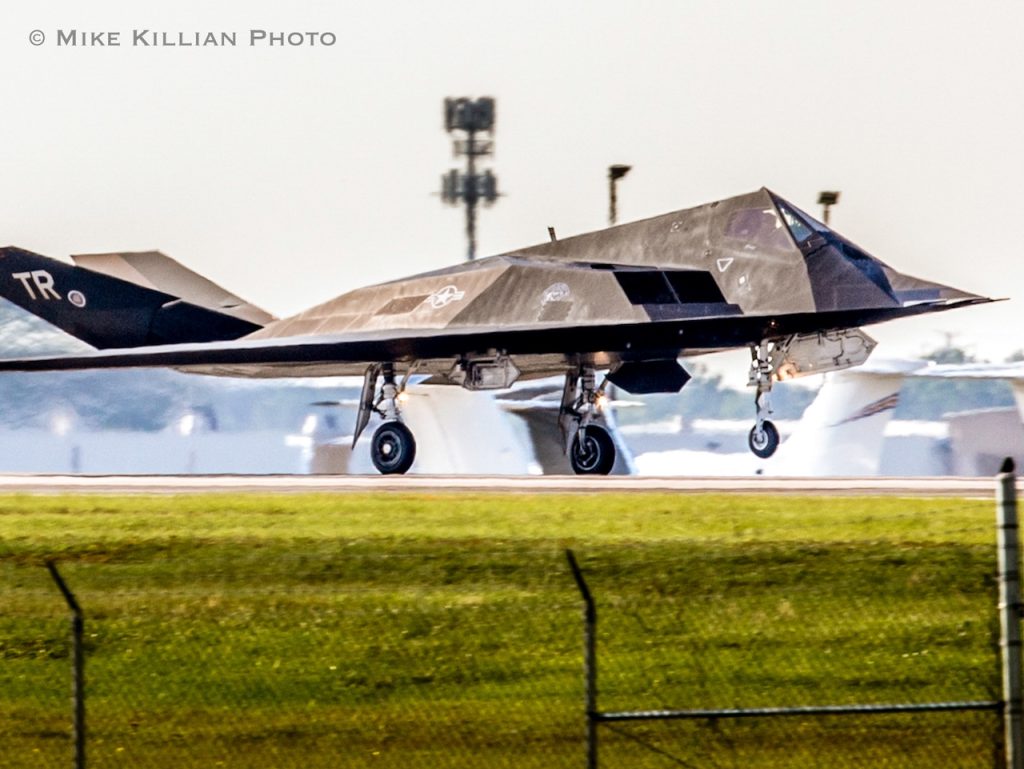
(Image credit: Mike Killian)
A Quarter-Century Encore
What makes this story unusual is not simply that a retired military aircraft still flies occasionally; plenty of airframes linger in test or ceremonial roles. It is the scale and duration: dozens of jets under an active maintenance program, flying real training and test missions for as long as 26 years after their public retirement, supported by dedicated infrastructure that includes aerial-refueling capability from the Air Force’s newest tanker. The Nighthawk was never really gone. Now, at least, the Air Force has acknowledged as much.
Frequently Asked QuestionsIs the F-117 Nighthawk still flying?Yes. Despite its official retirement in 2008, about 45 F-117 airframes remain in flying or regeneratable condition. The Air Force has contracted with Lockheed Martin to keep a portion of the fleet available for test and training missions through at least 2034. Why did the Air Force retire the F-117 in 2008?Newer stealth platforms had taken over its original strike mission, and the Air Force accelerated the F-117’s retirement to redirect funding toward modernizing the rest of its aircraft fleet. What does the F-117 do now?The remaining aircraft are used as adversary—or “red air”—training assets for pilots practicing against low-observable aircraft, as test platforms for radar and sensor technology, and as threat surrogates during testing and large-scale exercises. Where are the remaining F-117s based?The remaining fleet is based at Tonopah Test Range in Nevada, within the Nevada Test and Training Range northwest of Nellis Air Force Base. How many F-117s were built, and how many remain?Lockheed built 64 aircraft: five development aircraft and 59 production F-117As. About 45 remain in flying or regenerable storage condition, while others have been demilitarized, transferred to museums, or lost during the aircraft’s service life. |









Build QF-117’s for weapons testing, or amortize the development cost of the platform by ripping out the life support and replacing it with AI pilots to make it a low cost autonomous wingman.