






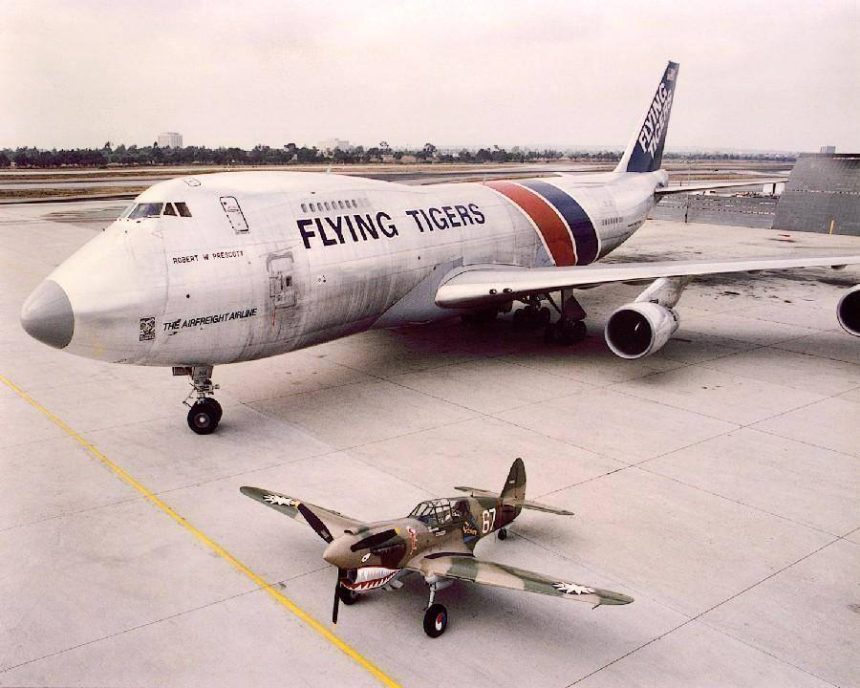

By Kevin Wilkins
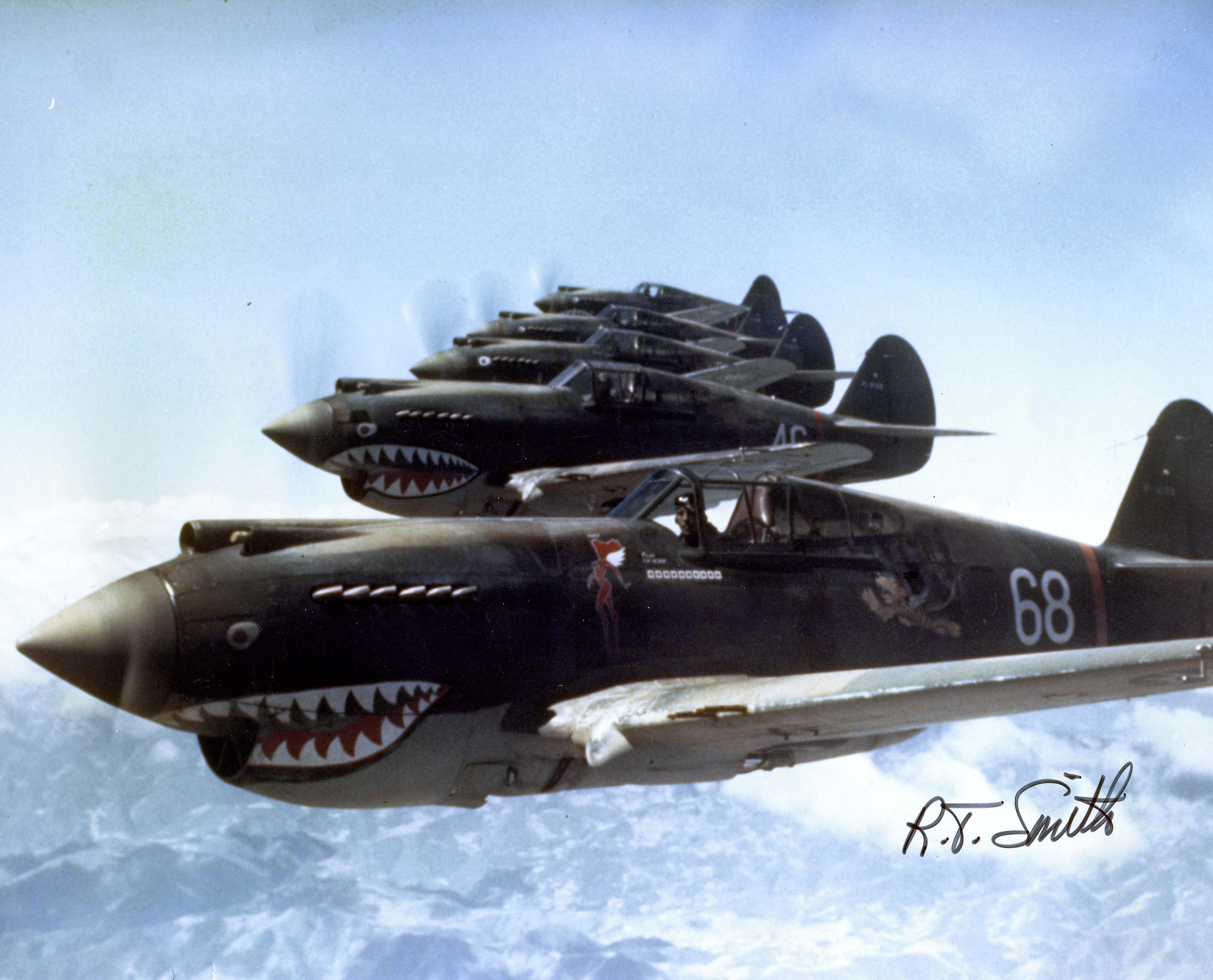
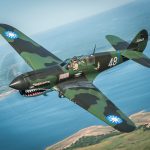
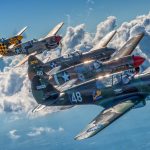
The origins of The Flying Tiger Line can be traced directly to World War II and the legendary American Volunteer Group, better known as the Flying Tigers. Founder Robert W. “Bob” Prescott was among the young American pilots who volunteered to fly in China under General Claire Lee Chennault, gaining combat experience and forging professional relationships that would later shape the future of air cargo transportation. Prescott was credited with 5.5 air-to-air victories.
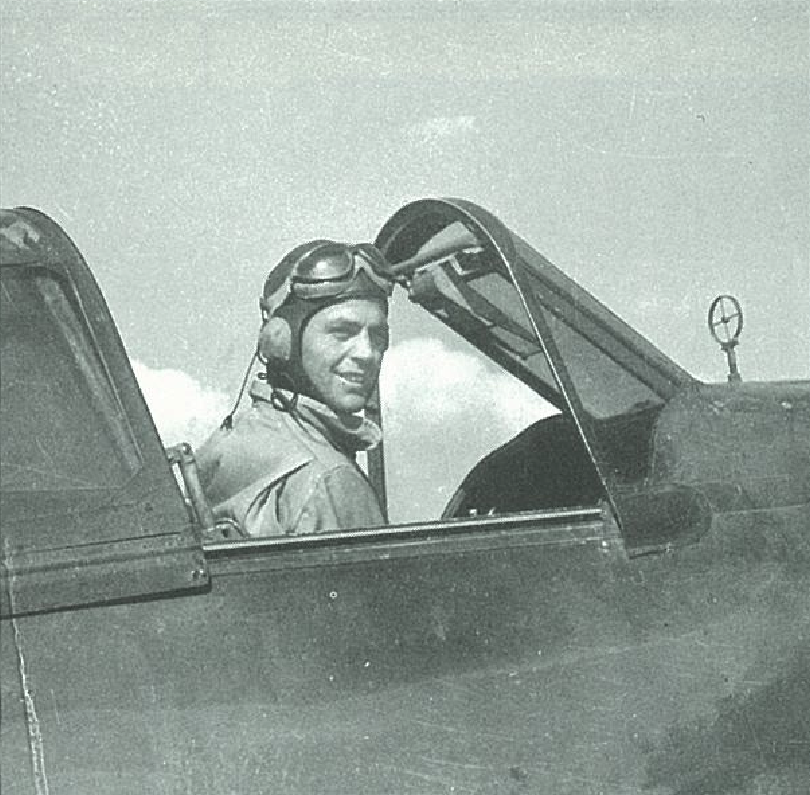
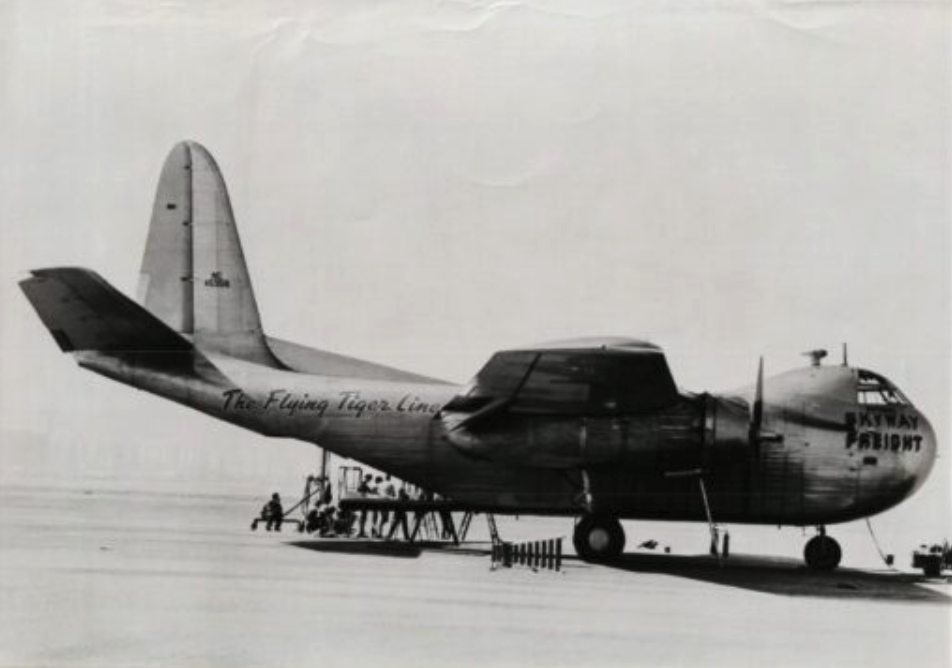
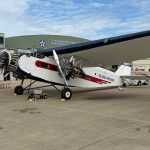
Following the war, Prescott and eleven fellow veterans from the China-Burma-India theater formed National Skyways Freight Corporation. Operating initially from a modest two-car garage in Long Beach, California, the company launched operations on June 25, 1945, becoming the first airline in the United States dedicated exclusively to cargo. Its earliest aircraft were Budd RB-1 Conestogas, and its first recorded shipment consisted of grapes flown from Bakersfield, California, to Atlanta, Georgia.
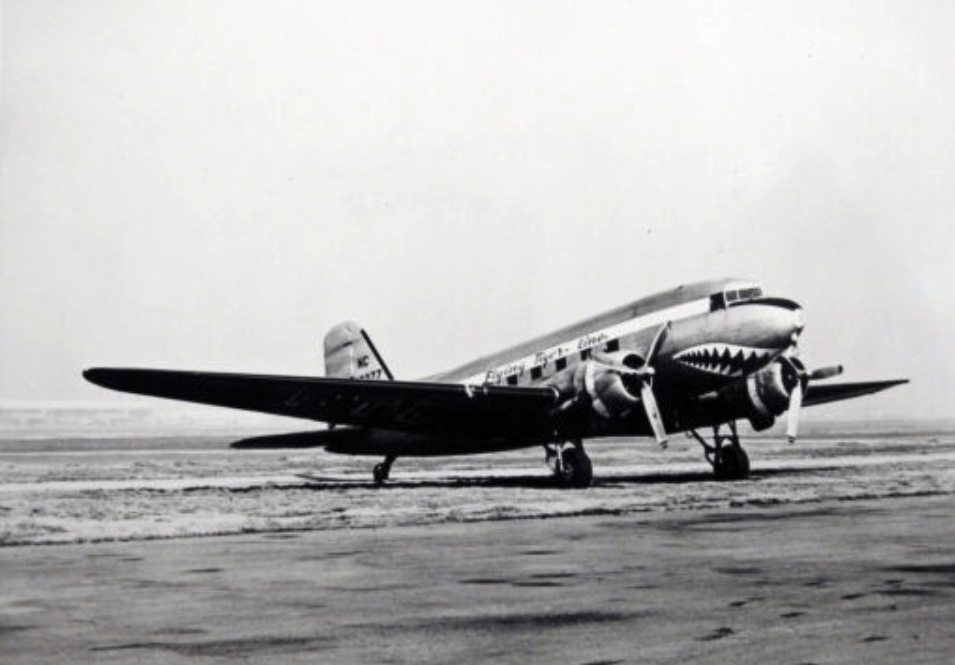
Growth came rapidly. By January 1946, operations had moved to Mines Field, later renamed Los Angeles International Airport. That same year, the fleet transitioned from Conestogas to Douglas C-47s, and by December Flying Tigers had secured its first transpacific military contract, operating C-54 Skymasters to Hawaii and Tokyo. In 1946, the airline also relocated its headquarters to the Lockheed Air Terminal in Burbank. The company formally adopted the name The Flying Tiger Line, Inc. in February 1947.
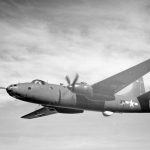
Public attention followed. One of the airline’s earliest publicity moments came when the Borden Company chartered a specially modified aircraft to transport “Elsie the Cow” on a nationwide tour. By 1948, the airline had introduced its enduring slogan, “Anything, Anytime, Anywhere,” reflecting a customer base that ranged from sports teams and entertainers to livestock and unusual cargo. A defining milestone arrived in April 1949 when, after a four-year regulatory battle, Flying Tigers received certification from the Civil Aeronautics Board. This approval allowed the launch of Route 100, the first scheduled all-cargo airline service in the United States, linking Los Angeles with Boston. New stations were opened across the country, significantly expanding the airline’s domestic footprint. That same year, the airline upgraded its domestic fleet from C-47s to the larger and longer-ranging C-46 Commando, while C-54s continued serving overseas charter routes.
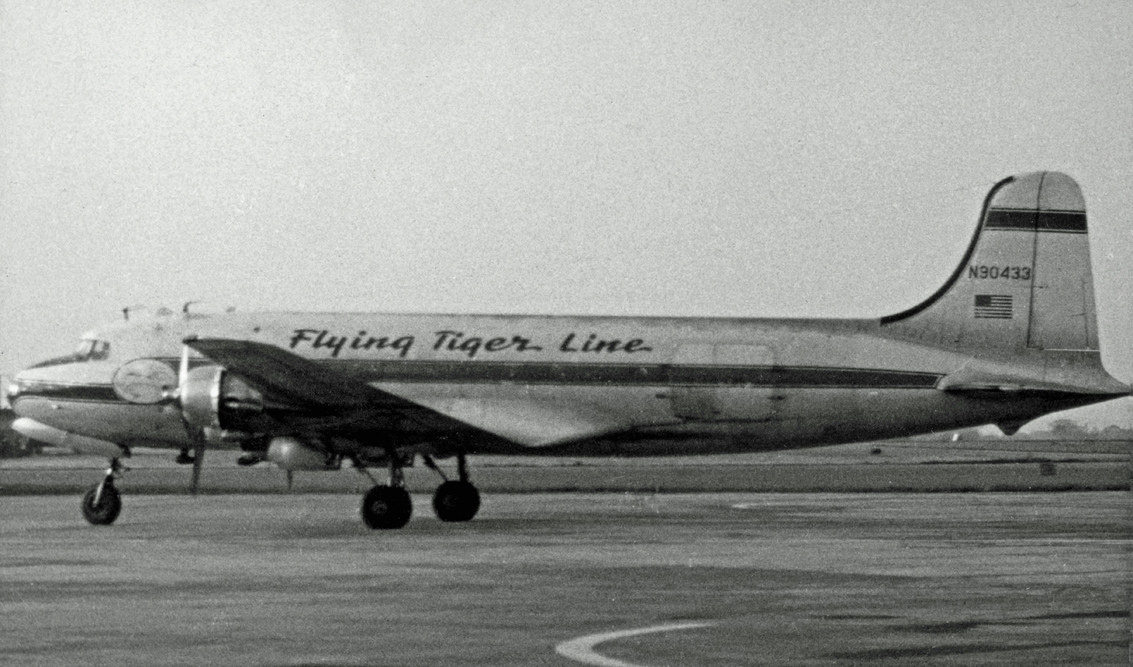
The 1960s marked Flying Tigers’ transformation into a global freight powerhouse. In early 1961, the airline introduced the Canadair CL-44, a purpose-built cargo aircraft whose distinctive swing-tail design revolutionized loading efficiency. The arrival of the CL-44 elevated Flying Tigers to the position of the world’s largest freight and contract airline. Regulatory and operational expansion followed. In 1962, the airline received its first permanent CAB certificate and introduced an integrated sea-and-air logistics concept later branded as SeaTiger. Operations returned to Los Angeles International Airport in 1963, and the following year saw the graduation of the company’s first class of flight attendants and the groundbreaking of its world headquarters at LAX. Jet operations began in earnest in 1965 with the arrival of Boeing 707-320C freighters.
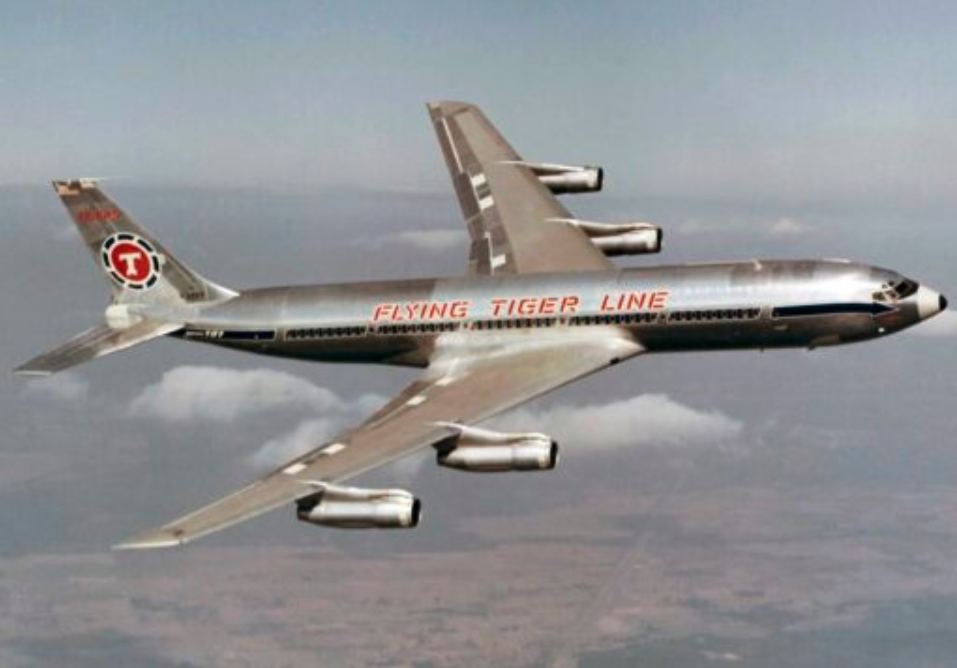
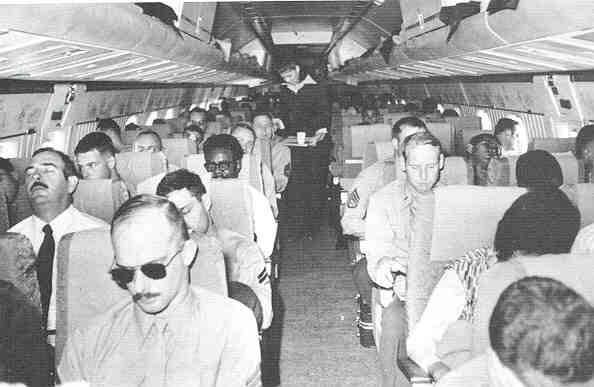
Flying Tigers continued to break new ground throughout the decade. The company opened its Flight Training Center at LAX in 1968, and one of its Boeing 707s, nicknamed POLECAT, set speed and distance records during a pole-to-pole flight around the globe. In 1967, the fleet expanded further with the arrival of the DC-8-63F. By 1969, Flying Tigers had secured Route 163 across the Pacific into Asia, and the older CL-44s and 707s were phased out in favor of an all–DC-8 jet fleet. During the 1970s, the airline’s operations reflected a rapidly shrinking world. Flying Tigers played a critical role in transporting troops and cargo during the Vietnam War and later supported international humanitarian efforts, including disaster relief following a devastating earthquake in Peru. In 1970, the Peter Prescott Children’s Hospital in Taiwan was dedicated in memory of the founder’s son. The mid-1970s saw Flying Tigers establish itself as a leader in hazardous materials transport with the publication of its Airfreight Guide for Hazardous Materials. In April 1975, as South Vietnam collapsed, the airline evacuated employees and refugees from Saigon—many of whom later became permanent members of the Flying Tigers workforce. The airline also took part in extraordinary missions, including the transport of Shamu the whale.
In November 1977, U.S. airfreight deregulation reshaped the industry, and Flying Tigers was well positioned to adapt. In 1978, shortly after the airline was recognized as the largest airfreight carrier in the free world, founder Robert W. Prescott passed away. The following year marked another milestone with the delivery of the company’s first Boeing 747-200 freighter. In 1979, Flying Tigers also conducted 176 humanitarian missions into Phnom Penh, delivering 17 million pounds of rice to the besieged city.
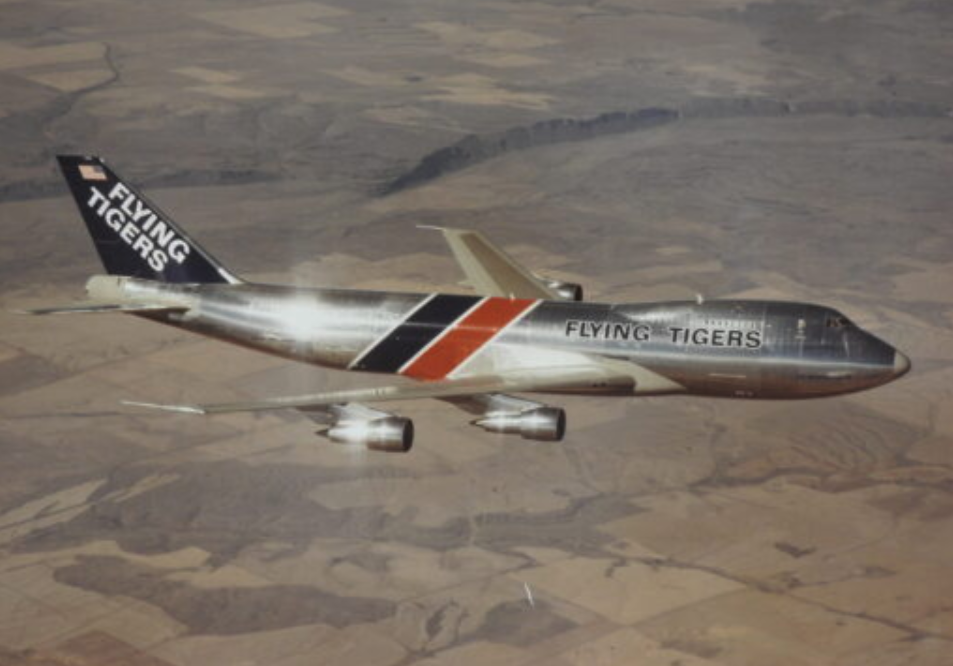
The final decade began with consolidation. On October 1, 1980, Flying Tigers merged with Seaboard World Airlines, creating a global all-cargo network linking North America, Europe, the Middle East, and Asia. By 1982, the airline had extended scheduled jet freighter service to South America, becoming the only all-cargo carrier at the time to connect Brazil with a worldwide route structure. That same year, Flying Tigers flew relief missions to Poland, delivering the first humanitarian aid since the imposition of martial law. Service continued to expand with the inauguration of Boeing 747 operations to Australia in 1983. Fleet modernization followed in response to new noise regulations, leading to the retirement of older DC-8 variants. The airline sponsored the 1984 Winter Olympics in Sarajevo and transported equipment for the Games. Among its most symbolic flights was the transport of the Statue of Liberty’s torch from New York to Los Angeles for the 1985 Rose Parade. Flying Tigers remained active in global humanitarian efforts, including Ethiopian relief flights in 1985. In 1986, the airline opened a major hub at Rickenbacker Air National Guard Base in Columbus, Ohio. By 1987, re-engined DC-8-73 freighters had joined a fleet that included Boeing 747s and 727s. The end came swiftly. In December 1988, Federal Express announced a tender offer to acquire Flying Tigers. The merger was completed on August 7, 1989, bringing to a close the history of an airline that had helped define the modern air cargo industry.
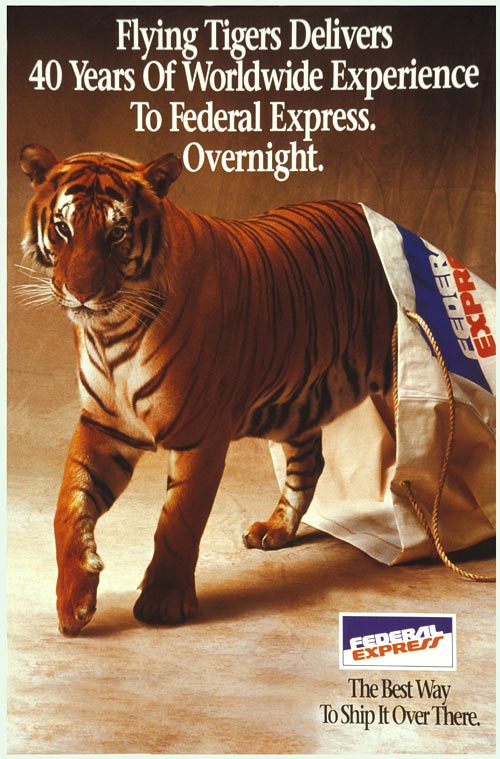
Many thanks to the Flying Tiger Line Historical Society, Flying Tigers Club, the Flying Tiger Line Pilots Association, and the AVG Association.






Worked Flying Tigers LAX very briefly for a few months in the second half of 1988 as an A&P mechanic when the acquisition by Fed Ex was in the works, it illustrated what a total joke working in that field had become, or for that matter any of the trades. The US Post Office offered me a position as a mail processing equipment mechanic, went with that, never looked back. The trades will no longer get someone into the middle class!