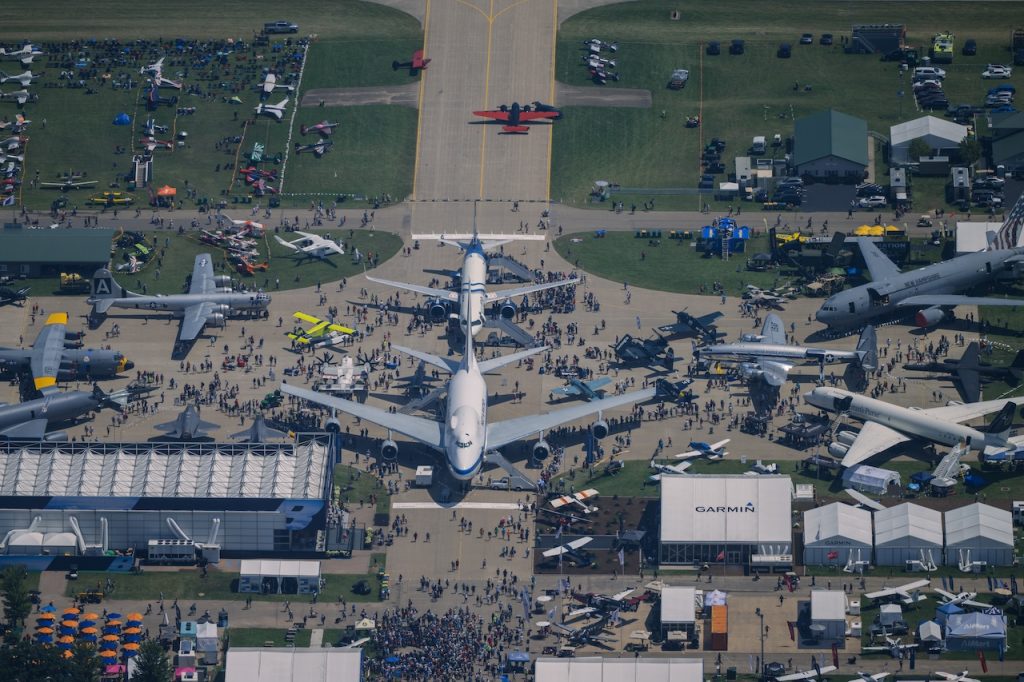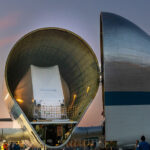
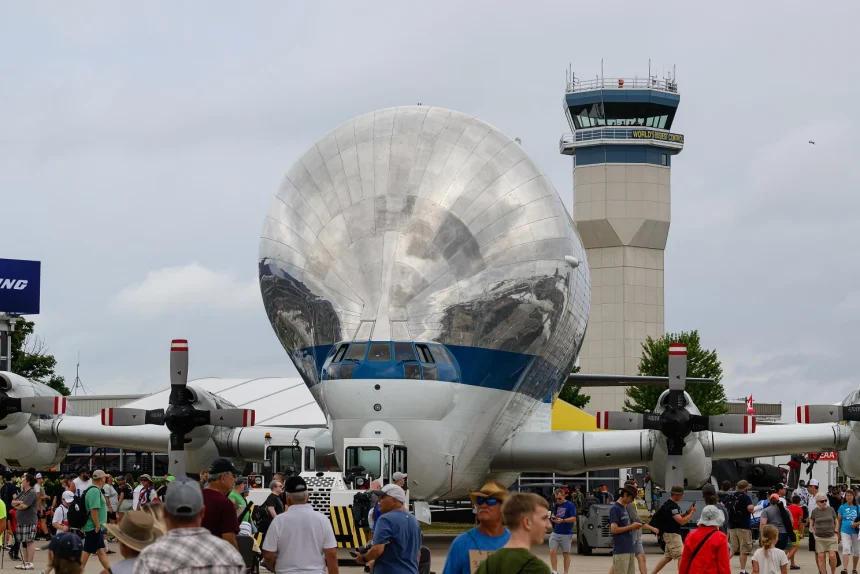

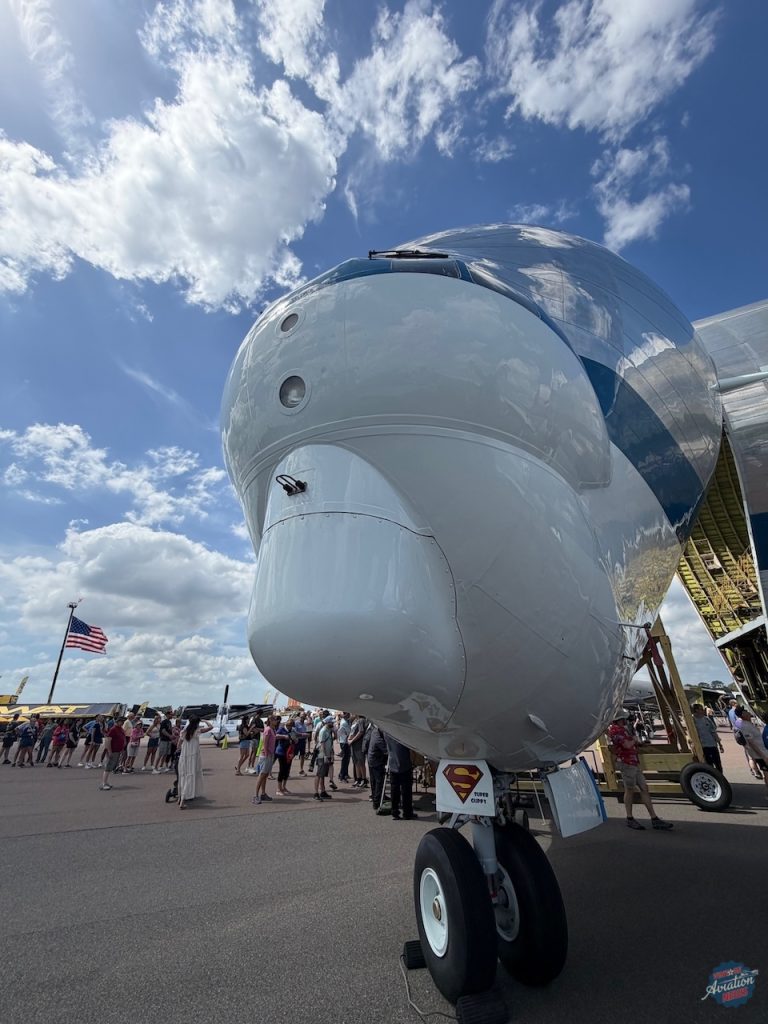
One of the most distinctive aircraft in the world is set to return to EAA AirVenture Oshkosh in 2026. NASA’s Super Guppy, a perennial crowd favorite whenever it appears on Boeing Plaza, is expected to spend much of the week on display at the world’s largest fly-in convention. The aircraft recently drew significant attention at this year’s SUN ’n FUN Aerospace Expo, where it was displayed in the event’s central plaza throughout the week and became one of the most photographed airplanes on the grounds.
(Image credit: EAA)
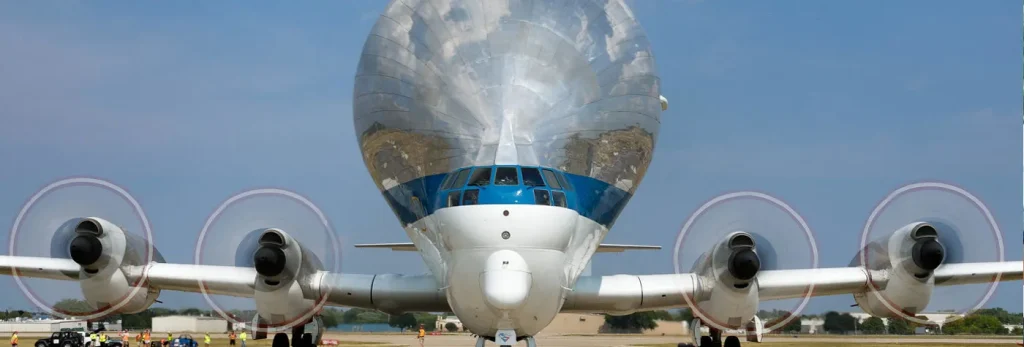
The Super Guppy first appeared at Oshkosh in 2000 and most recently attended AirVenture in 2023. Developed during the 1960s by Aero Spacelines Industries (ASI) and derived from the Boeing C-97 Stratofreighter, the Super Guppy remains one of the most unusual aircraft flying today. Designed specifically to transport oversized cargo, the aircraft features an enormous fuselage measuring 111 feet, 6 inches in length, with a maximum internal height of 25 feet, 6 inches, and a diameter of 25 feet. Powered by four Allison T56 turboprop engines, the Super Guppy has a maximum takeoff weight of 170,000 pounds and can carry payloads of up to 48,000 pounds. The aircraft cruises at approximately 290 mph at an altitude of 25,000 feet. One of the Super Guppy’s most distinctive features is its hinged nose section, which swings open 110 degrees—much like a giant refrigerator door—to allow front-loading of cargo. Freight is carried on pallets and moved within the cargo compartment using an integrated rail system.
The origins of the Guppy family trace back to the early days of the American space program. During the early 1960s, NASA faced a significant logistical challenge: transporting large rocket components from manufacturing facilities across the United States to launch sites in Florida. Conventional cargo aircraft were too small to accommodate these oversized loads, while transportation by ship often required weeks to complete. To address the problem, California-based Aero Spacelines Industries (ASI) developed the first Guppy aircraft in 1961. Created from a heavily modified Boeing KC-97 Stratofrieghter, the aircraft—known as the Pregnant Guppy—featured the largest cargo compartment of any airplane built at the time. With a fuselage diameter exceeding 19 feet, it was specifically designed to carry the second stages of Saturn rockets used during the Apollo program. The aircraft dramatically reduced transit times, allowing critical components to reach Cape Canaveral in approximately 18 hours instead of the 18 to 25 days typically required by barge.
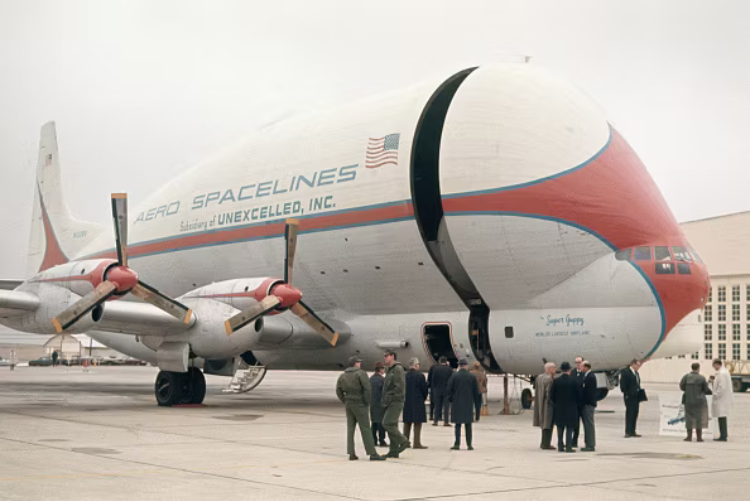
The success of the Pregnant Guppy led ASI to develop an even larger version in 1965: the Super Guppy. Featuring a 25-foot-diameter cargo compartment, more powerful engines, a pressurized cockpit, and a distinctive hinged nose section for front-loading cargo, the new design quickly became an indispensable tool for NASA’s growing space ambitions. In 1979, NASA acquired the original Super Guppy from ASI after years of successful commercial operation. Over the course of more than three decades, the aircraft logged over three million miles in support of some of America’s most significant space endeavors, including the Gemini, Apollo, Skylab, and International Space Station programs.
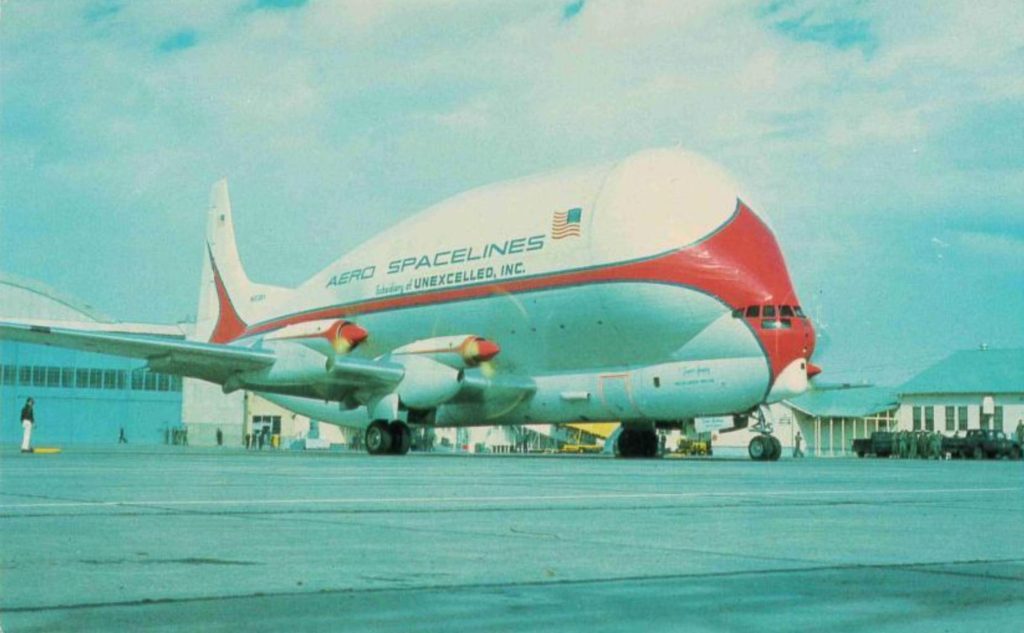
The aircraft appearing at AirVenture is a Super Guppy Turbine (SGT), the final and most advanced version of the Guppy family. Only four examples of the type were built. The SGT’s most significant improvement was the adoption of Allison T56 turboprop engines, which offered greater reliability and improved parts availability compared to earlier powerplants. After Aero Spacelines sold the design and manufacturing rights to Airbus Industries, the European aerospace company operated the aircraft for decades transporting oversized airliner components between production facilities across Europe.
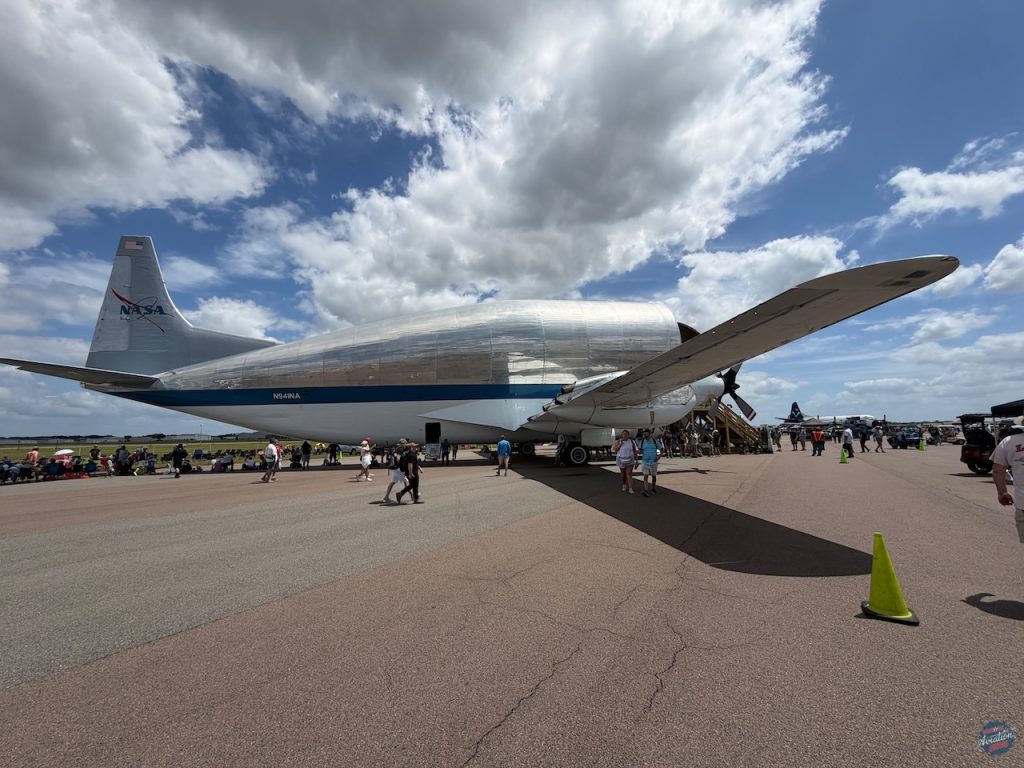
(Image credit: VAN)
When Airbus retired its fleet in 1997, NASA acquired Super Guppy Turbine No. 4 through an agreement with the European Space Agency. The aircraft remains in active service today, supporting NASA missions and transporting oversized aerospace hardware across the country. In recent years, it has also assisted the Department of Defense and aerospace contractors by moving aircraft and major components, including Air Force T-38 Talons and Navy V-22 Ospreys. More than six decades after the first Guppy took flight, the aircraft continues to fill a unique niche as one of the few practical solutions for transporting exceptionally large cargo by air.
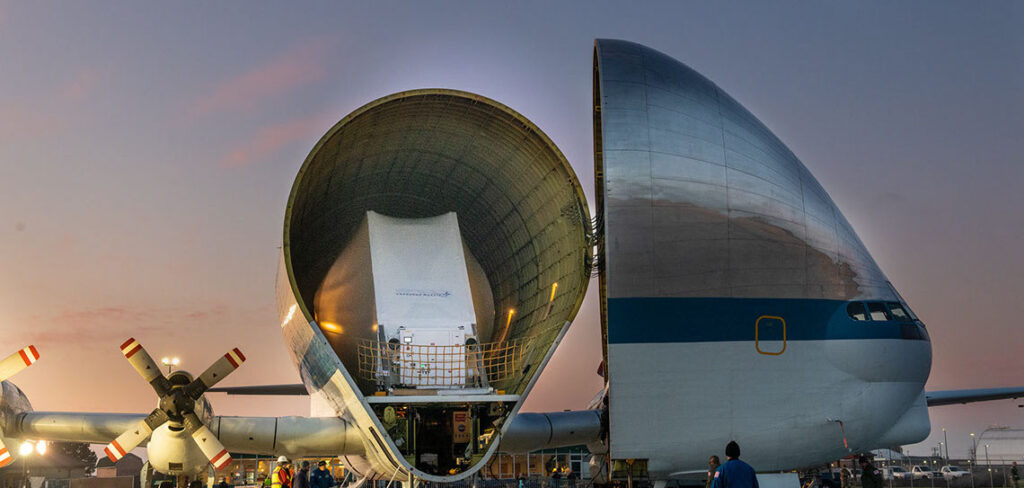
The Super Guppy is expected to remain at AirVenture throughout the week, with most of its stay scheduled on Boeing Plaza, where visitors will have ample opportunity to view and photograph this remarkable aircraft up close. For more information about AirVenture, visit www.eaa.org/airventure.