
“Vintage Aviation News staff did not write this article; the content comes via our partners who wish to help support our website.”
By Alexander Kidder
Every flying outfit has its coin. Pull one from a pilot’s pocket today, an air wing’s crest on one face and a squadron motto on the other, and you are holding an object whose story runs all the way back to the open cockpits and canvas wings of the First World War. The challenge coin is one of the few military traditions that aviation can fairly call its own, even if, as with so much in early flying history, the line between fact and legend blurred long ago. The legend is worth telling because it is the story most aviators still pass down.
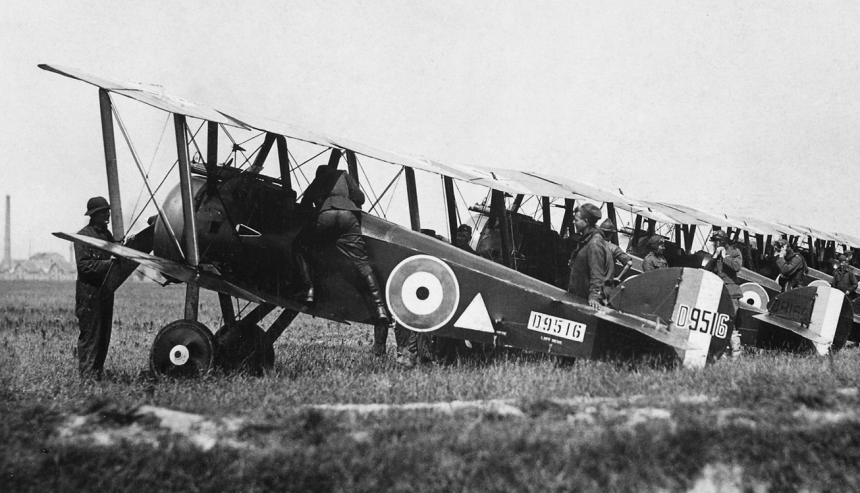
When the United States entered the war in 1917, the Army Air Service was brand new, and its flying squadrons filled up with volunteers from every corner of the country. A surprising number were well-off young men from Ivy League schools who had walked out of their classrooms, drawn by the romance and danger of this strange new way to fight. As the legend goes, one of them, a lieutenant with money to spend, had small bronze medallions struck with his squadron’s insignia and handed one to every pilot in the unit. One young flyer, who had never owned anything so fine, kept his coin in a small leather pouch around his neck.
Not long after, his aircraft was hit and he went down behind German lines. He was captured, stripped of his papers, and held prisoner, but the pouch around his neck went unnoticed. He escaped, made his way across no man’s land in borrowed civilian clothes, and stumbled at last into a French patrol. With no identification and German voices still echoing behind him, the French took him for a saboteur and prepared to put him against a wall. In desperation he pulled the medallion from its pouch and held it out. One of the Frenchmen recognized the squadron insignia. The execution was called off, and in some tellings the apology arrived as a bottle of wine. When the pilot finally returned to his squadron, the unit made it a rule that every man would carry his coin at all times, and the tradition was born.
It is a wonderful story, and it is almost certainly more legend than history. No archive has ever produced the lieutenant, the squadron, or the pilot, and serious historians, including those in the Air Force’s own ranks, treat it as a tradition built on a legend rather than a documented event. The oldest coins anyone can actually put a date to belong to a US Army infantry regiment in the Korean War, not a flying squadron at all. And yet aviation’s claim to the challenge coin was never really about who struck the first piece of metal. It is a claim about where the tradition found its home.
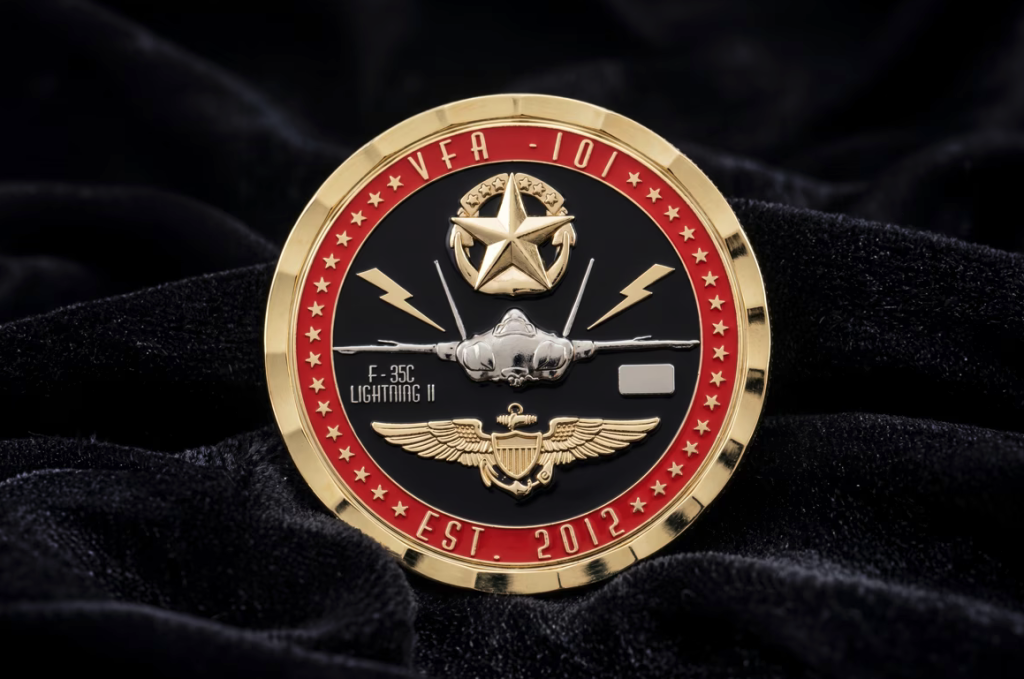
A squadron is a small world. Pilots and crews live, fly, drink, and grieve together, bound by a trade that can kill them on any given morning. That is exactly the soil in which a tradition like this takes root. A coin is squadron identity made solid, proof that you belong to this outfit and no other, and aviators took to it as naturally as anyone in uniform ever has. By the Second World War the practice had spread well beyond any single unit. American bomber and fighter groups carried their own coins, the Flying Tigers had theirs, and in occupied France the agents of the Office of Strategic Services used special coins as bona fides, quietly producing them to confirm a contact was friendly before a word was spoken.
The ritual most people know, the coin check, came later, and it too was born in the places aviators gathered. In the bars of Southeast Asia and occupied Germany, a man would slap his coin on the table, and everyone present had to produce theirs or buy the round. In Vietnam the term challenge coin finally stuck, and an older habit of carrying a spent bullet as a survival token gave way to the safer, sturdier coin. The rules shift from one outfit to the next, but the spirit never has. Carry your coin, or pay the price.
What is striking, looking back across a century of military aviation, is how completely the tradition endured. Every era of flying carried it forward, from the biplanes to the warbirds to the jets that followed. Walk into any squadron today and you will find a coin for it, and the Air Force coins issued across the service still trace a straight line back to those first volunteer flyers, real or imagined. The Department of Defense now counts the challenge coin among the military traditions it formally recognizes, a practice roughly a century old and showing no sign of fading.
That is the quiet magic of the thing. A challenge coin is a small object, easy to lose, and yet it has carried the identity of flying units through every war the country has fought since aviation first went to war at all. Whether or not a wealthy lieutenant ever pressed bronze medallions into his pilots’ hands, every coin that hits a bar table or passes quietly in a handshake still carries the spirit of those open-cockpit days, when flying was new and a small piece of metal could mean the difference between a firing squad and a bottle of wine.
Author Bio
Alexander Kidder is the CEO of KidderCorp, a veteran-owned business specializing in the design and manufacturing of custom challenge coins. He brings years of expertise to preserving military traditions and helping organizations tell their unique stories through physical craftsmanship.