We appreciate the support from readers like you at Foxiz. Through your purchases using the links on our site, you empower us with affiliate commissions.
A U.S. Air Force F-15E Strike Eagle at RAF Lakenheath has received a commemorative paint scheme marking 40 years since Operation El Dorado Canyon. The 1986 joint strike against Libya remains a defining moment in modern U.S. military history, and the aircraft continues the base’s tradition of honoring its heritage through special liveries.
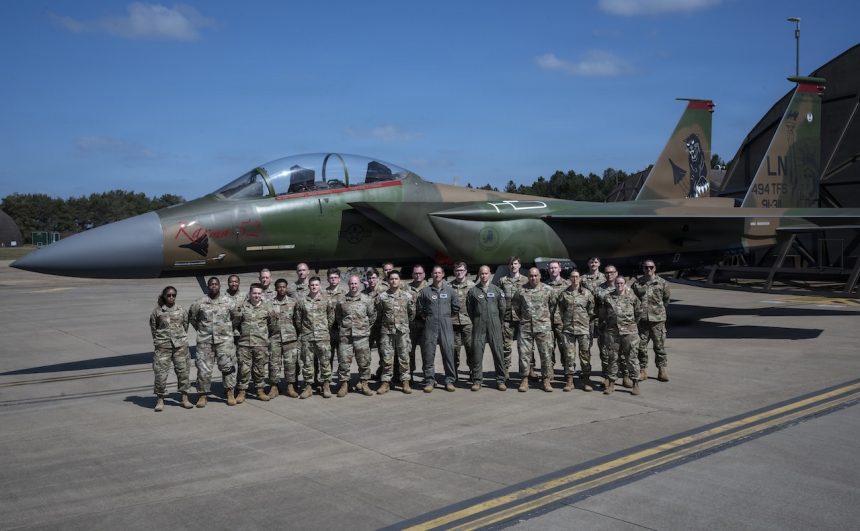
U.S. Airmen assigned to the 48th Fighter Wing pose in front of an F-15E Strike Eagle aircraft during a tail flash unveiling ceremony at RAF Lakenheath, England, April 28, 2026. The unveiling ceremony honored the aircrew who made the ultimate sacrifice during Operation El Dorado Canyon and recognized the work of 48th Equipment Maintenance Squadron Airmen on the project. (Image credit: U.S. Air Force photo by Airman 1st Class Rilynn Jacobs)
SHARE
At RAF Lakenheath in England, an F-15E Strike Eagle from the 494th Fighter Generation Squadron was readied on March 2, 2026, wearing a special El Dorado Canyon-themed paint scheme. The aircraft serves as a visual nod to a significant mission carried out 40 years earlier—one that demonstrated both American resolve and the effectiveness of coordinated airpower.
Airmen from the 48th Fighter Wing roll out an F-15E Strike Eagle aircraft during a tail flash reveal ceremony at RAF Lakenheath, England, April 28, 2026. The ceremony marked the 40th anniversary of Operation El Dorado Canyon by reimagining an F-15E in a heritage paint scheme based off a F-111F Aardvark “Karma 52” aircraft that flew in 1986. (Image credit: U.S. Air Force photo by Airman 1st Class Rilynn Jacobs)
Such commemorative markings are nothing new for the airmen at Lakenheath. In 2019, the 48th Fighter Wing unveiled another specially painted F-15E, this one carrying heritage markings inspired by its P-47 Thunderbolt predecessor. The aircraft took off from the base on February 6 of that year, highlighting the unit’s long-standing tradition of honoring its lineage through distinctive liveries.
An F-15E Strike Eagle assigned to the 492nd Fighter Squadron is painted in the heritage colors of its World War II P-47 Thunderbolt predecessor at Royal Air Force Lakenheath, England Jan 30. The 48th Fighter Wing officially unveiled the aircraft publicly during a ceremony on Jan 31. (U.S. Air Force photo/Tech. Sgt. Matthew Plew)
In the early hours of April 15, 1986, aviators from the U.S. Navy and Marine Corps launched from the aircraft carriers USS America and USS Coral Sea, heading into the Mediterranean night. Their orders, issued by President Ronald Reagan, were clear: strike targets tied to Libyan leader Muammar Gadhafi. The operation followed the April 5 bombing of the La Belle discotheque in West Berlin, which killed two American servicemen and injured many others. Investigators quickly linked the attack to Libya, setting the stage for a military response.
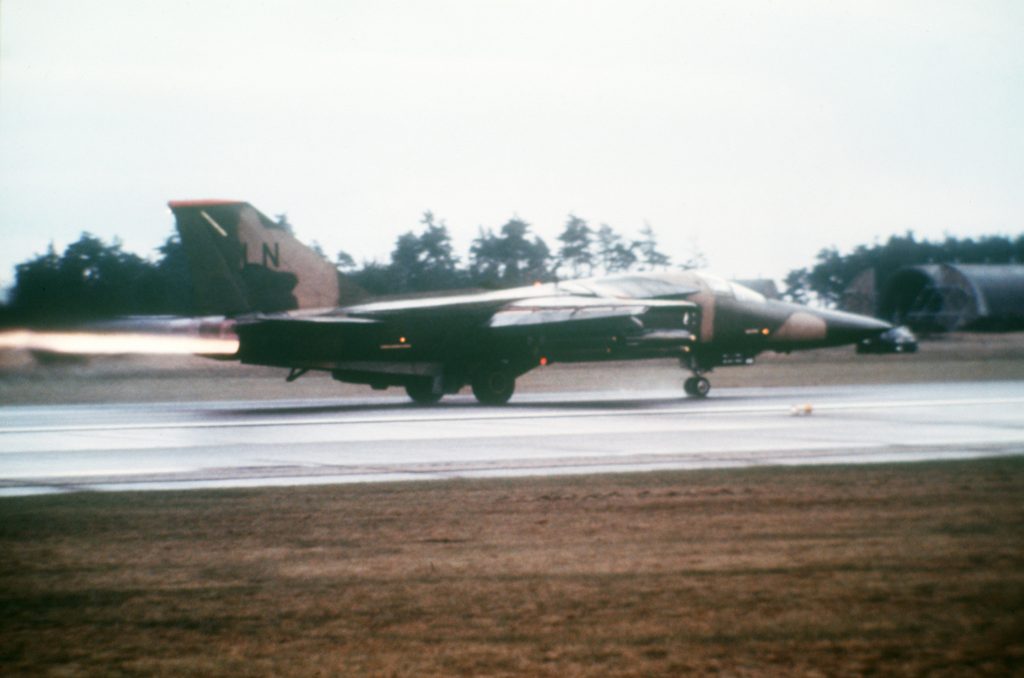
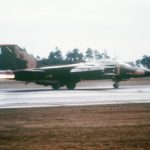
A 48th Tactical Fighter Wing F-111F aircraft loaded with Mark 82 500-pound general-purpose bombs lights its afterburners while taking off for a retaliatory air strike on Libya. (Image credit: USAF Image)
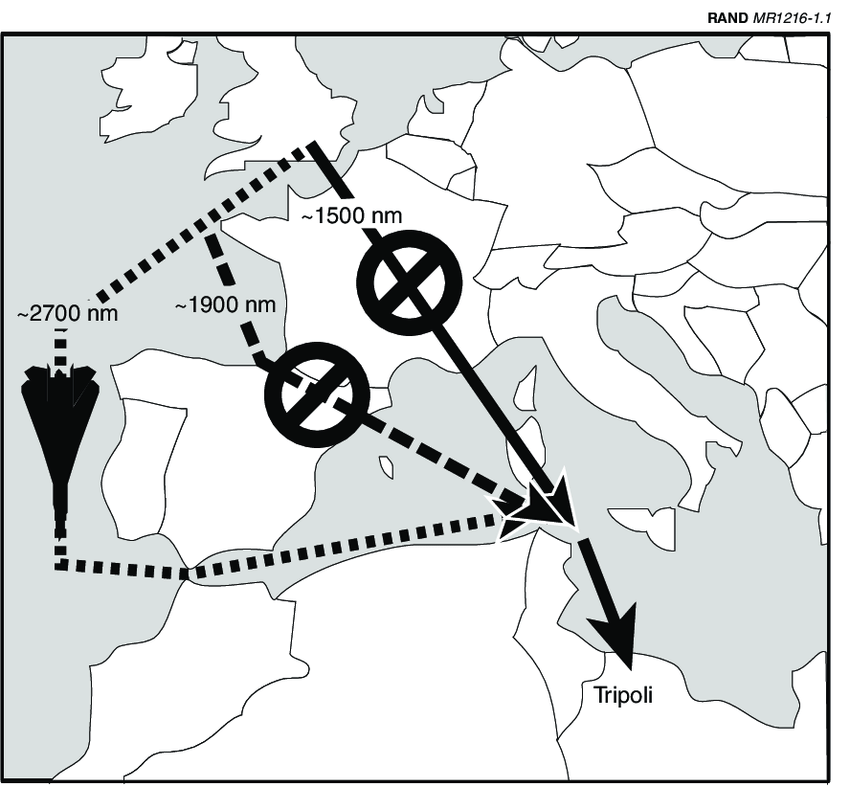
Known as Operation El Dorado Canyon, the mission required careful coordination between naval forces and U.S. Air Forces in Europe. Air Force F-111s departed from bases in England, flying a long and risky route to Libya. At the same time, Task Force 60—built around its two carriers—prepared to hit targets in the Benghazi area while also supporting and protecting the overall strike effort.
Aircraft from the carriers were heavily involved in neutralizing Libya’s air defenses. Navy A-7E Corsair IIs and Marine EA-6B Prowlers focused on disabling radar systems and missile sites, reducing the threat to incoming strike aircraft. Meanwhile, F-14 Tomcats and F/A-18 Hornets flew protective patrols, ensuring the strike force could operate without interference. E-2C Hawkeyes managed the air picture from above, coordinating movements and tracking potential threats, while aerial refueling aircraft extended the range and endurance of the mission.
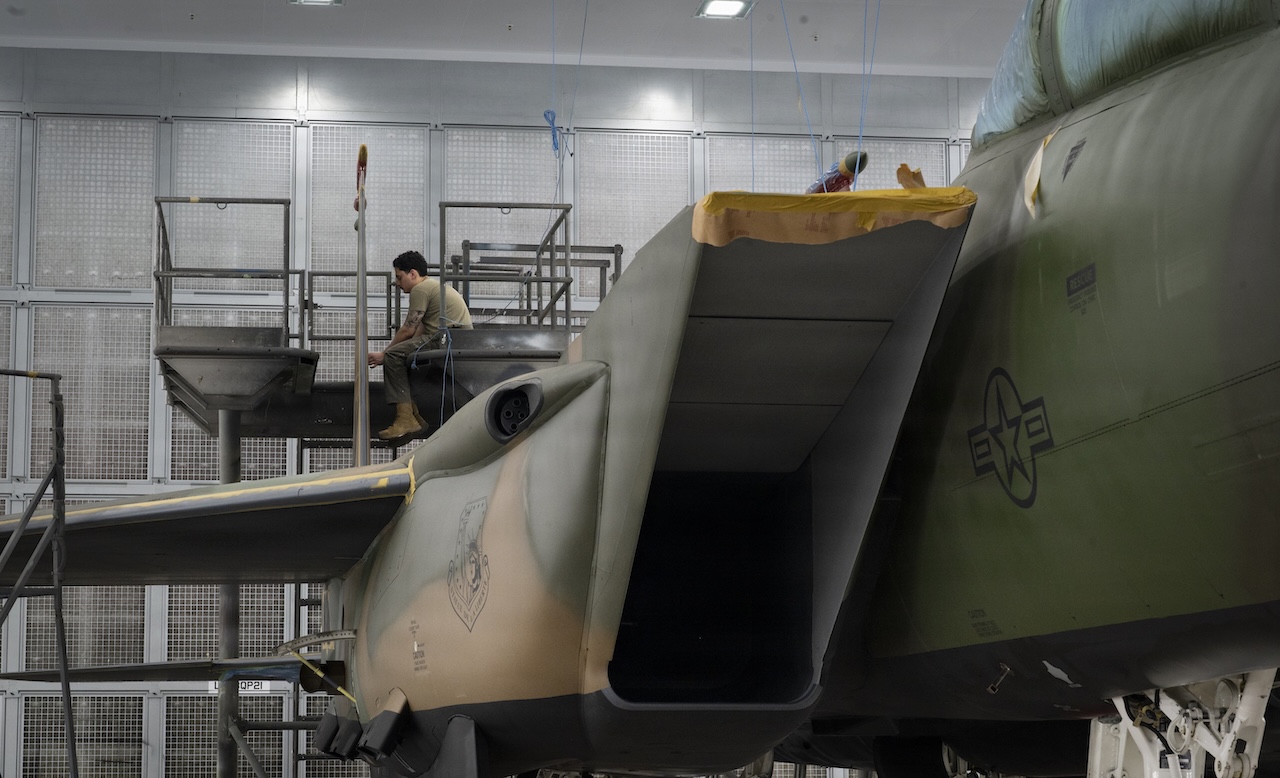
U.S. Air Force Senior Airman Leonardo Galvan, 48th Equipment Maintenance Squadron low observable journeyman , paints the tail of an F-15E Strike Eagle aircraft assigned to the 494th Fighter Generation Squadron at RAF Lakenheath, England, March 19, 2026. The paint scheme is modeled after an F-111F Aardvark aircraft that flew from RAF Lakenheath in 1986 to participate in Operation El Dorado Canyon.
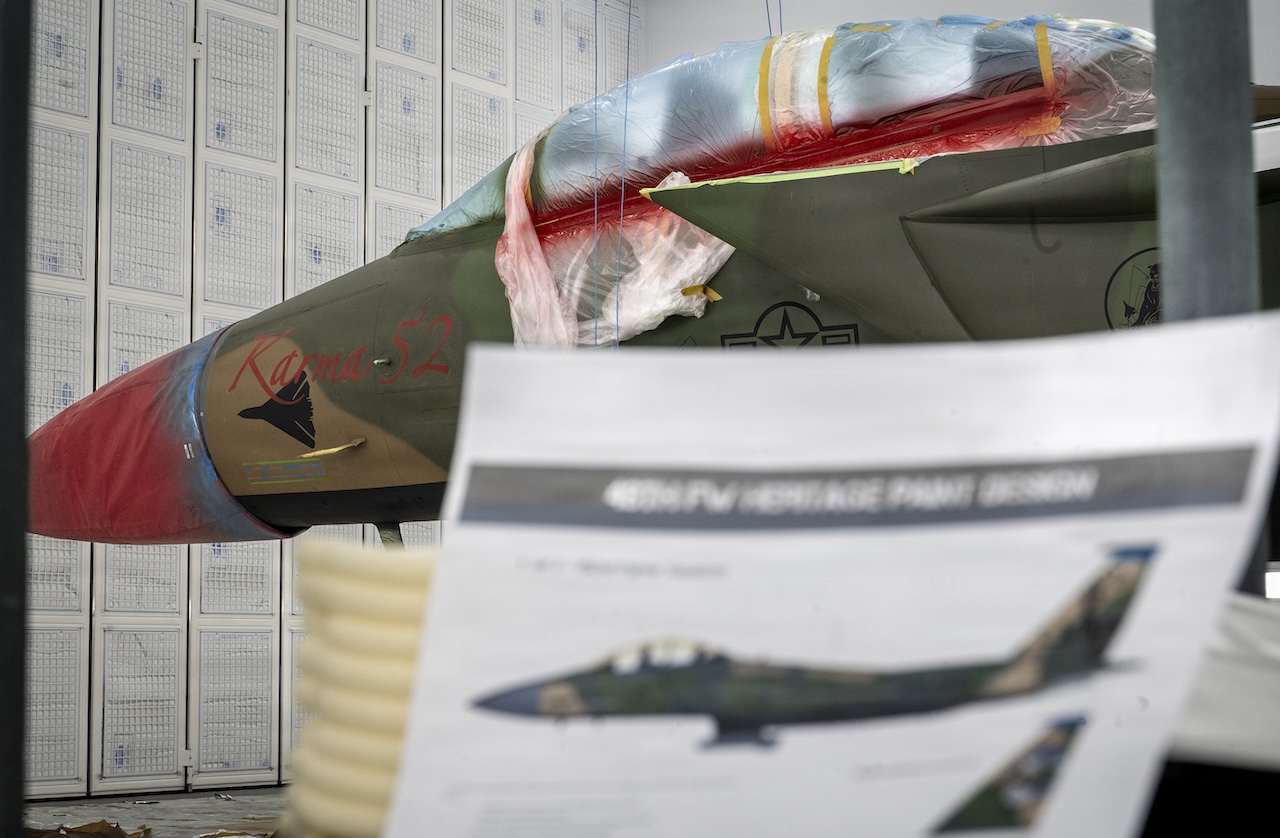
A U.S. Air Force F-15E Strike Eagle aircraft assigned to the 494th Fighter Generation Squadron sits behind a heritage design mock-up at RAF Lakenheath, England, March 18, 2026. During Operation El Dorado Canyon, an F-111F Aardvark “Karma 52” aircraft, the captain and the weapons system officer went missing while flying over the Mediterranean Sea. The markings on the modern paint scheme pay tribute to the personnel and aircraft that were lost during the mission.
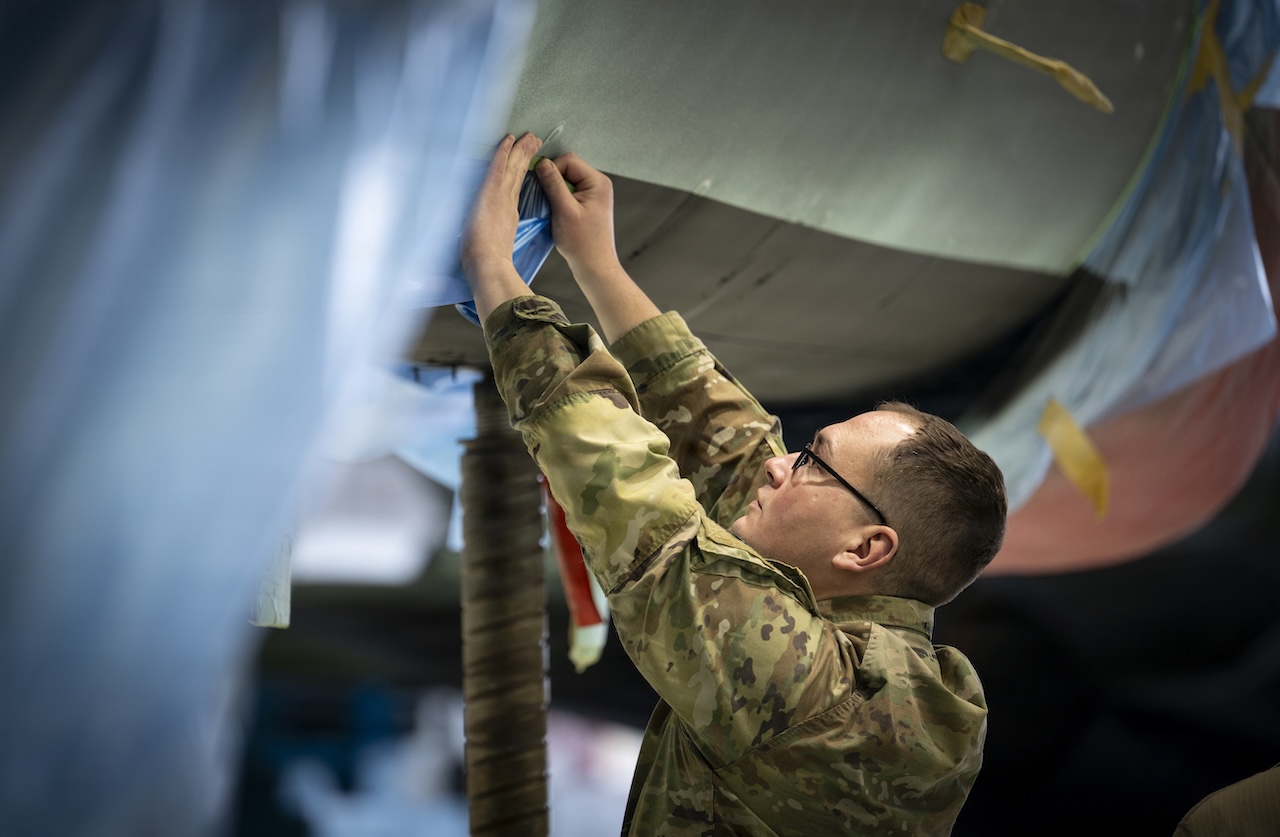
U.S. Air Force Tech. Sgt. Arian Capek, 48th Equipment Maintenance Squadron wing corrosion manager, applies masking to an F-15E Strike Eagle aircraft undergoing a heritage paint scheme at RAF Lakenheath, England, March 8, 2026. The process of applying a tail flash paint design consists of sanding, priming, stenciling and painting.
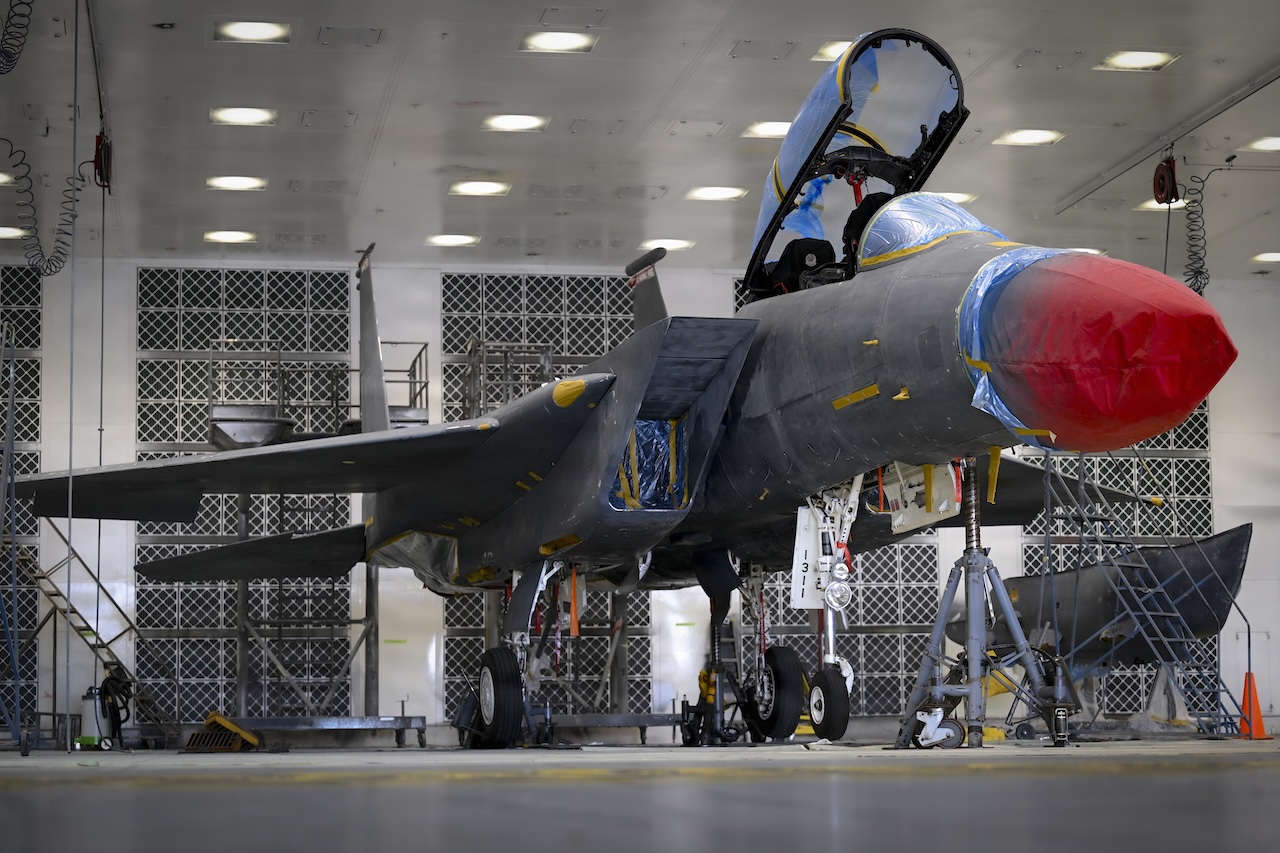
A U.S. Air Force F-15E Strike Eagle aircraft assigned to the 494th Fighter Generation Squadron is prepped for an El Dorado Canyon paint scheme at RAF Lakenheath, England, March 2, 2026. Operation El Dorado Canyon was a long-range strike in Libya that was carried out by the 48th Tactical Fighter Wing in 1986.
With defenses weakened, Navy A-6E Intruders moved in to strike key installations, including military barracks and airfields. The attack was carried out with precision, reflecting the high level of planning and cooperation between the services. The outcome sent a clear signal. Beyond the immediate damage inflicted, the operation underscored that attacks on Americans would not go unanswered. It also highlighted how carrier-based aviation could project force quickly and effectively, even far from home waters. For the U.S. military as a whole, it marked an important step forward in joint operations, bringing together different branches in a tightly coordinated effort.
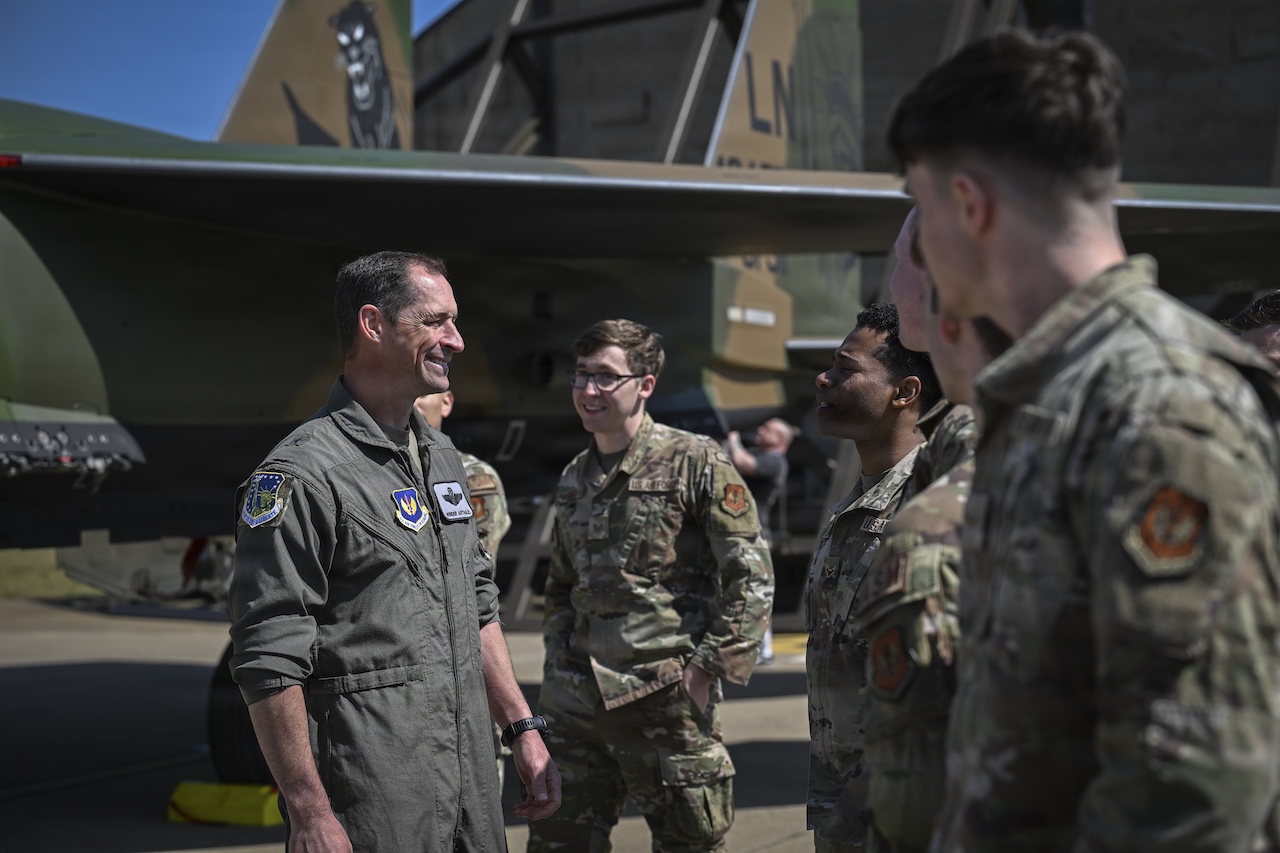
U.S. Air Force Brig. Gen. Jack Arthaud, 48th Fighter Wing commander, speaks with Airmen about their involvement in the new F-15E Strike Eagle aircraft heritage paint scheme at RAF Lakenheath, England, April 28, 2026. The ceremony gave Airmen the opportunity to learn about the operation, emphasizing the Air Force’s global reach capabilities and how the 48 FW contributes to the fight.
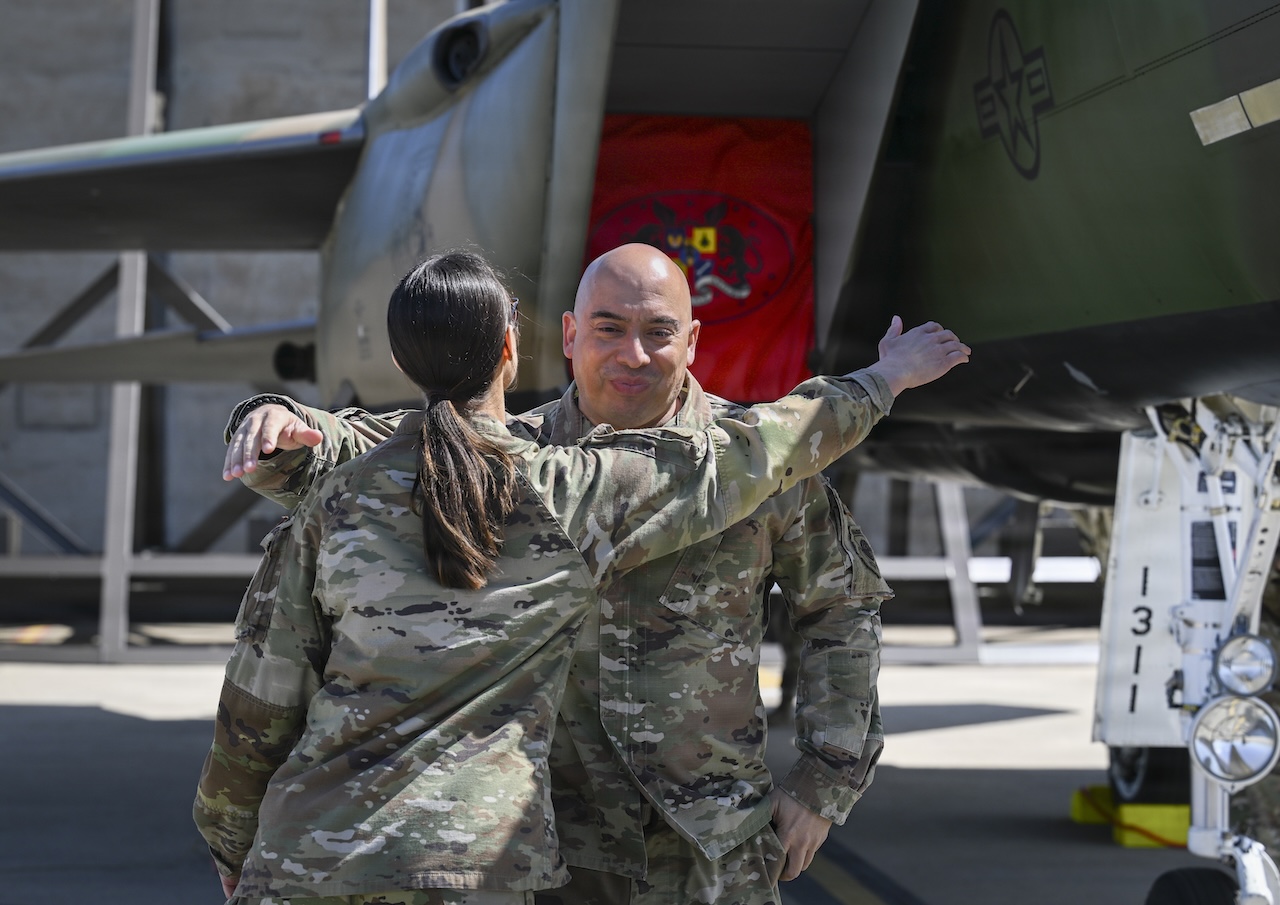
U.S. Air Force Chief Master Sgt. Peter Martinez, 48th Fighter Wing command chief, greets Lt. Col. Christie Taylor, 48th Equipment Maintenance Squadron commander, following the completion of the Operation El Dorado Canyon Heritage Tail Flash Ceremony at RAF Lakenheath, England, April 28, 2026. The Airmen of the 48 EMS dedicated 22 days to completing the project.
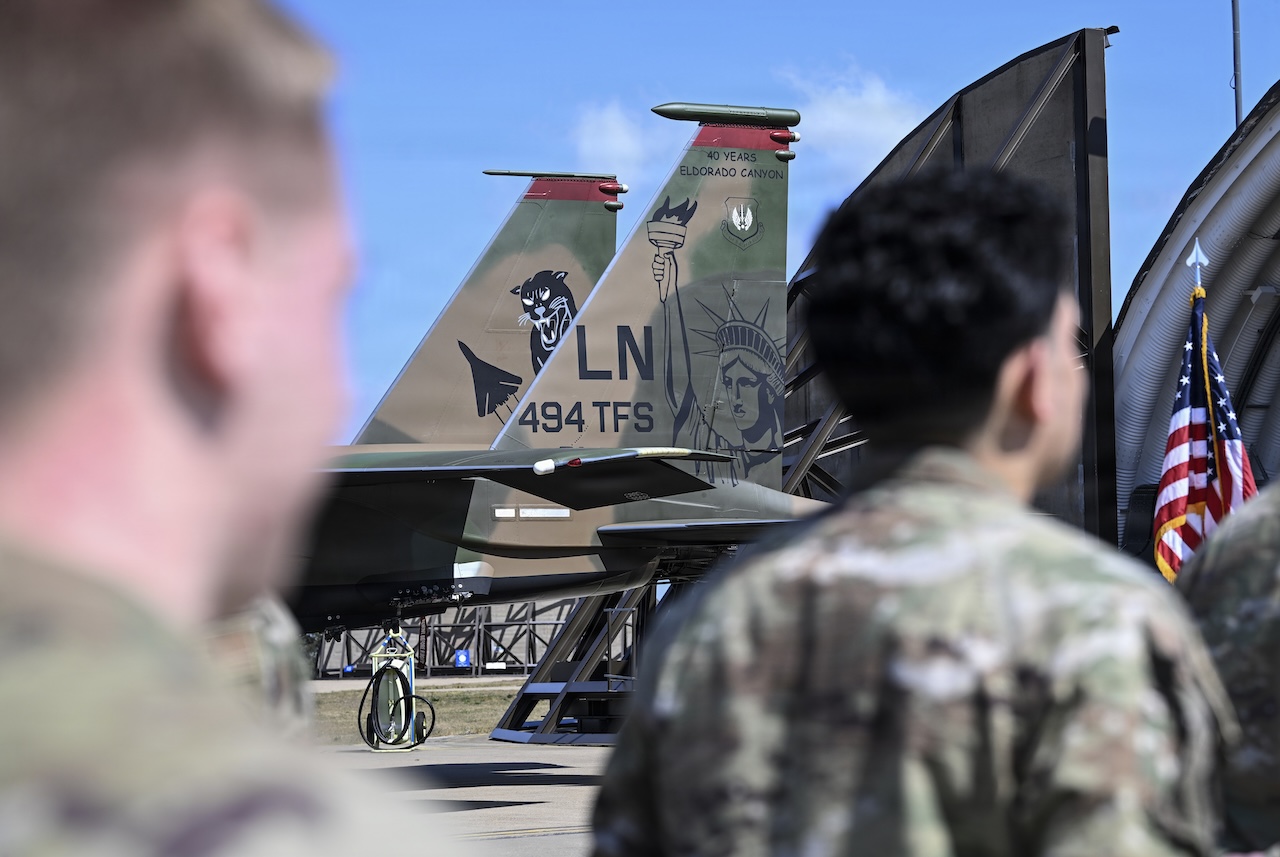
A U.S. Air Force F-15E Strike Eagle assigned to the 494th Fighter Generation Squadron sits on display during a tail flash unveiling ceremony at RAF Lakenheath, England, April 28, 2026. Important details included the call sign, the 494th FGS Panther, the Statue of Liberty and a special marking celebrating the 40th anniversary of Operation El Dorado Canyon.
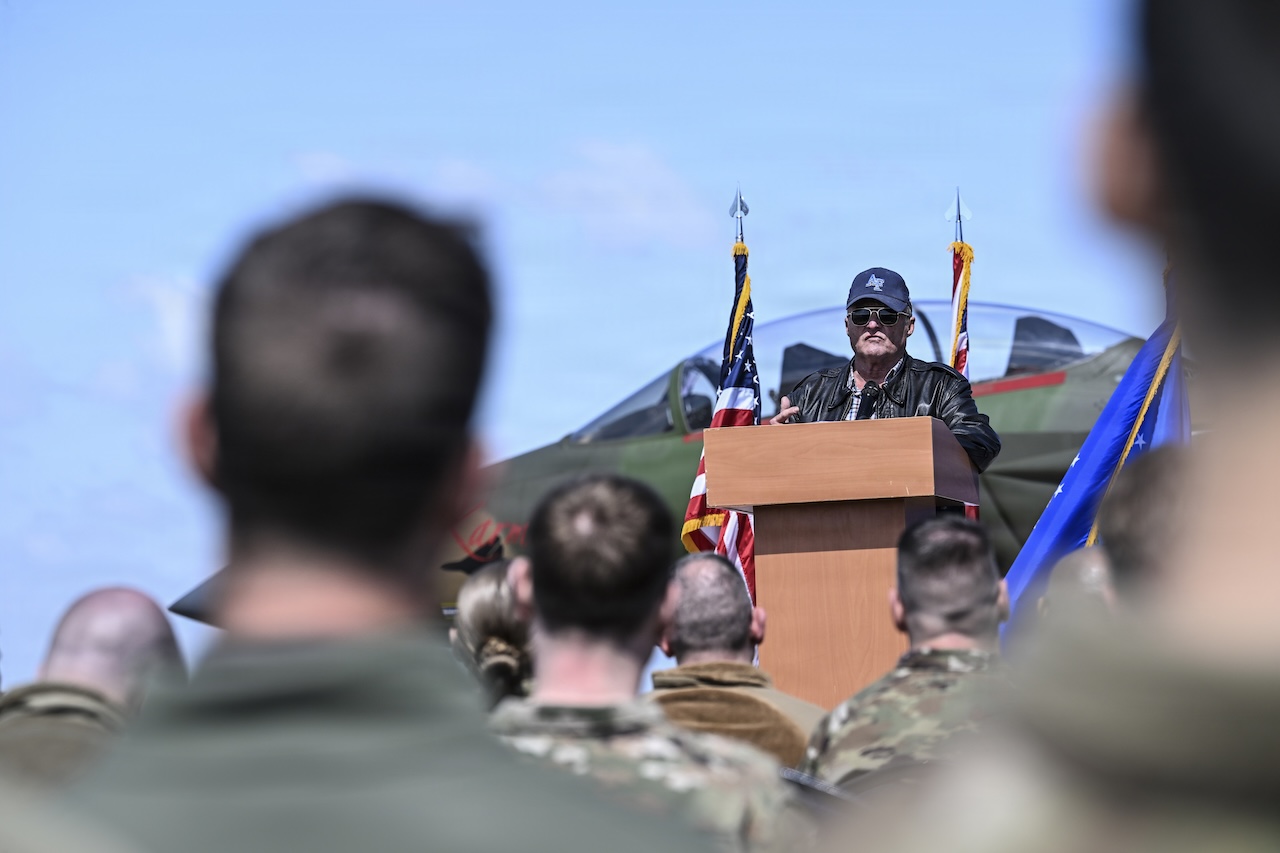
Retired U.S. Air Force Maj. Don Mobley, F-111F Aardvark and F-15E Strike Eagle aircraft pilot, addresses the audience during the Operation El Dorado canyon tail flash unveiling ceremony at RAF Lakenheath, England, April 28, 2026. Mobley flew with the 48th Fighter Wing in 1987 alongside members who took part in the operation.
Four decades later, the legacy of that mission still resonates. The specially painted F-15E at Lakenheath connects today’s crews with those who took part in the 1986 strike, reflecting both continuity and change in airpower. The sailors, Marines, and airmen involved in Operation El Dorado Canyon carried out their mission with professionalism and determination. Their efforts remain a notable example of coordinated military action and continue to be remembered as part of a defining moment in modern U.S. military history.
U.S. Airmen assigned to the 48th Fighter Wing pose in front of an F-15E Strike Eagle aircraft during a tail flash unveiling ceremony at RAF Lakenheath, England, April 28, 2026. The unveiling ceremony honored the aircrew who made the ultimate sacrifice during Operation El Dorado Canyon and recognized the work of 48th Equipment Maintenance Squadron Airmen on the project. (Image credit: U.S. Air Force photo by Airman 1st Class Rilynn Jacobs)
Kevin Wilkins is a veteran journalist who has spent more than 30 years working for a major British broadcaster. His passion for aviation began at a young age, inspired by his father, who flew the English Electric Lightning. A long career in mainstream news, politics, and journalism kept him largely away from his early interest in aviation history. As he approaches retirement, Kevin is increasingly returning to that passion and becoming more involved with Vintage Aviation News.
Vintage Aviation News now offers an ad-free reading experience. Enjoy faster-loading pages, uninterrupted stories, and the satisfaction of helping us preserve aviation history.