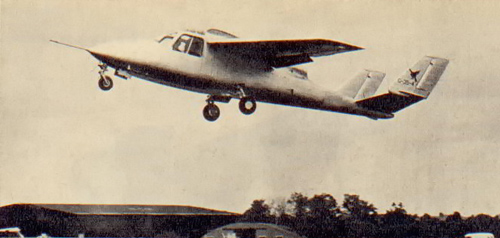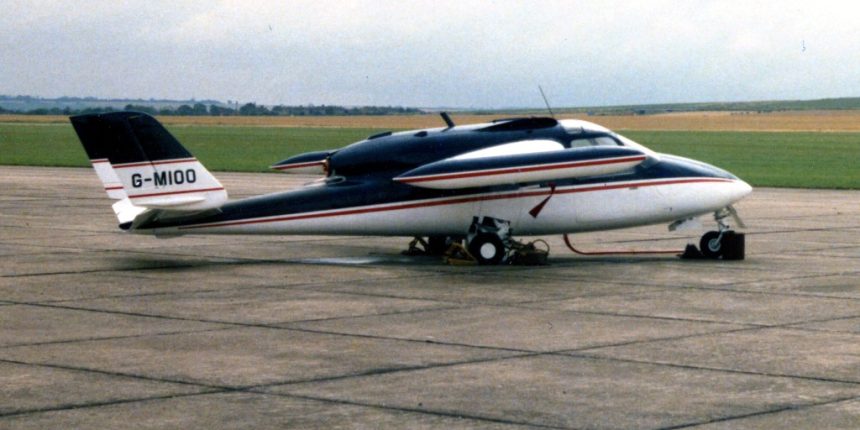

On this day in aviation history, 69 years ago (May 15, 1957), the first flight of the Miles M.100 Student took place. Originally built as a private venture by F.G. and G.H. Miles, development of the M.100 began in 1953. The Student was a lightweight trainer, intended for use with the British Royal Air Force. Miles built upon their experience with their previous M.77 Sparrowjet design, designing the M.100 as a two-seat, side-by-side, all-metal jet trainer. The Miles M.100 Student was powered by a Blackburn-built Turboméca Marboré IIA turbojet engine, which provided 880 pounds of thrust. The aircraft could attain a maximum airspeed of 298 mph and had a range of 540 nautical miles (with tip tanks installed). The M.100 could reach an altitude of 10,000 feet in 6 minutes and 48 seconds. Student and instructor sat side-by-side in the cockpit in the middle of an airframe that was 31 feet – 6 inches long, and that had a wingspan of 29 feet – 2 inches.
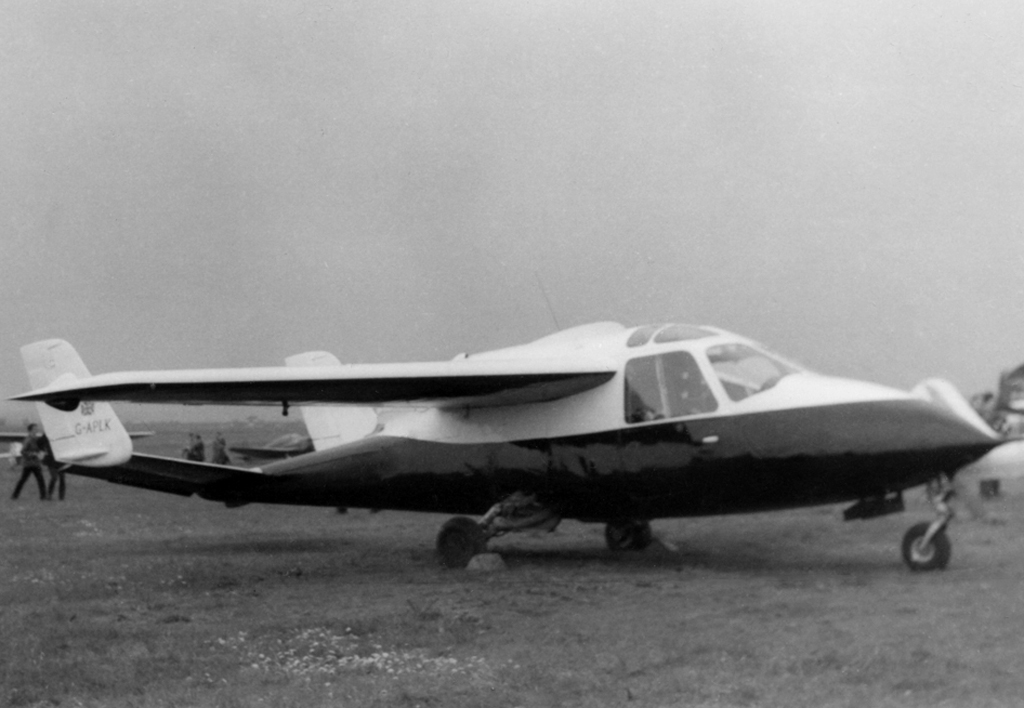
Following the M.100’s initial flight on 5/15/57, Miles had hoped that the RAF would take an interest and place an order for the trainer. Unfortunately, the RAF opted to order the Jet Provost instead. Several attempts were made to promote the Student to various flight training programs, but to no avail. The initial sole prototype G-APLK was converted into a counter-insurgency variant, known as the Mark 2, and re-named XS941. The RAF tested this variant, but it too would be rejected. Three additional variants of the M.100 were planned, using the RB.108, Gourdon, and Arbizon engines. These variants would have been designated as the Centurion 3, 4, and 5, respectively. The Mark 2 was again re-named as G-MIOO and suffered damage in an accident on August 24, 1985. This Student has since been restored and is now on display at the Museum of Berkshire Aviation.