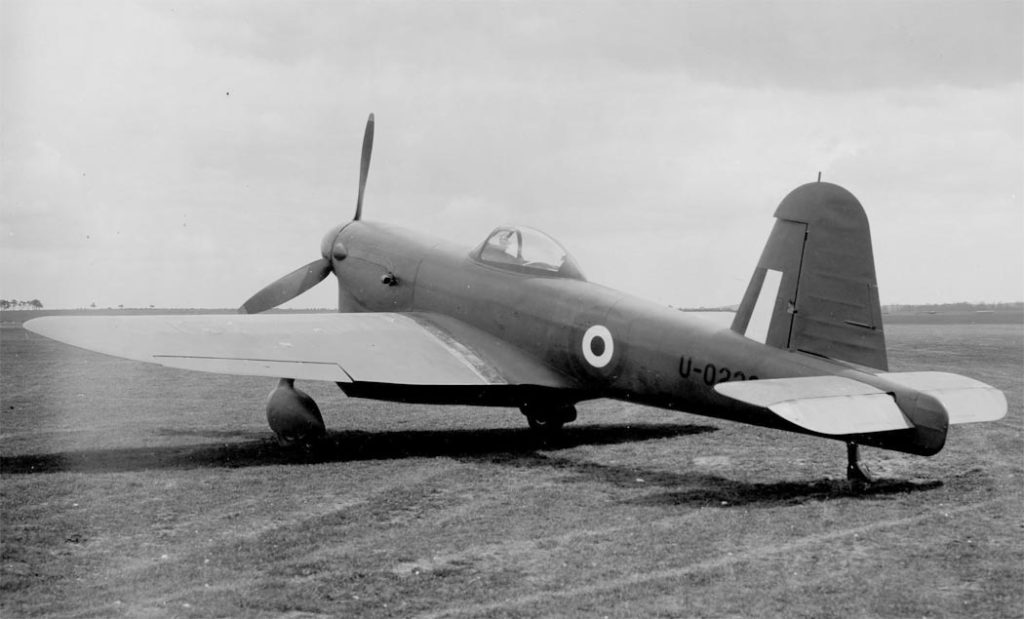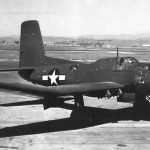
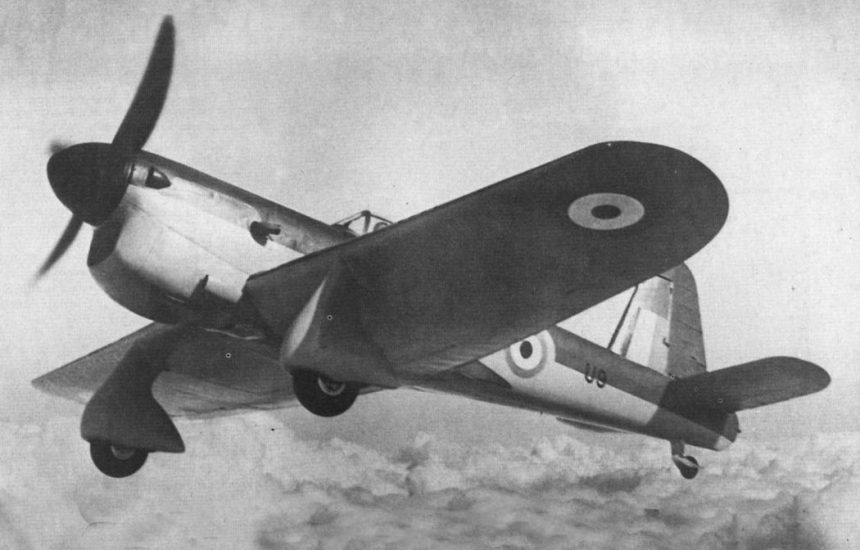

After the Battle of Britain, which took place in mid-1940 during WWII, the UK was worried about facing a potential shortage of fighter aircraft. Any German bombing effort on the factories could disrupt the production of the Royal Air Force’s Spitfires and Hurricanes. As a result, the service ordered Miles Aircraft to develop a simple, quick-to-manufacture aircraft for emergency use, if the production of Spitfires and Hurricanes faced threats. The aircraft was designated Miles M.20, and the first prototype took its maiden flight on September 15, 1940. To reduce production time, the Miles M.20 used all-wood construction and many parts from the earlier Miles Master trainer. In addition, the aircraft lacked hydraulics and had fixed landing gear with spats instead. The M.20 also had a bubble canopy for better 360-degree visibility. It followed a design approach that focused on simplicity and speed while reusing available parts. The Miles M.20 was powered by a Rolls-Royce Merlin XX V-12 liquid-cooled piston engine, which produced 1,260 horsepower at 3,000 rpm. The engine powered a three-bladed Rotol constant-speed propeller.
Design of Miles M.20
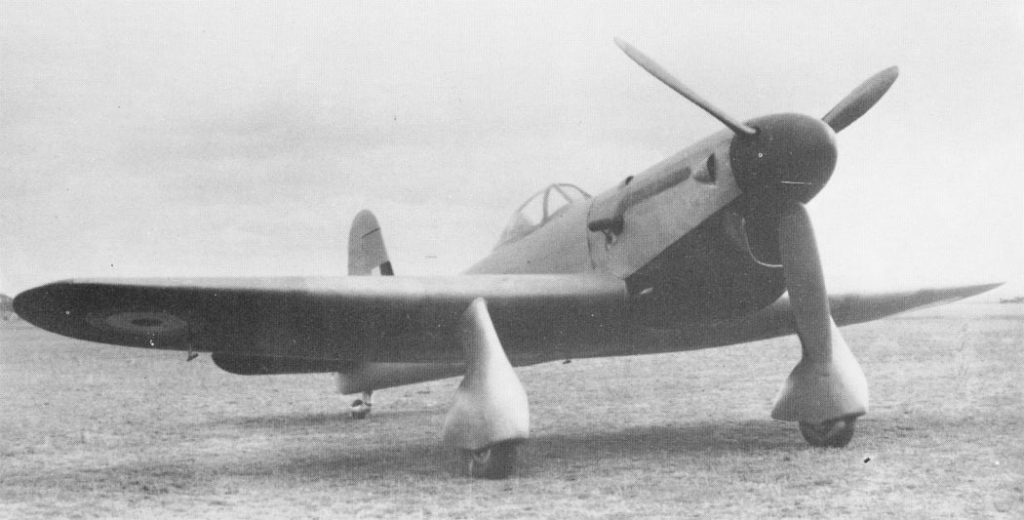
The single-seat Miles M.20 was 30 feet long, 12.6 feet high, with a wingspan of 34.7 feet and a wing area of 234 square feet. Its empty weight was 5,870 pounds, and the maximum takeoff weight was 7,758 pounds. The aircraft had a fuel capacity of 185 US gallons, providing a range of 550 miles for a normal duration of 2 hours, and an absolute maximum range of 870 miles, achievable at reduced power over 5 hours and 12 minutes. The maximum speed of the aircraft was 333 mph at 20,600 feet, and the service ceiling was 31,400 feet. The aircraft could climb 3,200 feet per minute, and the time to reach 20,000 feet was 9 minutes 36 seconds. The design of the Miles M.20 provided flight performance comparable to that of Spitfires and Hurricanes. The M.20 prototype was armed with eight.303 Browning machine guns, similar to the Hurricane. It was faster than the Hurricane but slower than the Spitfire models being produced at the time. However, it could carry more ammunition and had a longer range than both. In terms of speed, a Hurricane IIB with the same engine reached a speed of 342 mph at an altitude of 22,000 ft (6,700 m), while the Spitfire Mk.VC, which used a similar Merlin 45 engine, achieved a speed of 374 mph at 13,000 ft (4,000 m). Overall, its performance placed it perfectly somewhere between the two fighters.
The Cancellation
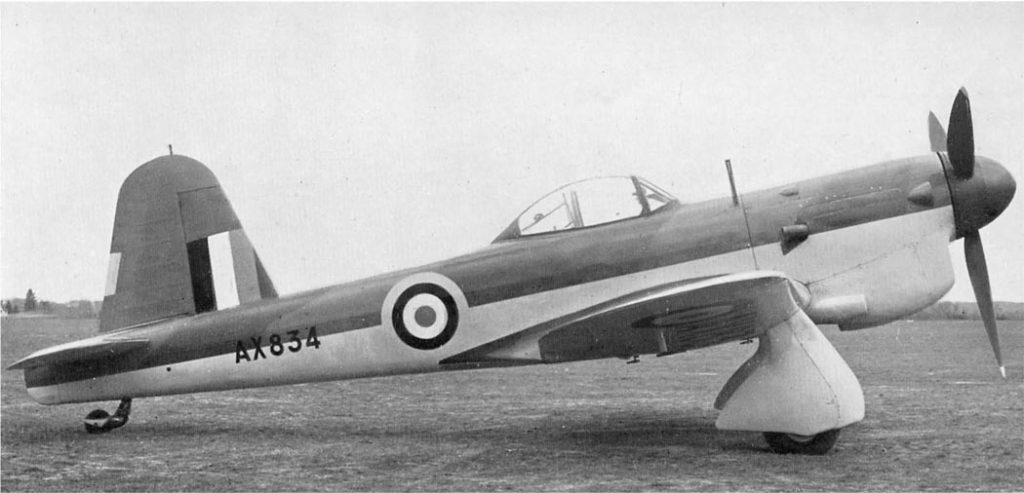
However, the German bombing strategy changed after the Battle of Britain, focusing on bombing British cities during The Blitz rather than targeting British factories. Because of this, the German Air Force’s attacks on the original Spitfire and Hurricane factories did not disrupt production. Because of this, the M.20 aircraft design was not needed, and work on it stopped. Once the German Air Force was defeated over Britain, there was no longer a need for the Miles M.20, so it was abandoned before production began, and the first prototype was scrapped. Later, a second prototype of the Miles M.20 was built to meet the need for a shipboard fighter for the Royal Navy’s naval aviation component, the Fleet Air Arm. The aircraft was equipped with an arrestor hook and points, which were helpful for catapult launches, and flew for the first time on April 8, 1941. A catapult could launch this variant from merchant ships that didn’t have flight decks. After completing their missions, the aircraft were to be ditched, and to make this easier, the undercarriage could be removed. However, older Hurricanes were modified to perform this role, making the shipboard version of the M.20 unnecessary. Test pilot Eric Brown flew this aircraft in January 1942 and found its performance impressive but noted it could not match the Martlet, Hurricane, or Spitfire in maneuverability. It also lacked the ideal deck-landing ability of the Martlet. As a result, the aircraft, despite its good performance, was canceled by both the Royal Air Force and the Royal Navy. In the Grounded Dreams series, if the Miles M.20 had been taken seriously, and not just as a simple, easy-to-build aircraft, its legacy could have been the same as Spitfires and Hurricanes. Despite a strong performance, even better in some cases, in comparison to Spitfires and Hurricanes, the aircraft could not see combat. Read more Grounded Dreams series articles HERE.