








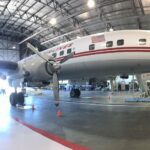
The Historical Aircraft Restoration Society has reached another important milestone in its effort to return Lockheed L-1049 Super Constellation VH-EAG Southern Preservation to the air, with the aircraft’s No. 1 engine now removed. The work follows the grounding of the aircraft after an engine problem left it in need of a replacement Wright R-3350 Duplex-Cyclone. Based at HARS Aviation Museum at Shellharbour Airport in New South Wales, Australia, VH-EAG is currently the world’s only flying example of the stretched L-1049 Super Constellation. With the No. 1 engine removed, attention will now turn to preparing its replacement. The rear section of the Quick Engine Change assembly must be connected to the replacement R-3350 before the complete powerplant can be installed on the aircraft.
Despite its name, the Quick Engine Change system still requires a complex sequence of work. The assembly incorporates far more than the engine itself, including the mount and numerous mechanical, electrical, fuel, oil, and control connections. Preparing the replacement engine and integrating it with the existing aircraft systems will require considerable time and specialized expertise from the HARS volunteer engineering team. The latest development provides visible progress in a project first reported by Vintage Aviation News in July 2026. At the time, HARS announced that the Super Constellation would remain grounded while the organization evaluated options for replacing its failed engine.

(Image credit: The Historic Aircraft Restoration Society (HARS))
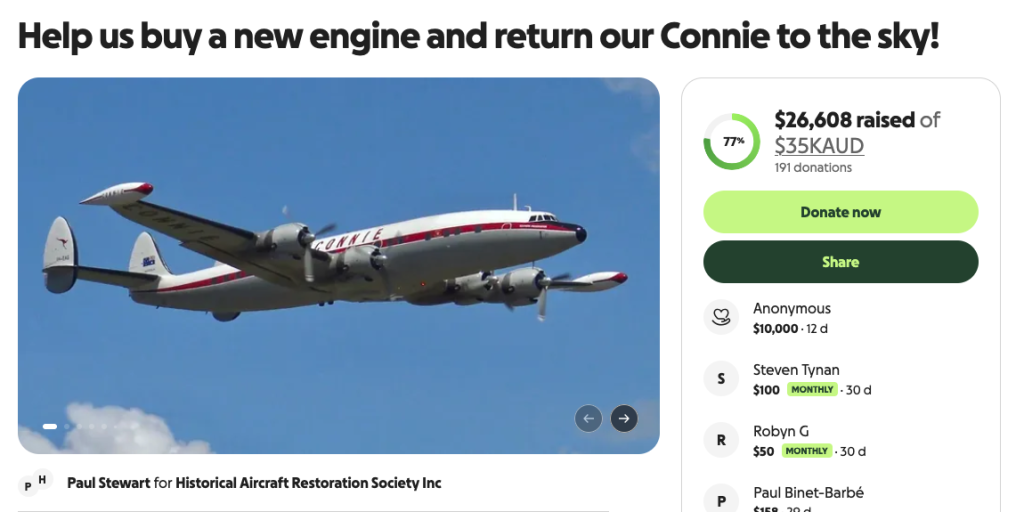
HARS has considered refurbishing an R-3350 already held in its inventory. If that engine proves unsuitable, however, the organization may need to acquire another serviceable powerplant—a prospect previously estimated to cost as much as AU$300,000, or approximately US$220,000. To support the work, HARS continues to operate a GoFundMe campaign. Contributions will help cover the cost of acquiring or preparing the engine and completing the work required to return the aircraft to flying condition.
Originally constructed as a military C-121C, the aircraft carries U.S. Air Force serial number 54-0157 and Lockheed construction number 4176. It was delivered to the Air Force on October 6, 1955, and initially assigned to the 1608th Military Air Transport Wing at Charleston Air Force Base, South Carolina. The aircraft later served with the Mississippi, West Virginia, and Pennsylvania Air National Guard before being retired to storage at Davis-Monthan Air Force Base in Arizona in 1977. By the time HARS members discovered it in 1990, storage maintenance had ceased, and many of its engines, instruments, and accessories had been removed. HARS began restoring the derelict aircraft in 1991 at the Pima Air & Space Museum in Tucson. The ambitious volunteer-led project required five years of work, with members repeatedly traveling between Australia and the United States. Support from Qantas Airways and numerous organizations and individuals helped make the restoration possible. The Super Constellation returned to flight in September 1994 after nearly 18 years on the ground. Following further preparation and crew training, it departed the United States for Australia. Registered VH-EAG, the aircraft arrived in Sydney on February 3, 1996, after a 39.5-hour trans-Pacific journey with stops in Oakland, Honolulu, Pago Pago, and Nadi. Since then, Southern Preservation has become the flagship of the HARS collection and a familiar presence at Australian airshows. Its polished metal finish and period-style Qantas markings commemorate the airline’s long association with the Constellation family, although the aircraft itself never served with Qantas. Its historical importance has grown as other Super Constellations have left flying status. VH-EAG was built immediately before the former Breitling Super Constellation in Switzerland, with the two aircraft carrying consecutive Lockheed construction numbers 4176 and 4177. With the Swiss aircraft no longer flying, Southern Preservation remains the only operational L-1049 in the world.

Removal of the No. 1 engine represents a tangible step toward preserving that distinction. Considerable work remains before the replacement R-3350 can be mounted, tested, and cleared for flight, but the latest progress brings HARS closer to returning one of the world’s most celebrated piston-powered airliners to the sky. To support the work, HARS continues to operate a GoFundMe campaign. Contributions will help cover the cost of acquiring or preparing the engine and completing the work required to return the aircraft to flying condition. For more information about the Historical Aircraft Restoration Society (HARS), visit www.hars.org.au.
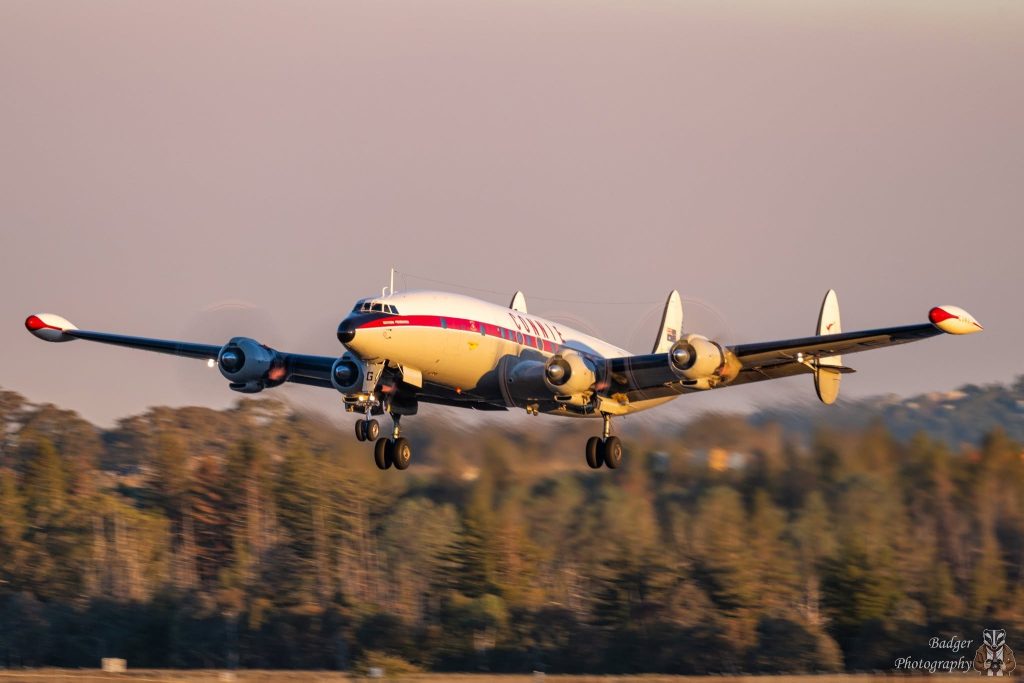
(Image credit: HARS/Badger Photography)

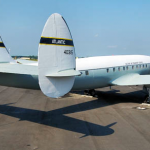






The former Swiss Connie HB-RSC has S/N 4175.