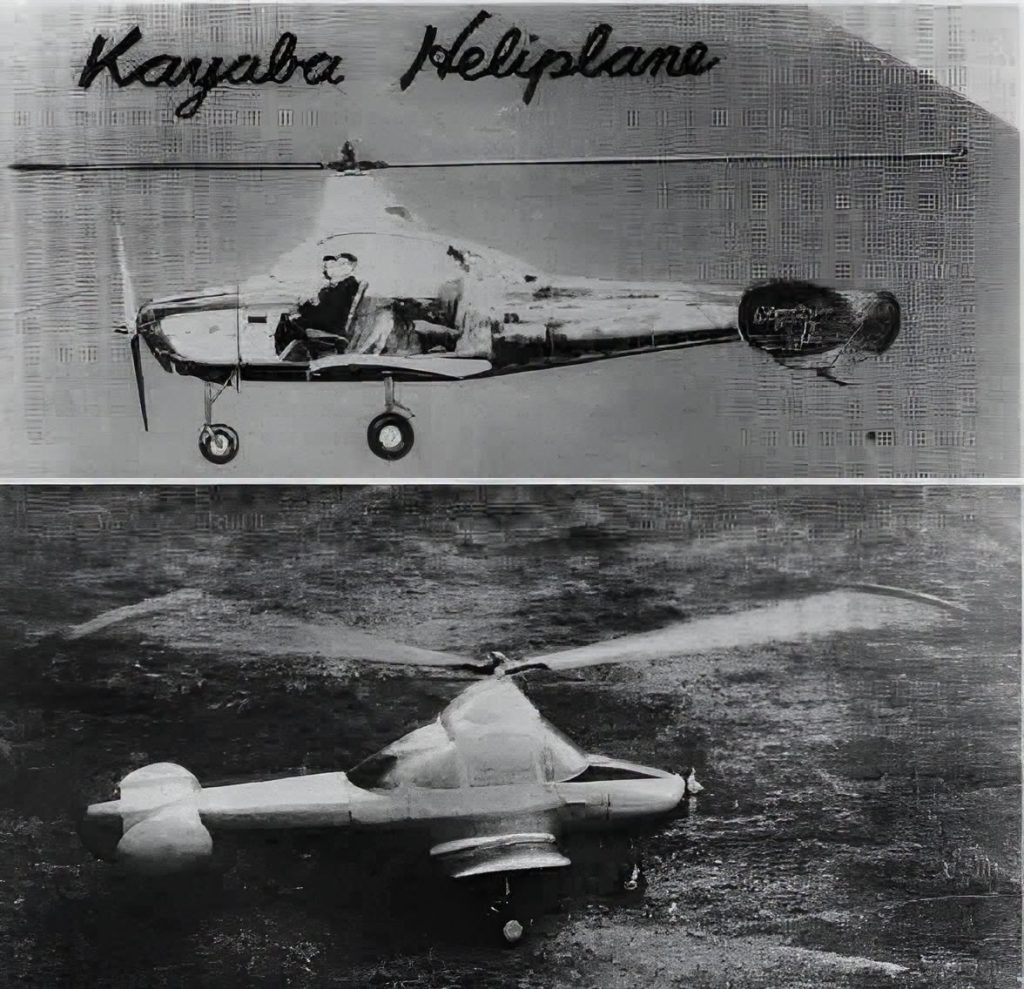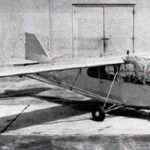



In March 1952, Japan’s Kayaba Industry began work on the Heliplane, a type of gyrodyne that combined the advantages of an autogyro and a helicopter. Kayaba drew on its experience in manufacturing the Ka-Go Ka-1 and Ka-2 autogyros, designed for reconnaissance, artillery spotting, and anti-submarine work during WWII. Kayaba received 2 million yen from the Japanese government to develop a Kayaba Heliplane. Additionally, Ishikawajima Heavy Industries (IHI) contributed 1.2 million yen for the rotor-tip ramjets. The Kayaba Heliplane was based on the Cessna 170B. The original wing was removed, and a three-blade main rotor was added to the top of the fuselage. Short fixed wings were also attached to the lower fuselage.
Design of Kayaba Heliplane
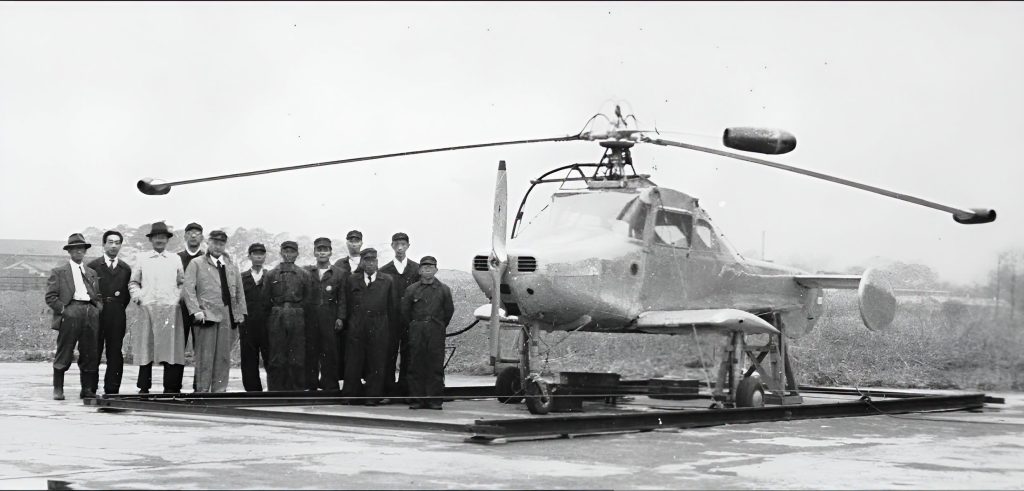
For initial testing, the Kayaba Heliplane retained the fixed-pitch wooden propeller from the Cessna 170, but a three-bladed variable-pitch propeller was planned for flight testing. Ishikawajima developed the Ne-0 ramjet during the war and tested it under a Kawasaki Ki-48-II. It was planned to use an improved version of this ramjet to power the rotor. During takeoff, the ramjet engines mounted at the rotor tips would start the rotor, and then the aircraft would switch to propeller power after the ramjets shut down. The Kayaba Heliplane was 24.3 feet long, 9.3 feet high, with a wingspan of 9 feet, a main rotor diameter of 36.1 feet, and a main rotor area of 1,020 square feet.
The Cancellation
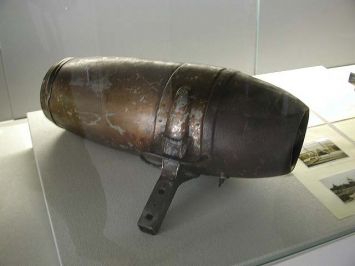
The aircraft was powered by a single Continental Motors air-cooled six-cylinder horizontally-opposed piston engine, specifically the E-190 model, producing 180 horsepower. It also had three rotor-tip ramjets, each producing 55 lbf of thrust. The Kayaba Heliplane was expected to have a top speed of 110 mph, with a cruise speed of 75 mph, a range of 220 miles, and a service ceiling of 13,000 feet. In March 1954, a prototype aircraft was built and nearly finished. However, in July 1954, the aircraft was damaged during testing, and development was stopped before the aircraft could be flown. Read more Grounded Dreams articles HERE.