
A Flying Fortress With an Unusual Wartime History
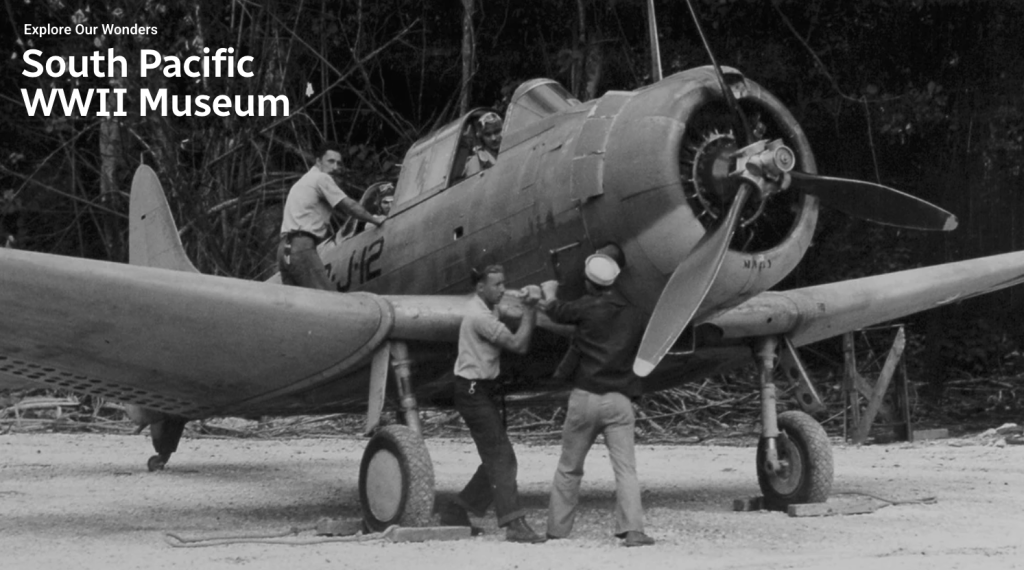
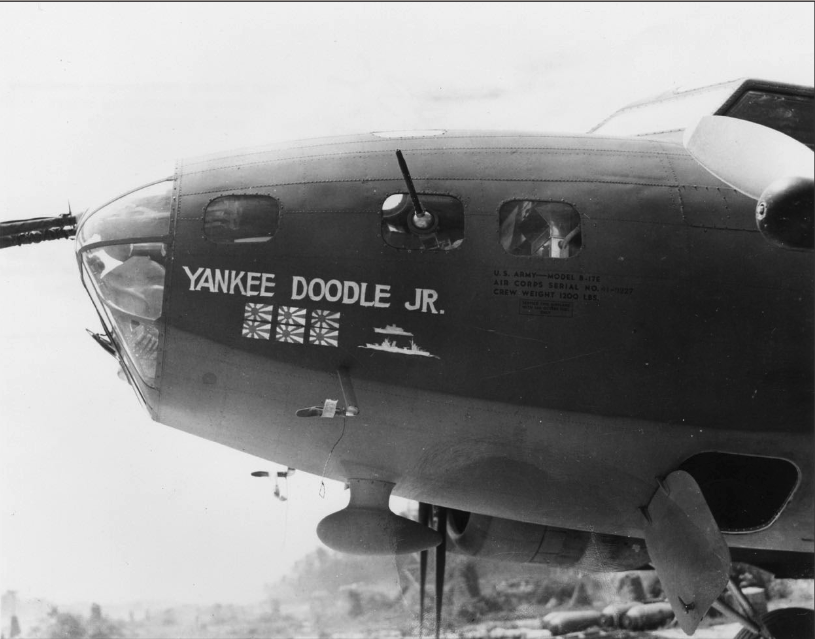
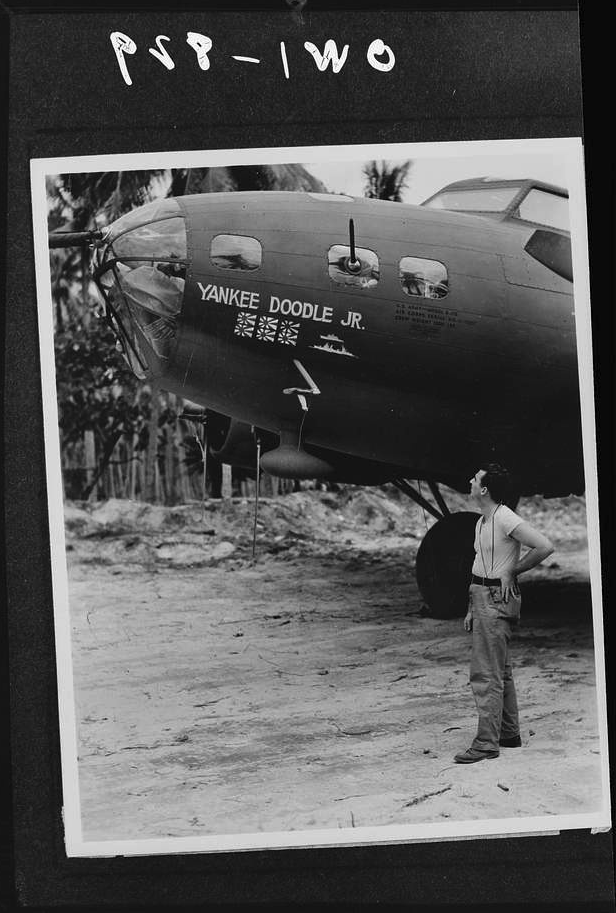
Built by Boeing in Seattle under constructor’s number 2699, Yankee Doodle Jr. was delivered to the U.S. Army Air Forces as serial number 41-9227. The aircraft subsequently deployed to the South Pacific, where it served with the 431st Bombardment Squadron, 11th Bombardment Group, Thirteenth Air Force, operating from Espiritu Santo. Its final flight, however, was not a combat mission. According to the South Pacific WWII Museum, the bomber was dispatched on December 31, 1942, to collect additional beer supplies from Fiji ahead of New Year’s Eve celebrations. What might otherwise have become an unusual anecdote of wartime life ended in tragedy shortly after takeoff. Captain Jack N. Levy was piloting the B-17, accompanied by First Lieutenant Robert B. Andrews, when the aircraft departed Bomber No. 1 Airfield at Pallikulo Bay. According to the museum’s account, the engines had not reached their proper operating temperature before departure, and the aircraft suffered a loss of power on one side shortly after becoming airborne. The Flying Fortress crashed before leaving Espiritu Santo. Levy was killed in the accident, while Andrews sustained severe injuries and subsequently died. Both men were officially recorded as having died on December 31, 1942, and are buried at the National Memorial Cemetery of the Pacific in Honolulu, Hawaii. The museum also cites the official accident report, which described the circumstances in unusually direct language, recording that the aircraft had “crashed Espiritu Santo on liquor ride.” A complete history of this aircraft is available on Pacificwrecks.com.
Eight Decades in the Jungle
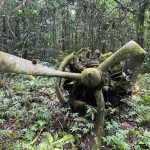
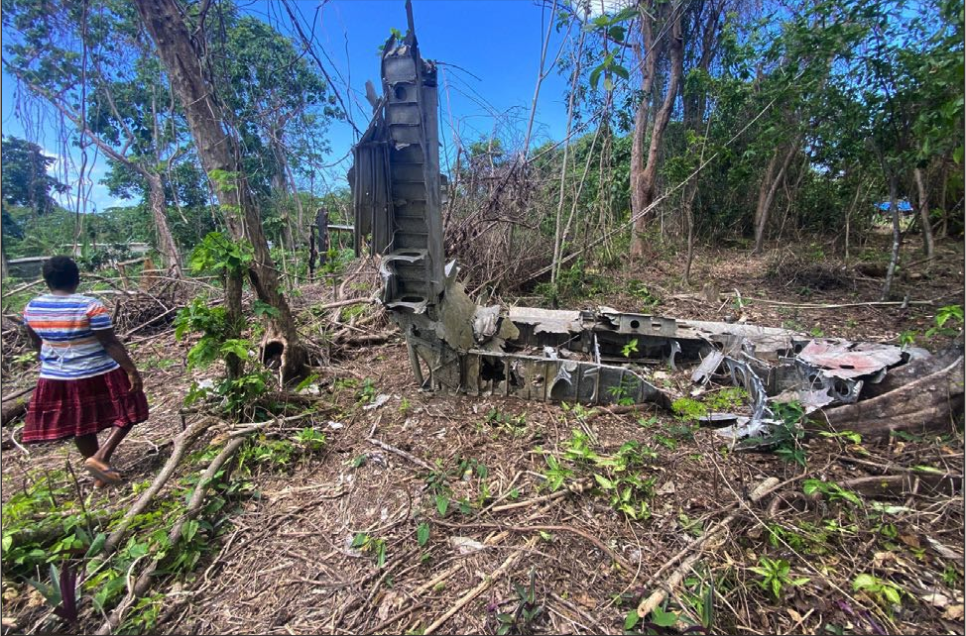
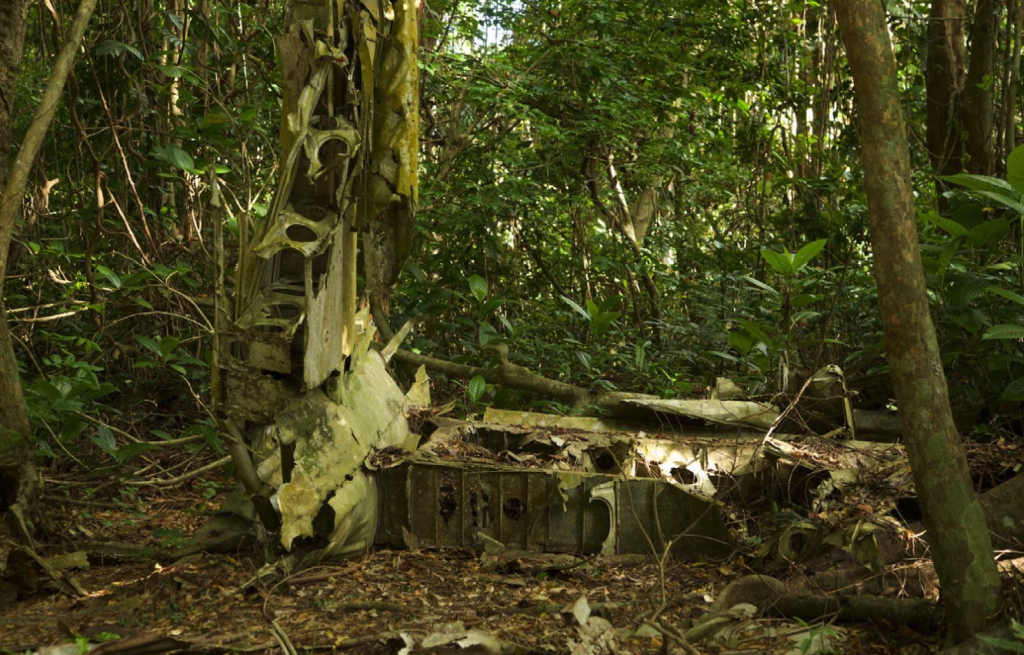
Following the accident, the wreckage remained near the crash site, where the surrounding jungle gradually reclaimed it. Over the following decades, trees and vines grew through the airframe, while heavy rainfall, tropical humidity, cyclones, and salt-laden air accelerated the deterioration of its aluminum and steel structure. Human activity contributed to the aircraft’s decline. According to the museum, various components disappeared over the years, although the circumstances surrounding their removal are not always clear. Some pieces were apparently taken as souvenirs, while others may have been salvaged for spare parts, scrap metal, or alternative uses. Additional damage resulted from people cutting or piercing sections of the aircraft’s skin. Despite this deterioration, several substantial components survived. Among the most recognizable are the aircraft’s Wright Cyclone radial engines, wing sections, and the vertical stabilizer, which remains attached to part of the rear fuselage. Other recovered pieces have yet to be positively identified. Although Yankee Doodle Jr. was no longer a substantially complete aircraft, the surviving wreckage continued to attract visitors and aviation enthusiasts interested in the island’s extensive WWII history.
Negotiations Secure the Aircraft’s Future
The South Pacific WWII Museum had long recognized the importance of preserving the remaining wreckage, but its location on privately owned land presented a significant obstacle. Any recovery effort required the agreement of the landowner, and for years no practical arrangement could be reached. The situation became increasingly urgent when portions of the property began to be sold and the possibility of development emerged. Museum officials feared that the surviving aircraft components could be removed or disposed of, potentially ending any opportunity to preserve the wreckage as part of Espiritu Santo’s wartime heritage. Museum Chairman Bradley Wood subsequently led negotiations with the landowner, seeking an agreement that would allow the historic material to be transferred to the museum. According to the museum, the discussions continued for several weeks and involved numerous proposals and counterproposals. Eventually, the landowner agreed to donate the surviving remains of Yankee Doodle Jr. to the South Pacific WWII Museum. The agreement marked a major breakthrough, but it also presented the museum with a considerable logistical challenge: removing large, deteriorated aircraft components from a site where they had remained for more than eight decades.
A Challenging Recovery Operation
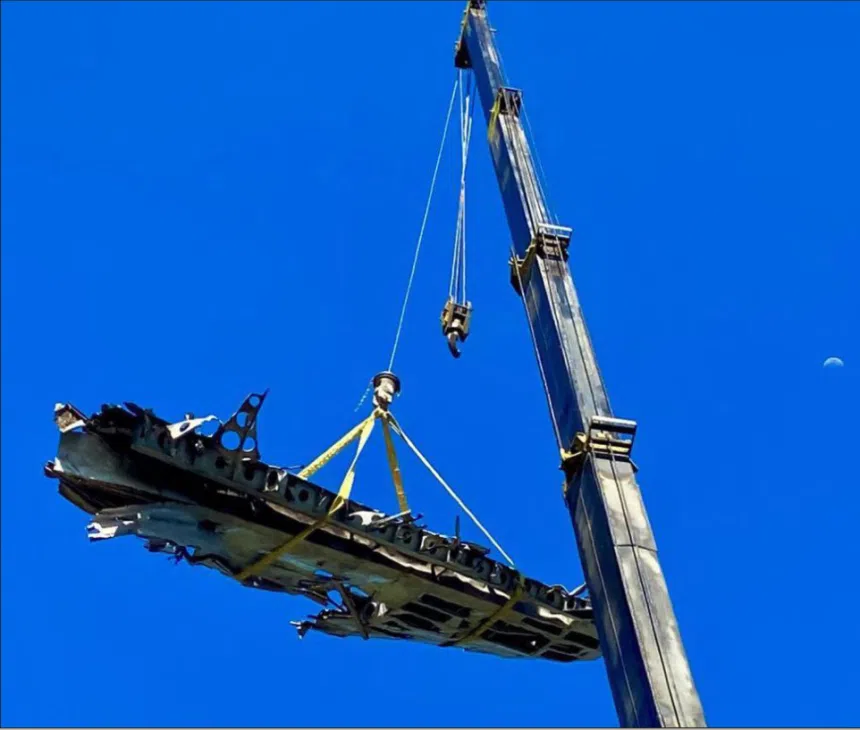
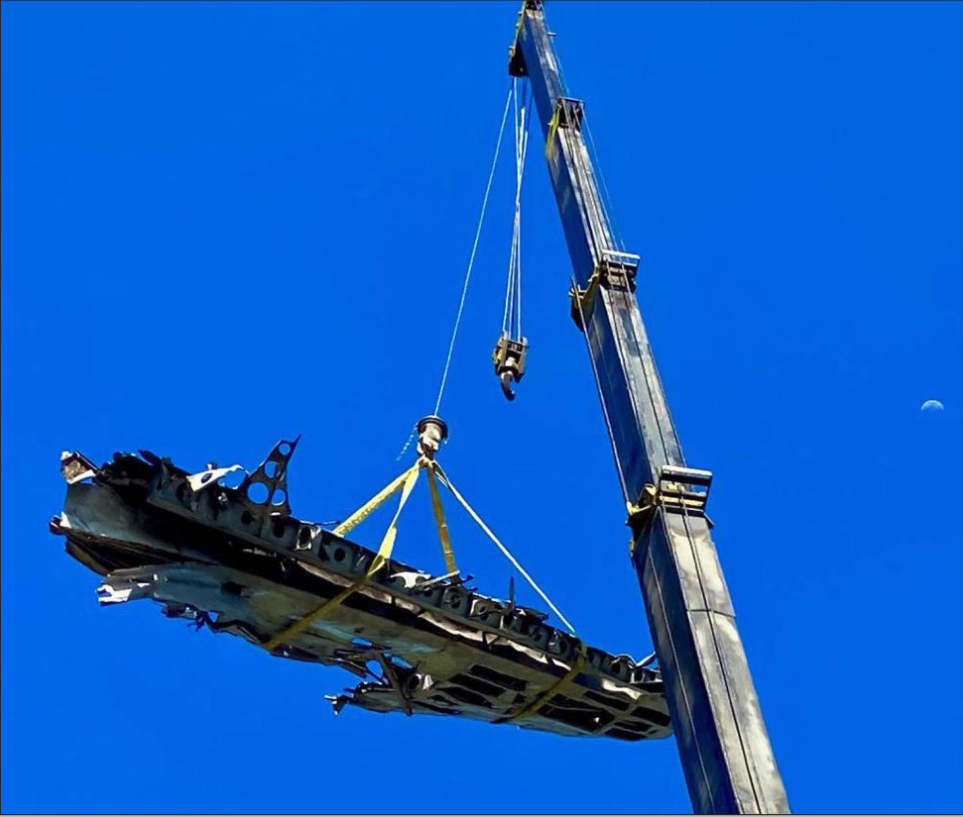
Recovering the wreckage required a coordinated effort involving personnel, heavy equipment, and extensive site preparation. Teams worked through the remaining vegetation, using chainsaws to clear trees that had grown around and through the aircraft’s surviving structure. The heavier components required mechanical assistance. A crane was brought in to lift sections of the aircraft, while trucks were used to transport the recovered material from the site. Among the components documented during the operation was a section of the B-17’s horizontal stabilizer, which was lifted by crane and placed aboard a waiting truck. The museum acknowledged the important assistance provided by Santo Hardware, which supplied the crane and trucks necessary for the operation. Particular recognition was given to the company’s general manager, Leighton Shearer, for supporting the recovery effort. The involvement of local businesses proved essential to a project that required resources and equipment beyond those normally available to the museum. Rather than attempting to recover an intact aircraft, the operation focused on safely removing and securing the historically significant components that had survived decades of exposure.
Preservation and Future Display
With the wreckage now in the museum’s possession, attention is turning to documenting, conserving, and interpreting the recovered material. The first stage will involve a comprehensive inventory of the surviving components. Each item will need to be identified, photographed, and assessed to establish its condition and determine its original position within the aircraft. While some components are immediately recognizable, others will require additional research before they can be properly cataloged. The museum will then evaluate how best to preserve the material and incorporate it into future displays. One of the more substantial surviving artifacts is a Wright Cyclone R-1820-97 engine, the type that powered the B-17E. According to the museum, the engine will be cleaned and eventually placed on display at its facility in Luganville. The recovery is particularly significant because the aircraft’s remains had been exposed to environmental deterioration for more than 80 years. Bringing the components into the museum’s collection provides an opportunity to document their condition and preserve the surviving evidence of the bomber’s wartime service and final flight. For the South Pacific WWII Museum, the project also represents an opportunity to tell the story of Captain Levy and Lieutenant Andrews, whose lives were lost in an accident that occurred far from the aerial battles more commonly associated with the Flying Fortress. Although Yankee Doodle Jr. will not return as a complete aircraft, its surviving components will help illustrate the enormous American military presence on Espiritu Santo during WWII and the many different circumstances in which aircraft and their crews were lost. The museum’s successful recovery ensures that an important part of the island’s aviation heritage will remain available for future generations to study and appreciate. For more information about the South Pacific WWII Museum, visit southpacificwwiimuseum.com

Source: South Pacific WWII Museum, September 2026 Newsletter, “Yankee Doodle Jr. Comes Home,” pages 9–11. Vintage Aviation News acknowledges the South Pacific WWII Museum for documenting the aircraft’s history and recovery. Read the original South Pacific WWII Museum newsletter