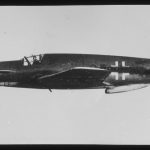


Fairey Fulmar: the Fleet Air Arm’s Unlikely Hero by Matthew Willis, reviewed by Joe May, available on Amazon.
Matthew Willis has written the authoritative book on the woefully underappreciated Fairey Fulmar. The Fulmar’s story also brings readers through the dire history of the Royal Navy’s Fleet Air Arm (FAA) from just prior to WWII through to the gaining of initiative against the Axis powers. Their histories are inextricably intertwined. Flight crews of the Fulmar experienced naval disasters, mass evacuations, desperate interception efforts, endless patrolling, desperate convoy escort, and adverse weather. Through it all, the Fulmar and its aircrews persevered and prevailed in an inferior aircraft for its day, one with odd mechanical issues, yet were effective—often against terrific odds. Willis tells the Fulmar’s story from the first Fairey design by Marcel Lobelle through naval actions spanning tens of thousands of miles across the North Sea, the Mediterranean Sea, the Atlantic Ocean, and the Indo-Pacific. Willis tells of the Fulmar’s excellent handling qualities—quoting no less than Eric “Winkle” Brown—as well as its gremlins. The Fulmar’s flight characteristics were forgiving, but landing gear failures to retract, as well as the machine gun armament being generally poor for the day and frequently malfunctioning, were constant companions.

Fairey Fulmar enlightens readers with the eventualities of poor decision-making made by Great Britain, Fascist Italy, Nazi Germany, and Imperial Japan. Willis details and explains how the FAA was all but starved of funding to favor the Royal Air Force (RAF). While RN aircraft carriers lacked modern fighter designs, the RAF had the Spitfire and the Hurricane. The FAA was made to make do with the biplane Sea Gladiator and multirole Fulmar for its fighters. In the same fashion, the Luftwaffe and Regia Aeronautica did the same to each of their naval counterparts—Nazi Germany through miscalculation and igniting WWII in Europe years earlier than planned, and Fascist Italy thinking the Italian peninsula was, in effect, an unsinkable aircraft carrier.

Aircrews in Fulmars were tested often in the first few years of WWII, beginning when Great Britain declared war against Hitler to defend another country against his totalitarian aggression—the only Allied country forward-thinking enough to do so. They were tested early in a politically ordered carrier raid off the Norwegian coast. Tested defending Crete then evacuating Crete. Tested again defending Greece then evacuating Greece. Fulmar aircrews flew reconnaissance as well as fighter missions throughout and suffered casualties while defending the fleet. The Fulmar was heavy for a fighter, back in the day, primarily since the FAA required a second crewman position, that of navigator/observer, given anticipated long missions over the North Sea with its mercurial weather. Oddly, this rear position was not an armed one—sans machine gun, unlike the Fairey Swordfish and Albacore. This omission was never to be rectified. Though, oddly, rear seaters were issued Thompson submachine guns as a remedy. How many magazines, or types of magazines (box or drum), were not mentioned—or needed to be.

Perhaps Fulmar crews were tested most harshly in the Mediterranean Sea during the casualty-inducing early convoy runs to supply Malta and Alexandria. Ship losses were high, extremely high, but absorbed in order to at least sustain Malta as well as inhibit Rommel’s advances in the Middle East to gain the Suez Canal as well as the region’s rich oil fields. Fulmars were able to provide combat air patrols in the western Mediterranean Sea since the attacking aircraft were floatplanes, flying boats, or medium bombers. Although the Fulmar’s eight .303 caliber machine guns often could not provide enough weight of fire. As Willis’s research clearly shows, this armament lacked the offensive punch required to reliably bring down robustly built aircraft but was enough to damage aircraft and deter attacks. The range from land bases was too great for fighter aircraft to escort the attacking bombers—a result of denying aircraft carriers to the Kriegsmarine as well as the Regia Marina. The RN was fortunate in this. Willis brings readers into the tedium Fulmar aircrews faced when intercepting surprise sea-skimming aerial torpedo attacks or conventional horizontal bombing runs. The Fulmar’s Merlin engines struggled to gain speed or altitude in time, all the while. Willis notes how desperate these convoy runs were in that FAA aircrews forced to ditch into the sea often were abandoned as no destroyer escort vessel could be spared for rescue missions. Credit Willis for writing of the heroism as well as the too-often poorly recalled, if at all, reality of this warfare. Convoys toward and returning from Alexandria in the eastern Mediterranean Sea were even more desperate, and Fulmar aircrews on combat air patrol suffered losses against opposing single-seat fighters. Willis has readers feeling the danger, the fatigue, and the relentless drive of Fulmar aircrews through his skillful writing as well as rich research.

After Arctic convoy duty, then Mediterranean convoy duty, came Imperial Japan’s entry into WWII. The FAA again found itself disadvantaged but very unlike against the Kriegsmarine and Regia Marina. The FAA was entirely outclassed by the Imperial Japanese Navy (IJN) aviation with its aircraft types that were leading edge for their time, as well as the number and capability of its aircraft carriers. Willis recalls the desperate and calculated moves by the RN to counter the IJN initial rampage across the Indian Ocean and western Pacific Ocean. The RN was spread too thin, and there was little miscalculation with the IJN regarding the modern employment of carrier-borne naval aviation to project power. Willis describes in dramatic detail how Fulmar aircrews valiantly tried to mitigate these early naval disasters of Great Britain and save what could be saved. Fulmars, of course, had no edge to employ against the IJN, as Willis objectively writes. The RN had no poor decision on the part of the IJN to exploit as had occurred with the Axis powers in Europe. Fulmar crews suffered but endeavored to prevail as Willis amazingly details. No aircraft flown by the FAA can be celebrated in a book without the opinion of the renowned Eric “Winkle” Brown. Brown’s observations and considered opinion are contained within an inset on Page 153. He makes for an interesting read.

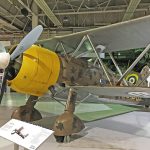
Fairey Fulmars and their aircrews participated in almost every challenge given to the RN in the harrowing early WWII years. Fulmars flew reconnaissance and fighter missions in arctic weather conditions, surrounded above and below in the Mediterranean Sea, and facing a clearly superior foe in the Indo-Pacific operational area. Fulmars were subsequently supplanted in their fighter role by Grumman Martlets (Wildcats in U.S. Navy service)—but it was the Fulmar that scored the most downed aircraft by any FAA fighter type during WWII. It was the Fulmar that defended the fleet and forced opposing bombers to jettison untold numbers of warloads in the years when the Axis air forces were at their pinnacle. Yet the Fulmar is unheralded today, with only one example on display in a museum (the Fleet Air Arm Museum, Yeovilton, UK). Thankfully, Matthew Willis has fixed this unforced error.

The Fairey Fulmar served well during the RN’s desperate early years of WWII and helped hold the line—all the more reason it and its aircrews should be celebrated. Fairey Fulmar: the Fleet Air Arm’s Unlikely Hero accomplishes this extraordinarily well. The written material is enhanced with color profiles by the artist. Willis’s book, Fairey Fulmar: the Fleet Air Arm’s Unlikely Hero, belongs in naval aviation history library spaces in particular. Note: Crowood Press is distributing the book in the UK, and it is available for pre-order on Amazon for U.S. and Canadian customers.
| Hardback
Publisher: The Crowood Press (August 2026) Size: 260mm (10¼”) x 215mm (8½”) Index: ✔︎ Bibliography: X Notes: ✔︎ (endnotes) Photos: ✔︎ (tons) Cost: £30/$37 ISBN: 978-0-7198-4864-7 Page Count: 176 Available on Amazon |