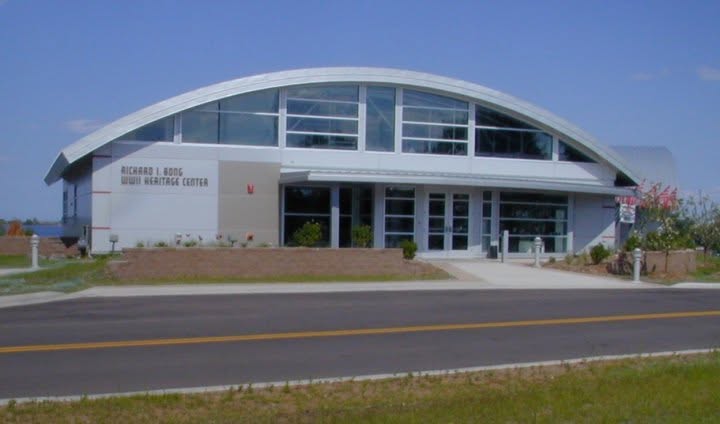

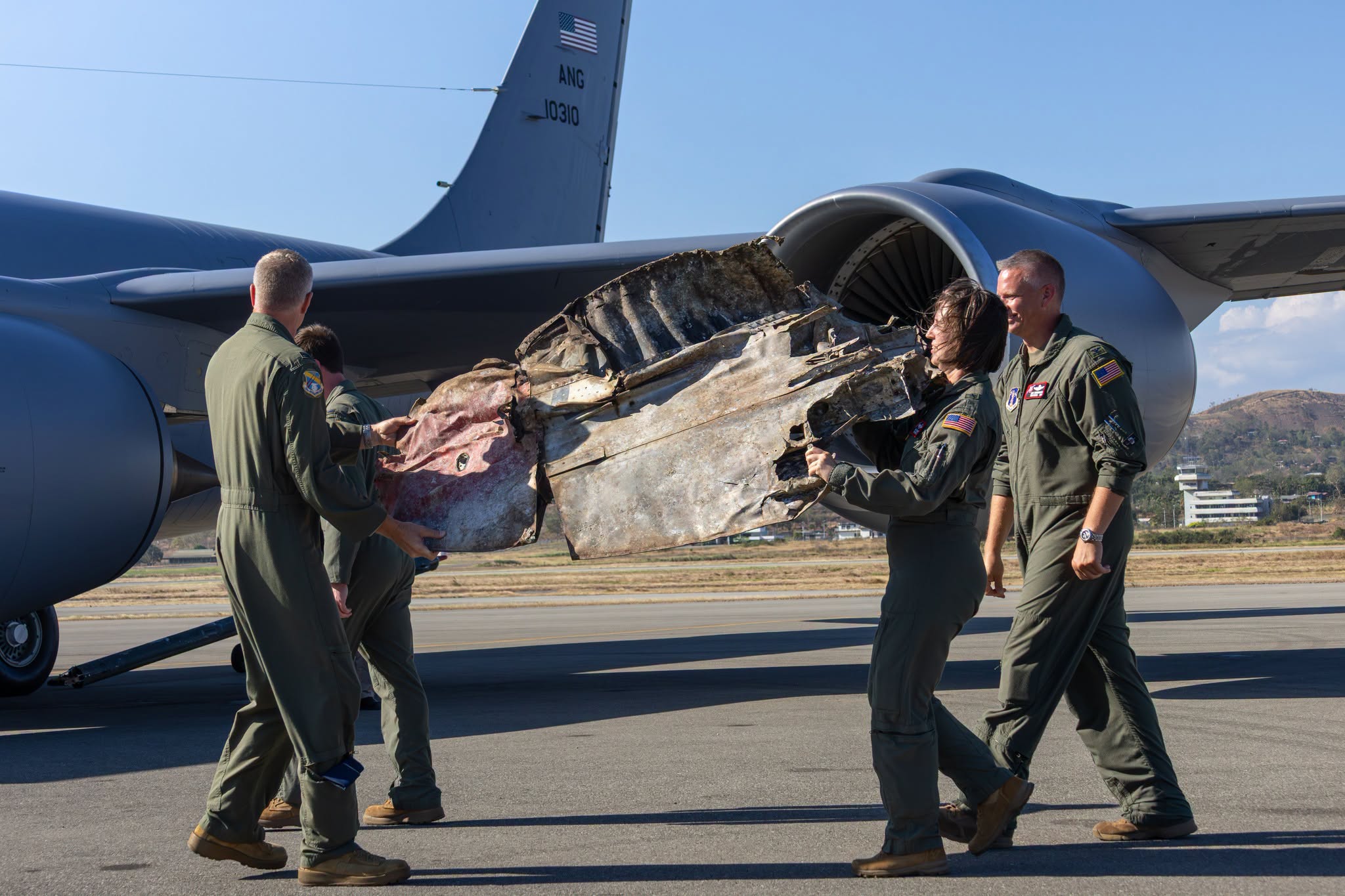
In the spring of 2024, media outlets reported on the discovery of the wreckage of a Lockheed P-38 Lightning ‘Marge’ assigned to America’s ace of aces of WWII, Major Richard Ira Bong, resting where it crashed in the mountainous jungles of Papua New Guinea. The discovery was made by Justin Taylan, the founder of Pacific Wrecks, in partnership with the Richard I. Bong Veterans Historical Center in Bong’s birthplace of Superior, Wisconsin. Now, the wingtip from this very P-38 has been brought to Wisconsin by the Wisconsin Air National Guard, and after being displayed at EAA AirVenture 2026 at Wittman Regional Airport, Oshkosh, Wisconsin, this aviation artifact from the P-38 flown by Bong, who named the aircraft for his girlfriend Marge, will go on display at the Richard I. Bong Veterans Historical Center.
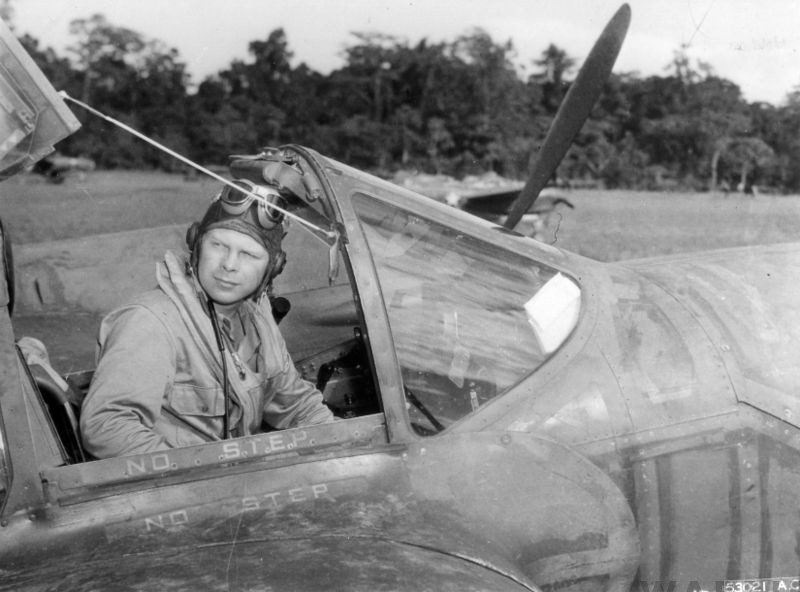
Richard Bong remains one of the most celebrated public figures in military history, and as America’s ace of aces, his 40 confirmed aerial victories remain unbroken to this day. Though Bong was born in the city of Superior, Wisconsin, on September 24, 1920, he was raised on his family’s farm in Poplar. As a child, he was inspired to fly after seeing airplanes flying over his farm to deliver mail to President Calvin Coolidge while he was on vacation at the Cedar Island Lodge near Brule, Wisconsin. Bong would later learn to fly through the Civilian Pilot Training Program (CPTP) during his studies at the Superior State Teachers College (today the University of Wisconsin-Superior). Bong enlisted in the U.S. Army Air Forces on May 24, 1941, and became a flight instructor on North American AT-6 Texan trainers, then learned to fly the Lockheed P-38 Lightning. In September 1942, he was sent to Australia and was assigned to the 9th Fighter Squadron, 49th Fighter Group, 5th Air Force, in November 1942 and entered combat against the Japanese. Between November 1942 and November 1943, Bong was credited with 21 victories before being sent back to the United States from December 1943 until returning to New Guinea to start his second tour of duty in February 1944. Before returning to New Guinea, though, he met and fell in love with a young student from his college back in Wisconsin named Marjorie “Marge” Vattendahl.
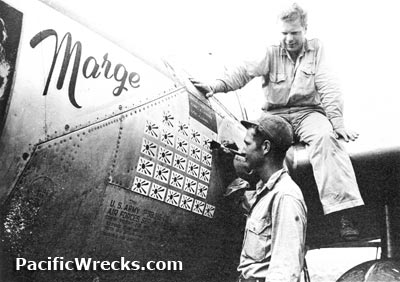
By this time, the 5th Air Force (5th AF) had started to receive the latest variant of the Lightning, the P-38J model dash 15, and among the new aircraft assigned was P-38J-15-LO 42-103993, which had been delivered to the United States Army Air Force on December 31, 1943, following its assembly at the Lockheed Aircraft Company’s plant in Burbank, California. When this aircraft was sent to the 49th Fighter Group, it was assigned to be flown by Richard Bong. Prior to this, Bong never had any distinctive markings for his assigned aircraft except for his name and tally, joking that he never had “…one aircraft long enough to paint anything on it. Too many bullet holes.” He chose to paint the nose cone, propeller spinners, wingtips, and the tips of his vertical and horizontal stabilizers. Throughout February 1944, Bong flew 15 combat missions while operating from Nadzab Airfield just outside the city of Lae. It would not be until March 1944, though, that the most famous personal touch Bong would make to P-38J 42-103993 would be made, and the aircraft would secure its place in history. On March 9, 1944, 42-103993 was down for maintenance after receiving 87 bullet holes during a mission the prior day, March 8, where Bong had to bring the aircraft back with a feathered engine, and where his close friend and fellow ace Lt. Col. Thomas Lynch was shot down by anti-aircraft fire while he and Bong were strafing Japanese barges in Aitape Harbor.
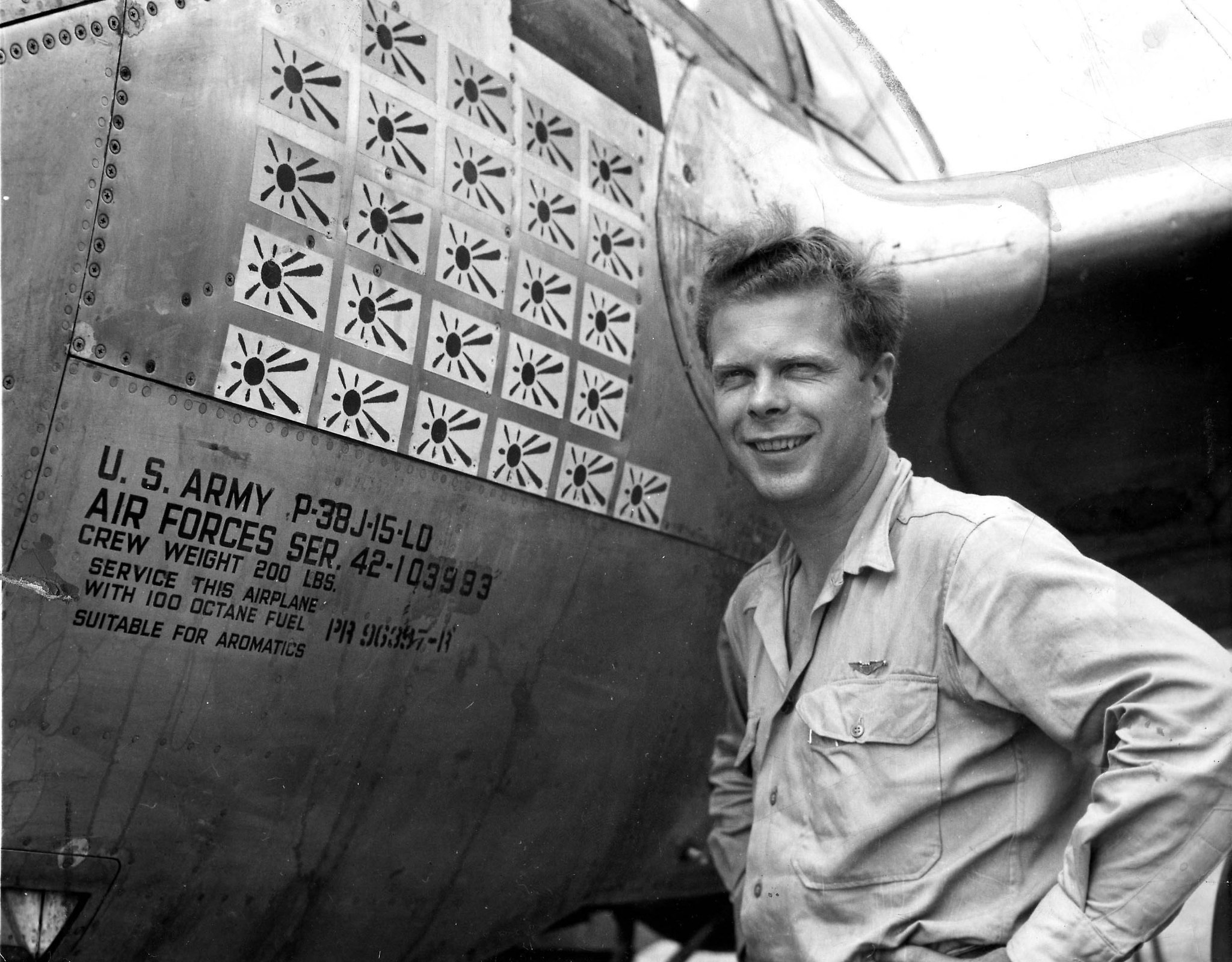
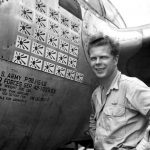
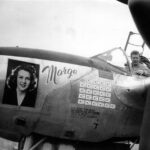
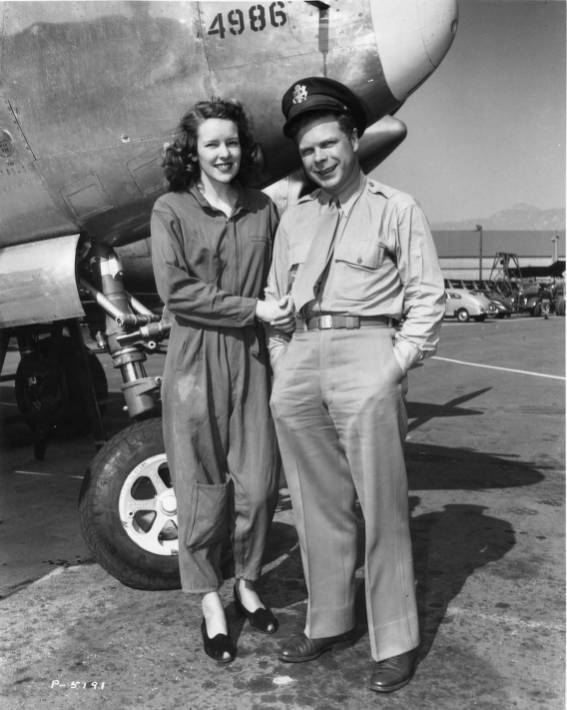
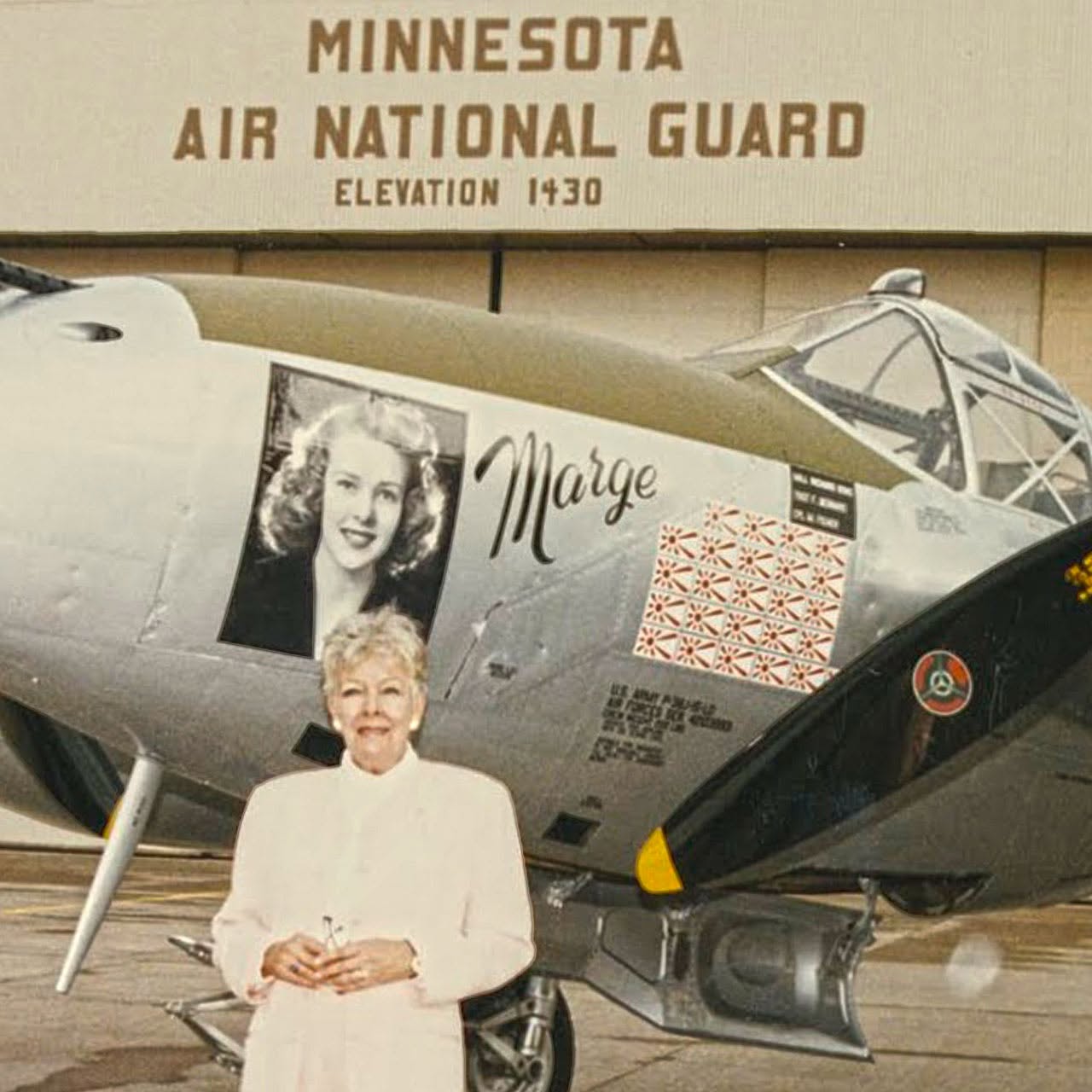
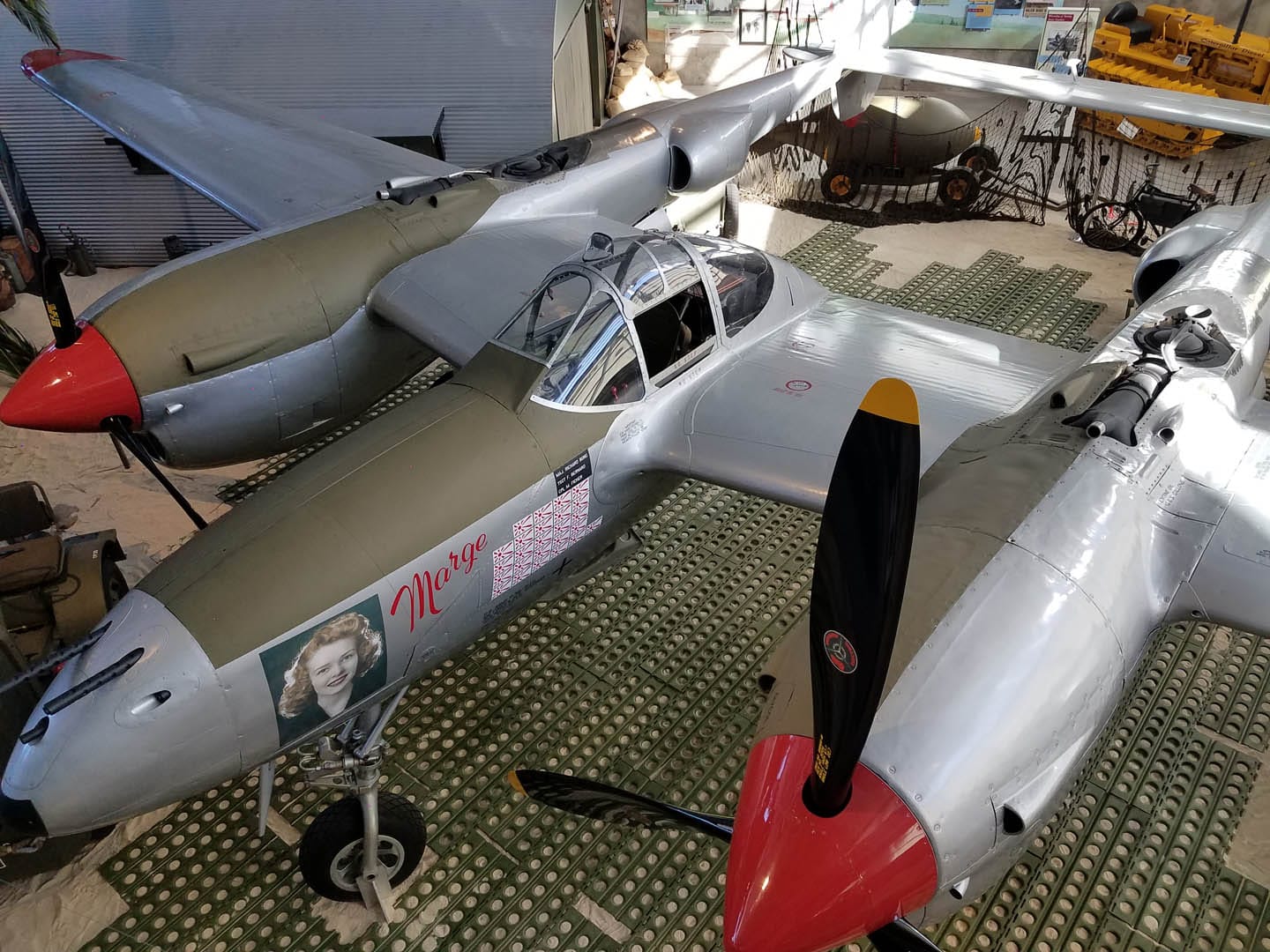
While his P-38 was being serviced, he asked Corporal James “Jim” R. Nichols, who was working in the intelligence unit, to help him customize his airplane. In his wallet, Bong had a photograph of his girlfriend Marge’s yearbook portrait, which Nichols enlarged to 20” x 24”. The left nose gun cover of 42-103993 was removed, cleaned, and the color-tinted print of Marge’s portrait glued and varnished to the metal panel that was reapplied to the aircraft. For the final touch, the nickname “Marge” was painted next to the print in a red cursive font with a white outline. Bong was later photographed next to the print of Marge on his P-38, and the image of a young fighter ace with his girlfriend’s picture on his airplane circulated across the country’s newspapers. But while the photos of Bong and his P-38 “Marge” became everlasting, the service life of P-38J 42-103993 “Marge” would be abruptly cut short.


On March 24, 1944, Marge took off from Nadzab Airfield on a weather reconnaissance mission over Wewak. But rather than being flown by Richard Bong, it was being flown by 2nd Lt. Thomas Malone, a nightfighter squadron pilot who had previously flown Marge the day prior on an earlier weather reconnaissance mission. Alongside Malone was another P-38, flown by Lt. Rolland Forrester, and shortly after both aircraft took off, the two airmen encountered heavy turbulence and overcast at 30,000 ft. Worse, Malone found issues with the left engine cooler shutters and poor radio reception. Then both Malone and Forrester lost sight of each other before hearing a radio message from Nadzab that the weather reconnaissance mission was to be canceled, and they were to return to base. Forrester made it back, but Malone was dealing with more and more issues. The aircraft’s radio failed, an engine quit, the propeller blades on that engine failed to feather, and the electrical system failed. Then the P-38 entered a spin. Malone tried to recover, but was unable, forcing him to bail out at 11,000 ft.
On bailing out, Malone was nearly knocked unconscious, and he lost his pistol; he saw snow in the clouds, and he landed unharmed near a river. After checking his bearings, Malone tried to float down the river on his life raft, but found the current to be too strong, and the rocky bottom threatened to puncture his raft. Instead, Malone spent the next nine hours walking down the river until stumbling upon a soldier from the 32nd Infantry Division, who nearly shot him before realizing Malone was an American. The division radioed Nadzab that Malone was safe with them, but the downed airman spent the night with the division, and Malone did not return to Nadzab until March 26 by way of barge and transport aircraft. Despite being upset at the loss of his P-38, Bong was glad that Malone had made it back safely, and he was later assigned another P-38, finishing his second tour of duty in May 1944 by bringing his tally to 28 aerial victories. After completing a war bond tour and attending Aerial and Ground Gunnery School at Foster Field at his own request, Bong returned to the Pacific and completed a third tour of duty between September 1944 and December 1944, bringing his total to 40 victories, becoming America’s highest-scoring fighter ace of WWII, and earning the Medal of Honor.
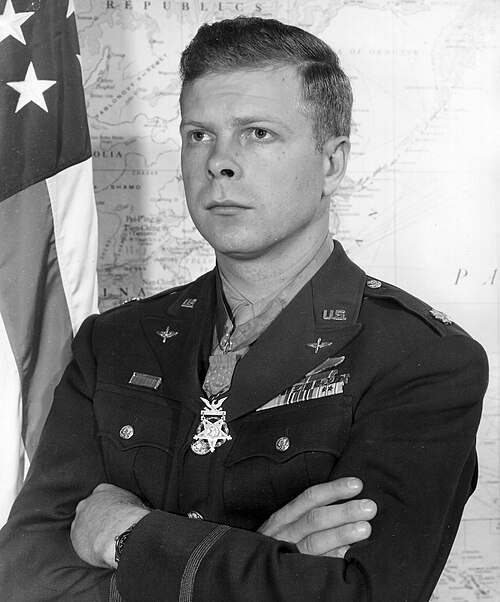
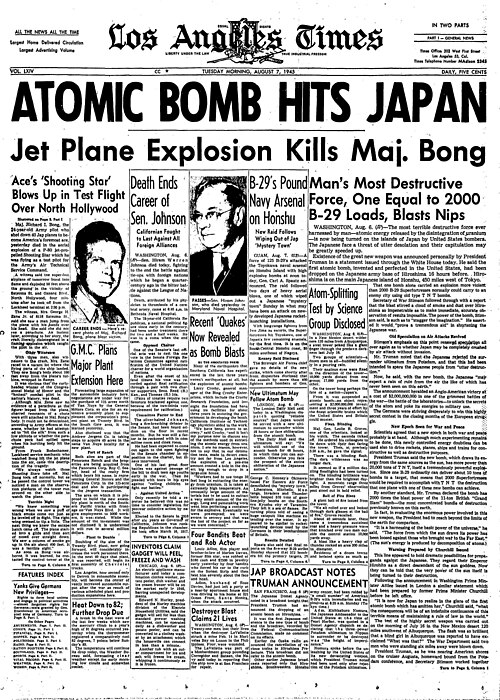
After returning from his final tour of duty, Richard Bong married Marge Vattendahl on February 10, 1945. With the end of the war in sight, Bong was reassigned as a test pilot flying the Lockheed P-80 Shooting Star, America’s first operational jet fighter. However, Bong’s life was tragically cut short when on August 6, 1945, the same day the B-29 Enola Gay dropped the atomic bomb Little Boy on Hiroshima, Japan, Bong took off in a P-80A-1-LO Shooting Star, 44-85048, from Lockheed Air Terminal (today Hollywood Burbank Airport) in Burbank, California for an acceptance flight when the main fuel pump failed immediately after takeoff. Bong steered his ailing jet for an empty plot of land before bailing out, but he no longer had sufficient altitude for his parachute to deploy and he was killed on impact, while his P-80 crashed into an empty lot near Oxnard Street and Satsuma Avenue in North Hollywood. So prominent was Bong in the wartime media that several newspapers across the country placed both the atomic bombing of Hiroshima and Bong’s death on the front page. Bong’s body was flown to Wisconsin, and America’s ace of aces was laid to rest in Poplar Cemetery in his hometown.
Wisconsin still remembers the legacy of Bong in many ways, with places named after him including the Richard I. Bong Memorial Bridge connecting Superior, Wisconsin and Duluth, Minnesota, Richard Bong Airport in Superior, and the Richard Bong State Recreation Area, built on the unfinished site of what was to be Bong Air Force Base. In 1987, Richard Bong was posthumously inducted into the Wisconsin Aviation Hall of Fame, just one year after being inducted into the National Aviation Hall of Fame in 1986. In the decades after the war, an interest grew around finding and documenting the wrecks of Allied and Japanese aircraft across the former Pacific Theater of Operations. Foremost among the active searchers in this effort is Justin Taylan, who has scoured the Pacific for over 30 years to document the wrecks of these aircraft, aids the Defense POW/MIA Accounting Agency in finding missing airmen, and, through Pacific Wrecks, maintains one of the most comprehensive and accessible archives on Asia-Pacific locations and wreckage. Additionally, Taylan collaborates with locals to find downed aircraft, and the locals of Madang Province played a vital role in the P-38 ‘Marge’ efforts.
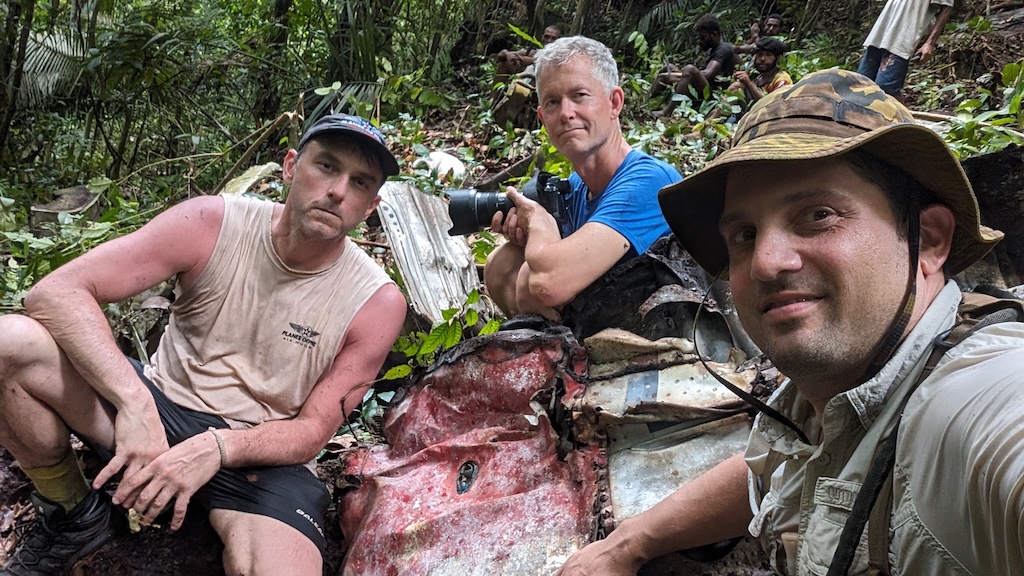
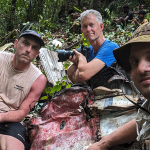
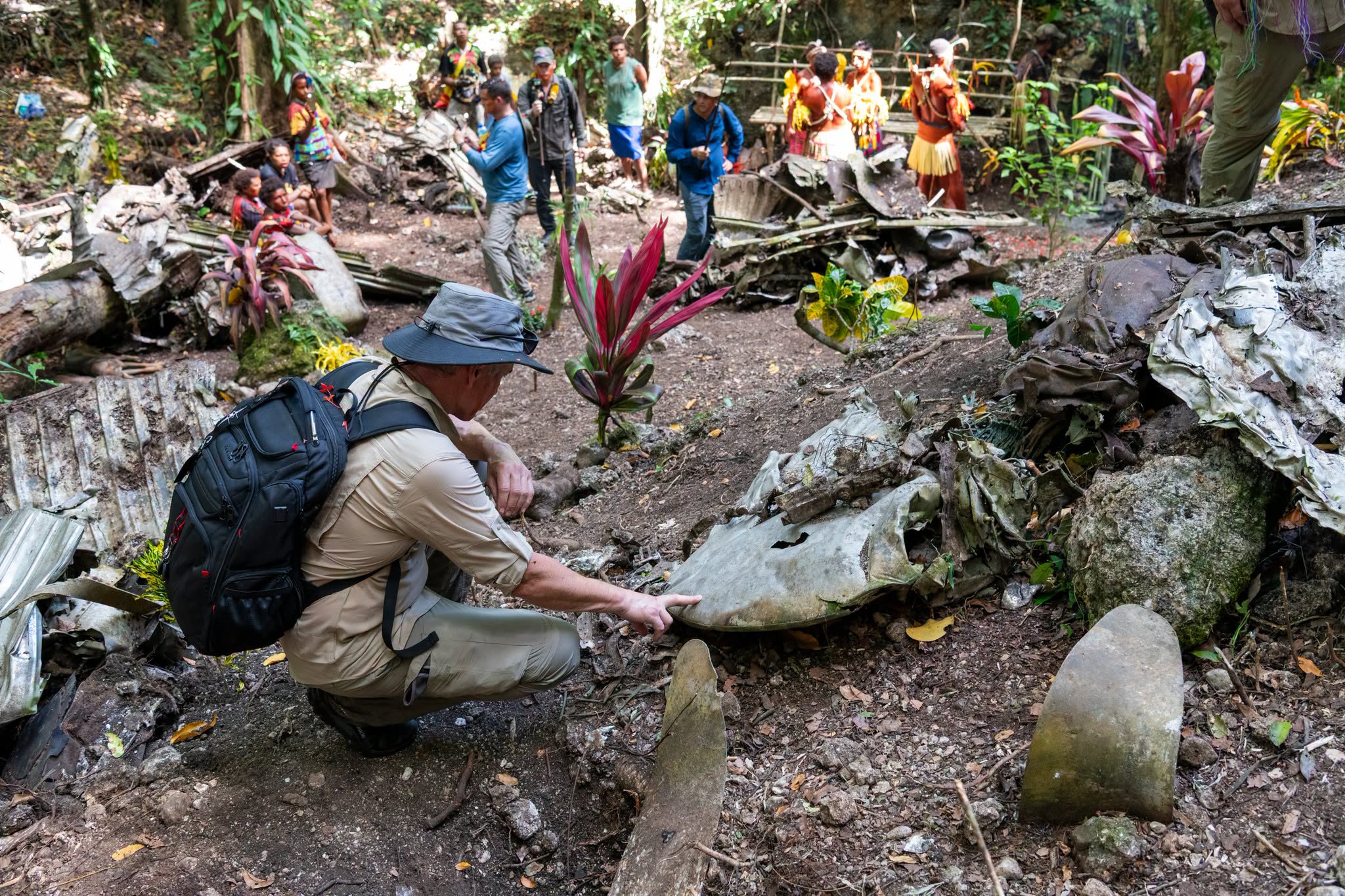
Taylan’s years of research led the Pacific Wrecks team on an expedition to search for, locate, and identify the location of the P-38 ‘Marge’. The team included Justin Taylan, Steve Kleiman and Joel Carillet. On May 16, 2024, the team discovered a previously undocumented wreck in a jungle-covered ravine. The wreck was of a twin-engine aircraft, with the protruding engines embedded into the ground, suggesting the aircraft had hit the ravine nose first. Remarkably, some of the paint and stencils had survived 80 years in the jungle, with the wingtips retaining red paint, and the stenciled number ‘993’, the last three digits of Bong’s P-38, being clearly legible. Learning of the discovery, James Bong, Richard Bong’s nephew, stated, “The Bong family is very excited about this discovery. It is amazing and incredible that ‘Marge’ has been found and identified.”


Now that the wreckage was confirmed to be from 42-103993, the Richard I. Bong Veterans Historical Center and Pacific Wrecks partnered to gain full and legal authorization to recover a piece of the P-38 for display at the Richard I. Bong Veterans Historical Center in Superior. It took two years of negotiations with the local landowners, Madang Province officials, and the Papua New Guinea National Museum and Art Gallery. Once authorization was granted, Pacific Wrecks led the 2026 expedition to recover the wingtip of ‘Marge’. Additionally, a piece of wreckage was recovered for the National Museum and Art Gallery to have an exhibit on Bong and ‘Marge’ in their newly opened Aviation Heritage Center. The wingtip will be loaned to the Bong Center on a permanent loan basis.
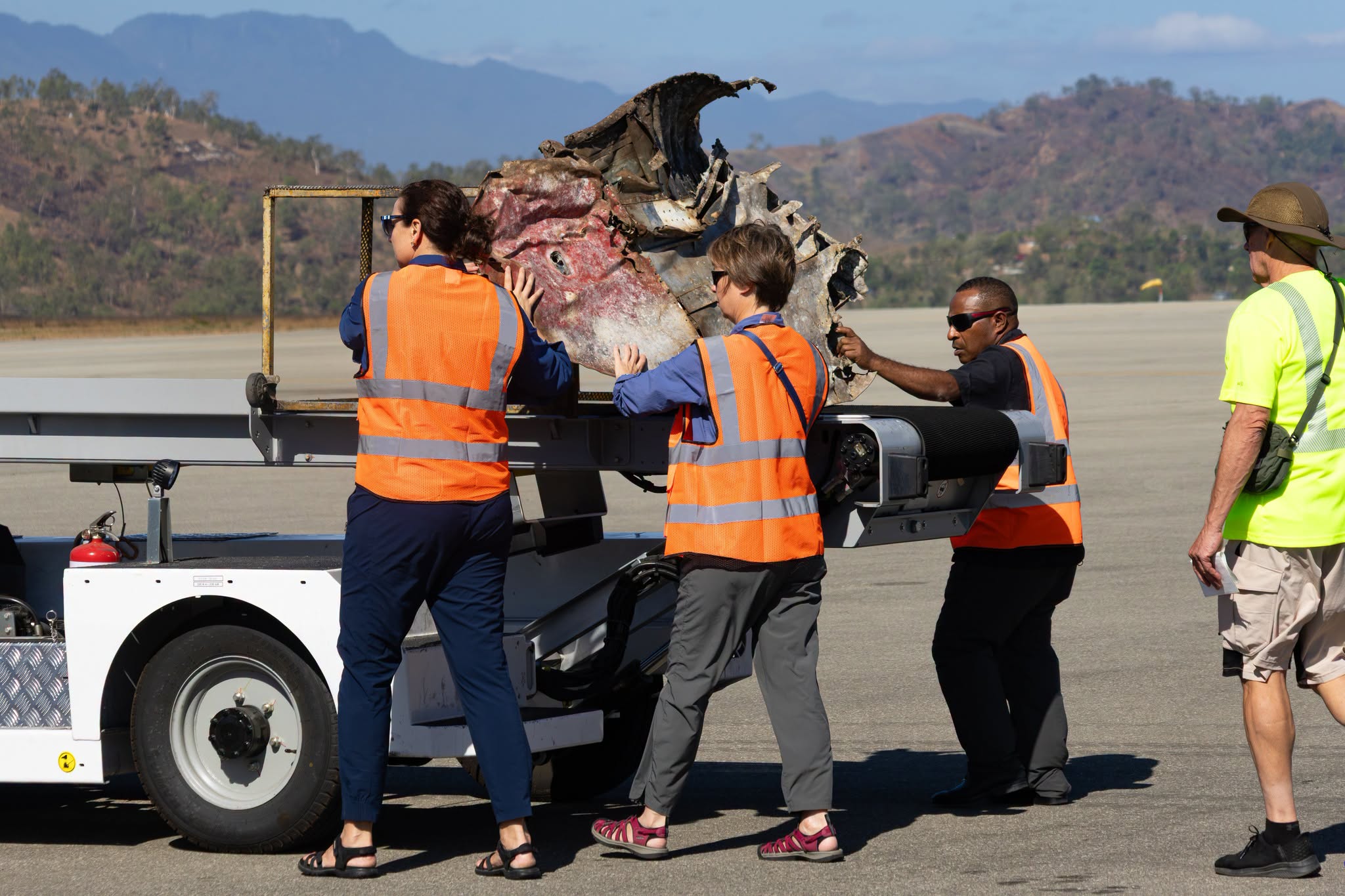
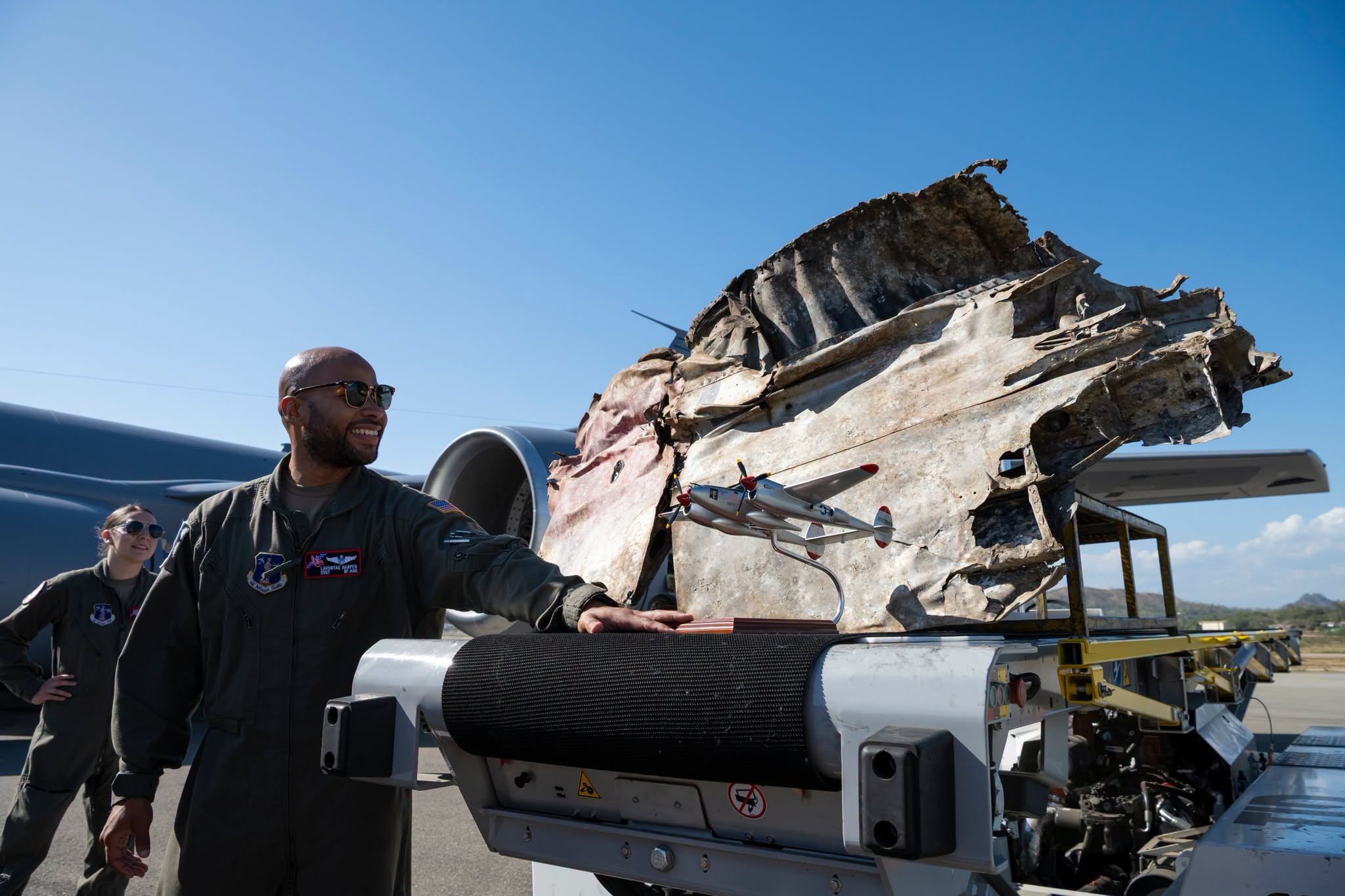
A Boeing KC-135R Stratotanker from the Wisconsin Air National Guard’s 128th Air Refueling Wing based at General Mitchell Air National Guard Base at Milwaukee Mitchell International Airport was assigned to transport the wingtip back to the United States. To aid the local community, a generous grant was provided for educational development of their local school, renamed the “Richard Ira Bong Memorial School. The first stop on American soil was Andersen Air Force, Guam, followed by a stopover at Joint Base Pearl Harbor–Hickam, Hawaii before proceeding to Wisconsin. The wingtip of 42-103993 ‘Marge’ was then brought to the EAA Aviation Museum’s Pioneer Airport at Wittman Regional Airport, Oshkosh, Wisconsin in time to make its debut at the annual EAA AirVenture airshow. Fittingly, the wingtip section of 42-103993 was displayed next to the EAA Aviation Museum’s own P-38L Lightning, 44-53087, which is painted in the colors of the original ‘Marge’.
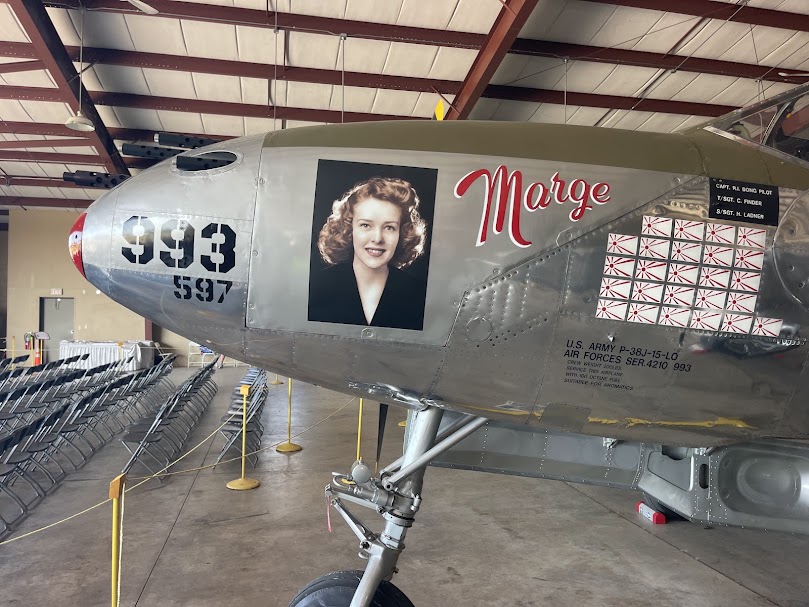
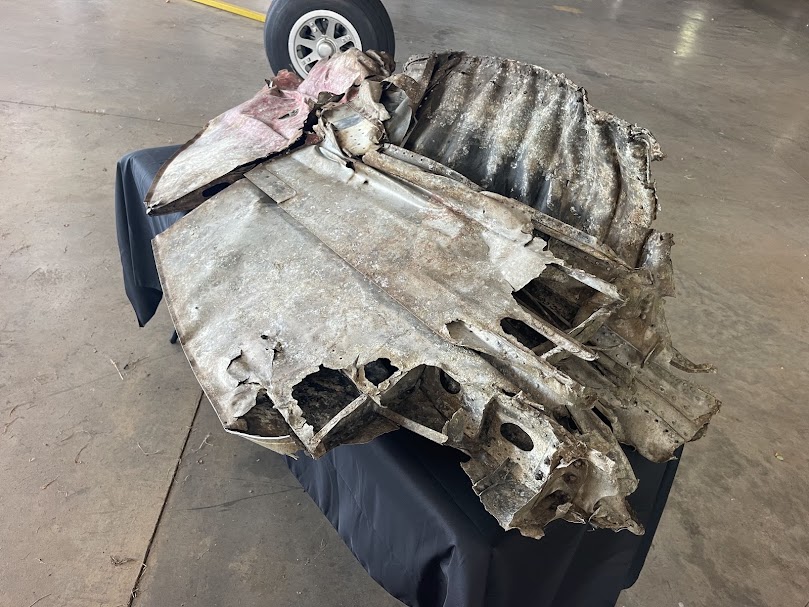
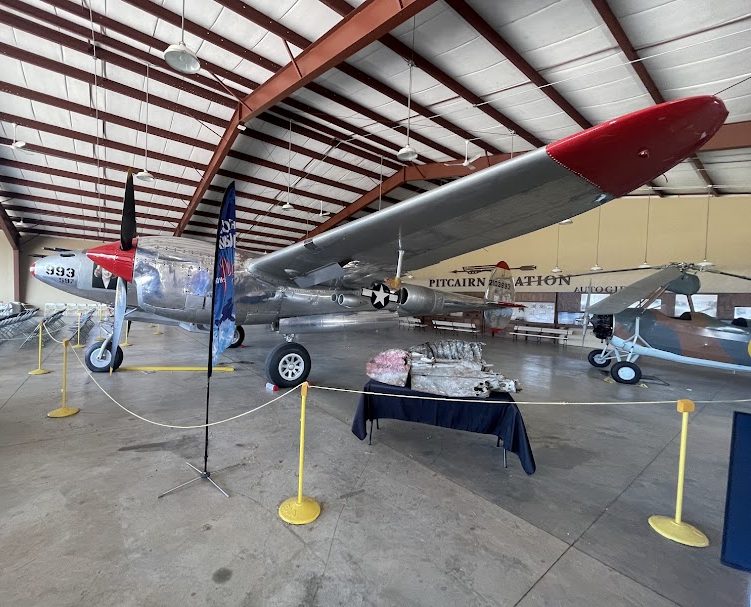
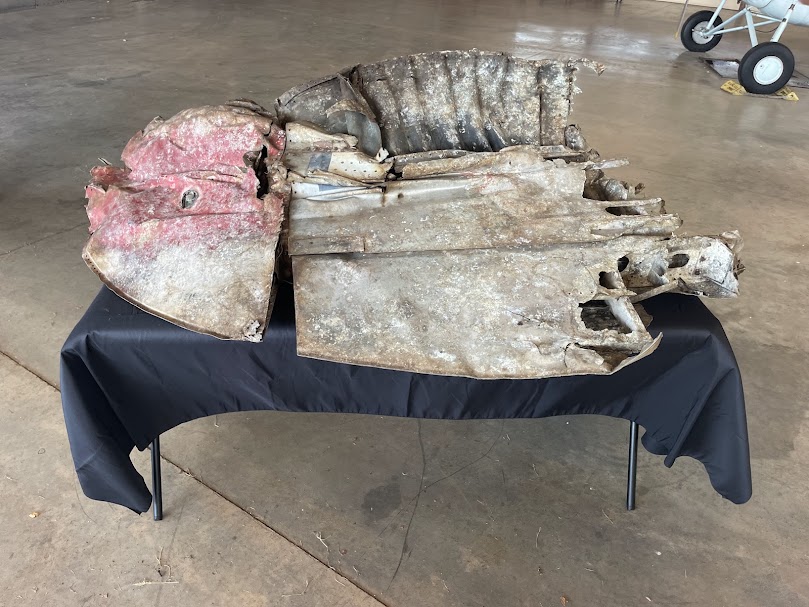
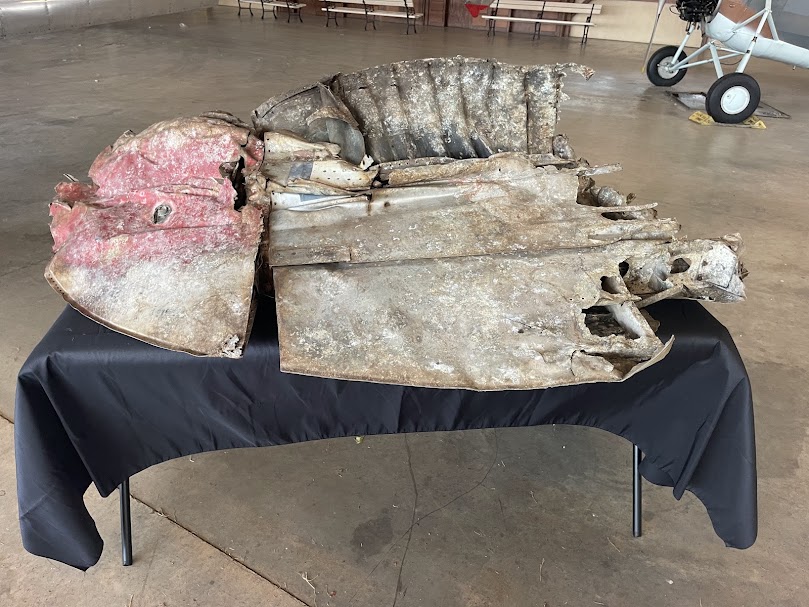
Another Wisconsin Air National Guard KC-135R later transported 2,000lbs of books donated by Wisconsin residents via the Bong Center to Papua New Guinea. Following AirVenture, the wingtip was then transported to Richard Bong’s hometown of Poplar, and after an official dedication ceremony on August 12, it will be on display at the Richard I. Bong Veterans Historical Center in Superior, where it will be displayed alongside the museum’s P-38L Lightning 44-53236 in the markings of “Marge”. After Bong’s death, Marge became a fashion model, then a magazine publisher before becoming an advocate for the Richard I. Bong Veterans Historical Center.
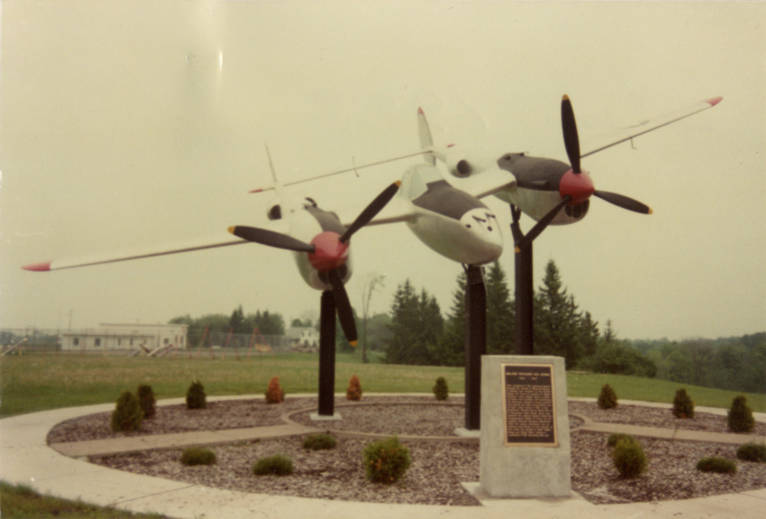
Now, the original wingtip of Richard Bong’s famous P-38 will become a lasting reminder not only of the memory of this young American airman but for the connection the people of Wisconsin have made with the people of Papua New Guinea in an international effort to commemorate the life of Richard I. Bong. For more information, visit Pacific Wrecks and Richard I. Bong Veterans Historical Center. Learn more about P-38J “Marge” on Pacific Wrecks. A documentary on the Mission Marge discovery and recovery effort can be viewed HERE. Special thanks to Justin Taylan for providing exclusive insight into this extraordinary project.