
By Randy Malmstrom
Since his childhood, Randy Malmstrom has had a passion for aviation history and historic military aircraft in particular. He has a particular penchant for documenting specific airframes with a highly detailed series of walk-around images and an in-depth exploration of their history, which have proved to be popular with many of those who have seen them, and we thought our readers would be equally fascinated too. This installment takes a look at the Western Antique Aeroplane and Automobile Museum’s Boeing Model 40C, c/n 1043, N5339, C.A.M. 8 (Contract Air Mail 8).
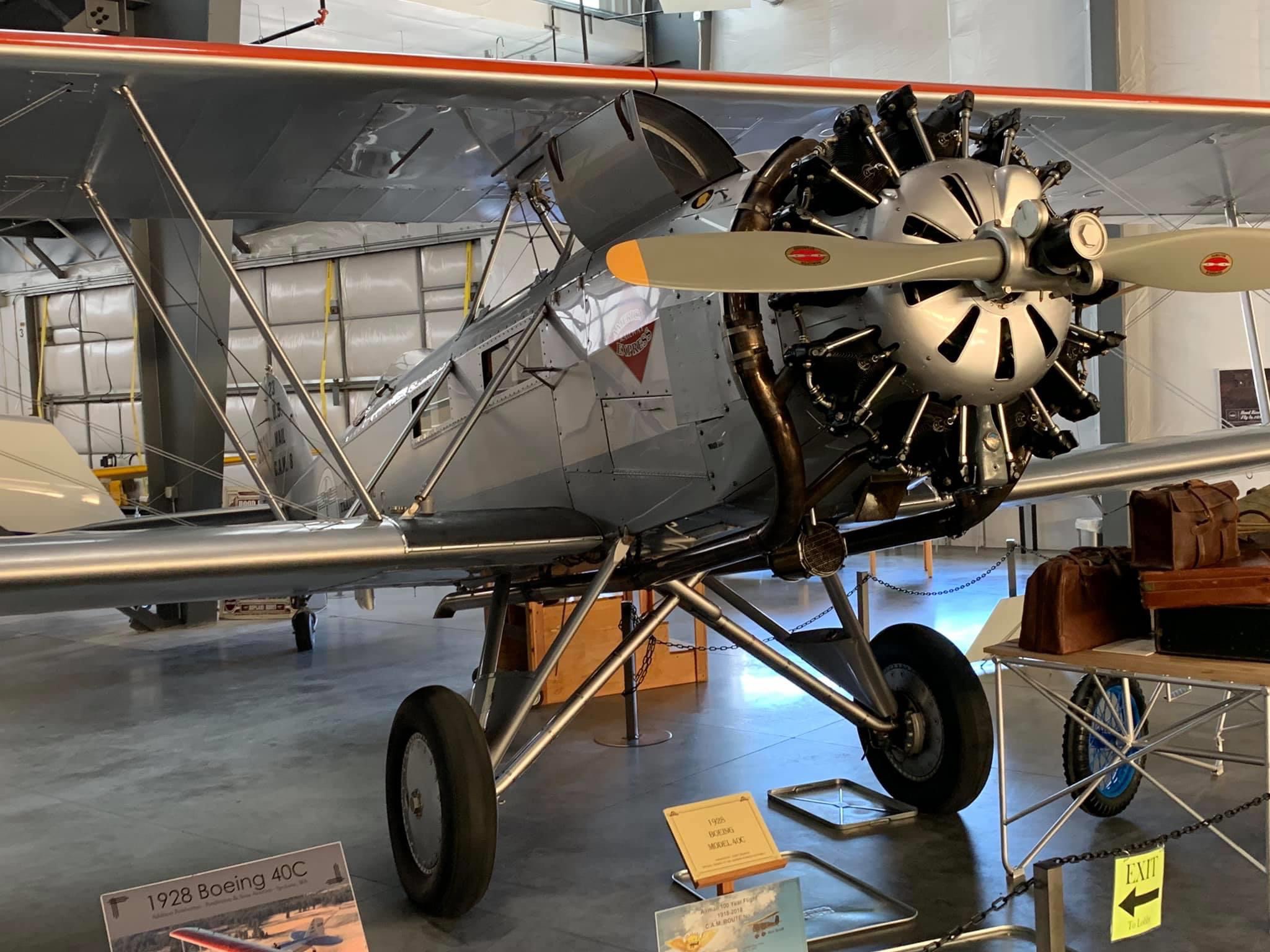
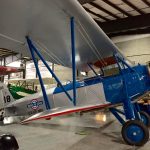
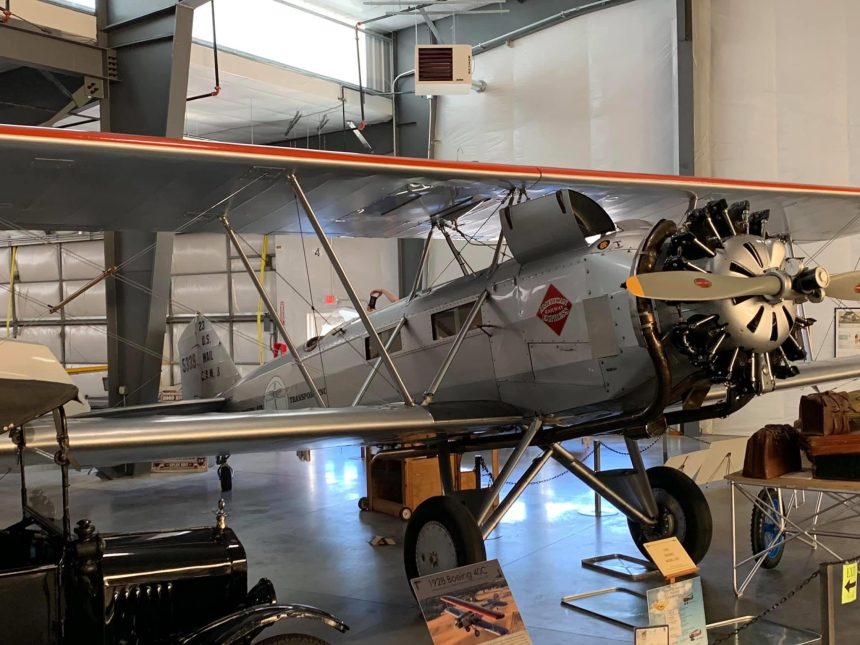
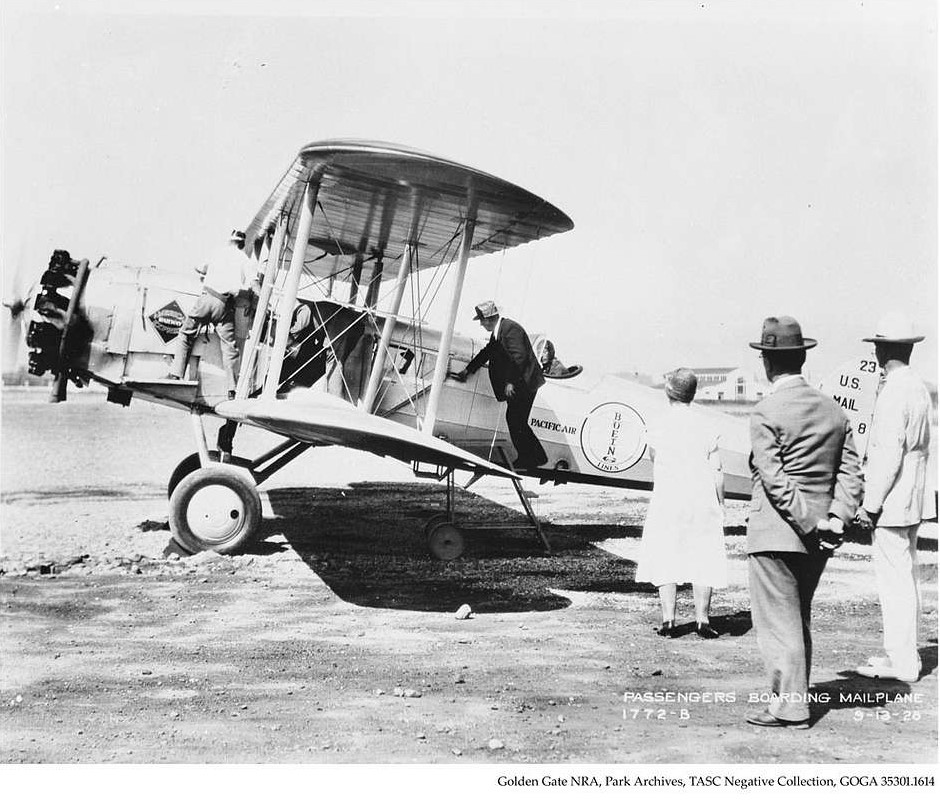
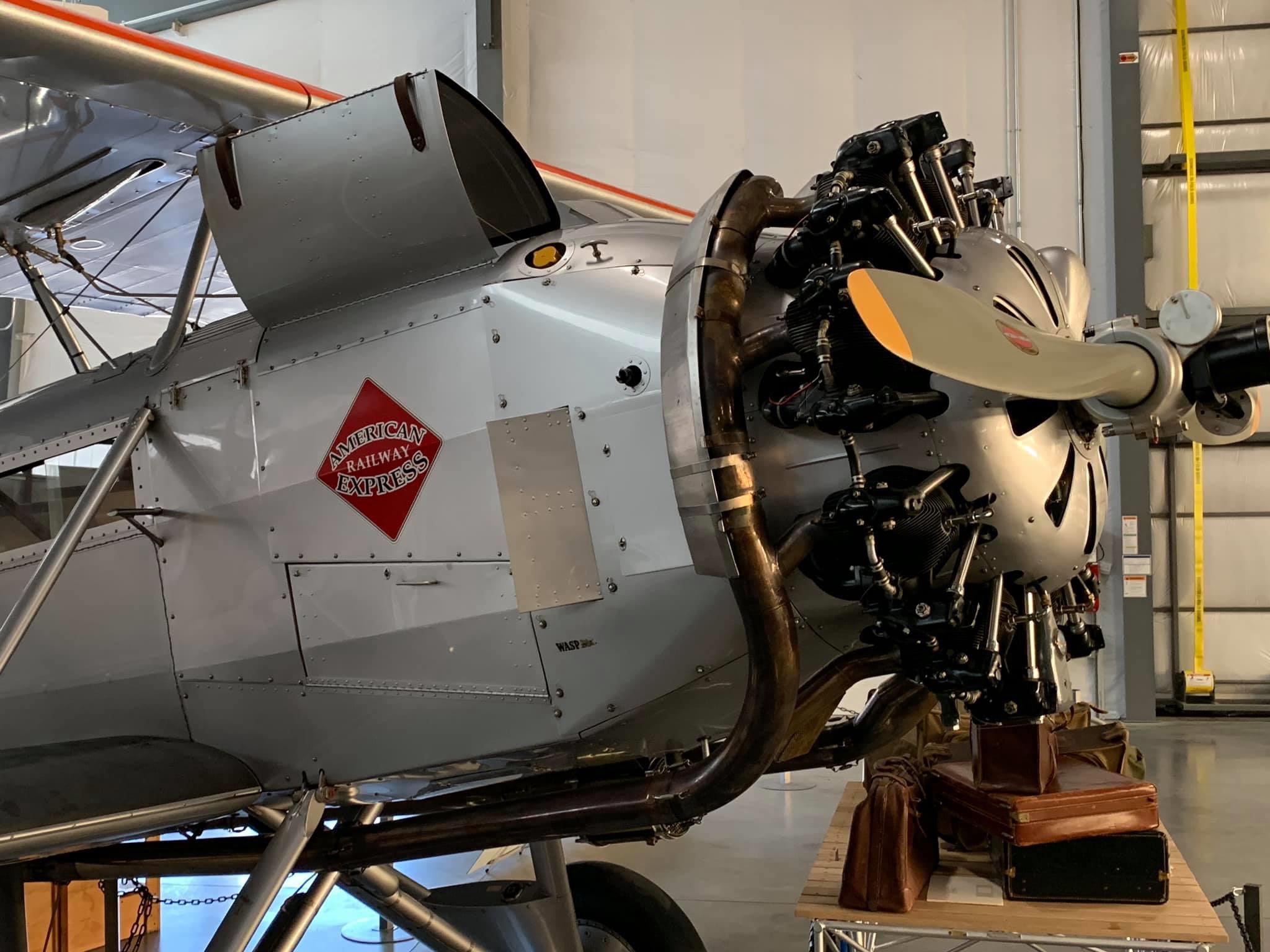
This particular airworthy aircraft was built in 1928 and flew as “Ship 23” of Pacific Air Transport, Inc., which by that time was a subsidiary of Boeing Airplane Company. On December 31, 1925, the U.S. Postmaster General awarded Vern C. Gorst a C.A.M. route for the Pacific Northwest states, and he incorporated Pacific Air Transport, Inc. in Oregon in 1926. (Gorst, an airplane and bus line entrepreneur, is considered the “Granddad of United Airlines,” having suggested in 1930 that several aircraft companies, including his own, merge into one.) Pacific Air Transport, Inc. was bought out and became a subsidiary of Boeing Aircraft Company in 1928. This aircraft is rebuilt from some original parts as described below. As such, it is the only airworthy aircraft of its kind and the oldest Boeing aircraft still flying, albeit largely rebuilt, but to make it airworthy required fabricating many new key components.
On October 2, 1928, pilot Grant Donaldson took off in the aircraft on a flight from Medford, Oregon, to Portland, Oregon. He was carrying 9 pounds of mail and passenger D.P. Donovan (a West Coast drugstore chain owner and gemstone dealer, carrying a satchel of diamonds). An hour into the flight through low-lying clouds over a mountainside near Canyonville, Oregon, he discovered he was scraping tree-tops. Too late to recover, it dove forward “…as if it had been a giant scythe” (as reported in the Roseburg, Oregon News-Review at the time). One tree, nearly a foot in diameter, was sheared off 25 feet above ground. The resulting fire melted the propeller. Donaldson escaped with severe burns (his scars with the markings of his flight goggles remained with him for the remainder of his life). Donovan was killed on impact. The next day, the airline salvaged his body and what diamonds they could (scavengers hiked up to the wreck site for years afterwards looking for diamonds, and rumors persist that some Canyonville women own rings set with the diamonds). In 1929, the tail section was hacksawed off for use as a nursery school jungle gym.
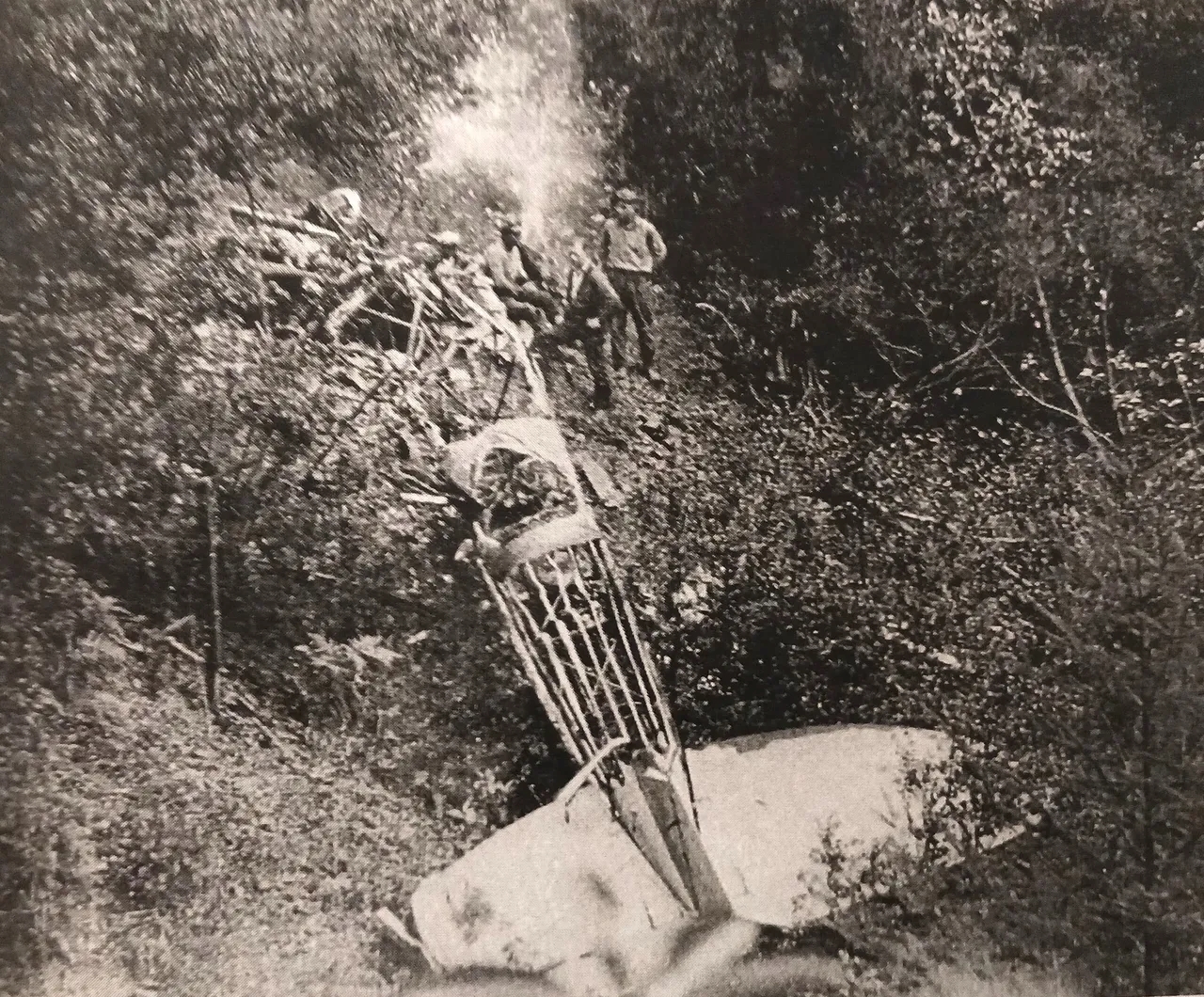
Addison Pemberton (of Pemberton & Sons Aviation of Spokane, and whose father recalled watching mail planes flying over Iowa in the 1930’s) acquired the remains of the aircraft, including the original data plate, from a member of the Oregon Aviation Historical Society who had salvaged pieces of the wreck over time and had them stored in a horse trailer in his backyard. Pemberton acquired the parts in exchange for a propeller, $5,000, and the promise to fully restore the aircraft. Some of the original pieces were used in the rebuild, including the alloy chromoly steel cockpit entry steps, wobble pump, and seat brackets, and pieces of wood were combined to make new gussets and cross-strips.
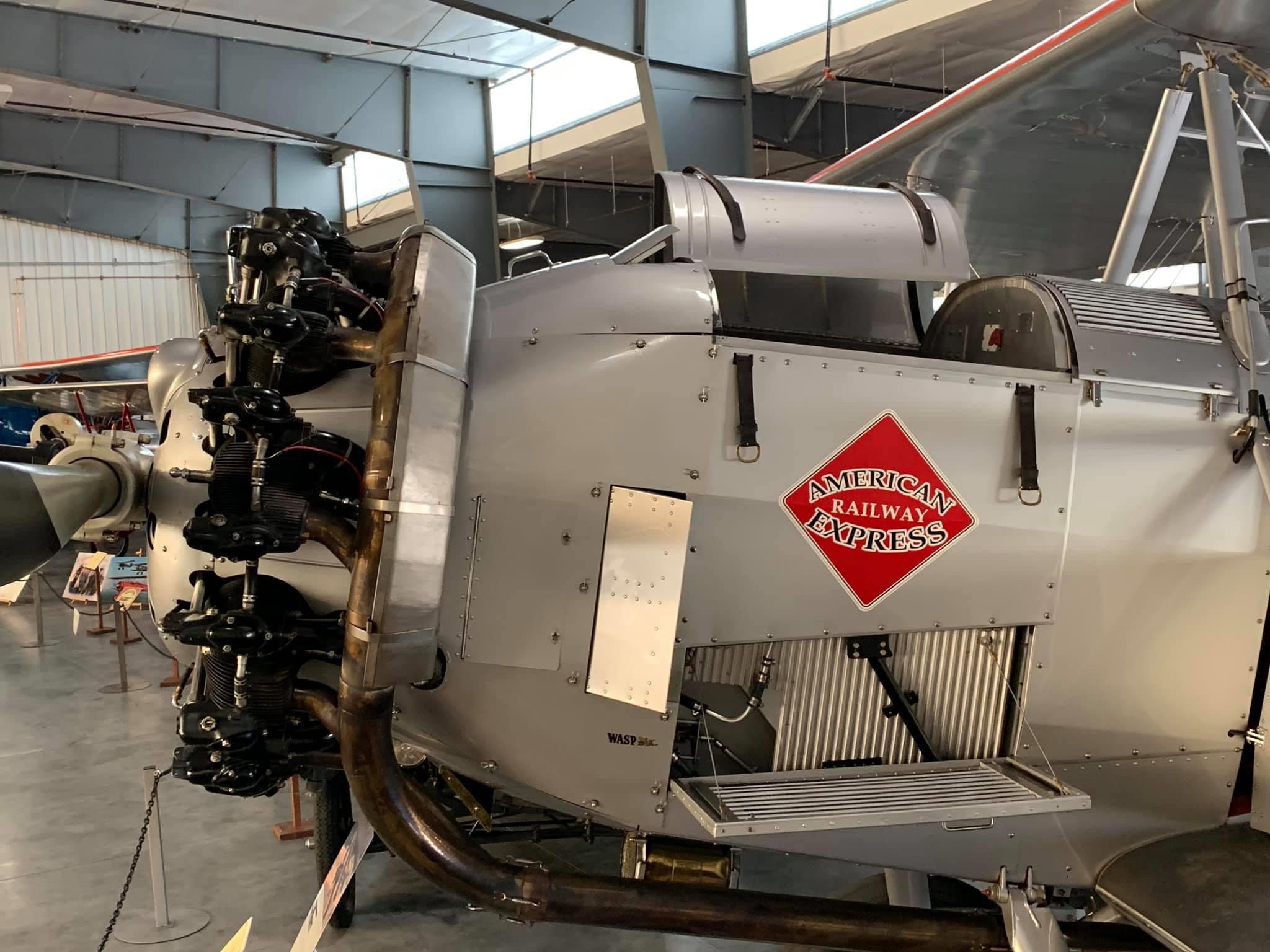
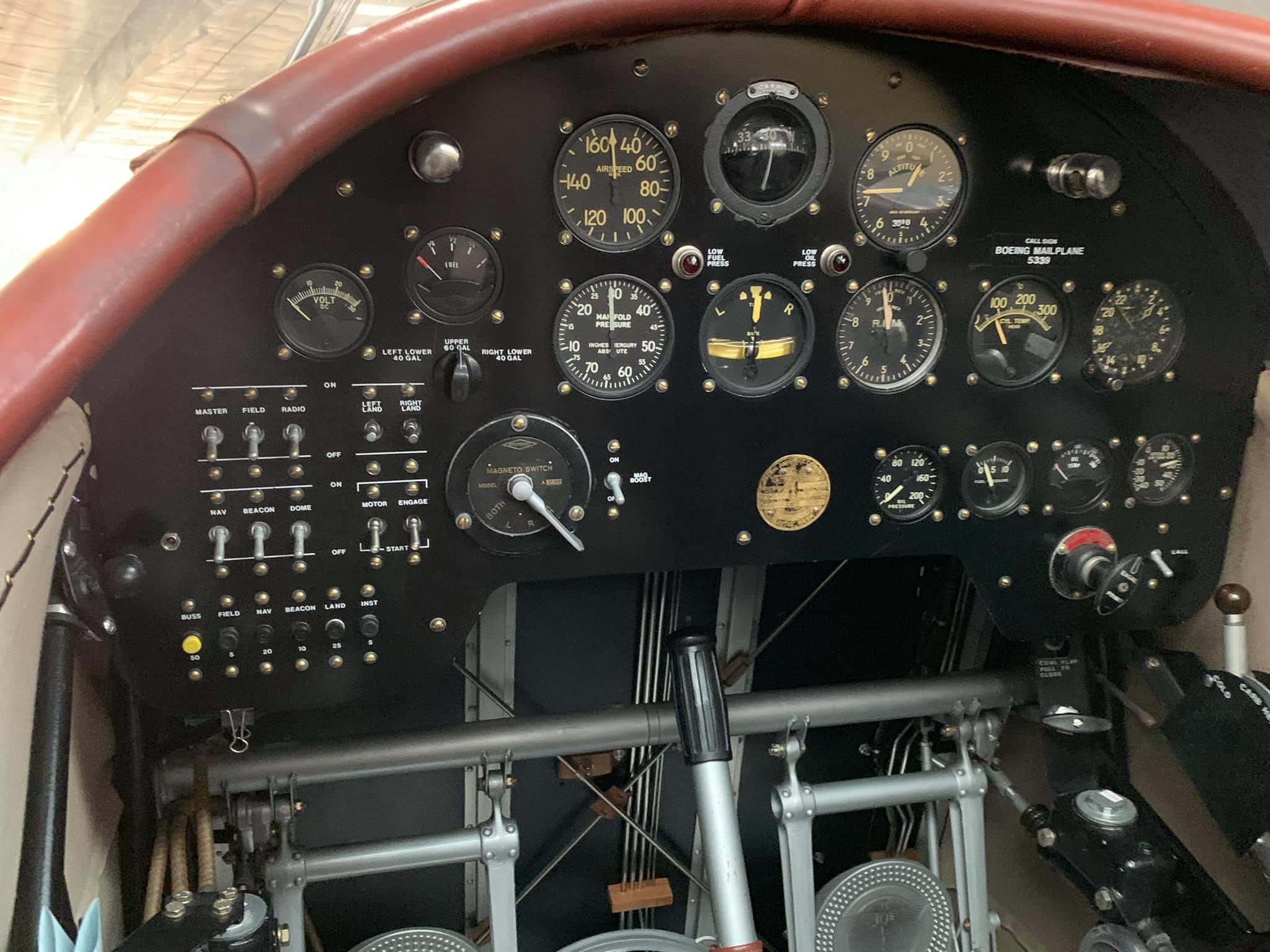
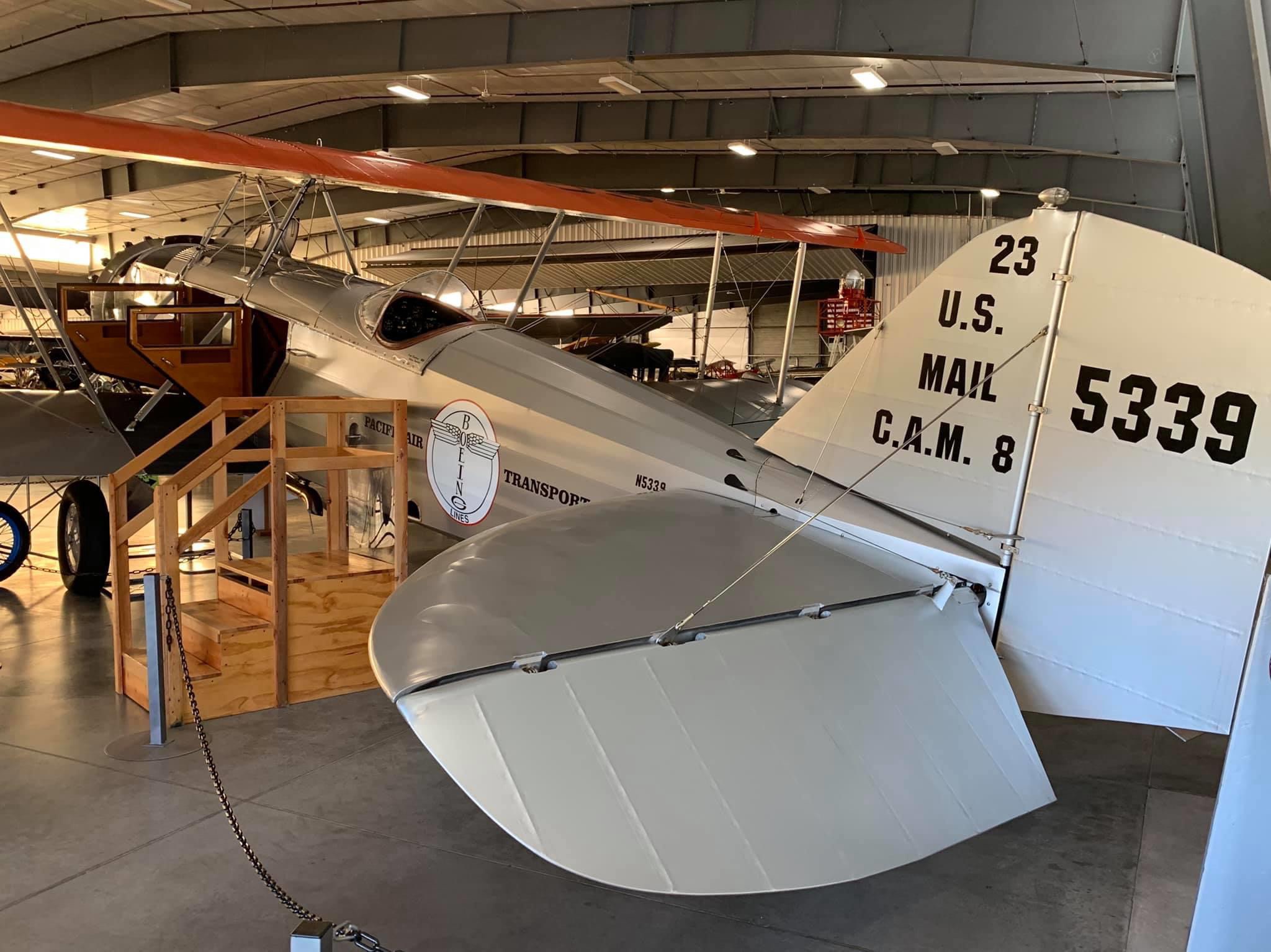
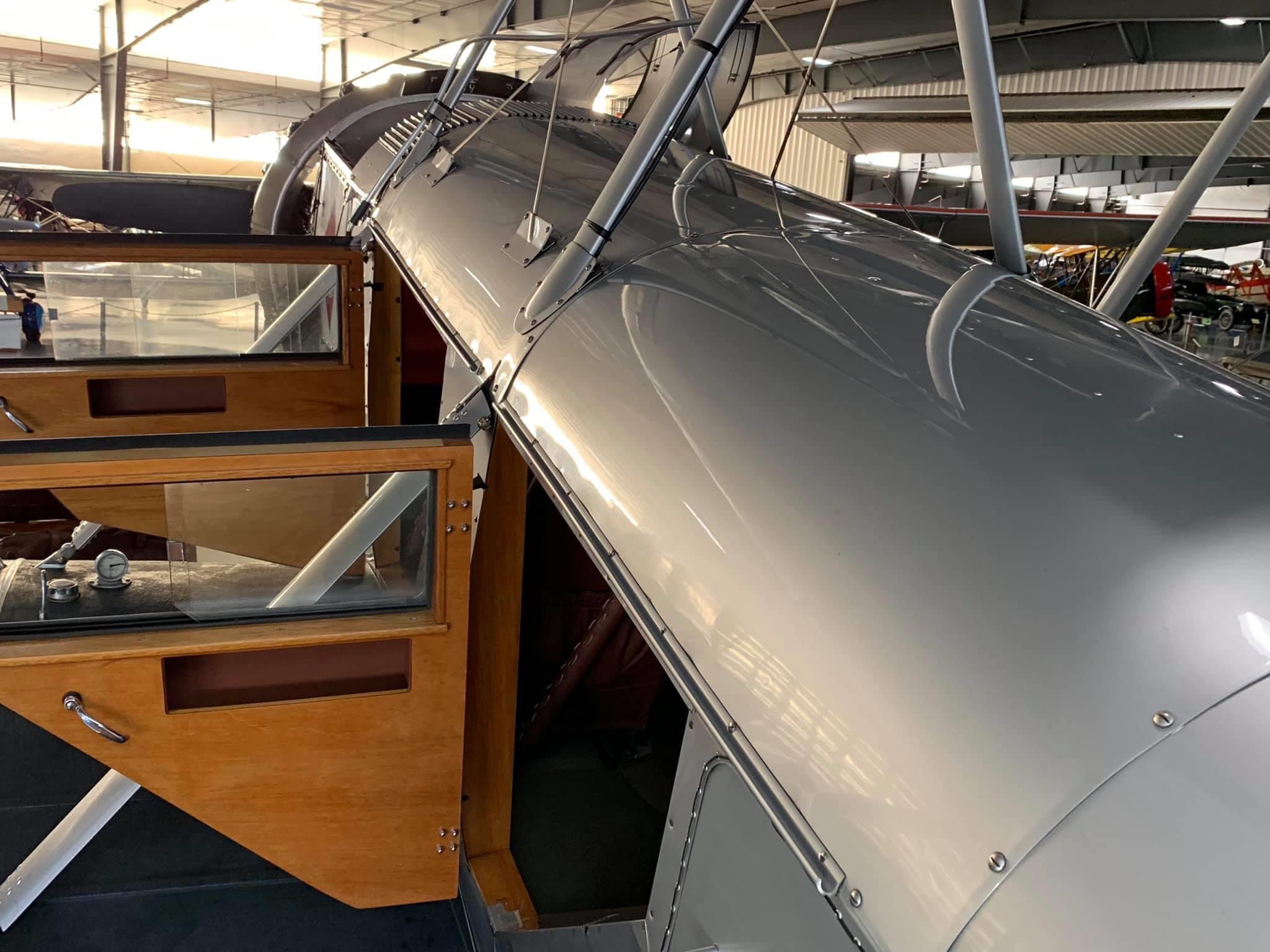
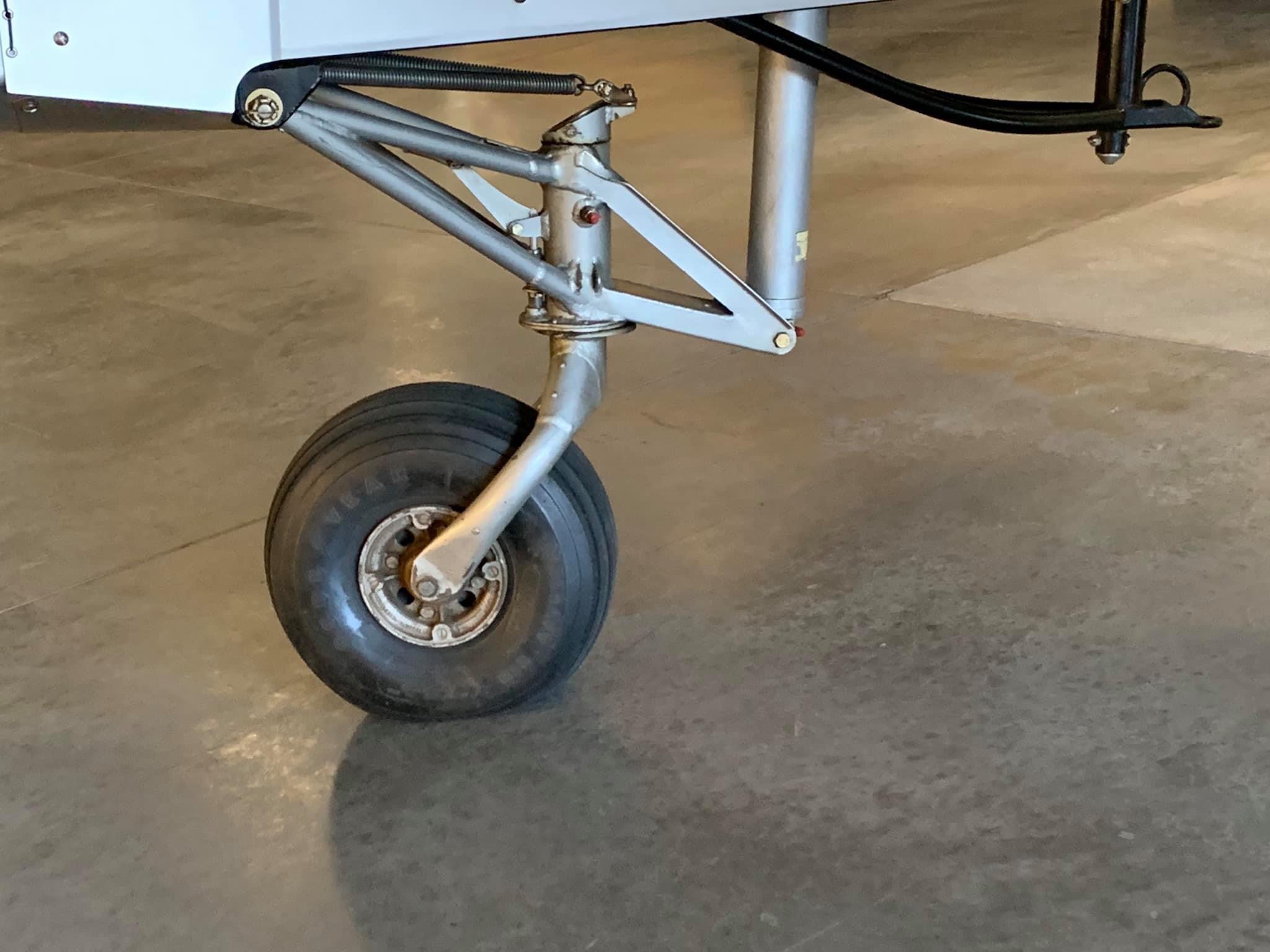
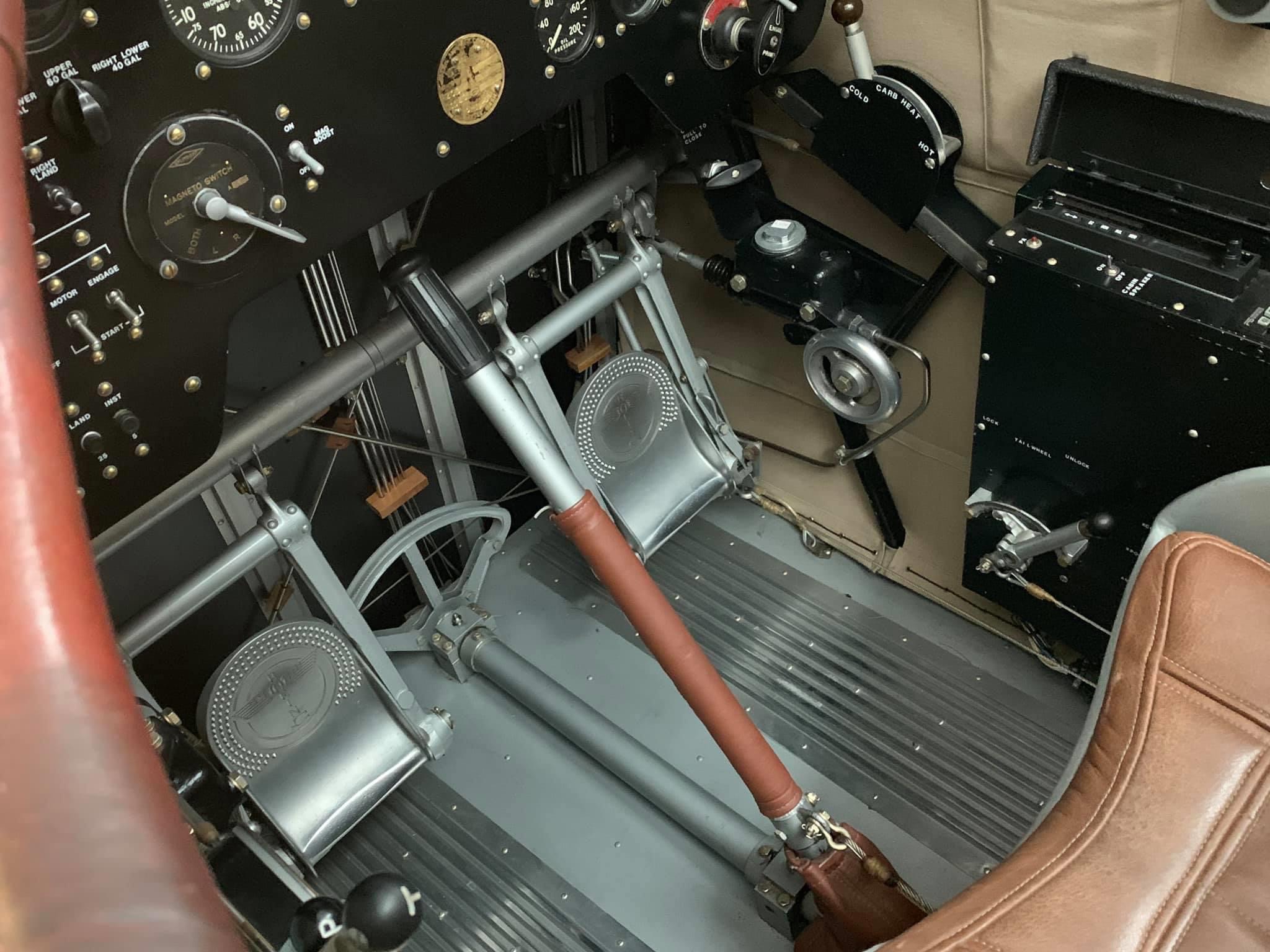
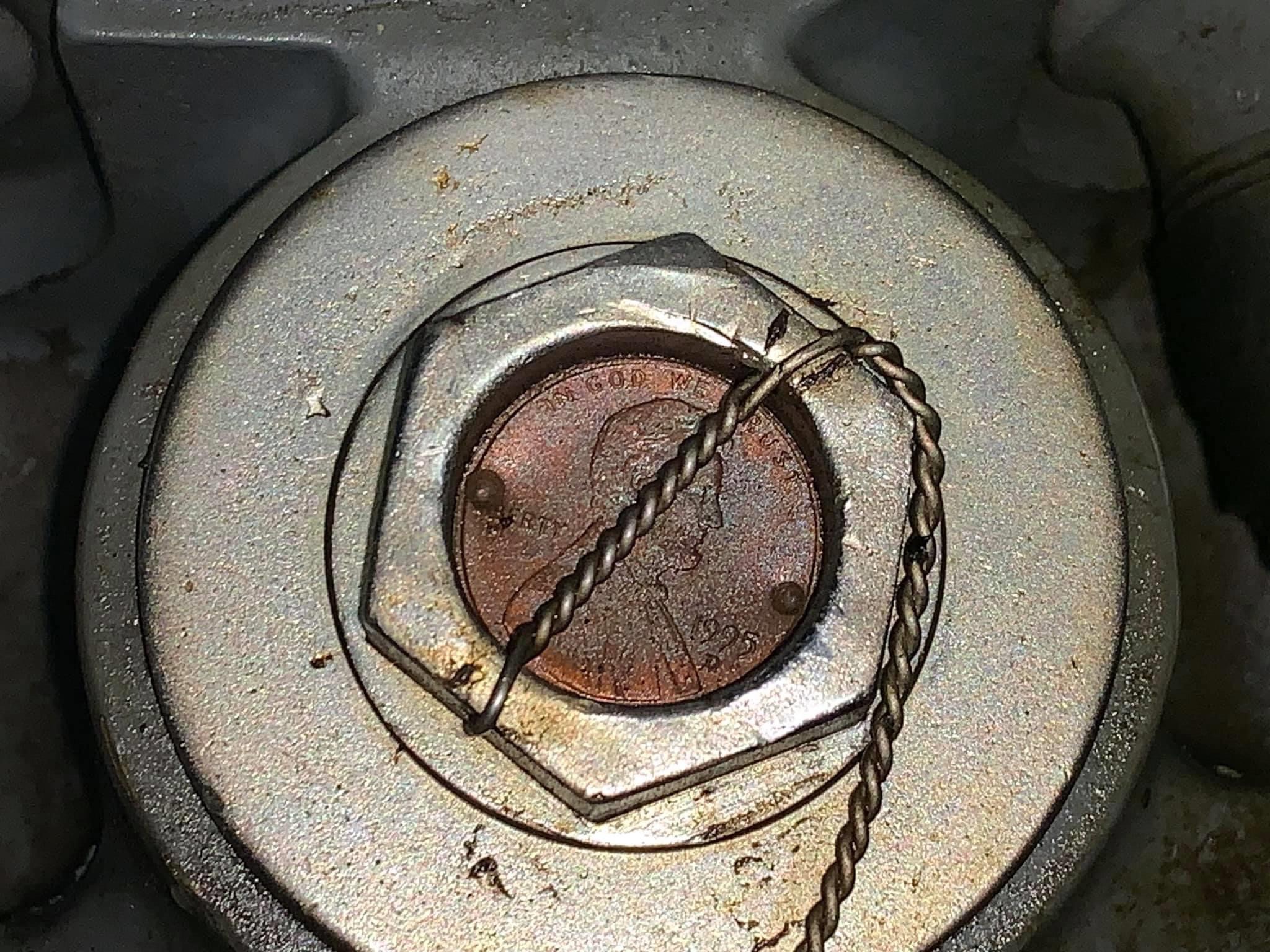
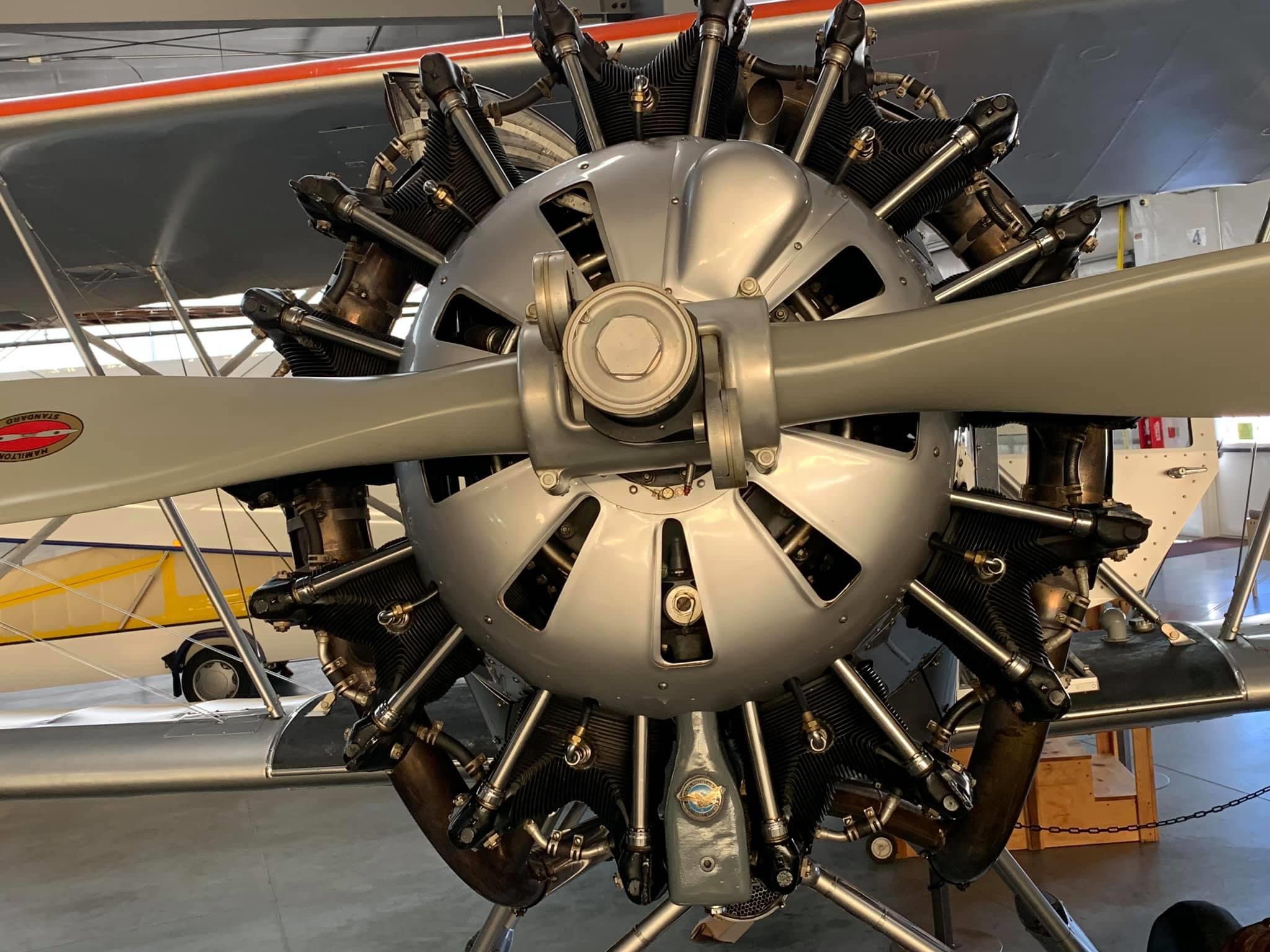
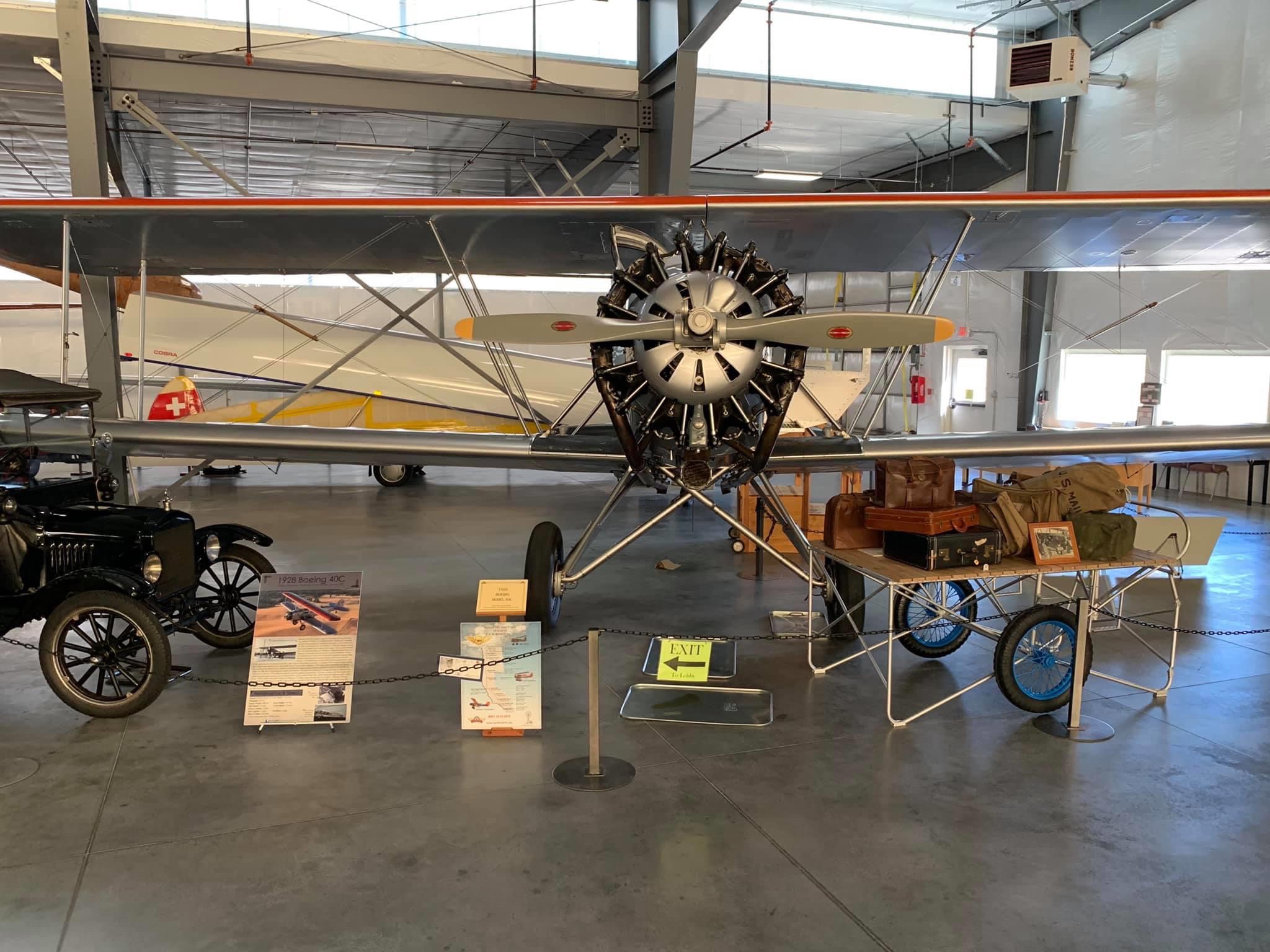
A locking tailwheel assembly from a Twin Beech 18 was incorporated into the rebuild. Pemberton’s wife, Wendy, provided the fabric work. Parts that were fabricated from scratch were made using 600 schematics on microfiche kept by former Boeing employee Harl Braken. It had its first flight as a rebuilt aircraft in 2008 and holds the title of the oldest flying Boeing in the world. Like the ancient tradition of sailors attaching coins under the masts of ships, if you look closely, you will see that a 1995 Lincoln penny was wired to the engine following restoration. The Pembertons donated the aircraft to Western Antique Aeroplane & Automobile Museum, Hood River, Oregon (WAAAM), the current owner. My photos.
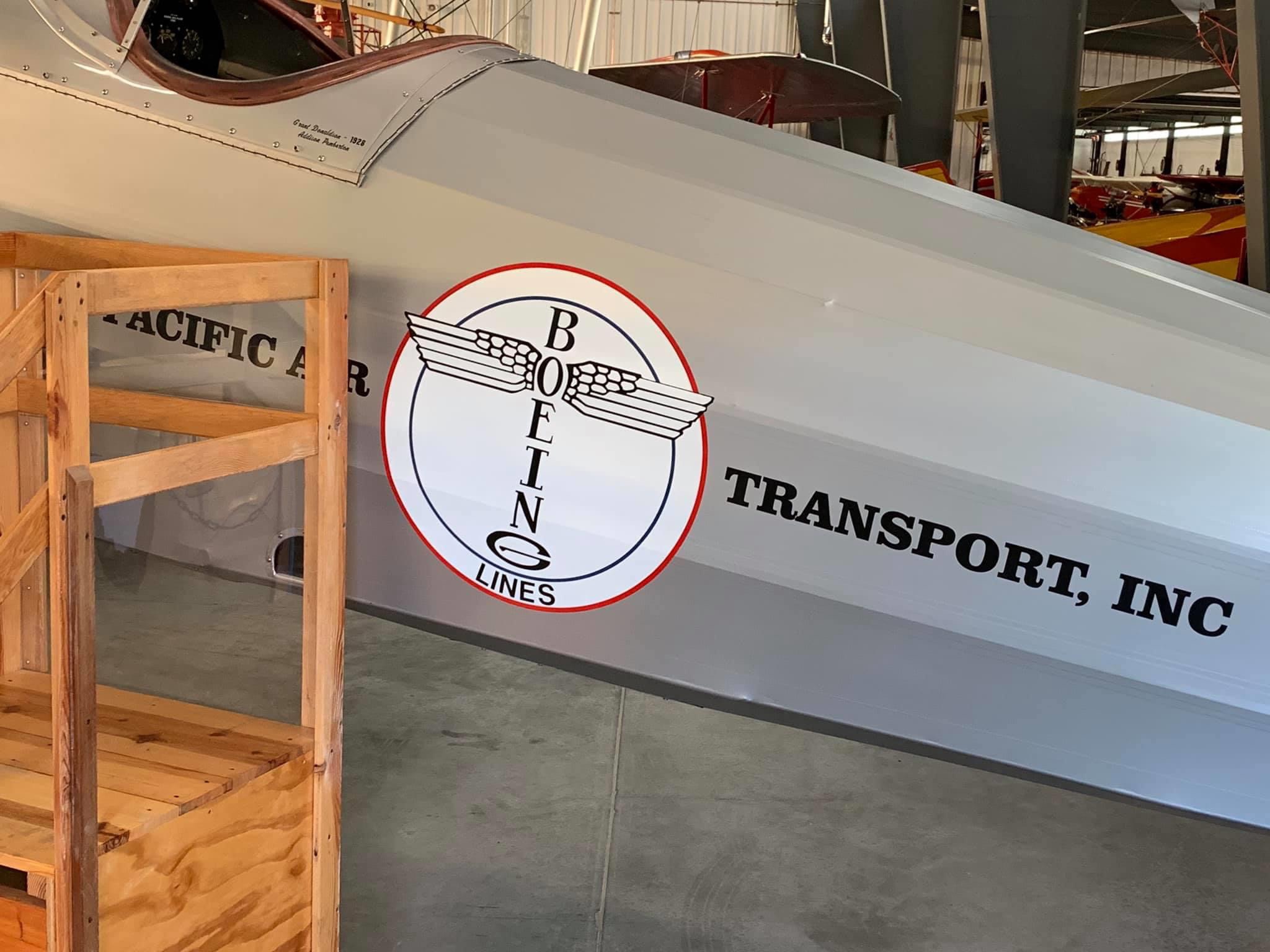
The Kelly Act of 1925 authorized the U.S. Post Office to contract with private mail carriers on designated routes, and the Post Office announced a competition for a replacement to the converted military de Havilland D.H.4 aircraft that had been flown for air mail since 1918. On November 25, 1926, the Post Office advertised for bids for the San Francisco-Chicago route. While William E. Boeing had been seeking federal contracts for pursuit and bomber aircraft, he became aware of the value of civil contracts and, while still skeptical, placed a bid and won the contract at a rate of $1.50 per pound of mail, and a Boeing Airplane Company subsidiary was formed called “Boeing Air Transport” for the purpose.
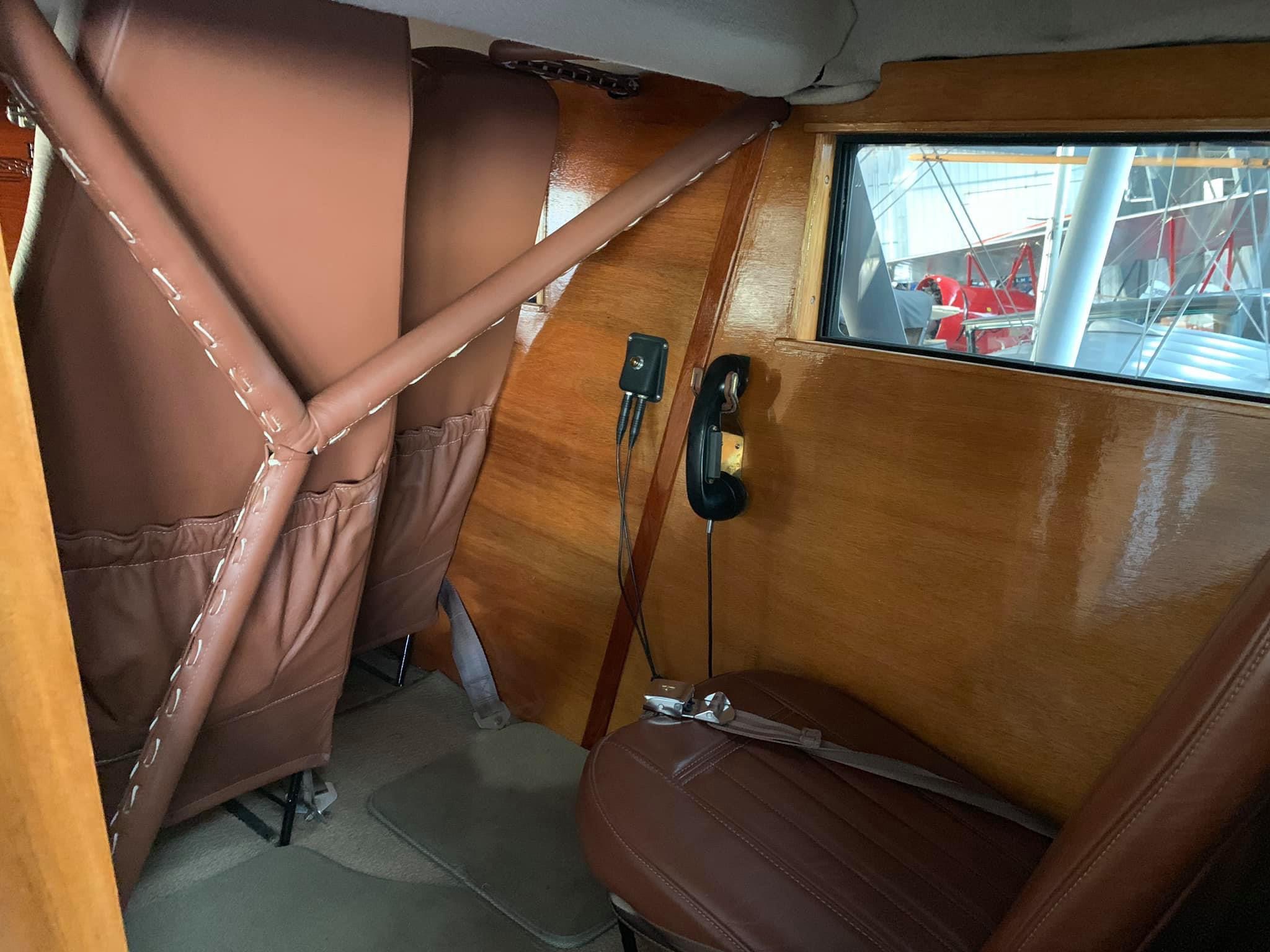
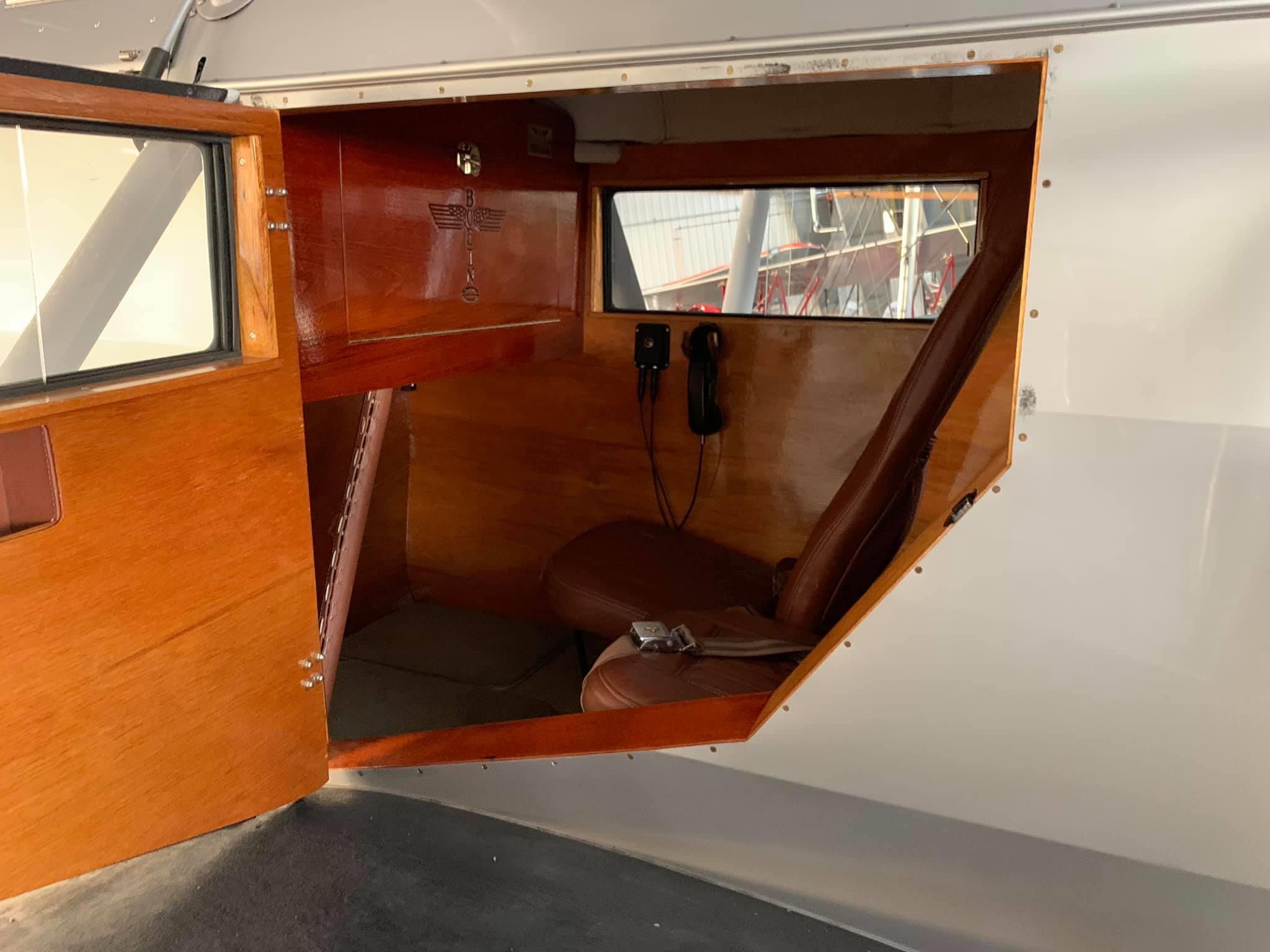
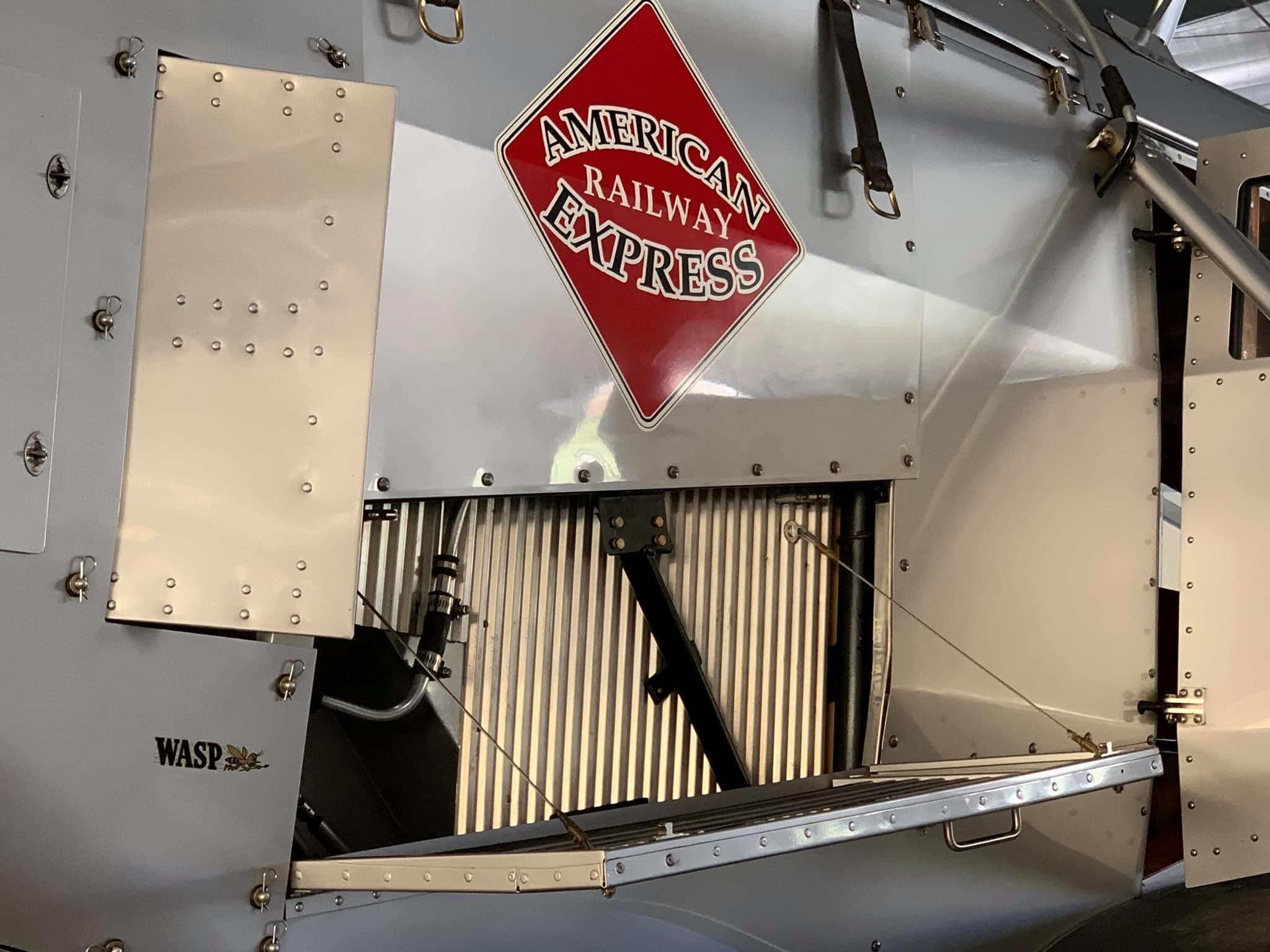
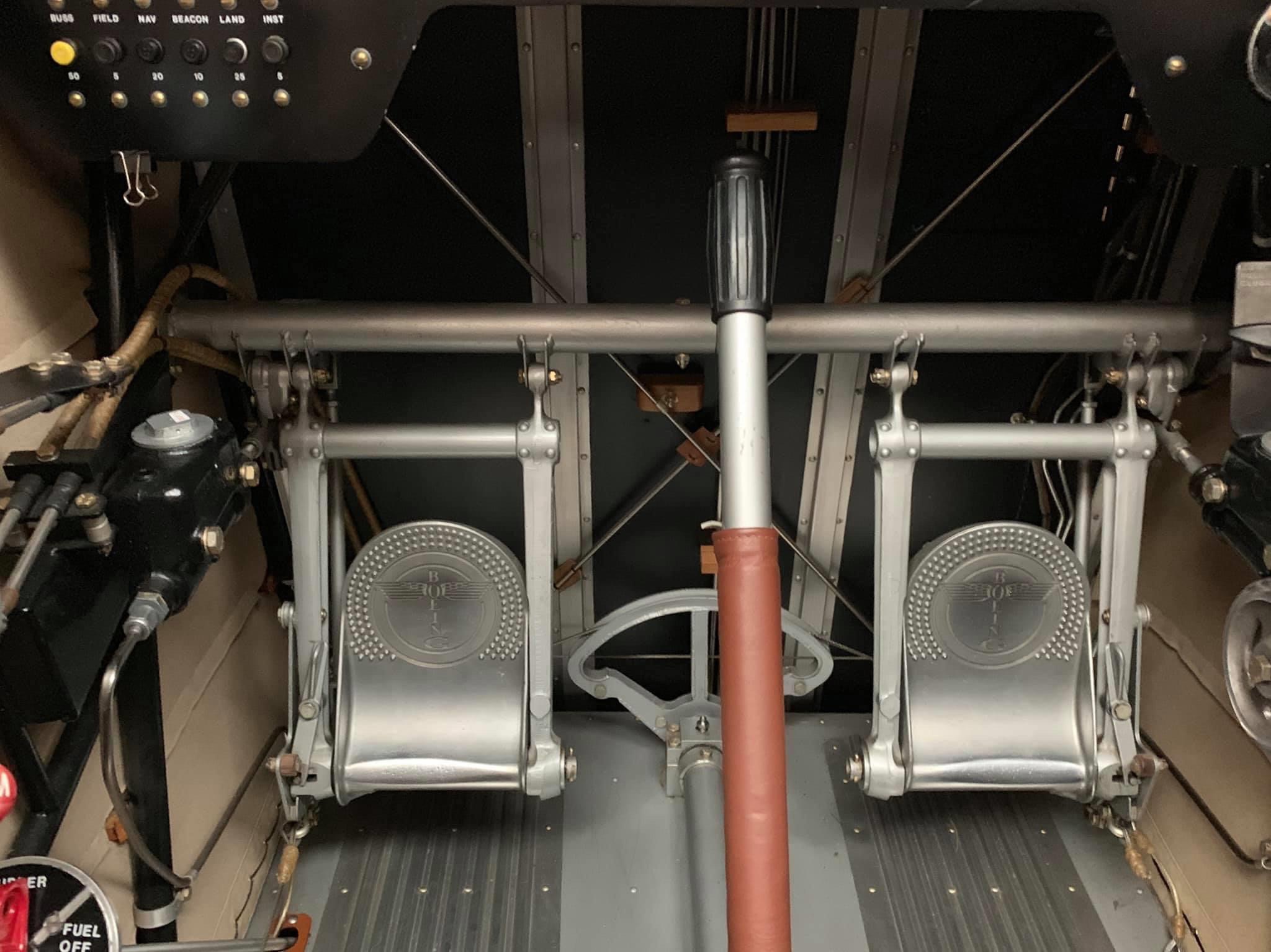
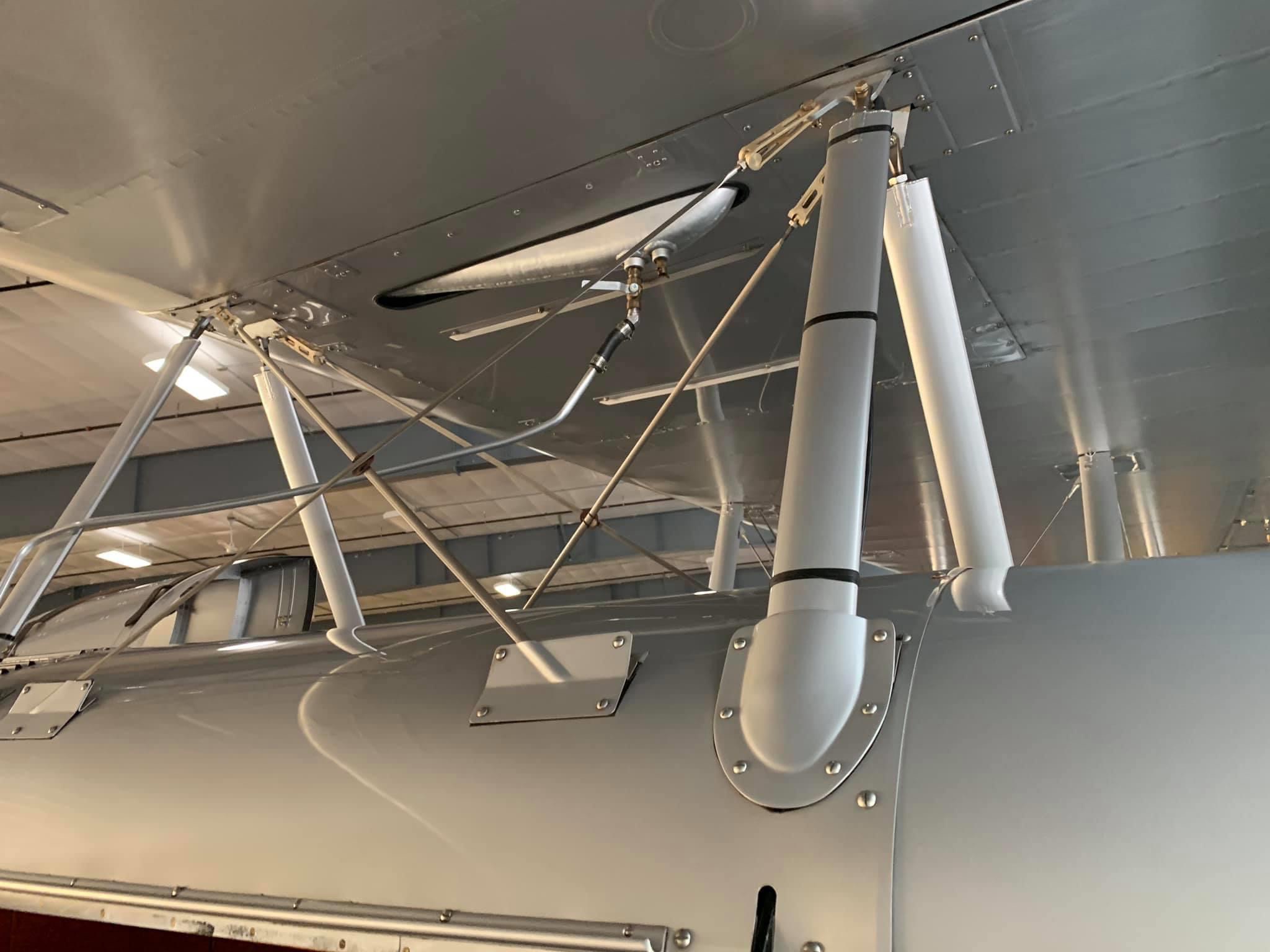
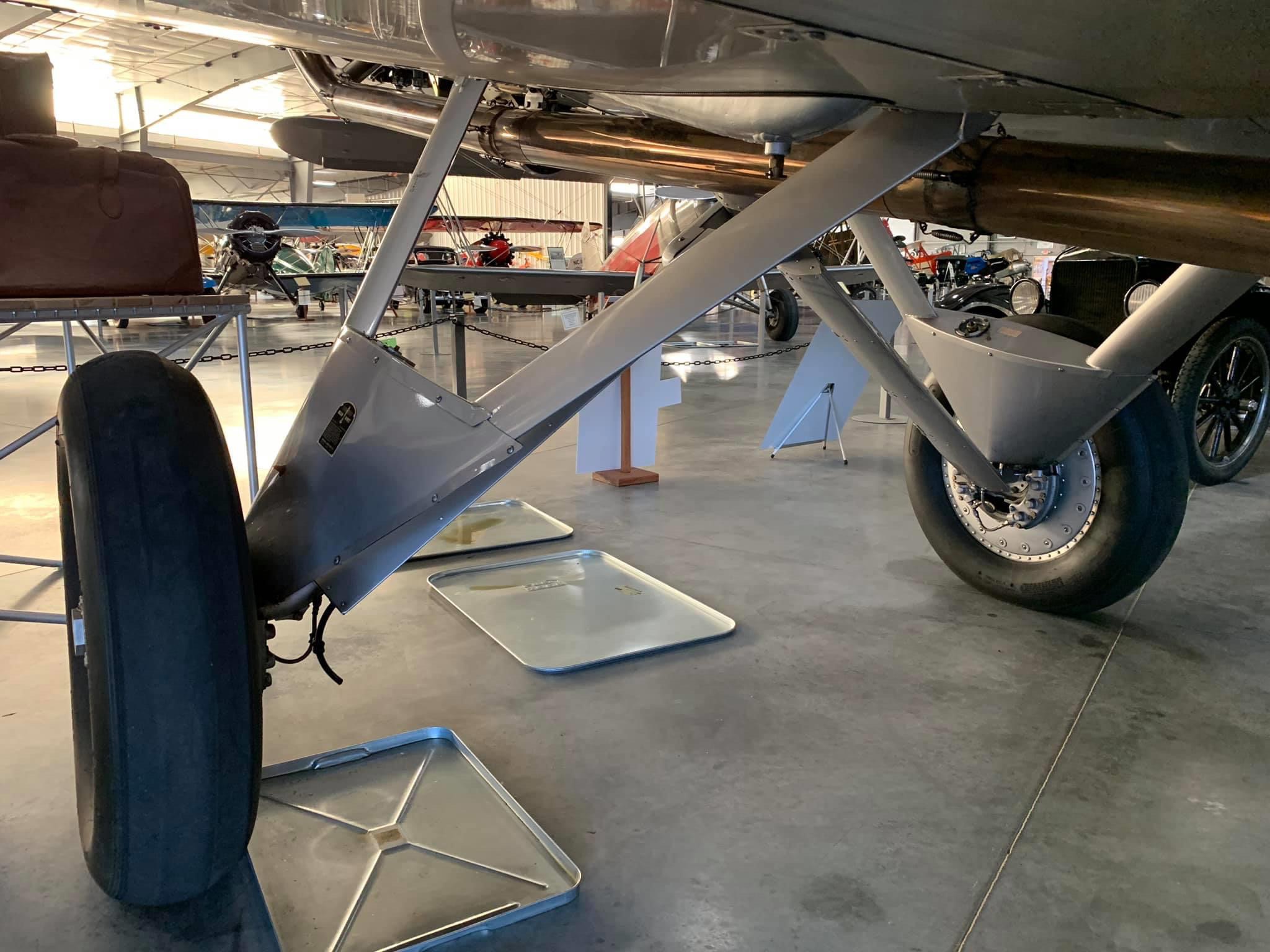
The Model 40C had a heated and lighted cabin and became the first Boeing aircraft to carry passengers. The C variants were fitted with one Pratt & Whitney R-1340 600-hp supercharged engine and a constant-speed propeller; they had 16-foot exhaust stacks and carried 140 gallons of fuel in three wing-selectable tanks (as opposed to two in the earlier variants). It was built of a frame of alloy chromoly steel tubing for the nose and curved wood-veneer laminate for the mid-fuselage; the wings were constructed of wood and covered with Grade A nitrate-doped cotton (as was common at the time), and the wing trailing edges have scalloping. This model could carry four passengers and 1,200 lbs. of mail in an enclosed cabin while the pilot was in an open cockpit. Forward of the passenger cabin was the mail pit with leather straps to secure the door over it.
Over seventy Model 40 aircraft were built by Boeing between 1927 and 1932. Four standard 40B-4s were built by Boeing-Canada, with two of them being sent to New Zealand, one unregistered, the other being ZK-ADX, which was sold to Australia, becoming VH-ADX. It crashed in New Guinea in September of 1939. The other also went to Australia and was destroyed in a hangar at Wau, Papua, New Guinea, during Japanese action in January of 1942. The Fuerza Aérea Hondureña (FAH = Honduran Air Force) flew them as a military transport.
About the author
 Randy Malmstrom grew up in a family steeped in aviation culture. His father, Bob, was still a cadet in training with the USAAF at the end of WWII, but did serve in Germany during the U.S. occupation in the immediate post-war period, where he had the opportunity to fly in a wide variety of types that flew in WWII. After returning to the States, Bob became a multi-engine aircraft sales manager and, as such, flew a wide variety of aircraft; Randy frequently accompanied him on these flights. Furthermore, Randy’s cousin, Einar Axel Malmstrom, flew P-47 Thunderbolts with the 356th FG from RAF Martlesham Heath. He was commanding this unit at the time he was shot down over France on April 24th, 1944, spending the rest of the war as a prisoner of war. Following his repatriation at war’s end, Einar continued his military service, attaining the rank of Colonel. He was serving as Deputy Wing Commander of the 407th Strategic Fighter Wing at Great Falls AFB, MT at the time of his death in a T-33 training accident on August 21, 1954. The base was renamed in his honor in October 1955 and continues to serve in the present USAF as home to the 341st Missile Wing. Randy’s innate interest in history in general, and aviation history in particular, plus his educational background and passion for WWII warbirds, led him down his current path of capturing detailed aircraft walk-around photos and in-depth airframe histories, recording a precise description of a particular aircraft in all aspects.