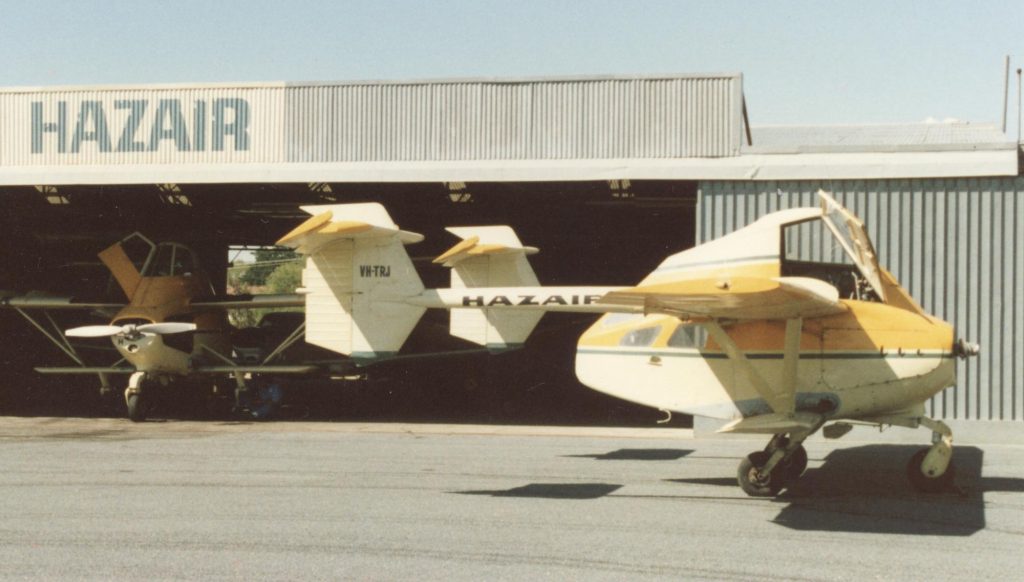
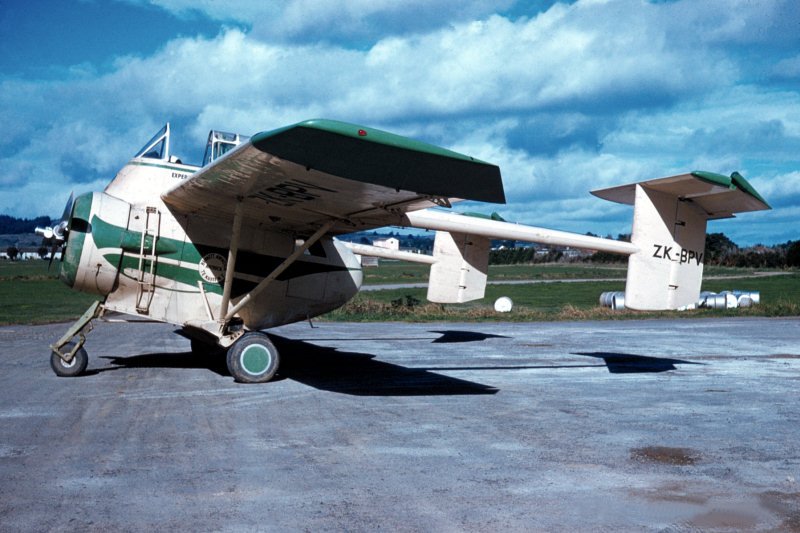


In the late 1950s, New Zealand operators were looking for a new agricultural aircraft to replace the de Havilland Tiger Moth, which had been used for aerial topdressing. At the same time, the agricultural aircraft designer Luigi Pellarini designed the Kingsford Smith PL.7, which the Australian aviation company Kingsford Smith Aviation Service built in the 1950s. To build an aircraft for the New Zealand market, Pellarini designed the PL-11 Airtruck, a modified version of his PL.7 design. Bennett Aviation Limited undertook the development of the PL-11 Airtruck, and to keep its costs down, the plan was to use war-surplus components from the Royal New Zealand Air Force’s Harvards (originally the North American Aviation T-6 Texan) to construct the aircraft. The PL-11 Airtruck had an all-aluminum structure and featured a high-wing monoplane design with a steel stub wing and V-shaped lift struts. It had a steerable tricycle landing gear and a very short pod-shaped fuselage. The cockpit, made from shortened Harvard glazing, was placed directly over the radial engine, providing a good forward view but creating drag. Below the cockpit, there was space for a superphosphate hopper or a cabin that could hold up to 5 people. The design included twin booms with separate tail units, allowing a truck to reverse between them to load the hopper. Despite its unusual appearance, the PL-11 Airtruck was surprisingly successful in the tests.
PL-11 Airtruck Design
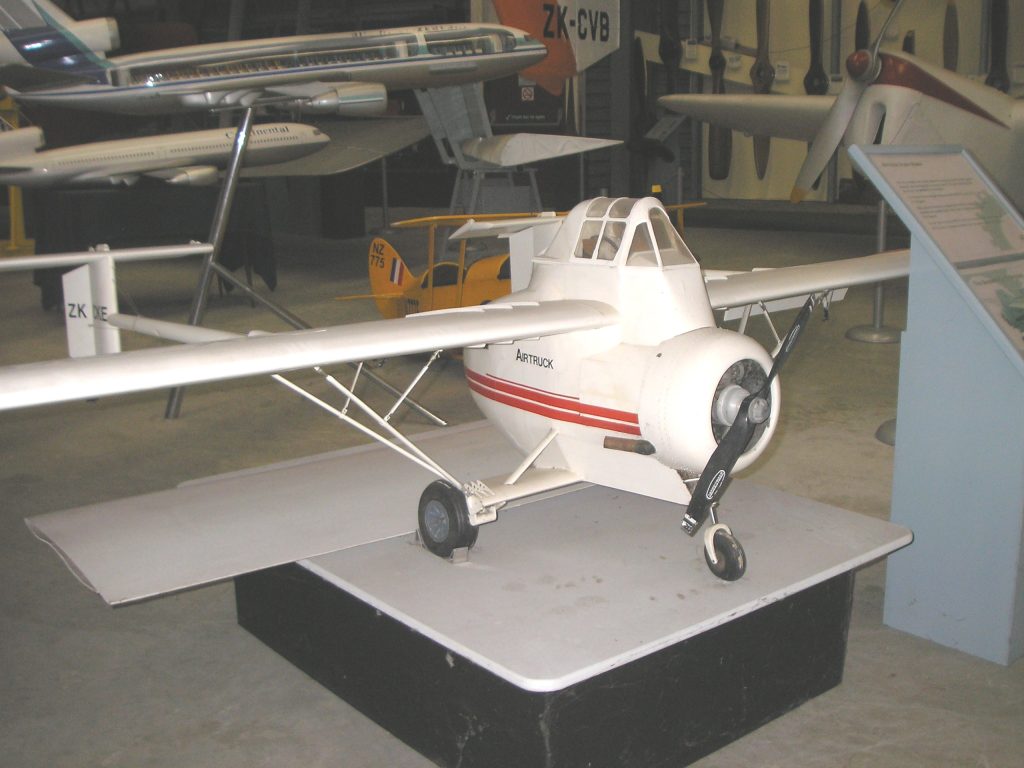
With a length of 25.8 feet and a height of 10.10 feet, the PL-11 Airtruck had a wingspan of 48 feet and a wing area of 369 square feet. The empty weight of the aircraft was 3,700 pounds, and the maximum takeoff weight was 7,200 pounds. It was equipped with a Pratt & Whitney R-1340 nine-cylinder air-cooled radial engine producing 550 horsepower. The aircraft’s maximum speed was 164 mph, with a cruise speed of 124 mph and a stall speed of 43 mph. With a climb rate of 1,800 feet per minute, the range of the PL-11 Airtruck was 450 miles. The first prototype of the PL-11 Airtruck flew on August 2, 1960. While on a test flight in October 1963, the aircraft crashed. After this, Bennett underwent reorganization, and the company became Waitomo Aircraft Limited. The second prototype of the PL-11 Airtruck flew in March 1965, with commercial operations beginning in early 1967. However, the second prototype also crashed a few days later. Struggling with a shortage of Harvard parts, Waitomo chose not to continue the program. Another reason was the time to develop the aircraft. The aircraft was developed to meet market needs in the late 1950s, not a decade later. Pellarini had also left New Zealand and returned to Australia, where he developed the PL-12 Airtruk with Transavia Corporation by modifying the PL-11 Airtruck design.
PL-12 Airtruk
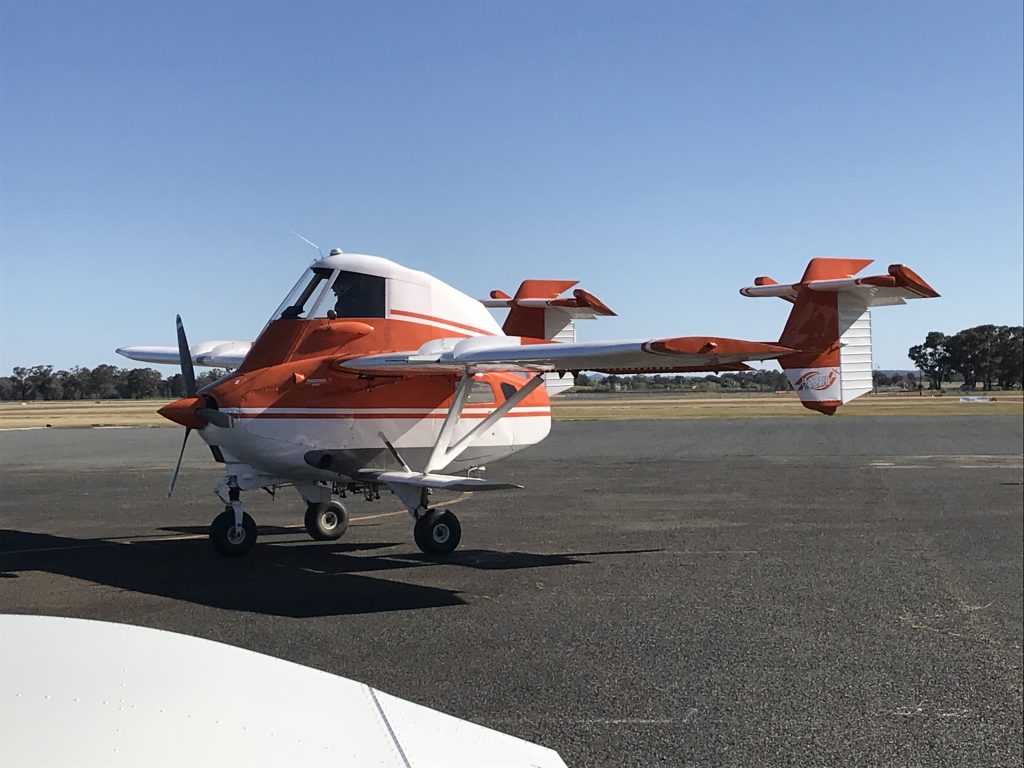
The PL-12 Airtruk was equipped with a 1-tonne capacity hopper and could carry two passengers as a topdresser. The single-engine aircraft had a shoulder-wing design and was all-metal. The cockpit sat above an air-cooled tractor-style engine, and the aircraft had a short pod fuselage with a rear door. The engine cover, rear fuselage, and top part were made of fiberglass. It featured a tricycle landing gear, with the main wheels attached to the lower wings. The aircraft had two tail booms with separate tail units. The first flight took place on April 22, 1965, and the aircraft received certification on February 10, 1966. New Zealand operated several PL-12 Airtruk for agricultural topdressing, but the aircraft was designed based on the PL-11 itself, confirming that the latter was not a bad idea. The PL-11 was caught up in poor planning, no clear idea of how to scale its production, no proactive approach to developing it, and a company that was restructuring itself. In the Grounded Dreams series, the PL-11 Airtruck is an unusual-looking civilian aircraft intended to be built from warbird components, but the world never saw it due to factors beyond performance. Read other Grounded Dreams articles HERE.