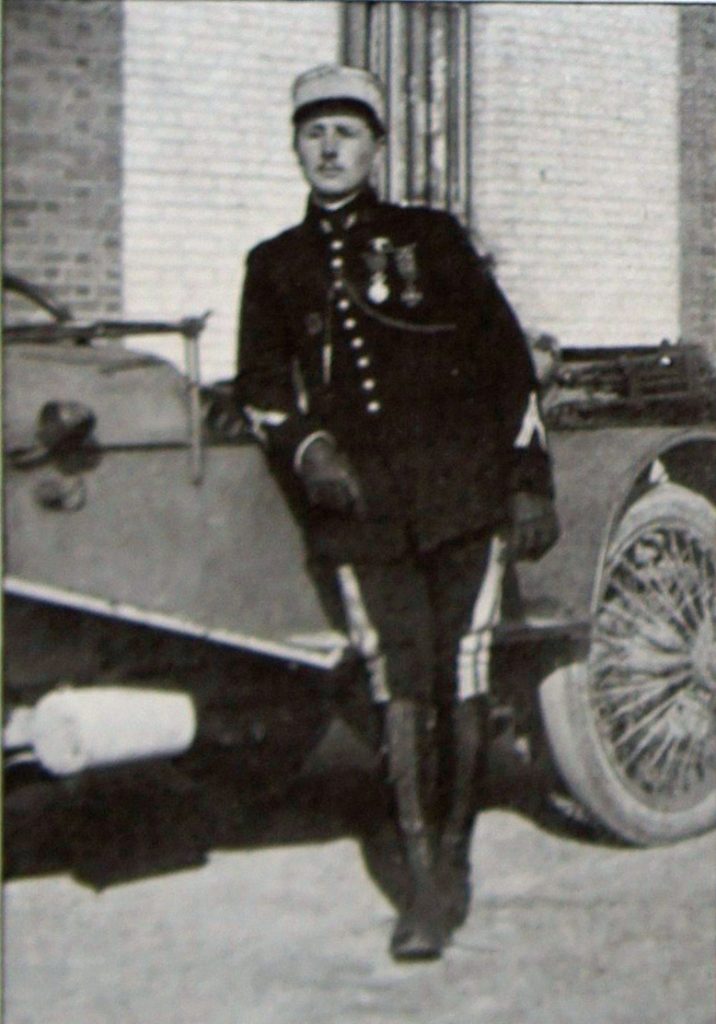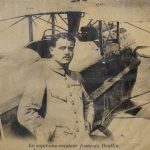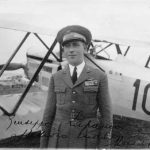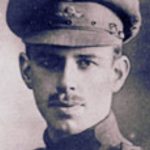
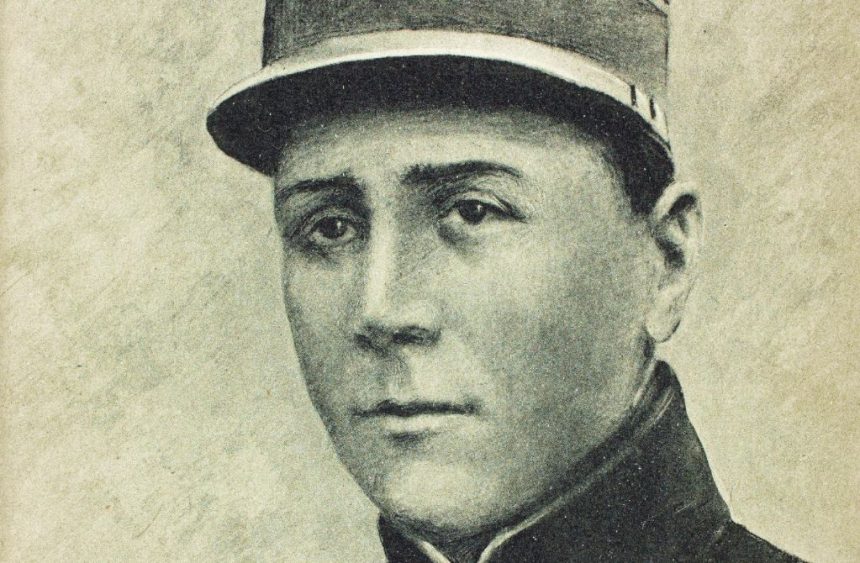

Many aces fought both in WWI and WWII. But hardly anyone had seen battle as closely as Alfred Heurtaux, who became an ace in WWI, saw the fall of his country, France, to the Germans in WWII, then joined the French Resistance and spent over three years in German prison. Heurtaux was born on May 20, 1893, in Nantes, France. He started his military career by entering officer training in 1912. In October 1912, he completed a required preliminary year with the 4e Regiment d’Hussards. By October 1913, he had become an officer cadet at the Saint Cyr military academy. When WWI began, he was promoted to second lieutenant in the 9e Regiment d’Hussards. In the next three months, he received three citations for bravery, and on December 6, 1914, he transferred to the air service.
Ace Journey of Alfred Heurtaux
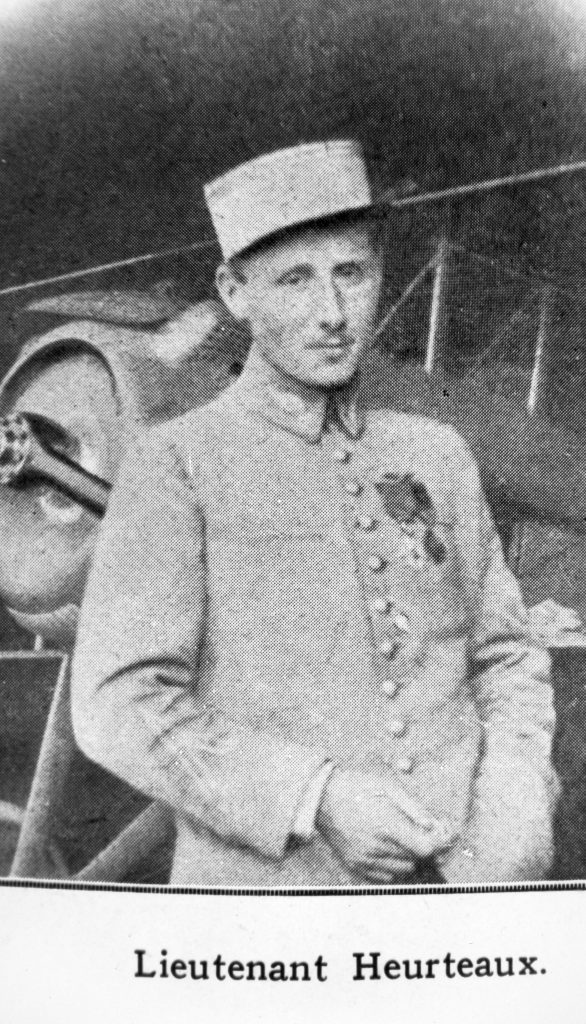
Initially, Alfred Heurtaux served as an aerial observer flying a Morane-Saulnier in Escadrille MS.26. He later completed pilot training and earned his wings on May 29, 1915. After that, he joined Escadrille MS38, another squadron flying Morane-Saulniers. He was promoted to lieutenant on December 25, 1915. On June 5, 1916, he moved to a fighter squadron, Escadrille N3, to fly Nieuports. His first confirmed victory came on July 9, 1916, when he shot down an LVG C aircraft, followed by another victory in the same month. In August, after shooting down two aircraft on the 2nd and 3rd, respectively, he was awarded the Légion d’Honneur. Then his unit was equipped with new SPAD VIIs. Flying this aircraft, Alfred Heurtaux scored his fifth victory on August 17 to become an ace officially. After scoring two victories in mid-September, on September 25, Alfred Heurtaux shot down ace pilot Leutnant Kurt Wintgens. Wintgens was the first fighter pilot to score a victory using an aircraft with a synchronized machine gun. He added three each in his tally in November and December 1916 to reach a personal score of 16 by the end of 1916. In 1917, he shot down three aircraft in January and two in February. His last victory came on May 4, 1917, bringing his personal score to 21. On May 5, 1917, he was seriously wounded by Ernst Udet during a dogfight. He fought against nine Albatros D.IIIs and was hit in both cheeks and thighs, and a near-miss grazed his head. Although he returned to duty, he did not score any more victories. In September 1917, he was wounded for the second time, which kept him from fighting for the rest of the war.
WWII and Legacy
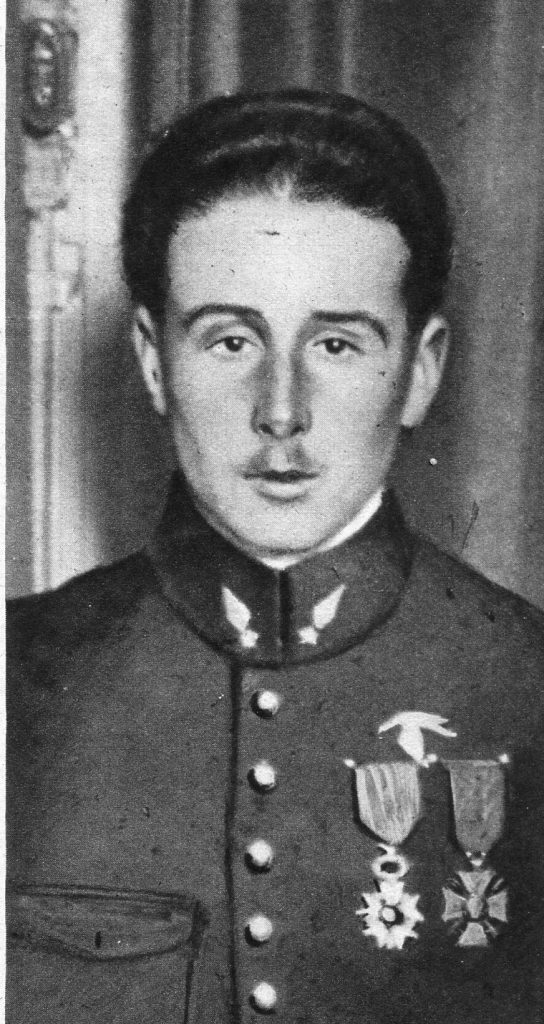
For his WWI contribution, Alfred Heurtaux was promoted from Chevalier to Officer in the Légion d’Honneur. He also received fifteen palms and two bronze stars for his Croix de Guerre. Heurtaux resigned his commission and returned to civilian life in October 1919. He became President of the French Fighter Aces Association. At 26, he was elected Deputy for Seine-et-Oise in 1919. After that, he entered the automobile industry and held a management position at Ford Motor Company in the US. While working at Ford in Dearborn, he wrote an autobiographical article for Henry Ford’s Dearborn Independent Magazine. He then took a job with General Motors in Europe, and later worked for Renault. Along with his jobs, Alfred Heurtaux was active in the Association of the Reserve Officers of the Air Force and served as its president from 1934 to 1937. On June 25, 1935, he was appointed a lieutenant colonel in the reserves. In the early days of WWII, Heurtaux returned to serve full-time and was the Inspector of Fighter Aviation for the French air forces. After France fell to the Germans, he joined the French Resistance. On January 23, 1941, Heurtaux became a member of the National Council of Vichy France. He was taken into custody in March 1941 by the Gestapo, which released him at that time, but arrested him again on November 3. He spent over three years in various German prisons in Düsseldorf, Bielefeld, Hannover, Berlin, and Potsdam. On March 13, 1945, Alfred Heurtaux was sent to Buchenwald and was liberated on April 11 when the US Army’s 6th Armored Division freed the camp, and in December 1945, he was promoted to brigadier general. In the Aces series, Alfred Heurtaux witnessed it all firsthand during his time with the French Armed Forces. He died on December 30, 1985, in Chantilly, Oise, and was buried in Paris. Read stories of other aces HERE.