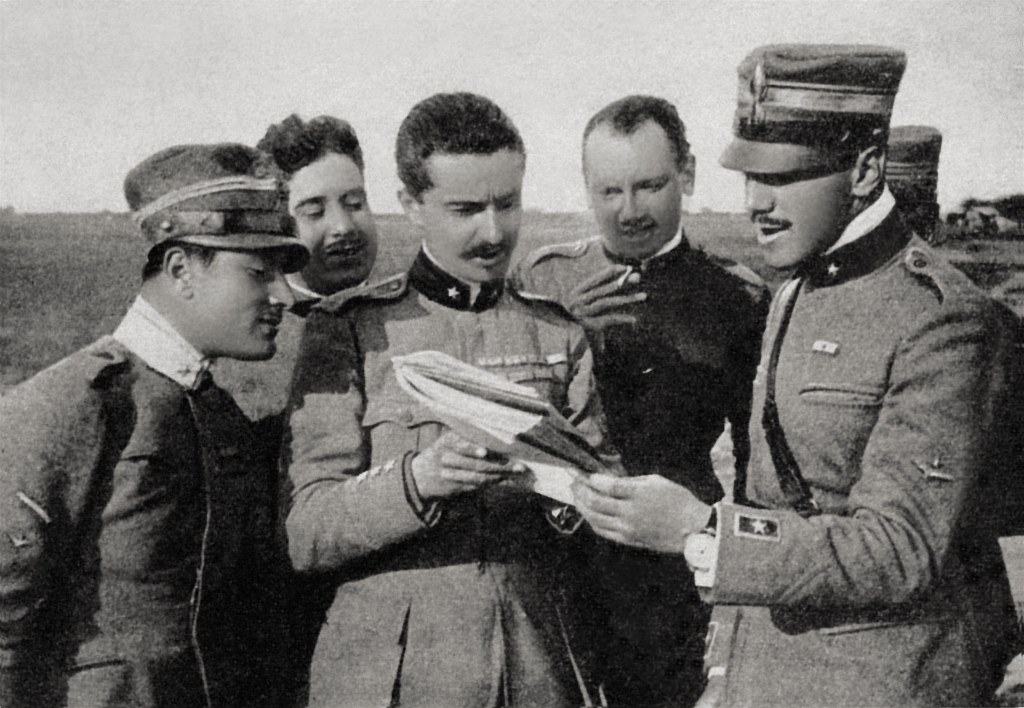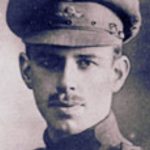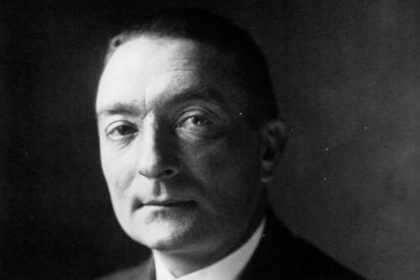
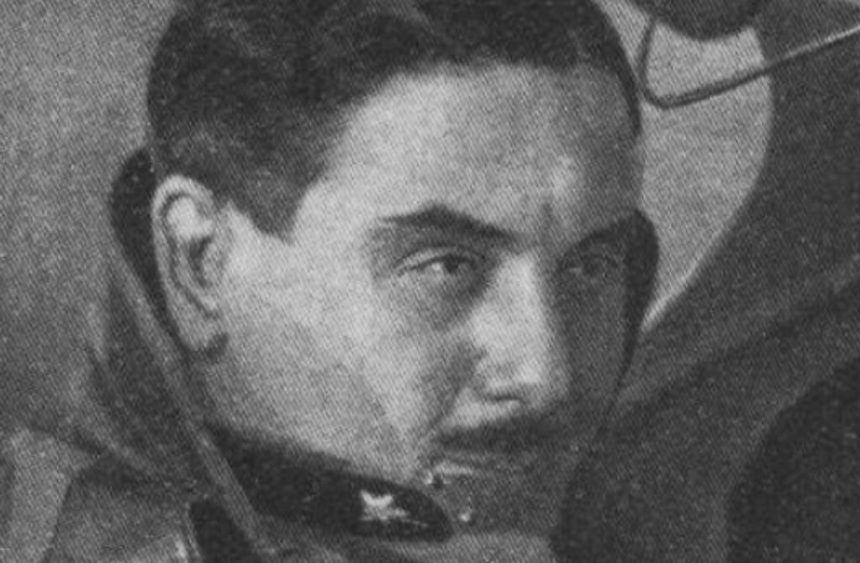

Many aces who survived WWI returned to civilian life after the war and later came back to serve in WWII. But some of them never left the military in the interwar period. One such individual was Ferruccio Ranza. Born on September 9, 1892, in Fiorenzuola d’Arda, Italy, Ranza joined the Italian military as an engineer in November 1914. In October 1915, after completing pilot training, he joined the 43a Squadron of the Italian Military Aviation Corps. He flew reconnaissance missions in this Squadron. He was awarded a Bronze Medal for Military Valor for completing an artillery spotting mission under heavy fire on April 1, 1916.
Ace Journey of Ferruccio Ranza
In June 1916, Ferruccio Ranza joined a fighter Squadron, the 77a. He flew a Nieuport 11 in this unit. Flying this aircraft, his first victory came on July 27, 1916, when he downed a Hansa-Brandenburg C.I aircraft. On September 14, 1916, he shot down a seaplane, followed by two more aircraft on November 25 in a single day to reach a personal score of four. He could not destroy another aircraft in 1916. In May 1917, Ferruccio Ranza was transferred to 91a Squadron to lead the unit. His fifth victory came on June 23, 1917, when he destroyed a two-seater to become an ace officially. Flying carefully, he shot down one aircraft each in August, September, and October, and two each in November and December, bringing his total to 12 by the end of 1917. Ferruccio Ranza scored his 13th victory on January 12, 1918, followed by two victories in February, one in June, and his last confirmed on August 17, 1918, to reach a personal score of 17. He also claimed eight unconfirmed victories in WWI. Out of his 17 aerial victories, seven were two-seater aircraft, six were Hansa-Brandenburg C.I aircraft, and one each was a seaplane, a Scout, an Albatros, and a DFW C. By the end of WWI, Ranza was promoted to captain.
Legacy and WWII
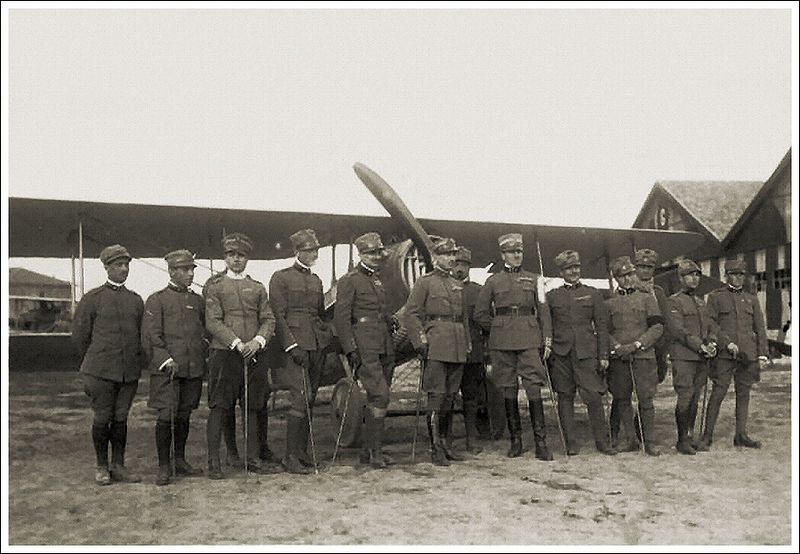
Ranza received three Silver awards of the Medal for Military Valor, four war crosses (two from Italy, one from France, and one from Belgium), the Serbian Order of the Star of Karađorđe, and the Military Order of Savoy. Ranza finished WWI having completed 465 combat missions and claimed 20 aerial victories. However, a military intelligence report from Bongiovanni on February 1, 1919, confirmed 17 of Ranza’s victory claims. Ferruccio Ranza continued serving in the Italian Air Force after WWI. In February 1924, he became the commander of the 13th Group. On April 15, 1927, he was promoted to lead the 2nd Wing. In 1928, he took charge of Italian air operations in Tripolitania, and later returned to Italy as Chief of Staff for the 1st Zone Air Force. From January to September 1935, he went back to Italian East Africa, where he was promoted to Brigadier General in March. In May 1939, he became the Air Officer Commanding in Albania. The following year, he was appointed Air Officer Commanding Southern Italy. Ranza retired on January 29, 1945, after Italy had already announced an armistice in 1943. Ferruccio Ranza passed away in Bologna, Italy, on April 25, 1973. In the Aces series, Ranza stands as an experienced ace who was brave yet careful, scoring 17 aerial victories and ending his military career at the top of the leadership ranks as a Brigadier General. Read stories of more flying aces HERE.