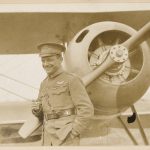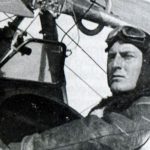
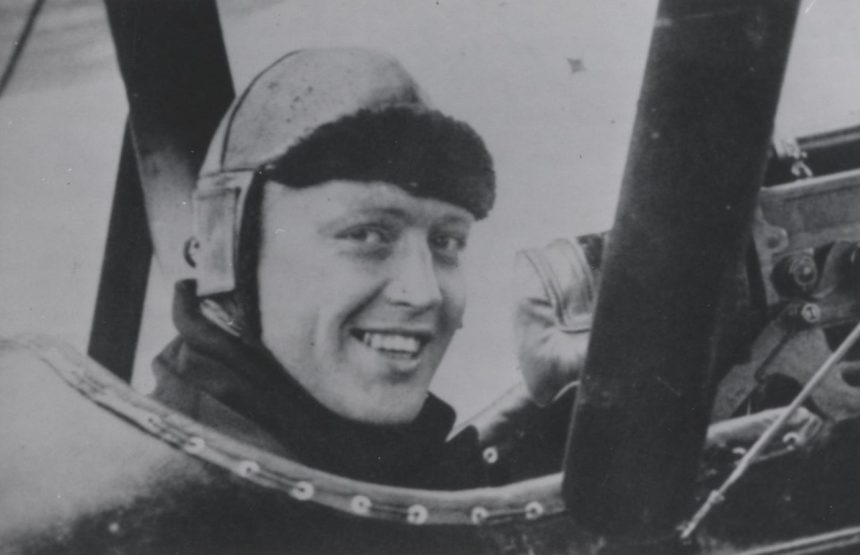

During WWI, the Royal Naval Air Service (RNAS) was a very active part of the British air combat effort and fought on the front lines before it was merged with the Royal Flying Corps (RFC) to form the Royal Air Force (RAF). However, the top-scoring RNAS pilot was not a British national, but a Canadian ace, Raymond Collishaw. Born on November 22, 1893, in Nanaimo, British Columbia, Raymond Collishaw joined the Royal Canadian Navy’s Fishery Protection Service in 1908, when he was just 15. He served on several patrol ships along the coast of British Columbia and became First Officer. In 1915, he joined the RNAS and paid his own way to attend the Curtiss Flying School in Toronto, Ontario. In January 1916, he arrived in England after being qualified as a probationary pilot. After arriving in England, Raymond Collishaw trained to be a pilot and completed his first solo flight on June 16, 1916. In August 1916, Raymond Collishaw joined RNAS 3 Wing, where he flew a Sopwith 1½ Strutter. The main mission of the unit was to bomb German targets with bombers. For that, some Strutters were converted into bombers, while others were used as two-seat fighters to escort the bombers. Raymond Collishaw flew it as a fighter to escort the bombers. His first aerial victory came on October 25, 1916, when he fought with German planes while escorting bombers. During the battle, he shot down two Scout planes in a single day. Later, in November and December, Raymond Collishaw continued taking part in bombing missions, and in January 1917, he was awarded the French Croix de Guerre for gallantry in action. In February 1917, after a short break for illness, he joined No. 3 Naval Squadron RNAS, where he flew a Sopwith Pup. In this squadron, his first victory came on February 15, followed by another one on March 4, downing Halberstadt D.II planes in both incidents, bringing his score to four. However, another injury forced him to rest for a couple of weeks.
Ace Journey of Raymond Collishaw
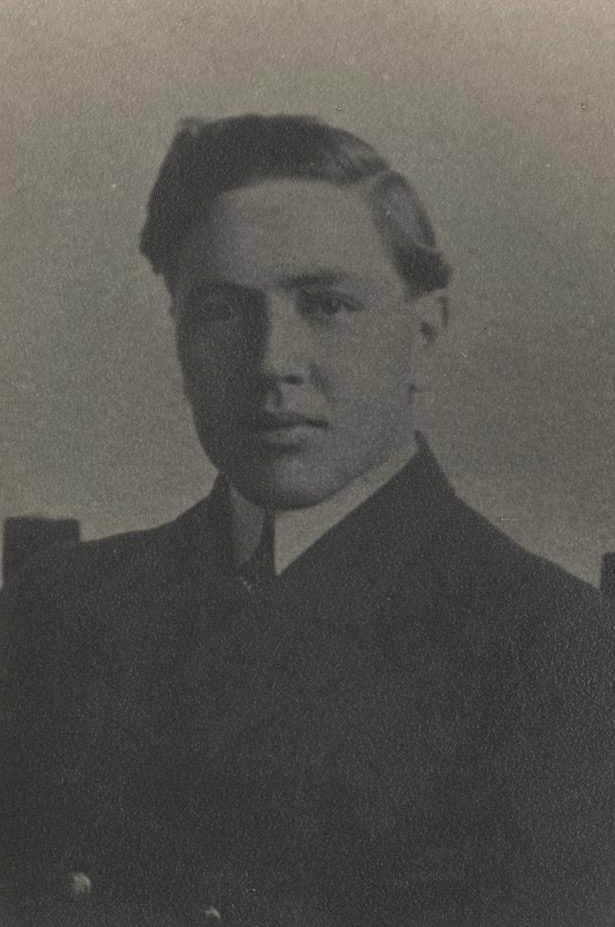
Returning to the front in April, Raymond Collishaw joined the all-Canadian No. 10 Naval Squadron as a flight commander, where he received a new Sopwith Triplane. He led the well-known ‘Black Flight’ during the spring and summer of 1917 in this squadron. On April 28, he shot down an Albatros D.II to officially become an ace, followed by another victory on April 30. After the German Bloody April, the British needed something to boost their troops’ confidence. As a result, the No. 10 Naval Squadron, commanded by Raymond Collishaw, initiated Black Flight, a three-month air offensive against Germany. Flying black-painted Sopwith Triplanes in 1917, the unit claimed 87 German aircraft in May, June, and July. The flight’s aircraft were named Black Maria, Black Prince, Black George, Black Death, and Black Sheep. Raymond Collishaw personally shot down two German aircraft in May, 16 in June, and 14 in July, as part of Black Flight. During this period, he also became the first pilot to claim six victories in a single day and the highest-scoring ace to fly the Sopwith Triplane, bringing his personal score to 38. For commanding Black Flight and scoring 32 victories in the initiative, he was awarded the Distinguished Service Cross (DSC) on July 20, 1917, with a citation, “In recognition of his services on various occasions, especially the following. On June 1, 1917, this officer shot down an Albatross Scout in flames. On June 3, 1917, he shot down an Albatross Scout in flames. On June 5, 1917, he shot down a two-seater Albatross in flames. On June 6, 1917, he shot down two Albatross scouts in flames and killed the pilot in a third. He has displayed great gallantry and skill in all his combats.” Following this, on August 11, he was awarded the Distinguished Service Order, with a citation, “For conspicuous bravery and skill in successfully leading attacks against hostile aircraft. Since June 10, 1917, Flt. Lieut. Collishaw has himself brought down four machines completely out of control and driven down two others with their planes shot away. Whilst on an offensive patrol on the morning of June 15, 1917, he forced down a hostile scout in a nose-dive. Later, on the same day, he drove down one hostile two-seater machine completely out of control, one hostile scout in a spin, and a third machine with two of its planes shot away. On June 24, 1917, he engaged four enemy scouts, driving one down in a spin and another with two of its planes shot away; the latter machine was seen to crash.”
The Legacy
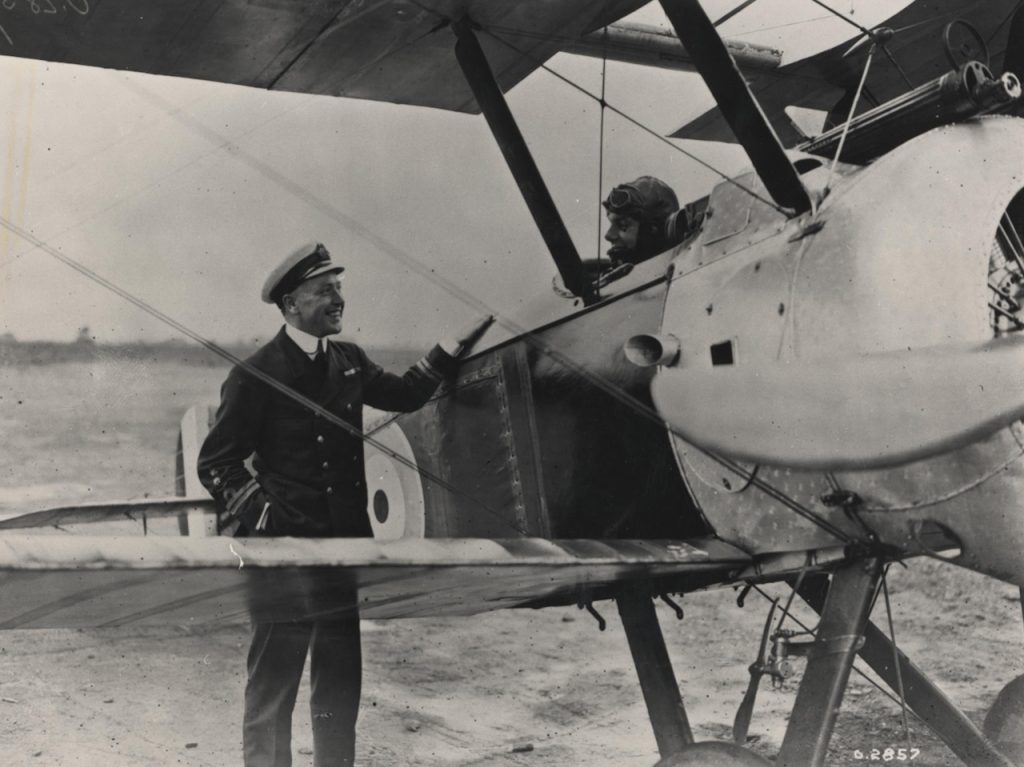
After receiving the awards, Raymond Collishaw was granted a couple of months’ leave and returned to Canada during that time. He returned to duty in November 1917 as Flight Leader in the No. 13 Naval Squadron, where he flew Sopwith Camel planes. In this squadron, his sole victory came on December 19, bringing his score to 39 by the end of 1917. In January 1918, Raymond Collishaw became the leader of his old squadron, No. 3 Naval Squadron, RNAS, which became 203 Squadron, RAF after the RNAS and the RFC combined to form the Royal Air Force in April. In this unit, flying a Sopwith Camel, Collishaw shot down five German aircraft in June and seven in July to reach a personal score of 51. In early August, he was awarded the Distinguished Flying Cross (DFC), with a citation, “This officer is an exceptionally capable and efficient squadron commander, under whose leadership the squadron has maintained a high place in the Army Wing. He has carried out numerous solo patrols and led many offensive patrols, on all occasions engaging the enemy with great bravery and fearlessness. Up to date, he has accounted for forty-seven enemy machines, twenty-two in the last twelve months.” Raymond Collishaw added five more victories in August and four in September, to end his WWI at a personal score of 60. On September 21, he was awarded the Distinguished Service Order (DSO) Bar, with a citation, “A brilliant squadron leader of exceptional daring, who has destroyed fifty-one enemy machines. Early one morning, he, with another pilot, attacked an enemy aerodrome. Seeing three machines brought out of a burning hangar, he dived five times, firing bursts at these from a very low altitude, and dropped bombs on the living quarters. He then saw an enemy aeroplane descending over the aerodrome; he attacked it and drove it down in flames. Later, when returning from a reconnaissance of the damaged hangars, he was attacked by three Albatross Scouts, who pursued him to our lines, when he turned and attacked one, which fell out of control and crashed.” By the end of the war, Collishaw was the top pilot in the RNAS and the third-highest-scoring pilot among all British Empire pilots.
Postwar and WWII
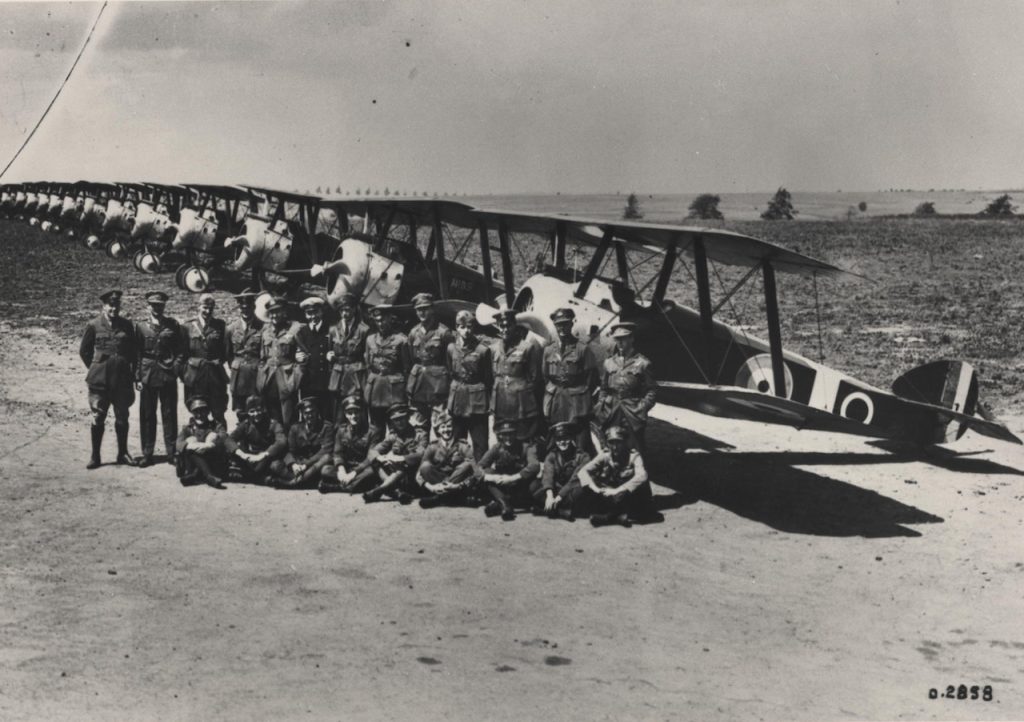
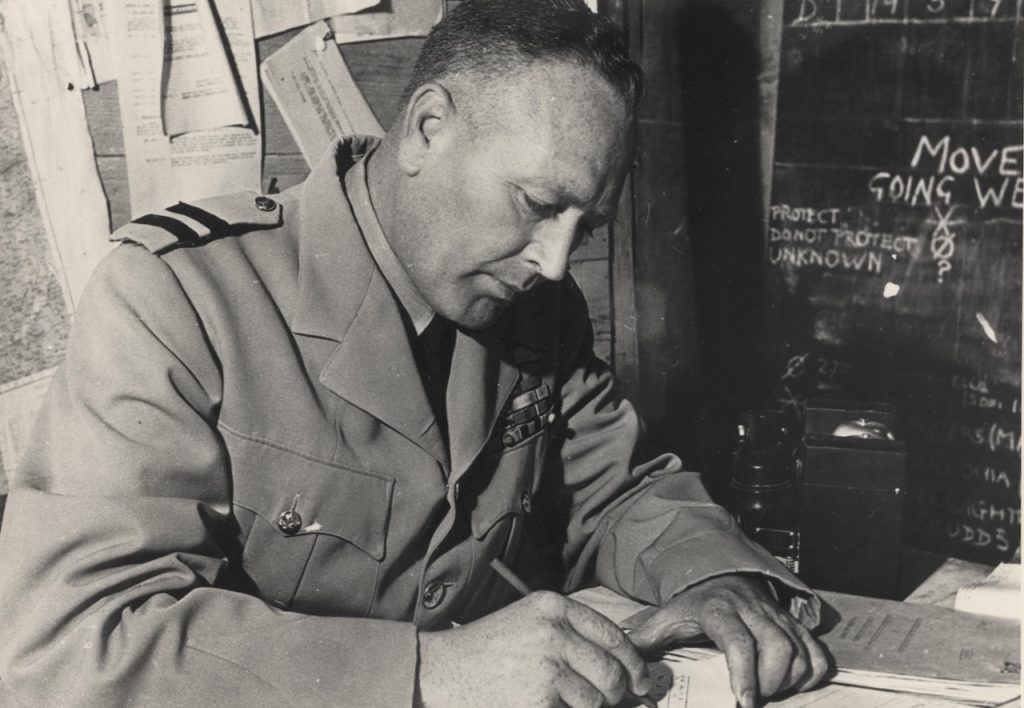
After the war, Raymond Collishaw received a permanent commission in the RAF. From 1919 to early 1920, he led 47 Squadron in South Russia, supporting Denikin’s White Russian Forces against the Bolsheviks. In late 1920, he went to Iraq to command 30 Squadron in operations against the Bolsheviks in North Persia. Raymond Collishaw was appointed an Officer of the Order of the British Empire and received three Russian honors, including the Orders of St. Anne, St. Stanislaus, and St. Vladimir. Three years later, he returned to England and attended the RAF Staff College. He subsequently held various squadron and air base commands. In 1929, as Wing Commander, he became the senior RAF Officer on HMS Courageous, an aircraft carrier in the Mediterranean Sea. In 1932, he returned to England to command the RAF station at Bircham Newton. By 1935, as Group Captain, he took charge of the RAF station at Upper Hayford. As war with Germany became more likely, the RAF in the Middle East strengthened its forces. In 1939, a new unit, the Egypt Group, was established, and in 1940, Collishaw was promoted to Air Commodore and took command of this group, which later became known as the Desert Air Force. When Italy joined the war in 1940, Collishaw’s group faced heavy odds. Despite being outnumbered, he kept the offensive, and his teams destroyed about 1,100 Italian aircraft. Raymond Collishaw flew operations in Hurricanes until he was grounded because he was considered too valuable to risk losing and too knowledgeable to be captured by the enemy. In March 1941, his inspiring leadership earned him the recognition of being made a Companion of the Order of the Bath. In 1942, Collishaw was assigned to Fighter Command Headquarters in England. He was promoted to Air Vice-Marshal and given command of 14 Fighter Group in Scotland. He retired from the RAF in 1943 but continued to serve as a liaison officer with the Civil Defense Organization until the war ended. Collishaw returned to Canada in 1945, and in 1946, he was made an Officer of the Order of the British Empire. He passed away in Vancouver on September 29, 1976. In the Aces series, Raymond Collishaw was not an ordinary ace but a true fighter pilot and a born leader who would be remembered for ages. Read more stories about other Aces HERE.