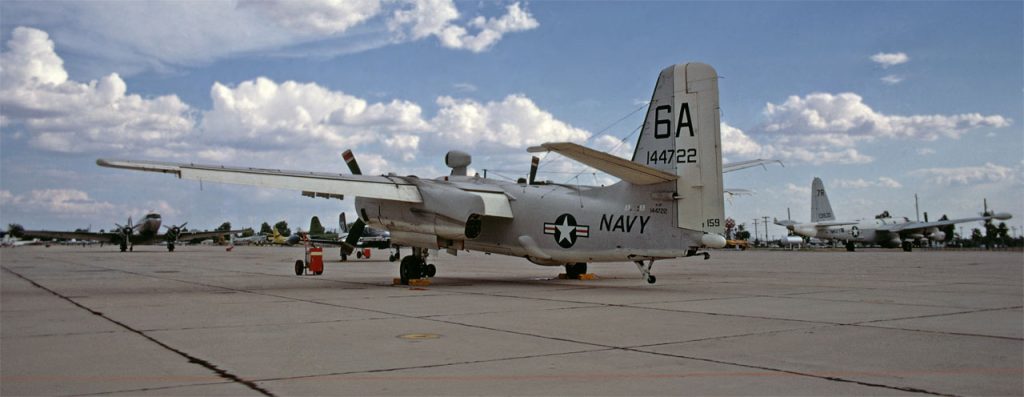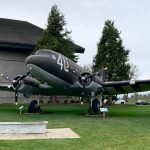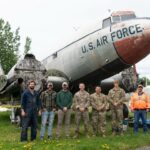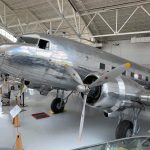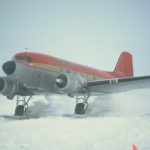
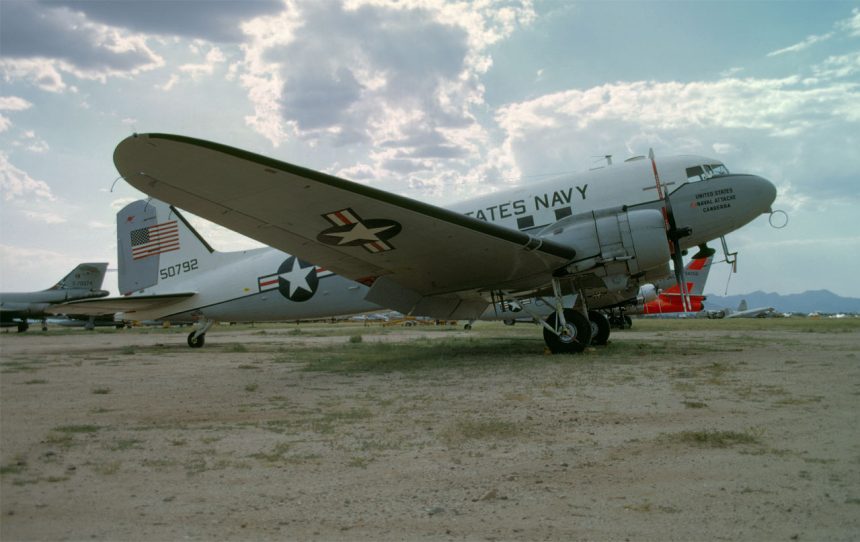

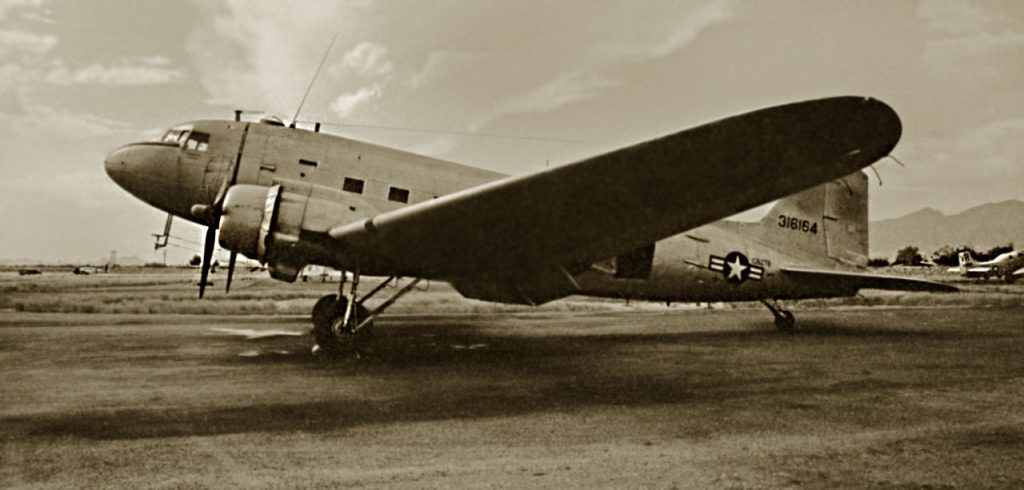
As we initiate the Boneyard Files series, which will showcase some of the retired aircraft resting at U.S. Davis-Monthan Air Force Base in Tucson, Arizona, in the late 1960s, through the lens of Neil Aird’s “Monthan Memories” photos, today’s story features the Douglas C-47 Skytrain. The C-47 was one of the most durable aircraft of the U.S. Air Force, and to date, there are very few aircraft that are so widely used or in service as long as the C-47. Nicknamed the “Gooney Bird,” the aircraft was based on the Douglas Aircraft Company’s DC-3 civilian airliner, which was the first reliable passenger aircraft. The U.S. Air Force first ordered the C-47 in 1940, after realizing in the late 1930s that the DC-3 needed several modifications before it could be used as a military aircraft. The DC-3 was fitted with two Pratt & Whitney R-1830s, each producing 1,200 horsepower, large cargo doors, a strong rear fuselage, and a strengthened cabin floor to turn it into the C-47 Skytrain. The U.S. Army Air Corps received its first C-47 Skytrain in 1941, and by the end of World War II, the service had procured 9,348 C-47s. On December 23, 1941, the first Douglas C-47 Skytrain ever built made its maiden flight from Long Beach Airport, California.
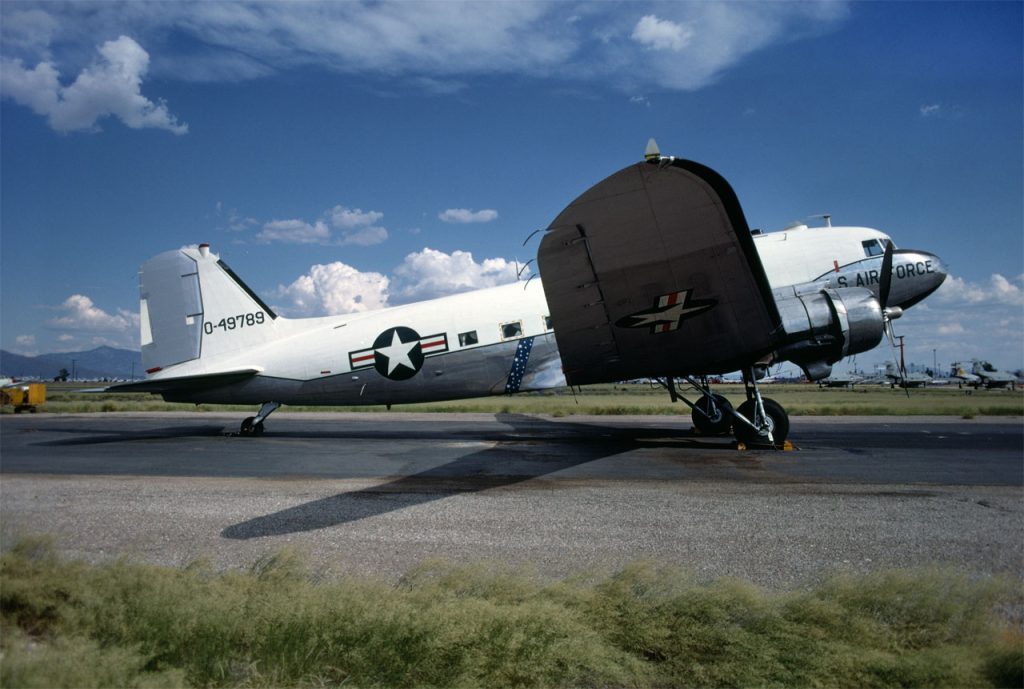
With a maximum speed of 232 mph and a range of 1,513 miles, the C-47s carried cargo and personnel, dropped paratroops into enemy territory, towed troop-carrying gliders, and air-evacuated sick or wounded patients around the globe. A C-47 Skytrain could carry up to 28 passengers, 18 to 22 fully equipped paratroopers, about 6,000 pounds of cargo, or 18 stretchers with three medical personnel. The C-47 was used in various missions during World War II, including Operation Husky, the Allied invasion of Italy that landed on Sicily (also known as the Battle of Sicily), and Operation Avalanche, the Allied landings near the port of Salerno. One of the most important and remembered aircraft missions came in Operation Overlord, also known as the D-Day invasion. To liberate Western Europe from the Nazis, thousands of British and U.S. soldiers prepared themselves to invade France on June 6, 1944. On that day, more than 1,000 C-47 Skytrains transported 23,000 paratroopers who had landed by parachute or gliders on five beaches along the Normandy coast.
In August 1944, the aircraft was used in Operation Dragoon, where the Allied soldiers invaded Southern France, landing between Toulon and Cannes, to create a second front in France, relieve pressure on Operation Overlord, and capture essential deep-water ports to supply the Allied advance. Soon followed another important operation in September, which remains the largest airborne operation to date. More than 1,400 C-47s dropped three divisions, including the U.S. 101st, the U.S. 82nd, and the British 1st, to capture major bridges in the Netherlands to end the war before Christmas 1944. However, the operation failed, and the Allied forces and the C-47 Skytrains took revenge in March 1945 with the launch of Operation Varsity. It was the largest single-lift airborne operation of the war, and part of the Allied campaign to cross the Rhine River into Germany. During the operation, 836 C-47 Skytrains dropped the U.S. 17th and British 6th Airborne Divisions, who were successful at securing territory on the east bank of the Rhine.
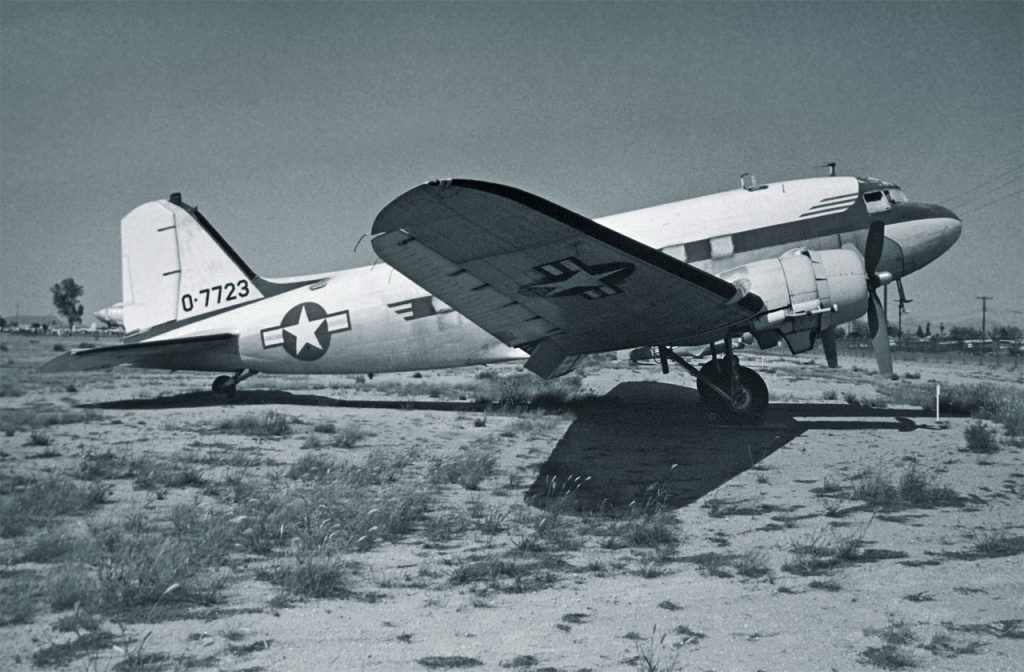
As the Japanese cut off China’s land and sea supplies, the C-47 Skytrains were also used to deliver cargo to China, flying from India over the Himalayas at around 17,000 feet. The Soviet Union produced nearly 6,000 license-built C-47 Skytrains between 1939 and 1952, designated the Lisunov Li-2. Ironically, the aircraft was so good that even the Imperial Japanese Navy used it as its primary transport plane during World War II, and it was not reverse-engineered but license-built. Japan licensed-built approximately 487 DC-3 civilian aircraft, known locally as the L2D Type 0 transport, between 1939 and 1945. But just as the U.S. Armed Forces modified the aircraft for military service by adding Pratt & Whitney engines, Japan added Mitsubishi Kinsei radial engines to its aircraft. Even after World War II, the C-47 Skytrains continued to serve the U.S. forces. It participated in the Berlin Airlift, the Korean War, and even the Southeast Asian War. During these missions, it handled supplies, dropped paratroops, evacuated wounded, dropped flares for night bombing attacks, conducted ground attacks as gunships, conducted reconnaissance, and conducted psychological warfare. The U.S. military began retiring the Douglas C-47 Skytrain in the late 1940s, but it remained in service for nearly 3.5 decades. The United States Air Force retired its last active C-47 Skytrain in June 1975. Several retired C-47 Skytrains were sent to rest at the U.S. Davis-Monthan Air Force Base in Tucson, Arizona, also known as “The Boneyard.”