






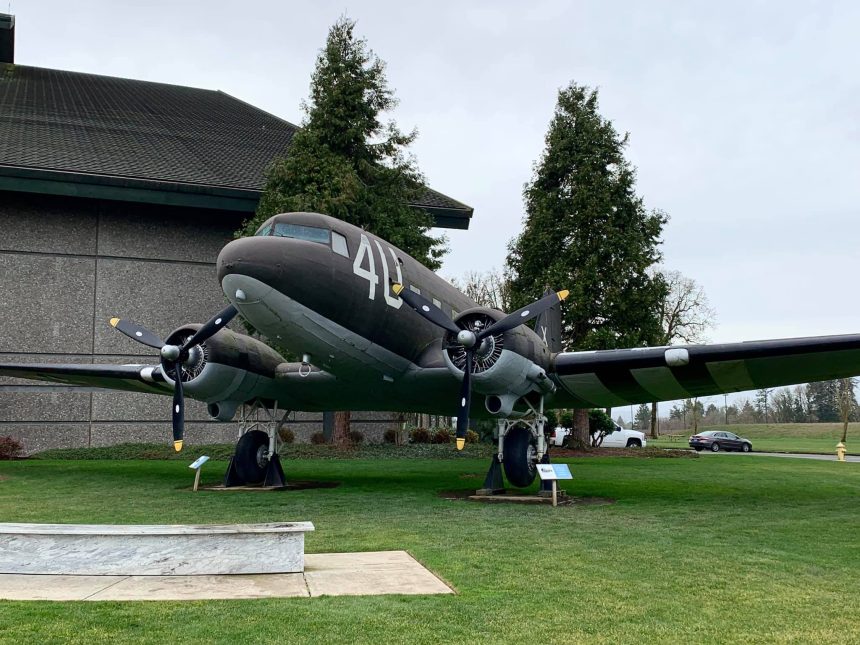

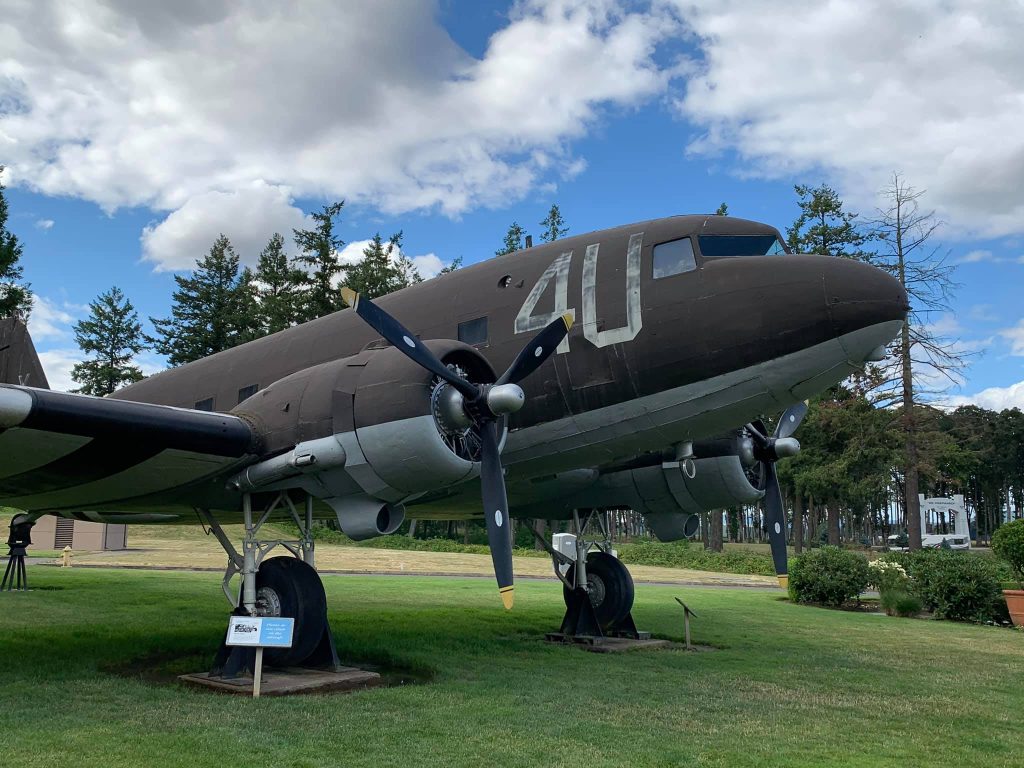
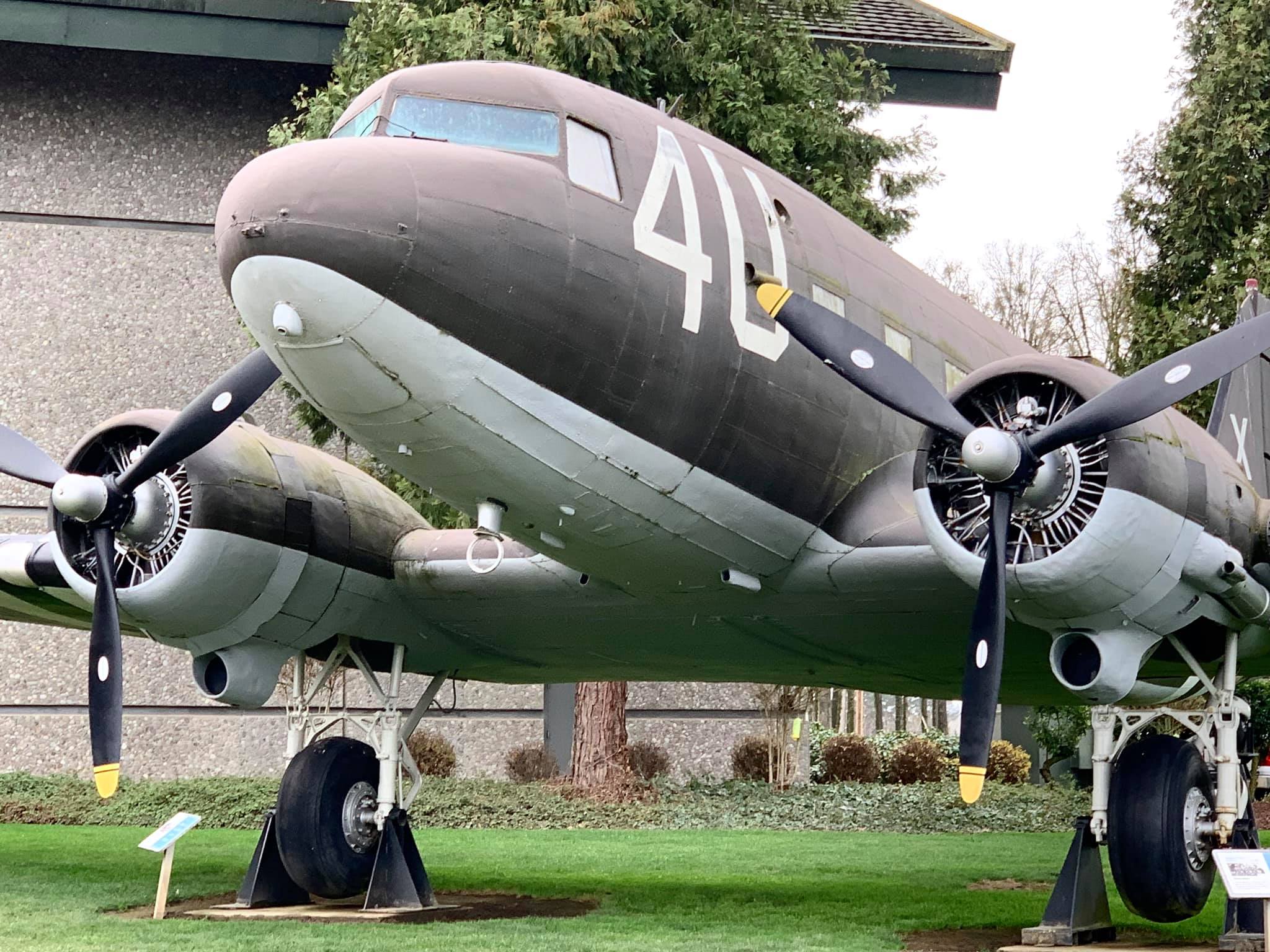
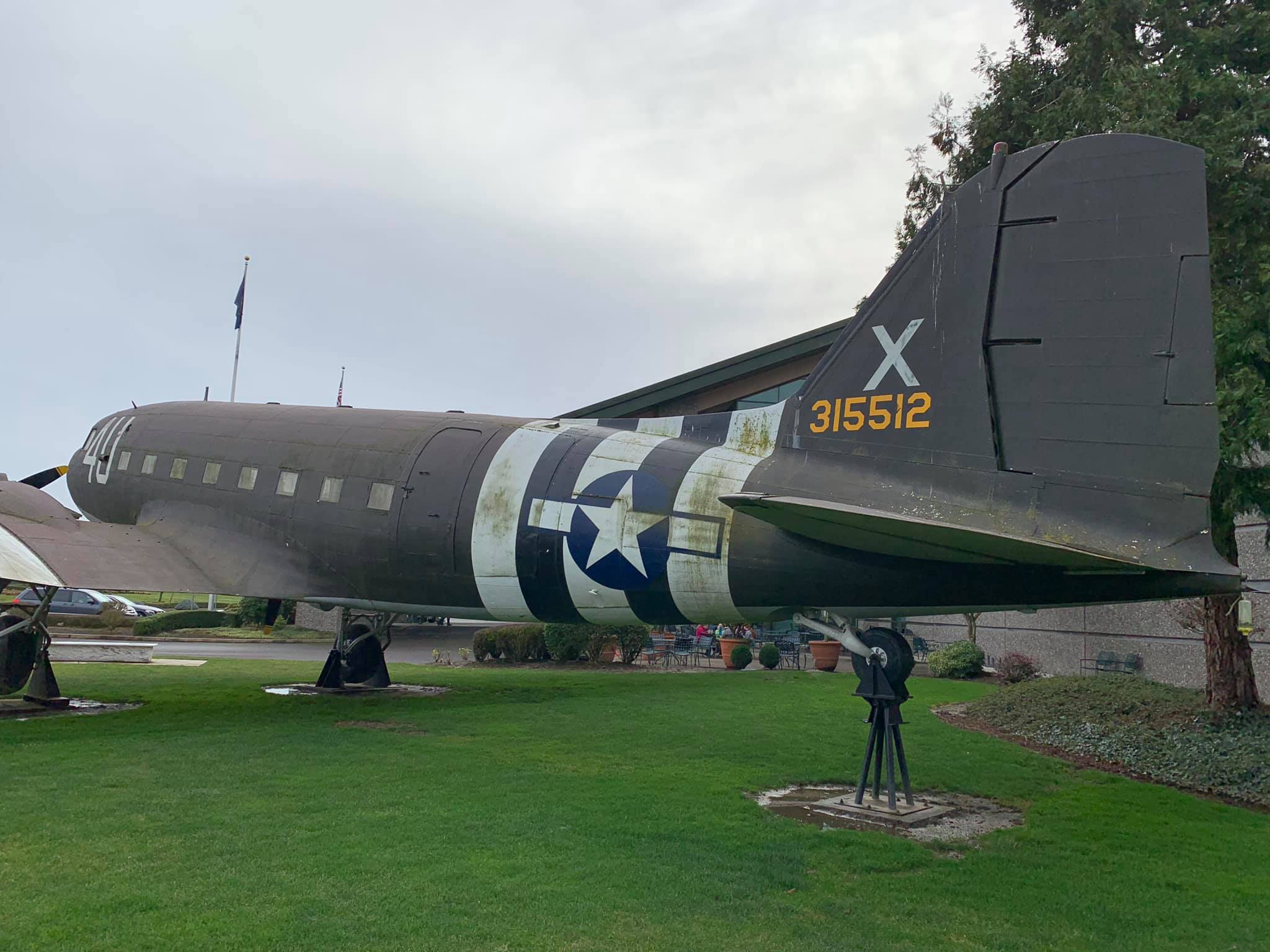
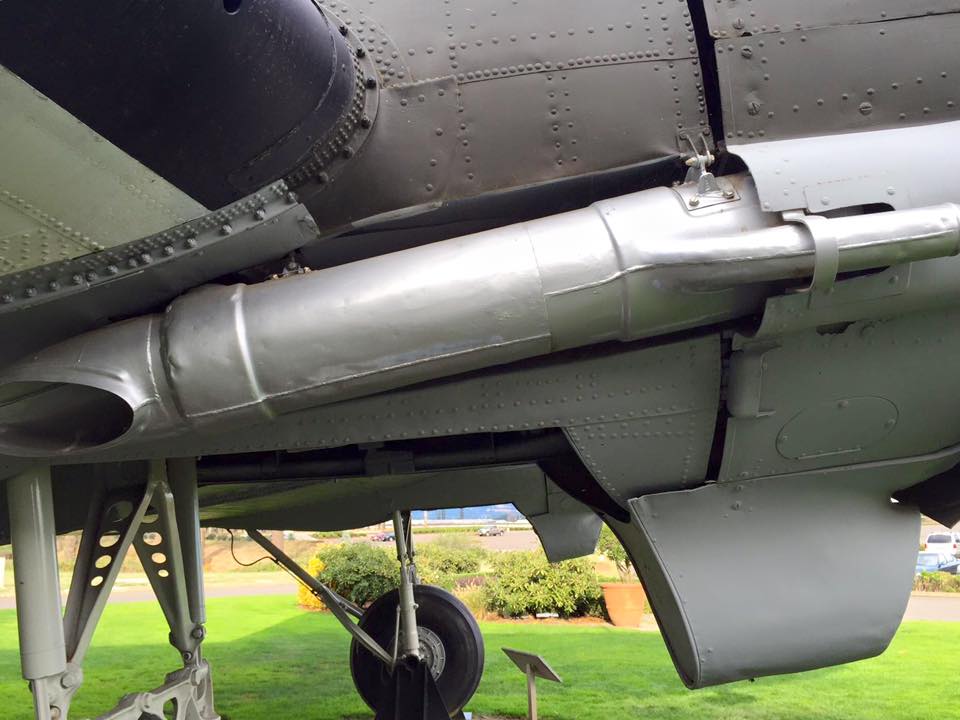
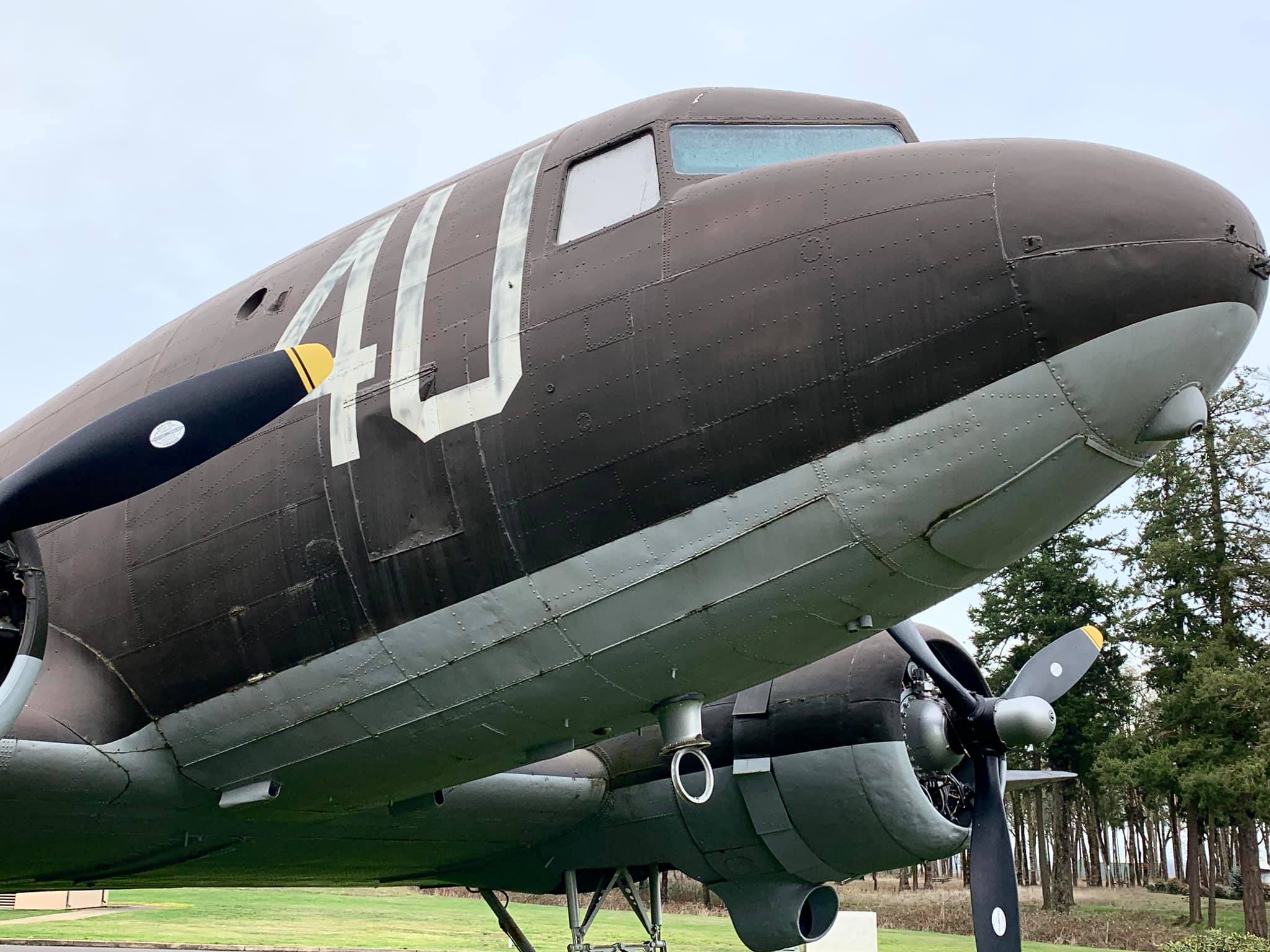
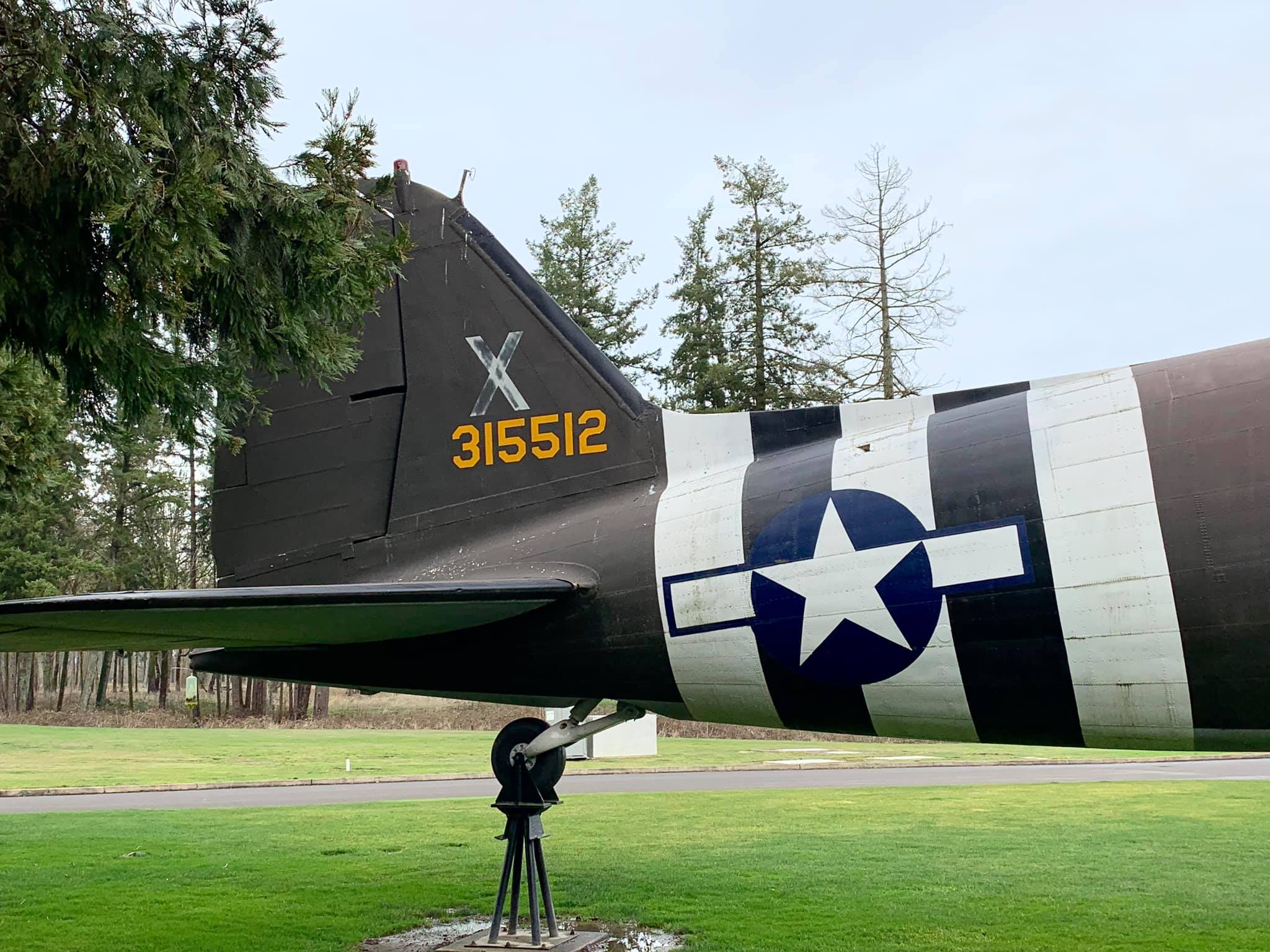
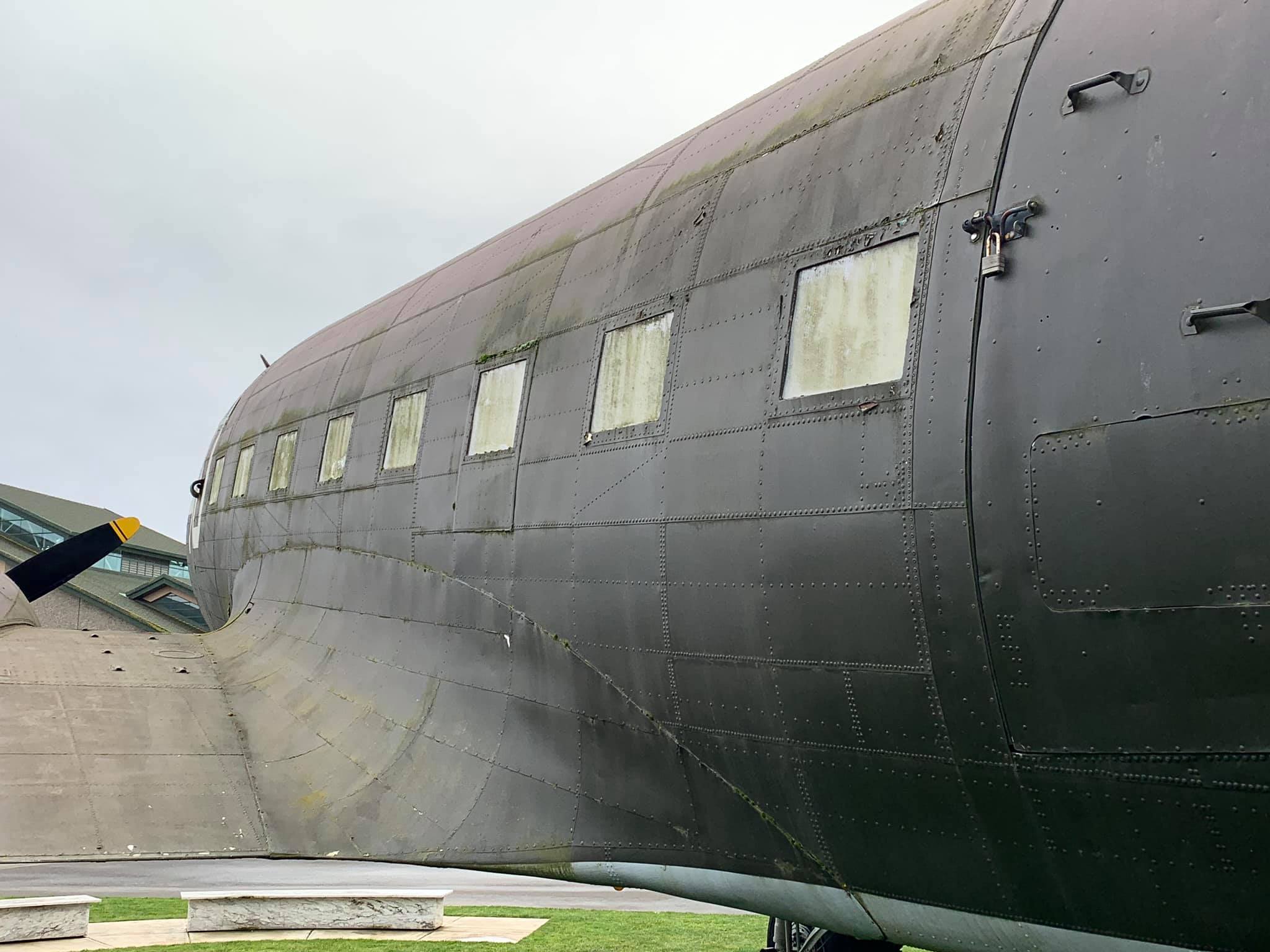
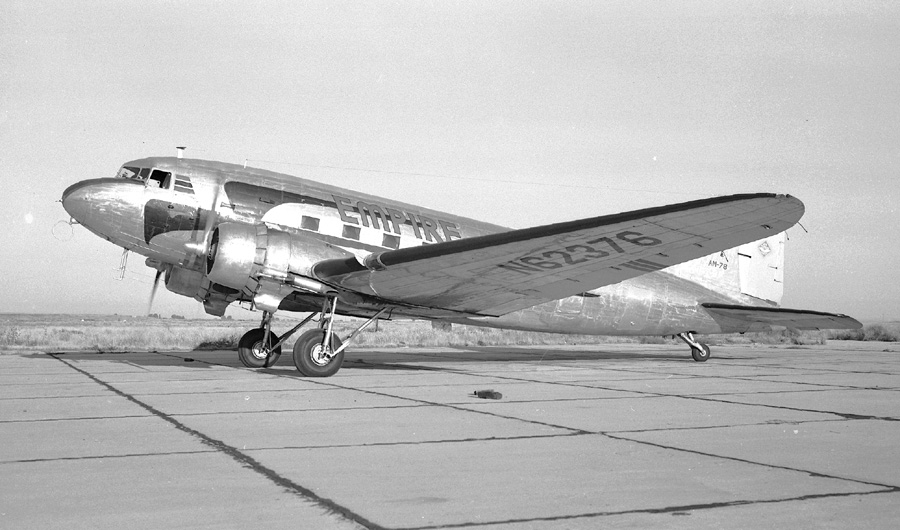
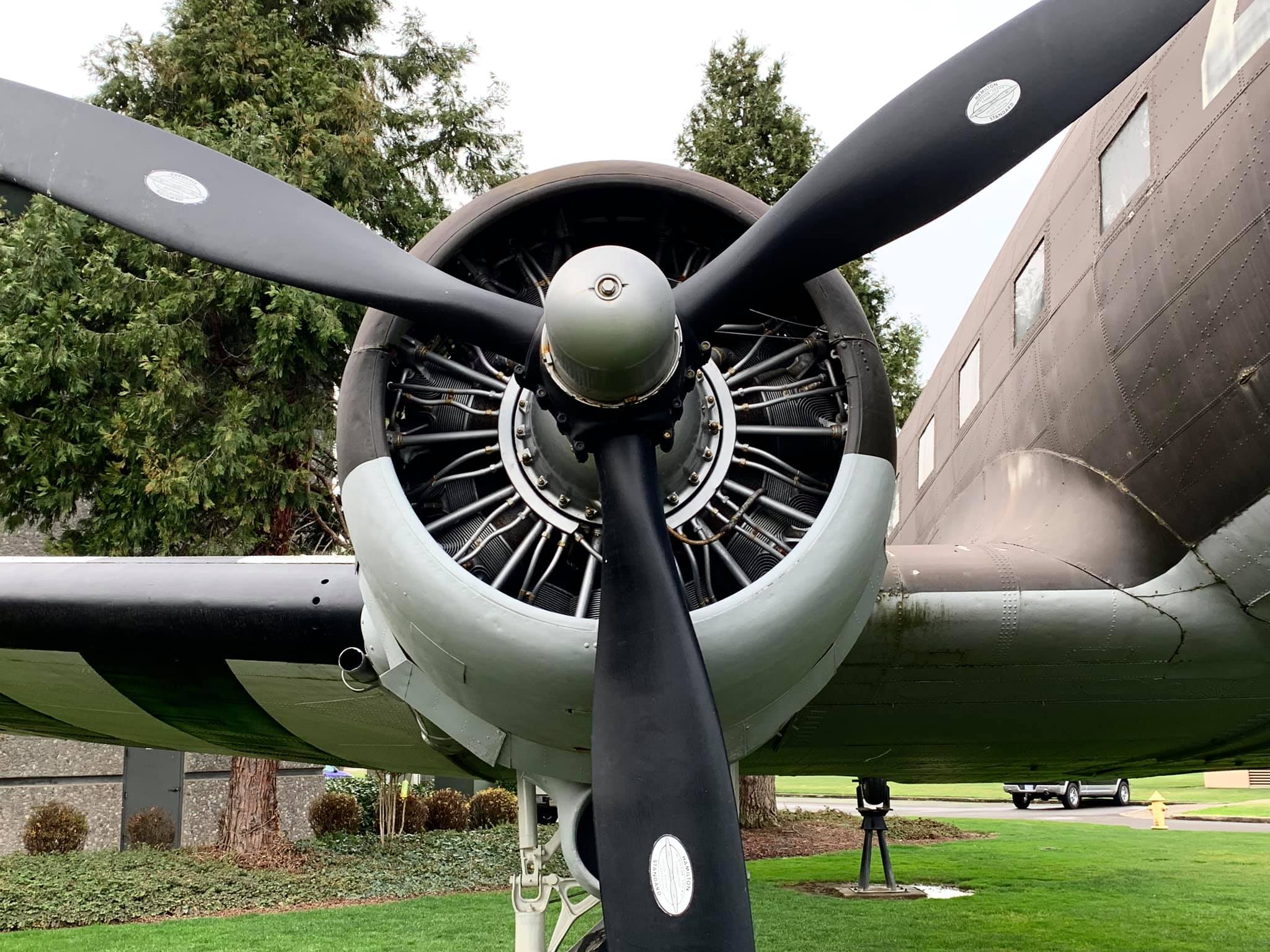
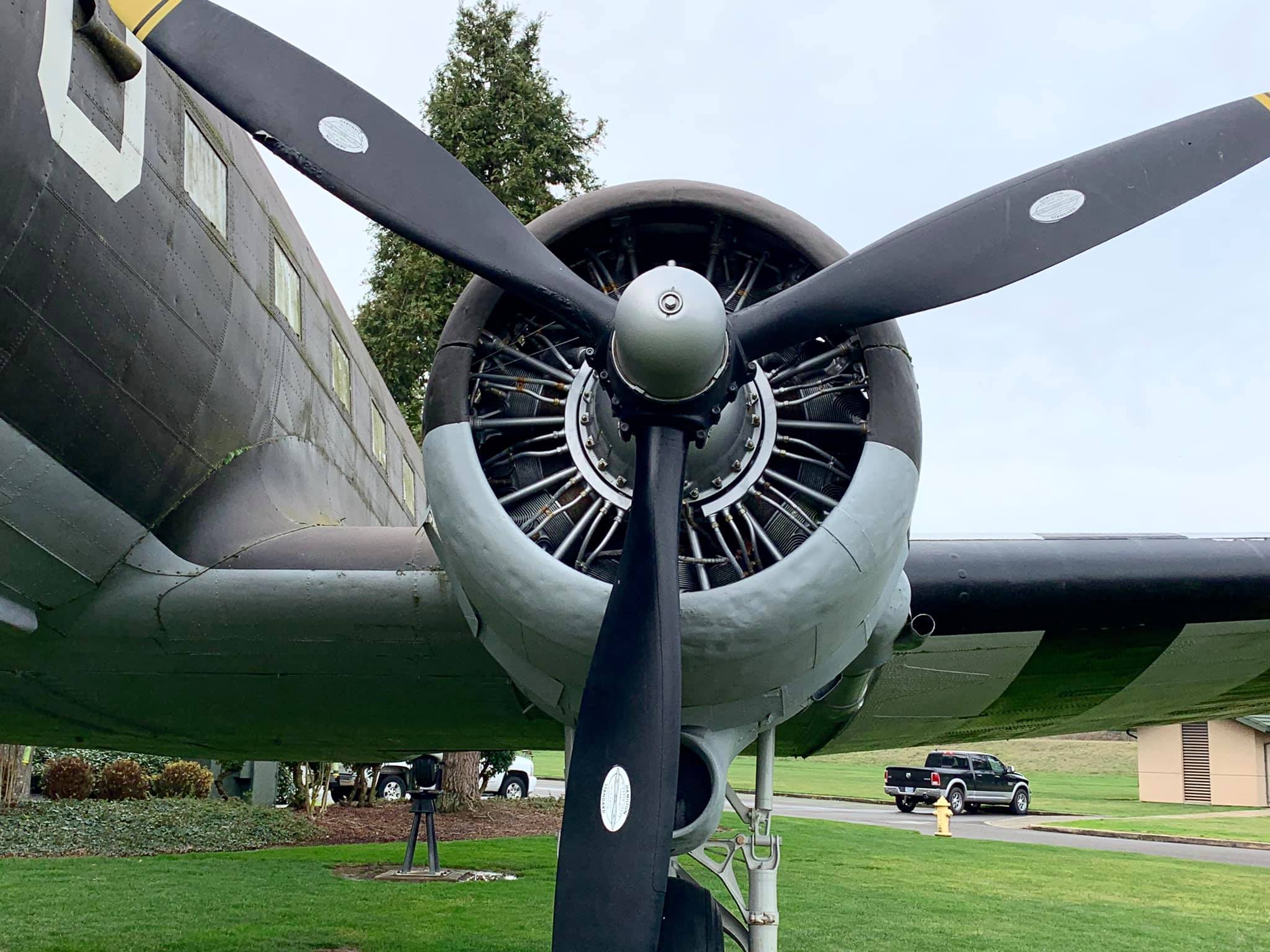
In 1946, it was sold as NC62736 to Empire Air Lines, and then on August 4, 1952, it was transferred to West Coast Airlines. The plane was WFU (withdrawn from use) in 1963 with a total of 32,181 flying hours. It was donated to the Oregon Museum of Science and Industry on May 24, 1966, where it sat outside at the museum’s hillside location at that time (it was disassembled at Boeing Field in Seattle for the road trip) – I recall it, and there was a walkway from the museum to the cabin door. When the museum moved to its present location on the Willamette River in downtown Portland, Oregon, the aircraft was transferred to its present location outside the main entrance to Evergreen Aviation & Space Museum, McMinnville, Oregon, and repainted in USAAF colors. It is not fully restored inside, as you can see, and is certainly not airworthy. My photos.
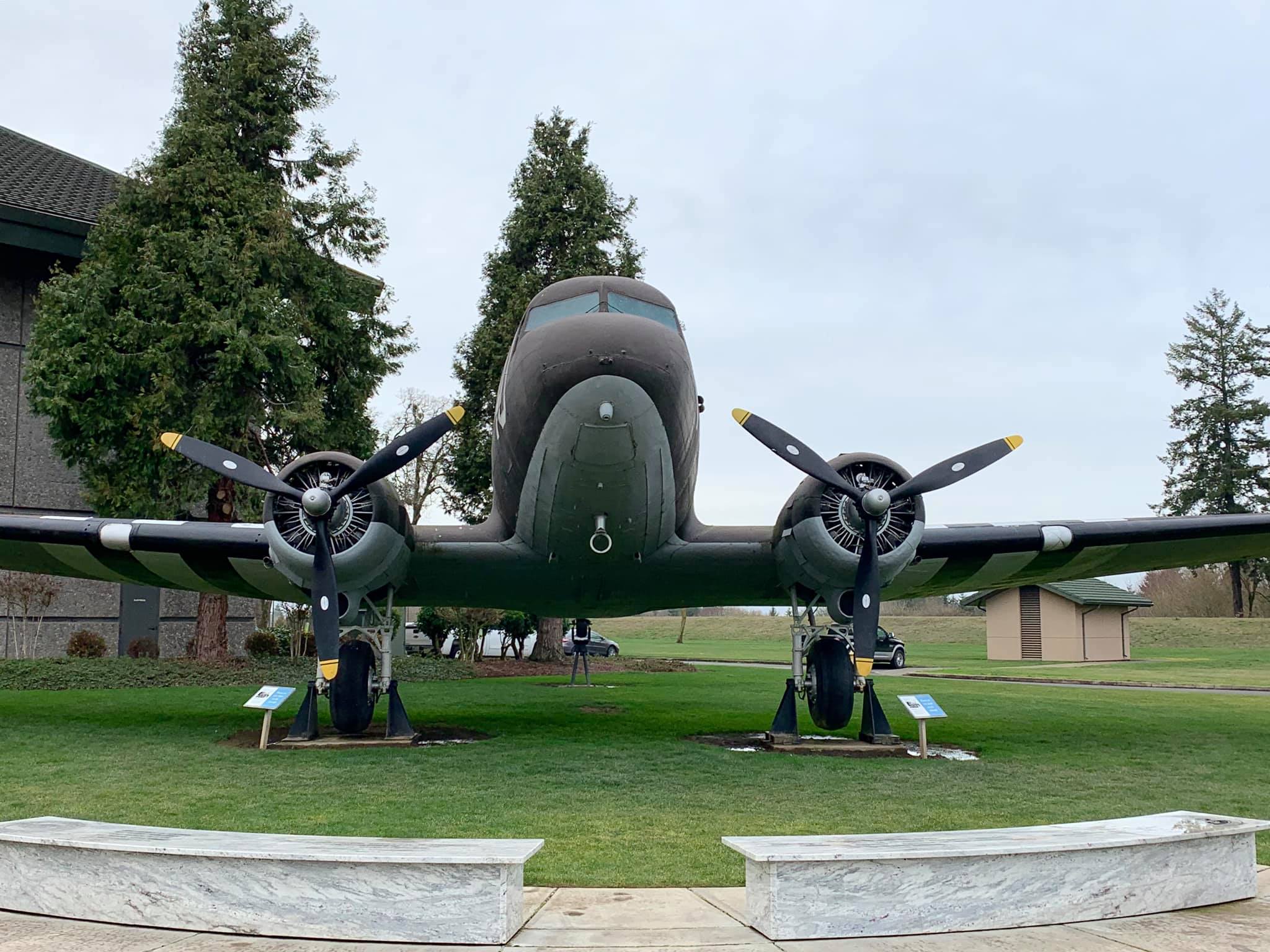
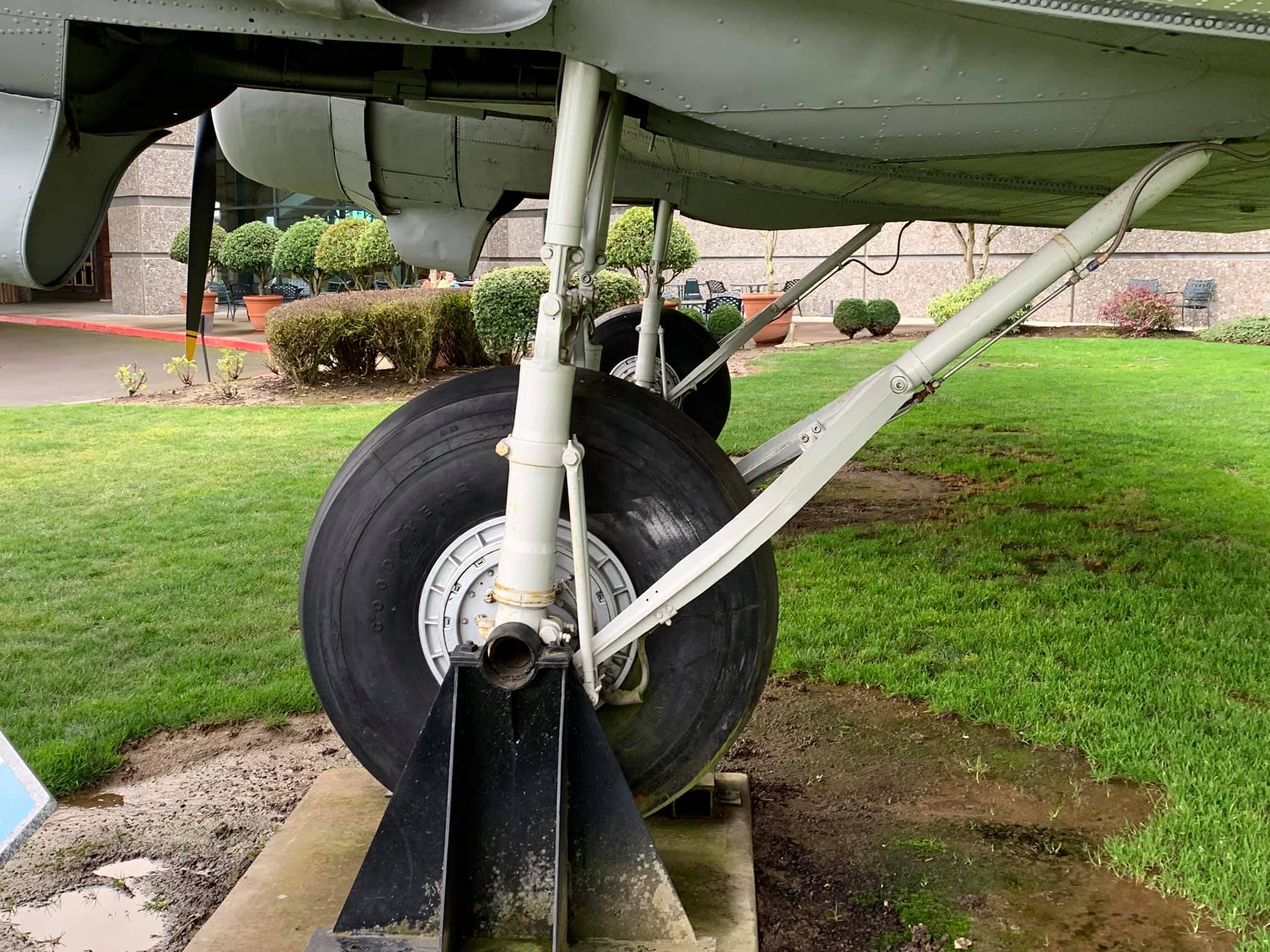
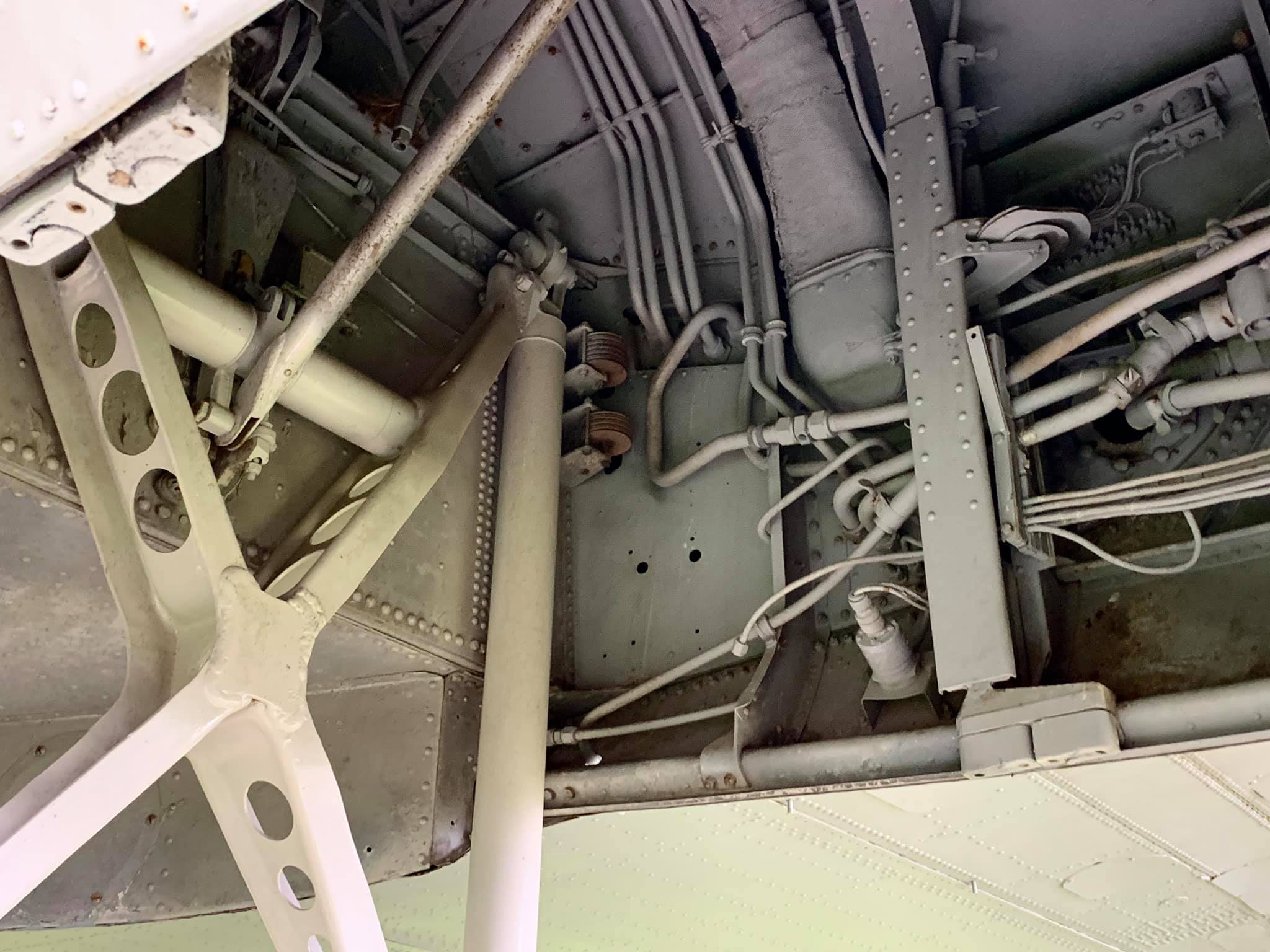
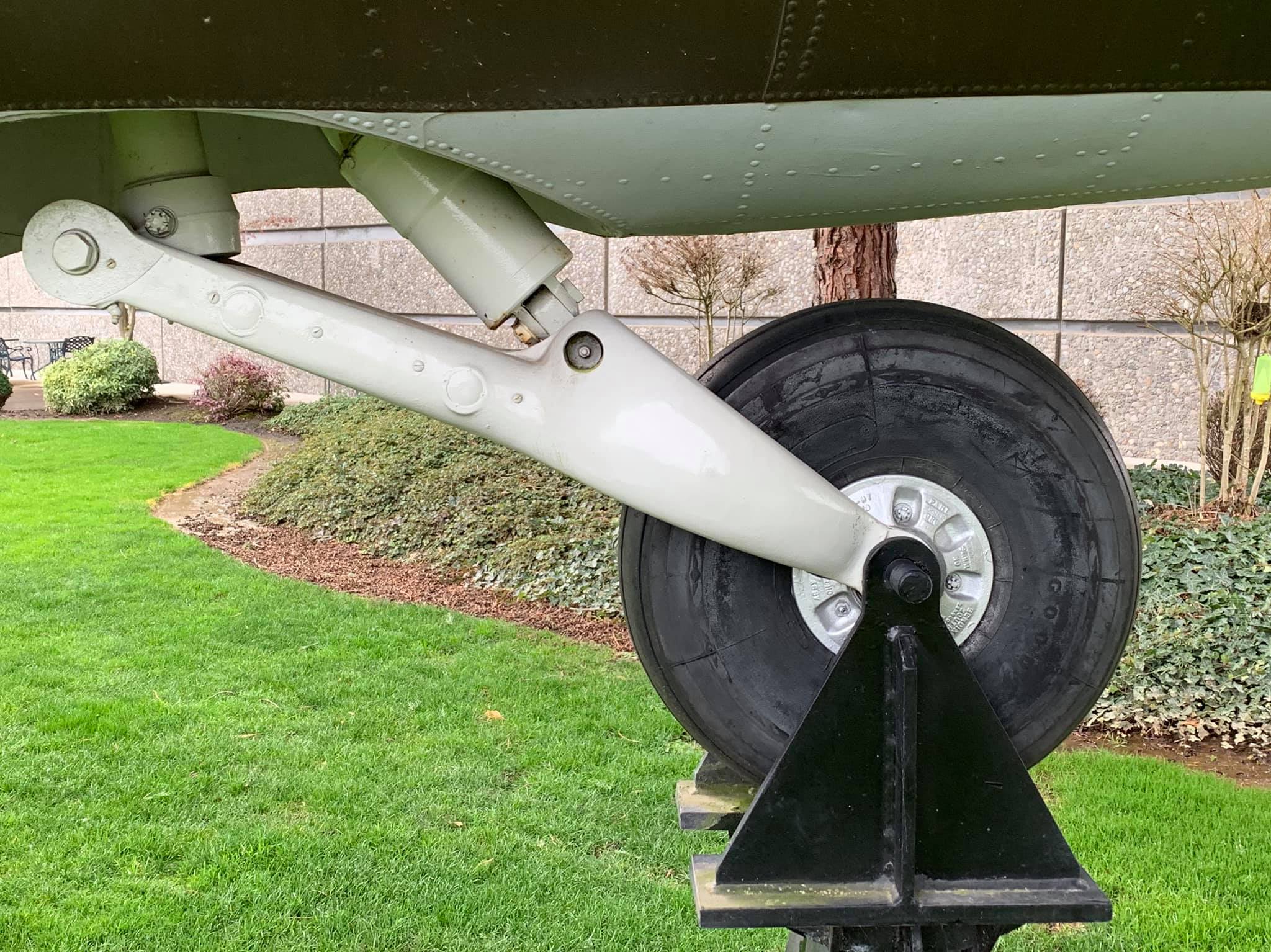
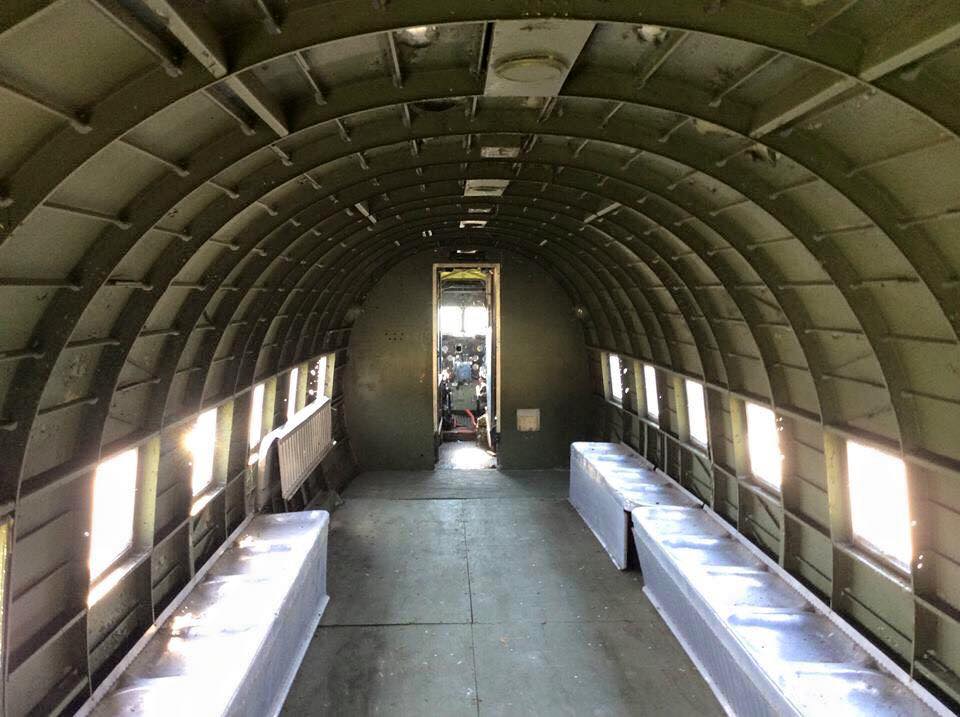
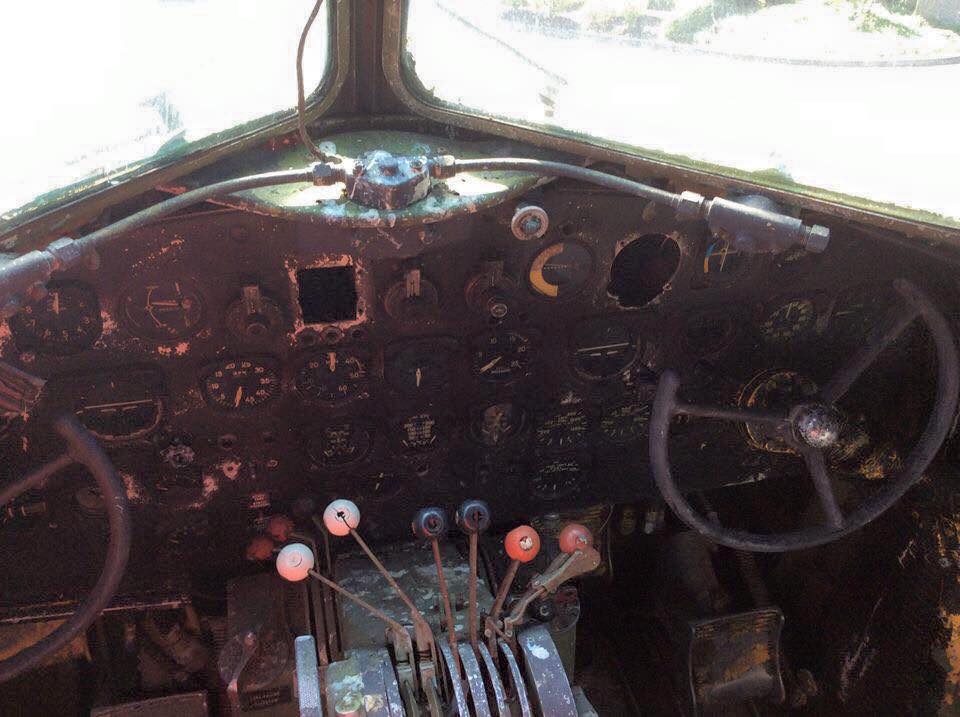
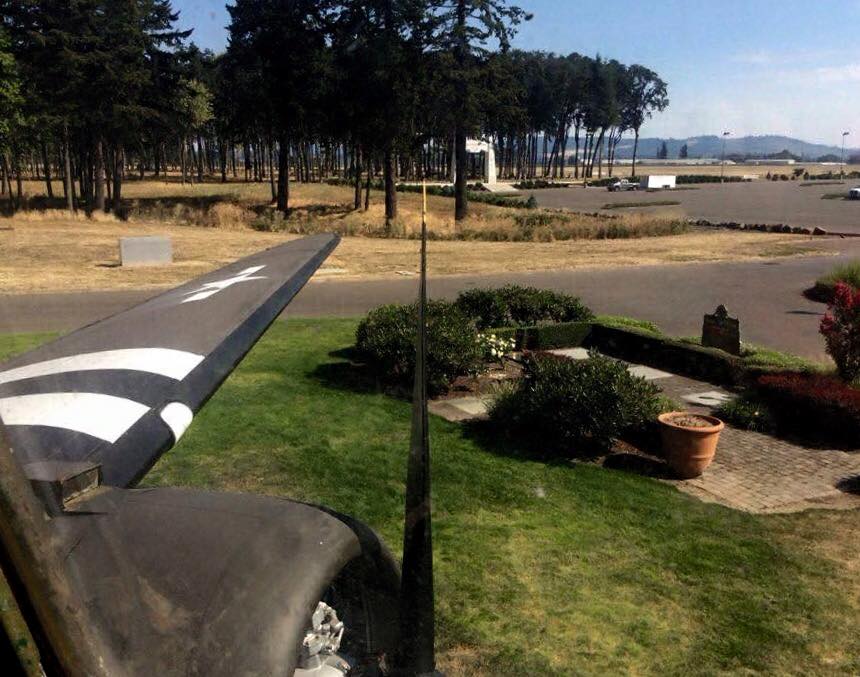
Also known by British Commonwealth forces as “Dakota” (DACoTA” for Douglas Aircraft Company Transport Aircraft), it also had the nicknames “Skytrooper” and “Gooney Bird” and “Old Bucket,” and during the Vietnam War it was known as “Puff” and “Puff, the Magic Dragon” ostensibly as a result of its appearance and sound at night while defending hamlets in the Mekong River Delta (as reported by Capt. Jack Harvey). Theories abound as to how the aircraft got the “Gooney Bird” nickname. It has been said that the name came from the South Pacific, where small atolls were the home of the wandering albatross, the giant seagull-like bird noted for its powers of flight and sometimes unflattering but safe landings.

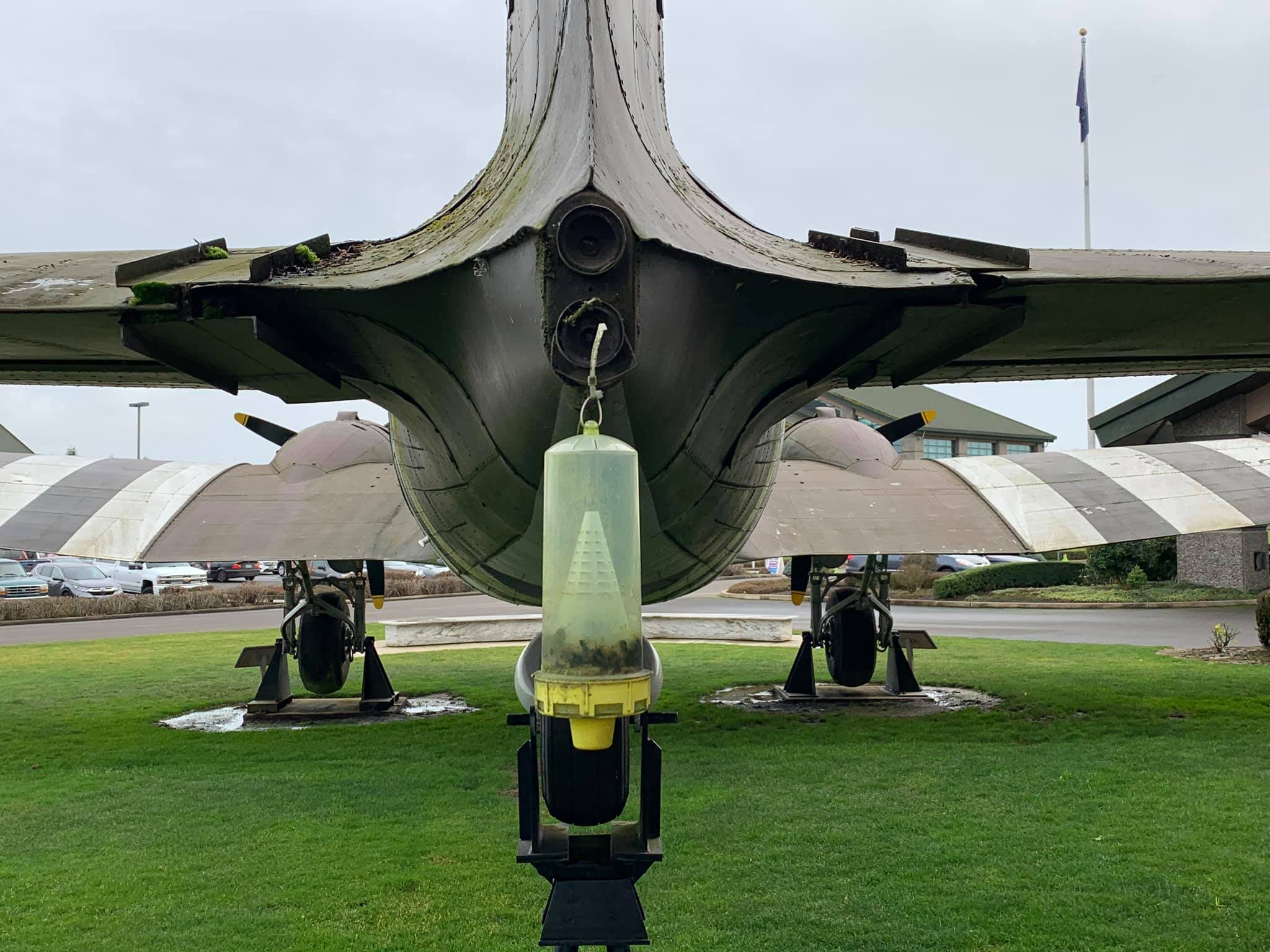
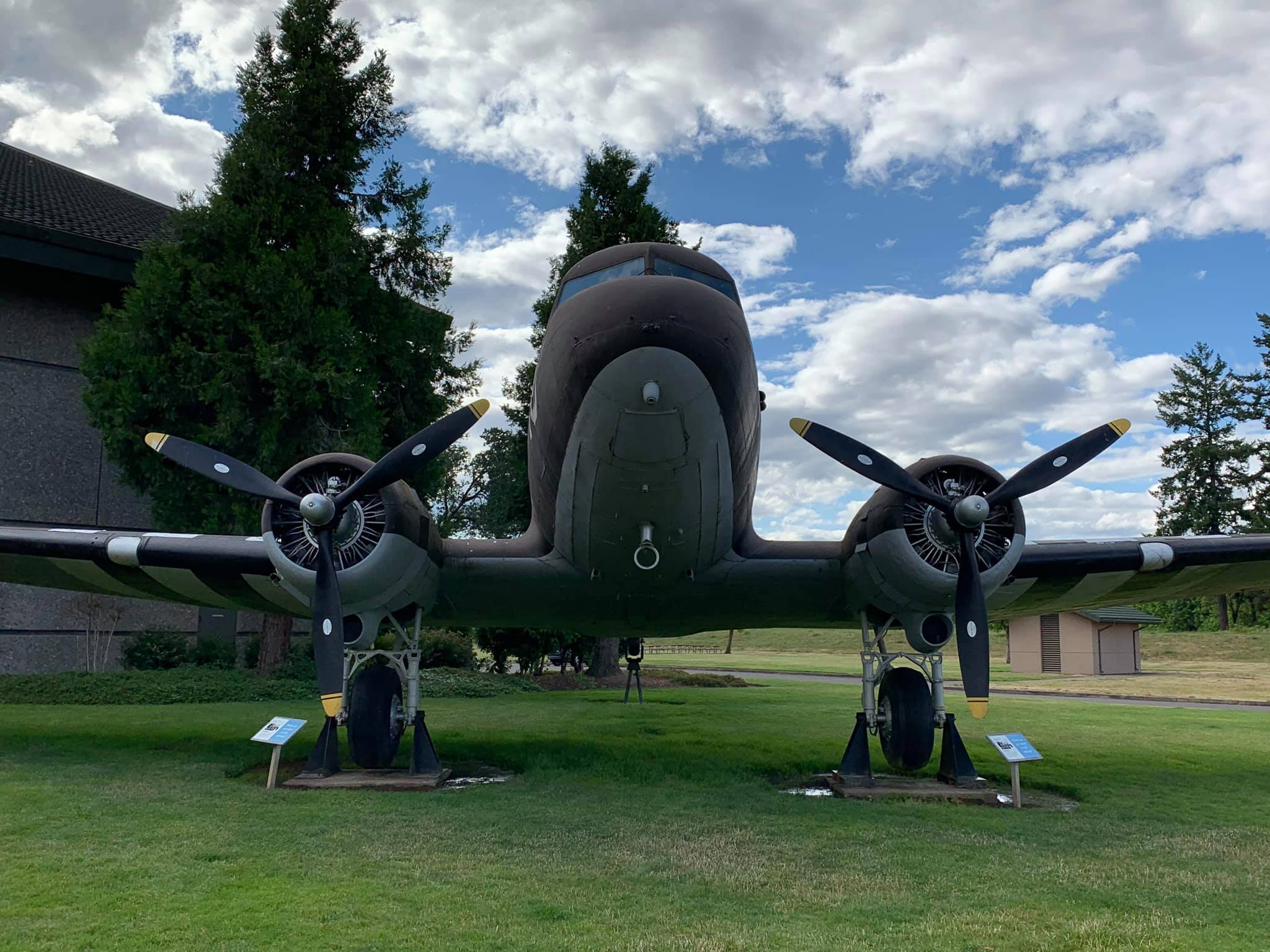
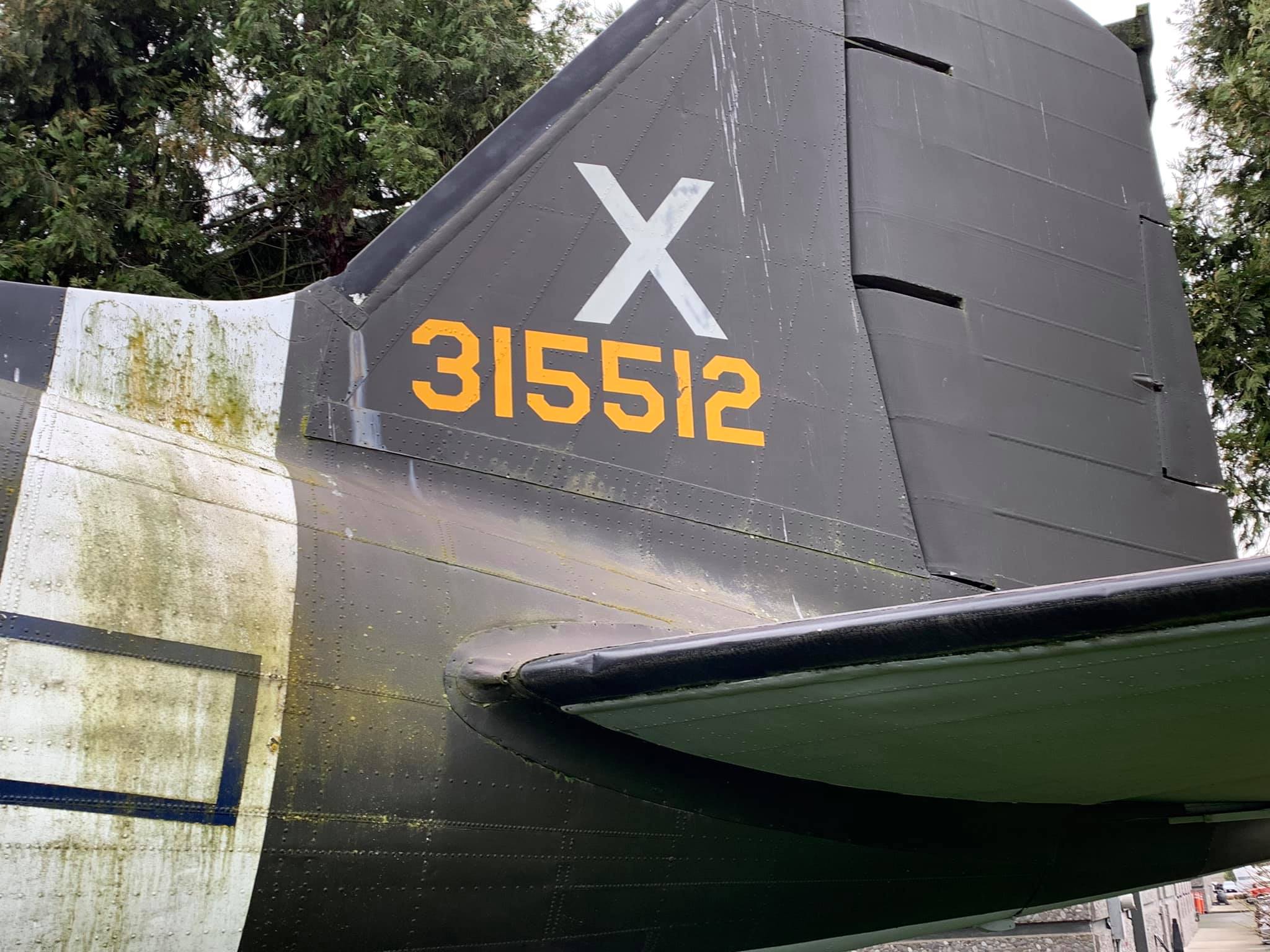

Some U.S. GIs said the C-47 looked like the bird, with a heavy body and long wings, and mimicked the bird in its struggle to get off the rain-soaked dirt fields. Or, the name comes from the definition of stupid or goon. Pilots called the C-47 stupid because they said it didn’t know it wasn’t supposed to be able to do the things it did. Another source claims that before the C-47, the C-39 was nicknamed “Gooney Bird” by the Tenth Transport Command at Patterson Field in Dayton, Ohio. The C-47 was fitted with two Pratt & Whitney R-1830-92 Twin Wasp engines and could hold 28 troops, a jeep, or a 37 mm cannon. Variants included the AC-47D Spooky gunship, SEC-47 electronic reconnaissance aircraft, EC-47Q antiaircraft systems evaluation, and C-53 Skytrooper.

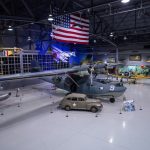
Editor’s note: In 2024, this aircraft was moved inside the museum’s building and placed on display near the museum’s Douglas DC-3 “Mainliner Reno”. Today, C-47A 43-15512 is under restoration while on display inside the Evergreen Aviation and Space Museum.
About the author
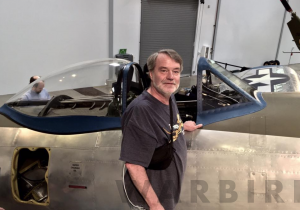 Randy Malmstrom grew up in a family steeped in aviation culture. His father, Bob, was still a cadet in training with the USAAF at the end of WWII, but did serve in Germany during the U.S. occupation in the immediate post-war period, where he had the opportunity to fly in a wide variety of types which flew in WWII. After returning to the States, Bob became a multi-engine aircraft sales manager and, as such, flew a wide variety of aircraft; Randy frequently accompanied him on these flights. Furthermore, Randy’s cousin, Einar Axel Malmstrom, flew P-47 Thunderbolts with the 356th FG from RAF Martlesham Heath. He was commanding this unit at the time he was shot down over France on April 24th, 1944, and spent the rest of the war as a prisoner of war. Following his repatriation at war’s end, Einar continued his military service, attaining the rank of Colonel. He was serving as Deputy Wing Commander of the 407th Strategic Fighter Wing at Great Falls AFB, MT, at the time of his death in a T-33 training accident on August 21, 1954. The base was renamed in his honor in October 1955 and continues to serve in the present USAF as home to the 341st Missile Wing. Randy’s innate interest in history in general, and aviation history in particular, plus his educational background and passion for WWII warbirds, led him down his current path of capturing detailed aircraft walk-around photos and in-depth airframe histories, recording a precise description of a particular aircraft in all aspects.



Yes,a bird by many names. In Aust. it was commonly called the Gooney Bird,which legend had,flew in ever decreasing circles till eventually dissapearing up its own Ar….e! Also by the acronym,Dak;which is obvious. My first flight, C1963 at RAAF Edinburgh,Sth. Aust. Thanks for the great stories.