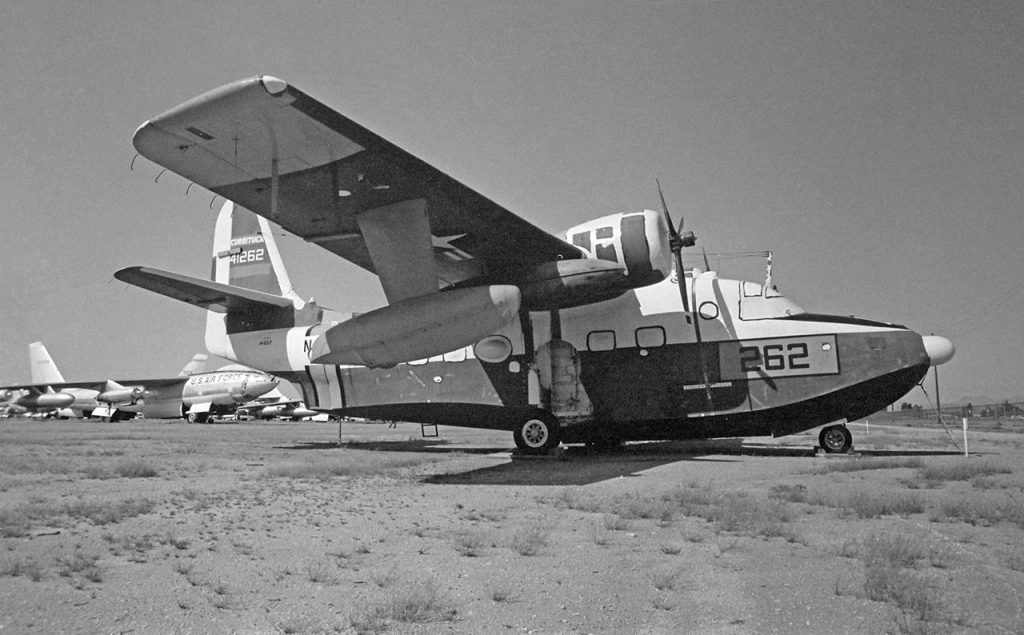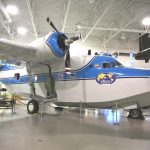
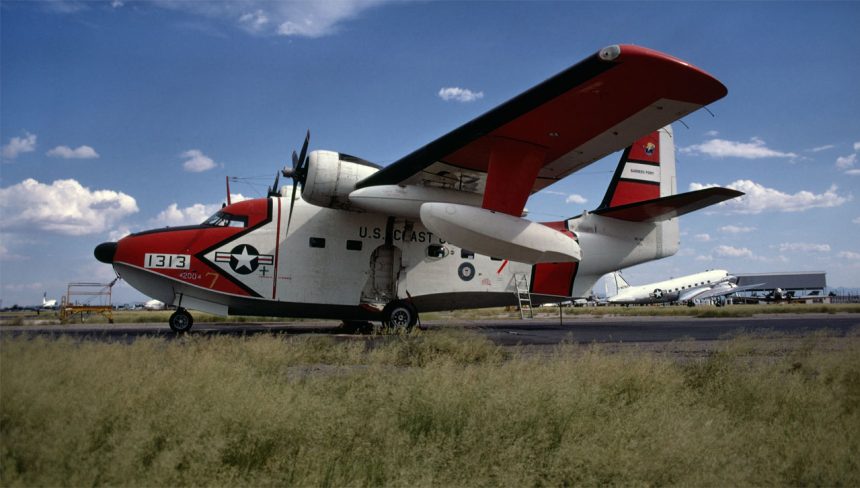

As we initiate the Boneyard Files series, which will showcase some of the retired aircraft resting at US Davis-Monthan Air Force Base in Tucson, Arizona, in the late 1960s, through the lens of Neil Aird’s “Monthan Memories” photos, today’s story features the Grumman HU-16 Albatross. The HU-16 Albatross was an iconic amphibious flying boat designed by Grumman just after World War II to meet US Navy requirements for an amphibious utility aircraft that could also operate from snow and ice with skis. Its first prototype flew in October 1947, and initial testing led not only to Navy orders but also to orders from the US Air Force and the Coast Guard. All three services primarily used the aircraft for search-and-rescue and general maritime patrol. Powered with two Wright R-1820 engines, producing 1,425 horsepower each, the HU-16 Albatross was supported by a crew of four to six and could carry 10 passengers. It was 62.10 feet long, 25.10 feet high, with a wingspan of 96.8 feet and a wing area of 1,035 square feet. Its empty weight was 22,883 pounds, its gross weight was 30,353 pounds, and its maximum takeoff weight was 37,500 pounds. The HU-16 Albatross could carry 1,075 gallons of fuel, with later versions expanding this capability to 1,694 gallons. The aircraft was equipped with two 3-bladed Hamilton fully-feathering reversible-pitch propellers. Its maximum speed was 250 miles per hour with a cruise speed of 124 mph. The range was 1,650 miles with a service ceiling of 21,500 feet and a rate of climb of 1,450 feet per minute.
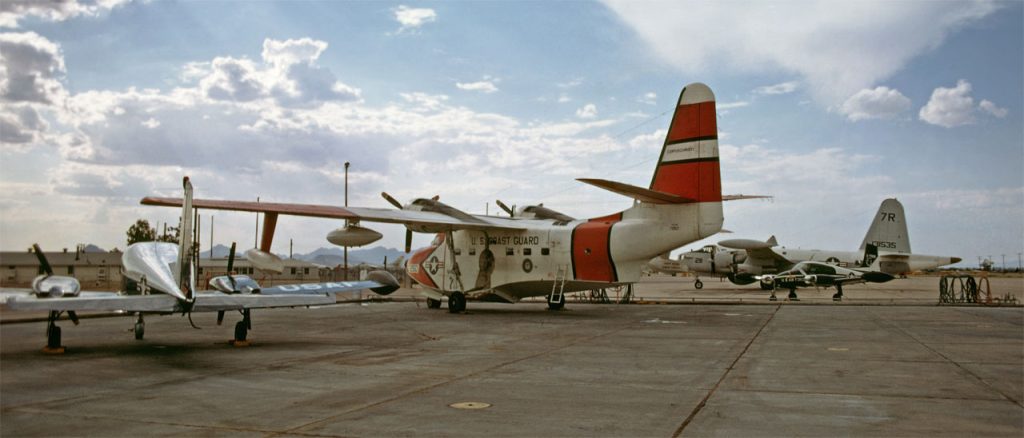
The HU-16 Albatross was known for its excellent short takeoff and landing (STOL) performance and amphibious versatility. A total of 466 HU-16 Albatross amphibious aircraft were built between 1949 and 1961. The aircraft’s combat operational debut was during the Korean War, where it was utilized by the US Air Force to rescue nearly 1,000 United Nations personnel from coastal waters and behind enemy lines. The Albatross, part of the US Air Force’s Air Rescue Service, rescued many downed airmen, 47 during the Vietnam War alone, often near enemy defenses. Even in peacetime, heavy seas and rough landings sometimes prevented aircraft from taking off. In one instance, an Albatross had to taxi over 50 miles back to port. To help with takeoffs from ocean swells, the HU-16 Albatross could use jet-assisted takeoff (JATO) bottles. Four of these devices were attached to the rear to provide a boost for takeoff. Another version, called a “Triphibian,” had skis on its floats and an extendable keel, allowing it to land on snow, land, and water. The HU-16 Albatross had an APS-31 radar that could be mounted in the nose or carried on a pod under the left wing. Inside, standard seats could be replaced with litter racks, and a platform could be added to help people board the aircraft from the water. The aircraft also had a hatch in the rear fuselage for quick engine changes and included a sink and a small toilet in the back compartment.
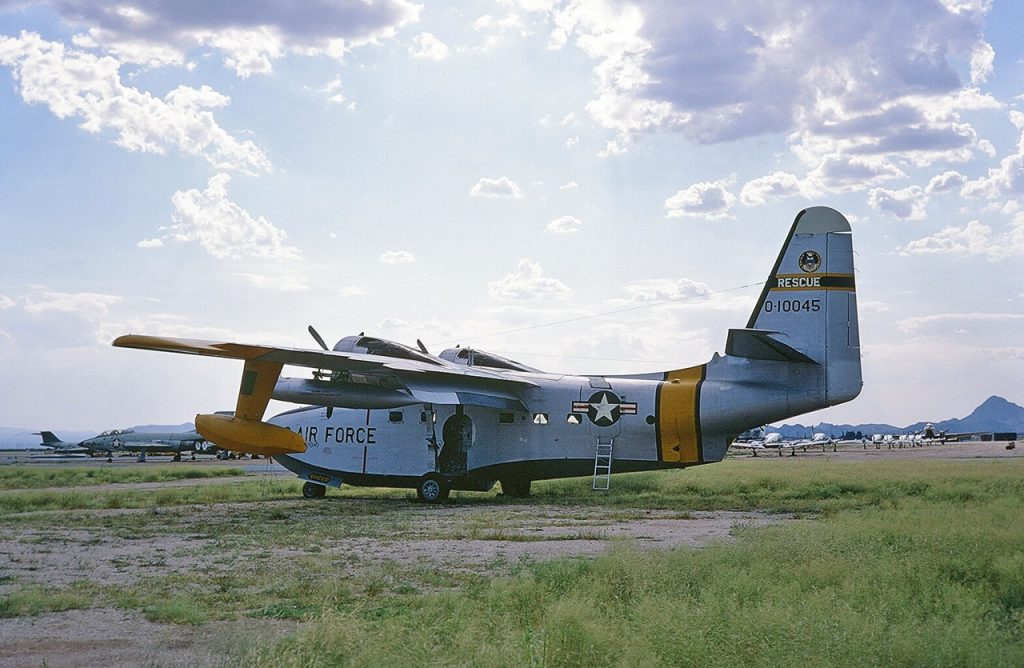
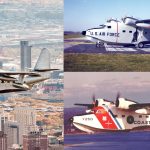
In 1955, Grumman developed an improved version with a 16.5-foot increase in wingspan and larger ailerons and tail surfaces. Beginning in 1957, early HU-16 Albatross models were converted to the new configuration with these improvements. Besides the Air Force and Navy, the Coast Guard also used the Albatross, giving it the distinction of being operated by three branches of the US military. The US Coast Guard operated 91 of them, which flew more than 500,000 hours in service and set records. One HU-16 Albatross reached an altitude of 32,883 feet in July 1973, establishing a world altitude record for twin-engine amphibious aircraft. Coast Guard crews also set speed and distance records in the early 1960s, including a nonstop flight of more than 3,100 miles from Kodiak to Pensacola. The last Coast Guard Albatross was retired in March 1983. The Grumman HU-16 Albatross was widely exported, with over 20 nations receiving them primarily as US military surplus for search-and-rescue, including Greece, Norway, Japan, and the Philippines. The last foreign operator of the Albatross was Greece, which operated it until 1995 before officially retiring it. The services, especially the Navy, began retiring the HU-16 Albatross in the late 1960s, and the retired aircraft were sent to Davis-Monthan Air Force Base in Tucson, Arizona, commonly known as “The Boneyard.” Read more Boneyard Files articles HERE.