






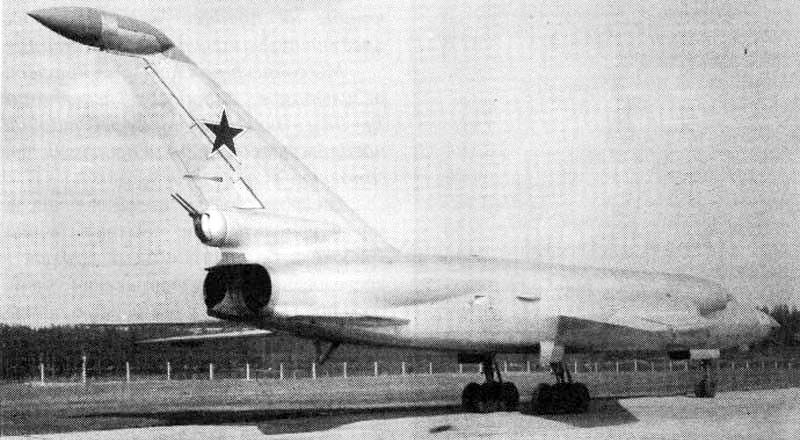


In the early 1950s, the USSR wanted to develop a supersonic bomber to replace its Tupolev Tu-16. As a result, the Tupolev Design Bureau (OKB-156) initiated work on a new prototype, following a decision by the USSR Council of Ministers on April 12, 1954. The chief designer of the aircraft, designated Tupolev Tu-98, was DS Markov. The aircraft was built in 1955 and first flew in 1956. The Tupolev Tu-98 had a mid-wing, swept-wing design with a 55-degree leading-edge sweep. It was powered by two Lyulka AL-7F turbojet engines, producing 21,000 pounds of thrust, located at the rear, with long intake ducts and air inlets positioned higher. The main landing gear was built into the fuselage, making the wing streamlined, but this also reduced ground stability.
Design of Tupolev Tu-98
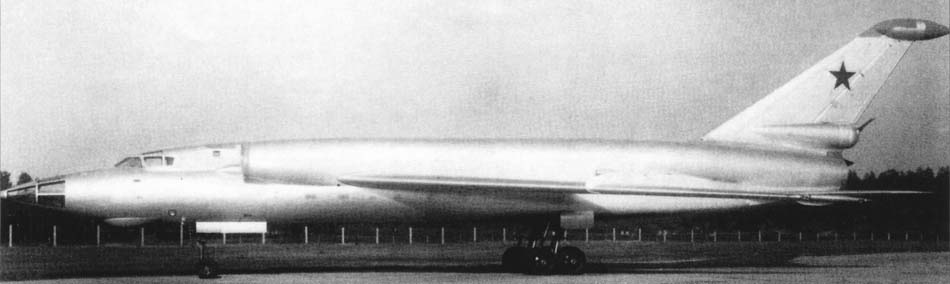
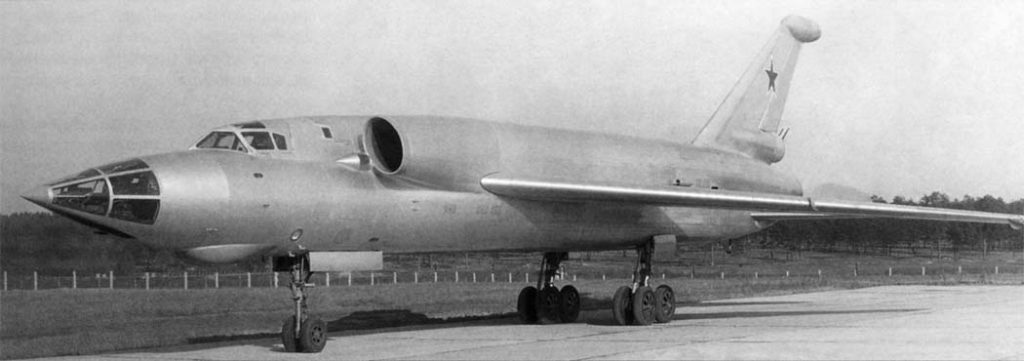
The three-seat aircraft, including a pilot, an operator, and a navigator, was 105.2 feet long, 26.5 feet high, with a wingspan of 56.8 feet, and a wing area of 942 square feet. The maximum takeoff weight of the aircraft was 85,980 pounds. Its speed was envisioned at 848 mph, with a range of 1,520 miles and a service ceiling of 41,830 feet. The aircraft could be armed with three 23 mm Nudelman-Rikhter NR-23 cannons and 11,000 pounds of bombs. The aircraft had a single pressurized cabin at the front, and behind it was a technical compartment that housed photographic equipment. The fuel system included four main tanks and one smaller centering tank within the fuselage. The wing was designed with two spars and had a caisson structure. In June 1956, the Tupolev Tu-98 bomber was shown to a US delegation led by General Twining at the Kubinka military airfield near Moscow. Soviet leader Nikita Khrushchev introduced it as a new development in bombers. There were rumors about plans to produce around 15 units each year starting in 1958. NATO gave the bomber the code name Backfin and the made-up designation Yak-42.
The Cancellation
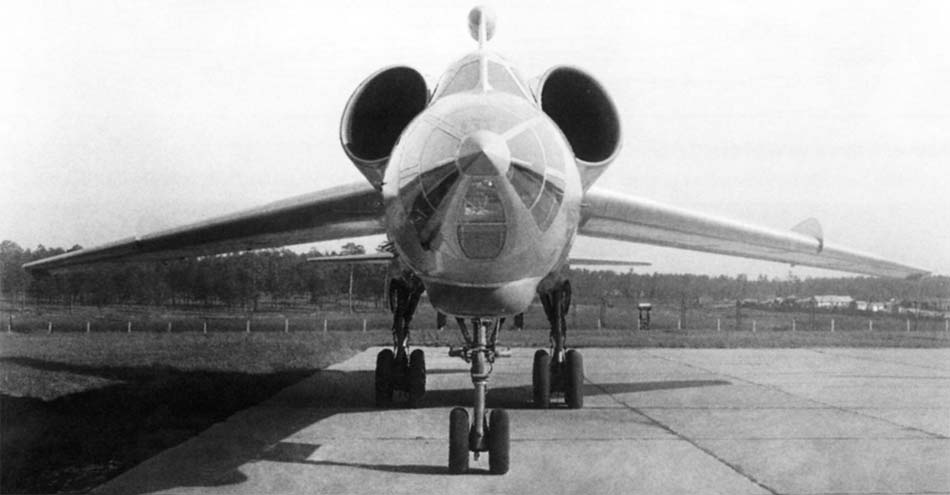
The Tupolev Tu-98 test flights continued until 1959, but the aircraft failed state tests and did not enter production due to unresolved manufacturing and technological issues. Later, it was used as a flying research laboratory to help develop the Tu-128 interceptor. Researchers used the Tu-98 for aerodynamic tests and to evaluate the future Tu-128 RP-7 “Smersch” radar, which replaced the plane’s nose. The researchers also tested the “Kompleks 80” fire control system on the Tupolev Tu-98. In addition, the aircraft helped test the R-4 air-to-air missiles planned as its weapons. It was officially called the Tu-98LL, meaning “flying laboratory.” The aircraft flew for the last time on November 21, 1960, when the landing gear failed. After completing these tests, the Tu-98 was kept in Zhukovsky for a while before being scrapped. Additionally, the Tu-98 provided data for building the Tu-22. In the Grounded Dreams series, the Tupolev Tu-98 could not prove itself as a bomber for the Soviet military, but helped researchers to mature many concepts. In fact, in the aircraft, for the first time, Soviet aeronautical engineer Andrey Nikolayevich agreed to use irreversible hydraulic boosters in all control channels. It was also the first domestic bomber to use a remote-controlled aft-firing dual AM-23 gun DK-18. Read more Grounded Dreams articles HERE.








Congrats Kapil, this Tupolev was totally unknown to me!