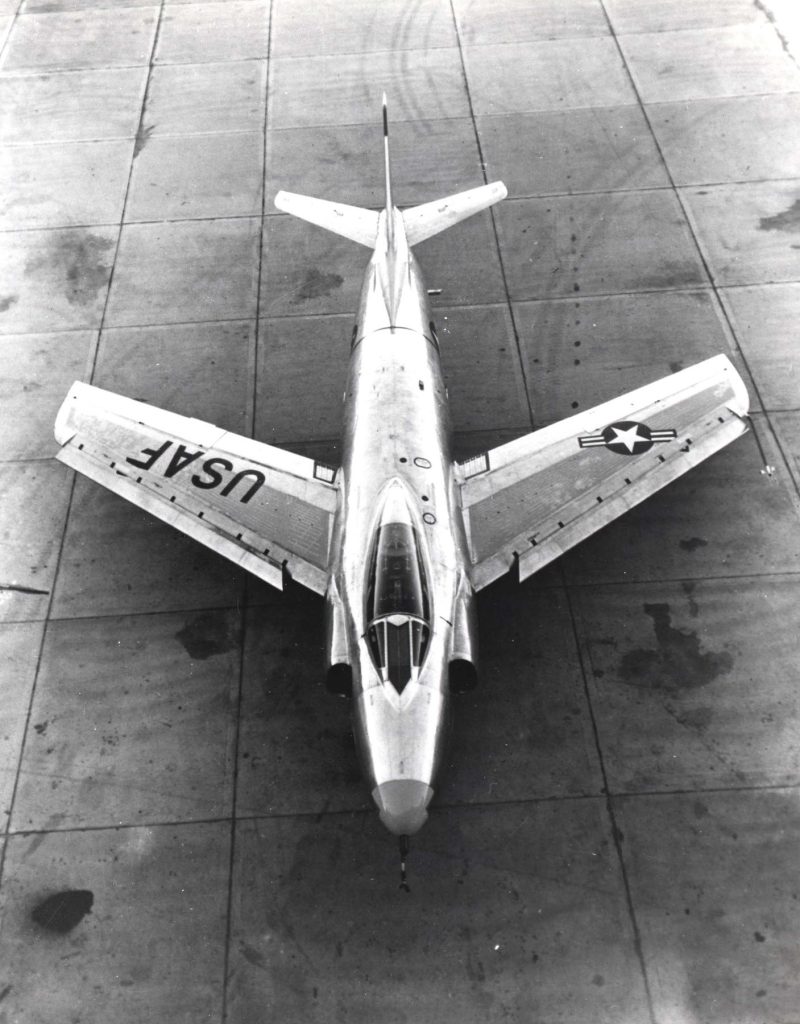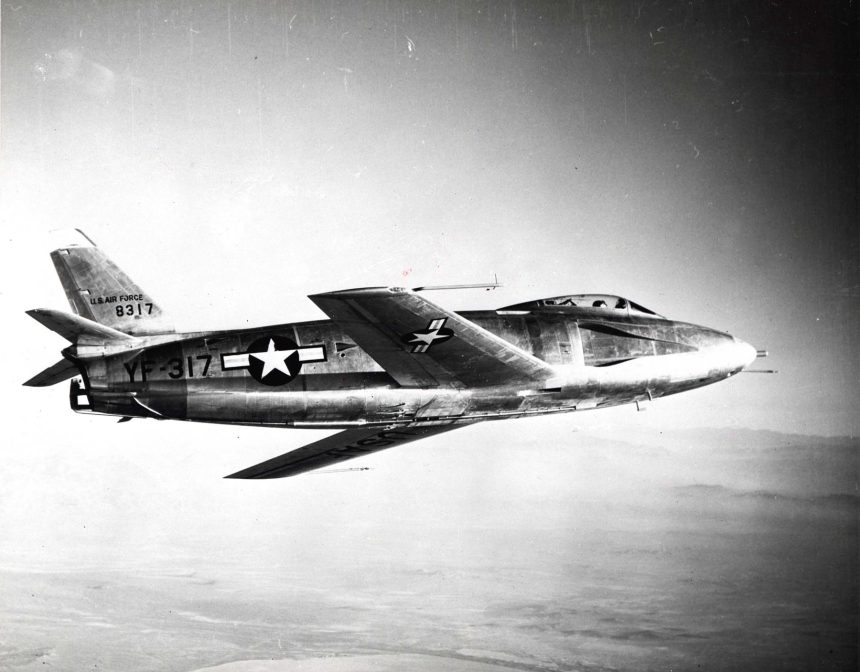


In the 1940s, the US Air Force required a penetration fighter that could travel long distances. North American Aviation, known at the time for its F-86 Sabres, began a new study in 1947 to develop a penetration fighter version of the Sabre. To carry more fuel, designers created a larger version of the F-86A that could hold 1,961 US gallons, both inside and in two 200-US-gallon drop tanks under the wings. The fighter, initially built as an F-86C, had a planned unrefueled range of over 2,000 nautical miles, double that of the standard F-86A. The fighter was designed to compete with the XF-88 Voodoo and the Lockheed XF-90 to meet the US Air Force’s needs for a penetration fighter.
Design of North American YF-93A
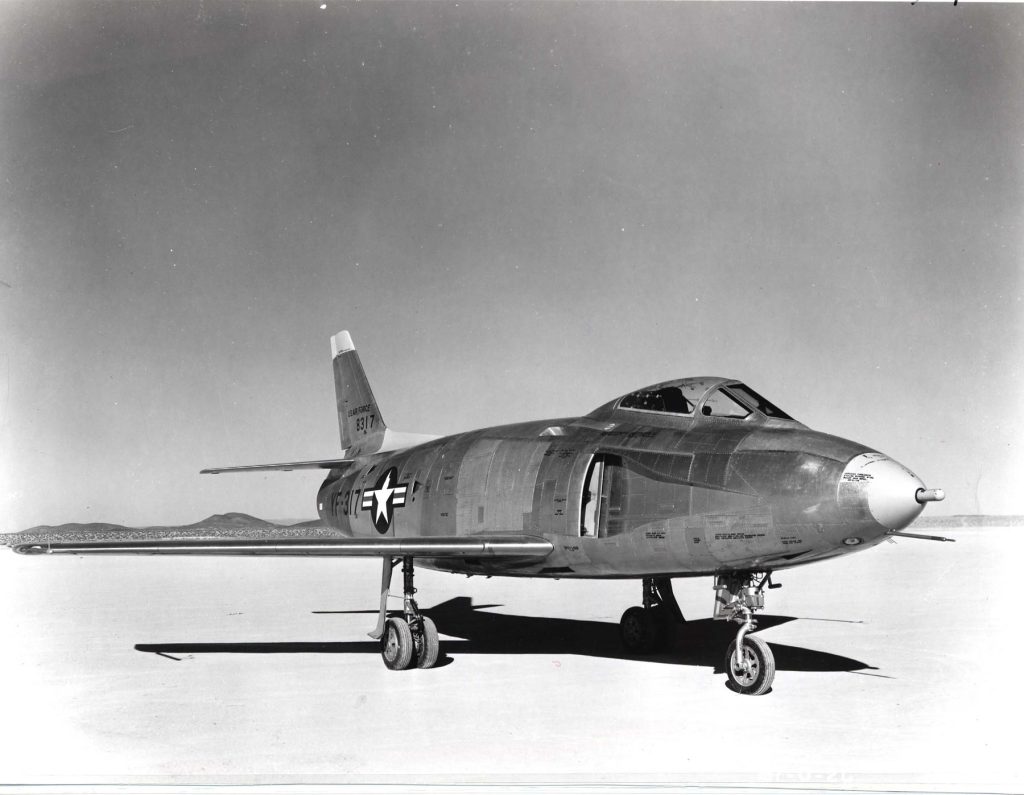
In December 1947, the Air Force ordered two prototypes of the plane and renamed them the North American YF-93A due to many changes made to the F-86. The first prototype had NACA inlet ducts, but was later updated with more standard intakes. About six months later, the Air Force placed an order for 118 F-93A-NAs. The single-seat North American YF-93A was 44.1 feet long, 15.8 feet high, with a wingspan of 38.9 feet and a wing area of 306 square feet. The empty weight of the aircraft was 14,035 pounds, the gross weight was 21,610 pounds, and the maximum takeoff weight was 26,516 pounds. It was powered by a Pratt & Whitney J48-P-6 turbojet engine, producing 6,000 pounds of dry thrust and 8,750 pounds with afterburner. The maximum speed of the North American YF-93A was envisioned at 708 mph at sea level and 622 mph at 35,000 feet, with a cruise speed of 534 mph and a service ceiling of 46,800 feet. The aircraft could be armed with six 20 mm M24 cannon, which were not fitted on the prototypes. In 1949, the production order for 118 aircraft was suddenly canceled after testing the new Boeing B-47 bomber. The B-47 was so fast that it was thought not to need an escort fighter. As the prototype YF-93As were just being completed, the US Air Force took over the project.
The Cancellation
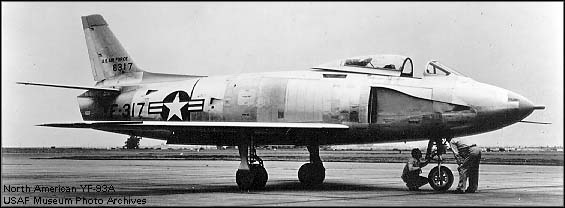
The flight tests for the North American YF-93A prototypes started in 1950 as part of a competition with other penetration fighter projects, the XF-88 and XF-90. The XF-88 Voodoo won this competition, but none of these projects moved into production. The YF-93As were then transferred to the National Advisory Committee for Aeronautics (NACA) at the Ames Aeronautical Laboratory facility for more testing. The North American YF-93As were also used as chase aircraft until 1956. However, using the NACA ducts caused problems at high angles of attack, limiting airflow to the engines. By this time, newer, more advanced aircraft were available, and both YF-93As were eventually declared surplus and scrapped. In the Grounded Dreams series, for the North American YF-93A, the purpose for which it was built changed as aviation engineering was advancing rapidly. It was not a bad aircraft, but it could not find its place in modern aviation due to the development of the Boeing B-47 Stratojet bomber. Read more Grounded Dreams articles HERE.