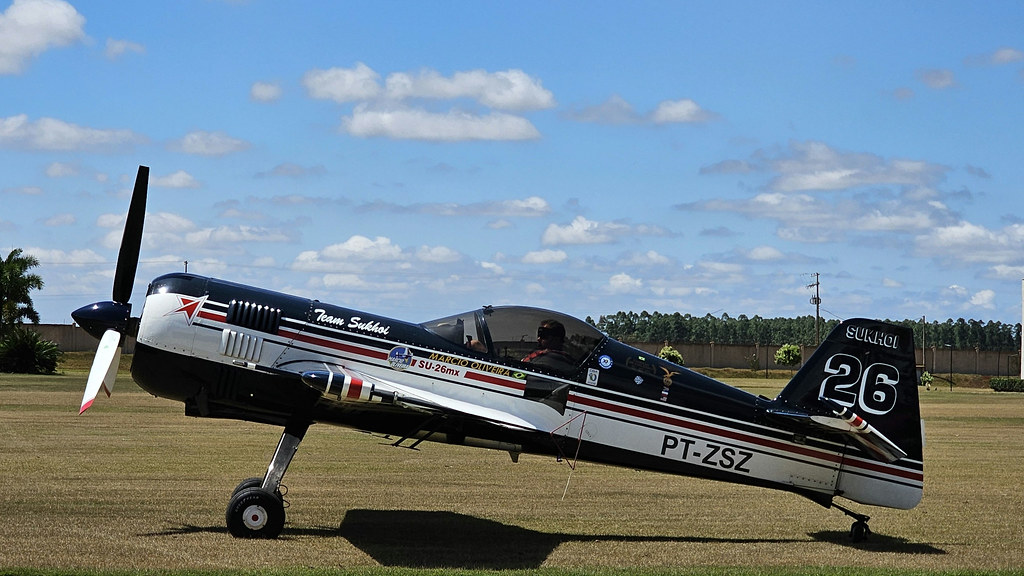
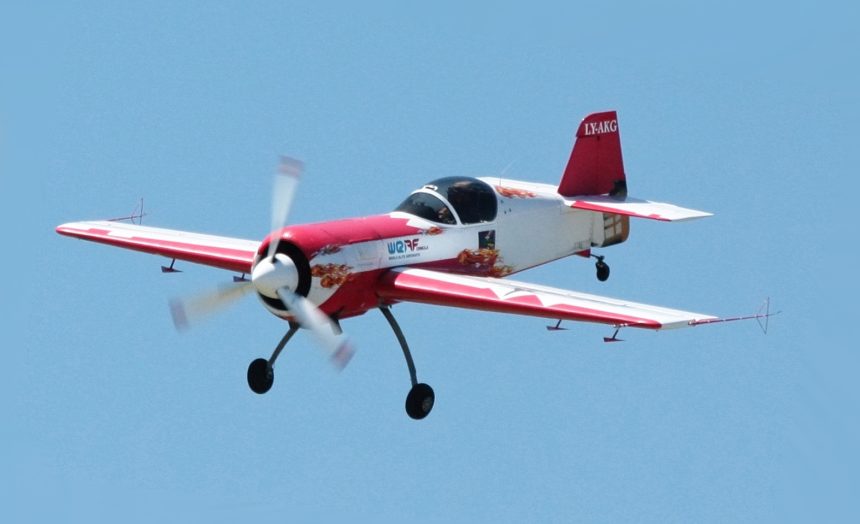


On this day in aviation history, 42 years ago (June 30, 1984), the Sukhoi Su-26 flew for the first time. A radial-engine powered aerobatic aircraft, the Su-26 was developed in the Soviet Union during the waning years of the Cold War. Like many single-place aerobatic aircraft, the Sukhoi features a straight wing and fixed conventional landing gear made of solid titanium. The original prototype, S42-1, took flight from Zhukovsky Airfield under the pull of a two-bladed propeller.
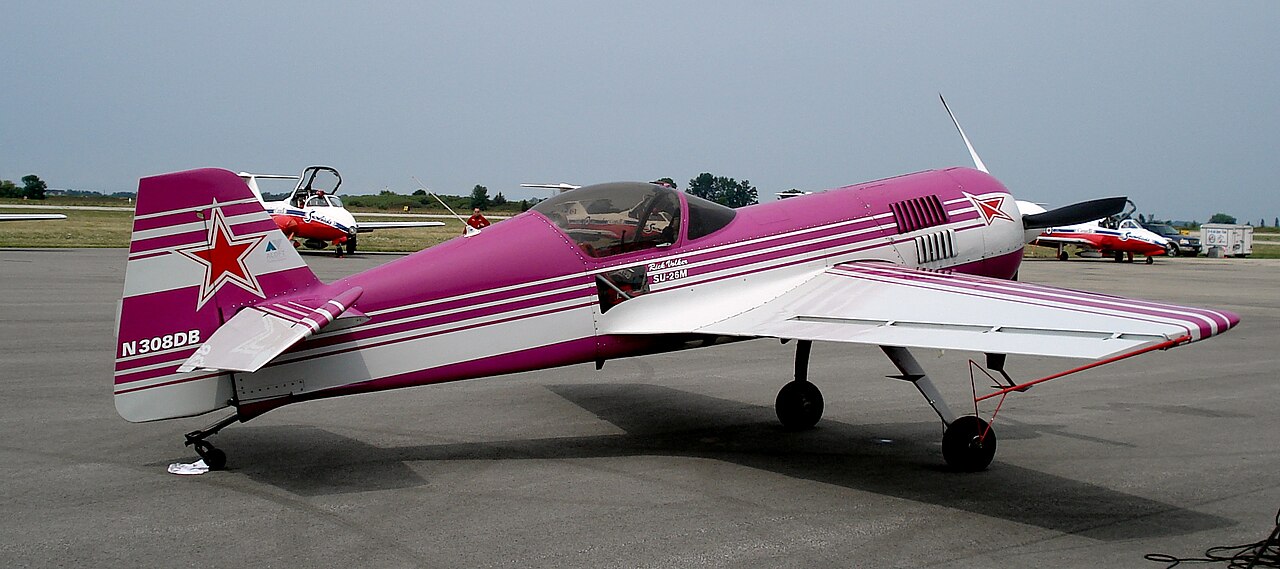
The production variant of the Sukhoi, the Su-26M, was upgraded to have a three-bladed MTV-9 composite prop, made in Germany. In addition, Sukhoi re-worked the tail surfaces for better control and stability in high-intensity flight. The Su-26M would prove itself in short order at the 1986 World Aerobatics Championships, winning both men’s and women’s team awards. The Su-26M3 variant features an upgraded 430-hp M9F engine, and this aircraft masterfully won the Aerobatic World Championships in 2003 and 2005. The Su-26MS also won the 2004 European Championships.
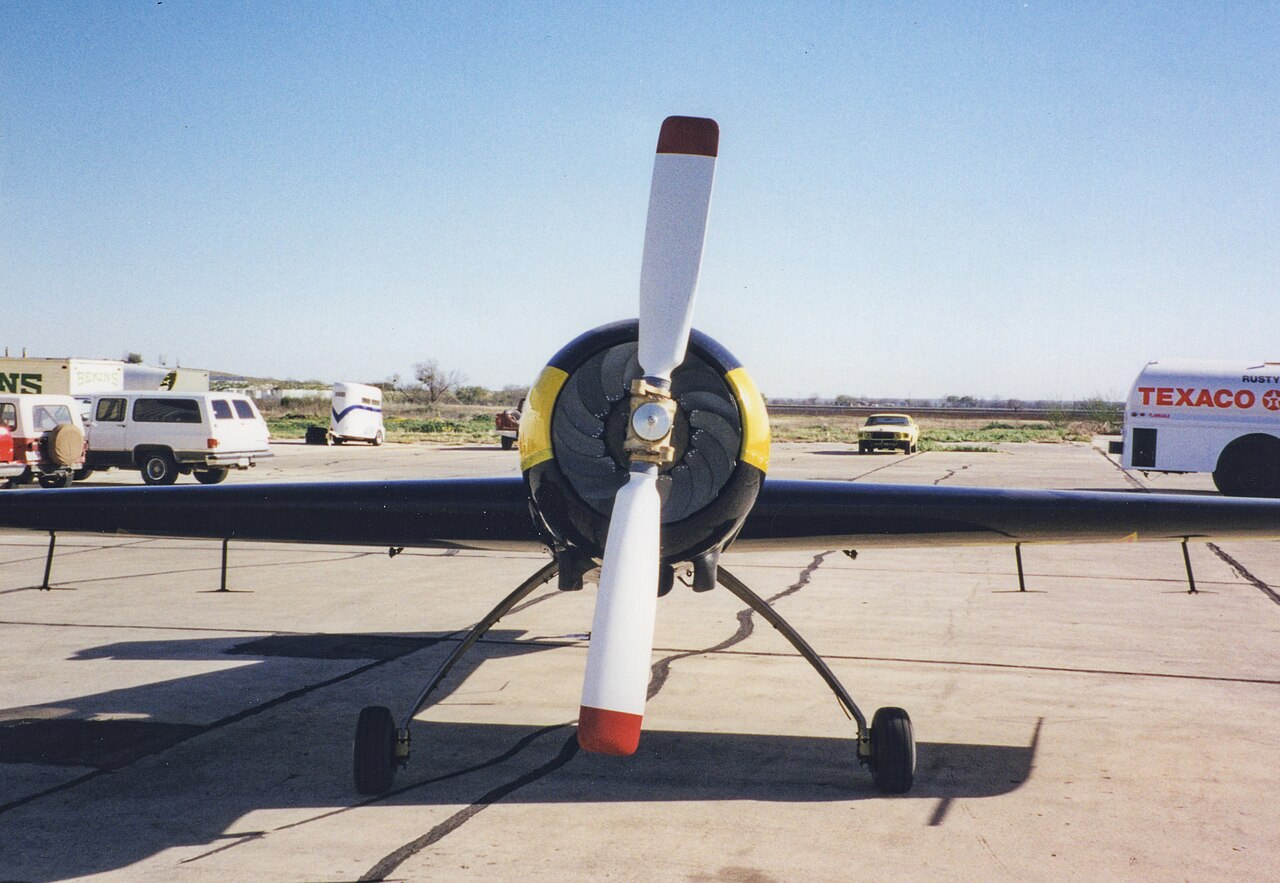
Sukhoi kept the Su-26 small and light in design; the wingspan is a mere 25 ft 7 in, and the length is 22 ft 5 in. The Su-26’s empty weight is 1,543 lbs, while max gross isn’t much higher at 1,742 lbs. The Su-26M, with the standard Vedeneyev M14P 9-cylinder radial engine, can cruise at 183 mph and achieve a maximum airspeed of 280 mph. This nimble Russian aerobatic aircraft can climb at 3,500 fpm and handle loads of +/- 12Gs. Many Su-26s are active today, especially on the airshow circuit. Sukhoi developed the Su-26 further into the Su-29 and Su-31, both with two seats and higher performance.